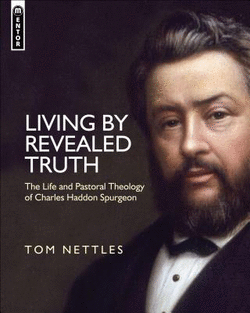
 Chapter 13: Theology and Controversy
“We do not wish to fight; but if we do, we hope that the pity will be needed by those with whom we contend.” Spurgeon was not one to pick a fight, but when truth was on the line, he didn’t back down either. He bravely battled Arminians and Hyper-Calvinists. Unlike many modern pastors, he refused to pretend a cordial relationship when truth was sacrificed at the altar of relevance: “He would not pretend fellowship with those with whom he disagreed upon vital points of truth.”
The author presents several notable theological controversies that Spurgeon confronted, including the Rivulet controversy, his battle with atheistic evolution, and his skirmishes with the Plymouth Brethren.
Chapter 14: Destroy or Be Destroyed
The author continues the discussion and reveals Spurgeon’s passionate defense of the truth as he stepped into the fray against the Roman Catholic Church. Spurgeon once remarked, “Showing charity to priests is like showing charity to tigers and rattlesnakes.”
Nettles recounts Spurgeon’s run-ins with the Church of England. For instance, he called baptismal regeneration “a wretched and rotten foundation” and a “deceitful invention of the antichrist.” His repudiation of infant baptism was clear. He referred to the font as a “mockery.”
Chapter 15: The Downgrade Conflict
The author carefully describes the downgrade conflict, the theological slide that Spurgeon confronted directly and ultimately led him out of the Baptist Union. Spurgeon painfully notes, “I have cut myself clear of those who err from the faith, and even from those who associate with them.”
Little room was left for the imagination to wander when one considered Spurgeon’s position on controversial matters. He was a man who would not be swayed by theological error. He was a bastion of truth in an age of compromise.
 Veritas et Lux