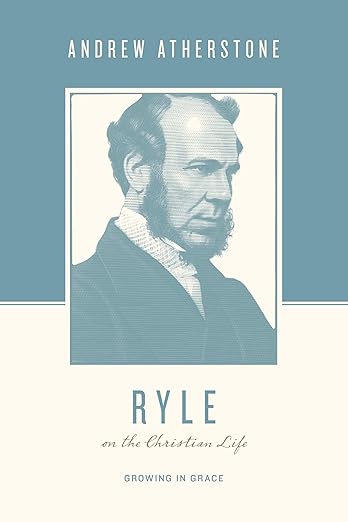
Andrew Atherstone, Ryle on the Christian Life: Growing in Grace (Wheaton: Crossway Books, 2025), 188 pp.
We live in an age of unprecedented compromise. Courage has been eclipsed by cowardice. Conviction has been hijacked by capitulation. The spirit of syncretism is gaining ground. The bishop of Liverpool, J.C. Ryle (1816-1900) lamented the lack of courage and conviction that characterized so many Christians in the United Kingdom. He bemoaned the cowardice that dominated the theological landscape, especially among young people:
It produces what I must venture to call a ‘jellyfish’ Christianity in the land: that is, a Christianity without bone, or muscle, or power. A jellyfish is a pretty and graceful object when it floats in the sea, contracting and expanding like a little, delicate, transparent umbrella. Yet the same jellyfish, when cast on the shore, is a mere helpless lump, without capacity for movement, self-defense, or self-preservation. Alas! It is a vivid type of much of the religion of the day, of which the leading principle is, ‘No dogma, no distinct tenets, no positive doctrine.’
Ryle on the Christian Life by Andrew Atherstone celebrates the life and legacy of this faithful man. Rather than writing a strict biography, Atherstone draws the attention of readers to the highlights of Ryle’s ministry and his core convictions.
The doctrine of Scripture was the driving force of Ryle’s life. Here is a man who stood on the solid ground of the Bible. He embraced the authority, inerrancy, infallibility, and sufficiency of Scripture throughout his life – and never wavered. Ryle lamented the rampant compromise concerning the Bible in the United Kingdom in the nineteenth century and would be deeply discouraged to see the slide that continues to this day, especially in the UK and America.
Atherstone focuses on Ryle’s orthodox views on sin and salvation. Ryle was never shy about his doctrinal commitments. His allegiance to Reformed theology was proclaimed with passion and faithfulness – in the pulpit and with his pen. He consistently preached about the doctrine of the Trinity. He argued, “that the work of all three Persons in the blessed Trinity, is absolutely and equally needful to the salvation of every saved soul.” Ryle was quick to emphasize the person and work of the Holy Spirit. He maintained that “without the intervention of the Holy Spirit, no one can ever turn to God in repentance and faith.” Ryle’s commitment to an Augustinian theological framework is clear. It is a commitment he maintained throughout his life and ministry.
Ryle was a man of action – and he expected his listeners to follow in his stead. The theme of discipleship recurs in his preaching as well as his writing ministry. “Holy practice will not flourish without sound doctrine.” He was concerned that God’s people were doctrinally sound, but doctrine is never alone. He constantly pushed people to move their feet and open their mouths.
Ryle focused on personal sanctification, as is evidenced in his well-known book, Holiness. He critiqued the “higher life” movement (also known as Keswick) and focused his attention on the necessity of fighting for holiness. Of course, he believed that the Holy Spirit sanctifies the people of God, but never apart from personal responsibility. The popular moniker, “Let go and let God,” had no place in the vocabulary of J. C. Ryle. He urged Christians to “keep up a perpetual war” against their sins.
Dr. Atherstone also touches on the importance of preaching in Ryle’s life. The bishop of Liverpool held to the indispensability of preaching. His little book, Simplicity in Preaching, is a gold mine of information for preachers – a resource that should be read and re-read. The author notes, “He never flagged in his conviction that lively proclamation of the gospel – whether from the pulpit or with the pen – is the God-ordained means of conversion and spiritual growth, essential to reviving the church and establishing healthy Christian disciples.”
The book concludes by drawing the attention of readers to Ryle’s experience with sorrow and affliction, and eventually in death. Ryle is a man who consistently maintained an eternal perspective. He constantly urged the unconverted to repent and believe in Christ for their salvation. He warned unbelievers about eternal judgment. But he also prepared Christians as they chart their path to the heavenly City.
Ryle on the Christian Life is an encouraging and educational read, designed for the man who stands behind the pulpit and anyone seated in the pew. This timely book will encourage the timid, prod the lazy, and challenge every reader. I commend this excellent work, a fitting addition to the Crossway series, Theologians of the Christian Life.
I received this book free from the publisher. I was not required to write a positive review.
 Veritas et Lux