Why Francis Schaeffer Matters: Consequences of Pitting Rationality Against Faith – Part 4

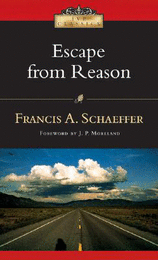
scaf 3The decisive result of falling below the line of despair is a pitting of rationality against faith.  Schaeffer sees this as an enormous problem and details four consequences in his book, Escape From Reason.

Pitting Rationality Against Faith

First, when rationality contends against faith, one is not able to establish a system of morality.  It is simply impossible to have an “upstairs morality” that is unrelated to matters of everyday living.

Second, when rationality and faith are dichotomized, there is no adequate basis for law.  “The whole Reformation system of law was built on the fact that God had revealed something real down into the common things of life” (Escape From Reason, 261).  But when rationality and faith are pitted against one another, all hope of maintaining any semblance of law is obliterated.

The third consequence is that this scheme throws away the answer to the problem of evil.  Christianity’s answer rests in the historic, space-time, real and complete Fall of man who rebelled and made a choice against God.  “Once the historic Christian answer is put away, all we can do is to leap upstairs and say that against all reason God is good” (Escape From Reason, 262).

Finally, when one accepts this unbiblical dichotomy he loses the opportunity to evangelize people at their real point of despair.  Schaeffer makes it clear that modern man longs for answers.  “He did not accept the line of despair and the dichotomy because he wanted to.  He accepted it because, on the basis of the natural development of his rationalistic presuppositions, he had to.  He may talk bravely at times, but in the end it is despair” (Escape From Reason, 262).  It is at this point that Schaeffer believes the Christian apologist has a golden opportunity to make an impact.  “Christianity has the opportunity, therefore, to say clearly that its answer has the very thing modern man has despaired of – the unity of thought.  It provides a unified answer for the whole of life.  True, man has to renounce his rationalism; but then, on the basis of what can be discussed, he has the possibility of recovering his rationality” (Escape From Reason, 262).

Schaeffer challenges us, “Let us Christians remember, then, that if we fall into the trap  against which I have been warning, what we have done, among other things, is to put ourselves in the position where in reality we are only saying with evangelical words what the unbeliever is saying with his words.  In order to confront modern man effectively, we must not have this dichotomy.  You must have the Scriptures speaking truth both about God Himself and about the area where the Bible touches history and the cosmos” (Escape From Reason, 263).

The Tension of Being a Man

Before proceeding to Dr. Schaeffer’s basic approach to apologetics one must understand the concept he calls “mannishness” or the tension of being a man.  The idea is essentially that no man can live at ease in the area of despair.  His significance, ability to love and be loved, and his capacity for rationality distinguish him from machines and animals and give evidence to this fact: Man is made in the image of God.  Modern man has been forced to accept the false dichotomy between nature and grace and consequently, takes a leap of faith to the upper story and embraces some form of mysticism, which gives an illusion of unity to the whole.  But as Schaeffer points out, “The very ‘mannishness’ of man refuses to live in the logic of the position to which his humanism and rationalism have brought him.  To say that I am only a machine is one thing; to live consistently as if this were true is quite another” (The God Who Is There, 68).  Schaeffer continues, “Every truly modern man is forced to accept some sort of leap in theory or practice because the pressure of his own humanity demands it.  He can say what he will concerning what he himself is; but no matter what he says he is, he is still a man” (The God Who Is There, 69).

Thus, the foundation for Francis Schaeffer’s basic approach to apologetics is simply to recognize that man is an image-bearer.  Man even in his sin has personality, significance, and worth.  Therefore, the apologist should approach him in those terms.  The apologist must not only recognize that man is made in the image of God;  he must also love him in word and deed.  Finally, the apologist must speak to the man as a unit; he must reach the whole man (for faith truly does involve the whole man) and refuse to buy into the popularized Platonic idea that man’s soul is more important than the body.

Why Francis Schaefer Matters: The Line of Despair – Part 3

francis_schaeffer-1


The Loss of Antithesis

The loss of antithesis in American culture led to what Dr. Schaeffer coined the “line of despair” or giving up all hope of achieving a rational unified answer to knowledge and life.  Schaeffer outlines what he believes are the various steps below this line of despair.  He begins with the German philosopher, Georg William Friedrich Hegel (1770-1831) who became the first man to open the door into the line of despair.  Hegel taught  what we really have is a thesis, and an opposite antithesis, with the answer of their relationship not a horizontal movement of cause and effect, but a synthesis, or dialectical thinking.  In the end result, Hegel’s philosophy produced a synthesis as opposed to antithesis which could be arrived at by reason.

Schaeffer believes that while Hegel opened the door to the line of despair the Danish philosopher, Soren Kierkegaard was the first one to go below the line.    Kierkegaard concluded that one could not arrive at synthesis by reason alone.  Rather, one achieves everything of real importance by taking a “leap of faith.”  Schaeffer, therefore, maintains that Kierkegaard’s conclusions gradually led to the absolute separation of the rational and logical from faith.

The Leap of Faith and the Line of Despair

What is this leap and what does it involve?  Schaeffer teaches that Kierkegaard’s leap put away the hope of any unity.  Schaeffer writes, “The leap is common to every sphere of modern man’s thought.  Man is forced to the despair of such a leap because he cannot live merely as a machine . . . If below the line man is dead, above the line, after the non-rational leap, man is left without categories.  There are no categories because categories are related to rationality and logic.  There is therefore no truth and no nontruth in antithesis, no right or wrong – you are adrift.” (Escape From Reason, 241, 256).

Schaeffer continues to chronicle the subsequent philosophers who followed Kierkegaard’s thought including the atheistic existentialism of Karl Jaspers, Jean Paul Sartre and Martin Heidegger.  These men reasoned below the line of despair and gave up hope of a rational answer to the questions of life.  The end result: they are left with only the anti-rational.

Schaeffer proceeds to explain what he considers the further steps under the line of despair.  The first as noted above began with philosophy.  The second step was art.  The third – music.  The fourth – culture, and the fifth step was the new theology which was opened by Karl Barth.  While most refer to this brand of theology as “liberal” or “neo-orthodox,” and rightly so, the issue at hand runs deeper than labels.  Indeed, liberal theology rejects the deity of Christ, the inerrancy of Scripture and the New Testament miracles.  The new theology knows nothing of man being created in the image of God.  But Schaeffer adds further clarity to the issue:  “All the new theology and mysticism is nothing more than a faith contrary to rationality, deprived of content and incapable of contentful communication.  You can bear ‘witness’ to it, but you cannot discuss it.  Rationality and faith are out of contact with each other” (The God Who Is There, 64).

Man, therefore, is left in a state of despair which “arises from the abandonment of the hope of a unified answer for knowledge and life.  Modern man continues to hang on to his rationalism and his autonomous revolt even though to do so he has had to abandon any rational hope of a unified answer” (Escape From Reason, 235-236).

The Consequences of Despair

The consequences and despair of modern man can be found in three areas.  alling prey to nihilism or embracing a worldview that offers no hope.

The second is  found in the fact that he accepts a false dichotomy (what Schaeffer calls an “absolute dichotomy”) between nature and grace.  However, the modern scheme is presently a dichotomy between contentless faith (no rationality) and rationality (no meaning).  “All the new theology and mysticism is nothing more than a faith contrary to rationality, deprived of content and incapable of contentful communication.  Rationality and faith are out of contact with each other” (The God Who Is There, 64).

Third, since there is no integration point between rationality and faith man engages in acts of desperation in order to find meaning, namely, he accepts a mysticism which gives an illusion of unity to the whole.  Hence we understand why the influx of eastern religion such as Hinduism, i.e. the New Age Movement has gained such a popular foothold in America today.  If there is no hope of a unified field of knowledge one must cling to a mystical world-view that has no rational base but promises hope for the present and the future.

Schaeffer enhances his discussion by contrasting the Christian faith with modern man’s faith which has turned inward.  In Christianity the value of faith depends upon the object towards which the faith is directed.  So it looks outward to the God who is there, and to the Christ who in history died upon the cross once for all, finished the work of atonement, and on the third day rose again in space and in time.  This makes the Christian faith open to discussion and verification (The God Who Is There, 65).

Why Francis Schaeffer Matters: The Turning Point in Truth – Part 2

sch 2

The Truth Crisis

Francis Schaeffer sets the tone for his apologetical procedure by explaining the crisis of truth in America:  “We are fundamentally affected by a new way of looking at truth.  This change in the concept of the way we come to knowledge and truth is the most crucial problem facing America today” (The God Who Is There, 6).  He believes a paradigm shift occurred around 1935 when the American attitude toward truth changed.  Prior to this time, American’s were devoted to thinking about presuppositions, namely, the existence of absolutes, particularly in the areas of morals (ethics) and knowledge (epistemology).  But the average American took it for granted that if a certain idea was true, it’s opposite was false.  In other words, “absolutes imply antithesis.”  The working antithesis is that God exists objectively (in antithesis) to his not existing.

Schaeffer believes that presuppositional apologetics would have stopped the decay.  Incidentally, he maintains that the use of classical apologetics was effective prior to the shift because non-Christians were functioning on the surface with the same presuppositions, even though they did not have an adequate base for them.

The Role of Thomas Aquinas

Dr. Schaeffer maintains that Aquinas opened the way for the discussion of what is usually called the “nature and grace” controversy (Escape From Reason, 209). He contends that Aquinas set up a dichotomy of grace versus nature.

Aquinas taught that the will of man was fallen, but the intellect was not.  The net result, according to Schaeffer, is that man’s intellect is seen as autonomous.  Schaeffer maintains that the teaching of Aquinas led to the development of the so-called Natural Theology where theology could be pursued independent of the Scriptures.  The vital principle to understand according to Schaeffer is that “as nature was made autonomous, nature began to ‘eat up’ grace” (Escape From Reason, 212).

Anthropology

Schaeffer militates against this so-called  “grace/nature” dichotomy and insists that Christ is equally Lord in both areas.  He suggests that God made the whole man and is consequently interested in the whole man.  When the historic space-time Fall took place, it affected the whole man, not merely the will as Aquinas taught.  Thus, Schaeffer taught that the whole man is saved and the whole man will eventually be glorified and perfectly redeemed.

Since God made man in His own image, man is not caught in the wheels of determinism:  “The Christian position is that since man is made in the image of God and even though he is a sinner, he can do those things that are tremendous – he can influence history for this life and the life to come, for himself and others” (Death In The City, 258).

Schaeffer argues that Evangelicals have such a strong tendency to combat humanism that they end up making man a “zero.”  He adds, “Man is indeed lost but that does not mean he is nothing . . . From the biblical viewpoint, man is lost, but great” (Death In The City, 258-259).  Therefore, Schaeffer’s anthropological position is that man is sinful, yet he is significant because he is made in the image of God.  And regenerate man is, as the Reformers emphasized, simul iustus et peccator – simultaneously righteous and sinful.

WHY FRANCIS SCHAEFFER MATTERS: An Introduction – Part 1

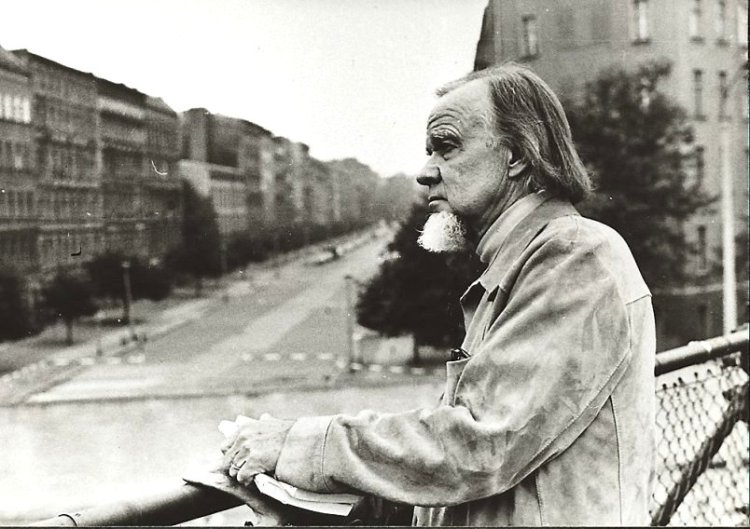
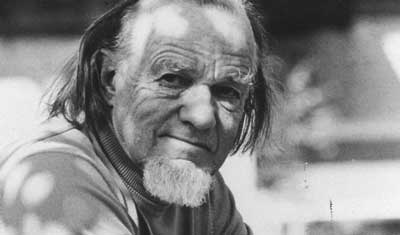
Dr. Francis A. Schaeffer (1912-1984) may very well be one of the most important Christian thinkers of the twentieth century.  Schaeffer graduated from Westminster Theological Seminary and was heavily influenced by J. Gresham Machen, Cornelius Van Til, and the Dutch theologian Abraham Kuyper.

In 1948, after a ten year pastorate in the United States, he moved his family to Switzerland to engage in missionary work.  In 1955, Dr. and Mrs. Schaeffer founded L’Abri in a small mountain village in Switzerland.  French for “shelter,” L’Abri became a refuge for people in need of spiritual help.  The Schaeffers were especially interested in people who sought answers to basic philosophical and metaphysical problems.  He writes, “To the best of my ability I gave the Bible’s answers.  But all the time I tried to listen and learn the thought forms of these people.  I think that my knowledge, whatever it is, is formed from two factors: 1) Forty years of hard study, and 2) Trying to listen to the twentieth century man as he talked” (Eternity, March 1973).  Schaeffer’s keen ability to listen carefully and engage the intellect of these people became a primary factor that contributed to his success.

Students came to L’Abri from varied backgrounds – philosophy, medicine, architecture, science and theology.  The Schaeffers ministered to college professors, students, pastors, engineers and lawyers to name a few.  The common thread among all L’Abri visitors was a thirst for truth.  These people sought answers to the basic questions of life:  Who am I?  Where am I going?  What is my purpose in life?  How does God fit in the scheme of things?

The stated purpose of L’Abri is “to show forth by demonstration, in our life and work, the existence of God” (L’Abri, 16).  L’Abri continues to operate and fulfill the vision of Francis Schaeffer even over twenty-five years after his death.  The ministry of L’Abri may also be found in Holland, Australia, England, Sweden, India, South Korea and Massachusetts.

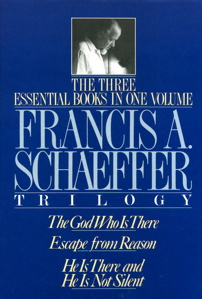
Francis Schaeffer published his first book, The God Who Is There in 1968.  He subsequently wrote twenty-two books which have been translated into more than twenty-five different languages.  A common unifying theme runs throughout Schaeffer’s books, namely, “the Lordship of Christ in the totality of life”  (The Great Evangelical Disaster, 303).

In the days to come, my goal is to expose readers to Francis Schaeffer and pay particular attention to his views on apologetics and the nature of the church.

Veritas et Lux!

SONGS OF THE NATIVITY – John Calvin (1562)

Songs of the Nativity by John Calvin is a collection of sermons taken from Luke 1 and 2. These sermons providecalvin an inside look at the commitments of the great Protestant Reformer. The sermons demonstrate Calvin’s handle on Scripture and his exegetical skill. But above all, these sermons reflect the love that Calvin had for the Savior in his earthly life.

Selected Quotes

“So whenever we speak about what God has done, we should strive to show how much we depend on him alone, and how all we have comes freely from his bountiful hand.”

“Woe to us if, in men’s eyes, we outrank the angels and enjoy the world’s praise, but fail to trust God!”

“God declares that all is misery unless our minds are firmly fixed on his word, and unless we recognize that to be blessed is to know his favor and to become a child of his.”

“When we have learned to rejoice in God, we will be free to praise him with a willing spirit, a loosened tongue and an untrammeled mind. If we would be consecrated to God as priests whose sacrifice brings glory to his name, we must rejoice in him.”

“Just to feel joy is simplicity itself. That is what the children of this world do all the time. But to rejoice in God is impossible until we experience the love he has for us, and until we know that he will not desert us but will lead us on to the end.”

“So however many troubles and trials may beset us, whatever sorrows and vexations we may feel, God’s peace is bound to prevail. Nothing should stop us rejoicing in him.”

Summary

Songs of the Nativity is a fitting devotional tool for the Christmas season. Readers will be blessed by one of the greatest expositors in the history of the church. Soli Deo gloria!

WHAT WE BELIEVE – R.C. Sproul (2015)

sproulWhat We Believe, by R.C. Sproul captures the essence of the well-known Apostles’ Creed. Dr. Sproul alerts readers in the preface, “The renewed mind is initiated by the immediate, sovereign, supernatural work of God, the Holy Spirit, in regeneration. It is developed by the continued operation of the Spirit in the soul and by feeding upon the Word of God.” Such an initial statement accomplishes much but in general, Sproul draws a theological “line in the sand” by directing the attention of the reader to the core of the Reformed faith.

The author patiently invites readers on a guided tour of the Apostles’ Creed, pausing at various junctures for more in-depth instruction. Readers familiar with Sproul’s writing will appreciate his careful explanation of church history and the relationship of the Creed to the discipline of systematic theology.

What We Believe contains enough meat for seasoned believers but is also appropriate for newcomers to the Christian faith.

I received this book free from the publisher. I was not required to write a positive review.

Do More Better: A Practical Guide to Productivity – Tim Challies (2015)

challiesHere’s a lofty claim: “I believe this book can improve your life.” This is a claim we’ve all heard before. Infomercials, hucksters, and television preachers make similar claims. The net result is generally less than satisfying. The consumer usually walks away from such a claim with a lighter wallet, a bruised ego, and more skepticism to boot.

Tim Challies is hedging his bets in his new book, Do More Better: A Practical Guide to Productivity. He believes that lives will be changed if readers will invest a bit of time in his book.

Do More Better (DMB) is a fitting title as the author sets out to help readers lead more productive lives. But DMB should not be confused with the typical self-help books that saturate most book stores. It should not even be compared to some of the most popular books on the discipline of productivity. Works like The 7 Habits of Highly Effective People by Stephen Covey, What’s Best Next by Matthew Perman, or Getting Things Done by David Allen made their respective contributions in the field of productivity.

But DMB truly stands alone in a sea of books that promise productivity. The author argues that our lives must begin with a solid foundation. Ultimately, this foundation must rest on a commitment to glorify God and enjoy him forever. Glorifying God involves doing good works and making God look good. In typical Reformation fashion, the author reminds readers that good works are only possible because of Christ’s completed work on the cross.

So the author encourages readers to establish productivity on the solid rock of the gospel. Indeed, this is the highest form of productivity, namely, a life that “glorifies God by doing good to others.” This lofty aim is what sets DMB apart from other books on productivity.

Challies highlights several barriers to productivity, what he calls “productivity thieves.” Readers are encouraged to structure and organize their lives so they can do “maximum good for others,” which in turn brings maximum glory to God. The call to Christian character is a dominant theme here. The author argues, “No amount of organization and time management will compensate for lack of Christian character, not when it comes to this great calling of glory through good – bringing glory to God by doing good to others.”

Next, DMB urges readers to define their responsibilities and their roles. Responsibilities are general items such as personal, family, and church. Roles are more specific. For example, personal roles may include spiritual fitness, physical fitness, administration, etc.

Readers are then encouraged to write a purpose statement for each area of responsibility. Challies gives helpful examples to help assure success in this area.

Three tools are recommended for maximum productivity: a task management tool, scheduling tool, and information tool. Challies points readers to digital tools that will help and encourage personal productivity. Specific action steps are spelled out for each tool. Ultimately, readers are challenged to “live the system” that is presented in the book.

I have been reading about personal productivity for nearly twenty-five years. I have benefited from some of the works mentioned earlier. But once again, Do More Better: A Practical Guide to Productivity, by Tim Challies truly stands alone. Three features set this book apart. This work is God-centered, practical, and offers users immediate help that is sure to boost personal productivity. I commend this excellent work and trust that God will use it to encourage many people!

I received this book free from the publisher. I was not required to write a positive review.

Awe: Why It Matters For Everything We Think, Say – Paul David Tripp (2015)

trippSome books are meant to be read. Others are meant to be devoured. Paul David’s Tripp’s new book is of the later sort. Awe: Why It Matters For Everything We Think, Say, And Do is a soul-searching work that draws readers in, grabs them by the throat, shakes them around, molds and transforms their hearts – with the ultimate aim of setting them free to serve, worship, and glorify the God of the universe.

Dr. Tripp argues with Scripture that God’s goal is for creatures to be “in awe of his creation, but that awe cannot and should not be an end in itself.” “Where you look for awe,” says Tripp, “will shape the direction of your life.”

The author helps readers understand their position between the “already” of Adam’s sin and the “not yet” of final redemption. Our current position is where the war ensues. While sinners struggle with what Tripp calls “awe wrongness” (AWN), namely, misplaced awe, God patiently draws people to himself so they might find their satisfaction in him.

Dr. Tripp repeatedly shows how people turn to awe-substitutes to find satisfaction, a sure-fire road to depression, frustration, and meaninglessness. “Only grace can give us back our awe of God again,” writes Tripp. This marvelous grace principle dominates the book and urges readers to find their satisfaction, i.e. awe in Christ alone.

Tripp’s book is a real gem. Some Christian books are descriptive. Many are prescriptive. But very few Christian books these days include a deep, transparent, admission of personal struggle. That is to say, very few Christian writers these days admit weakness, struggle with temptation, propensity to fearfulness or anxiety, and the like. Paul David Tripp speaks clearly and biblically. But he also shares from the depth of his heart. He shares about his struggles. He shares his weaknesses. He admits that the ministry is often times lonely. He confesses his secret hope to “throw in the towel.” This kind of transparency is difficult for most writers. Indeed, it is difficult for most Christ-followers. So the author should be commended for his candid and transparent approach.

“Spiritual growth is about recapturing your awe,” writes Dr. Tripp. Here lies the essence of the book, a theme that emerges throughout this fine work. Awe: Why It Matters For Everything We Think, Say, And Do may be the most important book of 2015. I trust that many will read, wrestle, digest, absorb, and be awakened to the beauty and majesty of Jesus Christ – the only One worth of our worship. Indeed, our awe should be found in him alone!

I received this book free from the publisher. I was not required to write a positive review.

AWAKENING THE EVANGELICAL MIND – Owen Strachan (2015)

mindIn the late 1940’s, V.W. Steele resigned as the Senior pastor at Bethel Baptist in Everett, Washington. He stepped away from his pulpit at the height of a revival as he felt prompted by God to move to another ministry. He loaded up the car with his young family made the long journey to Los Angeles. Providentially, he was commissioned by Charles Fuller to partner together and preach the gospel in Idaho, Montana and North Dakota. Pastor Steele was my grandfather, so I have a particular interest in his venture with Charles Fuller, the popular preacher on the Old Fashioned Revival Hour radio broadcast.

My grandfather pastored churches in a day where the battle lines were drawn. He lived in a day when men were willing to lose life and limb for the sake of doctrinal convictions. But he also lived in a day when the church was in a titanic struggle against the cultural monster of modernism.

Dr. Owen Strachan’s book, Awakening the Evangelical Mind provides an invaluable service for the church as he explores where the battle lines were drawn and introduces readers to the key players. These neo-evangelicals, including Harold Ockenga, Carl Henry, Billy Graham, and others helped establish the Christian mind in a culture awash in a sea of modernism.

Strachan traces the evangelical trajectory of these seminal thinkers by guiding readers through key historical turning points and decisions that were decisive for the establishment of the Christian mind in America. The author demonstrates how select Christian colleges and Seminaries were launched and the men who envisioned them. These are important historical details that the author skillfully tells; stories that have either been forgotten or worse yet, never heard!

R.C. Sproul and Mark Noll have both lamented about the decline of the Christian mind. Strachan’s excellent work is a much-needed corrective and salve for the soul. Strachan is eager to prop up the long history of the evangelical mind and optimistic about its future: “If the evangelical mind is not always appreciated, this simply cannot be because it does not exist. It does exist, and its contributions over two millennia are monumental.”

The author argues that evangelicals face some important decisions in the days ahead:

The church faces a profound choice: it can retreat and huddle, nursing its wounds as it accepts its intellectual marginalization. Or, it can learn once more from Ockenga, Henry, Graham, and the Cambridge evangelicals, and promote outstanding education that not only engages the questing heart but freshly awakens the evangelical mind.

Awakening the Evangelical Mind is a call to the next generation of Christian leaders to lead with biblical conviction and bold courage; to continue the legacy that was established by some great men of the faith.


A LOST GOD IN A LOST WORLD – Melvin Tinker (2015)

tinkerAugustine sounded the alarm in his magisterial work, The City of God.  The date was 426 A.D. Augustine’s battle cry alerted Christ-followers to the beauty, majesty, and sovereignty of a holy God.

Melvin Tinker sounds another alarm in his new book, A Lost God in a Lost World. His intent is to articulate the sobering truths that concern the lostness of people and to magnify the greatness and glory of God with the aim of encouraging Christ-followers to cling tenaciously to the Gospel of Jesus. They will, in the final analysis, be emboldened to stand strong in the grace which is found in their Savior. The author adds, “We shall become more effective instruments of righteousness in his hand for the salvation of many and the glorification of his name.”

Tinker diagnoses the problem and points his finger in the right direction – straight at idolatry. Calvin identified the propensity of people to turn to idols by describing their hearts as “idol factories.” The author elaborates on this problem which continues to plague humanity: “When we turn away in our hearts from the one true God we engage in a cheap exchange, swapping the one who is of infinite weight and worth for something which is empty and worthless.”

The remainder of the book describes the God-centeredness of God – the God who is crucified, the God who enters a life, the God who is proclaimed, the God who is embraced, the God who returns, and the God who makes all things new.

Tinker summarizes his excellent work in a concluding remark:

We have called this book, A Lost God in a Lost World because in the West an awareness of the real God has been lost and replaced by idolatrous thoughts with the result that people are lost, that is, they become disoriented, dissatisfied and detached form God and so from reality. It is not coincidental that this ‘loss of God’ and ‘loss of reality’ has gone hand in hand with a loss in the belief of heaven and hell – the ultimate realities.

Tinker’s work is a solid piece of work that will serve Christians well and will especially serve new comers to the Christian faith.

I received this book free from the publisher.   I was not required to write a positive review.