Five Lies of our Anti-Christian Age – Rosaria Butterfield

Rosaria Butterfield, Five Lies of our Anti-Christian Age (Wheaton: Crossway Books, 2023), 344 pp.

The devil is the great deceiver. Jesus says the devil “was a murderer from the beginning, and does not stand in the truth, because there is no truth in him. When he lies, he speaks out of his own character, for he is a liar and the father of lies” (John 8:44, ESV). The world believes these lies and is blind to the truth of God’s Word. Rosaria Butterfield addresses some of these lies in her most recent book, Five Lies of Our Anti-Christian Age.

The author is quick to point out that her book is not a comprehensive description of all the lies in our world. But the five lies she surveys are an accurate representation of the kind of deception that has our culture by the throat. These lies have fooled the world and tragically as Butterfield writes, “have found a home in evangelicalism.” The five lies include:

  1. Lie #1: Homosexuality is normal.
  2. Lie #2: Being a spiritual person is kinder than being a biblical Christian.
  3. Lie #3: Feminism is good for the world and the church.
  4. Lie #4: Transgenderism is normal.
  5. Lie #5: Modesty is an outdated burden that serves male dominance and holds women back.

Butterfield reveals what these lies have in common: “They don’t think that God had a plan and purpose when he created men and women.” Of course, the stated purpose of men and women is summed up in the first chapter of Genesis:

“So God created man in his own image, in the image of God he created him; male and female he created them. And God blessed them. And God said to them, ‘Be fruitful and multiply and fill the earth and subdue it, and have dominion over the fish of the sea and over the birds of the heavens and over every living thing that moves on the earth.’” (Genesis 1:27–28, ESV)

The author writes with a two-fold strategy: First, she summarizes and defends the biblical role of men and women. In the end, as Dr. Butterfield writes, “We are of no good to God or our loved ones if we believe the lies the culture feeds us about what it means to be a man or a woman.”

Second, she exposes the five lies and subjects them to the truth of Scripture. Each lie is explained and exposed through a biblical framework. As a former lesbian activist, Dr. Butterfield brings a depth of perspective and understanding that most people simply don’t possess. She is eager to confront the five lies and offer hope to people who have been deceived by the evil one.

The Five Lies of Our Anti-Christian Age is a much-needed response in our age of religious pluralism and compromise. The arguments are clear and compelling. The reasoning is sharp and biblical. The author’s heart for hurting people shines on every page. This is required reading for every follower of Christ!

I received this book free from the publisher. I was not required to write a positive review.

Reviving the Lost Art of Letter Writing

Once there was a day when the nib of a pen would intersect with a piece of paper, revealing the contemplations of a thoughtful person. The end result would yield a letter that would inspire a willing recipient and breathe fresh courage into a human soul.

Less than 200 years ago, letter-writing flourished in the American colonies. Yet, the convenience of technology has all but extinguished the power of the pen. The convenience of text messages and emails have replaced the personal touch of the letter. Indeed, the art of letter writing is nearly dead. For this reason, it is time to revive the lost art of letter writing.

A Rekindled Friendship

The strained friendship between John Adams and Thomas Jefferson is well known and documented. Thankfully, Dr. Benjamin Rush intervened and convinced Adams to renew his friendship with Jefferson. The second president of the United States responded with a letter to Jefferson. Subsequently, the two men exchanged letters back and forth until their respective deaths, which occurred on the same day – July 4, 1826. The power of pen and ink combined with some thoughtful words supercharged a friendship on the brink of collapse.

A Rekindled Art

A handful of letters have arrived in my mailbox over the past several years that left a meaningful mark and provided much-needed fuel to propel me in a Godward direction:

  • An affirming letter from my father
  • A letter of personal counsel from Dr. John Piper
  • A letter of encouragement from my grandfather, Samuel Barger
  • A letter from Pastor Wayne Pickens, who mentored me in the defining years of pastoral ministry

One letter from my 89-year-old friend, Bruce who recently went to be with the Lord sits permanently in my study:

“Knowing you is to learn, as our Lord measures it, more than just the message of Scripture. You sow also of yourself in His name. More than His word you teach by example, tireless sacrificial giving for His glory and in furtherance of His love …”

Each of the letters above are safely preserved and serve as a permanent reminder of a special time in my life.

Opening a timely and encouraging letter is like receiving oxygen at the summit of Mt. Everest after a grueling climb. It is like salve on a wound in need of healing. A letter is a welcome guest that is never turned away.

It is not too late to revive letter writing in our generation. I suggest we revive the art of letter writing for at least five reasons.

1. Personal Touch

First, a letter is personal. Taking time to compose words on a page, sealing the letter in an envelope, and dropping it in the mail involve a series of additional steps and effort but the payoff is worth it. The personal touch of a letter deeply impacts the one who receives it.

2. Powerful Memories

Second, a letter helps enshrine memories that preserve friendships, provide a permanent record of significant thoughts, and instill hope for the future. When I read a memorable letter, it helps recall significant thoughts and feelings that may have otherwise been forgotten.

3. Permanent Keepsake

Third, a letter becomes a personal and powerful memento. An email can be cataloged in Evernote or saved in some other digital format. An email can even be printed and tucked away for future reference. But an email can never replace the special quality of the written letter.

4. Portrays Selflessness

Next, a letter is an act of selflessness. It takes a certain amount of discipline, time, and creativity to craft a meaningful letter. Such a pursuit, then, involves an intentional act of kindness or selflessness as the one composing the letter must think of others before herself. One might say that letter writing is a way of fulfilling the Golden Rule: “Do to others whatever you would like them to do to you. This is the essence of all that is taught in the law and the prophets” (Matthew 7:12, NLT).

5. Proclaims a Blessing

Finally, a letter is a way of proclaiming a blessing. At the heart of a blessing is the need for acceptance. “Genuine acceptance,” writes John Trent, “radiates from the concept of the blessing.”1 A letter has a way of unleashing a person to become all that God intends them to be. It is a way of communicating the kind of support that is empowering and life-changing. A letter has a way of inscribing an indelible seal of blessing on the soul of one of God’s image-bearers.

black and silver fountain pen

A simple letter has the power to inspire hope, instill confidence, and initiate action. A letter communicates devoted love and lifts the human spirit. A letter unshackles the hands and feet, inspires hearts and minds, and communicates love and support to the people we care about.

Reviving the lost art of letter writing begins with you. Who will you influence or encourage today with a simple letter? Who will be the recipient of your timely wisdom or counsel? Who will be inspired to take a step into the great unknown because they received a letter from you? Who will be challenged by your courageous words? Whose life will be changed forever because you took the time to craft a well-thought-out letter? Let us, then, revive the lost art of letter writing – one letter at a time.

  1. John Trent, The Blessing (Nashville: Thomas Nelson, 1986), 28.

All That Jesus Commanded: The Christian Life According to the Gospels

John Piper, All That Jesus Commanded: The Christian Life According to the Gospels (Wheaton: Crossway Books, 2023), 400 pp.

Day by day, our culture grows progressively more averse to the law of God. Even in some churches, any demands are written off as narrow, petty, and legalistic. Some professing Christians, in an effort to be gracious, make the mistake of saying that the Word of God doesn’t contain imperatives. Nothing could be further from the truth. Kevin DeYoung reminds us, “There is nothing sub-Christian in talking about obedience to God’s commands. There is nothing inherently anti-gospel in being exhorted to keep the imperatives of Scripture. There is nothing ungracious about divine demands. Just the opposite, in fact – there is grace in getting law” (The Hole in Our Holiness, 52). He adds, “Both the indicatives of Scripture and the imperatives are from God, for our good, and given in grace” (The Hole in Our Holiness, 55).

In John Piper’s newly revised work, All That Jesus Commanded: The Christian Life According to the Gospels (formerly, What Jesus Demands from the World), the author demonstrates (much to the chagrin of some evangelicals) that Jesus not only makes demands, he does so many times in the gospels. The central theme is this: ”God gives the grace for what he demands.” In other words, whenever Jesus commands or makes a demand, he doesn’t leave God’s people without the necessary resources to carry out his commands. He gives grace for what he demands!

Piper’s work includes fifty demands that emerge in the pages of Scripture. Each chapter clearly outlines the demand and presents the pertinent theological rationale behind the demand. As already noted, readers are encouraged by the fact that God’s grace is granted which enables them to obey.

All That Jesus Commanded is a weighty book. It is a book that is designed to be read slowly and reflectively. Some may be surprised that instead of being burdened with guilt they will be confronted with the power of the gospel. Yes, readers will be challenged. Yes, readers will be convicted. Yes, they will be confronted with the many ways they fall short of God’s glory. But in the final analysis, they will be comforted with the fact that God grants grace for everything his Son demands!

This book should be required reading for new believers and those who have walked with Christ for many years. It is an entry-level book for beginners and a much-needed tool for those who are veterans of the Christian faith. Tole lege!

I received this book free from the publisher. I was not required to write a positive review.

The White Flag ebook – Only $2.99

For a limited time, the Kindle version of The White Flag: When Compromise Cripples the Church is only $2.99!

These are troubling times. We live in a day that is marked by theological error and apostasy. Leaders are falling, truth is routinely maligned, and compromise is celebrated. A glance across the cultural milieu reveals an unfurled white flag. The white flag has been hoisted high and a diabolical deal has been struck. This flag reveals a horrifying reality that must be addressed, namely – the final surrender of the church.

The White Flag: When Compromise Cripples the Church diagnoses our current condition and offers biblical action steps for marching forward in a way that glorifies God. It is a call to faithfulness in an age that is characterized by weak knees, passivity, and capitulation. It instills courage in weary Christ-followers who toil in a post-Christian era.

“Here is a passionate call from a pastor’s heart, from a man widely read, who sees with great clarity the difficult situation the church now faces, with opposition without and weakness and compromise within, who believes the battle will be won by the faithful believing and by the courageous teaching and proclaiming of the Word of God.”

  • DR. PETER JONES, Director, TruthXchange; author of The Other Worldview, Escondido, CA

THE JONAH COMPLEX

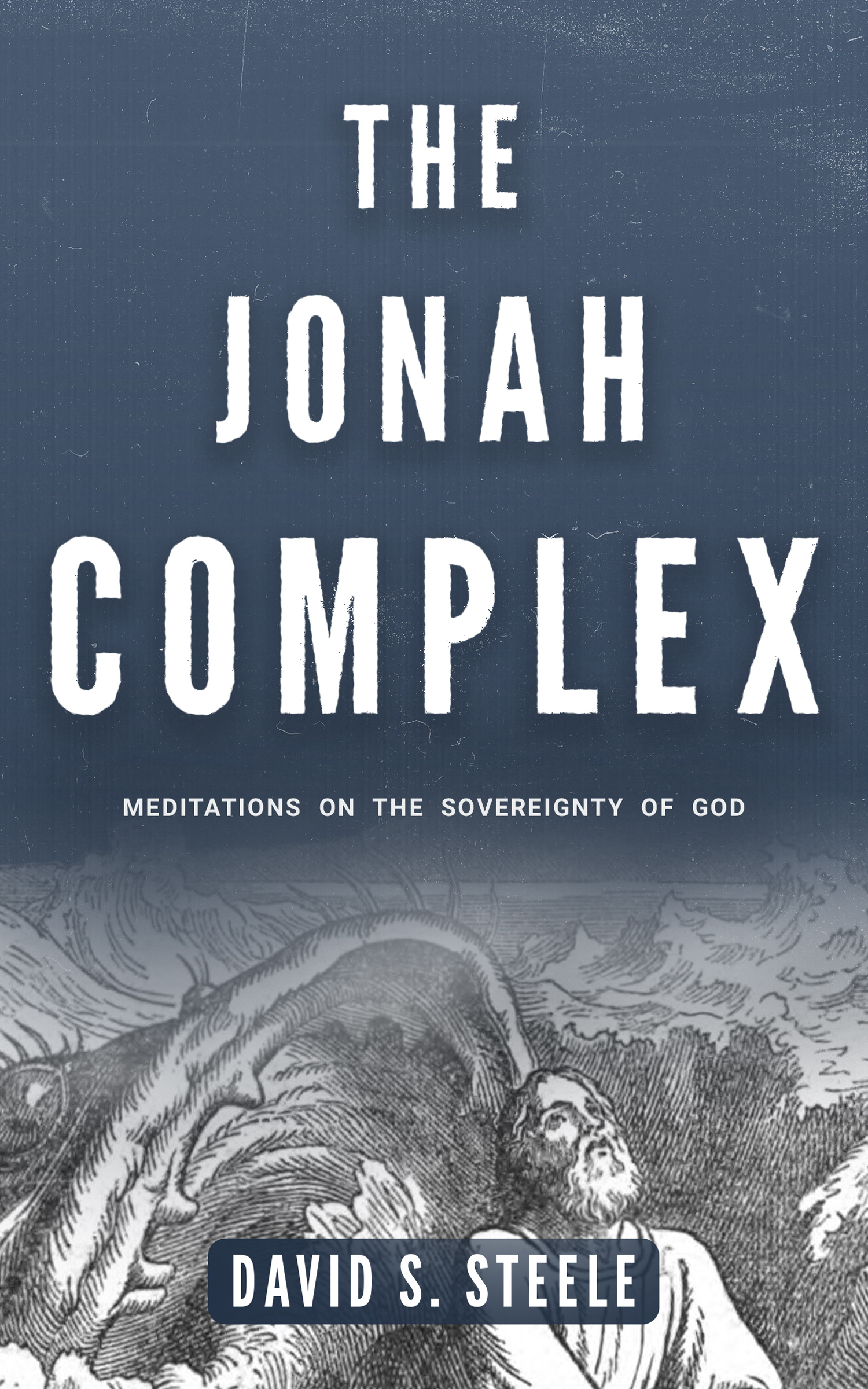
The paperback version of my newest book, The Jonah Complex: Meditations on the Sovereignty of God is available now! The Kindle version may be pre-ordered as well, which will drop on August 14.

The affirmation of Psalm 115:3 echoes throughout the created order.

“Our God is in the heavens; he does all that he pleases.”

The book boldly proclaims the unwavering sovereignty of God, exalts the Creator of the cosmos, and calls all creatures to stand in awe of his regal majesty.

The Jonah Complex: Meditations on the Sovereignty of God is designed to bolster your confidence in God. It is designed to acquaint you with a God who is sovereign over all. And in the end, the aim is to prompt deep trust, delight, and worship in the triune God and his purposes for his people.

A Walk Across the Sun – Corban Addison

In the nineteenth century, the British politician, William Wilberforce began a movement that led to the abolition of the slave trade.  His robust Christian faith fueled his 1402792808_bresolve to see tyranny destroyed and people created in the imago Dei set free.  Today, there are 27 million slaves in the world.  1.2 million are children, enslaved by the sex trade industry in India.  These horrifying realities are a painful reminder of the sin that pollutes our world; they harken back to the days of Wilberforce.  Yet today, very few appear willing to pick up the cause that Wilberforce began.

First time author, Corban Addison delivers a heart-wrenching, mind-rivetting, spine-tingling thriller that exposes the human trafficking/sex trade industry in his novel, A Walk Across the Sun.  Readers should be forewarned that this novel is not for the faint at heart.  The author paints a grizzly portrait of the underworld; a world that exploits women and children and panders to the diabolical deeds of men.

I can’t say enough about Corban Addison.  He writes with Grisham-like precision which ultimately leads to a redemptive end.  He gives enough details to educate readers to this horrifying industry which carries the ultimate aim of involvement, reformation, and the obliteration of slavery around the world.  The book is a mixture of unmitigated evil and unvarnished beauty.

Many thanks to my friends, Ron and Mark for alerting me to this book.  I’ll never doubt you again!

The Christian Mind – Harry Blamires

My uncle Dwight gave me this book almost thirty years ago.  I’ll never forget what he said when he handed it to me: “Only real men can read this book.”  Whether it was meant to motivate or amuse, I read it with a vengeance.  This is my third time through.

Blamires thesis is clear throughout the book: “There is no longer a  Christian mind.”  An interesting proposal, given the original publishing date of 1963.  But the facts outweigh any contrary argument.  The author notes, “And we have emptied our brains of Christian vocabulary, Christian concepts, in advance, just to make sure that we should get fully into touch.  Thus we have stepped mentally into secularism.”  We live in a post-Christian era.  This much is certain.  The frightening reality is that some Christians understood this in the 1960’s.  Many Christians today simply have no comprehension of the Christian mind.

In part two, the author suggests  what the Christian mind should look like.  He delineates six marks of the Christian mind which include:

1. A supernatural orientation.

2. An awareness of evil.

3. A conception of truth

4. Accepts the notion of authority

5. Has a concern for the person

6. Has a passion to live life to the glory of God.

The Christian Mind should be celebrated for its analysis of culture and its allegiance to the Word of God.  Like Francis Schaeffer, Blamires is in touch with the barriers to Christian thinking.  While his concerns originated in 1963, they continue to reverberate almost fifty years later.

The point my Uncle was trying to make is this: Real men think Christianly.  Real men live according to truth.

“The Christian mind is the prerequisite of Christian thinking.  And Christian thinking is the prerequisite of Christian action.”

Harry Blamires

When the Gavel Falls

It has been said that one of the greatest problems that plague contemporary people is unresolved guilt. Sin squeezes the life out of unwitting victims. Sins of omission, sins of commission, sins of regret, neglect, fear, ungodly anger, broken relationships, and insubordination pose a massive threat to the well-being of well-meaning people.

No one is excluded from this sinful parade. We have all committed sin. We are sinners by nature and by choice – and as a result, guilt rears its ugly head. Sometimes the guilt waits to surface until we’re all alone. For some of us, guilt is a constant note on the musical scoresheet of our lives. For others, the only time we feel guilt is when we hear a preacher remind us about our sin.

Here is the problem: Apart from the grace of God, we all stand before the bar of God’s justice – and we stand condemned. Apart from the grace of God – we are guilty.

The sound of the gavel is unmistakable in a courtroom setting. When the gavel falls, it reminds us that a verdict has been reached. It announces the guilt or innocence of the defendant.

In 1 John 2, the apostle John ushers us into the celestial courtroom and answers the question, “What is the greatest need of sinners when the gavel falls?” As we enter the heavenly tribunal, I invite you to encounter the divine standard and the divine representative.

THE DIVINE STANDARD

If you ever have the opportunity to attend a trial in a courtroom one of the first memories you will have is when the Judge enters the courtroom. The bailiff announces, “All rise!” John the apostle introduces the presiding Judge of the universe in 1 John 1:5. He writes, “This is the message we have heard from him and proclaim to you, that God is light, and in him is no darkness at all.”

The Presiding Judge of the Divine Standard

He is the majestic God of the universe. The psalmist proclaims, “O Lord, our Lord, how majestic is your name in all the earth! You have set your glory above the heavens” (Ps. 8:1, ESV). Moses says, “Who is like you, O Lord, among the gods? Who is like you, majestic in holiness, awesome in glorious deeds, doing wonders?” (Exod. 15:11).

He is the transcendent God of the universe. “For thus says the One who is high and lifted up, who inhabits eternity, whose name is Holy: “I dwell in the high and holy place, and also with him who is of a contrite and lowly spirit, to revive the spirit of the lowly, and to revive the heart of the contrite” (Isa. 57:15).

He is the sovereign God of the universe. The psalmist reminds us, “Our God is in the heavens; he does all that he pleases” (Ps. 115:3,). Daniel 4:34-35 says, “At the end of the days I, Nebuchadnezzar, lifted my eyes to heaven, and my reason returned to me, and I blessed the Most High, and praised and honored him who lives forever, for his dominion is an everlasting dominion, and his kingdom endures from generation to generation; all the inhabitants of the earth are accounted as nothing, and he does according to his will among the host of heaven and among the inhabitants of the earth; and none can stay his hand or say to him, “What have you done?””

And he is the holy God of the universe. “This is the message we have heard from him and proclaim to you, that God is light, and in him is no darkness at all” (1 John 1:5). The psalmists adds, “But the Lord sits enthroned forever; he has established his throne for justice, and he judges the world with righteousness; he judges the peoples with uprightness” (Psalm 9:7–8). The heavenly Judge has the authority to issue the particulars of the divine standard. This is the divine standard we turn our attention to.

The Particulars of the Divine Standard

John gives his readers an inside look at the motivation for his writing: “My little children, I am writing these things to you so that you may not sin …” (v. 1). John calls his readers to live holy lives, what he refers to as “walking in the light.” Notice the particulars, then, of this divine standard.

First, the call to holiness began in eternity past. Scripture reveals that God chose his people before the creation of the cosmos: “Even as he chose us in him before the foundation of the world, that we should be holy and blameless before him …” (Eph. 1:4).

Second, we are called out of darkness to proclaim the excellencies of God. “But you are a chosen race, a royal priesthood, a holy nation, a people for his own possession, that you may proclaim the excellencies of him who called you out of darkness into his marvelous light” (1 Pet. 2:9).

Third, we are called to conduct ourselves in a holy manner. “As obedient children, do not be conformed to the passions of your former ignorance, but as he who called you is holy, you also be holy in all your conduct, since it is written, “You shall be holy, for I am holy”” (1 Pet. 1:14–16).

The heart of the apostle John is to communicate the divine standard to Christians: “so that you may not sin.” Indeed, this is God’s standard – this is the divine standard. But there is a problem we must acknowledge: we do sin (1 John 1:5-10).

To sin means to miss the mark, specifically in our relationship to God. The Westminster Shorter Catechism says, “Sin is any want of conformity unto, or transgression of, the law God.”1 “Sin is disobedience to God’s revealed law,” writes Martyn Lloyd-Jones.2 And John Piper summarizes, “What does not come from satisfaction in God, and through the guidance of God, and for the glory of God, is God-less – it is sin.”3

Since we fail to the divine standard in every respect, John introduces the Divine Representative.

THE DIVINE REPRESENTATIVE

The apostle John presents three marks of the Divine Representative: “My little children, I am writing these things to you so that you may not sin. But if anyone does sin, we have an advocate with the Father, Jesus Christ the righteous” (1 John 2:1).

First, Jesus is righteous. The author of Hebrews helps us understand that the Divine Representative is sinless: “For we do not have a high priest who is unable to sympathize with our weaknesses, but one who in every respect has been tempted as we are, yet without sin” (Heb. 4:15). Jesus is without sin. Jesus is righteous.

Second, Jesus stands face-to-face with the Father. In the Gospel of John, in the book that bears his name, the apostle writes, “In the beginning was the Word, and the Word was with God, and the Word was God” (John 1:1). The preposition translated “with” comes from the Greek term prós which means “face-to-face.” From all eternity, Jesus has been with the Father.

Third, Jesus is our Advocate. An advocate is a helper or an intercessor. An advocate acts as a representative for someone. In this case, the advocate stands before the Father and represents sinners like you and me. This Advocate stands in our defense. He pleads our case. Lloyd-Jones adds, “Unlike a defense attorney who may argue that his client is innocent of all charges, this defense attorney recognizes your guilt before God. The Advocate turns to the Father and says, ‘… I am here just to remind You that the law has been fulfilled, that the death has died, the punishment has been enacted; they are free because I died for them.”4

And so we fail to meet the divine standard. The Divine Representative stands in our defense. All these things clear the path for the divine accomplishment, which John unfolds in 1 John 2:2 – “He is the propitiation for our sins, and not for ours only but also for the sins of the whole world” (1 John 2:2).

When the gavel falls, a verdict will be rendered. Will you bear the weight of your sin and thus, endure 10,000 degrees of white-hot wrath? Or will you trust Jesus to stand in your defense? When the gavel falls, will you stand condemned or will Christ’s sacrificial death pardon you, grant peace (Rom. 5:1), and welcome you into his presence where you will enjoy the pleasures of God forever (Ps. 16:11)?

  1. Westminster Shorter Catechism, Question 14.
  2. Martin Lloyd-Jones, Walking With God (Wheaton: Crossway Books, 1993), 14.
  3. John Piper, Future Grace (Sisters: Multnomah Books, 1995), 324.
  4. Lloyd-Jones, Walking With God, 15.

Gospel-Shaped Marriage: Grace for Sinners to Love Like Saints – Chad and Emily Van Dixhoorn,

Chad and Emily Van Dixhoorn, Gospel-Shaped Marriage: Grace for Sinners to Love Like Saints (Wheaton: Crossway Books, 2022), 155 pp.

Gospel-Shaped Marriage: Grace for Sinners to Love Like Saints by Chad & Emily Van Dixhoorn is a short, encouraging book that leads couples on a God-honoring path that is illuminated by the light of the gospel. The husband and wife team unveils the biblical context of marriage, which is grounded in covenant and unfolds several practical principles for mirroring the triune God.

The authors helpfully define submission as “respect that leads to serving.” However, the emphasis on the notion of “mutual submission” weakened the overall argument. I urge readers to refer to Recovering Biblical Manhood and Womanhood: A Response to Evangelical Feminism, edited by Wayne Grudem and John Piper for a different perspective.

Overall, though, the book is helpful and encouraging. The essence of the book may be summed up in one critical sentence: “Let it be the prayer of every Christian person reading this book that the marriages in their church will serve as a wonderful picture of the gospel and that this gospel will be the most important thing in our marriages.” In other words, the gospel drives this book and fuels marriages that honor the Lord Jesus Christ.

I received this book free from the publisher. I was not required to write a positive review.

The Loveliest Place – Dustin Benge

Dustin Benge, The Loveliest Place (Wheaton: Crossway Books), 2022), 198 pp.

Mention the word “church” in a casual conversation. The opinions offered will likely render a broad range of adjectives. Some people have been wounded in the church. Some people feel used by the church. Others feel that the church has run its course in this world.

The Loveliest Place by Dustin Benge offers a perspective on the church that is encouraging, edifying, heartwarming, and most of all – biblical. The author writes:

This book has one aim: to set before you a thoroughly biblical portrait of the church that derives its life from the sweet fellowship of the Father, Son, and Spirit, creating a community of love, worship, fellowship, and mission, all animated by the gospel and empowered by the word of God.

Benge maintains that the church is beautiful because God is beautiful. He utilizes the exegetical thunder of John Gill who demonstrates an allegorical portrayal that exists between Christ and the church. Benge observes:

The church is beautiful because the lens through which Christ regards her is his cross – the focal point of blood, righteousness, forgiveness, union, justification, regeneration, and grace. His cross makes her beautiful. His perfection makes her beautiful. It is his sacrificial, substitutionary, sinless blood that washes her garments as white as snow. The cross of Christ makes her beautiful not only inwardly by justification but also outwardly through sanctification. From giving second birth to final glory, the righteousness of Christ creates a beautiful church.

This stunning portrayal of the church sets the stage for the remainder of the book where the author presents a series of descriptions including the church as our helper and beautifier, a pillar and buttress of truth, and feeding the flock, to name a few.

To say that The Loveliest Place is breathtaking would be an understatement. Dustin Benge has wonderfully captured the essence of the church in a short book that is eminently readable, accessible, and biblical in every respect.

Highly recommended!

I received this book free from the publisher. I was not required to write a positive review.