The Seventy Sevens – Ping Pong Over the Abyss

The 77’s first album was originally released in 1983.  So why review an album that is over forty years old?  For starters, the album is now available on iTunes. So anyone that has an old crusty cassette and nothing to play it on should be very excited.  Also, the iTunes release gives many listeners a chance to hear these unbelievable notes for the first time.

Ping Pong Over the Abyss engages with worldview themes in a way that is uncommon in Christian circles.  If King Solomon wrote lyrics to a rock album, this is what it would be like.  The album tackles several worldviews in a very straightforward way.  A Different Kind of Light questions the notion of finding “truth within.”

They talk about a light inside you
I hope I never get that blind
I don’t want to take my chances
On joining the collective unconscious
I’m waiting for the clouds to break
I’m looking for the road to take
Don’t want the usual merchandise
Recycled in a new disguise

I’m following a different Light
A different kind of light

It’s So Sad lays bare the worldly philosophy of hedonism and refuses to embrace the lies of Hinduism:

Trying to buy heaven
Right here on earth
The cost will always end up
More than it’s worth
You ponder living
You wonder why
No matter what you do
You’re still going to die

Falling Down a Hole wrestles with a host of worldviews including Buddhism, Islam, Spiritualism, Fatalism, Humanism, Evolution, and Witchcraft:

Humanism
Is a tired old line
The logos is sleeping
Just give it some time
Evolution is preaching
“From monkey to divine”

Renaissance Man is a frontal assault on atheistic evolution and is a powerful musical apologetic:

It’s from “star stuff” that he’s made
It’s the cosmos that gave him life
How does that help him feed the poor
How does that help him love his wife

A renaissance man
Tearing himself from The Rock
A renaissance man
Tearing himself from The Rock

He’s cast away all thoughts of heaven
His science is full of preconceptions
His answers make me ask more questions
How many can wait on evolution

He needs to live
On the sides of the north
In the city of Reformation
That’s where he’ll find his life

This album is definitely not a typical Christian rock album.  The themes are sobering and tap into the meaninglessness of man apart from Christ.  A severe blow is delivered to nihilism, humanism, and hedonism.  Something tells me these guys were reading Francis Schaeffer in the late ’70s!

If you like your music raw and realistic and don’t mind a trip back to the 80s,  Ping Pong Over the Abyss is for you.

Creeds, Confessions, and Catechisms – Chad Van Dixhoorn, Ed

Chad Van Dixhoorn, Ed. Creeds, Confessions, & Catechisms (Wheaton: Crossway Books, 2022), 479 pp.

Creeds, Confessions, & Catechisms is a compilation of the major historical documents that have nurtured the church for the past two thousand years. Chad Van Dixhoorn offers a short explanation of each document, giving the historical context and theological impetus for writing.

Creeds, Confessions, & Catechisms is a much-needed book for our times, especially since theology is being downplayed in so many churches. It is a vivid reminder of the depth and breadth of Scripture and beckons readers to dig deeply into God’s truth.

This beautiful book would be a gift for a graduate or pastor. It is a welcome addition to any theological library.

I received this book free from the publisher. I was not required to write a positive review.

Rejoice in God!

Open the morning newspaper. Watch the evening news. Pay careful attention to the culture that surrounds us. You will be prompted to protest. You will be cajoled to complain. You will feel the steady pull of pundits who invite you to join their campaign. Emotions will range from fear to frustration. Anger dominates much of the time. When anger doesn’t reign, anxiety is sure to take its place.

Followers of Jesus Christ have a higher calling. We must be discerning and live distinctly Christian lives (1 Pet. 1:14-17). A little phrase is tucked away in Romans 5:11 that helps refocus our attention on what really matters:

“More than that, we also rejoice in God through our Lord Jesus Christ, through whom we have now received reconciliation.”

“We also rejoice in God.” This is exactly the opposite of what our culture demands. Rejoicing in God, then, is countercultural. It is also commanded!

Paul’s argument in this unit of thought in Romans chapter 5 ends on a high note. The guilty have been pardoned (v. 9). The condemned have been saved (v. 9). Enemies have been reconciled (v. 10). The posture of rebellion has turned to a posture of joy!

Do you want to impact lives? Do you want your life to be a reflection of God? Do you want to glorify the great God of the universe? Refuse to bow down to the idols of the age. Refuse to get caught up in the pettiness that characterizes our day. Choose today to rejoice in God!

Redeeming Reason: A God-Centered Approach – Vern Poythress

Vern S. Poythress, Redeeming Reason: A God-Centered Approach (Wheaton: Crossway Books, 2023), 181 pp.

Vern S. Poythress never disappoints. His writing has encouraged the hearts and illumined the minds of God’s people for many years now. Dr. Poythress continues down the same path with his new work, Redeeming Reason: A God-Centered Approach.

Poythress argues that sinful creatures need renewed minds and must draw knowledge from the source of knowledge, which is in God. The stated goal of the book, then, is “to explore how human reasoning depends on God.” Depending on God for knowledge involves staying in the confines that he has created and ordained.

Truth is derived via God who exists from all eternity as triune. The author asks, “Can we see expressions of the truth of the Trinity by looking at how God displays himself in the world? And would the truth of the Trinity also be reflected in the nature of human reasoning?”

Poythress pays homage to John Frame as he utilizes Dr. Frame’s well-known perspectivalism. This theological paradigm views the Christian life through three lenses – the situational perspective, the normative perspective, and the existential perspective. This threefold distinction is expressed in God’s lordship in the way he deals with the world – the aspects of authority, control, and presence, respectively.

The author presses further by noting the rationality of the Triune God. He writes, “God is rational. So God the Father is rational. The Son is rational. And the Holy Spirit is rational. yet there are not three rationalities but one.” In short, the Triune God expresses rationality in his very being.

Human rationality draws from the river of knowledge, which is found in God. God utilizes the laws of logic, which are a reflection of his character. Or as Poythress observes, “they reflect his love for himself. The Father loves the Son. He will never deviate from that love. That love is love for the Logos, who also expresses the rationality of God.”

In the end, we find the reality of the Trinity at the very heart of the book. “All human knowledge,” writes Poythress is analogical.” He continues, “Our thinking imitates and reflects God’s thoughts.” We are able to know because God gives us knowledge which causes us to respond in unhindered praise for the greatness of his worth.”

Redeeming Reason exposes the folly of man-centered philosophy but the main thrust is positive and directs readers to know God and to use reason in God-centered ways.

I received this book free from the publisher. I was not required to write a positive review.

Everything is Spiritual – Rob Bell

Rob Bell, Everything is Spiritual (New York: St. Martin’s Publishing Group, 2020), 310 pp.

In 2011, I reviewed Love Wins, my first book by Rob Bell. The piece prompted praise by conservatives and vicious scorn by progressive Christians and liberals. Whatever anyone thinks about Bell, one thing is for sure: the guy can write. He is a master communicator. And whenever he writes or talks, people listen.

Anyone familiar with Rob Bell knows that he is somewhat of a gadfly among evangelicals. And “gadfly” is a massive understatement. But there is something endearing about Bell. Some point to his skill. Others are impressed with his intellect. For me, I’ve always been drawn to Bell’s ability to communicate what he’s truly feeling – including insecurity, childhood pain, or unfulfilled expectations. He identifies a “generational lack of grace,” a trait that is found too often in the church. His transparency is refreshing and his candor is something that is greatly needed in our day.

While I applaud Bell’s transparency, I have expressed deep concern with some of the theological and philosophical assertions that he has proposed. His most recent book, Everything Is Spiritual is no exception. Michael Eric Dyson’s endorsement of the book provides a revealing summary:

“In Everything Is Spiritual, Rob Bell updates Teilhard de Chardin’s Catholic mysticism, makes sexier Werner Heisenberg’s quantum physics, and baptizes Jewish Kabbalah in an exciting vision of the future of human evolution. Bell challenges the notion that science and belief are at war, with his sublime fusion of Christian faith and modern evolutionary science. Bell’s book is the perfect antidote to the plague of an evangelical worldview that is captive to imperial dreams and a literalism that kills the spirit of Christianity …”

I will argue in this review that while Michael Eric Dyson truly does capture the essence of Bell’s intentions in Everything Is Spiritual, the end result is unhelpful and spiritually dangerous. Instead of illumination, readers will be left in a quagmire – with more questions than answers. And they will wander aimlessly in a spiritual wasteland, armed with an inaccurate portrait of God that leaves them hopeless without the biblical gospel.

No Final Answer

One of the common themes in Bell’s writing is ambiguity. He extinguishes certitude and exalts mystery (both of which are fundamental tenets of postmodernism). Careful readers will notice that the author is quick to pay lip service to Christian theology but swiftly degenerates into a subtle (or not so subtle man-made philosophy). The Bible warns, “For the time is coming when people will not endure sound teaching, but having itching ears they will accumulate for themselves teachers to suit their own passions, and will turn away from listening to the truth and wander off into myths” (2 Tim. 4:3-4, ESV).

Tragically, many have been deceived by Bell’s “spirit myths” over the years. For instance, in Bell’s book, What We Talk About When We Talk About God, he argues that God is “with us, for us, and ahead of us – all of us.” The notion that God is “with us,” “for us,” and “ahead of us (every single one of us) may sound good initially but falls short of the biblical model. It is true that God is “with” his people. We see this especially in the incarnation of Jesus, the One who is named Immanuel – or God with us (Matt. 1:23). Yet God is not “with” the man who has rejected the revelation of God in Christ. God is not “with” the one who rejects the Lord Jesus Christ and his gospel. “… Whoever does not obey the Son shall not see life, but the wrath of God remains on him” (John 3:36).

It is true that God is “for us” – that is to say, he is for his people. “For I am sure that neither death nor life, nor angels nor rulers, nor things present nor things to come, nor powers, nor height nor depth, nor anything else in all creation, will be able to separate us from the love of God in Christ Jesus our Lord” (Rom. 8:38–39, ESV). Yet, God is not “for” the man who repudiates the promises and purposes of God. The holy God opposes the proud (Jas. 4:6; 1 Pet. 5:5).

I referred to Paul’s warning in 2 Tim. 4:3-4 again and again as I read Everything is Spiritual. Indeed, doctrine is downplayed and orthodoxy is questioned. But not everything is ambiguous. As he did in Love Wins, Bell dogmatically casts aside the doctrine of hell: “Because some stories are better than others. Stories about a God who tortures people forever in hell shouldn’t be told. They’re terrible stories. They make people miserable. They make people want to kill themselves. Stories that insist that a few human beings are going to be okay and every other human being ever is doomed for eternity are horrible stories.”

In a magical twist, certitude suddenly reappears! Alas, the painful reality is obvious here: Anyone who bemoans doctrine is in fact, dogmatic themselves! It appears, then, that the dogmatic bark is worse than the bite.

No Final Authority

To make matters worse, no final authority is offered in Everything Is Spiritual. It is difficult to determine if Bell embraces pantheism, panentheism or some other theological construct. Whatever the case, the book makes much of God’s immanence and downplays his transcendence.

But what is missing here is a distinction between the Creator and the creature. Missing is a Creator who is sovereign over creation and rules over all. Bell’s account of God is noted in the biblical exchange with Moses who refers to himself as I AM. So far so good. But notice how Bell’s understanding of God undermines the Creator/creature distinction:

Moses wants to locate God, and what Moses gets is Everywhere. Moses wants something to wrap his mind around, and what he gets is All of it.

What an answer. Another way you could say I AM is Being Itself.

That’s past, that’s present, that’s future. All of it. Being Itself, the formless beyond any one form, animating all forms. The electricity the entire thing is plugged into. The water it’s all swimming in.

That’s every you that ever was and ever will be. All your yous.

Later, Bell refers once again to “Being Itself. I AM.” He writes, “You ground yourself in that, and you’re all of it. You root yourself in the source and Spirit beyond all these forms and categories and labels, you listen to that and follow that and you keep going.” Bell refers to this as the “collective unity of humanity,” or “the body of Christ.” He adds, “All of us humans ever, across time, all together, adding up to something. The body of Christ.”

Not only does this line of reasoning militate against the Creator/creature distinction; it misleads readers into believing that they are members of Christ’s body, when the unbelieving world is described as enemies of God and under his holy wrath.

Acts 17:22-31 reveals a Creator God who is the cosmos shaper, the kingdom shaker who lives above creation. He is the all-sufficient Ruler, Life-Giver, and Destiny Maker. And he is the righteous Judge who “commands all people everywhere to repent, because he has fixed a day on which he will judge the world in righteousness by a man whom he has appointed …” (Acts 17:30-31, ESV).

And Scripture speaks of the creature who was created by God (Gen. 2:7). The creatures (Adam and Eve) were originally free from sin but fell and as a result became sinners by nature and by choice (Gen. 3:1-7). As such, these sinful creatures have no inherent righteousness, no desire for God (Rom. 3:10-11). Subsequently, all creatures are born with a hatred in their hearts for God (Rom. 8:7-8). They are dead in sin (Eph. 2:1-3), and they are enslaved in sin; totally unable to come to Christ apart from God’s empowerment (John 6:44). These creatures are dependent upon God for everything. While they have the ability to make free choices, these choices are determined in eternity past (Acts 17:26; Prov. 19:21; 21:1). And these creatures are accountable to a righteous and sovereign Judge (Rom. 2:5-11).

As such, there is no final authority in Everything is Spiritual. Bell writes, “God is not detached from the world, up there, or above, or somewhere else, that would make God a form like everything else.” So, we are left with the strange and unbiblical blending of the Creator and the creature.

No Exclusive Path

One of the reasons that people are drawn to Bell is because he refuses to be boxed in by a religious system or creed. He is quick to jettison the traditional path and proudly promotes another route: “And then there was soul. This deeper voice within me telling me another truth, coaxing me to rethink what success even is. I had my own path, and it wasn’t this, and what you do with a path is you walk it … But walking your path, when you’re surrounded by multiple voices with strong opinions about what you should be doing, that takes tremendous spinal fortitude.”

“Spinal fortitude,” is to be commended. The problem is that Scripture points to one path – the path that Jesus describes as “narrow.” Jesus says, “Enter by the narrow gate. For the gate is wide and the way is easy that leads to destruction, and those who enter by it are many. For the gate is narrow and the way is hard that leads to life, and those who find it are few” (Matt. 7:13-14).

One of the primary arguments in Bell’s book is that “everything is spiritual.” He refers to Christ, who holds all things together: “All of it. All of us. Everybody, everywhere, in Christ.” He rightly notes how every person is created with dignity and honor and possesses “infinite worth and value.” But things take a tragic turn for the worse. For the one who pursues his own path, according to Bell, is something of a radical. In a stunning admission, Bell acknowledges: “The radical is not the person who wandered off the path into the deep weeds. The radical is the one who went back to the origins, to the roots, to how it all began. Sometimes the tribe has lost its way, sometimes the ones claiming to be orthodox, correct, pure ones have gone off the rails, sometimes it’s the mother ship that has lost its bearing, and it’s the radical who’s actually rediscovering the true path.”

Radicals like Jan Hus and Martin Luther rediscovered the true path when they embraced biblical authority and the gospel of Jesus. But Bell is not referring to these stalwarts of the faith. Rather, he is referring to those who dare to break free from the chains of orthodoxy. After all, writes Bell, “You aren’t an object, you aren’t a pawn … you possess Spirit. Personal, intimate, infinite, knowing, Spirit. You reflect the divine, present in each of us. You’re in Christ.

No exclusive path is necessary since we are “in Christ,” according to Bell. This theme emerged clearly in Love Wins as Bell undercut sovereign grace by arguing that God draws all people to himself. He writes, “ … We see that Jesus himself, again and again, demonstrates how seriously he takes his role in saving and rescuing and redeeming not just everything, but everybody.”

But Scripture stands in opposition to this theme. The Bible never declares that all people are “in Christ” as Bell supposes. Rather, each person is born in Adam and experiences death as a result (Rom. 5:12-21). Jesus never promises to rescue and redeem all people. Rather, people are assured that they will receive eternal life and forgiveness if they turn from their sin and trust the Lord Jesus Christ (John 3:15-16; 6:37, 47; 7:38; 8:12; Acts 4:12; Rom. 10:9-13, 17). When a person trusts in Christ alone for their salvation, then and only then, are they truly “in Christ.”

Bell’s “gospel” is described as “the divine announcement that you are loved and accepted exactly as you are, that everything has been taken care of, that everything you’ve been striving to earn has been yours the entire time, that you belong, in exactly this condition that you are currently in, nothing additional required or needed.” Readers are left, then, with more ambiguity. Whose “gospel” is Bell describing? And does this “gospel” tolerate sin? Does this “gospel” lay down demands? Is surrender required? Belief? Repentance? Is this “gospel” inclusive or is it exclusive? Is this “gospel light?” Or is this the “gospel” that Scripture refers to as a “different gospel” (Gal. 1:6)?

The matter of the gospel has eternal implications. The apostle Paul warns the Christians in Galatia to beware of those who “distort the gospel of Christ” (Gal. 1:7). He continues, “But even if we or an angel from heaven should preach to you a gospel contrary to the one we preached to you, let him be accursed. As we have said before, so now I say again: If anyone is preaching to you a gospel contrary to the one you received, let him be accursed” (Gal. 1:8-9, ESV).

The biblical gospel or the “good news” of God begins with God. It declares that God is sovereign and holy. It tells us that God created people for his glory (Isa. 43:7). It tells us that people are sinners by nature and by choice (Rom. 3:23; 5:12). The gospel warns us that God is just and that he has the right to punish sin and that unrepentant people will endure the wrath of God for eternity (Rom. 6:23; John 3:36). The gospel tells us about a Savior who will destroy death and rescue his creatures from the power of sin and the penalty of sin. And one day this gospel will rescue followers of Jesus from sin’s very presence.

The gospel distinguishes between the Creator and the creature. Peter Jones adds, “The Bible warns us not to worship the creation but to worship and serve only the Creator. The starting point of gospel truth is that God the Creator, in the three persons of the divine Trinity – Father, Son and Holy Spirit – is the one and only God and that all which is not God was created by him … The Christian faith maintains a separateness between God and His creation.”1 The gospel makes provision for sin, exalts the crucified and risen Savior, and reconciles sinners to a holy God.

Tragically, the biblical gospel is jettisoned in Everything is Spiritual. The gospel is reduced to a “divine announcement” of acceptance. This soft, inclusive “gospel” is a different gospel that Scripture condemns (Gal. 1:6, 9).

Summary

“Everything is spiritual.” The very idea sounds so very, well … spiritual. And people who flock to read the musings of Bell continue in a trancelike state like they’ve been doing for years. But the author makes a very revealing statement near the end of the book. He writes, “I want to help people rediscover the wonder and awe of their existence.” Yet, no final answer is given. No final authority is offered. And no exclusive path is revealed. Instead of rediscovering “the wonder and awe of their existence,” readers are left wandering in an existential fog, unaware of the Creator God who made all things for his glory; the transcendent God who sovereignly rules and reigns; the God who sent his Son to rescue sinners, redeem them, and bless them with eternal life.

Michael Eric Dyson refers to Bell’s book as “a perfect spiritual antidote to the plague of an evangelical worldview that is captive to imperial dreams and a literalism that kills the spirit of Christianity.” Nothing could be further from the truth. The message that Rob Bell presents in this book is anything but spiritual. Instead, it offers a syncretistic concoction of worldly philosophy that leads the unsuspecting on a path to divine judgment. That’s a far cry from an antidote. Poison doesn’t cure disease. Poison kills the unsuspecting.

  1. Peter Jones, Gospel Truth, Pagan Lies: Can You Tell the Difference? (Enumclaw: Winepress Publishing, 1999), 23-24.

A Black-And-White Proposal: Farewell To Fuzzy Thinking

Donald Miller raises the banner for “fuzzy thinking” in a blog post entitled, “The Problem with Black-and-White Thinking” (re-posted on relevantmagazine.com).  His main thought: “Black-and-white, either-or thinking polarizes people and stunts progressive thought.”  Additionally, he holds that this kind of thinking stunts our “ability to find truth.”

DEFENDING THE GOOD IN MILLER’S PROPOSAL

Miller admits that there is such a thing as right and wrong.  He also admits the existence of absolute truth.  So Miller does not advocate full-fledged relativism.  For this, we can be thankful.  In fact, even though his posting is loaded with difficulties, Miller does include some helpful suggestions worth considering:

First, Miller suggests, “Disengage your ego from your ideas.”  This point is well taken because many times a particular view is so tied to one’s ego that it becomes virtually impossible to separate fact from fiction.

Second, Miller encourages, “Understand there is much you don’t understand.”  He rightly adds, “We begin to think in black-and-white when we assume we know everything.”  While he does not press the point of Christian humility (as he should – pardon the black- and white thinking), it seems to be a part of his overall argument.

Third, Miller seems to argue in essence, that charity and grace ought to be a part of conversations and even arguments.  This implied pointer ought to be a part of daily life, where conversations and arguments produce more light than heat and stimulate deeper thinking about a given subject.

DISMANTLING THE BAD IN MILLER’S PROPOSAL

There are four problems that emerge, including unwarranted assumptions that must be dismantled.

  1. Black-and-White Thinking Demonizes the Opposition

Miller advances the common notion that black-and-white thinking is polarizing; a bad thing. Again, “Black-and-white, either-or thinking polarizes people and stunts progressive thought.”  He adds, “… We begin to believe whatever thought camp we subscribe to is morally good and the other morally bad, thus demonizing a threatening position.”

But this is not necessarily the case.  One can advance a dogmatic view but do so in a humble, yet decisive way.  After gaining a hearing with the philosophers in Athens, Paul presents an argument that could be construed as black-and-white:  “The times of ignorance God overlooked, but now he commands all people everywhere to repent because he has fixed a day on which he will judge the world in righteousness by a man whom he has appointed; and of this, he has given assurance to all by raising him from the dead” (Acts 17:30, ESV).

Paul does polarize his audience.  Notice their response.  “Now then they heard of the resurrection of the dead, some mocked.  But others said, ‘We will hear you again about this'” (Acts 17:32).  The polarization that occurs is a necessary part of proclaiming the gospel message.  “For the word of the cross is folly to those who are perishing, but to us who are being saved it is the power of God” (1 Cor. 1:18, ESV).

Jesus employs a similar strategy when he confronts the Jews in John 8:  “Whoever is of God hears the words of God.  The reason why you do not hear them is that you are not of God” (v. 47, ESV).  Jesus does not demonize his hearers.  He merely tells them the truth.  Again, polarizing – but necessary.

These Jews maintained, “We are offspring of Abraham and have never been enslaved to anyone.  How is it that you can say, ‘You will become free?'” (John 8:33, ESV).  Jesus polarizes his Jewish audience when he says,”Truly, truly, I say to you, everyone who commits sin is a slave to sin” (John 8:34, ESV).  Oh, the horror of polarization!  But Jesus does not leave them without hope.  He adds, “So if the Son sets you free, you will be free indeed” (John 8:36).

I would argue that when people are polarized, this can prove to be very helpful. When a truth claim is presented, one either accepts or rejects the claim.  If one accepts the claim but disagrees, thoughtful dialogue may continue.  So instead of “stunting progressive thought” and “stunting our ability to think and find truth” as Miller claims, black-and-white thinking can actually lead to the discovery of truth.

2. Black-and-White Thinking Assumes Arrogance

Miller continues in his diatribe against black-and-white thinking:  “It [black-and-white thinking] allows us to feel intelligent without understanding, and once we are intelligent, we feel superior.  People who don’t agree with us are just dumb.”  Honestly, Miller’s charge may prove quite accurate at times.  It is true that black-and-white thinking may lead to arrogant behavior and a haughty spirit.  But this does not have to be the case.  One can embrace and promote a dogmatic view and do so in a spirit of gentleness and humility.  This much is demanded in the Scripture.

Scripture instructs believers to “speak the truth in love” (Eph. 4:15) and demonstrate compassion, kindness, humility, meekness, and patience with one another (Col. 3:12).  Additionally, God’s Word instructs believers to speak in a way that demonstrates gentleness and respect (1 Pet. 3:16).  Paul admonishes Timothy, “And the Lord’s servant must not be quarrelsome but kind to everyone, able to teach, patiently enduring evil, correcting his opponents with gentleness …” (2 Tim. 2:24-25a).  In other words, there is a place for admonition (which by the way requires black-and-white thinking).  But the admonition must be laced with gentleness and kindness.

For instance, Jesus says, “I am the light of the world.  Whoever follows me will not walk in darkness, but will have the light of life” (John 8:12, ESV).  What is Jesus saying here?  He graciously tells his listeners that if they reject his lordship, they will walk in darkness.  Again, he polarizes his audience but speaks the truth in love.  There is no hint of arrogance.  Indeed, this is the sinless Son of God! Jesus adds, “I told you that you would die in your sins, for unless you believe that I am he you will die in your sins” (John 8:24, ESV).

It is simply naive to automatically assume that black-and-white thinking inevitably leads to arrogance.  Christ-followers, then, must make truth claims with boldness and humility.  Recognizing the danger of pride and arrogance, they must season their words with grace and gentleness.  They must be winsome in their approach to communicating the truth.

3. Black-and-White Thinking Discourages Open Dialogue

This point is implied when Miller encourages people to walk away from a conversation that becomes characterized as black-and-white.  He says, “When the conversation becomes about defending one’s identity, it’s time to politely move on.”  He goes on to say that “these discussions go nowhere and don’t help me find truth.”  Miller unfairly draws a conclusion that black-and-white arguments result in “defending one’s identity.”  This is certainly a possibility – but is not inevitable.

A few years ago, Whoopi Goldberg and Joy Behar walked off their own set on The View when the conversation got heated with Bill O’Reilly.  They walked away from a black-and-white conversation as Miller encourages.  O’Reilly who was and is usually unashamedly black-and-white was construed as an uncaring and insensitive person, based on some comments he made about the 911 attacks.  Some would argue that Miller’s prediction came to pass; that O’Reilly’s strong stand was tied to his identity.   The fact is that when Goldberg and Behar made their exit, the dialogue stopped – and became even more heated and controversial.  Moreover, O’Reilly was not the only person on the set who promoted black-and-white thinking!

4. Black-and-White Thinking Assumes the Impossibility of Certainty

Built into the framework of Miller’s argument is at the very least, an implicit suspicion of certainty.  Since Miller admits the existence of absolute truth and since he rejects relativism, he must embrace that some truth is certain.   But where will this suspicion of certainty lead in the long run?

Some progressive types may be tempted to hop on the postmodern bandwagon and condemn “certainty” as a worn-out product of the Enlightenment (a position that is amusing because it is dripping with so much certainty!)

I am less concerned with Don Miller at this point.  He’s too smart to make absolute statements against absolute truth.  What concerns me is what some will do with his antipathy to black-and-white thinking. What concerns me deeply are those who take the next step into uncertainty because they have not examined the logic (or irrationality) of their presuppositions.  What concerns me is that full-fledged relativism is just around the corner.

John Piper sums up the essence of relativism: “No one standard of true and false, right and wrong, good and bad, or beautiful and ugly, can preempt any other standard.  No standard is valid for everyone” (Think: The Life of the Mind and the Love of God, 98).  This relativistic way of thinking is knocking on the door of the church and in some cases has already barged in.

DISTURBING ELEMENTS OF FUZZY THINKING

  1. Fuzzy Thinking Does Not Work in the Real World

Fuzzy thinking will not fly when it comes to raising children: “Please be home by 10:00 p.m. or feel free to do whatever you want.”  Fuzzy thinking will not fly when a police officer stops you for speeding.  Fuzzy thinking doesn’t work very well at the bank.  It doesn’t work on the basketball court. And it certainly does not fare well on the operating table.  Fuzzy thinking will always lead to a bad grade in philosophy class (and every other course).  Fuzzy thinking cannot stand up to the brutal reality of absolute truth.

Fuzzy thinking didn’t work for Jesus either.  Imagine the difficulty in pointing sinners to the Father in John 14 if Jesus had employed fuzzy thinking.  He would have been forced to say, “I am one of the many ways to the Father.  Everyone gets to heaven so long as their motives are right.”  But instead, Jesus speaks in absolute, black-and-white terms: “I am the way, and the truth, and the life.  No one comes to the Father except through me” (John 14:6, ESV).  He not only makes an absolute truth claim concerning his identity; he utilizes a universal negative and makes it clear that “no one comes to the Father except through me.”

Jesus utilizes black-and-white thinking throughout his ministry.  Notice his absolute truth claims:

“Whoever believes in the Son has eternal life; whoever does not obey the Son shall not see life, but the wrath of God remains on him” (John 3:36, ESV).

“But whoever drinks of the water that I will give him will never be thirsty forever.  The water that I will give him will become in him a spring of water welling up to eternal life” (John 4:14, ESV).

“God is spirit, and those who worship him must worship in spirit and truth” (John 4:24, ESV).

“Truly, truly, I say to you, whoever hears my word and believes him who sent me has eternal life.  He does not come into judgment, but has passed from death to life” (John 5:24).

2. Fuzzy Thinking Does Not Work in the Pyre

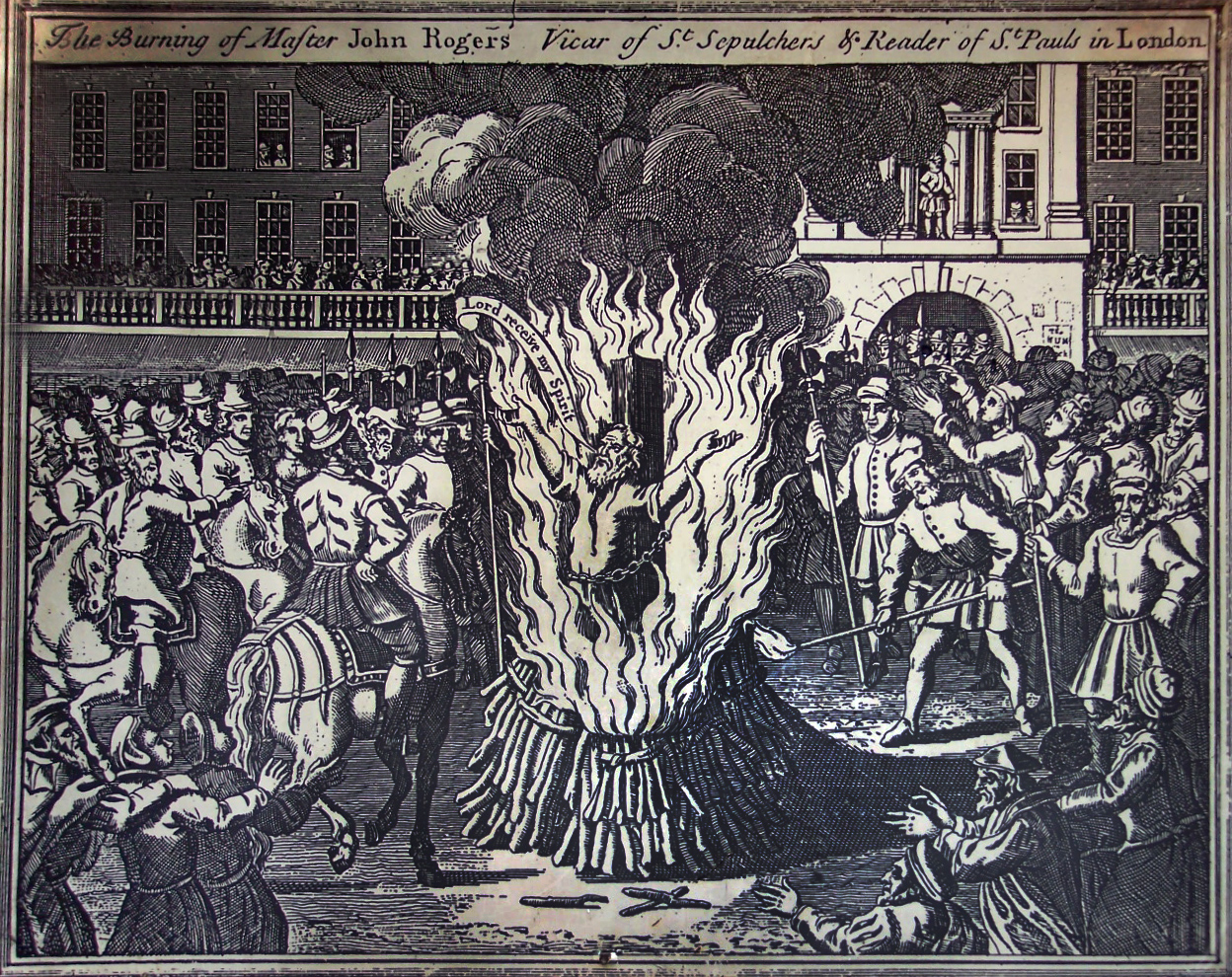
If fuzzy thinking does not work in the real world, then it certainly does not work in the midst of persecution.  The martyrs of historic Christianity lived and died because of black-and-white thinking

On his way to martyrdom, Ignatius wrote seven black-and-white letters that have proven to be very valuable documents to help our understanding of early Christianity.

When Polycarp faced execution for his Christian faith, the judge promised a quick release if Polycarp swore allegiance to the Emperor and vowed to curse Christ.  Polycarp responded, ““For eighty-six years I have served him, and he has done me no evil.  How could I curse my King, who saved me?”

When the judge threatened him with burning him alive, Polycarp simply answered that the fire that was about to be lit would only last a moment, whereas the eternal fire would never go out.  After Polycarp was tied to the post in the pyre, he looked up and prayed out loud: “Lord Sovereign God . . . I thank you that you have deemed me worthy of this moment, so that, jointly with your martyrs, I may have a share in the cup of Christ . . . For this . . . I bless and glorify you” (Justo L. Gonzalez, The Story of Christianity – Volume I, 39-48).

And consider the example of William Tyndale.  Tyndale courageously opposed anyone who quenched the work of the Spirit or despised God’s Word.   Again, Spirit enabled black-and-white thinking fueled his resolve.

One time a clergyman told Tyndale, “We are better without God’s laws than the pope’s.”  Tyndale’s black-and-white thinking prompted a decisive response: “I defy the Pope and all his laws; and if God spares my life, I will cause the boy who drives the plow in England to know more of the Scriptures than the Pope himself.”

Ignatius, Polycarp, and Tyndale held fast to the good (1 Thes. 5:21).  John MacArthur describes this imperative as “a militant, defensive, protective stance against anything that undermines the truth or does violence to it in any way.  We must hold the true securely; defend it zealously; preserve it from all threats.  To placate the enemies of truth or lower our guard is to violate this command.”

3. Fuzzy Thinking Minimizes the Role of Reason and Logic

Miller argues that black-and-white thinking would never make it “through the door of an undergraduate course in logic.”  Much to the contrary, the law of non-contradiction teaches us that a statement and its opposite cannot both be true at the same time and in the same sense.

Ron Nash reminds us, “The presence of contradiction is always a sign of error.  Hence, we have a right to expect a conceptual system to be logically consistent, both in its parts (its individual propositions) and in the whole.  A conceptual system is in obvious trouble if it fails to hang together logically” (Worldviews in Conflict, 55).

In other words, every worldview needs to be subjected to the law of non-contradiction.  When a contradiction emerges, the worldview must be abandoned.  Without black-and-white thinking, this worldview test passes by the wayside and discernment vanishes.

The root of this discussion concerning black-and-white thinking is tied to the formation of a worldview.   And in order for a worldview to be plausible, it must be able to be lived out in the real world.  Francis Schaeffer reminds us, “We must be able to live consistently with our theory” (The God Who is There, 121).

So in the final analysis, black-and-white thinking is not problematic.  Indeed, black-and-white thinking is not only philosophically tenable; it is an essential part of living the Christian life.  Without black-and-white thinking, it would be impossible to choose between two competing alternatives.  Without black-and-white thinking, theological and philosophical assertions would all receive equal acclaim, which is to say that truth at the end of the day is a matter of personal preference.

Whenever someone begins to back away from absolutes, reason and logic suddenly become unwelcome in the house of irrationality; a house that is destined to collapse under its own weight.  Peter Kreeft demonstrates the importance of logic: “If an argument has nothing but clear terms, true premises, and valid logic, its conclusion must be true” (Socratic Logic, 32).  Fuzzy thinking, however, tends to minimize the role of reason and logic, which at the end of the day proves not only unrealistic, but irrational.

Additionally, fuzzy thinking militates against the Law of the Excluded Middle.  James Nance and Douglas Wilson define this law: “Any statement is either true or false … it excludes the possibility of a truth value falling somewhere in the middle of truth or false” (Introductory Logic, xi).

Here’s the funny thing.  I am quite certain that Miller embraces these philosophical laws.  The problem is when he discourages black-and-white thinking, he unwittingly begins to whittle away at laws of logic which flow from the nature of God.  The downhill descent eventually leads to full-blown relativism.  Again, I am not concerned so much with Miller.  I am convinced that he would never go this route.  I am concerned, however, with those who are convinced by his arguments against black-and-white thinking.

DETERMINING A PROPOSAL REGARDING  BLACK-AND-WHITE THINKING

Donald Miller focuses on the so-called problems of black-and-white thinking.  I argue that Christian testimony and gospel witness will begin to erode to the degree that black-and-white thinking deteriorates.  Indeed, the essence of the gospel will erode to the degree we embrace fuzzy thinking.  Therefore, I submit the following proposal:

1. Black-and-White Thinking Should be Encouraged – Not Discouraged

Black-and-white thinking should be encouraged on biblical, philosophical, and practical grounds.  Sometimes, such thinking is criticized as “hair-splitting.”  Yet this black-and-white “hair-splitting” was indispensable as Athanasius challenged the arch-heretic, Arius.  This kind of thinking was a necessary part of formulating the doctrine of the Trinity and affirming the two natures of Christ; i.e. fully God and fully man.

Black-and-white thinking led to the formation of the major creeds and catechisms including the Apostles’ Creed, Nicene Creed, Chalcedonian Creed, the Heidelberg Catechism, and the Westminster Confession of Faith.

Black-and-white thinking should be encouraged.  For whenever black-and-white thinking is discouraged, the net result is theological error and irrationality.

2. Black-and-White Thinking is Essential to Christian Epistemology

Francis Schaeffer warned the church in 1968:  “We are fundamentally affected by a new way of looking at truth.  This change in the concept of the way we come to knowledge and truth is the most crucial problem facing America today” (The God Who Is There, 6).  In other words, “absolutes imply antithesis.”  The working antithesis is that God exists objectively (in antithesis) to his not existing.

The loss of antithesis (or repudiating black-and-white thinking) in American culture led to what Dr. Schaeffer coined the “line of despair” or giving up all hope of achieving a rational unified answer to knowledge and life.

So Christians must rise above the level of despair and affirm a Christ-saturated epistemology.  They recognize that truth is a unified whole.  They understand that there is no disparity between faith and reason.  In other words, faith and reason are not out of contact with each other.  They embrace what Nancy Pearcey refers to as “total truth.”

3. Black-and-White Thinking is Essential to Healthy Christian Living

Christ-followers who recognize that truth is unified understand this fundamental reality:  They know that black-and-white thinking is essential to the Christian life.  They recognize real good and real evil: “Ponder the path of your feet; then all your ways will be sure.  Do not swerve to the right or to the left; turn your foot away from evil” (Prov. 4:26-27, ESV).

Because Christians understand that “absolutes imply antithesis” they speak and live in terms of black-and-white:

“Whoever is steadfast in righteousness will live, but he who pursues evil will die.  Those of crooked heart are an abomination to the LORD, but those of blameless ways are his delight.  Be assured, an evil person will not go unpunished, but the offspring of the righteous will be delivered” (Prov. 11:19-21).

“Whoever speaks the truth gives honest evidence, but a false witness utters deceit” (Prov. 12:17).

4. There Should Be No Dichotomy Between Bold, Black-and-White Convictions and a Gracious Offering of Truth Claims

For instance, Jesus proclaims a series of woes on the Pharisees in Matthew 23.  His black-and-white thinking is actually stunning.  Yet at the end of chapter 23, we find him lamenting over Jerusalem: “O Jerusalem, Jerusalem, the city that kills the prophets and stones those who are sent to it!  How often would I have gathered your children together as a hen gathers her brood under her wings, and you would not!” (v. 37).

5. Black-and-White Truth Claims Should be Set Forth With Decisive Humility

On the one hand, Christ-followers must maintain their commitment to absolute truth claims.  They must do so vigorously and decisively.  They must boldly proclaim the truth in the marketplace of ideas.  And they must point to Christ, who is the essence of truth, apart from whom, knowledge is impossible.

On the other hand, Christ-followers must believe, proclaim, and defend black-and-white truth with Spirit-enabled humility: “But this is the one to whom I will look: he who is humble and contrite in spirit and trembles at my word” (Isa. 66:2b, ESV).  They must passionately proclaim truth “with all humility and gentleness, with patience, bearing with one another in love …” (Eph. 4:2, ESV).  And they must teach and defend the truth and embrace the framework of 2 Timothy 2:24.  “And the Lord’s servant must not be quarrelsome but kind to everyone, able to teach, patiently enduring evil, correcting his opponents with gentleness …”

SUMMARY

I hear what Don Miller is saying and I suspect that he’s concerned with Christ-followers who demonstrate less than loving behavior.  He would be right to be concerned.  Indeed, Christ is the most loving person that ever existed or will ever exist.  But Christ was also a black-and-white thinker.  The prophets were black-and-white thinkers.  The apostles were black-and-white thinkers.  And the martyrs were black-and-white thinkers.

Miller’s position could be construed to mean something like this: “We need less truth and more love and grace.”  I am quite confident that this is not his intention.  Similarly, my position could be construed to promote the following: “We need less love and more truth.”  Of course, this is not my argument either.  Rather, as Christians, we are called to both!  We are called to speak the truth – and we are called to engage in this ministry of proclamation with love, gentleness, and humility.

The funny thing is that Miller uses black-and-white thinking to argue against black-and-white thinking.  So at worst, his argument is self-refuting.  At best, perhaps there is hope for the future because, in the final analysis, Miller embraces black-and-white thinking after all!

If Miller is concerned primarily with the promotion of personal opinions, fine.  If he is concerned with soliciting dogmatic statements in gray areas that concern cultural matters like music and one’s choice of the best Italian restaurant, I have no quarrel.  But when it comes to matters of eternal significance, black-and-white thinking is essential.

We live in a world of absolutes.  And absolutes demand humble and decisive proclamation.  May Christians continue to proclaim and defend black-and-white propositional truth to the glory of Jesus Christ.  My black-and-white proposal: Farewell to fuzzy thinking!

“I know that truth stands and is mighty forever, and abides eternally, with whom there is no respect of persons.” – John Hus, Czech reformer, black-and-white thinker and martyr (1412)

Veritas et Lux!

Reformed Theology – Jonathan Master

Jonathan Master, Reformed Theology (Phillipsburg: P&R Publishing, 2023), 108 pp.

Reformed Theology by Jonathan Master is a short and readable overview that guides people through the basics of this historical theological position. Masters summarizes Reformed theology by pointing readers to the so-called five points of Calvinism, which emerged at the Synod of Dort in 1618-1619. These five succinct doctrinal pillars were direct responses to the Arminians of the day. Reformed theology is also undergirded by the five solas of the Reformation – grace alone, faith alone, Christ alone, Scripture alone, and to God alone be the glory.

Master helpfully summarizes Reformed theology by pointing to three key articles. Reformed theology 1) affirms the five solas and all their implications, 2) recognizes the centrality of the covenant in God’s saving purposes, and 3) is expressed in a historic and public confession of faith.

Reformed theology also rightly makes much of the sovereignty of God. The author adds:

Creation shows that God alone is in charge; he alone has the right to demand obedience and allegiance. God’s promise of salvation demonstrates that God is in charge of the future as well as the present and past. He can promise that something will take place, and the fulfillment of that promise is guaranteed.

The covenants of Scripture are explored which “provide the skeleton or structure for what God reveals about himself and for how he redeems his people.” The book surveys the biblical covenants and concludes with the New Covenant which grants spiritual life to the people of God and gives them the ability to obey him and worship him as Scripture demands. Masters concludes:

Understanding the covenantal structure of the Bible is vital to understanding the nature of Reformed theology. Because Reformed theology is centered on the Scriptures, the way in which the Bible reveals God’s salvation must inform how we understand and proclaim it today. When we look carefully at the covenants as they unfold in Scripture, we not only see Jesus Christ more clearly but also see the breadth of God’s salvation to all nations and the glories of a salvation that is by grace alone through faith alone in Christ alone – all to the glory of the triune God.

Finally, the blessings of Reformed theology is explored. This chapter is a fitting conclusion as the author reveals several practical blessings that are part and parcel of the Reformed approach to understanding Scripture. Reformed Theology by Jonathan Master is a clear summary of the Reformed faith that should grace every pastor’s shelf. Pastors should in turn recommend this powerful little book to inquiry minds and those who need a primer on the basics of Reformed theology.

I received this book free from the publisher. I was not required to write a positive review.

Friendship with God – Mike McKinley

Mike McKinley, Friendship with God (Wheaton: Crossway Books, 2023), 168 pp.

The seventeenth-century theologian, John Owen wrote with biblical precision and melted the hearts of his readers. Owen’s deep understanding of God’s Word challenged and encouraged each person who was willing to take up the glorious task of reading his work. Almost four hundred years later, Owen’s work is unmatched but is left unread by many contemporary Christians. Admittedly, Owen can be wordy and his arguments are difficult for people to comprehend. Pastor Mike McKinley understands the importance of John Owen’s contribution. But he also acknowledges the difficult challenge that Owen presents.

It is in this spirit that Pastor McKinley presents Friendship with God: A Path to Deeper Fellowship with the Father, Son, and the Spirit. His work seeks to unpack and explain John Owen’s seminal book, Communion with God in a way that is understandable without sacrificing any theological precision.

The book is comprised of four parts that focus on communion with the Triune God, communion with the Father, Son, and Holy Spirit. Each part drills down into the depths of Owen’s theology. The author masterfully explains Owen’s heart and encourages readers to draw near in friendship to the sovereign God of the universe.

McKinley’s exposition of John Owen’s Communion with God is a thoughtful and careful exposition. It reminds readers about the depth of God’s love for his people and helps them dig deeper into the theological treasures that are so easily passed over in our day.

I heartily recommend Friendship with God and trust that many will be encouraged in their own walks with God. I trust that many will also be prompted to read John Owen for themselves!

I received this book free from the publisher. I was not required to write a positive review.

Resilient Faith – Lewis and Sarah Allen

Lewis & Sarah Allen, Resilient Faith (Wheaton: Crossway Books, 2023), 228 pp.

Resilient Faith: Learning to Rely on Jesus in the Struggles of Life by Lewis & Sarah Allen addresses the highs and lows of the Christian journey. The authors acknowledge that the Christian life can be exhausting. But at the same time, it is also exhilarating.

The aim of the book (as the title suggests) is to encourage followers of Christ to live resilient Christian lives; lives that are focused on the person and work of Jesus. Pastor and Mrs. Allen write, “What’s needed more than anything else is resilience, the ability to weather the storm and keep going.”

Resilience Faith is comprised of nine parts, each focusing on the Christian journey. Each part contains short chapters that lead readers to bank their hope and trust in the Lord Jesus Christ and his saving benefits on the cross. The writing is clear and basic and is directed at new and seasoned believers alike. However, new Christians will most likely benefit the most from the material. Each chapter concludes with penetrating questions that urge readers to apply what they’ve learned. A prayer is offered to help readers focus their attention on God and the saving benefits of his Son.

Resilient Faith accomplishes what it sets out to do. Many people will no doubt be greatly encouraged as their faith is challenged and stimulated by this thought-provoking book.

I received this book free from the publisher. I was not required to write a positive review.

A Praying Church – Paul E. Miller

Paul E. Miller, A Praying Church: Becoming a People of Hope in a Discouraging World (Wheaton: Crossway Books, 2023), 279 pp.

Ask any Christian if they are satisfied with their prayer life. Ask any pastor if he is satisfied with the emphasis on prayer in the church he pastors. Most responses will be discouraging. Hence the need for Paul Miller’s book, A Praying Church.

Miller builds on his earlier work, A Praying Life by urging pastors and their congregants to commit to a rigorous practice of prayer. The author begins by making the case for praying together. He proceeds to explain the functions of a New Testament church and reveals how the Spirit of God reshapes a praying community. Finally, Miller gives practical suggestions for cultivating a church that is saturated by prayer.

At one point, the author commends the popular video series, The Chosen, a move that does not fit with the general tenor of the book. The lack of discernment is concerning but does not distract from the major arguments in the book.

In the end, Miller succeeds in motivating Christians to return to a passionate pursuit of prayer. He writes, “We don’t learn the Spirit abstractly, separate from the person of Jesus. The Spirit of Jesus loves hidden places where he isn’t turned into a show. He loves to work in broken people, people who realize that they can’t do life on their own.”

May churches gather in prayer, in the power of the Spirit, so that our great God will be known and cherished around the world.

I received this book free from the publisher. I was not required to write a positive review.