Notes From the Tilt-A-Whirl – N.D. Wilson

tilt

N.D. Wilson, Notes From the Tilt-A-Whirl, Nashville: Thomas Nelson, 2009, 197 pp.

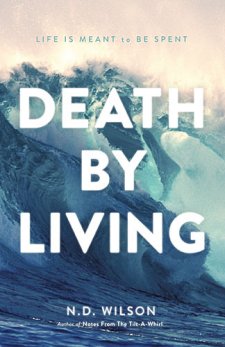
Notes From the Tilt-a-Whirl, by N.D. Wilson is a fascinating look at God’s creation from a creative perspective.

Several features are worth noting.  First, Wilson reminds readers of the importance of a personal Creator: “For those who believe in ex nihilo creation, the world is inevitably art, and it is inevitably art from top to bottom, in every time and in every place.  The world cannot exist apart from the voice of God.  It is the voicings of God.”  The author demonstrates the absurdity of a creation devoid of a personal Creator.

Second, Wilson demonstrates the utter foolishness of atheism, relativism, and Darwinian natural selection.  He chides the evolutionist and sets his eyes on God’s good creation.  He makes it clear (and rightly so) that he will enjoy God’s good creation.

Third, I appreciate Wilson’s interaction with philosophers like Hume and Kant.  But especially noteworthy is his interaction with the German philosopher, Nietzsche.  I sense he respects Nietzsche and would have savored the opportunity to sit and visit with him in a German tavern.  But Wilson admits a frustration with Nietzsche: “I want to ruffle his hair.  I want to take the poor Lutheran boy’s head in my hands and kiss his creased forehead.  It is all I can do.  I cannot set a bone, let alone a soul.”  Wilson continues with an unforgettable line: “He [Nietzsche] moves on, preaching unbelief to an empty street.”

Finally, the author effectively reminds readers of an eternal hell: “Heaven or Hell is about love and hate.  Do you love God or do you hate him?  Is He foul in your nostrils?  Do you see His art and wish your arm was long enough to reach His face?  Do you spit and curse like Nietzsche?  Would you trade places with the damned thief so that you might see Him die and know that God Himself heard your challenges?”  Wilson continues, “Then Hell is for you.  Hell is for you because God is kind and reserves a place for those who loathe Him to the end, an eternal exile, a joyless haven for those who would eternally add to their guilt, a place where blasphemy will be new every morning … If you displease Him, He will displease you.  He will put you away and remove the grace you have experienced in this world.  With the crutches of His goodness gone, He will leave people to themselves, leave them to their own corrupt desires and devices.”

Thankfully, the author does not leave the reader groveling in hopelessness at the prospect of an eternal hell: “If you want to love Him, then He has already begun giving you change.  He has already begun unclenching your fists, taking your filth to be laundered on the cross.”

Wilson demonstrates that he is well-read and tuned in theologically and philosophically.  For instance, one of my favorite lines in the book is directed Godward: “An infinite God is I AM, and all else must be measured in terms of His nature, His loves, and His loathings.”  This is heady, creative writing.  In fact, some of this stuff is pure genius!  The writing is a strange mixture of Don Miller, Dennis Miller, C.S. Lewis, and G.K Chesterton.

The goodness in Wilson’s work, however, is overshadowed at times by his insistence on using profanity.    For instance, the author skillfully demonstrates the foolishness of rejecting transcendent absolute standards and argues against a relativistic worldview:  “I look in the atheist’s mirror.  I look at his faith in the nonexistence of meaning.  I look at his preaching and painting.  I see nothing but a shi*-storm.”  This kind of banter is totally unnecessary and undercuts the weight of the otherwise legitimate argument.

This growing trend toward the glorification of the profane is an alarming trend in the church, one that needlessly offends and accomplishes absolutely nothing.  This kind of writing is clearly not consistent with the Scriptural mandate, especially Paul’s warning to the Ephesian church: “Let there be no filthiness nor foolish talk nor crude joking which are out-of-place, but instead let there be thanksgiving” (Eph. 5:4, ESV).  Colossians 3:8 makes it clear that Christ-followers are to put away “obscene talk.”  For we have been “renewed in knowledge after the image of its creator” (Col. 3:10, ESV).  I can already anticipate the quick response I will receive from postmodern pastors, emergent sympathizers, and enthusiastic bloggers.  But I stand with Scripture on my side.  For “my conscience is held captive by the Word of God.  To go against conscience is neither right nor safe.”  Indeed, it is ironic to lay claim to Luther’s words, given his propensity to use vulgarity.  However, I argue that Luther should have taken the scrub brush to his mouth as well.

I know some Christ-followers who would toss this book into the ash heap because of the vulgarity.  I am not prepared to go that far.  I am not ready to toss the baby out with the bathwater.  There is too much good in Notes From the Tilt-a-Whirl to justify such a knee-jerk reaction.

Notes From the Tilt-a-Whirl made me dizzy.  But it also made me think.  Sometimes it angered me.  At the end of the day, I am glad I came to the “carnival.”  I am glad I decided to jump on the ride.  At times, I felt as if I’d eaten too much cotton candy.  But other times, I felt like buying another “ticket” and riding again – and again!

The Joy of Hearing – Thomas Schreiner

Thomas R. Schreiner, The Joy of Hearing: A Theology of the Book of Revelation (Wheaton: Crossway Books, 2021), 203 pp.

I had a professor in Bible College who made a dogmatic recommendation one day in class: “Select an eschatological position and stick with it. Resist the urge to read about the other positions.” It was some of the worst theological counsel I’ve ever received.

The professor subscribed to Dispensational Premillennialism, which was also the doctrinal position of the school. As such, every branch of theology was informed by a movement that was still in its infancy. Thankfully, I have moved beyond my initial exposure to Dispensational Premillennialism and have found great value in exploring the theological commitments of amillennialists, postmillennialist, and historical premillennial l thinkers.

The Joy of Hearing: A Theology of the Book of Revelation by Thomas Schreiner is a book that would have received a great deal of scorn from my professors in Bible College over thirty-five years ago. Now I celebrate the efforts of Dr. Schreiner who is willing to deal honestly with difficult texts and guide his readers on a path that glorifies the Lord.

Some readers may disagree with Schreiner’s conclusions at various points. But one thing will capture the attention of every thoughtful reader – Dr. Schreiner is intent on making sure that each student of Revelation walks away with a mindset of “listening,” an attitude of joy, and a posture of perseverance. The Joy of Hearing is a book that I will turn to again and again – both to educate and also to help maintain perspective in this confusing world.

I received this book free from the publisher. I was not required to write a positive review.

Luther and the Reformation – R.C. Sproul

R.C. Sproul, Luther and the Reformation (Sanford: Ligonier Ministries, 2021), 112 pp.

Luther and the Reformation by R.C. Sproul is a short overview of the events that shook the world in the sixteenth century. Dr. Sproul surveys the iconic life of Martin Luther, Roman Catholic monk turned evangelical theologian. He traces Luther’s steps from the famous thunderbolt experience to the door of the monastery.

After wrestling with Paul’s letter to the church at Rome, which eventually led to his conversion, Dr. Sproul walks readers through the progression of events from Wittenberg, Worms, and the Wartburg castle.

Luther and the Reformation, while brief is an easy-to-read account of Luther’s life and theological commitments. It may serve as “first steps” for readers who are unfamiliar with the Protestant Reformation and also serve as a “refresher course” for students versed in these matters.

Soli Deo gloria!

The Eclipse of the Gospel and the School of Hard Knox

A Powerful Man

I stood in the shadow of St. Giles Cathedral in Edinburgh, Scotland. Clouds gathered overhead and people walked curiously through the front doors. Here, the famous reformer, John Knox faithfully tended the flock until his death in 1572.

Once inside this massive cathedral, I was transfixed by the sheer beauty of this place. I was overwhelmed by the architecture – the awe-inspiring flying buttresses that point worshippers to the transcendence of God. A single elevated pulpit is located in the center of the sanctuary. It stands strategically above the worshippers, which symbolically places God’s Word above sinful creatures.

John Knox brought reform to Scotland and re-energized a nation that had all but forgotten God. Knox helped awaken a nation that neglected God’s truth which led to a virtual eclipse of the gospel. Martyn Lloyd-Jones describes Knox as a man who preached “with the fire of God in his bones and in his belly!  He preached as they all preached, with fire and power, alarming sermons, convicting sermons, humbling sermons, converting sermons, and the face of Scotland was changed …” Simply put, the faithful preaching of Knox brought much needed reform to the Scottish landscape and renewed evangelical fervor to the church.

John Knox courageously raised the banner of the gospel and defended the truths of the Protestant Reformation. He was unashamed of the gospel (Rom. 1:16) and fearlessly proclaimed the Word of God. He stood boldly and with Peter and the apostles, obeyed God rather then men (Acts 5:29). Indeed, Knox is a true exemplar of faithfulness in the face of adversity.

A Personal Lesson

As I made my way out of St. Giles, my mind was filled with stories surrounding the life and ministry of John Knox. As I turned to gaze again at the rising fortress where Knox served the Lord, a thought occurred to me. It was not a new thought. Rather, it was a lesson that has moved me for many years now but in this moment, the lesson was magnified as I scanned the edifice of St. Giles. The lesson is this: church history matters.

It seems like such a simple lesson. But it is a lesson that many contemporary Christians are unfamiliar with. Even as a young Bible College student, I failed to understand the importance of church history. The buildings seemed so old and the names were so hard to pronounce. It is a sentiment that is not unique to me. I hear it all the time. I hear the cruel remarks about John Calvin and the caricatures that biased people have cooked up about Jonathan Edwards. But when we move past all the petty talk and face reality, we realize that church history truly does matter.

A Pivotal Mindset

First, Church history matters because when we forget the past, we fail to learn valuable lessons that impact our lives. George Santayana famously said, “Those who cannot remember the past are condemned to repeat it.” So Christians who minimize the importance of church history are vulnerable to the theological error that plagued the church in the past. Additionally, they repeat the sins committed by our forefathers.

For example, Arius committed a fatal theological error by teaching that Christ was the first created being. This theological controversy which erupted in 318 A.D. led to a series of heretical Arian propositions:

  1. The Son was created by the Father.
  2. The Son owed his existence to the will of the Father.
  3. The Son was not eternal, that is, there was a time when he was not.

Such teaching stood diametrically opposed to Scripture and was outside the bounds of orthodoxy. In the end, Arius rejected the full deity of the Son and the Holy Spirit.

Second, Church history matters because it strengthens our faith. Scripture instructs, “Remember your leaders, those who spoke to you the word of God. Consider the outcome of their way of life, and imitate their faith.” (Heb. 13:7, ESV) The term remember is a present imperative verb that means, “keep thinking about,” or “call to mind.”

Remembering godly leaders in church history is not optional; it is a command in sacred Scripture. The author of Hebrews does not limit the scope of these “leaders” to men like Moses, Abraham, Paul or Peter. He instructs us to remember leaders “who spoke to you the word of God.” So remembering leaders like Augustine, Calvin, Edwards, Luther, and Spurgeon is an important part of the Christian pilgrimage. We do well to follow in their paths by boldly proclaiming the truth and living faithfully before the Lord, even when our detractors heap insults on us for faithfully remembering these heroes of the faith.

Third, Church history matters because God ordained specific events that lead to the worldwide spread of his glory. Church history truly is “his story.” Whenever we discount history, we subtly stand in judgment over God and claim to know a better way. Whenever we disparage church history and subtly place ourselves in a position that was never ours to enjoy. Indeed, “Our God is in the heavens; he does all that he pleases” (Psalm 115:3, ESV).

The School of Hard Knox

John Knox was a faithful man who led a gospel-centered life, according to the grace that was given him by his Savior. His relentless preaching helped drive away the darkness and restore the light of the gospel to his land. Almost five hundred years later, St. Giles still stands but the truth has fallen on hard times. Once again, the gospel is being eclipsed by man-made philosophy and foolishness.

As Christ-followers, we must learn well the lessons that church history teaches us. When we forget the past we falter in our faith and fail to exalt the sovereign purposes of our Savior. When we forget the past, we become comfortable stumbling around in the dark and begin to glory in our ignorance.

Let us become educated in the School of Hard Knox. And may the gospel shine brightly again. “For the earth will be filled with the knowledge of the glory of the Lord as the waters cover the sea” (Habakkuk 2:14, ESV). And may we recover our love of truth and our passion for the gospel.

The Bible Convictions of John Wycliffe – Steven J. Lawson

Steven J. Lawson, The Bible Convictions of John Wycliffe (Sanford: Ligonier Ministries, 2021), 212 pp.

The Council of Constance condemned him as a heretic on May 4, 1415. His writings were banned and he was condemned on 260 different counts and posthumously excommunicated. That is, he was banished from the church after his death. Pope Martin V decreed that his body should be exhumed from the ground and burned. The pope also decreed that his writings were to go up in flames. The exhumation and cremation of his corpse were carried out in 1428, his ashes cast into the River Swift which flows through Lutterworth, England.

Who was this man who drew the ire of the most influential leaders in the Roman Catholic Church which included the Pope himself? This man produced more than 200 written works in his lifetime and his beliefs reverberated throughout England and spread from there. His name — is John Wycliffe. He is the subject of Steven J. Lawson’s most recent book, The Bible Convictions of John Wycliffe.

Lawson’s work is also the latest installment in the outstanding series, A Long Line of Godly Men. The thirteen books that appear in this series unveil a host of godly men who have left their mark on both the church and the world. This series is noteworthy as it educates, inspires, and challenges the current day reader. It is impossible to walk through these volumes without being convicted and encouraged. I commend each book without reservation.

The Bible Convictions of John Wycliffe show the inner working of the man and the historical context that he served. The Roman Catholic Church was Wycliffe’s most fierce opponent as he labored to teach, preach, and translate the Word of God into English.

Wycliffe was a formidable theologian, who was deeply committed to the truth of Scripture. He was a staunch defender of the Bible and the Christian faith and refused to back down, even in the face of persecution. Dr. Lawson says this about John Wycliffe:

He was a man who was willing to pay any price to bring the Word of God to the people of his country. He was willing to risk his personal livelihood and reputation to place into the hands of his fellow Englishmen a Bible they could read and understand. The sacrifices that Wycliffe made were enormous, as he died in the midst of producing an English Bible.

The Morningstar of the Reformation helped “set the table” for men like Jan Hus and Martin Luther. These bold and courageous men put the Bible front and center out of a sense of duty as well as delight. Our challenge is to learn these great lessons well and allow the truth of God’s Word to shape us and mold us and transform us into the kind of people that God wants us to be!

The Local Church – Edward Klink

Edward W. Klink, The Local Church (Wheaton: Crossway, 2021), 172 pp.

The church stands at the very center of God’s redemptive purposes. Yet there is much misunderstanding about the church in our day. Some people downplay the importance of the church. Others are critical of the notion of church membership. Edward W. Klink intends to “cut through the fog” and set the record straight in his book, The Local Church: What It Is and Why It Matters for Every Christian.

Dr. Klink’s heart for the church emerges on every page as the author sets forth the biblical purposes and priorities that emerge in Scripture. Klink begins by exposing some of the misconceptions about the church. He says, “To speak plainly, a church’s Christianity has no relation to Christ. The real and necessary connection between Christ, his church, and all of its members not only is a biblical command and a theological truth but also must be a personal and pastoral priority in the contemporary church.”

Once the misconceptions are swept aside, the author focuses on the biblical portrait of the church. “The entire story of Scripture explains how God chose a people for himself to dwell with him forever,” writes Dr. Klink. Therefore, at the heart of the church is the pleasure of God, the people of God, the power of God, the proclamation of God, the provision of God, and the purpose of God. The threefold purposes of the church, according to Klink include loving God, loving our neighbor, and loving one another.

The author not only informs and educates; he challenges. Indeed, one of the most helpful aspects of this book is the bold challenge that is offered to professing Christians:

To say that a person has a personal relationship with Jesus Christ is to speak about how a person becomes a Christian, not how a person lives as a Christian. Please Hear this: if Jesus is at the center of your life, a local church is at the center of your life. Who is the church? If you are a believer in Jesus Christ, then you are!

The book concludes with a helpful section that includes twenty common questions about the local church. The answers are short and crisp; but more importantly, the answers are biblical. The Local Church is a superb overview and should receive a wide readership.

I received this book free from the publisher. I was not required to write a positive review.

A Tribute to R.C. Sproul

On December 14, 2017 Dr. R.C. Sproul entered into the presence of his Lord and Savior, Jesus Christ. Dr. Sproul was a graduate of Westminster College (B.A. in Philosophy), Pittsburgh Theological Seminary (B.D.), Free University of Amsterdam (Drs.) and received additional recognition from Geneva College (Litt. D) and Grove City College (L.H.D.) in 1993.

Dr. Sproul was ordained in 1965 by the Presbyterian Church in America (PCA) and taught at Westminster College (1965 – 1966), Gordon College (1966 – 1968), Conwell School of Theology (1968 – 1969), Gordon Conwell Theological Seminary (1971 – 1981) and held the John Trimble, Sr. Chair of Systematic Theology at Reformed Theological Seminary (1987 – 1995). He served on the Executive Committee for the International Council on Biblical Inerrancy (1977 – 1983). He held various leadership roles with the Coalition for Christian Outreach (1971 – 1976), Evangelism Explosion III, International (1980 – 1981), and Prison Fellowship (1979 – 1984).

In addition to several other teaching roles at theological Seminaries, including Knox Theological Seminary and Reformed Theological Seminary, Dr. Sproul served on the pastoral staff at Saint Andrews Chapel in Sanford, Florida.

Dr. Sproul was the founder and Chairman of Ligonier Ministries, a non-profit organization dedicated to providing theological education for the church. Ligonier provided and continues to provide a myriad of teaching resources by Dr. Sproul and others, which are primarily directed toward the laity.

Many tributes will be posted for several days and weeks to come which will celebrate Sproul’s life and legacy. My small contribution will be personal in nature as I recount the ways that my life was impacted by his ministry.

The Sovereignty of God in Salvation

R.C. Sproul was greatly used by God as he reintroduced Reformed theology to the evangelical church. He articulated the doctrines of grace with passion, courage, conviction, and authority. He spoke about the depth of our depravity and reminded us that the “flesh profits nothing” (John 6:63). Indeed, as Luther said, “Nothing is not a little something!” “Sin is cosmic treason,” writes Sproul. “Sin is treason against a perfectly pure Sovereign. It is an act of supreme ingratitude toward the One to whom we owe everything, to the One who has given us life itself. Have you ever considered the deeper implications of the slightest sin, of the most minute peccadillo? What are we saying to our Creator when we disobey Him at the slightest point? We are saying ‘no’ to the righteousness of God.” R.C. Sproul powerfully proclaimed the hideous effects of sin on a fallen race.

He not only spoke of the depth of depravity; he proclaimed the beauty of sovereign grace. He helped us understand the importance of election and predestination. Chosen by God served an especially important purpose in my life. This book was a theological battering ram. Chosen by God smashed my preconceived Arminian notions. It shattered my Semi-Pelagian understanding of free will and petty arguments against Calvinism.

Positively, Chosen by God elevated my understanding of God’s sovereignty. However, it would be more accurate to say that Sproul catapulted my view of God’s sovereignty into the stratosphere. “If there is any part of creation outside of God’s sovereignty,” writes Sproul, “then God is simply not sovereign. If God is not sovereign, then God is not God.”

Chosen by God helped shift my understanding of mercy into biblical categories. Previously, I held the view that God was obligated to offer mercy to sinners. But Sproul’s theological battering ram obliterated my presuppositions about mercy. I’ll never forget reading these words: “If God is not pleased to dispense his saving mercy to all men, then I must submit to his holy and righteous decision. God is never, never obligated to be merciful to sinners. That is the point we must stress if we are to grasp the full measure of God’s grace.”

R.C. Sproul captivated us with the wonder of effectual grace. And he spoke often of the perseverance of the saints, or better yet, as he was fond of saying, “the preservation of the saints.” Indeed, “the doctrine teaches that if you have saving faith you will never lose it, and if you lose it, you never had it.”

R.C. not only equipped a new generation of Reformed thinkers; he alerted the body of Christ to theological error. He lamented the rise of theological wolves and deceitful hucksters. And he warned us about the Pelagian Captivity of the Church. Sproul notes, “One thing is clear: that you can be purely Pelagian and be completely welcome in the evangelical movement today. It’s not simply that the camel sticks his nose into the tent; he doesn’t just come in the tent — he kicks the owner of the tent out.”

The first time I saw Dr. Sproul preach at a live event, I stood in line for at least an hour to say “hello” and get a signature in his latest book, Not a Chance. It was a typical scene where several hundred hungry theology students gathered for a chance to visit for a moment with one of the premier theological minds of the day. Sproul was signing books and carrying on in casual conversations. When my time came, I uttered these words: “Dr. Sproul, I want to thank you for your ministry. Before I began reading your books, I was a total Arminian.” Those words caught his attention. He lowered his reading glasses and looked me straight in the eye: “Weren’t we all Arminians at one time!” The crowd roared but R.C.’s infectious laugh overcame the whole room.

Dr. Sproul confronted the love affair with free will in the church: “The semi-Pelagian doctrine of free will prevalent in the evangelical world today is a pagan view that denies the captivity of the human heart to sin. It underestimates the stranglehold that sin has on us.”

Pursuing Church History

Dr. Sproul awakened in me a love for church history that was previously non-existent in my life. He had a special gift for storytelling that invited listeners to enter the world of Augustine, Calvin, Luther, and Edwards. His passion for uncovering the treasures of church history was something to behold. These giants of the faith came to life when R.C. spoke of their courage, tenacity, and faithfulness in proclaiming the unadulterated Word of God.

Passion for the Holiness of God

R.C. Sproul authored at least sixty books, most of which I digested over the past thirty years. Those books are filled with highlights, notes, and observations. But the book that impacted me above all was The Holiness of God. R.C. writes, “We fear God because He is holy. Our fear is not the healthy fear that the Bible encourages us to have. Our fear is servile fear, a fear born of dread. God is too great for us; He is too awesome. He makes difficult demands on us. He is the Mysterious Stranger who threatens our security. In His presence we quake and tremble. Meeting Him personally may be our greatest trauma.”

The Holiness of God caught me completely by surprise in my early twenties. My mind was transfixed. My heart was warmed. And my life was forever changed as I poured over the pages of this book which will no doubt be in print for many years to come.

Defender of the Gospel

Finally, R.C. Sproul was a teacher, preacher, and defender of the gospel of Jesus Christ. He articulated the deep realities of the gospel in simple terms and invited anyone with ears to hear to come along for the ride. R.C reminded us that we are “saved by faith alone but that faith is never alone.” He made sure that we memorized Luther’s famous line that, “justification is that article upon which the church stands or falls.”

It is difficult to summarize the life of a man who carried such a huge weight of influence for over thirty years. A few short paragraphs hardly seem fitting for a man who helped change the face of evangelicalism.

In a recent sermon, Steven Lawson admonished his audience, “Give us some men who know the truth.” R.C. Sproul was such a man. R.C. taught the truth, defended the truth, and worked tirelessly to proclaim the truth to the nations.

Dr. R.C. Sproul (1939 – 2017) fought the good fight. He finished the race. And he kept the faith. Enter into the joy of your Savior where you will reign with him unto all eternity.

A Christian Reading Manifesto

Modern technology has launched us into the stratosphere of learning. With the click of a mouse or a few keystrokes, we can access information from around the world and gain a treasure chest of knowledge. Smartphones are at the forefront of the new technological frontier and provide users with a massive array of educational and intellectual tools. These ingenious devices have “thirty thousand times the processing speed of the seventy-pound onboard navigational computer that guided Apollo 11 to the surface of the moon.”1 Never before have we been able to access so much information. In addition, the rise of podcasting and audiobooks allow us to connect with current and previous generations in a way that was once impossible.

Despite the benefits of recent technological tools, we are also experiencing a phenomenon that should be of grave concern to pastors and Christian leaders. Many people, especially millennials (people born between 1981 and 1995) are eager to learn but appear resistant to reading. They are “on the verge,” in the prophetic words of Neil Postman, “of amusing themselves to death.”2 They may eagerly listen to a podcast or watch a YouTube video, but a growing number of people pass when it comes to the written page. They are quick to listen but slow to read. Thus, we stand at the crossroads. We have a wealth of information at our fingertips but many resist the challenge to read books. Pastors should be especially concerned as they seek to train and equip the next generation of Christian leaders, who are in many cases, reluctant to read.

UNPACKING THE CHRISTIAN READING MANIFESTO

Mark Noll laments, “The scandal of the evangelical mind is that there is not much of an evangelical mind.”3 Thirty years earlier, Harry Blamires offered an even grimmer assessment: “There is no longer a Christian mind; there is no shared field of discourse in which we can move at ease as thinking Christians by trodden ways and past established landmarks.”4 These allegations should serve as a warning and alert Christians, thus refueling their resolve for learning and spiritual growth. My own view is one of cautious optimism. That is, I maintain (despite the evidence) there is still hope for the evangelical mind. But a new awakening will require a commitment to, you guessed it … reading.

I offer this Christian Reading Manifesto as a brief rationale and apologetic for evangelicals, especially young people. My hope is that many will respond to the challenge and enter a new era of learning which will accelerate their Christian growth and sanctification. Lord willing, this new resurgence of learning will impact countless lives in the coming days and help spark a new Reformation.

1. Reading forces us to think

The very act of reading is an act of the mind. Our culture invites and even demands us to have “open minds” about everything under the sun – religion, philosophy, and politics, to name a few. G.K. Chesterton warned, “Merely having an open mind is nothing. The object of opening the mind, as of opening the mouth, is to shut it again on something solid.” Given the current trajectory, the next generation of Christian leaders will be open to almost anything. Thus, they will fail to discern between truth and error. They will be “tossed to and fro by the waves and carried about by every wind of doctrine” (Eph. 4:14). Their failure to invest in the life of the mind will result in a gradual epistemological erosion that will affect generations to come. They will bear a strange resemblance to Paul’s kinsmen who had a zeal for God, but not according to knowledge (Rom. 10:2). They will, in the words of Hosea 4:6 be laid to ruin: “My people are destroyed for lack of knowledge; because you have rejected knowledge …”

God gave us minds. He expects us to use them. Paul charged Timothy, “Do your best to present yourself to God as one approved, a worker who has no need to be ashamed, rightly handling the word of truth” (2 Tim. 2:15). The Greek term translated, do your best means “to be eager or zealous; to show a keen interest in something.” One of the ways we present ourselves to God is through consistent study: “Study to shew thyself approved unto God …” (KJV). Paul’s command to Timothy is no less a command to each of us. The fruit of such diligent study has three important results.

First, such a person is approved. This person has been tested and is shown to be genuine. The prerequisite for this approval, however, is a zeal for the truth. The person who is approved has committed himself to study and has a passion to pursue the truth and practice the truth. “So I will keep Your law continually, forever and ever. And I will walk at liberty, For I seek Your precepts” (Psalm 119:44–45, NASB95).

Second, this kind of person has no need to be ashamed. This person is not open to blame. He is irreproachable. The great benefit of this quality is a life characterized by freedom. Lifelong learning characterizes the one who is committed to passionately pursuing the truth. But the prerequisite for such a pursuit involves reading.

Third, this kind of person handles the truth with precision. The person who commits to diligent study is in a position to handle the Word of God with accuracy. He is committed to reading and analyzing Scripture correctly. Such a person cuts it straight and maintains strict standards of orthodoxy. He will rise up with men like Athanasius by opposing false teaching and clinging to the truth.

Paul’s command to Timothy and every subsequent follower of Christ involves careful thinking. “Deep within the worldview of the biblical authors and equally within the minds of the earliest church fathers was the understanding that to be fully human is to think.5 And careful thinking involves reading. There is simply no way around this principle. People who resist reading will likely be quick to appeal to other learning venues like audiobooks and podcasting. But the written word is the gold standard of learning. Reading the written word is the great equalizer. John Piper reminds us:

“The way we glorify him is by knowing him truly, by treasuring him above all things, and by living in a way that shows he is our supreme treasure … I am pleading that in all your thinking you seek to see and savor the Treasure. If thinking has the reputation of being only emotionless logic, all will be in vain. God did not give us minds as ends in themselves. The mind provides the kindling for the fires of the heart. Theology serves doxology. Reflection serves affection. Contemplation serves exultation. Together they glorify Christ to the full.”6

To ignore reading, then, is tantamount to turning away from a treasure chest filled with precious jewels.

2. Reading cultivates discipline

While audiobooks and podcasting have their place, one of the major drawbacks is a passive approach to learning. Very few people will commit to sitting down with pen in hand during a podcast session. It is not unusual for audio content to go in one ear and out the other.

Reading, on the other hand, cultivates discipline. It forces us to follow the arguments, reasoning, and rationale of the author. It invites the learner to pay attention to key words and phrases. Reading requires taking notes and highlighting for future reference. The very act of reading promotes attentiveness. The precursor to attentiveness is discipline.

The connection between doctrine and discipline is unavoidable in 1 Timothy 4:6-8. Paul admonishes the young pastor:

“In pointing out these things to the brethren, you will be a good servant of Christ Jesus, constantly nourished on the words of the faith and of the sound doctrine which you have been following. But have nothing to do with worldly fables fit only for old women. On the other hand, discipline yourself for the purpose of godliness; for bodily discipline is only of little profit, but godliness is profitable for all things, since it holds promise for the present life and also for the life to come.”

Paul’s passion is that Timothy would be constantly growing and learning. Instead of fixating on worldly things, Paul instructs him to discipline (or train) himself for the purpose of godliness. Reading, therefore, is an essential aspect of Christian discipleship.

3. Reading forces us to reckon with words

The historic Christian faith is one that is built around words. In Genesis 1:1 God spoke the cosmos into existence. God uttered three words, “Let there be light,” and there was light (Gen. 1:3).

The Jewish people clung tenaciously to a tradition that was undergirded by words.

“Hear, O Israel: The LORD our God, the LORD is one. You shall love the LORD your God with all your heart and with all your soul and with all your might. And these words that I command you today shall be on your heart. You shall teach them diligently to your children, and shall talk of them when you sit in your house, and when you walk by the way, and when you lie down, and when you rise. You shall bind them as a sign on your hand, and they shall be as frontlets between your eyes. You shall write them on the doorposts of your house and on your gates” (Deut. 6:4–9, ESV).

Words, in all reality, are at the very center of the Christian faith. “God has revealed himself in words to minds. His revelation is a rational revelation to rational creatures.”7 Remember Paul’s challenge to Timothy, namely – to be “constantly nourished on the words of faith” (1 Tim. 4:6). Imagine where you would be as a Christian if you were unable to read. Kevin DeYoung highlights the importance of this emphasis on words: “We make no apology for being Word-centered and words-centered. Faith comes by hearing (Rom. 10:17). That’s how God designed it because that’s how he has chosen to reveal himself.”8 So reading forces us to pay careful attention to words. Instead of condemning words, then, we celebrate words and affirm their importance to historic Christianity.

4. Reading fuels our minds and ignites our hearts

R.C. Sproul spoke frequently about the rampant anti-intellectualism that dominates the postmodern theological landscape. “This same specter of anti-intellectualism rises regularly to haunt the Christian church,” wrote John R.W. Stott.9 Such is the case of a church that seeks entertainment over education. “We are” in the words of Neil Postman, “amusing ourselves to death.”

Reading, however, fuels our minds and ignites our hearts. It connects us with the great heroes of church history. Reading invites us into their world, helps us see things from their perspective, and acquaints us with their sufferings.

Reading leads us to the Word (logos). “In the beginning was the Word,” writes John, “and the Word was with God, and the Word was God” (John 1:1-2). In other words, reading introduces us to the Savior (Rom. 10:17) and helps cultivate our faith in Christ, leading us into deeper fellowship and communion with him (1 John 1:1-3).

The very act of reading, then, serves as a sort of kindling that helps fuel our minds and ignite our hearts. Reading is a great boon to the soul.

5. Reading helps us love God with our minds

Scripture commands us to love God with all our minds. Yet this imperative is routinely ignored by many: “And he said to him, “You shall love the Lord your God with all your heart and with all your soul and with all your mind” (Matt. 22:37). J.P. Moreland adds, “If we are going to be wise, spiritual people prepared to meet the crises of our age, we must be a studying, learning community that values the life of the mind.” John Piper takes it one step further: “Loving God with the mind means that our thinking is wholly engaged to do all it can to awaken and express the heartfelt fullness of treasuring God above all things.”10 Such a pursuit, as Moreland and Piper assert, is not optional. Rather, it is essential. Loving God with our minds stands at the very center of our Christian lives.

The Christian mind, therefore, must be nurtured and developed. It must be shaped by Scripture and learn to rejoice in God’s truth. At the same time, the Christian mind must reject worldly ideology and philosophy. “The mind of man,” writes Harry Blamires, “must be won for God.”11

Cultivating a Christian mind requires a basic understanding of knowledge. David S. Dockery suggests that “the starting point of loving God with our minds, thinking Christianly, points to a unity of knowledge, a seamless whole, because all true knowledge flows forms the one Creator, to His one creation … all truth has its source in God, composing a single universe of knowledge.” 12 Such a robust understanding of knowledge will enable us to take the first step to loving God with our mind. Reading facilitates this process and moves us in a decisively Godward direction.

6. Reading is essential for Christian growth

Paul was concerned for the spiritual growth of his friends in Colossae:

“And so, from the day we heard, we have not ceased to pray for you, asking that you may be filled with the knowledge of his will in all spiritual wisdom and understanding, so as to walk in a manner worthy of the Lord, fully pleasing to him: bearing fruit in every good work and increasing in the knowledge of God; being strengthened with all power, according to his glorious might, for all endurance and patience with joy” (Col. 1:9–11, ESV).

First, Paul prays that the Colossians would be consumed by the truth (v. 9). He prays a similar prayer for the Ephesian believers and asks God to grant them a spirit of wisdom and of revelation in the knowledge of God (Eph. 1:16-17). He prayed that the Philippian believers would grow in knowledge (Phil. 1:9). Paul understood that the marginalization of knowledge would be deadly to the sanctification process.

Second, Paul prays that the Colossians would be transformed by the truth (vv. 10-12). The progressive marks of ongoing transformation include worthy walking, bearing fruit, and increasing in the knowledge of God. “We must always make progress in the doctrine of godliness until death.”13 Such a commitment results in spiritual strength.

Reading, therefore, becomes an essential ingredient that helps fulfill the prayer that Paul prays for the people of God.

7. Reading builds humility

On one end of the spectrum, reading reminds us of what we don’t know. When we make a concerted effort to read, we come face-to-face with this reality: We don’t know as much as we think we do! Surely, this reminder will work wonders and help transform us into the humble people that God is looking for (Isa. 66:2; Jas. 4:6-10).

On the other end of the spectrum, reading will alert us to the dreadful deficiencies in our own personal pilgrimages. “Without strong theological traditions, many evangelicals lack a critical element required for making intellectual activity both self-confident and properly humble, both critical and committed. To advance responsible Christian learning, the vitality of commitment needs the ballast of tradition.”14 It is this realization that should prompt us to begin afresh and commit ourselves to reading, which will keep us on a path of humility.

A MODEST PROPOSAL

A fourth-century pagan heard a child mutter two Latin words that would change his life forever. “Tolle lege,” said the child. “Take up and read.” Augustine opened a Bible and read, “Let us walk properly as in the daytime, not in orgies and drunkenness, not in sexual immorality and sensuality, not in quarreling and jealousy. But put on the Lord Jesus Christ, and make no provision for the flesh, to gratify its desires (Rom. 13:13-14, ESV). The Spirit of God quickened the stone-cold heart of Augustine that day. A pagan was delivered from the darkness and transferred to the kingdom of Christ (Col. 1:13-14).

My concern is that those who will benefit the most from this article will never read it in the first place. In other words, the strange irony is that those who need this the most simply will not take the time to “take up and read.” While some young evangelicals bemoan the discipline of reading, they sever the root of the tree which is designed to help them grow and flourish. Malnourished and immature Christians will populate our pews and propagate a new breed of spiritual immaturity.

Despite the current state of the church, however, there are some encouraging signs on the horizon. Even Mark Noll, who has offered a grim assessment on the Christian mind has recently written, “We are indeed witnessing improvement in Christian intellectual life from evangelical, but this improvement does not point toward the development of a distinctly evangelical mind.”15 A move in the right direction will require a concerted effort. It will require discipline, as we have already seen. Therefore, I challenge Christians to set themselves to the task of reading. This modest proposal includes four basic goals that anyone can implement immediately.

1. Commit to reading

The first challenge is to begin reading. It should go without saying that the Bible should be foremost in our reading diet. A cursory glance reminds us of the importance of daily time in God’s Word:

“The law of the LORD is perfect, reviving the soul; the testimony of the LORD is sure, making wise the simple; the precepts of the LORD are right, rejoicing the heart; the commandment of the LORD is pure, enlightening the eyes; the fear of the LORD is clean, enduring forever; the rules of the LORD are true, and righteous altogether. More to be desired are they than gold, even much fine gold; sweeter also than honey and drippings of the honeycomb. Moreover, by them is your servant warned; in keeping them there is great reward” (Psalm 19:7-11, ESV).

“For the word of God is living and active, sharper than any two-edged sword, piercing to the division of soul and of spirit, of joints and of marrow, and discerning the thoughts and intentions of the heart” (Heb. 4:12, ESV).

“I will meditate on your precepts and fix my eyes on your ways. I will delight in your statutes; I will not forget your word. Deal bountifully with your servant, that I may live and keep your word. Open my eyes, that I may behold wondrous things out of your law” (Psalm 119:15—18, ESV).

“Your words were found, and I ate them, and your words became to me a joy and the delight of my heart, for I am called by your name, O LORD, God of hosts” (Jer. 15:16, ESV).

The Scripture “is the foundation of the Christian mind. A biblical worldview – a view of the world informed and shaped by the Bible – has always marked the most developed and formidable of Christian minds.”16 Therefore, the Word of God should have priority in our reading goals.

Additionally, we should commit ourselves to a steady diet of Christian books. The average American reads twelve books per year. That figure is likely inflated. Whatever the case, there is a desperate need to introduce good Christian books as a part of our daily lives.

Reading the right kind of books is as important as reading the books themselves. I recommend getting started with these solid resources:

1. The Holiness of God—R.C. Sproul

2. Desiring God – John Piper

3. The Gospel According to Jesus – John MacArthur

4. The Cross-Centered Life – C.J. Mahaney

5. The Pilgrim’s Progress – John Bunyan

6. The Preacher’s Catechism – Lewis Allen

Each of these books are relatively short, readable, and readily accessible. But most important, these books are gospel-centered, Christ-saturated, and biblical. They will encourage you greatly and help you move forward on your pilgrimage to the Celestial City. The key is to get started and make a commitment to reading.

2. Set an annual reading goal

When I got married, I began reading books regularly. I began with one or two books a month. Year by year, the number increased. These days, I generally read between ten to fifteen books per month. The number of books is not important. What is important is that you get in the habit of reading.

Once an annual reading goal is established, begin to track your books on Goodreads.com. This site gives you the ability to share your reading progress with others and post reviews for books, if you so choose. One of the great benefits of Goodreads is that you will learn about new books that you can add to your future reading list.

3. Read broadly

The mistake I made early on was to limit my reading to one subject—theology. Over the years, I began to broaden my reading appetite which also included history, philosophy, biography, leadership, management, business, personal growth, health and wellness, popular culture, and politics. Be intentional about the books you read. Reading broadly will make you a well-rounded person and will enable you to engage in conversation with people from diverse backgrounds, nationalities, and worldviews.

4. Read joyfully

Jonathan Edwards urged his congregation to delight in God. He said, “God is glorified not only by His glory’s being seen, but by its being rejoiced in.”17 We do that same when we read for joy. Reading enables us to know who God is and what he requires of us.

“And we are writing these things so that our joy may be complete.” When the apostle John penned these words in 1 John 1:4, he assumed that someone would read his words. And upon reading, their joy would be complete.

The simple act of reading transformed Augustine as we have seen. When he heeded the words of a child in the garden, he read for joy that day. The very act of reading joyfully will revitalize your whole approach. Gone are the days of duty-filled reading. Why? Because you have purposed to set your gaze upon the Savior.

Summary

I urge you to make this Christian Reading Manifesto a part of your daily life. Begin with the Bible. Jesus says, “These things I have spoken to you, that my joy may be in you, and that your joy may be full” (John 15:11, ESV). And read a steady stream of good Christian books that will serve to strengthen and edify you. Perhaps one day, you’ll say with Erasmus, “When I have a little money, I buy books; and if I have any left, I buy food and clothes.”

📚📚

Thanks to Dr. Ismael Gurrolla for posing the question which prompted this article.

  1. Tony Reinke, 12 Ways Your Phone is Changing You (Wheaton: Crossway, 2017), 41.
  2. Neil Postman, Amusing Ourselves to Death (New York: Penguin Books, 1985), 4.
  3. Mark Noll, The Scandal of the Evangelical Mind (Grand Rapids: Eerdmans, 1994), 3.
  4. Harry Blamires, The Christian Mind (Ann Arbor: Servant Publications, 1963), 4.
  5. James Emery White, A Mind for God (Downers Grove: IVP, 2006), 15.
  6. John Piper, Think: The Life of the Mind and the Love of God (Wheaton: Crossway, 2010), 15, 183-184.
  7. Stott, Your Mind Matters, 20.
  8. Kevin DeYoung, The Ten Commandments (Wheaton: Crossway, 2018), 46.
  9. John R.W. Stott, Your Mind Matters (Downers Grove: IVP, 1972), 8.
  10. John Piper, Think: The Life of the Mind and the Love of God, 19.
  11. Harry Blamires, The Christian Mind, 81.
  12. David S. Dockery, Renewing Our Minds (Nashville: B&H Academic, 2008), 15-16.
  13. John Calvin, Galatians, Ephesians, Philippians, and Colossians (Grand Rapids: Eerdmans Publishing Company, 1965), 305.
  14. Mark Noll, Jesus Christ and the Life of the Mind (Grand Rapids: Eerdmans, 2011), 165.
  15. Mark Noll, Jesus Christ and the Life of the Mind (Grand Rapids: Eerdmans Publishing Company, 2011), 165.
  16. James Emery White, A Mind for God, 47.
  17. “Miscellanies” in The Works of Jonathan Edwards, vo. 13, ed. Thomas Schaefer (New Haven: Yale University Press, 1994), 495 (Miscellany 448).

Isaiah For You – Tim Chester

Tim Chester, Isaiah For You (Epsom, Surrey: The Good Book Company, 2021), 227 pp.

Isaiah For You, by Tim Chester is the latest installment in the God’s Word For You series. This series is designed to help readers learn biblical content and make direct application to their hearts. Each book in the series strives to be Bible-centered, Christ-glorifying, relevant, and be read in an easy manner.

Isaiah For You accomplishes the stated goals above as Dr. Chester unfolds the rich theological meat in God’s Word. A short introduction orients readers to the historical background of the book and gives them enough material to begin studying the book of Isaiah with confidence.

Each chapter includes a short readers guide, a summary of the main points that serve as a sort of mini commentary. The remainder of each chapter includes an explanation of the main features that inform both the mind and the heart.

The most important feature of Isaiah For You is the Christ-centered application that occurs throughout the book. Dr. Chester constantly guides readers back to the cross and helps them focus on the gospel. This work is suitable for beginning Bible students and will also serve as an encouragement to those well versed in Old Testament studies.

I received this book free from the publisher. I was not required to write a positive review.

Reviving the Lost Art of Letter Writing

Once there was a day when the nib of a pen would intersect with a piece of paper, revealing the contemplations of a thoughtful person. The end result would yield a letter that would inspire a willing recipient and breathe fresh courage into a human soul.

Less than 200 years ago, letter-writing flourished in the American colonies. Yet, the convenience of technology has all but extinguished the power of the pen. The convenience of text messages and emails have replaced the personal touch of the letter. Indeed, the art of letter writing is nearly dead. For this reason, it is time to revive the lost art of letter writing.

A Rekindled Friendship

The strained friendship between John Adams and Thomas Jefferson is well known and documented. Thankfully, Dr. Benjamin Rush intervened and convinced Adams to renew his friendship with Jefferson. The second president of the United States responded with a letter to Jefferson. Subsequently, the two men exchanged letters back and forth until their respective deaths, which occurred on the same day – July 4, 1826. The power of pen and ink combined with some thoughtful words supercharged a friendship on the brink of collapse.

A Rekindled Art

A handful of letters have arrived in my mailbox over the past several years that left a meaningful mark and provided much-needed fuel to propel me in a Godward direction:

  • An affirming letter from my father
  • A letter of personal counsel from Dr. John Piper
  • A letter of encouragement from my grandfather, Samuel Barger
  • A letter from Pastor Wayne Pickens, who mentored me in the defining years of pastoral ministry

One letter from my 89-year-old friend, Bruce who recently went to be with the Lord sits permanently in my study:

“Knowing you is to learn, as our Lord measures it, more than just the message of Scripture. You sow also of yourself in His name. More than His word you teach by example, tireless sacrificial giving for His glory and in furtherance of His love …”

Each of the letters above are safely preserved and serve as a permanent reminder of a special time in my life.

Opening a timely and encouraging letter is like receiving oxygen at the summit of Mt. Everest after a grueling climb. It is like salve on a wound in need of healing. A letter is a welcome guest that is never turned away.

It is not too late to revive letter writing in our generation. I suggest we revive the art of letter writing for at least five reasons.

1. Personal Touch

First, a letter is personal. Taking time to compose words on a page, sealing the letter in an envelope, and dropping it in the mail involve a series of additional steps and effort but the payoff is worth it. The personal touch of a letter deeply impacts the one who receives it.

2. Powerful Memories

Second, a letter helps enshrine memories that preserve friendships, provide a permanent record of significant thoughts, and instill hope for the future. When I read a memorable letter, it helps recall significant thoughts and feelings that may have otherwise been forgotten.

3. Permanent Keepsake

Third, a letter becomes a personal and powerful memento. An email can be cataloged in Evernote or saved in some other digital format. An email can even be printed and tucked away for future reference. But an email can never replace the special quality of the written letter.

4. Portrays Selflessness

Next, a letter is an act of selflessness. It takes a certain amount of discipline, time, and creativity to craft a meaningful letter. Such a pursuit, then, involves an intentional act of kindness or selflessness as the one composing the letter must think of others before herself. One might say that letter writing is a way of fulfilling the Golden Rule: “Do to others whatever you would like them to do to you. This is the essence of all that is taught in the law and the prophets” (Matthew 7:12, NLT).

5. Proclaims a Blessing

Finally, a letter is a way of proclaiming a blessing. At the heart of a blessing is the need for acceptance. “Genuine acceptance,” writes John Trent, “radiates from the concept of the blessing.”1 A letter has a way of unleashing a person to become all that God intends them to be. It is a way of communicating the kind of support that is empowering and life-changing. A letter has a way of inscribing an indelible seal of blessing on the soul of one of God’s image-bearers.

black and silver fountain pen

A simple letter has the power to inspire hope, instill confidence, and initiate action. A letter communicates devoted love and lifts the human spirit. A letter unshackles the hands and feet, inspires hearts and minds, and communicates love and support to the people we care about.

Reviving the lost art of letter writing begins with you. Who will you influence or encourage today with a simple letter? Who will be the recipient of your timely wisdom or counsel? Who will be inspired to take a step into the great unknown because they received a letter from you? Who will be challenged by your courageous words? Whose life will be changed forever because you took the time to craft a well-thought-out letter? Let us, then, revive the lost art of letter writing – one letter at a time.

  1. John Trent, The Blessing (Nashville: Thomas Nelson, 1986), 28.