Men and Women in the Church – Kevin DeYoung (2021)

Kevin DeYoung, Men and Women in the Church (Wheaton: Crossway Books 2021), 170 pp.

One of the most contested issues in the church in recent days concerns the role of men and women in the church. What are they commanded to do? What are they prohibited from doing? The chief question among many people is this: “Can a woman preach on a Sunday morning to a congregation that consists of both men and women? Kevin DeYoung tackles this thorny question in his excellent book, Men and Women in the Church. The subtitle captures the essence of the book: A Short, Biblical, Practical Introduction.

The book is arranged in two parts. Part 1 focuses on biblical exposition. DeYoung begins in the Old Testament and works his way through Scripture and highlights the pertinent themes concerning the role of men and women in the church. Readers must bear in mind that the purpose of this book is to introduce the central themes and cause them to take a deeper dive into more comprehensive treatments of this subject.

Part 2 contains questions and applications. DeYoung explores common questions that pertain to men and women in the local church and he provides clear biblical answers.

One section that is particularly helpful concerns parenting children and teaching them their respective roles as aspiring men and women. DeYoung is intrigued (as am I) with John Piper’s helpful question: “If your son asks you what it means to be a man, or your daughter asks you what it means to be a woman, what would you say?” DeYoung builds on this thought-provoking question and explores ways for parents to raise their children in the fear and admonition of the Lord. He concludes:

What do we say then to our sons and daughters who ask, ‘Daddy and Mommy, what does it mean to be a man or a woman?’ Tell them they are made in the image of God and for union with Christ. And then tell your daughters that they should strive to be beautiful in the way God wants them to be beautiful. And tell your sons to strive to be strong in all the ways God wants them to be strong.

While the arguments in DeYoung’s work are not as detailed as those found in works like Recovering Manhood and Womanhood, edited by John Piper and Wayne Grudem, the arguments are still substantial. Indeed, DeYoung’s arguments are concise. But more important the arguments are biblical. I commend Men and Women in the Church to anyone who will take time to wrestle with DeYoung’s essential arguments. My hope is that many readers will be convinced. The result is a strengthened and more obedient church.

I received this book free from the publisher. I was not required to write a positive review.

Recovering the Lost Art of Reading – Leland Ryken and Glenda Faye Mathes

Recovering the Lost Art of Reading: A Quest for the True, the Good, and the Beautiful by [Leland Ryken, Glenda Mathes]

Leland Ryken and Glenda Faye Mathes, Recovering the Lost Art of Reading (Wheaton: Crossway Books, 2021), 296 pp.

Reading has fallen on hard times. Technology and all things visual have led to a steady decline of the written page. Leland Ryken and Glenda Faye Mathes have something to say about this problem in their book, Recovering the Lost Art of Reading.

Reading is a Lost Art

The authors develop a strong case for the lost art of reading in part one. The authors laments, “The decline of reading has impoverished our culture and individual lives. We have lost mental sharpness, verbal skills, and ability to think and imagine.” One can only imagine how culture would improve if people recovered the lost art of reading.

Reading Literature

In part two, the motivation for reading is explored and several suggestions are given for reading a wide variety of genres, including poems, novels, children’s books, fantasy, and more. A fascinating theological appeal is set forth as the authors note that “God wants us to have literature in our lives because he has revealed himself to the human race in a book that is primarily literary in nature.” Such a challenge should move prospective readers in a direction that can only result in something positive and productive.

Recovering the Art of Reading

Part three is a call to arms. The chief argument is this: “The road to recovery lies through discovery.” Readers are challenged to make reading a normal part of their lives. “In the words we read,” write the authors, “we often see dim reflections of the One who created by his word and the Living Word, Jesus Christ.”

A final appeal is made to Jonathan Edwards who argues that beauty is an important part of the Christian life:

For as God is infinitely the greatest being, so he is allowed to be infinitely the most beautiful and excellent: and all the beauty to be found throughout the whole creation, is but the reflection of the diffused beams too that Being who hath an infinite fullness of brightness and glory.

Reading, then, is an important part of God’s redemptive plan. Surely, the people of God should rise up and either restore their passion to read or begin afresh by making reading a priority as a matter of Christian discipleship.

Recovering the Lost Art of Reading: A Quest for the True, the Good, and the Beautiful is a helpful book. It is a much-needed book. I trust that many will dig in and take up the challenge that Ryken and Mathes offer.

I received this book free from the publisher. I was not required to write a positive review.

Embodied – Gregg R. Allison

Gregg R. Allison, Embodied (Grand Rapids: Baker Books, 2021), 260.

Embodied: Living as Whole People in a Fractured World by Gregg R. Allison addresses a crucial matter that impacts every person. While every systematic theology addresses the issue of embodiment, few tackle this subject with the skill and precision that Dr. Allison does here.

Allison shows at the outset that a theology of embodiment is critical since it crosses several other important Christian doctrines including creation, anthropology, Christology, and eschatology. More specifically, “a theology of embodiment addresses numerous contemporary moral and social issues: human personhood, gender dysphoria, transgenderism, heterosexuality and homosexuality, dehumanization and objectification, body image, the obesity epidemic, anorexia and bulimia, compulsive exercise, orthorexia, body modification, selfie dystrophia, and more.”

Additionally, a theology of embodiment directly challenges the Gnostic heresy that was so prominent in early church history and continues to plague the worldviews of contemporary Christians. In the end, as Allison writes, “a theology of embodiment will help us live as whole people in a fractured world.”

Each of the topics above are explored and exposited in the framework of a biblical worldview. The author clearly explains each subject, shows how it emerges in Scripture, and how it conflicts with worldly ideology. Finally, readers are challenged at the close of each chapter with thought-provoking questions that enable them to apply the lessons.

Embodied: Living as Whole People in a Fractured World is a book that may not have received much attention in previous generations. But given the radical paradigm shift in the culture and contemporary church, this book will is a welcome guest in a culture that is coming apart at the seams. It challenges theological and philosophical error with graciousness and humility and helps equip the next generation of Christ-followers.

I received this book free from the publisher. I was not required to write a positive review.

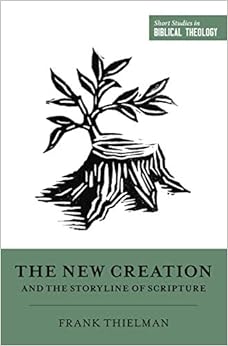
The New Creation and the Storyline of Scripture – Frank Thielman (2021)

Frank Thielman, The New Creation and the Storyline of Scripture (Wheaton: Crossway Books, 2021), 142 pp.

The New Creation and the Storyline of Scripture by Frank Thielman is the most recent installment in Crossway’s Short Studies in Biblical Theology. The goal of this series, according to the editors is “to magnify the Savior and build up his church – magnifying the Savior through showing how the whole Bible points to him and his gracious rescue of helpless sinners; and building up the church by strengthening believers in their grasp of these life-giving truths.”

Thielman’s work is the most general in nature in the Crossway series. It guides readers from a world under the curse of sin to the New Jerusalem in Revelation 21. The author does a commendable job in a short amount of space in showing God’s redemptive purposes in the plot line of Scripture. “Because God is so gracious,” writes Thielman, “he has not left his creatures to wallow in the mire of their own rebellion against him. He has undertaken costly and concrete steps to put the world right.”

I received this book free from the publisher. I was not required to write a positive review.

The Promise: The Amazing Story of Our Long-Awaited Savior – Jason Helopoulos (2021)

Jason Helopoulos, The Promise: The Amazing Story of Our Long-Awaited Savior (Wheaton: Crossway Books, 2021), 64 pp.

Everyone loves a good story. For centuries people have gathered to tell stories. Some stories are simply fun. Others are life-changing. The Promise: The Amazing Story of Our Long-Awaited Savior by Jason Helopoulos is a story of the latter variety. Indeed, it is a story about God’s plan for the nations. But it is not just any story – it is his story.

This short children’s book is a creative way to teach biblical theology to young minds. Pastor Helopoulos begins in Genesis 1:1 with the creation narrative. He walks readers through the six days of creation and proceeds to show how sin entered the world and ruined everything. The remainder of the book focuses on various ways that people try to find peace with God.

In the end, the reader is confronted with the reality of the gospel as the Lord Jesus Christ came into the world to save sinners, the one who was promised in Genesis 3:15: The author writes:

In this child, the promise came. He was the one who would crush the head of the serpent, deliver mankind from their sins, grant them his righteousness, work in them his holiness, give them his life.

The Promise not only accurately unfolds the precious promise of the Redeemer; it is beautifully bound and includes stunning illustrations on each page by Rommel Ruiz. The blend of art and theology geared to children of all ages makes this book an important part of family discipleship. It is a book that can and should be read multiple times and discussed with children. Such a book can be passed from one generation to the next and introduce children to God’s redemptive plan for the nations.

Highly recommended!

I received this book free from the publisher. I was not required to write a positive review.

The Church: An Introduction – Gregg R. Allison

Gregg R. Allision, The Church: An Introduction (Wheaton: Crossway Books, 2021), 181 pp.

The church is at the very center of God’s redemptive purposes. Gregg Allison is quick to articulate this great reality in The Church: An Introduction. Dr. Allison’s work is the newest installment in Crossway’s Short Studies in Systematic Theology series, one that has been commended unreservedly by this writer.

Foundational Issues

Dr. Allison pours a sturdy ecclesiological foundation in part one and demonstrates the great need to ground this subject in the triune God. Almost immediately, the author distinguishes himself as set apart from a Classical Dispensational understanding of Scripture:

In summary, both the Old and New Testament present the one people of God in two aspects: as the people of Israel in old covenant relationship with him. Believers constitute the one people of God … Specifically, this redeemed people of God consists of two aspects: the people of Israel in old covenant relationship with him and the people of the church in new covenant relationship with him. Believers constitute the one people of God.

God redeems a people for his own possession and his Spirit dwells among his people. Once again, Allison drives home the reality and importance of the church: “There is one people of God, who from eternity past has graciously elected all those who will believe in him by faith and walk with him in obedience, worship, love, and service.”

Next, the author focuses on the ecclesiastical framework.

Mere Ecclesiology and More Ecclesiology

Various elements of the church are explored in some detail including the leadership, government, and ordinances of the church. As with the other topics in the Short Studies in Systematic Theology series, these are covered in a basic manner but never in a simplistic way.

More than anything else, I appreciate the tone of Dr. Allision. His books are theologically rich and practical. Both beginners and veterans of the Christian faith will benefit from this excellent discussion.

I received this book free from the publisher. I was not required to write a positive review.

Finding Truth – Nancy Pearcey

Finding Truth, by Nancy Pearcey is another fine contribution thataa deserves to be read.  The author maintains with Romans 1 that all people have access to general revelation. As such:

  • We all have access to evidence for God through creation.
  • We all suppress the evidence for God from creation.
  • We all create idols to take the place of God.
  • God gives us up to the consequences of our idols to a “debased” mind.
  • God gives us up to the consequences of our idols – to “dishonorable” behavior.

Pearcey builds upon her earlier works, both of which are best sellers.  Total Truth argued for a unified view of truth and the obliteration of sacred/secular split.   Saving Leonardo   sought to help people develop skills in critical thinking.  Finding Truth introduces readers to five principles that help make sense of competing worldviews and make a positive case for historic Christianity.  The five strategic principles are summarized below:

  1. Identify the Idol.  Anything which is presented as eternal and unchanging is an idol.  This principle helps us get to the heart of mankind’s propensity to erect idols and bow down to them.  By way of contrast, Christianity refuses to begin with creation and an epistemological starting point.  Rather, the beginning of knowledge rests in a transcendent Creator who is sovereign over all things.
  2. Identify the Idol’s Reductionism.  Pearcey notes, “The link is that idols always lead to a lower view of human life … When one part of creation becomes deified, the other part will be denigrated.”  Reductionism, is, therefore, a fool’s errand as the creation is elevated to a status that God never intends.
  3. Test the Idol: Does it Contradict What We Know About the World?  Since idols always fail to satisfy, people will begin to realize that they cannot live according to the logic of their presuppositions.  They are either forced to live in the real world – which is to oppose their worldview or they live in accordance with their worldview which contradicts reality.
  4. Test the Idol: Does it Contradict Itself?  The competing worldview, at this point, becomes self-defeating.  The author notes, “Everyone who proposes a reductionist worldview must make a tacit exception for his own thinking – at least, at the moment he is stating his claims.  But that too creates a logical inconsistency.”  Thus the worldview fails.
  5. Replace the Idol: Make a Case for Historic Christianity.  As it becomes apparent that a competing worldview fails, the apologist must make a strong case for the viability and truthfulness of the Christian worldview.  “By identifying the points where non-Christians are free-loading, we can be confident that we are addressing areas where they sense the need for something more.”

Finding Truth is an essential toolbox for thinking Christians.  Pearcey does a dual service for readers as she not only instructs them to analyze and demolish competing worldviews (2 Cor. 10:5); she encourages readers to go deeper in the Christian faith which is informed by biblical reality and rock-solid facts.   A more accurate description, however, would be a treasure chest.  This is required reading which will only enrich one’s Christian life and effectiveness in the marketplace of ideas!

I received this book free from the publisher.   I was not required to write a positive review. 

BLOODGOOD – Dangerously Close

bloodgoodAlmost 30 years ago, I saw Bloodgood open for Stryper at the Paramount Theater in Seattle.  Even though I was fired up to see Stryper for the first time, I’ll never forget being blown away by Bloodgood.  They brought an energy to the stage that I’d never witnessed before.  But more important than energy was the gospel.  These four guys made it very clear they were Christians who just happened to be musicians who loved to rock.  The music never eclipsed the gospel; rather the gospel was only magnified by their music.

Bloodgood has returned stronger than ever with their first studio album in 22 years, Dangerously Close.  The rockers from Seattle are older and more seasoned.  David Zaffiro left the band years ago and has since been replaced by the virtuoso, Paul Jackson and more recently, Oz Fox from Stryper.

The album starts off strong with Lamb of God, an anthem that delights in the person and work of Christ:

He stretched out His arms to hold you/Gave up His life to know you/Lamb of God

On His knees He washed our feet/Poured His blood on the mercy seat/Told us to love one another/Lay down your life for your brother

Child on Earth  (a song that may prove to be the best track on the album) contrasts the righteousness of God and sinfulness of man in stark terms.  The Messiah is presented as the Virgin born, Son of God – the only One who can cover a sin-stained world.   It is a celebration of the protoevangelium (the first gospel) that articulates the redemptive purposes of the Messiah that Scripture prophecies in Genesis 3 and Isaiah 9:

My sin, my sin, has gone away/The Lord has set me free/My friend, my friend beginning and end, the Lord has died for me/Virgin birth, child on     earth/Crucified, pierced his side

The child grew and the cradle fell, crushing the head of the snake from hell

Several songs have a vertical dimension that catapult listeners to Scripture soaked lyrics.  I Will has a psalm-like feel that exalts the living God and expresses trust in his Providential care.  Bread Alone expresses complete confidence in God’s all-sufficient grace.  Pray is call to humble submission before a holy God who delights to answer the cry of His people.  And Run the Race challenges Christ-followers to live faithfully before God.

On a musical note: The guitar work on Dangerously Close is a feast for the ears.  These guys are a real delight to listen to.  I’ll admit my biases up front.  I’m a huge fan of Paul Jackson and Oz Fox, two guitar players who are underrated and deserve more attention.

Bloodgood is a different band with a different sound.    But one thing remains the same.  Bloodgood is committed to the gospel of the Lord Jesus Christ, a message that rings loudly throughout their new album.   The cross stands at the center of the lyrical content – an emphasis that is missing in a lot of Christian music these days.  Dangerously Close is a solid offering that should please longtime fans and welcome new listeners to a very good band.

4 stars

Theocracy – Remastered and Remixed (2007)

theocracyThe self-titled release by the Atlanta-based band, Theocracy first appeared in 2007 but has been out of circulation since that time.  For several months, fans have long-awaited for the release of Theocracy’s original album – an album that has been remastered and remixed.  On November 19, fans around the were thrilled to listen in to Matt Smith and the boys hammer out their unique style of Stryper meets Dream Theater heavy metal music.

Track by Track:

After a 80’s-like keyboard intro the album begins with a double-base drum anthem that celebrates victory in Christ.  Here’s a few lines from Ichthrus.

Forced into the catacombs
unite to praise the King of kings
they fear a revolution
and the power that He brings
heaven’s sons stand as one, as believers
in the blood of Christ
even in death we have true life

CENTURIES FLY
BUT THE FLAME IS STILL ALIVE
THE MAY HIDE IT, BUT IT WILL NEVER DIE
CARVED IN OUR SOULS,
SEE THE TWO HALVES OF THE SIGN
THROUGH THE AGES HIS GLORY WILL ARISE
FOR ALL TIME

The Serpent’s Kiss begins as a ballad and speaks candidly about the curse of sin that has been inflicted on the cosmos.

Born into the darkness
thrown into the viper’s den
the serpent in the cradle
takes the child into its nest of sin
slowly suffocating
the souls of victims it has found
into the vicious cycle
on the path that only leads us down

Rat-race-fueled machinery
this system of corruption
have we become so cold and numb
we’re blind to its destruction?
We’re forging in the fires made of greed
Our idols made of gold
then bowing down before them
with corrupt, adulterous souls
opened eyes,
realize…

WHAT WE HAVE DONE
WHAT WE HAVE SEEN
WHAT HAS BECOME OF OUR LIVES
CORRUPTED OUR DREAMS
WHAT WE HAVE LOST
AND WHAT REMAINS
PARALYZED BY THE VENOM THAT RUNS THROUGH OUR VEINS
THERE’S GOT TO BE MUCH MORE TO LIFE THAN THIS
THE WORLD’S CARESS IS JUST THE SERPENT’S KISS

But the venom that has plagued mankind has been defeated by the power of the cross.  So the song continues …

I stand before you as a child
by this world I’ve been defiled
stained and poisoned, burned and beaten
bruised and wounded, sick and vile
with hands reaching out to you, I run
realizing what I’ve done
you take me in your arms, a reunited father and son…

The song is not only a powerful reminder of the gospel but also leaves listeners with a permanent and painful warning:

And all illusion ceases to exist
the world’s caress is just a serpent’s kiss

Mountain paints a vivid portrait of the journey that every Christ-follower faces.

Step by step the climb gets harder
my being weakens as I struggle farther and farther
flesh is weakness, darkness, sickness
my dreams are shattered, my ambitions crumbled
my will defeated, my spirit humbled once more
I am hopeless, helpless without you

The tune resembles John Bunyan’s classic work, Pilgrim’s Progress and leaves listeners with hope as they plod their way through the Christian life:

Take me to the places I can’t go
Transcending
I’m sick of living in the status quo
New Beginning
And when it seems I’ve given up
On eagle’ wings you life me up again
and this time I know, in the end
…You carried me

The title track, Theocracy is a metal dream that challenges every listener with the direct claims of Christ’s lordship:

At the center of my heart there sits a throne
That the rightful occupant’s not always
free to call His own
For how can I give the King
His place of worth above all else
When I spend my time striving
to place the crown upon myself?

The chorus hammers the lordship theme with a holy vengeance:

I TAKE MY CROWN AND CAST IT DOWN
CASTLES BURNING
CASTLES BURNING
LEARN TO GROW, GROW TO BE
A FLESH AND BLOOD THEOCRACY
TO TAKE THE LOSS AND BEAR THE CROSS
RAISE THE KINGDOM
RAISE THE KINGDOM
BURN AWAY ALL IVE BEEN
TO RESURRECT THEOCRACY WITHIN

2 Corinthians 10:5 is employed to remind Christians to submit every thought to the lordship of Christ:

and the would-be rulers of my heart
that I place upon the throne
each lead the kingdom of my life to ruin
to bring every though into submission
to tear the idols down
is to break the chains, to rearrange,
to give the king his crown

The Healing Hand is a powerful five-part masterpiece that begins with the prophecy of the Messiah – the hope of nations.  The tune leads listeners from the cradle to the Cross of Christ where the “healing hand becomes the bleeding hand.”

His kingdom forever, the Lion of Judah in strength
everlasting redemption, atonement complete
resurrected in power, as King now he stands
FOR THE BLEEDING HAND HAS BECOME THE RULING HAND

Faith-born forever, a part of His kingdom become
Or reject him, stand back
and watch his kingdom come
Alpha and omega almighty is he
Christ reigns victorious for eternity
Eternity

Several more songs grace this stunning album.  There is simply too much to share in a short review in this format.  But suffice it to say, this piece of work by Theocracy is about as good as it gets.  The music is tight, the production is crisp, and the vocals are spot on.  Again, as I have noted elsewhere, Matt Smith is one of the premier songwriters of this day.  For whatever reason, he has gone largely unnoticed – a tragedy in its own right.  This young man should be commended for his God-given gifts.  But as every God-fearing man recognizes, all the glory goes back to the Giver of every good gift.

Thanks to Matt Smith and the band for writing such God-honoring music; heavy metal music that truly honors the Lord Jesus Christ and magnifies his gospel!

5 stars

Deacons: How They Serve and Strengthen the Church – Matt Smethurst

Matt Smethurst, Deacons: How They Serve and Strengthen the Church (Wheaton: Crossway Books, 2021), 166 pp.

For several years, 9Marks has consistently produced solid resources in their Building Healthy Churches series. The newest installment, Deacons: How They Serve and Strengthen the Church by Matt Smethurst is no exception.

Smethurst’s aim is stated at the begging: “The basic thesis of this book is that deacons – rightly understood and deployed – are an irreplaceable gift to Christ’s church. They are model servants who excel in being attentive and responsive to tangible needs in the life of the church.”

The author provides the necessary context and historical background behind the office of deacon. A basic job description is offered along with the biblical qualifications. The ministry of Christ is the ultimate model of what a deacon should aim for:

And Jesus called them to him and said to them, “You know that those who are considered rulers of the Gentiles lord it over them, and their great ones exercise authority over them. But it shall not be so among you. But whoever would be great among you must be your servant, and whoever would be first among you must be slave of all. For even the Son of Man came not to be served but to serve, and to give his life as a ransom for many” (Mark 10:42–45).

Deacons: How They Serve and Strengthen the Church is short, readable, and filled with powerful stories about the impact that deacons have on a local church. Every pastor should pay careful attention to this volume along with the others in the 9Marks series.

I received this book free from the publisher. I was not required to write a positive review.