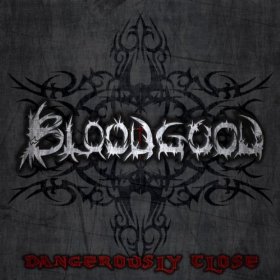
BLOODGOOD – Dangerously Close

bloodgoodAlmost 30 years ago, I saw Bloodgood open for Stryper at the Paramount Theater in Seattle.  Even though I was fired up to see Stryper for the first time, I’ll never forget being blown away by Bloodgood.  They brought an energy to the stage that I’d never witnessed before.  But more important than energy was the gospel.  These four guys made it very clear they were Christians who just happened to be musicians who loved to rock.  The music never eclipsed the gospel; rather the gospel was only magnified by their music.

Bloodgood has returned stronger than ever with their first studio album in 22 years, Dangerously Close.  The rockers from Seattle are older and more seasoned.  David Zaffiro left the band years ago and has since been replaced by the virtuoso, Paul Jackson and more recently, Oz Fox from Stryper.

The album starts off strong with Lamb of God, an anthem that delights in the person and work of Christ:

He stretched out His arms to hold you/Gave up His life to know you/Lamb of God

On His knees He washed our feet/Poured His blood on the mercy seat/Told us to love one another/Lay down your life for your brother

Child on Earth  (a song that may prove to be the best track on the album) contrasts the righteousness of God and sinfulness of man in stark terms.  The Messiah is presented as the Virgin born, Son of God – the only One who can cover a sin-stained world.   It is a celebration of the protoevangelium (the first gospel) that articulates the redemptive purposes of the Messiah that Scripture prophecies in Genesis 3 and Isaiah 9:

My sin, my sin, has gone away/The Lord has set me free/My friend, my friend beginning and end, the Lord has died for me/Virgin birth, child on     earth/Crucified, pierced his side

The child grew and the cradle fell, crushing the head of the snake from hell

Several songs have a vertical dimension that catapult listeners to Scripture soaked lyrics.  I Will has a psalm-like feel that exalts the living God and expresses trust in his Providential care.  Bread Alone expresses complete confidence in God’s all-sufficient grace.  Pray is call to humble submission before a holy God who delights to answer the cry of His people.  And Run the Race challenges Christ-followers to live faithfully before God.

On a musical note: The guitar work on Dangerously Close is a feast for the ears.  These guys are a real delight to listen to.  I’ll admit my biases up front.  I’m a huge fan of Paul Jackson and Oz Fox, two guitar players who are underrated and deserve more attention.

Bloodgood is a different band with a different sound.    But one thing remains the same.  Bloodgood is committed to the gospel of the Lord Jesus Christ, a message that rings loudly throughout their new album.   The cross stands at the center of the lyrical content – an emphasis that is missing in a lot of Christian music these days.  Dangerously Close is a solid offering that should please longtime fans and welcome new listeners to a very good band.

4 stars

Theocracy – Remastered and Remixed (2007)

theocracyThe self-titled release by the Atlanta-based band, Theocracy first appeared in 2007 but has been out of circulation since that time.  For several months, fans have long-awaited for the release of Theocracy’s original album – an album that has been remastered and remixed.  On November 19, fans around the were thrilled to listen in to Matt Smith and the boys hammer out their unique style of Stryper meets Dream Theater heavy metal music.

Track by Track:

After a 80’s-like keyboard intro the album begins with a double-base drum anthem that celebrates victory in Christ.  Here’s a few lines from Ichthrus.

Forced into the catacombs
unite to praise the King of kings
they fear a revolution
and the power that He brings
heaven’s sons stand as one, as believers
in the blood of Christ
even in death we have true life

CENTURIES FLY
BUT THE FLAME IS STILL ALIVE
THE MAY HIDE IT, BUT IT WILL NEVER DIE
CARVED IN OUR SOULS,
SEE THE TWO HALVES OF THE SIGN
THROUGH THE AGES HIS GLORY WILL ARISE
FOR ALL TIME

The Serpent’s Kiss begins as a ballad and speaks candidly about the curse of sin that has been inflicted on the cosmos.

Born into the darkness
thrown into the viper’s den
the serpent in the cradle
takes the child into its nest of sin
slowly suffocating
the souls of victims it has found
into the vicious cycle
on the path that only leads us down

Rat-race-fueled machinery
this system of corruption
have we become so cold and numb
we’re blind to its destruction?
We’re forging in the fires made of greed
Our idols made of gold
then bowing down before them
with corrupt, adulterous souls
opened eyes,
realize…

WHAT WE HAVE DONE
WHAT WE HAVE SEEN
WHAT HAS BECOME OF OUR LIVES
CORRUPTED OUR DREAMS
WHAT WE HAVE LOST
AND WHAT REMAINS
PARALYZED BY THE VENOM THAT RUNS THROUGH OUR VEINS
THERE’S GOT TO BE MUCH MORE TO LIFE THAN THIS
THE WORLD’S CARESS IS JUST THE SERPENT’S KISS

But the venom that has plagued mankind has been defeated by the power of the cross.  So the song continues …

I stand before you as a child
by this world I’ve been defiled
stained and poisoned, burned and beaten
bruised and wounded, sick and vile
with hands reaching out to you, I run
realizing what I’ve done
you take me in your arms, a reunited father and son…

The song is not only a powerful reminder of the gospel but also leaves listeners with a permanent and painful warning:

And all illusion ceases to exist
the world’s caress is just a serpent’s kiss

Mountain paints a vivid portrait of the journey that every Christ-follower faces.

Step by step the climb gets harder
my being weakens as I struggle farther and farther
flesh is weakness, darkness, sickness
my dreams are shattered, my ambitions crumbled
my will defeated, my spirit humbled once more
I am hopeless, helpless without you

The tune resembles John Bunyan’s classic work, Pilgrim’s Progress and leaves listeners with hope as they plod their way through the Christian life:

Take me to the places I can’t go
Transcending
I’m sick of living in the status quo
New Beginning
And when it seems I’ve given up
On eagle’ wings you life me up again
and this time I know, in the end
…You carried me

The title track, Theocracy is a metal dream that challenges every listener with the direct claims of Christ’s lordship:

At the center of my heart there sits a throne
That the rightful occupant’s not always
free to call His own
For how can I give the King
His place of worth above all else
When I spend my time striving
to place the crown upon myself?

The chorus hammers the lordship theme with a holy vengeance:

I TAKE MY CROWN AND CAST IT DOWN
CASTLES BURNING
CASTLES BURNING
LEARN TO GROW, GROW TO BE
A FLESH AND BLOOD THEOCRACY
TO TAKE THE LOSS AND BEAR THE CROSS
RAISE THE KINGDOM
RAISE THE KINGDOM
BURN AWAY ALL IVE BEEN
TO RESURRECT THEOCRACY WITHIN

2 Corinthians 10:5 is employed to remind Christians to submit every thought to the lordship of Christ:

and the would-be rulers of my heart
that I place upon the throne
each lead the kingdom of my life to ruin
to bring every though into submission
to tear the idols down
is to break the chains, to rearrange,
to give the king his crown

The Healing Hand is a powerful five-part masterpiece that begins with the prophecy of the Messiah – the hope of nations.  The tune leads listeners from the cradle to the Cross of Christ where the “healing hand becomes the bleeding hand.”

His kingdom forever, the Lion of Judah in strength
everlasting redemption, atonement complete
resurrected in power, as King now he stands
FOR THE BLEEDING HAND HAS BECOME THE RULING HAND

Faith-born forever, a part of His kingdom become
Or reject him, stand back
and watch his kingdom come
Alpha and omega almighty is he
Christ reigns victorious for eternity
Eternity

Several more songs grace this stunning album.  There is simply too much to share in a short review in this format.  But suffice it to say, this piece of work by Theocracy is about as good as it gets.  The music is tight, the production is crisp, and the vocals are spot on.  Again, as I have noted elsewhere, Matt Smith is one of the premier songwriters of this day.  For whatever reason, he has gone largely unnoticed – a tragedy in its own right.  This young man should be commended for his God-given gifts.  But as every God-fearing man recognizes, all the glory goes back to the Giver of every good gift.

Thanks to Matt Smith and the band for writing such God-honoring music; heavy metal music that truly honors the Lord Jesus Christ and magnifies his gospel!

5 stars

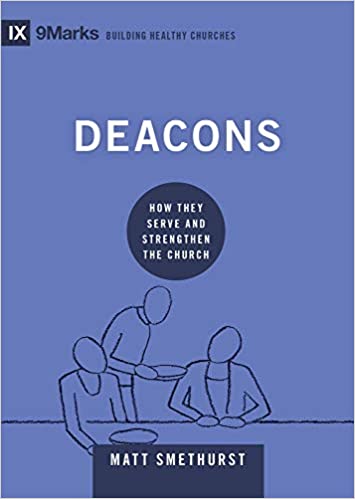
Deacons: How They Serve and Strengthen the Church – Matt Smethurst

Matt Smethurst, Deacons: How They Serve and Strengthen the Church (Wheaton: Crossway Books, 2021), 166 pp.

For several years, 9Marks has consistently produced solid resources in their Building Healthy Churches series. The newest installment, Deacons: How They Serve and Strengthen the Church by Matt Smethurst is no exception.

Smethurst’s aim is stated at the begging: “The basic thesis of this book is that deacons – rightly understood and deployed – are an irreplaceable gift to Christ’s church. They are model servants who excel in being attentive and responsive to tangible needs in the life of the church.”

The author provides the necessary context and historical background behind the office of deacon. A basic job description is offered along with the biblical qualifications. The ministry of Christ is the ultimate model of what a deacon should aim for:

And Jesus called them to him and said to them, “You know that those who are considered rulers of the Gentiles lord it over them, and their great ones exercise authority over them. But it shall not be so among you. But whoever would be great among you must be your servant, and whoever would be first among you must be slave of all. For even the Son of Man came not to be served but to serve, and to give his life as a ransom for many” (Mark 10:42–45).

Deacons: How They Serve and Strengthen the Church is short, readable, and filled with powerful stories about the impact that deacons have on a local church. Every pastor should pay careful attention to this volume along with the others in the 9Marks series.

I received this book free from the publisher. I was not required to write a positive review.

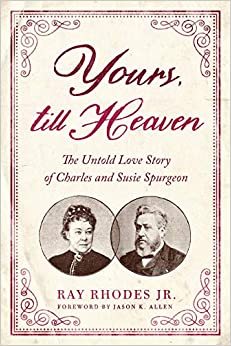
Yours, till Heaven: The Untold Love Story of Charles and Susie Spurgeon – Ray Rhodes Jr.

Ray Rhodes Jr., Yours, till Heaven: The Untold Love Story of Charles and Susie Spurgeon (Chicago: Moody Publishers, 2021), 208 pp.

Charles Haddon Spurgeon. Affectionately referred to as the “Prince of Preachers.” He is the most influential English-speaking preacher in church history. He is known around the world for his evangelistic zeal and his love for training pastors and planting churches.

Most Christians seem to know all about C.H. Spurgeon. But very few are acquainted with the love story between he and his wife, Susie. Dr. Ray Rhodes Jr. introduced Spurgeon’s wife in his outstanding book, Susie: The Life and Legacy of Susannah Spurgeon, Wife of Charles H. Spurgeon. Rhodes picks up where he left off in his latest work, Yours, till Heaven: The Untold Love Story of Charles and Susie Spurgeon.

The author sets out to show readers the “depth of Susie’s commitment to Charles and consider how her devotion to him helped to make him the man we admire.” It appears the adage is true, “Behind every good man is a godly woman.” Such is the case here.

Rhodes chronicles the Spurgeon romance, engagement, and marriage. Readers who are unfamiliar with the depth of suffering that both Charles and Susie endured throughout their lives will be humbled and encouraged to see how they navigated thirty-seven years of marriage and managed to grow through every season of adversity. The Spurgeon marriage, while not perfect, is one that should be emulated by every Christian couple.

The Spurgeon’s modeled a deep love for the gospel, the church, the Word of God, family, and of course – one another. The mutual support they showed throughout their marriage is unrivaled and inspiring. I commend this work wholeheartedly and trust that it will receive a wide readership.

I received this book free from the publisher. I was not required to write a positive review.

What the Bible Says About Divorce and Remarriage – Wayne Grudem

Wayne Grudem, What the Bible Says About Divorce and Remarriage (Wheaton: Crossway Books, 2021), 110 pp.

The Bible describes marriage as a God-initiated union established before witnesses, a union that is indissoluble. Indeed, God’s plan is for a man and a woman to enter a marriage covenant that lasts a lifetime. Jesus told the inquisitive Pharisees, “Therefore what God has joined together, let man not separate” (Mark 19:6b). The only event that may break the covenant is death (Rom. 7:2) at which point the living spouse is free to remarry.

Wayne Grudem’s book, What the Bible Says About Divorce and Remarriage attempts to navigate a biblical path for people in search of answers. As stated above, Dr. Grudem holds to a marital union that is lifelong and monogamous. Since we live in a world which is polluted by sin, the standard that God expects is often jettisoned and disobeyed.

While the author has a high view of marriage, he does maintain that in some cases, remarriage may be permissible – even when the previous spouse is still living. He sets forth his case in a clear and gracious way and notes his objections to authors such as J. Carl Laney.

The great strength of this work is its brevity and readability. Even though I deeply respect Dr. Grudem and have been impacted by his life and writing ministry in a multitude of ways, my convictions are closer to those outlined by Carl Laney in his seminal work, The Divorce Myth.

I encourage readers to wrestle with Grudem’s position and contrast it with competing others such as Laney, Heth, and Jim Ellif.

I received this book free from the publisher. I was not required to write a positive review.

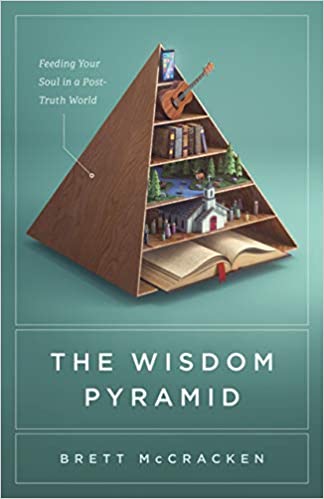
The Wisdom Pyramid – Brett McCracken

Brett McCracken, The Wisdom Pyramid (Wheaton: Crossway Books, 2021), 188 pp.

The rise of social media and the internet is slowly chipping away at the evangelical mind. A subtle erosion has set in and rendered people incapable of thinking Christianly. In the end, this tragic turn of events has led many to jettison the path of wisdom.

Brett McCracken address this epistemological shift in his book, The Wisdom Pyramid. The author passionately argues that “we need a better diet of knowledge ad better habits of information intake.” The ultimate aim of the book is to present a strategy for developing wisdom. McCracken anchors the purpose of the book in the mind of his readers:

It’s a plan for stabilizing a sick society by making Christians wiser: God-fearing, trustworthy truth-tellers and truth-livers. Salt and light. This is what we are called to be. This is what the world desperately needs us to be.

Part one examines the sources of our sickness. Nothing is surprising here but the accumulated evidence that is presented is overwhelming. A nod of approval is given to Neil Postman’s classic work, Amusing Ourselves to Death. While originally penned in 1985, Postman’s thesis is proven to be accurate is most people in the west are drowning in a sea of information and have nothing to show for it. Tribalism and triviality reign – and the effects on culture are troubling.

The author presents a cogent case for our changing brains. This thesis, popularized by Nicholas Carr in his seminal work, The Shallows demonstrates how our minds are being manipulated by media and hardwired by a plethora of digital distractions. McCracken rightly notes, “We are digital wanderers, and this is a dangerous thing to be.” Even worse, very few seem to care.

Part two examines various sources of truth that lead to a life of wisdom. “Our sources of intake are vitally important,” writes the author. He continues, “They can make us healthy, or they can make us sick. Bad intake can make us unwise. Good intake – from trustworthy sources of truth – can make us wise, inoculating us against viruses of deception and error.”

Six sources are presented that offer sources of wisdom – Scripture, the church, nature, books, beauty, and the internet. Scripture is placed at the bottom of the pyramid and utilizes the well-known “Food Pyramid,” which was first introduced by the US Department of Agriculture in 1992. In this model, Scripture must be the basis of one’s diet in order for healthy growth to occur. But the other areas are not minimized. Rather, they are placed in their proper order. The purpose of this placement is the accumulation of wisdom which is defined as, “knowing what to do with knowledge gained through various means of education: how to apply knowledge and information in everyday life; how to discern if something is true or not; how to live well in light of truth gained.”

The Wisdom Pyramid is a helpful book are is sure to help many people, especially young people who are trapped in the quagmire of digital/social media. It is a solid antidote for Christians who seek wisdom in a culture of quick answers and digital “fast food.” McCracken draws deep into the wells of Christian theology and invites readers, in the end, to taste and see that the Lord is good.

I received this book free from the publisher. I was not required to write a positive review.

Biblical Apologetics: How Shall We Respond to Unbelief?

photo of three person sitting and talkingUnbelief is in the air.  Unbelief is gaining ground in postmodern culture.  Over 100 years ago, the German philosopher, Friedrich Nietzsche wrote, “I call Christianity the one great curse, the one great innermost corruption, the one great instinct of revenge, for which no means is poisonous, stealthy, subterranean, small enough – I call it the one immortal blemish of mankind.”


The bankrupt philosophy of the so-called four horsemen of atheism continues to gain in popularity.  Why?  Apparently, unbelief is in.  Unbelief is hip.  But the question that is burning a hole in the table for Christians is this: How shall we respond to unbelief?  How shall we who have a heart for lost people answer when they malign the Christian faith and mock the very foundations of historic Christianity?

The apostle Peter instructs believers to respond rightly: “But in your hearts honor Christ the Lord as holy, always being prepared to make a defense to anyone who asks you for a reason for the hope that is in you; yet do it with gentleness and respect” (1 Peter 3:15, ESV).  In other words, we must develop the mindset of an apologist (ἀπολογία).  John Frame’s definition of apologetics of helpful: Apologetics is “the discipline that teaches Christians how to give a reason for their hope … it is the application of Scripture to unbelief.”  Cornelius Van Til writes, “Apologetics is the vindication of the Christian philosophy of life against the various forms of the non-Christian philosophy of life.”  Tragically, the mandate to engage in apologetics often turns ugly.  Well-meaning Christians have turned apologetics into a nasty slug fest.  Nothing could be further from the truth.  Notice six crucial principles of biblical apologetics.

1. Apologetics involves verbal proclamation

Christians are commanded to proclaim the good news.  The Greek word, “proclaim”  (κηρύσσω) means to announce or proclaim; to preach or publish.”  St. Francis of Assisi was on to something when he quipped, “Preach the gospel and if necessary, use words.”  The point: Make sure your life matches the gospel.  However, actions alone cannot convert.  Actions must be backed up with verbal proclamation.  “So faith comes from hearing, and hearing through the word of Christ” (Romans 10:17, ESV).  Simply put, the gospel is meant to be published.  The gospel must be proclaimed.  Postmodern gurus and emergent sympathizers may be quick to downplay preaching and promote a “deeds not creeds” mentality.  Jesus disagrees: “And this gospel of the kingdom will be proclaimed throughout the whole world as a testimony to the nations, and then the end will come” (Matt. 24:14, ESV).  The first principle of apologetics involves verbal proclamation.

2. Apologetics involves bold proclamation

The New Testament apostles boldly proclaimed the truth.  Paul prayed for an extraordinary boldness (Eph. 6:19).  And Luke made it clear how bold proclamation characterized his ministry: “He lived there two whole years at his own expense, and welcomed all who came to him, proclaiming the kingdom of God and teaching about the Lord Jesus Christ with all boldness and without hindrance” (Acts 28:30-31, ESV).  We too, must boldly proclaim the Word of God without apology.  Now is the time for bold and courageous proclamation.

3. Apologetics involves logical proclamation

Peter argues that we must “always being prepared to make a defense to anyone who asks you for a reason for the hope that is in you …” (1 Peter 3:15, ESV)  “Reason” (λόγος) involves a word, an utterance or reasonable speech.  The apostle Paul was quick to reason with the thinkers that flooded the first century marketplace of ideas:

  • “And Paul went in, as was his custom, and on three Sabbath days he reasoned with them from the Scriptures” (Acts 17:2, ESV).
  • “So he reasoned in the synagogue with the Jews and the devout persons, and in the marketplace every day with those who happened to be there” (Acts 17:17, ESV).
  • “And he reasoned in the synagogue every Sabbath, and tried to persuade Jews and Greeks” (Acts 18:4, ESV).

We must be able to spell out the gospel message.  We must clearly and logically explain how a holy God created men and women in his image.  These image-bearers fell from God when they sinned which separated them from a holy God.  But God in his mercy, sent Christ – born of a virgin to live a perfect life, obey the law of God and die on the cross.  Christ satisfied  the justice of God and extinguished the wrath of God for every person who would ever believe.  On the third day, Jesus rose from the dead, conquered sin and death, opening the way to a restored relationship with God for anyone who would repent of their sin and turn to Christ alone for forgiveness.  It is our privileged responsibility to proclaim the truth of the gospel in a logically compelling way.

4. Apologetics involves hopeful proclamation

We offer a message of hope!  We offer a message that promises liberation (John 8:36).  It tells  sinners they can be forgiven; that they can be delivered from the penalty and power of sin; and one day they shall be free from the presence of sin (Luke 1:66-67; Acts 5:31; Eph. 1:7; Col. 2:13; Rom. 4:7; 1 Pet. 2:9).  Apologetics involves hopeful proclamation.

5. Apologetics involves faithful proclamation

This message of hope is for everyone.  Therefore, our task is to share this hope with people as we are given opportunity:  “And he said to them, ‘Go into all the world and proclaim the gospel to the whole creation'” (Mark 16:15, ESV).  The Great Commission involves faithful proclamation to all peoples (Rev. 5:9).

6. Apologetics involves Christ-centered proclamation

Peter makes it clear: “but in your hearts honor Christ the Lord as holy, always being prepared to make a defense to anyone who asks you for a reason for the hope that is in you; yet do it with gentleness and respect” (1 Peter 3:15, ESV).  First, we must maintain an attitude of gentleness (πραΰτης), which implies humility or an unpretentious spirit.  It involves a kind answer.  Additionally, we must be respectful (φόβος) as we engage in apologetics, a term that conveys deep admiration for another person.

Our response to unbelief is crucial.  The world is watching.  May our apologetics match the biblical model.  And may we proclaim the gospel of Jesus Christ in a winsome and compelling way.  For in the final analysis, all of God’s elect will hear and believe.

“Therefore let it be known to you that this salvation of God has been sent to the Gentiles; they will listen” (Acts 28:28).

Standing on the Authority of God’s Word

As we embark on yet another year, the challenges before us may seem daunting. We live in a culture that relies heavily on hunches, intuitions, and feelings. The emphasis on the subjective has led many to deny biblical Christianity and reject any notion of truth. The witty British writer, G.K. Chesterton poetically described the plight of postmodern culture: “Once people stop believing in God, the problem is not that they will believe nothing; rather the problem is that they will believe anything.” 

Given the dismal postmodern attitude toward authority, where are we to turn? Perhaps more than ever, we as disciples of Jesus need a solid rock to stand on or the waves of syncretism, pluralism and false teaching may sweep us away. We must, therefore, begin and end with the Bible as the source of divine revelation from God.

The Word of God is our highest authority. Therefore, we also need to become acquainted with the supreme value of Scripture and the benefits it brings to our daily lives. Understanding the transcendent worth of God’s Word not only helps us grow more deeply in love with the Savior; it helps point our generation to the truth that can be found in Jesus Christ alone. Consider a few valuable qualities of God’s Word found in Psalm 19:7.

God’s Authoritative Word

First, the Word of God is perfect. Psalm 19:7 plainly says, “The law of the LORD is perfect.” The Hebrew word translated perfect means “complete, whole or sound.” It is in accord with what is true. So we can confidently approach God’s Word with the full assurance that the truth presented corresponds to reality. God’s Word is not a trifle or a fad. It is perfect in every way and demands our unwavering allegiance.

Psalm 19:7 secondly reveals that God’s Word is the means of conversion. “The law of the LORD is perfect, converting the soul.” In other words, apart from God’s Word, conversion is impossible. Calvin indicates that while God is revealed in general revelation, the “spectacles of faith” are needed to rightly perceive and receive God. “It is needful that another and better help be added to direct us aright to the very Creator of the universe . . . So the Scripture, gathering up the otherwise confused knowledge of God in our minds, having dispersed our dullness clearly shows us the true God.” Spurgeon adds force to the argument that God’s Word is the means of conversion: 

The great means of the conversion of sinners is the Word of God, and the more closely we keep to it in our ministry the more likely we are to be successful . . . Try men’s depraved nature with philosophy and reasoning, and it laughs at your efforts to scorn, but the Word of God soon works a transformation. 

So people everywhere must submit to God’s Word and recognize the biblical truth that salvation belongs to the Lord. 

Third, the Word of God is reliable and trustworthy. “The statutes of the LORD are trustworthy, making wise the simple” (Ps. 19:7b, NIV). “Your righteousness is everlasting and your law is true” (Ps. 119:142). “O Sovereign LORD, you are God! Your words are trustworthy, and you have promised good things to your servant” (2 Sam. 7:28). God’s Word is the anchor of truth for believers who live in a world that balks at the notion of truth. It is the firm foundation where believers may confidently rest, knowing that the sacred Scriptures will never disappoint for they are utterly reliable and trustworthy. 

When Luther stood before the Diet at Worms and was asked to repudiate his books and the “errors they contain,” he replied:

Unless I am convicted by Scripture and plain reason – I do not accept the authority of popes and councils, for they have contradicted each other – my conscience is held captive to the Word of God. I cannot and will not recant anything, for to go against conscience is neither right nor safe. God help me, Amen. 

May God grant us the rigor and courage of Luther as we hold the authoritative Word of God high in the unique culture where God has providentially placed us.

Stand Strong for Christ

man wearing brown leather dress shoes stepping on brown wood

We are living through one of the most tumultuous times in American history. It seems like every day a new challenge surfaces. We face trials, temptations, suffering, and grief. We hear rumors about the fate of our Republic. Conspiracy theories are at a fevered pitch. None of this should surprise us. In Jesus’s day he told his disciples:

And you will hear of wars and rumors of wars. See that you are not alarmed, for this must take place, but the end is not yet. For nation will rise against nation, and kingdom against kingdom, and there will be famines and earthquakes in various places. All these are but the beginning of the birth pains. “Then they will deliver you up to tribulation and put you to death, and you will be hated by all nations for my name’s sake. And then many will fall away and betray one another and hate one another. And many false prophets will arise and lead many astray. And because lawlessness will be increased, the love of many will grow cold. But the one who endures to the end will be saved. And this gospel of the kingdom will be proclaimed throughout the whole world as a testimony to all nations, and then the end will come (Matthew 24:6–14, ESV).

Jesus has a way of bringing us back to ground zero. He always tells the truth and he always has our best interests in mind. Is it any wonder that Paul admonished the Ephesian believers to put on the armor of God? He writes:

Stand therefore, having fastened on the belt of truth, and having put on the breastplate of righteousness, and, as shoes for your feet, having put on the readiness given by the gospel of peace. In all circumstances take up the shield of faith, with which you can extinguish all the flaming darts of the evil one; and take the helmet of salvation, and the sword of the Spirit, which is the word of God, praying at all times in the Spirit, with all prayer and supplication. To that end, keep alert with all perseverance, making supplication for all the saints, and also for me, that words may be given to me in opening my mouth boldly to proclaim the mystery of the gospel, for which I am an ambassador in chains, that I may declare it boldly, as I ought to speak (Ephesians 6:14–20, ESV).

In order to be battle ready, we need the courage of Christ. We need to put on the armor of Christ. And we need to stand strong for Christ.

The Puritan William Gurnall writes, “To stand is the opposite of to flee or to surrender. A captain who sees his men retreating or on the verge of surrender gives the order, ‘Stand!’ and every soldier worthy of his calling responds at once to his captain’s voice. In like manner, every Christian is to respond to God’s call to ‘Stand!’ – or, in other words, steadfastly to resist and never yield to the attacks of Satan.”1 Taking such a stand means that we not only stand for Christ; we also stand against some things. We stand against:

  • An ungodly world. Paul warns us about the kosmos (world) in his letter to the church in Colossae. He writes, “See to it that no one takes you captive by philosophy and empty deceit, according to human tradition, according to the elemental spirits of the world, and not according to Christ” (Colossians 2:8).
  • An ungodly agenda. Scripture describes the essence of this agenda in 2 Timothy 3:1-5. I encourage you to read through this section of Scripture and become familiar with this ungodly agenda.
  • An ungodly enemy. Satan is our enemy, a foe who is backed by a horde of evil demons. They are Satanic ambassadors who do the bidding of the prince of darkness. They seek to hinder the work of the ministry (1 Thes. 2:18). They work with all their might to stir up pride among the people of God. Ultimately, their aim is to destroy (John 10:10).
Prepared for Battle

Are you battle ready?

  • Do you have the courage of Christ?
  • Are you wearing your spiritual armor each day?
  • Are you standing strong for Christ?

J.C. Ryle reminds us, ““Take away the gospel from a church and that church is not worth preserving. A well without water, a scabbard without a sword, a steam-engine without a fire, a ship without compass and rudder, a watch without a mainspring, a stuffed carcass without life, all these are useless things. But there is nothing so useless as a church without the gospel.”2

Let us stand strong for the sake of Christ.

  1. William Gurnall, The Christian in Complete Armor (Edinburgh: Banner of Truth Trust, 1655), 285.
  2. J.C. Ryle, Light From Old Times (Edinburgh: The Banner of Truth, 2015), 45.

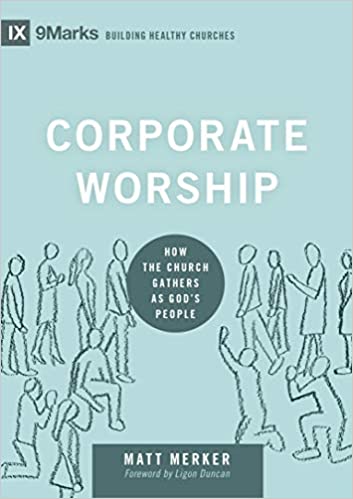
Corporate Worship – Matt Merker

Matt Merker, Corporate Worship (Wheaton: Crossway Books, 2021), 170 pp.

Corporate Worship by Matt Merker is the most recent installment in the Building Healthy Churches series of books. This series helps Christians obey the biblical commands that are an integral part of the process of growing a healthy church.

This volume addresses the matter of worship. As such it focuses issues that revolve around participants at church and the specifics of worship in the local church setting.

Merker sets the stage by revealing some helpful word pictures that show the importance of corporate worship. First, a local church is “an outpost of the kingdom of heaven.” Second, the local church is “a holy temple.” The key here is to understand that corporate worship is a matter of feasting. “Christ himself hosts us at his banquet table. We gather in his honor to delight in the richest of fare. And he expects us to meet together, as one family.” This critical foundation establishes the necessary biblical base for what follows.

The reason for corporate worship is three-fold: “God gathers us unto his glory, for our mutual good, before the world’s gaze.” Merker’s exposition of these important points are to the point and biblical throughout.

The most helpful aspect of Corporate Worship is the explanation of the so-called “Regulative Principle.” A summary of our Reformed heritage is presented in simple terms. We are called to read the Word, pray the Word, preach the Word, sing the Word, and see the Word (the Lord’s Supper and baptism). This presentation is worth the price of the book and should serve many readers well and keep them linked to the Bible and God’s heart for worship.

Five principles are set forth by way of practical application which include 1) Stay focused on the gospel, 2) Pray for a healthier church, 3) Encourage the elders to lead, 4) Teach patiently, and make changes gradually, and 5)Trust God’s sovereignty.

Corporate Worship is a worthy addition to the Building Healthy Churches series and will encourage and equip a new generation of Christian leaders.

I received this book free from the publisher. I was not required to write a positive review.