Christian Ethics: An Introduction to Biblical Moral Reasoning

grudemWayne Grudem, Christian Ethics: An Introduction to Biblical Moral Reasoning (Wheaton: Crossway Books, 2018), 1212 pp.

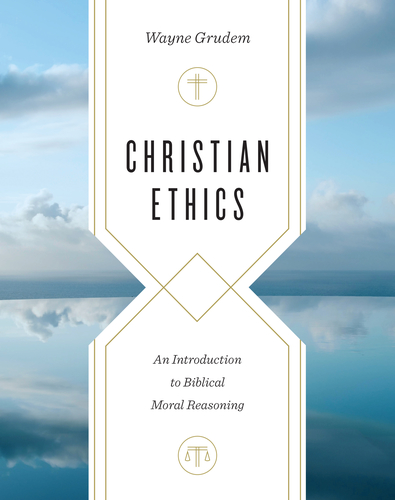
Wayne Grudem has become a household name in evangelical circles over the years. His landmark book, Systematic Theology, is used in Bible Colleges and Seminaries around the world. I have personally taught through his excellent book at least six times. As a result, hundreds of men and women have been equipped and edified in the Christian faith.

Dr. Grudem’s newest offering, Christian Ethics: An Introduction to Biblical Moral Reasoning is a wonderful companion to Systematic Theology. The book weighs in at over 1,200 pages and will likely turn some readers away. But walking away from Grudem’s book would be like gazing at a massive treasure chest and refusing to open it for lack of time or desire. Both responses would be tantamount to foolishness.

The introduction alone is worth the price of the book as the author establishes the foundation for Christian ethics by grounding his discussion in the holy character of God and sacred Scripture. Indeed, the essence of Christian ethics is living Coram Deo, and to the glory of God.

The remainder of the book is organized around the Ten Commandments. The basic outline is as follows:

  • Protecting God’s Honor
  • Protecting Human Authority
  • Protecting Human Life
  • Protecting Life
  • Protecting Property
  • Protecting Purity of Heart

Grudem does not leave any stone unturned here. Every ethical topic imaginable is explored. Each topic, of course, is subjected to uncompromising biblical standards.

Christian Ethics is a breath of fresh air that will embolden followers of Jesus Christ and challenge them to live with God-centered resolve in a postmodern ethos that has forgotten God. It is not only a response to the zeitgeist that surrounds us; it is a rally-cry for faithful Christians to live in a way that pleases the triune God!

I received this book free from the publisher. I was not required to write a positive review.

Why I Love the Apostle Paul – John Piper (2019)

John Piper, Why I Love the Apostle Paul (Wheaton: Crossway, 2019), 204 pp.

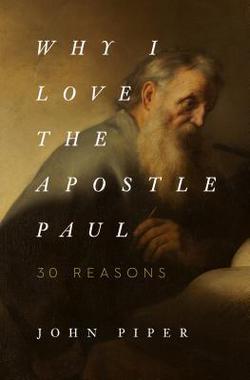
The aim of John Piper’s most recent book is to help readers get to know Paul the apostle. Piper’s motive is that Paul’s “God-entranced soul and his unparalleled vision of Jesus Christ and the authenticity of his life would move you to admire him and believe his message and embrace his Lord.”

The name of the book is Why I Love the Apostle Paul. Thirty reasons are supplied in short, readable chapters as Dr. Piper unpacks the heart and soul of one of the greatest thinkers and theologians of all time.

This book reveals the underbelly or the foundations of Piper’s well-known Christian hedonism. Many have fought against the very notion of such a worldview. Some have cast it aside as heretical; others have discounted it or marginalized its value. The arguments for Christian hedonism that Piper presents are not only biblical; they are robust, logical, mind-shaping, and heart-warming. The central thought of Piper’s Christian hedonism is this:

God is most glorified in us when we are most satisfied in him.

Piper’s latest offering, while not necessarily an apologetic for Christian hedonism, is a worthy defensive and brilliant articulation of the philosophy which has undergirded the author’s life and ministry.

Quite frankly, Why I Love the Apostle Paul is an enthralling book. It is certain to open many eyes to the depth, breadth, majesty, and beauty of the gospel. The deep biblical realities that Dr. Piper unfolds are powerful and encouraging. This is a book that deserves to be read over and over again!

I received this book free from the publisher. I was not required to write a positive review.

Called to Suffer

running man on bridge

The “health and wealth” gospel continues to wield a powerful influence on many people around the world. This movement is fraught with theological danger and should be resisted and opposed by thoughtful Christians. Al Mohler addresses this troubling trend:

Prosperity theology is a false gospel. Its message is unbiblical and its promises fail. God never assures his people of material abundance or physical health. Instead, Christians are promised the riches of Christ, the gift of eternal life, and the assurance of glory in the eternal presence of the living God. In the end, the biggest problem with prosperity theology is not that it promises too much, but that it promises too little. The gospel of Jesus Christ offers salvation from sin, not a platform for earthly prosperity. While we should seek to understand what drives so many into this movement, we must never for a moment fail to see its message for what it is – a false and failed gospel.

In contrast to the “health and wealth” gospel, the Bible calls followers of Christ to suffer. We are called to suffer together (1 Cor. 12:26). We are called to patiently endure suffering (2 Cor. 1:6). We are called upon to suffer for Christ’s sake (Phil. 1:29). In 1 Thessalonians 3:1-5, we learn that God has ordained that we will suffer.

The fact that we are called to suffer is one of the clear themes of Scripture. The Bible says, “For what credit is it if, when you sin and are beaten for it, you endure? But if when you do good and suffer for it you endure, this is a gracious thing in the sight of God. For to this you have been called, because Christ also suffered for you, leaving you an example, so that you might follow in his steps.” (1 Peter 2:20–21, ESV).

The apostle Paul challenges us to “rejoice in our sufferings …” (Rom. 5:3). This biblical mindset requires us to set our hope upon the risen Savior. It requires us to pay close attention to God’s revealed word. We know that suffering is not an end in itself. We know that God is using suffering for his purposes. And we know that suffering is ultimately for our good and for his glory. Listen to Paul’s God-centered perspective in his letter to the Corinthians:

So we do not lose heart. Though our outer self is wasting away, our inner self is being renewed day by day. For this light momentary affliction is preparing for us an eternal weight of glory beyond all comparison, as we look not to the things that are seen but to the things that are unseen. For the things that are seen are transient, but the things that are unseen are eternal (2 Cor. 4:16–18, ESV).

We are a people of unshakeable hope. Even in the midst of a global pandemic, we have much to rejoice in. Indeed, we rejoice in our sufferings, knowing that suffering produces endurance, and endurance produces character, and character produces hope.

The great Welsh pastor, Martyn Lloyd-Jones reminds us, “Faith produces hope, and the more clearly and consciously we have that hope, the more we shall know the love of God to us, and the more, in turn we shall love God.” Yes, we are called to suffer. Yes, we will experience adversity. But we cast our hope on a sovereign God who controls it all and will one day make all things new!

Stand Strong for Christ

man wearing brown leather dress shoes stepping on brown wood

We are living through one of the most tumultuous times in American history. It seems like every day a new challenge surfaces. We face trials, temptations, suffering, and grief. We hear rumors about the fate of our Republic. Conspiracy theories are at a fevered pitch. None of this should surprise us. In Jesus’s day he told his disciples:

And you will hear of wars and rumors of wars. See that you are not alarmed, for this must take place, but the end is not yet. For nation will rise against nation, and kingdom against kingdom, and there will be famines and earthquakes in various places. All these are but the beginning of the birth pains. “Then they will deliver you up to tribulation and put you to death, and you will be hated by all nations for my name’s sake. And then many will fall away and betray one another and hate one another. And many false prophets will arise and lead many astray. And because lawlessness will be increased, the love of many will grow cold. But the one who endures to the end will be saved. And this gospel of the kingdom will be proclaimed throughout the whole world as a testimony to all nations, and then the end will come (Matthew 24:6–14, ESV).

Jesus has a way of bringing us back to ground zero. He always tells the truth and he always has our best interests in mind. Is it any wonder that Paul admonished the Ephesian believers to put on the armor of God? He writes:

Stand therefore, having fastened on the belt of truth, and having put on the breastplate of righteousness, and, as shoes for your feet, having put on the readiness given by the gospel of peace. In all circumstances take up the shield of faith, with which you can extinguish all the flaming darts of the evil one; and take the helmet of salvation, and the sword of the Spirit, which is the word of God, praying at all times in the Spirit, with all prayer and supplication. To that end, keep alert with all perseverance, making supplication for all the saints, and also for me, that words may be given to me in opening my mouth boldly to proclaim the mystery of the gospel, for which I am an ambassador in chains, that I may declare it boldly, as I ought to speak (Ephesians 6:14–20, ESV).

In order to be battle ready, we need the courage of Christ. We need to put on the armor of Christ. And we need to stand strong for Christ.

The Puritan William Gurnall writes, “To stand is the opposite of to flee or to surrender. A captain who sees his men retreating or on the verge of surrender gives the order, ‘Stand!’ and every soldier worthy of his calling responds at once to his captain’s voice. In like manner, every Christian is to respond to God’s call to ‘Stand!’ – or, in other words, steadfastly to resist and never yield to the attacks of Satan.”1 Taking such a stand means that we not only stand for Christ; we also stand against some things. We stand against:

  • An ungodly world. Paul warns us about the kosmos (world) in his letter to the church in Colossae. He writes, “See to it that no one takes you captive by philosophy and empty deceit, according to human tradition, according to the elemental spirits of the world, and not according to Christ” (Colossians 2:8).
  • An ungodly agenda. Scripture describes the essence of this agenda in 2 Timothy 3:1-5. I encourage you to read through this section of Scripture and become familiar with this ungodly agenda.
  • An ungodly enemy. Satan is our enemy, a foe who is backed by a horde of evil demons. They are Satanic ambassadors who do the bidding of the prince of darkness. They seek to hinder the work of the ministry (1 Thes. 2:18). They work with all their might to stir up pride among the people of God. Ultimately, their aim is to destroy (John 10:10).
Prepared for Battle

Are you battle ready?

  • Do you have the courage of Christ?
  • Are you wearing your spiritual armor each day?
  • Are you standing strong for Christ?

J.C. Ryle reminds us, ““Take away the gospel from a church and that church is not worth preserving. A well without water, a scabbard without a sword, a steam-engine without a fire, a ship without compass and rudder, a watch without a mainspring, a stuffed carcass without life, all these are useless things. But there is nothing so useless as a church without the gospel.”2

Let us stand strong for the sake of Christ.

  1. William Gurnall, The Christian in Complete Armor (Edinburgh: Banner of Truth Trust, 1655), 285.
  2. J.C. Ryle, Light From Old Times (Edinburgh: The Banner of Truth, 2015), 45.

Counseling Under the Cross: How Martin Luther Applied the Gospel to Daily Life

kel

Bob Kellemen, Counseling Under the Cross: How Martin Luther Applied the Gospel to Daily Life Greensboro: New Growth Press, 2017, pp. 246.

One man blazed a trail in the sixteenth century that laid the groundwork for countless numbers of Christians. Martin Luther was the primary agent who God used in a mighty way as he hammered his 95 theses on the castle door at Wittenberg on October 31, 1517. He unleashed a theological revolution known as the Protestant Reformation, where the doctrines of grace were recovered and the gospel began to exert a powerful influence in the lives of people.

Counseling Under the Cross by Bob Kellemen explores the life and legacy of Martin Luther and reveals how his theological framework influenced his counseling ministry.

What Shaped Martin Luther’s Pastoral Counseling?

Part one explores Luther’s background and alerts readers to the oppressive environment that was so common in the sixteenth century. Luther fought desperately to find peace with God but was doomed to failure apart from completed work of Christ which is received by grace alone through faith alone.

Kellemen explains how Luther’s anxiety impacted his life in his early adult years. Luther admits, “For I had hoped I might find peace of conscience with fasts, prayers, and the vigils with which I miserably afflicted my body, but the more I sweated it out like this, the less peace and tranquillity I knew.”

The author continues, “Before he came under the influence of the cross, Luther lived life as a man terrified that he would never find peace with God because his God was not a God of peace. Luther lived with a constant sense of guilt and dread in the face of a terrifying, angry, and unforgiving God.”

The only way Luther found relief is by casting all his hope and future on a sovereign God, by grace alone through faith alone. Kellemen writes, “The Christ of the cross transformed Luther the man terrified before God into Luther the man at peace with God.” This newly converted man now saw God in a different light which not only radically affected his life; it altered his ministry at every level.

What is the Shape of Martin Luther’s Pastoral Counseling?

“Luther’s counseling reflects his theology – it is cross-shaped and gospel-centered.” Part two reveals the shape of Luther’s pastoral counseling. The author examines Luther’s approach to pastoral counseling by exploring two primary angles.

First, soul care: comfort for suffering.Luther’s theology and methodology of sustaining and healing are presented with specific examples of how the Reformer encouraged and edified the saints.

Second, spiritual direction: confrontation for sinning.Specifically, Luther’s theology and methodology of reconciling and guiding are presented here. Again, the author paints a pastoral portrait of Luther and shows him at work among the Body of Christ. While soul care (noted above) involves comforting and encourages Christians, spiritual direction involves a confrontation with people. Kellemen adds, “In reconciling soul care, we seek to startle one another with the gospel.” Such a nouthetic approach is mandated in Scripture (Col. 1:28) and plays a vital role in biblical counseling.

EVALUATION

Counseling Under the Cross is a treasure chest of gospel nuggets. Bob Kellemen does a beautiful job of explaining how Martin Luther applied the gospel to everyday life. One of the most helpful aspects of the book is the emphasis on indicatives and imperatives. The author makes it clear that both are important aspects of the Christian life: “Salvation in Christ (gospel indicatives) frees, empowers, and motivates us through faith to serve others in love (gospel imperatives). Progressive sanctification is faith active in love – exercising the love that comes from faith in the grace of Christ.”

I strongly urge pastors, counselors, and church leaders to prayerfully study Counseling Under the Cross. Additionally, I urge readers to pick up a copy of my book, Bold Reformer: Celebrating the Gospel-Centered Convictions of Martin Luther, as a companion volume to Bob Kellemen’s excellent work.

I received this book free from the publisher. I was not required to write a positive review.

A Godward Gaze: The Holy Pursuit of John Calvin

calMy recent book, A Godward Gaze: The Holy Pursuit of John Calvin is available now! Here’s a brief synopsis.

“… But this is the one to whom I will look: he who is humble and contrite in spirit and trembles at my word” (Isaiah 66:2).

A Godward Gaze is a snapshot of a man on a mission. It is about one man who set his sights on the Celestial City and never looked back. His name is John Calvin. He was a pious man, driven by God’s glory and a love for Scripture. His holy pursuit was rare among men and a model for followers of Christ. David Steele points readers to a truly remarkable man – a biblical expositor, a theologian, and a courageous reformer. Calvin changed a city and helped changed the world. His godly example may change your life.

Pick up your copy today. https://www.amazon.com/Godward-Gaze-Holy-Pursuit-Calvin/dp/1095816462/ref=sr_1_fkmr0_1?keywords=a+godward+gauze+david+steele&qid=1559651630&s=gateway&sr=8-1-fkmr0

The Rise and Triumph of the Modern Self – Carl R. Trueman

Carl R. Trueman, The Rise and Triumph of the Modern Self (Wheaton: Crossway, 2020), 425.

The sexual revolution of the 60’s fundamentally changed the cultural landscape in North America. Yet, percolating beneath the surface was an even more diabolical worldview; a worldview that many are unfamiliar with. Even those who have engaged with the history of Western civilization may be jolted when the implications become clear.

The Rise and Triumph of the Modern Self by Carl R. Trueman pulls back the veil and alerts us to the underlying ideologies that have catapulted our current views about self and sexuality in the Western world. Trueman shows readers in a precise and shocking way how men have forgotten God and presents reasons for their tragic decision.

The driving argument of Trueman’s work is this:

The issues we face today in terms of sexual politics are a symptom or manifestation of the deeper revolution in selfhood that the the rise and triumph of expressive individualism represents.

The emphasis we find in Trueman bears some similarity to John Piper’s recent contention that “the essence of sin is minimizing God and making much of self.”1

Several negative reviews have been submitted that are not sympathetic to Trueman’s work. What these reviews fail to understand is that The Rise and Triumph of the Modern Self is neither a lament nor a polemic. It is in the words of Trueman, “an attempt to explain how the revolution of the self came to take the form it has in the West and why that is so culturally significant.” The goal of the author is achieved and is undergirded by meticulous research from multiple angles – theological, sociological, psychological, and beyond.

The Rise and Triumph of the Modern Self should be celebrated for its candor and penetrating analysis of the human condition. It sufficiently lays the groundwork for more study and deeper discussions in the coming days.

I received this book free from the publisher. I was not required to write a positive review.

  1. John Piper, Providence (Wheaton: Crossway Books, 2021), 127.

The White Flag Unfurled

wf

These are troubling times. We live in a day which is marked by theological error and apostasy. Leaders are falling, truth is routinely maligned, and compromise is celebrated. A glance across the cultural milieu reveals an unfurled white flag. The white flag has been hoisted high and a diabolical deal has been struck. This flag reveals a horrifying reality which must be addressed, namely – final surrender in the church.

The White Flag: When Compromise Cripples the Church diagnoses our current condition and offers biblical action steps for marching forward in a way that glorifies God. It is call to faithfulness in age that is characterized by weak knees, passivity, and capitulation. It instills courage in weary Christ-followers who toil in a post-Christian era.

“Here is a passionate call from a pastor’s heart, from a man widely read, who sees with great clarity the difficult situation the church now faces, with opposition without and weakness and compromise within, who believes the battle will be won by the faithful believing and by the courageous teaching and proclaiming of the Word of God.”

DR. PETER JONES, Director, TruthXchange, Author of “The Other Worldview,” Escondido, CA

“David Steele is a champion for the truth of God’s word.The White Flag not only exposes the destructive enemy of doctrinal compromise that threatens the contemporary church; it inspires godly courage in all believers to stand firm in defending the truth of Scripture no matter the cost. Read this excellent book to be blessed and emboldened by its timely message.”

WAYNE PICKENS, Founding pastor of Homestead Country Gathering, La Grande, OR

“Dr. David Steele exposes a clear and present danger threatening our churches. This is a biblical, bold, urgent call-to-arms reminding us that our Commander-in-Chief has entrusted us to a “Precious Treasure” that must be protected as well as proclaimed.”

NATE PICKOWICZ, Author of Reviving New England and How to Eat Your Bible.

Order your copy of The White Flag: When Compromise Cripples the Church here!

Walking With God Through Pain and Suffering – Timothy Keller

kellerI have yet to meet a person who enjoys pain and suffering.  Yet suffering is a part of the warp and woof of life.  It is not a part of God’s original intent for creation.  Since Adam’s first sin, pain and suffering have been an abnormal part of the cosmos.  Suffering is an unwelcome guest who bullies his way to the table and makes demands – much like a  soldier on a bloody battlefield.

Walking With God Through Pain and Suffering by Timothy Keller addresses this topic with candor and clarity.  Keller leaves no stone unturned here.  The book is organized into three sections:

Understanding the Furnace

Keller introduces the problem of pain and suffering and explores some of the philosophical challenges that Christ-followers must understand and address:

Nothing is more important than to learn how to maintain a life of purpose in the midst of painful adversity,” writes Keller.  Yet our culture has a tendency to respond to suffering in ways that are helpful and wrongheaded.  The moralist response to suffering is to “do good.

The fatalist’s response to suffering is to “hang in there” and “endure.”  The dualist response to suffering is “purified faithfulness.”  And the secular response to suffering is focussed on “technique.”  A combination of these erroneous responses to suffering litter the current milieu and produce a generation of confused and discouraged people.

Keller rightly alerts readers to the importance of worldviews and their relation to the subject of pain and suffering.  Ultimately, the matter of pain and suffering is a matter of faith.  “Faith,” writes Keller “is the promise of God.”  He adds:

We can be fully accepted and counted legally righteous in God’s sight through faith in Christ, solely by free grace … It means freedom from fear of the future, from any anxiety about your eternal destiny.  It is the most liberating idea possible and it ultimately enables you to face all suffering, knowing that because of the cross, God is absolutely for you and that because of the resurrection, everything will be all right in the end.

Facing the Furnace

Part two provides readers with the theological muscle – a crucial part of the battle.  Keller unpacks the doctrine of God’s sovereignty and provides a painful but biblical rationale for the role of suffering the lives of people.

At the heart of this discussion is an important look at the suffering of the Lord Jesus Christ.  The author summarizes, “That is, in order to satisfy justice, in order to punish sin so that in love he could forgive and receive us, God had to bear the penalty for sin within himself.  God the Son took the punishment we deserved, including being cut off from the Father.  And so God took into his own self, his own heart, an infinite agony – out of love for us.”

Keller’s treatment in part two travels great distances to help resolve the problem of evil – the so-called “Achilles heal” of the Christian faith: “So while Christianity never claims to be able to offer a full explanation of all God’s reasons behind every instance of evil and suffering – it does have a final answer to it.  The answer will be given at the end of history and all who hear it and see its fulfillment will find it completely satisfying, infinitely sufficient.”

While Keller never attempts to provide a comprehensive answer to the problem of evil, his treatment of this thorny subject is some of the best in print.  He may not satisfy the disciples of David Hume, Voltaire, or Sam Harris – but he does give ample ammunition for believers who are looking for honest answers.

Walking With God in the Furnace

Parts one and two explore the philosophical and theological angles of pain and suffering.  Part three helps readers with practical application.  They are given practical tools for “walking with God in the furnace.”  The very notion of walking with God in the furnace assumes pain – pain that some are unwilling to admit.  But practical experience reveals that we live in a broken world; a world which has been torn to shreds by the consequences of sin.

Keller urges readers to walk with God in suffering: “If you go into the furnace without the gospel, it will not be possible to find God in there.  You will be sure he has done terrible wrong or you have and you will feel all alone.  Going into the fire without the gospel is the most dangerous thing anyone can do.”  So the gospel is the first and last defense of every Christ-follower; indeed it is the hope of the watching world.

Second, the author stresses the importance of weeping during seasons of adversity.  Elijah serves as an example of a man who cried out in great agony.  He was a man unafraid of weeping.  Such an approach is not only honest – it is a sign of emotional health.

Third, Keller demonstrates the need for trusting in God during days of pain and adversity.    Joseph is portrayed as an example of a man who trusted: If the story of Joseph and the whole of the Bible is true, then anything that comes into your life is something that, as painful as it is, you need in some way.”  Jesus too demonstrated trust in his Father and points believers in the identical direction.  Keller continues to alert readers to other tools that they should utilize during their dark days.

Walking With God Through Pain and Suffering is a watershed book that deserves to be read.  Christ-followers will no doubt be encouraged by this Christ-exalting book; a book which drives readers to the cross of the suffering Savior.

Lincoln’s Battle With God: A President’s Struggle With Faith and What It Meant For America (2012)

linStephen Mansfield, Lincoln’s Battle With God: A President’s Struggle With Faith and What It Meant For America Nashville: Thomas Nelson, 2012, 254 pp. $13.31

The sixteenth president of the United States is dearly beloved by conservatives and liberals alike. He is known for his exemplary leadership, uncompromising character, and love for liberty. Yet his approach to God and the Christian life is something that is either assumed or neglected altogether. Either option shows a certain amount of naivety and must be challenged. Stephen Mansfield’s book, Lincoln’s Battle With God: A President’s Struggle With Faith and What it Meant for America addresses this matter in a way that is educational and inspiring.

Mansfield presents Lincoln as one who was raised in a strict Calvinistic home which was discarded during his teenage years. During his legislative years in Illinois, he was referred to by friends and associates as the “infidel.” One friend spoke candidly about Lincoln’s early rejection of the Christian faith: “Lincoln denies that Jesus was the son of God as understood and maintained by the Christian world.”

Yet, when Lincoln began his bid for the White House, his antipathy toward historic Christianity appears to cool. In his earlier days, some considered him to be an atheist, yet as he progressed in politics, his worldview begins to shift. He is a man who as Mansfield writes, “believes in a God who exerts some degree of sovereign rule in human affairs … whatever the case, he appears to have emerged from his season of ‘infidelity’ and moved toward a less skeptical view of Christian truth.”

Pastor James D. Smith may have played an important role in Lincoln’s view of religion. Smith was a scholar in his own right and was welcomed by Lincoln for his rational approach to Scripture. He stood head and shoulders about some of the revivalists who were excessive in their methodology, not to mention their theological foibles. Whatever the case, Smith was convinced that Lincoln was converted under his ministry. “It is a very easy matter to prove,” writes Smith, “that while I was Pastor of the 1st Presbyterian Church of Springfield, Mr. Lincoln did avow his belief in the Divine Authority and Inspiration of the Scriptures.” Considerable debate has taken place and continues to this day whether or not Lincoln put his faith in Christ at this point.

But in 1850, Lincoln son Eddie grew ill and eventually died on February 1. Most agree that significant change in Lincoln’s worldview occurred during this time. Mansfield writes, “Had Lincoln become a Christian? We cannot know definitively. We do have reason to suspect, though, that something had changed in his ongoing battle with God … A process of spiritual broadening had clearly begun.”

The author continues to document the ongoing theological development in Lincoln and argues convincingly that a work of grace had likely taken place. Later speeches and letters force one to conclude that at the very least, Lincoln had turned a theological corner; at the very best, a true conversion had taken place. Much of Lincoln’s correspondence and especially his speeches give evidence of a truly converted man.

Lincoln’s Battle With God is an illuminating look at one of the most influential leaders in American history. Mansfield writes objectively and provides a depth of research that guides readers into the inner recesses of our 16th president’s heart. I commend Steven Mansfield for offering such a heartfelt book and encourage many to enjoy the fruit of his labor.