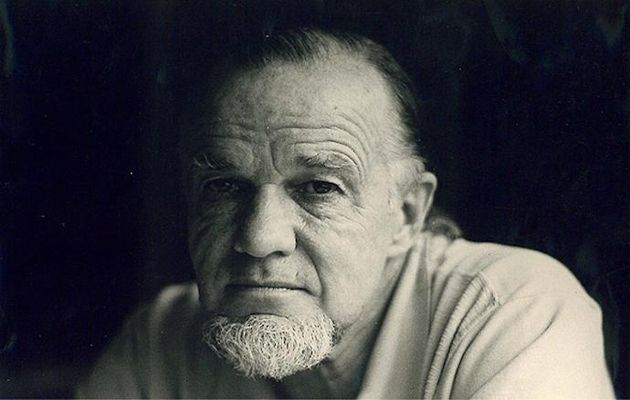
Why Francis Schaeffer Matters: The Turning Point in Truth – Part 2

sch 2

The Truth Crisis

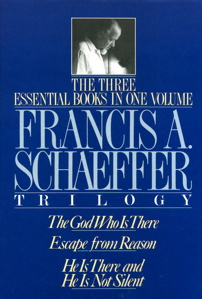
Francis Schaeffer sets the tone for his apologetical procedure by explaining the crisis of truth in America:  “We are fundamentally affected by a new way of looking at truth.  This change in the concept of the way we come to knowledge and truth is the most crucial problem facing America today” (The God Who Is There, 6).  He believes a paradigm shift occurred around 1935 when the American attitude toward truth changed.  Prior to this time, American’s were devoted to thinking about presuppositions, namely, the existence of absolutes, particularly in the areas of morals (ethics) and knowledge (epistemology).  But the average American took it for granted that if a certain idea was true, it’s opposite was false.  In other words, “absolutes imply antithesis.”  The working antithesis is that God exists objectively (in antithesis) to his not existing.

Schaeffer believes that presuppositional apologetics would have stopped the decay.  Incidentally, he maintains that the use of classical apologetics was effective prior to the shift because non-Christians were functioning on the surface with the same presuppositions, even though they did not have an adequate base for them.

The Role of Thomas Aquinas

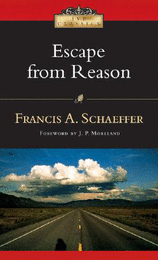
Dr. Schaeffer maintains that Aquinas opened the way for the discussion of what is usually called the “nature and grace” controversy (Escape From Reason, 209). He contends that Aquinas set up a dichotomy of grace versus nature.

Aquinas taught that the will of man was fallen, but the intellect was not.  The net result, according to Schaeffer, is that man’s intellect is seen as autonomous.  Schaeffer maintains that the teaching of Aquinas led to the development of the so-called Natural Theology where theology could be pursued independent of the Scriptures.  The vital principle to understand according to Schaeffer is that “as nature was made autonomous, nature began to ‘eat up’ grace” (Escape From Reason, 212).

Anthropology

Schaeffer militates against this so-called  “grace/nature” dichotomy and insists that Christ is equally Lord in both areas.  He suggests that God made the whole man and is consequently interested in the whole man.  When the historic space-time Fall took place, it affected the whole man, not merely the will as Aquinas taught.  Thus, Schaeffer taught that the whole man is saved and the whole man will eventually be glorified and perfectly redeemed.

Since God made man in His own image, man is not caught in the wheels of determinism:  “The Christian position is that since man is made in the image of God and even though he is a sinner, he can do those things that are tremendous – he can influence history for this life and the life to come, for himself and others” (Death In The City, 258).

Schaeffer argues that Evangelicals have such a strong tendency to combat humanism that they end up making man a “zero.”  He adds, “Man is indeed lost but that does not mean he is nothing . . . From the biblical viewpoint, man is lost, but great” (Death In The City, 258-259).  Therefore, Schaeffer’s anthropological position is that man is sinful, yet he is significant because he is made in the image of God.  And regenerate man is, as the Reformers emphasized, simul iustus et peccator – simultaneously righteous and sinful.

Why Francis Schaeffer Matters: An Introduction – Part 1

Why Francis Schaefer Matters: The Line of Despair – Part 3

Why Francis Schaeffer Matters: Consequences of Pitting Rationality Against Faith – Part 4

Top Picks in 2020

2020 was a year of lockdowns, which freed many people to read more. Thankfully, this past year was a great year for books. My selections this year focus on titles that made a direct impact on my life, sparked additional research, and enriched my pastoral ministry.

This image has an empty alt attribute; its file name is abook.jpeg
1. Gentle and Lowly – Dane Ortlund
This image has an empty alt attribute; its file name is agentle.jpg
2. Why Social Justice is Not Biblical Justice – Scott David Allen
This image has an empty alt attribute; its file name is asoc.jpg
3. Live Not by Lies – Rod Dreher
Live Not by Lies: A Manual for Christian Dissidents  -     By: Rod Dreher
4. Strangely Bright – Joe Rigney
Strangely Bright
5. The Gathering Storm – Al Mohler
This image has an empty alt attribute; its file name is 414+WL93MPL._SY344_BO1,204,203,200_.jpg
6. Coronavirus and Christ – John Piper
Coronavirus and Christ by [John Piper]
7. Blackout: How Black America Can Make Its Second Escape From the Democratic Plantation – Candace Owens
This image has an empty alt attribute; its file name is acan.jpg
8. When the Stars Disappear – Mark Talbot
This image has an empty alt attribute; its file name is astart.jpg
9. Lead – Paul David Tripp
This image has an empty alt attribute; its file name is alead.jpg
10. Finding the Right Hills to Die on – Gavin Ortlund
This image has an empty alt attribute; its file name is agave.jpg


Why Francis Schaeffer Matters: An Introduction – Part 1

sch.jpg

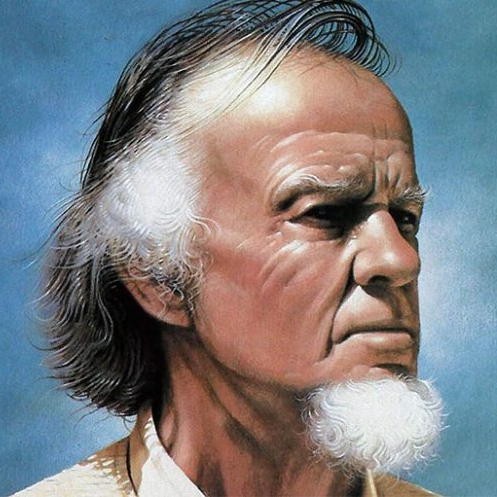
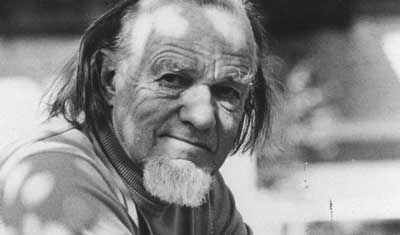
Dr. Francis A. Schaeffer (1912-1984) may very well be one of the most important Christian thinkers of the twentieth century.  Schaeffer attended Westminster Theological Seminary and was heavily influenced by J. Gresham Machen, Cornelius Van Til, and the Dutch theologian Abraham Kuyper.

In 1948, after a ten year pastorate in the United States, he moved his family to Switzerland to engage in missionary work.  In 1955, Dr. and Mrs. Schaeffer founded L’Abri in a small mountain village in Switzerland.  French for “shelter,” L’Abri became a refuge for people in need of spiritual help.  The Schaeffers were especially interested in people who sought answers to basic philosophical and metaphysical problems.  He writes, “To the best of my ability I gave the Bible’s answers.  But all the time I tried to listen and learn the thought forms of these people.  I think that my knowledge, whatever it is, is formed from two factors: 1) Forty years of hard study, and 2) Trying to listen to the twentieth-century man as he talked” (Eternity, March 1973).  Schaeffer’s keen ability to listen carefully and engage the intellect of these people became a primary factor that contributed to his success.

Students came to L’Abri from varied backgrounds – philosophy, medicine, architecture, science, and theology.  The Schaeffers ministered to college professors, students, pastors, engineers, and lawyers to name a few.  The common thread among all L’Abri visitors was a thirst for truth.  These people sought answers to the basic questions of life:  Who am I?  Where am I going?  What is my purpose in life?  How does God fit in the scheme of things?

The stated purpose of L’Abri is “to show forth by demonstration, in our life and work, the existence of God” (L’Abri, 16).  L’Abri continues to operate and fulfill the vision of Francis Schaeffer even over twenty-five years after his death.  The ministry of L’Abri may also be found in Holland, Australia, England, Sweden, India, South Korea and Massachusetts.

Francis Schaeffer published his first book, The God Who Is There in 1968.  He subsequently wrote twenty-two books which have been translated into more than twenty-five different languages.  A common unifying theme runs throughout Schaeffer’s books, namely, “the Lordship of Christ in the totality of life”  (The Great Evangelical Disaster, 303).

In the days to come, my goal is to expose readers to Francis Schaeffer and pay particular attention to his views on apologetics and the nature of the church.

Veritas et Lux!

Why Francis Schaeffer Matters: An Introduction – Part 1

Why Francis Schaeffer Matters: The Turning Point in Truth – Part 2

Why Francis Schaefer Matters: The Line of Despair – Part 3

Why Francis Schaeffer Matters: Consequences of Pitting Rationality Against Faith – Part 4

He is There and He is Not Silent- Francis Schaeffer (1972)

I first read He is There and He is Not Silent by Francis Schaeffer in 1992.  Multiple readings have ensued and I turn back to Schaeffer’s book again and again for help with apologetics. Readers will be pleased to see this new edition by Crossway Books with a revised cover in time to meet the current needs of our time.

Schaeffer argues for three basic areas of philosophical thought: metaphysics (being or existence), morals (the dilemma of man), and epistemology (the problem of knowing). Philosophy and religion are essentially devoted to the same questions, namely, metaphysics, morals, and epistemology.

Philosophy is concerned with either an academic subject or a person’s worldview.  It is the later, that Schaeffer is concerned with in this volume.  Schaeffer contends that every man is a philosopher of sorts because it is impossible for humans to live without a worldview.

Metaphysics

There are three basic answers to the question of metaphysics.  The first answer is that “everything that exists has come out of absolutely nothing.”  Naturalism’s answer suggests no energy, no mass, no motion, and no personality.  This answer is, as Schaeffer calls it, “nothing, nothing.”

The second answer is that everything had an impersonal beginning.  This answer leads automatically to reductionism.  “Beginning with the impersonal must be explained in terms of the impersonal plus time plus chance,” writes Schaeffer.  This answer poses many problems.  But the two primary problems fail to answer the major philosophical question: the need for unity and the need for diversity.

The third answer is the biblical answer.  The third answer is the only rational and satisfying answer.  This answer suggests that we must begin with a personal beginning.  And to have an adequate answer of a personal beginning, one must have a personal infinite God, and personal unity and diversity in God (found the holy Trinity).

Schaeffer concludes: “The reason we have the metaphysical answer is because the infinite-personal God, the full Trinitarian God is there and he is not silent.”

Morals

There are only two basic answers to the question of morals.  The first: Everything had an impersonal beginning.  The is the answer of atheism.  Schaeffer never minces words.  He writes, “Beginning with the impersonal, there is no explanation for the complexity of the universe or the personality of man.”  When one begins with the impersonal, one eliminates the possibility of morals or ethics.

The second answer is the biblical reality of a personal beginning.  Man was created by an infinite-personal God.  Man sinned or “made a decision to change himself” as Schaeffer notes.

“The starting point,” writes Schaeffer “to the answer (of the question of morals) as with metaphysics is the fact that God is there and he is not silent.”

Epistemology

Schaeffer concludes by setting forth the problem concerning epistemology and the epistemological answer.

The epistemological problem concerns the tension between nature (particulars) and grace (universals).  When nature becomes autonomous, the universal is lost with the hope of giving the particulars meaning.  The problem is that when nature becomes autonomous, nature “eats up” grace.  Schaeffer argues that when we are left with only particulars, we become lost in the areas of metaphysics, morality, and epistemology.

The epistemological answer was summarized by the Reformers.  The Reformers did not allow for a dichotomy between nature and grace.  The reason: they had verbal propositional revelation.  The Reformers were vocal about the reality of God’s existence and the reality of his revelation.  Schaeffer popularized this view in the title of his book, He is There and He is Not Silent.  God has spoken truly about himself.  However, he has not spoken exhaustively about himself.

Schaeffer urges readers to come face to face with two gigantic presuppositions – “the uniformity of natural causes in a closed system and the uniformity of natural causes in an open system and in a limited time span.”  Ultimately, readers must determine which worldview fits with the facts.

Schaeffer summarizes, then, the basic presuppositions in historic Christianity.

1. God is there.

2. God is the infinite-personal God who has made man in his image.

3. God made man a verbalizer in the area of propositions in his horizontal communications with other men.

4. God communicates to us on the basis of propositions, viz, he is there and his is not silent.

Schaeffer maintains, “Under the unity of the apex of the infinite-personal God, in all of these areas we can have meaning, we can have reality, and we can have beauty.”

He is There and He is Not Silent is an essential work of apologetics.  It should be required reading for every Bible College/Seminary student.  Schaeffer put his finger on the essential issues of the day – even in the early 70’s and especially in our day.

No Final Conflict – Francis Schaeffer (1975)

“It is my conviction that the crucial area of discussion for evangelicalism in the next years will be Scripture.  At stake is whether evangelicalism will remain evangelical.”  So stated Francis Schaeffer in his 1975 landmine, No Final Conflict.  While this treasure was penned over forty years ago, it remains relevant and applicable to 21st-century culture.

It was not unusual for Schaeffer to warn Christians.  He did it often during the seventies and eighties.  His chief warning in No Final Conflict is to cling to the propositional truth of the Scriptures:  “We must say that if evangelicals are to be evangelicals, we must not compromise our view of Scripture … The issue is clear: Is the Bible truth without error wherever it speaks, including where it touches history and the cosmos, or is it only in some sense revelational where it touches religious subjects?”  Schaeffer smelled a “rat” in 1975.  He always had a good sense of smell!  The pesky “rat” that Schaeffer detected continues to scurry about in postmodern culture; in fact that “rat” has produced offspring.  The liberalism of the 70’s is flourishing in the 21st century.  Schaffer’s antidote is simple – We must embrace the truth of Scripture: “In our day that point is the question of Scripture.  Holding to a strong view of Scripture or not holding to it is the watershed of the evangelical world … We must say most lovingly but clearly: evangelicalism is not consistently evangelical unless there is a line drawn between those who take a full view of Scripture and those who do not.”

One of Schaeffer’s key points is to clear up the confusion between reason and faith.  Indeed, this was one of the major notes of his writing.  He saw a unity between faith and reason; a unity that is marginalized especially by the new atheists like Richard Dawkins and Sam Harris.  Schaeffer posits, “There may be a difference between the methodology by which we gain knowledge from what God tells us in the Bible and the methodology by which we gain it from scientific study, but this does not lead to a dichotomy as to the facts … if both studies can be adequately pursued, there will be no final conflict.”  Truth is “unified” as Nancy Pearcey observes.  There is no conflict between reason and faith.

Dr. Schaeffer went to be with his Lord in 1984.  If he were still with us, I’m convinced that he would never have an “I told you so attitude.”  Rather, he would continue to admonish believers to hold to a strong uncompromising view of Scripture.  He would challenge Christ-followers to cling to the rock of propositional truth.  And he would warn disciples of Christ to flee from anything that looks like a rat, smells, like a rat, or walks like a rat.  His warnings mattered over forty years ago.  They continue to be as relevant as ever!


The Bucket List

The Bucket List, starring Morgan Freeman and Jack Nicholson is about two very different men who are both diagnosed with terminal diseases. One of the men, upon learning of his condition, decides to draft a “bucket list.” The list would include achievements and things to see before he “kicks the bucket.” After viewing the film, I began to re-visit my bucket list:

  • Attend a baseball game at every major league park in America
  • Visit the Metropolitan Tabernacle in London
  • Walk the streets of Geneva where John Calvin ministered
  • Stand at the Castle Door in Wittenberg
  • Climb the stairs of the Lincoln Memorial

A bucket list is an important tool because it helps a person discern what is most important in life. What is on your bucket list? Who would you want to see? What would you want to accomplish? Where would you travel?

We know that the Apostle Paul had some important goals in his life. But if Paul had a bucket list, what would be on it? Philippians 1:12-18 is a window into the heart of Paul:

I want you to know, brothers, that what has happened to me has really served to advance the gospel, so that it has become known throughout the whole imperial guard and to all the rest that my imprisonment is for Christ. And most of the brothers, having become confident in the Lord by my imprisonment, are much more bold to speak the word without fear. Some indeed preach Christ from envy and rivalry, but others from good will. The latter do it out of love, knowing that I am put here for the defense of the gospel. The former proclaim Christ out of selfish ambition, not sincerely but thinking to afflict me in my imprisonment. What then? Only that in every way, whether in pretense or in truth, Christ is proclaimed, and in that I rejoice …

At the top of Paul’s “bucket list” is that the gospel of Jesus Christ would spread to every man and woman and every boy and girl in great power to the glory of God. And indeed, the gospel spread like wildfire in the ancient world. The gospel would eventually explode in Europe and Africa and China. The gospel would ignite all around the world! What caused this gospel to progress with such great power?

The Gospel Progressed Because of Ferocious Persecution

The Method God Used

Imagine serving on a team that was commissioned to help promote the flourishing of the gospel. What methodology would you employ? Would you initiate a massive advertising campaign? Would you pump money into a missions program? Or perhaps you enlist the help of an army of volunteers?

In the first century, God providentially used Paul’s imprisonment to cause the powerful spread of the gospel. This persecution came as no surprise to the apostle and should not surprise us either. Jesus told the disciples,

Behold, I am sending you out as sheep in the midst of wolves, so be wise as serpents and innocent as doves. Beware of men, for they will deliver you over to courts and flog you in their synagogues, and you will be dragged before governors and kings for my sake, to bear witness before them and the Gentiles. When they deliver you over, do not be anxious how you are to speak or what you are to say, for what you are to say will be given to you in that hour” (Matt. 10:16–19, ESV).

One of the methods that God used and continues to use to advance the gospel is persecution.

The Meaning Behind God’s Method

Paul refers to the advance of the gospel. The word advance comes from the Greek term prokopei which refers to the progress of an army. It comes from a verb that means “to cut down in advance.” It describes the removing of any barriers which would hinder the progress of an army.1 Paul’s imprisonment took place so that the gospel might advance in a mighty way. The end result is that people would benefit greatly and God would be greatly glorified.

Verse 13 describes a flourishing gospel; one that became known “thought the whole imperial guard.” “The praetorian guard,” writes John MacArthur, was likely a group of nearly ten thousand soldiers who were stationed throughout Rome to keep the peace and protect the emperor.”2 Paul glories in this gospel which became known “to all the rest” for the great name sake of Jesus, his Savior.

The Model Prisoner

The apostle Paul was chained to a Roman guard (Acts 28:16). Consequently, the guards circulated in and out as their shifts changed which gave Paul a remarkable opportunity to bear witness to Christ. No doubt, the guards would have witnessed his body language and learned things about him that would have otherwise been difficult if not impossible. In short, God used this model prisoner to serve as an ambassador for Christ.

No less than one hundred years later (A.D. 155), Polycarp of Smyrna would also serve as a model prisoner and give his life for his Savior. After his arrest, the judge ordered Polycarp to renounce Jesus. The judge promised that if he would swear by the emperor and curse Christ, he would be set free. Polycarp’s response is priceless: “For eighty-six years I have served him, and he has done me no evil. How could I curse my king, who saved me?”3When the judge threatened to burn him in the pyre, Polycarp simply answered that the fire would only last a moment, whereas the eternal fire would never be extinguished. After Polycarp was tied to the post in the pyre, he gazed into the heavens and prayed aloud, “Lord Sovereign God … I thank you that you deemed me worthy of this moment, so that, jointly with your martyrs, I may have a share in the cup of Christ … I bless and glorify you.”4The gospel progressed because of ferocious persecution. Notice two principles that will serve us in our generation.

First, remember to maintain an eternal perspective. God’s in his providence permits persecution so that Christ might be proclaimed. We may reason, “In order for the gospel to progress in a country like China, communism must be rooted out.” But the reality is this: Communism continues and the underground church is flourishing! God’s providence may close doors that open others doors. Paul maintained an eternal perspective. He maintained his passion for the spread of the gospel and made the best of every opportunity.

Second, allow persecution to strengthen your resolve for proclaiming the gospel of Christ. When you are ridiculed for believing in a personal Creator who fashioned the world, be encouraged. Continue to proclaim the truth, despite the ferocious persecution. When you are mocked for believing in absolutes, be encouraged in that truth and proclaim it despite the ferocious persecution. And when you are challenged for believing that Jesus is the only One who can forgive sin, be encouraged in that truth and proclaim it, despite the ferocious persecution.

How did the gospel progress in the first century? It progressed in large measure because of ferocious persecution. But the gospel also progressed because it was fearlessly proclaimed.

The Gospel Progressed as it was Fearlessly Proclaimed

The persecution of Paul not only helped advance the cause of the gospel; it strengthened the resolve of Christians to preach the uncompromising message of the gospel.

The Definition of Proclamation

The Greek term for preach in verse 15 means “to be a herald; to proclaim with authority.” This message must be listened to and obeyed. Paul sets forth this imperative to herald the truth in 2 Timothy 4:2-4. He writes,

Preach the word; be ready in season and out of season; reprove, rebuke, and exhort, with complete patience and teaching. For the time is coming when people will not endure sound teaching, but having itching ears they will accumulate for themselves teachers to suit their own passions, and will turn away from listening to the truth and wander off into myths.

Martin-Lloyd Jones says, “The most urgent need in the Christian church today is true preaching; and as it is the greatest and most urgent need in the church, it is the greatest need of the world also.”5 And Steven Lawson adds, “True biblical preaching is authoritative in nature and body proclaims God’s Word without compromise or apology.”6 Such is the call of every Christ-follower who fearlessly proclaims the truth.

The Defining Marks of Proclamation

Two marks, in particular, emerge in Philippians 1:14-17. First, proclamation must be confident. Peithō, the Greek term which is translated, confident means “to have faith; to be persuaded of a thing concerning a person – in this case, the Lord Jesus Christ.” Romans 8:38-39 highlights the confidence that believers enjoy: “For I am sure (peithō) that neither death nor life, nor angels nor rulers, nor things present nor things to come, nor powers, nor height nor depth, nor anything else in all creation, will be able to separate us from the love of God in Christ Jesus our Lord” (Romans 8:38–39).

Second, proclamation must be bold and fearless. Paul stresses the importance of speaking the word boldly without fear (Phil. 1:14). The word translated bold means to “endure; to have courage.” Dr. Luke refers readers to the courage of Paul the apostle, who proclaimed the truth “with all boldness and without hindrance” (Acts 28:31). Such a ministry marks the one who is committed to the proclamation of God’s Word.

William Tyndale was a man who modeled the marks of bold proclamation. Born in 1494, he attended Oxford, Magdalen Hall, and Cambridge Universities. A student and adherent of the Protestant Reformation, Tyndall engaged in numerous debates with Roman Catholics. One Catholic leader mocked Tyndale: “We are better to be without God’s laws than the Pope.” Never content to put up with heresy, Tyndale replied, “I defy the Pope and all his laws. If God spare my life ere many years, I will cause the boy that drives the plow to know more of the scriptures than you.”

Tyndale was a confident, bold, and fearless theologian and scholar who translated the Bible into an early form of Modern English, likely with Luther’s help in Wittenberg. But he was arrested and imprisoned for 500 days. He was tried for heresy and treason in a kangaroo court and ultimately convicted. He was sent to be strangled and burnt at the stake in the prison yard on October 6, 1536. The final words were, “Lord, open the king of England’s eyes.”

Unfortunately, not everyone has the courage of Tyndale. In fact, Paul tells us that there are two different kinds of preachers.

The Different Kinds of Preachers

Some preach Christ “from envy and rivalry” (v. 15). Paul explains that this man proclaims Christ out of selfish ambition. Such a man is not sincere and proves to be unfaithful in the final analysis (v. 17).

Some preach Christ from “good will.” Paul says the motivation of this man is love (v. 16). Such a man understands that the apostle was providentially placed in prison for the defense of the gospel.

The Gospel Progressed as it was Faithfully Proclaimed

“What then? Only that in every way, whether in pretense or in truth, Christ is proclaimed, and in that I rejoice. Yes, and I will rejoice” (Phil. 1:18).

The gospel refers to the “glad tidings of the kingdom of God” or the “good news.” It is the proclamation of the grace of God which is manifest and pledged in Christ.

Jesus was born of the Virgin Mary. He lived a perfect life and was tempted in every way as we are, yet without sin (Heb. 4:15). He perfectly kept the law of God. Jesus died for our sins in accordance with the Scriptures; he was buried and raised on the third day in accordance with the Scriptures (1 Cor. 15:3). Jesus was glorified and seated at the right hand of the Father. He bore the wrath of God on the cross for everyone who would ever believe (Rom. 3:25). He redeemed us from the curse of the law by becoming a curse for us (Gal. 3:13). Jesus became our substitute on the cross (2 Cor. 5:21). He reconciled us to God by making peace by the blood of his cross (Col. 1:20). He made us right with God so that we might have peace with God (Rom. 5:1). And Jesus forgives sinners and enables them to stand holy in the very presence of God.

CONCLUSION

In the first century, the gospel progressed because of ferocious persecution, fearless proclamation, and faithful preaching. It was the gospel of Jesus Christ that motivated the apostle Paul. Proclaiming Christ and hearing that Christ was being preached was his passion. The apostle writes, “But I do not account my life of any value nor as precious to myself, if only I may finish my course and the ministry that I received from the Lord Jesus, to testify to the gospel of the grace of God” (Acts 20:24).

I had the pleasure of visiting a small church in a former communist country a few years ago. The pastor was so proud of the little structure which was smaller than most elementary school classrooms. I noticed a sign above the pulpit, written in a language unfamiliar to me. I asked the pastor, “What does that sign say?” With a smile on his face, he said through a translator, “We preach Christ crucified!

What would it look like if each one of us committed ourselves to fearlessly and faithfully proclaiming the gospel of Jesus Christ? What would it look like if we committed ourselves to fearlessly and faithfully proclaiming the gospel in the sphere where God has placed us?

The gospel progressed because of ferocious persecution, fearless proclamation, and faithful preaching. Will you make it a goal to proclaim the gospel of Jesus fearlessly and faithfully, despite the persecution that surrounds you? May gospel proclamation become a part of every Christ-followers bucket list!

  1. See William Barclay, The Letters to the Philippians, Colossians, and Thessalonians (Philadelphia: The Westminster Press, 1975), 20.
  2. John F. MacArthur, Philippians (Chicago: Moody Press, 2001), 61.
  3. Cited in Justo L. Gonzalez, The Story of Christianity – Vol. 1 (San Francisco: Harper Collins Publishers, 1984), 44.
  4. Ibid, 44.
  5. Martin Lloyd-Jones, Preaching and Preachers (Grand Rapids: Zondervan Publishing House, 1971), 9.
  6. Steven J. Lawson, Famine in the Land: A Passionate Call For Expository Preaching (Chicago: Moody Publishers, 2003), 42.

Susie: The Life and Legacy of Susannah Spurgeon – Ray Rhodes

Ray Rhodes Jr, Susie: The Life and Legacy of Susannah Spurgeon (Chicago: Moody Press, 2018), 294 pp.

Behind every great man is a great woman – or so the saying goes. The same could be said about the mighty men of God: “Behind every godly man is a godly woman.” Such is the case of the Prince of Preachers, Charles Haddon Spurgeon. In his book, Susie: The Life and Legacy of Susannah Spurgeon, Ray Rhodes Jr. introduces Spurgeon’s wife and reveals how this godly woman stood behind the famous Baptist pastor.

Very little has been written about Susannah Spurgeon. This makes Rhodes’ book somewhat of a landmark book that will educate and encourage students of Spurgeon. The book is an inside look at the Spurgeon’s marriage and ministry and helps readers understand how they navigated their way through trials, including physical suffering and persecution.

The book reveals the stalwart faith of Susannah Spurgeon and highlights her rock-solid support of her husband. It also shows how she ministered to poor pastors in London and around the world through her Book Fund and was instrumental in planting a church in the memory of her beloved husband.

This work is best summed up in Susie’s timeless words, “Look to Jesus.” “This message,” writes the author, “she offered to non-Christians and Christians alike. She would say to every Christian grieving over, fighting against, and hating their sin, or suffering through physical or emotional pain to look to Christ for help.”

Susie: The Life and Legacy of Susannah Spurgeon is a deeply moving book – one that is sure to inspire many and encourage anyone who is enduring the loss of a loved one. Susannah Spurgeon is a model of Christian maturity who lived Coram Deo, ”before the face of God.”

I received this book free from the publisher. I was not required to write a positive review.

Love Thy Body: Answering Hard Questions About Life and Sexuality – Nancy Pearcey

pNancy Pearcey, Love Thy Body: Answering Hard Questions About Life and Sexuality Grand Rapids: Baker, 2018, 337 pp. $15.31

The publication of Nancy Pearcey’s book, Total Truth: Liberating Christianity From Its Cultural Captivity sent shockwaves throughout the evangelical world and help equip a new generation of apologists. Total Truth confronted the notion that scientific knowledge and moral knowledge are separated into two domains. The lower story includes objective truths that are public and valid for all people. This is the realm of empirical science. These truths are true and verifiable. The upper story includes the realm of moral knowledge which is private, relative, and subjective. Hence, the so-called unified concept of truth was obliterated and separated into two domains.

Pearcey’s previous works, Saving Leonardo: A Call to Resist the Secular Assault on Mind, Morals, and Meaning and Finding Truth: 5 Principles for Unmasking Atheism, Secularism, and Other God Substitutes have also left an indelible mark on the church and culture at large. The impact of these books on me personally, cannot be overstated. My suspicion is that many people would concur.

Nancy Pearcey’s newest offering, Love Thy Body: Answering Hard Questions about Life and Sexuality pick up where the other titles left off. The overarching goal of Love Thy Body is to “uncover the worldview that drives the secular ethic.” Ultimately, the book is designed to “show that a secular morality doesn’t fit the real universe.”

Readers familiar with Pearcey will quickly see the influence of Francis Schaeffer on her thought. It was Schaeffer who originally exposed the so-called “fact/value” split which has created a fractured epistemology that continues to be propagated today.

Pearcey shows the practical outgrowth of this fragmented worldview (or the two-story worldview) by pointing to several contemporary culture matters including abortion, euthanasia, “same-sex marriage,” and transgenderism. She helps readers understand how these various worldviews have been smuggled into our culture and links each of them to the two-story dichotomy.

Readers will be encouraged and challenged to walk through the argument of Love Thy Body and will be better equipped to not only contend with culture but also reach out to people who have been deceived by a pagan worldview.

Readers will discover that Pearcey’s argument is not combative. Rather, her heart cries for people who have been co-opted by this deviant worldview. She pleads with readers to reach out and love people with Christ-centered love: “Christians must present biblical morality in a way that reveals the beauty of the biblical view of the human person so that people actually want it to be true.”

Love Thy Body is a book that is filled with description and prescription. Facts and figures run through the book but the author is not content to leave her readers with data alone. She sets forth a workable prescription which is set on helping people and healing them at the deepest level. Therefore, “We must work to educate and persuade on a worldview level,” writes Pearcey. Such an approach is imperative if Christ-followers have any hope of reaching a lost world with the saving message of the gospel. Running through the book is a mindset that Pearcey, no doubt, learned from Schaeffer, namely, sharing the gospel with a tear in one’s eye.

Love Thy Body is riveting, challenging, educational, a shot to the heart, a challenge for the mind, and bold push for the feet. It will spark controversy in some venues and may even precipitate debate in the local church. Surely, this kind of debate is necessary as Christians seek to influence culture for God’s glory.

I received this book free from the publisher. I was not required to write a positive review.

When Character Was King: A Story of Ronald Reagan – Peggy Noonan

A number of years ago, I began devouring books about my favorite president, Ronald Reagan  When Character Was King by Peggy Noonan emerges as one of the most thoughtful and inspiring books about the former president.

Noonan paints a compelling portrait of President Reagan; a portrait that is an exceedingly human portrayal of a man who feared God, loved his country, and cherished freedom.  The author writes, “As president, Ronald Reagan believed without question that tyranny is temporary, and the hope of freedom is universal and permanent; that our nation has unique goodness, and must remain uniquely strong; that God takes the side of justice, because all our rights are His own gifts.”

Reagan opposed the godless ideology that held millions of Russians hostage from 1917 to 1991.  Lenin said in 1920, “We repudiate all morality that proceeds from supernatural ideas that are outside class conceptions. Morality is entirely subordinate to the interests of class war. Everything is moral that is necessary for the annihilation of the old exploiting social order and for uniting the proletariat.”  In contrast, Reagan knew that virtue and morality are directly related to one’s relationship with God.

A few quotes reveal the man we know as President Reagan:

We had strayed a great distance from our Founding Fathers’ vision of America.  They regarded the central government’s responsibility as that of providing national security, protecting our democratic freedoms, and limiting the government’s intrusion in our lives – in sum, the protection of life, liberty and the pursuit of happiness.  They never envisioned vast agencies in Washington telling our farmers what to plant, our teachers what to teach, our industries what to build.

Don’t give up your ideals.  Don’t compromise.  Don’t turn to expediency.  And don’t for heaven’s sake, having seen the inner workings of the watch, don’t get cynical.

All of these things – learning to control the government, limiting the amount of money it can take from us, protecting our country through a strong defense – all of these things revolve around one word, and that word is ‘freedom.’

President Reagan was and continues to be a breath of fresh air in an increasingly pessimistic political climate.  He was unafraid to stare evil in the face.  He courageously stood for the cause of freedom.  Indeed, he was jealous to see the flag of freedom fly in every land.  He opposed despotism, communism, and socialism.  He promoted free enterprise.  President Reagan refused to capitulate in the face of adversity.

Nothing But the Truth

Scripture warns, “See to it that no one takes you captive by philosophy and empty deceit, according to human tradition, according to the elemental spirits of the world, and not according to Christ” (Col. 2:8, ESV). As followers of Christ, we need to be vigilant, constantly on guard, and discerning good from evil. One of the ways that the worldly system “takes us captive” is by marginalizing truth or eliminating it altogether. It is important to understand that the worldly system militates against the Christian view of truth. Is it any wonder, then, that the importance of truth is highlighted so much in Scripture?

David Understood the Importance of Truth

King David acknowledged that since God is truth, he expects his people to live truthful lives. He writes, “Behold, you delight in truth in the inward being, and you teach me wisdom in the secret heart” (Ps. 51:6, ESV).

The implications of David’s words are massive as we consider our inward motivations, conversations, and the way we conduct our lives. Ask yourself, “Am I a person that is committed to the truth?” “Does the love for truth undergird my life and worldview?”

Paul Spoke Often About the Truth

The apostle begins the book of Titus with these revealing words: “Paul, a servant of God and an apostle of Jesus Christ, for the sake of the faith of God’s elect and their knowledge of the truth, which accords with godliness” (Titus 1:1, ESV) . Notice the relationship between truth and godliness. Indeed, they are intimately connected. “The truth of the Gospel,” writes Warren Wiersbe, “changes a life from ungodliness.”1 As Christians, we unapologetically adhere to the truth. We must not only adhere to the truth; it must stand at the very center of our lives.

Additionally, Paul referred to the church as ” … a pillar and buttress of the truth” (1 Tim. 3:15, ESV). The church, then, is God’s appointed means of declaring the word of God to the nations. Ask yourself, “How is God using me to declare the truth to my community?” “How is God using me to declare the truth to the nations?”

Paul Warned People Who Abandon the Truth

Scripture is packed with examples of people who abandoned the truth. Paul writes, “This testimony is true. Therefore rebuke them sharply, that they may be sound in the faith, not devoting themselves to Jewish myths and the commands of people who turn away from the truth” (Titus 1:13–14, ESV). Tragically, this trend continues in our generation. Young people are turning away from the truth by the thousands. College students are manipulated and deceived by professors who peddle a worldview that opposes historic Christianity. Hearts are cold to God’s revealed truth. Ask yourself, “Am I pursuing the truth or am I fleeing from the truth?” “Do I have a sinful unbelieving heart that is turning away from the living God?” (Heb. 3:12).

Peter Pressed Home the Importance of Truth.

Peter is an interesting character to be sure. Here is a man who denied Jesus, the very embodiment of truth – three times! Yet, he was forgiven and restored and was used in a mighty way to spread a passion for the truth of God:

Having purified your souls by your obedience to the truth for a sincere brotherly love, love one another earnestly from a pure heart … (1 Peter 1:22, ESV).

Ask yourself, “Do I obey the truth?” “Am I established in the truth?”

John Had a Passion for the Truth.

The apostle John was a warm-hearted Christian thinker who had a passion for the truth. Listen to how this God-centered man expressed his love for the truth:

Little children, let us not love in word or talk but in deed and in truth (1 John 3:18, ESV).

I have no greater joy than to hear that my children are walking in the truth (3 John 4, ESV) .

Jesus Spoke Plainly About the Truth

Finally, we turn our attention to Jesus, the One who made the startling claim that he was in fact the way, the truth, and the life (John 14:6). The importance that Jesus attaches to truth cannot be denied:

Sanctify them in the truth; your word is truth (John 17:17, ESV).

… and you will know the truth, and the truth will set you free (John 8:32, ESV)

Conclusion

All spiritual growth is based on a knowledge of truth. Yet countless people, even people in the church are discarding truth and walking down paths that fail to honor and glorify God. Al Mohler warns, “Departing a Christian worldview leads to a distrust of final truth and a rejection of universal authority, which then hides the way back to the God of the Bible.”2 As followers of Jesus Christ, may we cling to the truth, proclaim the truth, and defend the truth. May we stand with the men and women throughout redemptive history who were willing to lay their lives down for the great cause of truth. May the cry of our hearts be, “nothing but the truth!”

  1. Wiersbe, W. W. (1996). The Bible exposition commentary (Vol. 2, p. 260). Wheaton, IL: Victor Books.
  2. Albert Mohler, The Gathering Storm: Secularism: Culture, and the Church (Nashville: Thomas Nelson, 2020), 11.