The White Flag: When Compromise Cripples the Church by David S. Steele was published in 2019 and is available through Amazon.
A few months ago, Dr. David Steele sent me a copy of his latest book The White Flag. Being the diligent and quick book reviewer that I am, I was able to turn to this past week to read it.
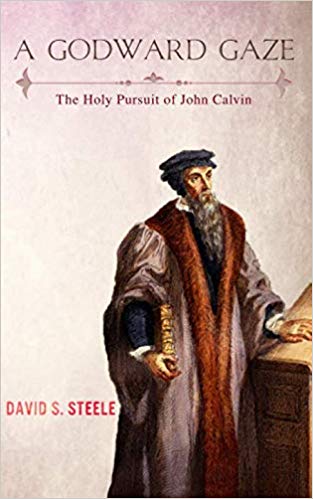
First of all, I think it is good and necessary that pastors write. David is senior pastor of Christ Fellowship in Everson, Washington. This is, I believe, his third book, and the other two are on Martin Luther and John Calvin. Pertaining to the topic sentence of this paragraph, I believe that writing, on the one hand, is a good discipline for pastors. (I often cringe when I know that teachers assign themes and papers, but never write such things themselves.) But more than just the discipline and focus…
Sharp Eyes, Soft Hearts, And Sanctified Minds: Evaluating Christian Books
I review books – a lot of books. Some people have expressed an interest in how I evaluate them. A few specific criteria govern the way I evaluate the overall effectiveness of Christian books, in particular.
First and most important, is the book biblical? That is, does the content reflect the teaching of the infallible, authoritative, inerrant Word of God? The label “Christian” does not automatically mean that a given book is a faithful representation of orthodoxy. Does it accurately unpack doctrines that are in step with the Reformed faith and exalts the Lord Jesus Christ? Any deviation from from the truth results in a sharp critique and swift relegation to the “heresy shelf.” Tragically, my heresy shelf has steadily grown over the years.
Second, is the writing clear and compelling? Does the book address important questions? And does it offer answers that genuinely help readers? Does it posit suggestions that encourage their Christian growth? Is the book coherent or does it violate the laws of logic? Is the writing organized and systematic? Tragically, logic and a systematic approach to theology is viewed with suspicion and even disdain in some Christian circles. The very act of repudiating the laws of logic that God has established is a foolish act and is by definition, illogical!
Third, does the book impact lives and promote progressive sanctification? Many Christian books (or books that are at least categorized as “Christian”) offer little in the area of practical help. Instead of helping readers become conformed to the image of Christ, they foster pride and build upon on edifice of shifting sand. A worthy Christian book should alert readers to the problem of sin and reveal the remedy, which is found exclusively in Jesus Christ.
A good Christian book should guide the reader to the Celestial City. It should lead them in a Godward direction and inspire them to live hopeful lives and holy lives.
Finally, does the book magnify the gospel of Jesus Christ? Is the gospel at the heart of the book or is it a mere tack on? Is the gospel the primary fuel that drives the arguments in the book or is the gospel more like “fumes” that emerge from the tailpipe of worldliness or pragmatism? Such an approach may be appealing in the short run, but will lead readers to a path of destruction.
These are only a few of the special areas of concern that I consider when I place a Christian book under the microscope. Such a pursuit involves having a sharp eye, a soft heart, and a sanctified mind. Having a sharp eye involves God-centered discipline to read everything through the lens of a Christian worldview. A sharp eye will not only pinpoint doctrinal error; it will pay tribute to doctrinal purity. A soft heart avoids the extremes of a hyper-critical spirit and a pietistic free-for-all. And a sanctified mind requires complete submission to Scripture and surrender to the Spirit of God. This approach is undergirded by a commitment to be transformed by the renewal of our minds (Rom. 12:2).
May the Lord grant much discernment as you dig deeper and grow stronger in the Christian faith. May you echo the prayer of Solomon who cried out to God, “So give your servant a receptive heart to judge your people and to discern between good and evil. For who is able to judge this great people of yours?”” (1 Kings 3:9, CSB)
Sproul, R.C. Enjoying God: Finding Hope in the Attributes of God, Grand Rapids: Baker Books, 2017, 230 pp.
Enjoying God: Finding Hope in the Attributes of God by R.C. Sproul is written with the layman in mind. The author intentionally sets unnecessary theological jargon aside and aims for hearts and minds of everyday people. The end result is a biblical vision of God which draws readers into a profound sense of worship and awe.
The focus in Enjoying God is theology proper which sets forth a sampling of God’s attributes including omniscience, omnipotence, omnipresence, truth, immutability, justice, and love to name a few. Eleven chapters are devoted to exploring God’s attributes. Each chapter includes a brief explanation linked to the pertinent biblical passages.
I cannot think of any living author outside of R.C. Sproul who has so revolutionized my view of God. My first introduction to Dr. Sproul cam\e in 1988 as I devoured his best-selling book, Chosen By God. Those were formative years where the theological foundations in my life began to slowly take shape. Since then, I have consumed every book I can find by Dr. Sproul. He consistently points to a God who is holy, holy, holy. And he faithfully exposits the Bible in a way that exalts the living God.
I received this book free from the publisher. I was not required to write a positive review.
Kevin DeYoung, Grace Defined and Defended (Wheaton: Crossway, 2019), 130 pp.
Whenever Kevin DeYoung pens a book, I devour it – quickly. DeYoung writes with biblical precision. He writes with clarity. And his writing exalts the Lord Jesus Christ. His latest book, Grace Defined & Defended is no exception.
This short book is a summary and exposition of the Canons of Dort. The Synod convened from 1618-1619 and crystallized the Reformed position concerning soteriology.
DeYoung reproduces the historical Canon of Dort and provides a short commentary that explains and defends the content. Misconceptions are erased and the doctrinal ore is successfully mined and served up in a readable and devotional manner.
The selling-point of Grace Defined & Defended is its ability to drive readers to the Canons of Dort – a document that most contemporary believers have never heard about, let alone read.
DeYoung’s ability to unpack and explain this 400-year old confession is unparalleled and should be devoured by followers of Jesus. Readers who affirm historic Calvinistic orthodoxy will be edified and encouraged. Fence-sitters and Arminians will be challenged and convinced. And all readers, in the final analysis, will exalt the person and work of the Lord Jesus Christ.
Soli Deo gloria!
I received this book free from the publisher. I was not required to write a positive review.
Bob Kellemen, Counseling Under the Cross: How Martin Luther Applied the Gospel to Daily Life Greensboro: New Growth Press, 2017, pp. 246.
One man blazed a trail in the sixteenth century that laid the groundwork for countless numbers of Christians. Martin Luther was the primary agent who God used in a mighty way as he hammered his 95 theses on the castle door at Wittenberg on October 31, 1517. He unleashed a theological revolution known as the Protestant Reformation, where the doctrines of grace were recovered and the gospel began to exert a powerful influence in the lives of people.
Counseling Under the Cross by Bob Kellemen explores the life and legacy of Martin Luther and reveals how his theological framework influenced his counseling ministry.
What Shaped Martin Luther’s Pastoral Counseling?
Part one explores Luther’s background and alerts readers to the oppressive environment that was so common in the sixteenth century. Luther fought desperately to find peace with God but was doomed to failure apart from completed work of Christ which is received by grace alone through faith alone.
Kellemen explains how Luther’s anxiety impacted his life in his early adult years. Luther admits, “For I had hoped I might find peace of conscience with fasts, prayers, and the vigils with which I miserably afflicted my body, but the more I sweated it out like this, the less peace and tranquillity I knew.”
The author continues, “Before he came under the influence of the cross, Luther lived life as a man terrified that he would never find peace with God because his God was not a God of peace. Luther lived with a constant sense of guilt and dread in the face of a terrifying, angry, and unforgiving God.”
The only way Luther found relief is by casting all his hope and future on a sovereign God, by grace alone through faith alone. Kellemen writes, “The Christ of the cross transformed Luther the man terrified before God into Luther the man at peace with God.” This newly converted man now saw God in a different light which not only radically affected his life; it altered his ministry at every level.
What is the Shape of Martin Luther’s Pastoral Counseling?
“Luther’s counseling reflects his theology – it is cross-shaped and gospel-centered.” Part two reveals the shape of Luther’s pastoral counseling. The author examines Luther’s approach to pastoral counseling by exploring two primary angles.
First, soul care: comfort for suffering.Luther’s theology and methodology of sustaining and healing are presented with specific examples of how the Reformer encouraged and edified the saints.
Second, spiritual direction: confrontation for sinning.Specifically, Luther’s theology and methodology of reconciling and guiding are presented here. Again, the author paints a pastoral portrait of Luther and shows him at work among the Body of Christ. While soul care (noted above) involves comforting and encourages Christians, spiritual direction involves a confrontation with people. Kellemen adds, “In reconciling soul care, we seek to startle one another with the gospel.” Such a nouthetic approach is mandated in Scripture (Col. 1:28) and plays a vital role in biblical counseling.
EVALUATION
Counseling Under the Cross is a treasure chest of gospel nuggets. Bob Kellemen does a beautiful job of explaining how Martin Luther applied the gospel to everyday life. One of the most helpful aspects of the book is the emphasis on indicatives and imperatives. The author makes it clear that both are important aspects of the Christian life: “Salvation in Christ (gospel indicatives) frees, empowers, and motivates us through faith to serve others in love (gospel imperatives). Progressive sanctification is faith active in love – exercising the love that comes from faith in the grace of Christ.”
Mark Jones, Living for God: A Short Introduction to the Christian Faith (Wheaton: Crossway, 2020), 262 pp.
Introductory books to the Christian faith are a “dime a dozen” these days. My usual response is to pass on such books since many of them are doctrinally weak and shallow. Living for God: A Short Introduction to the Christian Faith by Mark Jones is an exception to the rule. This book is anything but weak and moves readers from the “shore” to the “deep end” of the pool.
The first two sentences in the book are important and set the stage for what follows: “Living for God. True living is when we live for God.” Jones adds, “Our approach to the Christian life must be grounded in the conviction that sound doctrine and godly living go hand in hand, with the former providing the foundation for the latter.” Unfortunately, many pastors and authors either jettison sound doctrine or minimize the importance of godliness. Jones maintains that doctrine is the “engine” that drives our Christian lives. “Doctrine and life are inextricably linked,” Jones writes. “Indicatives lead to imperatives.”
Living for God is arranged in five parts:
A Trinity Oriented Life
The Christ-Focused Life
The Spirit-Energized Life
The Church Inhabited Life
The Heaven-Anticipated Life
In short chapters, the author presents clear and biblical instruction that guides readers into truth. These chapters are both readable and reliable guides for the people of God. No shortcuts are taken. Rather, Jones uses his writing gift to instruct and edify willing readers.
In the end, what really matters is that Christians are living for God. This challenge is nicely summarized by Jones, which is also a summary of his well-written book:
Live then, my brothers and sisters in Christ, a Trinity-oriented, Christ-focused, Spirit-energized, church-inhabited, and heaven-anticipated life for the glory of God and the good of your soul.
I received this book free from the publisher. I was not required to write a positive review.
Timothy R. Jennings, The Aging Brain: Proven Steps to Prevent Dementia and Sharpen Your Mind (Grand Rapids: Baker Books, 2018), 283 pp.
The Aging Brain by Timothy R. Jennings, MD addresses the growing problem of dementia and Alzheimer’s disease. At the heart of this book is the idea that these pathological states may in some cases be avoided with a healthy lifestyle and choices. The book is arranged in four parts:
Part 1: History and Aging
The author is realistic in his assessment of aging. He understands that aging is a normal part of life and is a result of the Fall. But the effects of aging can be curtailed through a series of lifestyle changes. “The purpose of this book,” writes Dr. Jennings, “is to lead people to healthier lives, which slow the aging process and reduce the risk of dementia.”
One of the central takeaways of Part 1 is that a healthy brain requires a healthy body. So the author recommends a series of lifestyle changes including proper nutrition and regular exercise as a means of preventative care.
Part 2: Oxidative Stress and Aging
In my mind, Part 2 is the most helpful and most interesting section of The Aging Brain. Dr. Jennings discusses the three factors that lead to oxidative stress (inflammation) and aging which include obesity, sugar, and toxins (tobacco, illegal substances, and alcohol abuse). The author includes several actions steps that lead readers in a direction of health, which in the final analysis result in a healthier brain and longevity.
Part 3: Lifestyle and Aging
Part 3 includes several practical steps that lead to brain health including exercise, sleep, regular rest (sabbaticals), a healthy worldview, and stress management.
Part 4: Pathological Aging
Part 4 focuses on Alzheimer’s disease, more practical steps to help prevent dementia, and a short section that describes how to care for a loved one with dementia.
Critique
The Aging Brain is a helpful resource for anyone who seeks help in understanding the various pathological states, such as dementia. The medical and scientific discussion is readable and accessible to anyone who is willing to put in the time for study.
One of the most attractive features of The Aging Brain is the learning points that the author concludes at the close of each chapter. Also included is an action plan. Here, the author suggests practical steps for moving in a healthy direction that promotes brain health.
While much of the book is helpful, The Aging Brain does not come without weaknesses. First, the author refers in some places to God as the “higher power.” I understand his desire to reach a broad base of readers who may not be followers of Christ. However, the reference to God as a “higher power” is not only unhelpful; it proves harmful as readers may be subtly encouraged to turn to a false god.
Second, the author discourages readers from believing in a deity who is a “punishing god.” It is unclear whether he means the “punishing god” of Islam or the God of the Bible who is a God of wrath and promises to punish every unrepentant person, in the final analysis (John 3:36; 1 Thes. 1:9-10).
Third, the promotion of self-forgiveness is included which proves unhelpful and ultimately, idolatrous.
Summary
These theological disagreements are significant but should not prevent readers from benefiting from the medical wisdom that explodes from this book. Throwing out the baby with the bathwater would be a mistake. Instead, I urge readers to carefully digest the material in The Aging Brain which will involve biblical discernment and discretion.
I received this book free from the publisher. I was not required to write a positive review.
ME:“Doc, I cycle 100 miles a week, burn at least 10,000 calories a week, take fish oil, and I’m eating better. I even take advantage of “nature’s broom” by eating oatmeal almost every day. However, my cholesterol just won’t drop.
DOCTOR: “Because of family history and genetics, you simply won’t be able to lower your cholesterol without a statin.”
So for the last four years, I’ve taken a well-known statin and the results have been favorable. However, Drs. Jonny Bowden and Stephen Sinatra disagree with the notion that lowering cholesterol prevents heart disease. Their book, The Great Cholesterol Myth contains an argument that pumps feverishly through the arteries of this book: The real causes of heart disease include four key factors, namely – inflammation, oxidation, sugar, and stress. The authors contend the real tragedy is the fixation with cholesterol which has produced an industry that boasts over $30 billion a year in the statin market. In a shocking statement, both authors maintain, “Cholesterol does not cause heart disease.”
Bowden and Sinatra point out that cholesterol is vital for healthy living: “Cholesterol is an essential molecule without which there would be no life, so important that virtually every cell in the body is capable of synthesizing it.” For over fifty years, the so-called lipid hypothesis has dominated the medical community which essentially states that “saturated fat runs up cholesterol levels, and elevated cholesterol leads to heart disease.” The hypothesis has never been proved but continues to rule in the hearts and minds of most Americans.
One of the most helpful aspects of The Great Cholesterol Myth is the discussion about the importance of coenzeme Q10 (better known as CoQ10) which serves an important nutrient, a sort of fuel source for the heart. Statins deplete CoQ10 which may lead to muscle pain, weakness, and fatigue. Yet none of the doctors that have prescribed a stain in my case have ever mentioned that importance of supplementing with CoQ10. The authors plead with readers who take statins to immediately begin supplementing their cholesterol lowering drug with CoQ10 – a minimum of 200 mg daily.
Dr. Sinatra admits that he still prescribes statins on occasion but “almost exclusively to middle-aged men who’ve already had a first heart attack, coronary intervention, or coronary artery disease.” He argues, “Statin drugs are anti-inflammatory, and their power to reduce inflammation is more much important than their ability to lower cholesterol. But [and here’s the clincher] we can lower inflammation (and the risk for heart disease) with natural supplements, a better diet, and lifestyle changes such as managing stress.”
The authors reveal a fascinating study that includes five factors that significantly lowered the risk for heart disease:
1. Don’t smoke.
2. Drink alcohol in moderation.
3. Engage in moderate-to-vigorous exercise for at least half an hour a day on average.
4. Maintain a healthy weight (BMI under 25).
5. Eat a wholesome, low-glycemic (low-sugar) diet with plenty of omega-3 fats and fiber.
Notice that lowering cholesterol is painfully absent from the list. Perhaps this is why, as the authors note, “Cholesterol is a relatively minor player in heart disease and a poor predictor of heart attacks. More than half of all people who are hospitalized with heart attacks have perfectly normal cholesterol levels.”
The heart of the book explores the real culprit behind heart disease. The authors dogmatically claim “the true cause of heart disease is inflammation” or as they put it, “acute inflammation hurts, but chronic inflammation kills.” Second, oxidation is one of the sure signs of inflammation, which leads to a fascinating conclusion, namely – the only time cholesterol becomes troubling is if it’s oxidized (or damaged). Third, the authors note that “sugar is a far greater danger to your heart than fat ever was.” They go on to demonstrate that “the number one dietary contributor to heart disease is sugar.” Finally, stress is included as a major cause of heart disease.
Bowden and Sinatra wonder out loud if statins will become the next medical tragedy – quite comforting to anyone who has relied on statins for years on end! Side-effects are explored, which is well documented, and side-effects which I have personally experienced. But the alarming news is that some researchers are warning that statins may contribute to Alzheimers, thinking skills, and memory. One researcher comments, “Cholesterol changes the shape of the protein to stimulate thinking and memory.” But the fact that is most often repeated is ability of statins to deplete the body of CoQ10. “The depletion of CoQ10 is one of the most important negative effects of statins, and the one that is pretty much responsible for a host of common side effects involving muscle pain, weakness, and loss of energy.” To summarize, the authors maintain the risk of using statins outweighs the rewards.
Finally, Bowden and Sinatra explore how supplements can lead to heart health such as vitamins, antioxidants, and omega-3 fats included in wild salmon. Additionally, they recommend that stain users immediately begin to supplement their diet with CoQ10. “Just as a gasoline engine can’t work without spark plugs, the human body can’t work without CoQ10.”
I am not ready to pitch my statin until my doctor recommends doing so. But The Great Cholesterol Myth has got me thinking. And it has led to some concrete action steps such as implementing CoQ10 into my daily diet. I’m actually looking forward to my next doctor visit – where my list of questions will be long. Let’s just say, I’ll be getting my money’s worth that day!
Brian Hedges, With Jesus: Finding Your Place in the Story of Christ. Wapwallopen: Shepherd Press, 2017, 185 pp.
With Jesus, by Brian G. Hedges is a book that invites readers on a journey of a lifetime. The gospel is weaved into the fabric of this story and helps readers understand the role that Christ places in individual lives. Hedges writes, “Whatever the shape of your life, whether your personal saga is comedy, tragedy, adventure, or soap opera, the gospel resounds with good news for all who believe: you’ve been inserted into a new story – the story of Christ. This book is about finding your place in the story of Jesus.”
The author is convinced that many people read the gospel “through the wrong lens.” Therefore, his goal is to help people read the gospel narratives in a “gospel-centered way.”
So the book begins with the birth of the self-existent Son of God in the manger. Hedges guides readers through the gospel narratives and highlights each of the major aspects of Christ’s earthly life from his baptism to Gethsemane, the crucifixion, the resurrection, ascension, and return. Each chapter includes well-thought-out observations about the person and work of Christ that both encourage and challenge.
Hedge’s work weighs in at 185 pages. Each page is packed with biblical wisdom and insight. The writing is pastorally challenging and theologically engaging. Many Puritans and stalwarts from church history are consulted, which only strengthens the punch in this already excellent study. The investment of time and energy in Pastors Hedges’s book will pay rich dividends and will shower a wealth of gospel-centered joy on each reader.
The lesson that stands out for me above all come in a few short sentences by the author:
“I have been gripped with this glorious truth: that in all of his obedience, Jesus was acting as our representative, husband, and head. If I am in Christ, then his achievements are counted as mine. What he accomplished, I accomplished with him.”
Readers are urged to plunge, prayerfully into this very well-written book and spend some time With Jesus.
I received this book free from the publisher. I was not required to write a positive review.
James K.A. Smith, On the Road With Saint Augustine: A Real-World Spirituality for Restless Hearts (Grand Rapids: Brazos Press, 2019), 240 pp.
The postmodern prophet and rock star, Bono Vox laments, “I have run, I have crawled, I have scaled these city walls, these city walls, only to be with you. But I still haven’t found what I’m looking for.” U2 isn’t the only one tapped into the inner drive and existential angst of the ages. Augustine had them beat by 1,600 years! “Oh Lord, you have created us for yourself but our hearts are restless until they find their rest in Thee.” It appears that Bono and Augustine have something in common!
James K.A. Smith is on a similar quest and is eager to share the fruit of his efforts in his most recent book, On the Road With Saint Augustine: A Real-World Spirituality for Restless Hearts. Smith’s work is an invitation to meet Augustine on the path that will lead to the culmination of his hopes, dreams, and desires.
Readers are in for a treat, especially the ones who have caricatured Augustine as a stuffy academician who puffs on a pipe, panders to the educated elite, and pontificates with an accent. Smith notes, “The Christian gospel, for Augustine, wasn’t just the answer to an intellectual question (though it was that); it was more like a shelter in a storm, a port for a wayward soul, nourishment for a prodigal who was famished, whose own heart had become, he said, ‘a famished land.’” As such, the “famished land” of many professing Christians will be laid bare. The fertile soil of Augustine will help nurture, strengthen, and revitalize travelers who dare to follow his lead.
The most endearing feature of Smith’s work is the emphasis on what he refers to as a “refugee spirituality.” Such an approach is desperately needed in our day, especially when most people seem content in the here and now and are satisfied with temporal trinkets: “Imagine a refugee spirituality,” writes Smith, “an understanding of human longing and estrangement that not only honors those experiences of not-at-homeness but also affirms the hope of finding a home, finding oneself … it’s about knowing how to make the journey, how to adopt the posture of the refugee who travels light.” Tragically, many American Christians are so burdened with temporal trinkets, they cannot even envision Augustine’s prescribed pursuit.
Smith traces the Augustinian path and focuses on several fascinating subjects that every pilgrim must wrestle with: freedom, ambition, sex, and death to name a few. On the Road With Saint Augustine: A Real-World Spirituality for Restless Hearts is a treasure map of sorts. Readers will see a totally new side of the Bishop of Hippo. Thoughtful readers will be prodded and poked. But they will also be encouraged and edified. They will be forced into a corner and challenged to weigh these heavenly realities and ultimately find their rest in God and the gospel of His Son.