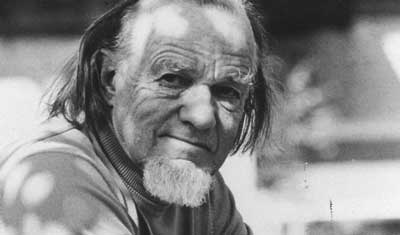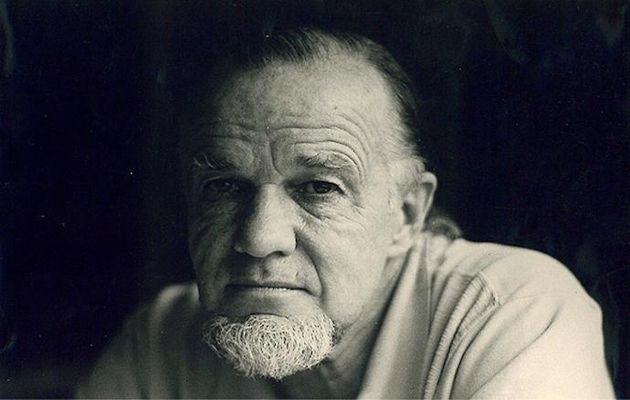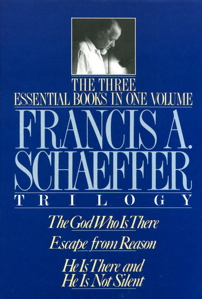
Why Francis Schaeffer Matters: His Approach to Apologetics – Part 6

cropped-sch

Christian Apologetics: Two Purposes

Francis Schaeffer’s holds a rather basic view concerning apologetics.  He explains there are two purposes of Christian apologetics.  “The first is defense.  The second is to communicate Christianity in a way that any given generation can understand” (The God Who Is There, 151).

Schaeffer begins his approach to apologetics by pointing out that every non-regenerate person enters the discussion with a set of presuppositions.  Some have taken the time to analyze their presuppositions.  Most have not.  But each non-regenerate person is caught in the horns of a dilemma because it is impossible to be consistent in logic or practice.  This holds true along the whole spectrum of people.  Every person whether a University student, housewife, businessman or disgruntled teenager is stuck and boxed in by the logic of his or her presuppositions.  Thus, Schaeffer writes, “You are facing a man in tension, and it is this tension which works on your behalf as you speak to him . . . A man may try to bury the tension and you may have to help him find it, but somewhere there is a point of inconsistency” (The God Who Is There, 133).  Schaeffer adds, “To have to choose between one consistency or the other is a real damnation for man.  The more logical a man who holds a non-Christian position is to his own presuppositions, the further he is from the real world; and the nearer he is to the real world, the more illogical he is to his presuppositions” (The God Who Is There, 133-134).

Therefore, the place to begin in the real world with real people is to find out where the tension exists.  Once the point of tension is uncovered the apologist must push the non-regenerate man toward the logical conclusion of his presuppositions.  Schaeffer warns, “Pushing him towards the logic of his presuppositions is going to cause him pain; therefore, I must not push any further than I need to” (The God Who Is There, 139).

Schaeffer calls this approach “taking the roof off” because every man has constructed a roof over his head to protect himself at the point of tension.  “At the point of tension the person is not in a place of consistency in his system, and the roof is built as a protection against the blows of the real world, both internal and external” (The God Who Is There, 140).

Taking the roof off involves showing man his need.  His need is addressed in the Scriptures which show his lostness and the answer found in the person of Jesus Christ.  Schaeffer admits that this process is extremely unpleasant “but we must allow the person to undergo this experience so that he may realize his system has no answer to the crucial questions of life.  He must come to know that his roof is a false protection from the storm of what is; and then we can talk to him about the storm of God’s judgment” (The God Who Is There, 141).

As soon as the person is ready to hear the gospel it is not necessary to push any further.  Schaeffer departs from the typical evangelistic approach at this point.  He writes, “We must never forget that the first part of the gospel is not ‘Accept Christ as Savior,’ but ‘God is there.’  Only then are we ready to hear God’s solution for man’s moral dilemma in the substitutionary work of Christ in history” (The God Who Is There, 144).

Christian Apologetics: Two Principles

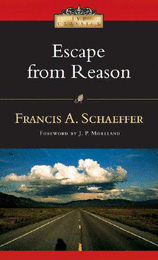
Schaeffer believes that there are two vital principles in communicating the gospel (Escape From Reason, 269).  First, there are certain unchangeable facts which are true.  Here again, the idea of antithesis is prominent in Schaeffer’s thinking.  If a given proposition is true, it’s opposite is false.  Second, we need to know the thought patterns of the culture at large.  Unless we do this, the gospel will fall on deaf ears.

Schaeffer proceeds to discuss biblical faith which begins with the fact of God’s existence.  “True Christian faith rests on content . . . The true basis for faith is not the faith itself, but the work which Christ finished on the cross.  My believing is not the basis for being saved – the basis is the work of Christ . . . The call to Christian believing rests on God’s propositional promises” (The God Who Is There, 146).

Schaeffer militates against easy believism and goes to great lengths to promote a biblical paradigm for faith.  Here he stands in the historic tradition of the Reformers who taught that biblical faith is a combination of notitia (know the facts of the gospel), assensus (believing the facts of the gospel) and fiducia (trusting or banking one’s hope on Christ alone for salvation).  Schaeffer outlines his scheme for biblical faith and is worth quoting in its entirety to get the full flavor of his thinking.

1. Do you believe that God exists and that He is a personal God, and that Jesus Christ is God – remembering that we are not talking of the word or idea god, but of the infinite-personal God who is there?

2. Do you acknowledge that you are guilty in the presence of this God – remembering that we are not talking about guilt-feelings, but true moral guilt?

3. Do you believe that Jesus Christ died in space and time, in history, on the cross, and that when He died His substitutional work of bearing God’s punishment against sin was fully accomplished and complete?

4. On the basis of God’s promises in His written communication to us, the Bible, do you (or have you) cast yourself on this Christ as your personal Savior – not trusting in anything you yourself have ever done or ever will do? (The God Who Is There, 147).

To sum up Dr. Schaeffer’s approach to apologetics one must understand that he embraces Paul’s method of preaching to man without the Bible.  He suggests telling the sinner, “You’re under the wrath of God because you hold the truth in unrighteousness.”  (Death In The City, 266).  The reason:  Sinful man needs to come to grip with the fact that he is a law-breaker and will ultimately face the white-hot wrath of God apart from Christ.


Why Francis Schaeffer Matters: Epistemology – Part 5

schaeffer 5

The Importance of Presuppositions

Dr. Schaeffer’s epistemology is integral to his approach to apologetics and may be described simply as follows: First, one must understand that pagan thought endorses a belief in the uniformity of natural causes in a closed system.  Propositional and verbal revelation is nonsense in this scheme.  Christian epistemology stands in stark contrast to the non-Christian worldview.  The presupposition of Christianity begins with the God who is there.  God is the infinite-personal Being who has made man in His image.  God made man a verbalizer in the area of propositions in his horizontal communications with other men.  Thus God communicates to us on the basis of verbalizations and propositions by means of the written Word of God (He Is There And He Is Not Silent, 326-327).

Thus the Christian epistemological system brings three things together in a unified whole; the unified field of knowledge that modern man has given up on.  “The infinite personal God who made the universe; and man, whom he made to live in that universe; and the Bible, which He has given us to tell us about that universe” (He Is There And He Is Not Silent, 329).

Schaeffer goes one step further by noting that the presuppositions of Christianity is in line with every man’s experience.  “The fact is that if we are going to live in this world at all, we must live in it acting on a correlation of ourselves and the thing that is there, even if we have a philosophy that says there is no correlation . . . In other words, all men constantly and consistently act as though Christianity is true” (He Is There And He Is Not Silent, 330).

The reason for the shift in society leading to despair comes as a result of buying the lie of the uniformity of natural causes in a closed system.  The result delivers a deathblow to any possibility of epistemology.   Schaeffer adds, “Man’s attempted autonomy has robbed him of reality.  He has nothing to be sure of when his imagination soars beyond the stars, if there is nothing to guarantee a distinction between reality and fantasy.  But on the basis of the Christian epistemology, this confusion is ended, the alienation is healed.  This is the heart of the problem of knowing, and it is not solved until our knowledge fits under the apex of the infinite-personal, Triune God who is there and who is not silent” (He Is There And He Is Not Silent, 343-344).

Two Alternatives

Therefore, there are only two alternatives in the search for the source of knowledge according to Dr. Schaeffer.  Either a person attempts to find the answers to all his questions alone (autonomously) or he seeks truths from God and His revealed Word (the biblical world-view).

The former view mandates that a person begins with himself.  However, as Schaeffer notes, “Starting with himself, a person cannot establish an adequate explanation for the amazing possibility that he can observe the world around him and be assured that his observations have a correspondence with reality” (Whatever Happened To The Human Race, 365).  Herein lies the problem: Sinful man is forced to provide the answers to the ultimate metaphysical questions, but because they have limited experience they can know nothing with a high degree of certainty.  The end result is a hellish tension which leads down the road of meaninglessness and the relativity of morals:  “The truth is that everyone who rejects the biblical world-view must live in a state of tension between ideas about reality and reality itself” (Whatever Happened To The Human Race, 369).

The later view that derives truth from God’s Word is the only sure way to engage in epistemology.  Dr. Schaeffer gives three testimonies found in the Scripture.  First, the Bible gives us the explanation for the universe.  Second, the Bible explains the mannishness of man (which is described below) and third, the Bible is open to verification by historical study.  “From the Bible’s viewpoint, all truth finally rests upon the fact that the infinite-personal God exists in contrast to His not existing” (Whatever Happened To The Human Race, 393).

Why Francis Schaeffer Matters: Consequences of Pitting Rationality Against Faith – Part 4

scaf 3The decisive result of falling below the line of despair is a pitting of rationality against faith.  Schaeffer sees this as an enormous problem and details four consequences in his book, Escape From Reason.

Pitting Rationality Against Faith

First, when rationality contends against faith, one is not able to establish a system of morality.  It is simply impossible to have an “upstairs morality” that is unrelated to matters of everyday living.

Second, when rationality and faith are dichotomized, there is no adequate basis for law.  “The whole Reformation system of law was built on the fact that God had revealed something real down into the common things of life” (Escape From Reason, 261).  But when rationality and faith are pitted against one another, all hope of maintaining any semblance of law is obliterated.

The third consequence is that this scheme throws away the answer to the problem of evil.  Christianity’s answer rests in the historic, space-time, real and complete Fall of man who rebelled and made a choice against God.  “Once the historic Christian answer is put away, all we can do is to leap upstairs and say that against all reason God is good” (Escape From Reason, 262).

Finally, when one accepts this unbiblical dichotomy he loses the opportunity to evangelize people at their real point of despair.  Schaeffer makes it clear that modern man longs for answers.  “He did not accept the line of despair and the dichotomy because he wanted to.  He accepted it because, on the basis of the natural development of his rationalistic presuppositions, he had to.  He may talk bravely at times, but in the end it is despair” (Escape From Reason, 262).  It is at this point that Schaeffer believes the Christian apologist has a golden opportunity to make an impact.  “Christianity has the opportunity, therefore, to say clearly that its answer has the very thing modern man has despaired of – the unity of thought.  It provides a unified answer for the whole of life.  True, man has to renounce his rationalism; but then, on the basis of what can be discussed, he has the possibility of recovering his rationality” (Escape From Reason, 262).

Schaeffer challenges us, “Let us Christians remember, then, that if we fall into the trap  against which I have been warning, what we have done, among other things, is to put ourselves in the position where in reality we are only saying with evangelical words what the unbeliever is saying with his words.  In order to confront modern man effectively, we must not have this dichotomy.  You must have the Scriptures speaking truth both about God Himself and about the area where the Bible touches history and the cosmos” (Escape From Reason, 263).

The Tension of Being a Man

Before proceeding to Dr. Schaeffer’s basic approach to apologetics one must understand the concept he calls “mannishness” or the tension of being a man.  The idea is essentially that no man can live at ease in the area of despair.  His significance, ability to love and be loved, and his capacity for rationality distinguish him from machines and animals and give evidence to this fact: Man is made in the image of God.  Modern man has been forced to accept the false dichotomy between nature and grace and consequently, takes a leap of faith to the upper story and embraces some form of mysticism, which gives an illusion of unity to the whole.  But as Schaeffer points out, “The very ‘mannishness’ of man refuses to live in the logic of the position to which his humanism and rationalism have brought him.  To say that I am only a machine is one thing; to live consistently as if this were true is quite another” (The God Who Is There, 68).  Schaeffer continues, “Every truly modern man is forced to accept some sort of leap in theory or practice because the pressure of his own humanity demands it.  He can say what he will concerning what he himself is; but no matter what he says he is, he is still a man” (The God Who Is There, 69).

Thus, the foundation for Francis Schaeffer’s basic approach to apologetics is simply to recognize that man is an image-bearer.  Man even in his sin has personality, significance, and worth.  Therefore, the apologist should approach him in those terms.  The apologist must not only recognize that man is made in the image of God;  he must also love him in word and deed.  Finally, the apologist must speak to the man as a unit; he must reach the whole man (for faith truly does involve the whole man) and refuse to buy into the popularized Platonic idea that man’s soul is more important than the body.

Why Francis Schaefer Matters: The Line of Despair – Part 3

francis_schaeffer-1


The Loss of Antithesis

The loss of antithesis in American culture led to what Dr. Schaeffer coined the “line of despair” or giving up all hope of achieving a rational unified answer to knowledge and life.  Schaeffer outlines what he believes are the various steps below this line of despair.  He begins with the German philosopher, Georg William Friedrich Hegel (1770-1831) who became the first man to open the door into the line of despair.  Hegel taught  what we really have is a thesis, and an opposite antithesis, with the answer of their relationship not a horizontal movement of cause and effect, but a synthesis, or dialectical thinking.  In the end result, Hegel’s philosophy produced a synthesis as opposed to antithesis which could be arrived at by reason.

Schaeffer believes that while Hegel opened the door to the line of despair the Danish philosopher, Soren Kierkegaard was the first one to go below the line.    Kierkegaard concluded that one could not arrive at synthesis by reason alone.  Rather, one achieves everything of real importance by taking a “leap of faith.”  Schaeffer, therefore, maintains that Kierkegaard’s conclusions gradually led to the absolute separation of the rational and logical from faith.

The Leap of Faith and the Line of Despair

What is this leap and what does it involve?  Schaeffer teaches that Kierkegaard’s leap put away the hope of any unity.  Schaeffer writes, “The leap is common to every sphere of modern man’s thought.  Man is forced to the despair of such a leap because he cannot live merely as a machine . . . If below the line man is dead, above the line, after the non-rational leap, man is left without categories.  There are no categories because categories are related to rationality and logic.  There is therefore no truth and no nontruth in antithesis, no right or wrong – you are adrift.” (Escape From Reason, 241, 256).

Schaeffer continues to chronicle the subsequent philosophers who followed Kierkegaard’s thought including the atheistic existentialism of Karl Jaspers, Jean Paul Sartre and Martin Heidegger.  These men reasoned below the line of despair and gave up hope of a rational answer to the questions of life.  The end result: they are left with only the anti-rational.

Schaeffer proceeds to explain what he considers the further steps under the line of despair.  The first as noted above began with philosophy.  The second step was art.  The third – music.  The fourth – culture, and the fifth step was the new theology which was opened by Karl Barth.  While most refer to this brand of theology as “liberal” or “neo-orthodox,” and rightly so, the issue at hand runs deeper than labels.  Indeed, liberal theology rejects the deity of Christ, the inerrancy of Scripture and the New Testament miracles.  The new theology knows nothing of man being created in the image of God.  But Schaeffer adds further clarity to the issue:  “All the new theology and mysticism is nothing more than a faith contrary to rationality, deprived of content and incapable of contentful communication.  You can bear ‘witness’ to it, but you cannot discuss it.  Rationality and faith are out of contact with each other” (The God Who Is There, 64).

Man, therefore, is left in a state of despair which “arises from the abandonment of the hope of a unified answer for knowledge and life.  Modern man continues to hang on to his rationalism and his autonomous revolt even though to do so he has had to abandon any rational hope of a unified answer” (Escape From Reason, 235-236).

The Consequences of Despair

The consequences and despair of modern man can be found in three areas.  alling prey to nihilism or embracing a worldview that offers no hope.

The second is  found in the fact that he accepts a false dichotomy (what Schaeffer calls an “absolute dichotomy”) between nature and grace.  However, the modern scheme is presently a dichotomy between contentless faith (no rationality) and rationality (no meaning).  “All the new theology and mysticism is nothing more than a faith contrary to rationality, deprived of content and incapable of contentful communication.  Rationality and faith are out of contact with each other” (The God Who Is There, 64).

Third, since there is no integration point between rationality and faith man engages in acts of desperation in order to find meaning, namely, he accepts a mysticism which gives an illusion of unity to the whole.  Hence we understand why the influx of eastern religion such as Hinduism, i.e. the New Age Movement has gained such a popular foothold in America today.  If there is no hope of a unified field of knowledge one must cling to a mystical world-view that has no rational base but promises hope for the present and the future.

Schaeffer enhances his discussion by contrasting the Christian faith with modern man’s faith which has turned inward.  In Christianity the value of faith depends upon the object towards which the faith is directed.  So it looks outward to the God who is there, and to the Christ who in history died upon the cross once for all, finished the work of atonement, and on the third day rose again in space and in time.  This makes the Christian faith open to discussion and verification (The God Who Is There, 65).

Why Francis Schaeffer Matters: The Turning Point in Truth – Part 2

sch 2

The Truth Crisis

Francis Schaeffer sets the tone for his apologetical procedure by explaining the crisis of truth in America:  “We are fundamentally affected by a new way of looking at truth.  This change in the concept of the way we come to knowledge and truth is the most crucial problem facing America today” (The God Who Is There, 6).  He believes a paradigm shift occurred around 1935 when the American attitude toward truth changed.  Prior to this time, American’s were devoted to thinking about presuppositions, namely, the existence of absolutes, particularly in the areas of morals (ethics) and knowledge (epistemology).  But the average American took it for granted that if a certain idea was true, it’s opposite was false.  In other words, “absolutes imply antithesis.”  The working antithesis is that God exists objectively (in antithesis) to his not existing.

Schaeffer believes that presuppositional apologetics would have stopped the decay.  Incidentally, he maintains that the use of classical apologetics was effective prior to the shift because non-Christians were functioning on the surface with the same presuppositions, even though they did not have an adequate base for them.

The Role of Thomas Aquinas

Dr. Schaeffer maintains that Aquinas opened the way for the discussion of what is usually called the “nature and grace” controversy (Escape From Reason, 209). He contends that Aquinas set up a dichotomy of grace versus nature.

Aquinas taught that the will of man was fallen, but the intellect was not.  The net result, according to Schaeffer, is that man’s intellect is seen as autonomous.  Schaeffer maintains that the teaching of Aquinas led to the development of the so-called Natural Theology where theology could be pursued independent of the Scriptures.  The vital principle to understand according to Schaeffer is that “as nature was made autonomous, nature began to ‘eat up’ grace” (Escape From Reason, 212).

Anthropology

Schaeffer militates against this so-called  “grace/nature” dichotomy and insists that Christ is equally Lord in both areas.  He suggests that God made the whole man and is consequently interested in the whole man.  When the historic space-time Fall took place, it affected the whole man, not merely the will as Aquinas taught.  Thus, Schaeffer taught that the whole man is saved and the whole man will eventually be glorified and perfectly redeemed.

Since God made man in His own image, man is not caught in the wheels of determinism:  “The Christian position is that since man is made in the image of God and even though he is a sinner, he can do those things that are tremendous – he can influence history for this life and the life to come, for himself and others” (Death In The City, 258).

Schaeffer argues that Evangelicals have such a strong tendency to combat humanism that they end up making man a “zero.”  He adds, “Man is indeed lost but that does not mean he is nothing . . . From the biblical viewpoint, man is lost, but great” (Death In The City, 258-259).  Therefore, Schaeffer’s anthropological position is that man is sinful, yet he is significant because he is made in the image of God.  And regenerate man is, as the Reformers emphasized, simul iustus et peccator – simultaneously righteous and sinful.

Why Francis Schaeffer Matters: An Introduction – Part 1

sch.jpg

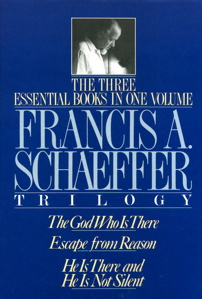
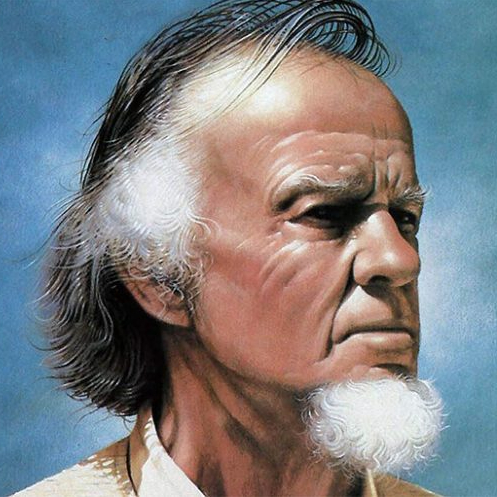
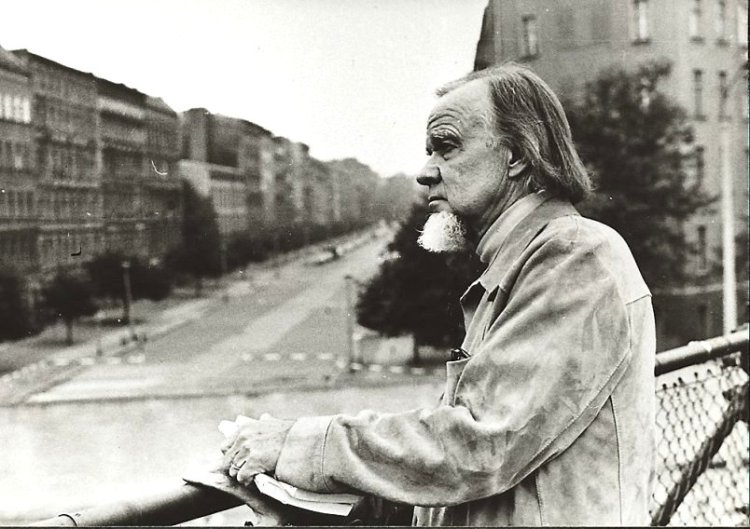
Dr. Francis A. Schaeffer (1912-1984) may very well be one of the most important Christian thinkers of the twentieth century.  Schaeffer graduated from Westminster Theological Seminary and was heavily influenced by J. Gresham Machen, Cornelius Van Til, and the Dutch theologian Abraham Kuyper.

In 1948, after a ten year pastorate in the United States, he moved his family to Switzerland to engage in missionary work.  In 1955, Dr. and Mrs. Schaeffer founded L’Abri in a small mountain village in Switzerland.  French for “shelter,” L’Abri became a refuge for people in need of spiritual help.  The Schaeffers were especially interested in people who sought answers to basic philosophical and metaphysical problems.  He writes, “To the best of my ability I gave the Bible’s answers.  But all the time I tried to listen and learn the thought forms of these people.  I think that my knowledge, whatever it is, is formed from two factors: 1) Forty years of hard study, and 2) Trying to listen to the twentieth-century man as he talked” (Eternity, March 1973).  Schaeffer’s keen ability to listen carefully and engage the intellect of these people became a primary factor that contributed to his success.

Students came to L’Abri from varied backgrounds – philosophy, medicine, architecture, science, and theology.  The Schaeffers ministered to college professors, students, pastors, engineers, and lawyers to name a few.  The common thread among all L’Abri visitors was a thirst for truth.  These people sought answers to the basic questions of life:  Who am I?  Where am I going?  What is my purpose in life?  How does God fit in the scheme of things?

The stated purpose of L’Abri is “to show forth by demonstration, in our life and work, the existence of God” (L’Abri, 16).  L’Abri continues to operate and fulfill the vision of Francis Schaeffer even over twenty-five years after his death.  The ministry of L’Abri may also be found in Holland, Australia, England, Sweden, India, South Korea and Massachusetts.

Francis Schaeffer published his first book, The God Who Is There in 1968.  He subsequently wrote twenty-two books which have been translated into more than twenty-five different languages.  A common unifying theme runs throughout Schaeffer’s books, namely, “the Lordship of Christ in the totality of life”  (The Great Evangelical Disaster, 303).

In the days to come, my goal is to expose readers to Francis Schaeffer and pay particular attention to his views on apologetics and the nature of the church.

Veritas et Lux!

The Eclipse of the Gospel and the School of Hard Knox

A Powerful Man

I stood in the shadow of St. Giles Cathedral in Edinburgh, Scotland. Clouds gathered overhead and people walked curiously through the front doors. Here, the famous reformer, John Knox faithfully tended the flock until his death in 1572.

Once inside this massive cathedral, I was transfixed by the sheer beauty of this place. I was overwhelmed by the architecture – the awe-inspiring flying buttresses that point worshippers to the transcendence of God. A single elevated pulpit is located in the center of the sanctuary. It stands strategically above the worshippers, which symbolically places God’s Word above sinful creatures.

John Knox brought reform to Scotland and re-energized a nation that had all but forgotten God. Knox helped awaken a nation that neglected God’s truth which led to a virtual eclipse of the gospel. Martyn Lloyd-Jones describes Knox as a man who preached “with the fire of God in his bones and in his belly!  He preached as they all preached, with fire and power, alarming sermons, convicting sermons, humbling sermons, converting sermons, and the face of Scotland was changed …” Simply put, the faithful preaching of Knox brought much needed reform to the Scottish landscape and renewed evangelical fervor to the church.

John Knox courageously raised the banner of the gospel and defended the truths of the Protestant Reformation. He was unashamed of the gospel (Rom. 1:16) and fearlessly proclaimed the Word of God. He stood boldly and with Peter and the apostles, obeyed God rather than men (Acts 5:29). Indeed, Knox is a true exemplar of faithfulness in the face of adversity.

A Personal Lesson

As I made my way out of St. Giles, my mind was filled with stories surrounding the life and ministry of John Knox. As I turned to gaze again at the rising fortress where Knox served the Lord, a thought occurred to me. It was not a new thought. Rather, it was a lesson that has moved me for many years now but in this moment, the lesson was magnified as I scanned the edifice of St. Giles. The lesson is this: church history matters.

It seems like such a simple lesson. But it is a lesson that many contemporary Christians are unfamiliar with. Even as a young Bible College student, I failed to understand the importance of church history. The buildings seemed so old and the names were so hard to pronounce. It is a sentiment that is not unique to me. I hear it all the time. I hear the cruel remarks about John Calvin and the caricatures that biased people have cooked up about Jonathan Edwards. But when we move past all the petty talk and face reality, we realize that church history truly does matter.

A Pivotal Mindset

First, Church history matters because when we forget the past, we fail to learn valuable lessons that impact our lives. George Santayana famously said, “Those who cannot remember the past are condemned to repeat it.” So Christians who minimize the importance of church history are vulnerable to the theological error that plagued the church in the past. Additionally, they repeat the sins committed by our forefathers.

For example, Arius committed a fatal theological error by teaching that Christ was the first created being. This theological controversy which erupted in 318 A.D. led to a series of erroneous Arian propositions:

  1. The Son was created by the Father.
  2. The Son owed his existence to the will of the Father.
  3. The Son was not eternal, that is, there was a time when he was not.

Such teaching stood diametrically opposed to Scripture and was outside the bounds of orthodoxy. In the end, Arius rejected the full deity of the Son and the Holy Spirit.

Second, Church history matters because it strengthens our faith. Scripture instructs, “Remember your leaders, those who spoke to you the word of God. Consider the outcome of their way of life, and imitate their faith.” (Heb. 13:7, ESV) The term remember is a present imperative verb that means, “keep thinking about,” or “call to mind.”

Remembering godly leaders in church history is not optional; it is a command in sacred Scripture. The author of Hebrews does not limit the scope of these “leaders” to men like Moses, Abraham, Paul or Peter. He instructs us to remember leaders “who spoke to you the word of God.” So remembering leaders like Augustine, Calvin, Edwards, Luther, and Spurgeon is an important part of the Christian pilgrimage. We do well to follow in their paths by boldly proclaiming the truth and living faithfully before the Lord, even when our detractors heap insults on us for faithfully remembering these heroes of the faith.

Third, Church history matters because God ordained specific events that lead to the worldwide spread of his glory. Church history truly is “his story.” Whenever we discount history, we subtly stand in judgment over God and claim to know a better way. Whenever we disparage church history and subtly place ourselves in a position that was never ours to enjoy. Indeed, “Our God is in the heavens; he does all that he pleases” (Psalm 115:3, ESV).

The School of Hard Knox

John Knox was a faithful man who led a gospel-centered life, according to the grace that was given him by his Savior. His relentless preaching helped drive away the darkness and restore the light of the gospel to his land. Almost five hundred years later, St. Giles still stands but the truth has fallen on hard times. Once again, the gospel is being eclipsed by man-made philosophy and foolishness.

As Christ-followers, we must learn well the lessons that church history teaches us. When we forget the past we falter in our faith and fail to exalt the sovereign purposes of our Savior. When we forget the past, we become comfortable stumbling around in the dark and begin to glory in our ignorance.

Let us become educated in the School of Hard Knox. And may the gospel shine brightly again. “For the earth will be filled with the knowledge of the glory of the Lord as the waters cover the sea” (Habakkuk 2:14, ESV). And may we recover our love of truth and our passion for the gospel.

Travel With John Knox

travelDavid Campbell, Travel With John Knox Leominster: Day One Publications, 2003, 128 pp. $20.00

Travel With John Knox by David Campbell is another installment in the Day One series the introduces readers to the heroes of the Christian faith. This 128-page volume is a great introduction to the Scottish Reformer who is described as “the most excellent man Scotland ever produced.”

Color photographs appear throughout this work, sparking interest in the Scottish Reformation and the theological genius of John Knox. A perfect traveling tool for anyone making a trek to the United Kingdom.

With Jesus: Finding Your Place in the Story of Christ – Brian G. Hedges (2017)

hBrian Hedges, With Jesus: Finding Your Place in the Story of Christ. Wapwallopen: Shepherd Press, 2017, 185 pp. $13.95

With Jesus, by Brian G. Hedges is a book that invites readers on a journey of a lifetime. The gospel is weaved into the fabric of this story and helps readers understand the role that Christ places in individual lives. Hedges writes, “Whatever the shape of your life, whether your personal saga is comedy, tragedy, adventure, or soap opera, the gospel resounds with good news for all who believe: you’ve been inserted into a new story – the story of Christ.  This book is about finding your place in the story of Jesus.”

The author is convinced that many people read the gospel “through the wrong lens.” Therefore, his goal is to help people read the gospel narratives in a “gospel-centered way.”

So the book begins with the birth of the self-existent Son of God in the manger. Hedges guides readers through the gospel narratives and highlights each of the major aspects of Christ’s earthly life from his baptism to Gethsemane, the crucifixion, the resurrection, ascension, and return. Each chapter includes well-thought-out observations about the person and work of Christ that both encourage and challenge.

Hedges work weighs in at 185 pages. Each page is packed with biblical wisdom and insight. The writing is pastorally challenging and theologically engaging. Many Puritans and stalwarts from church history are consulted, which only strengthens the punch in this already excellent study. The investment of time and energy in Hedges book will pay rich dividends and will shower a wealth of gospel-centered joy on each reader.

The lesson that stands out for me above all come in a few short sentences by the author:

“I have been gripped with this glorious truth: that in all of his obedience, Jesus was acting as our representative, husband, and head.  If I am in Christ, then his achievements are counted as mine.  What he accomplished, I accomplished with him.”

Readers are urged to plunge, prayerfully into this very well-written book and spend some time With Jesus.

I received this book free from the publisher. I was not required to write a positive review.

The Affectionate Theology of Richard Sibbes – Mark Dever (2018)

sibesMark Dever, The Affectionate Theology of Richard Sibbes. Sanford: Reformation Trust Publishing, 2018, 198 pp. $16.00

The Long Line of Godly Men Profiles is a series published by Reformation Trust that has been educating and inspiring Christians for over ten years. Steven Lawson serves as the series editor and oversees this important project. This excellent series introduces readers to pastors and theologians from different generations – men like Calvin, Edwards, Luther, Tyndale, and Spurgeon. Each book stands alone and each one offers a treasure chest of biblical resources – historical, biblical, theological, and pastoral. The latest offering is no exception as Dr. Mark Dever introduces the life, ministry, and theology of Richard Sibbes.

The Affectionate Theology of Richard Sibbes is a short biographical sketch of the influential pastor. In Dever’s words, Sibbes was “the quintessential Puritan.” The aim of the author is to present Sibbes in a clear light and provide historical and theological clues along the way that will portray him in a proper light. In a final sense, Dever’s goal in this work is to “recover Sibbes as a historical and theological whole.”

Dever traces the ministerial career of Richard Sibbes and alerts readers to some of the high points of his ministry and makes reference to some of the controversies that emerge, along the way. One of the dominant themes is the tension which existed in the 17th-century Elizabethan era between the conformists and the non-conformists.

Three specific pastoral matters that occupied the attention of Sibbes was the centrality of the heart, assurance of salvation, and the role of the conscience. Dever introduces each subject and highlights the various points, which were emphasized by Sibbes.

The Affectionate Theology of Richard Sibbes has a more academic feel than most of the other books in the Long Line of Godly Men Series. Students interested in the Puritan era and 17th century England will find Dever’s observations interesting and illuminating. Dever’s fine work should be welcomed and applauded.

I received this book free from the publisher. I was not required to write a positive review.