The Indispensable Need For Unity: Part 1

00000141I’ll never forget the time I bumped into a pastor at the store one day.  We served together for some time in ministry and enjoyed a good friendship and working relationship.  I asked, “How have you been?”  He proceeded to tell me about the church he was serving at and how one of the members had leveled some horrible accusations against him; accusations that were not true in any way, shape, or form.  These accusations began to swell and before long the pastor was driven out and the church eventually disintegrated.

There is an indispensable need for unity in the church of Jesus Christ.  God places a premium on unity.  The one God who has revealed himself in three persons has from all eternity been united; in perfect fellowship.  And the Trinity will be unified unto all eternity.  Indeed, this is his call to the church.  King David unfolds the blessings of unity in Psalm 133:1-3.  He begins, “Behold, how good and pleasant it is when brothers dwell in unity!”  In verses 2 and 3, compares unity to the precious oil that ran on the head of Aaron which ran onto his beard and down the collar of his robes.  He compares unity to the dew of Hermon, which falls on the mountains of Zion.

The Definition of Unity

Unity points to the community.  It suggests the state of being one where the whole is greater than the sum of its parts.  The essence of unity is harmony.   This is the call of the church – to be unified.  Yet a quick survey of local churches reveals a disturbing trend.  Many of these churches may appear to be unified externally but are on the verge of collapse on the inside.  Notice three New Testament examples of this call to unity.

Ephesians 4:1-3

“I therefore, a prisoner for the Lord, urge you to walk in a manner worthy of the calling to which you have been called, with all humility and gentleness, with patience, bearing with one another in love, eager to maintain the unity of the Spirit in the bond of peace.”

Paul uses a Greek word here, translated as “unity” which is a “oneness.”  It is important to see that unity is tied to humility, gentleness, patience, and longsuffering.  We can safely say that to the degree that these qualities are absent in the church – to that degree disunity will prevail.

Ephesians 4:13

“until we all attain to the unity of the faith and of the knowledge of the Son of God, to mature manhood, to the measure of the stature of the fullness of Christ …”

God places a premium on unity; so much so that it stands at the heart of God’s purposes for the church.  And note its aim, namely, mature manhood, “to the measure of the stature of the fullness of Christ.”  In order to be unified in the way that God intends, we must be growing deeply in the soil of God’s grace.  So churches that marginalize theological pursuit are in danger of disobeying this important component of church life.  Churches that get caught up in pragmatic approaches to ministry miss out on the blessing that unity brings!

1 Peter 3:8

“Finally, all of you, have unity of mind, sympathy, brotherly love, a tender heart, and a humble mind.”

Peter uses a different Greek word here.  It is a word that means, “the state of being united; a thing forming a complex whole; like-minded.”  I serve at a church where the men gather on a regular basis to weigh-in on important decisions and shepherd the flock of God.  From time to time, we have strong opinions on a given issue, yet something incredible always happens.  We always leave the meeting united.  My prayer is that the same spirit would permeate the local church.  Sometimes we agree to disagree.  This is part of life.  But when a decision is made, we must make a conscious decision to be unified.  May unity mark churches that embrace the biblical gospel of Jesus Christ.  May we stand united around the purposes of our Savior for the glory of God!

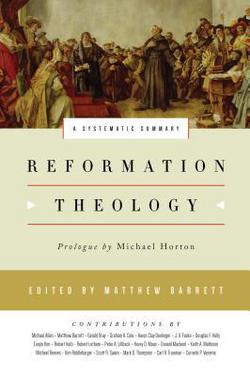
Reformation Theology

refMatthew Barrett, Ed. Reformation Theology, Wheaton: Crossway, 2017, 784 pp. $33.00

Nearly five hundred years ago, Martin Luther nailed his now famous ninety-five theses to the castle door in Wittenberg. Luther’s courage continues to inspire faithful followers of Jesus. His character raises the bar for anyone who strives to serve with truth-centered passion in the kingdom of God. His conviction puts steely audacity in the hearts of the timid and fearlessness in the one prone to cowardice. The resolve of Martin Luther helps fuel a new generation of Christians who do the right things for the right reasons—all for the glory of God.

Reformation Theology, edited by Matthew Barrett celebrates the doctrinal realities that flowed forth from the pens of men like Martin Luther and John Calvin. Barrett rightly argues that the gospel was rediscovered during the Protestant Reformation. He adds, “The Reformation was a return to a gospel-centered, Word-centered church.” Thus, this book seeks to present a systematic summary of Reformation theology.

Part One reveals the historical background of the Reformation and alerts readers to the pertinent details of the Reformation that helped fuel the fire which erupted in the sixteenth century.

Part Two compromises the vast majority of the book and contains the finer points of Reformation theology. Every theme that one might fathom is set forth in this volume – everything from the doctrine of justification by faith alone to the solas, predestination and election, and the Lord’s Supper. No stone is left unturned here.

Reformation Theology is a must for students of historical theology and systematic theology. The depth and breadth of scholarship is stunning. We owe a great debt to Matthew Barrett for teaming up with such a fine group of theologians.

Highly recommended!

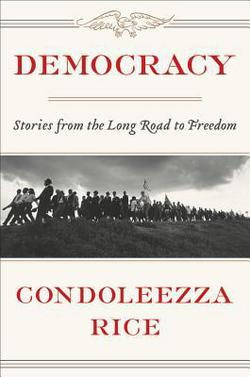
Democracy: Stories from the Long Road to Freedom – Condoleezza Rice (2017)

riceThe Puritan, John Winthrop spoke of America as “the city on a hill” as he gazed upon the shores of his new home from the confines of his ship, the Arbella. President Ronald Reagan inspired freedom lovers around the world as he too spoke in glowing terms of this “city on a hill.” Winthrop and Reagan captured the very heartbeat of every human being with that phrase as they echoed the cry for freedom – a freedom which is made possible by democracy.

Former Secretary of State, Dr. Condoleeza Rice paints a beautiful portrait of freedom in her most recent book, Democracy: Stories from the Long Road to Freedom. Rice explores the early foundations of American democracy by providing a basic framework for freedom.

Most of the book is devoted to telling stories about the hope of democracy in countries like the Russian Federation, Columbia, Poland, Kenya, and the Middle East. Readers will not be surprised to learn that while democracy is on the rise in the world, the promise of democracy is usually a long path and is usually accompanied by pain and bloodshed. Some nations like Germany and Japan are “stabilizing forces for good.” But other nations like Russian and China “seem determined to disrupt the global order.”

Dr. Rice makes full use of her experience as Secretary of State by sharing stories about her role in helping various nations move forward in their quest for democracy. Readers will quickly note that Secretary Rice has a passion for freedom and is quick to defend the downtrodden. Rice adds, “Giving voice to the voiceless is a moral cause for a country – America that is based on an idea: that human freedom is the source of human dignity and progress. That cannot be true for us and not for them.

Democracy by Condoleeza Rice is a book for every American. Liberals and conservatives alike should digest this book and be reminded of the great price of freedom:

“The United States has been a north star for those seeking liberty not because it is perfect, but because it was born imperfect and is still struggling with imperfection. That has always been the best argument for America’s example – and America’s engagement. We are living proof that the work of democracy is never done. For those who are just starting – stumbling, and starting again – that is reassuring and inspiring. And it is reason to be a voice for them as they struggle in their freedom – just as we do – to chart a better future.”

Dr. Rice tells about the time she visited the home of Lech Wałęsa in Gdańsk, Poland. One hundred thousand Polish workers were waving flags and shouting, “Bush, Bush, Bush … Freedom, Freedom, Freedom.” Rice turned to her colleague as said, “This is not exactly what Karl Marx meant when he said, ‘Workers of the world unite.”

So the atheistic worldview of Karl Marx is relegated to the ash heap of history. And the city on a hill shines brightly, still. However, there are still forces that loom large and cast a dark shadow on our liberty. Democracy is a celebration of our liberty and a vivid reminder of the freedom we enjoy as Americans.

Highly recommended!

No Final Conflict – Francis Schaeffer (1975)

“It is my conviction that the crucial area of discussion for evangelicalism in the next years will be Scripture.  At stake is whether evangelicalism will remain evangelical.”  So stated Francis Schaeffer in his 1975 landmine, No Final Conflict.  While this treasure was penned nearly thirty years ago, it remains relevant and applicable to 21st-century culture.

It was not unusual for Schaeffer to warn Christians.  He did it often during the seventies and eighties.  His chief warning in No Final Conflict is to cling to the propositional truth of the Scriptures:  “We must say that if evangelicals are to be evangelicals, we must not compromise our view of Scripture … The issue is clear: Is the Bible truth without error wherever it speaks, including where it touches history and the cosmos, or is it only in some sense revelational where it touches religious subjects?”  Schaeffer smelled a “rat” in 1975.  He always had a good sense of smell!  The pesky “rat” that Schaeffer detected continues to scurry about in postmodern culture; in fact that “rat” has produced offspring.  The liberalism of the 70’s is flourishing in the 21st century.  Schaffer’s antidote is simple – We must embrace the truth of Scripture: “In our day that point is the question of Scripture.  Holding to a strong view of Scripture or not holding to it is the watershed of the evangelical world … We must say most lovingly but clearly: evangelicalism is not consistently evangelical unless there is a line drawn between those who take a full view of Scripture and those who do not.”

One of Schaeffer’s key points is to clear up the confusion between reason and faith.  Indeed, this was one of the major notes of his writing.  He saw a unity between faith and reason; a unity that is marginalized especially by the new atheists like Richard Dawkins and Sam Harris.  Schaeffer posits, “There may be a difference between the methodology by which we gain knowledge from what God tells us in the Bible and the methodology by which we gain it from scientific study, but this does not lead to a dichotomy as to the facts … if both studies can be adequately pursued, there will be no final conflict.”  Truth is unified as Nancy Pearcey has reminded us.  There is no conflict between reason and faith.

Dr. Schaeffer went to be with his Lord in 1984.  If he were still with us, I’m convinced that he would never have an “I told you so attitude.”  Rather, he would continue to admonish believers to hold to a strong uncompromising view of Scripture.  He would challenge Christ-followers to cling to the rock of propositional truth.  And he would warn disciples of Christ to flee from anything that looks like a rat, smells, like a rat, or walks like a rat.  His warnings mattered almost thirty years ago.  They continue to be as relevant as ever!


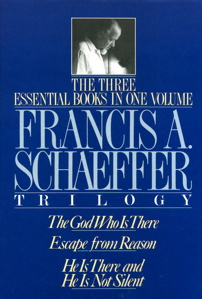
He is There and He is Not Silent- Francis Schaeffer (1972)

I first read He is There and He is Not Silent by Francis Schaeffer in 1992.  Multiple readings have ensued and I turn back to Schaeffer’s book again and again for help with apologetics.

Schaeffer argues for three basic areas of philosophical thought: metaphysics (being or existence), morals (the dilemma of man), and epistemology (the problem of knowing). Philosophy and religion are essentially devoted to the same questions, namely, metaphysics, morals, and epistemology.

Philosophy is concerned with either an academic subject or a person’s worldview.  It is the later, that Schaeffer is concerned with in this volume.  Schaeffer contends that every man is a philosopher of sorts because it is impossible for humans to live without a worldview.

Metaphysics

There are three basic answers to the question of metaphysics.  The first answer is that “everything that exists has come out of absolutely nothing.”  Naturalism’s answer suggests no energy, no mass, no motion, and no personality.  This answer is, as Schaeffer calls it, “nothing, nothing.”

The second answer is that everything had an impersonal beginning.  This answer leads automatically to reductionism.  “Beginning with the impersonal must be explained in terms of the impersonal plus time plus chance,” writes Schaeffer.  This answer poses many problems.  But the two primary problems fail to answer the major philosophical question: the need for unity and the need for diversity.

The third answer is the biblical answer.  The third answer is the only rational and satisfying answer.  This answer suggests that we must begin with a personal beginning.  And to have an adequate answer of a personal beginning, one must have a personal infinite God, and personal unity and diversity in God (found the holy Trinity).

Schaeffer concludes: “The reason we have the metaphysical answer is because the infinite-personal God, the full Trinitarian God is there and he is not silent.”

Morals

There are only two basic answers to the question of morals.  The first: Everything had an impersonal beginning.  The is the answer of atheism.  Schaeffer never minces words.  He writes, “Beginning with the impersonal, there is no explanation for the complexity of the universe or the personality of man.”  When one begins with the impersonal, one eliminates the possibility of morals or ethics.

The second answer is the biblical reality of a personal beginning.  Man was created by an infinite-personal God.  Man sinned or “made a decision to change himself” as Schaeffer notes.

“The starting point,” writes Schaeffer “to the answer (of the question of morals) as with metaphysics is the fact that God is there and he is not silent.”

Epistemology

Schaeffer concludes by setting forth the problem concerning epistemology and the epistemological answer.

The epistemological problem concerns the tension between nature (particulars) and grace (universals).  When nature becomes autonomous, the universal is lost with the hope of giving the particulars meaning.  The problem is that when nature becomes autonomous, nature “eats up” grace.  Schaeffer argues that when we are left with only particulars, we become lost in the areas of metaphysics, morality, and epistemology.

The epistemological answer was summarized by the Reformers.  The Reformers did not allow for a dichotomy between nature and grace.  The reason: they had verbal propositional revelation.  The Reformers were vocal about the reality of God’s existence and the reality of his revelation.  Schaeffer popularized this view in the title of his book, He is There and He is Not Silent.  God has spoken truly about himself.  However, he has not spoken exhaustively about himself.

Schaeffer urges readers to come face to face with two gigantic presuppositions – “the uniformity of natural causes in a closed system and the uniformity of natural causes in an open system and in a limited time span.”  Ultimately, readers must determine which worldview fits with the facts.

Schaeffer summarizes, then, the basic presuppositions in historic Christianity:

1. God is there.

2. God is the infinite-personal God who has made man in his image.

3. God made man a verbalizer in the area of propositions in his horizontal communications with other men.

4. God communicates to us on the basis of propositions, viz, he is there and he is not silent.

Schaeffer maintains, “Under the unity of the apex of the infinite-personal God, in all of these areas we can have meaning, we can have reality, and we can have beauty.”

He is There and He is Not Silent is an essential work of apologetics.  It should be required reading for every Bible College/Seminary student.  Schaeffer put his finger on the essential issues of the day – even in the early 70’s and especially in our day.


Forensic Faith

forHe is an experienced cold-case detective and he is a committed follower of Jesus Christ. J. Warner Wallace brings a wealth of experience and knowledge in his new book, Forensic Faith. The book is apologetic in nature but is laced with evangelistic fervor.

Several features mark Forensic Faith and make it a beneficial resource to beginning Christians and seasoned veterans. First, Wallace argues that Christians have a duty to be “Christian case makers.” That is, they must present a compelling case for the historicity and reliability of the Christian faith. Indeed, we must be “prepared to make a defense to anyone who asks you for a reason for the hope that is in you” (1 Pet. 3:15). The author adds, “It’s time for the distinctly evidential nature of Christianity to result in a distinctly intelligent, reasonable, and evidential family of believers. This Christian difference ought to form our Christian duty. We are called to embrace a forensic faith and to love God with our minds.” The duty to present this compelling case, therefore, forms an unbreakable foundation for the remainder of the book.

Second, apologetic training must be specifically targeted. This “training, writes Warner, “is more than mere instruction. Training involves putting instruction into practice.” There is a fine line between teaching which imparts knowledge and training which prepares learners for a unique challenge.

Third, intense investigation must undergird would-be apologists. Five practices are suggested: 1) Read the Bible completely. 2) Think about the evidence for God and the Bible broadly. 3) Takes notes and analyze the Bible thoroughly, 4) Summarize and organize the biblical evidence usefully, and 5) Add to the biblical case evidentially.

Fourth, readers are urged to utilize convincing communication skills which culminates with the much-needed skill of closing the argument with winsome persuasion.

The book includes a helpful section that describes brief answers to typical challenging questions that may be leveled on a university campus or other challenging arena.

Forensic Faith is a helpful tool that should be utilized by many as they seek to gain a better understanding of the Christian faith and making a positive case for its claims.

One weakness is that page numbers are not provided in the table of contents, an oversight that should be corrected in future editions. There is some redundancy in this work that may leave readers bogged down and frustrated. Apart from these minor critiques, I commend Forensic Faith and trust that the contents will be a deep encouragement to many.

I received this book free from the publisher. I was not required to write a positive review.

Two Contents, Two Realities – Francis Schaeffer (1974)

Francis-Schaeffer-560x328Sometimes the best things come in small packages.  Case in point: Two Contents, Two Realities by Francis Schaeffer.  To call it a booklet would be inaccurate.  To call it a pamphlet would be insulting.  The worst accusation one could hurl at this work is irrelevant or outdated.  Originally published in 1974 as a position paper that was presented at the International Congress on World Evangelization in Lausanne, Switzerland, Schaeffer’s work (as usual) is prophetic, timely, and challenging.  His writing aims squarely at the Christian mind but always impacts the heart.  And whenever the mind and heart are inflamed by Christian truth, the hands and feet are quick to follow.

Schaeffer’s proposition in this piece is simple.  The culture is getting increasingly more secular and ungodly.  There are two contents and two realities:

Content # 1: Sound Doctrine

Content # 2: Honest Answers to Honest Questions

Reality # 1: True Spirituality

Reality # 2: The Beauty of Human Relationships

The First Content: Sound Doctrine

Schaeffer argues, “We must have the courage to make no compromise with liberal theology and especially neo-orthodox existential theology.”  He argues strenuously against any system that abandons the role of the intellect which is tantamount to rejecting propositional revelation.  In regards to the doctrinal content, Schaeffer maintains there are three things we must recognize:

1) There must be a strong emphasis on content.

2) There must be a strong emphasis on the propositional nature of the Bible, especially the early chapters of Genesis.

3) There must be a strong emphasis on the practice of truth.

Anyone who takes a serious look at the church in the 21st century must admit that we have clearly moved away from these important components in Schaeffer’s system.  Theology is marginalized in most churches.  Propositional truth is relegated to modernity and cast aside in favor of mysticism and existentialism.  And while practicing the truth may be in vogue, one wonders which truth is being practiced given the shaky epistemological groundwork.

The Second Content: Honest Answers to Honest Questions

Schaeffer identifies the strong Platonic worldview that has been embraced by mainstream evangelicals – a view that divides man into two parts, namely, spiritual and physical.  He rightly adds, “We must consciously reject the Platonic element which has been added to Christianity.  God made the whole man; the whole man is redeemed in Christ.  And after we are Christians, the Lordship of Christ covers the whole man.”

Herein lies the rub.  Since historic Christianity is the truth (what Schaeffer calls elsewhere, “true truth),  it must therefore “touch every aspect of life.”  Difficult questions may be challenging, but answers must be given nonetheless.  Forever gone are the days when one answers, “You must just believe.”  Such a mindset is tantamount to blind faith – which in all reality is no faith at all!

Schaeffer adds, “Answers are not salvation.  Salvation is bowing and accepting God as Creator and Christ as Savior.  I must bow twice to become a Christian.  I must bow and acknowledge that I am not autonomous; I am a creature created by the Creator.  And I must bow and acknowledge that I am a guilty sinner who needs the finished work of Christ for my salvation.”

The church must address cultural questions as well as questions that come from within.  Schaeffer maintains that in order for this to take place, there must be sufficient training in both the church as well as the academy.

The First Reality: True Spirituality

Behind true spirituality is a commitment to truth which is stated in propositions.  Schaeffer spoke to the liberals in his day and echoes that same reality to emergent types and neo-liberals with this bold challenge: Anybody who diminishes the concept of the propositionalness of the Word of God is playing into … non-Christian hands.” He proceeds to encourage readers to grasp propositional truth by making truth come alive in the streets and in the marketplace of ideas.  He reacts strongly to any system that is a mere end in itself: “A dead, ugly orthodoxy with no real spiritual reality must be rejected as sub-Christian.”

The Second Reality: The Beauty of Human Relationships

Schaeffer observes, “We are to show something to the watching world on the basis of the human relationships we have with other people, not just other Christians.”  Schaeffer illustrates how we are called to love people without compromise.  He uses the liberal theologian as an example.  He adds, “Yes, we are to stand against his theology.  We are to practice truth, and we are not to compromise.  We are to stand in antithesis to his theology.  But even though we cannot cooperate with him in religious things, we are to treat the liberal theologian in such a way that we try from our side to bring our discussion into the circle of truly human relationships … We can have the beauty of human relationships even when we must say no.”

Francis Schaeffer’s understanding and exposition of two contents and two realities is very helpful as one seeks to make inroads with secular people.  I commend it and trust that this excellent work will be read and digested by many.

Why Francis Schaeffer Matters:The Role of the Church in Cultural Transformation – Part 9

Francis Schaeffer believes that the church has a heavy responsibility to promote community.  He holds that the first step in comprehending Christian community is understanding the individuals who make up the community.  The reason: The individual is important to God.  He adds, “I am convinced that in the twentieth century people all over the world will not listen if we have the right doctrine, the right polity, but are not exhibiting community” (The Church At The End Of The Twentieth Century, 64).

He stresses “existential living in the community.”  The horizontal relationships must all be rooted in the vertical, namely, a relationship with God.  He holds that the primary responsibility is developing community within the church.  He does not minimize the importance of reaching out to the lost but contends the community of the faithful must come first.

We Must Practice Purity

Schaeffer expresses his passion for maintaining purity in the church by appealing to the bride motif in Scripture.  “As the bride of Christ, the church is to keep itself pure and faithful which involve two principles that seem to work against each other” (The Church Before The Watching World, 115).  These principles include the practice of purity in regard to doctrine and life and the practice of an observable love and oneness among all true Christians regardless of who they happen to be.

Ultimately our task is to exhibit simultaneously the holiness and the love of God.  Schaeffer explains this complex responsibility.  “If we stress the love of God without the holiness of God, it turns out only to be compromise.  But if we stress the holiness of God without the love of God, we practice something that is hard and lacks beauty” (The Church Before The Watching World, 152).

The method for practicing purity within the church is the consistent practice of church discipline (noted above as one of the norms of the New Testament church).  Schaeffer unapologetically believes that anyone who rejects the teaching of Scripture in belief or practice should be placed under church discipline – the very purity of Christ’s church is at stake.

Drawing further on the bride motif, Schaeffer warns Christians from committing spiritual adultery:  “The bride of Christ can be led away and can become less than the bride should be.  As there can be physical adultery, so too there can be unfaithfulness to the divine Bridegroom – spiritual adultery” (The Church Before The Watching World, 139).  Further, “To turn away from the divine Bridegroom is to turn to unfufillment.  This is not only sin, it is destruction” (The Church Before The Watching World, 147).

The moment by moment experience with the Bridegroom is an extremely important issue in Schaeffer’s thinking.  He believes that evangelicals, for the most part, have banked on the doctrine of justification by faith alone but they have failed to live in the light of this teaching:  “As the bride puts herself in the bridegroom’s arms on the wedding day and then daily, and as therefore children are born, so the individual Christian is to put himself in the Bridegroom’s arms, not only once for all in justification, but existentially, moment by moment” (The Church Before The Watching World, 135).  Moreover, “We are to act as that we are.  We are not just going to heaven.  We are even now the wife of God.  We are at this moment the bride of Christ.  And what does our divine Bridegroom want from us?  He wants from us not only doctrinal faithfulness, but our love day by day” (The Church Before The Watching World, 148).

We Must Demonstrate the Reality of Christianity

Schaeffer does not stop with doctrinal and existential faithfulness to Christ.  He contends that we must also demonstrate the reality of the Christian faith in tangible ways to the watching world.  He holds that the essential quality of a believer is love for one another (John 13:35).

Despite Schaeffer’s vigorous attempts to provide a defense of the Christian faith, he contends that love for one another and a unified body provide the basis for the unbeliever to become interested in the Christian faith.  He calls this love and unity “the final apologetic.”  He offers this challenge to the evangelical church:  Our love will not be perfect, but it must be substantial enough for the world to be able to observe or it does not fit into the structure or the verses in John 13 and John 17.  And if the world does not observe this among true Christians, the world has a right to make two awful judgments which these verses indicate: that we are not Christians and that Christ was not sent by the Father (The Mark Of The Christian, 197).

We Must Engage in a Christian Revolution

Schaeffer contends that the evangelical church must return to the base of Scripture and embark on a Christian revolution.  He maintains the church must be pitted against everyone who has turned away from God and the revelation of the Word of God.  He believes the implications of revolution are threefold:  First, Christians must realize that there is a difference between being a co-belligerent and an ally.  Second, the church must take truth seriously (Here is the repeated emphasis on antithesis).  Third, the church must be a real place of community (as noted above).

He provides two basic principles for being a revolutionary Christian.  First, we need a Christianity that is strong, not a mere memory.  He simply calls this “hot Christianity.”  Second, our Christianity must become truly universal; relevant to all segments of society and all societies of the world.  He refers to this as “compassionate Christianity.”

Schaeffer does not believe, however, that mere revolution is enough.  He believes that the church in the modern generation also needs reformation and revival.  Reformation refers to a restoration to pure doctrine and a return to the teachings of Scripture.  Revival refers to a restoration in the Christian life and a proper relationship to the Holy Spirit.

Reformation and revival must occur simultaneously.  Or as Schaeffer puts it, “The great moments of church history have come when these two restorations have simultaneously come into action so that the church has returned to pure doctrine and the lives of the Christians in the church have known the power of the Holy Spirit.  There cannot be true revival unless there has been reformation; and reformation is not complete without revival” (Death In The City, 210).

We Must Reclaim the Culture for the Cause of Christ and His Kingdom

This final admonition for Dr. Schaeffer plays a central role in his thinking.  He sums up his view in his little book, Back To Freedom and Dignity.  “In short, Christians should prepare to take the lead in giving direction to cultural change.”

The primary issue at hand is a return to the Christian consensus; the Christian worldview.  “I tell you in the name of God He will judge our culture unless there is a return to a Christian base for the culture – and that begins with true repentance and renewal in the church” (The Church Before The Watching World, 147).

The most definitive look at Schaeffer’s view in this area is his popular work, A Christian Manifesto.  Inspired by Samuel Rutherford who wrote Lex Rex (law is king) in 1644, Schaeffer proceeds to describe the cultural responsibilities of the church.  He quotes John Witherspoon approvingly who writes, “A republic once easily poised must either preserve its virtue or lose its liberty.”

He addresses the problem of pluralism and believes “it is up to Christians to show that Christianity is the Truth of total reality in the open marketplace of freedom” (A Christian Manifesto, 440).

He addresses the problem of humanism and writes, “If we are going to join the battle in a way that has any hope of effectiveness – with Christians truly being salt and the light in our culture and our society – then we must do battle on the entire front” (A Christian Manifesto, 445).  He continues:

Most fundamentally, our culture, society, government, and law are in the conditions they are in, not because of a conspiracy, but because the church has forsaken its duty to be the salt of the culture.  It is the church’s duty (as well as its privilege ) to do now what it should have been doing all the time – to use freedom we do have to be that salt of the culture (A Christian Manifesto, 447).

The answer Schaeffer gives for the enduring problems that America faces is most interesting.  He endorses civil disobedience and goes so far to say that a given Christian is disobedient if she does not engage in necessary civil disobedience.

The foundation for Schaeffer’s adherence to civil disobedience may be found in the book,  Lex Rex.  It essentially proclaims that the law is king, and if the king and the government disobey the law they are to be disobeyed.  The logic is defined as follows:  All power is from God (Rom. 13) and government is ordained and instituted by God.  However, the state is to be administered according to the principles of God’s Law.  Acts of the state which contradict God’s Law are illegitimate and are considered acts of tyranny (defined as ruling without the sanction of God).

Therefore, the following principles apply to the Christian church:  First, since tyranny is satanic, not to resist it is to resist God.  Conversely, to resist tyranny is to honor God.  Second, since the ruler is granted conditional power, it follows that the people have the power to withdraw their sanction if the proper conditions are not fulfilled.  Third, Christians have a moral obligation to resist unjust and tyrannical government.

Rutherford further explains the steps for a private person engaging in civil disobedience.  The first step is to defend oneself by protest (in our society this would most likely take place by exerting legal action).  Second, one must flee if at all possible.  Finally, one may use force if necessary to defend himself.  Dr. Schaeffer mentions that potential protest or withholding of taxes may be used to protest immoral activity such as euthanasia.

Building on the principles set forth in Lex Rex, Dr. Schaeffer suggests a strategy for Christian force in an injustice such as abortion.  First, one should aggressively support a human life bill or a constitutional amendment that protects the unborn.  Second, one must enter the courts seeking to overturn the Supreme Court’s decision.  Third, legal and political action should be taken against hospitals and abortion clinics that perform abortions.  Fourth, the state must be made to feel the presence of the Christian community.

Schaeffer’s position is clear.  He maintains that the early church engaged in civil disobedience.  He uses Caesar as an example who commanded everyone to worship him.  The Christians in Rome willingly disobeyed and paid the ultimate price for their act of courage.

Schaeffer, then,  issues a challenge to the present day church.  “And we must demonstrate to people that there is indeed a bottom line.  To repeat: the bottom line is that at a certain point there is not only the right, but the duty to disobey the state (A Christian Manifesto, 485).

If there is no final place for civil disobedience, then the government has been made autonomous, and as such, it has been put in the place of the Living God.  If there is no final place for civil disobedience, then the government has been put in the place of the Living God, because then you are to obey it even when it tells you in its own way at the time to worship Caesar (A Christian Manifesto, 491).

To sum up, Dr. Schaeffer challenges the church to stand up and act.  The Christian church must respond to the cultural decay or find itself wanting.  Schaeffer’s warning in the late 60’s and early 70’s is even more relevant today!


Why Francis Schaeffer Matters: The Responsibility of the Church in Post-Modern Culture – Part 8

Francis Schaeffer has an extremely high view of the church and great expectations as any Christian should.  He details some solemn responsibilities that the church of Jesus Christ must consider.

We Must Adhere to the New Testament Boundaries for the Local Church

Schaeffer’s primary assertion is that Scripture mandates eight specific norms for the New Testament church (The Church At The End Of The Twentieth Century, 51-60).  The first norm: Local congregations are to exist and should be made up of Christians.   Schaeffer would have clearly opposed the so-called seeker sensitive movement that is so prevalent in the church today.  While he believed that the church ought to evangelize the lost, he would have had real problems with the present day fascination of catering to the non-believer.

Second, Dr. Schaeffer believed these congregations ought to meet in a special way on the first day of the week.  He clearly has Sunday as the specific meeting day in mind, although I am inclined to think that Schaeffer would be comfortable with the new trend toward Saturday evening services and the like.  The critical issue for him was that the church met regularly each week.

Third, the church should have elders who have a responsibility to shepherd the flock of God.

Fourth, there should also be deacons responsible for the community of the church in the area of material things.

Fifth, Schaeffer strongly believed that these elders and deacons should be qualified in accordance with the Pauline standards set forth in 1 Timothy 3:1-13 and Titus 1:5-9.

The sixth norm is that the church must engage in church discipline.  Schaeffer goes to great lengths to show the necessity and benefits of church discipline in accordance with the principle set forth by Jesus in Mathew 18.  Schaeffer explains, “The New Testament stresses such purity, for the church is not to be like an ameba so that no one can tell the difference between the church and the world.  There is to be a sharp edge.  There is to be a distinction between one side and the other – between the world and the church, and between those who are in the church and those who are not” (The Church At The End Of The Twentieth Century, 57).  He writes in no uncertain terms: “For a church not to have discipline in life and doctrine means that it is not a New Testament church on the basis of the New Testament norms” (The Church At The End Of The Twentieth Century, 57).

Finally, Schaeffer declares that a vital mark of the church is the administration of two ordinances: baptism and the Lord’s Supper.

These seven norms are non-negotiable principles in the thinking and ecclesiology of Francis Schaeffer.  These norms are commanded by God.  Any church that fails to engage in even one of these crucial norms forfeits the right to be called a true church.  However, Dr. Schaeffer believes there are many areas in which the church is left free.  There is a form and there is also a freedom.  “It is my thesis that as we cannot bind men morally except where the Scripture clearly commands (beyond that we can only give advice), similarly anything the New Testament does not command concerning church form is a freedom to be exercised under the leadership of the Holy Spirit for that particular time and place” (The Church At The End of The Twentieth Century, 59-60).

In many ways, Francis Schaeffer may be considered very conservative in his approach to “doing church.”  But in other ways, he is a bit of a radical.  His views on form and freedom leave room for creativity, spontaneity and a wide variety of ministry options.

Why Francis Schaeffer Matters: The Church in Culture – Part 7

The Church in Modern Culture

Francis Schaeffer’s view of the church in modern culture is multifaceted yet cuts straight to the point.  He does not mince words or play clever evangelical games.  He believes one major problem with Christians is that they see things in bits and pieces.  They have failed to see that modern man’s despair has come to fruition because of a shift in worldview.  He contends that Christians should begin to think in terms of the big picture.  They should have a view of spiritual reality that is authentic and covers all areas of life.  Indeed, the Lordship of Christ covers all life and all life equally.

The Church in Postmodern Culture: Marks of Postmodernism

It is interesting to note that Dr. Schaeffer may have been the first to write in-depth about post-Christian culture.  It is important to understand Schaeffer’s view on culture in order to understand his position on the church in these perilous times.

Postmodernism essentially posits the view that there is nobody in the universe.  There is “nobody to love man, nobody to comfort him, even while he seeks desperately to find comfort in the limited, finite, horizontal relationships to life (Death In The City, 215).   The result is that “God has turned away in judgment as our generation turned away from Him, and He is allowing cause and effect to take its course in history” (Death In The City, 216).

The postmodern generation is inherently humanistic.  Schaeffer mentions six key planks of the humanistic worldview including:

  • A rejection of the doctrine of creation.
  • A rejection of total depravity.
  • Sees human nature as part of a long, unfolding process of development in which everything is changing.
  • Casts around for some solution to the problem of despair that this determinist-evolutionist vision induces.
  • Can only find a solution in the activity of the human will.
  • Therefore, encourages manipulation of nature and tinkering with people (Whatever Happened To The Human Race, 288).

Humanism in a nutshell.  This is what the church must contend with.  She cannot isolate herself or flee the surrounding culture.    Rather she must face it head on or lose any chance of influencing the culture for the sake of the kingdom.

Hope For a Post-Christian Culture

Despite the degradation of the culture, Schaeffer believes there is hope for the Christian church.  But if the church is to truly thrive, not merely survive, she must boldly proclaim and defend at least seven foundational truths including the inspiration and inerrancy of the Bible, the deity of Christ and His Virgin Birth, the substitutionary atonement of Christ’s death, the literal resurrection of Christ from the dead, and the literal return of Christ (The Great Evangelical Disaster, 350).

The Christian Perspective on Postmodernism

Schaeffer helps clarify the Christian perspective on postmodernism.  First, he notes that much to the chagrin of many evangelicals, our culture and country is under the wrath of God.  The net effect should not be alarming.  Man has forgotten his purpose and consequently forgets the meaning of life.

Second, Schaeffer helps Christians understand that turning away from the truth of God not only results in decay but ends ultimately in death.

There will be death in the city until people turn to the truth . . . This must be our perspective [emphasis added], for only as men turn back to the One who can really fulfill, return to His revelation, and reaffirm the possibility of having a relationship with Him as He has provided the way through Jesus Christ, can they have the sufficient comfort which every man longs for (Death In The City, 222, 224).

The Christian Response to Postmodernism

First, he warns the church to guard against using worldly methods.  If the church chooses to engage in “worldly” ministry the already cynical post-modern generation will surely reject the organized church.  Rather, the church must stand strong in this age and boldly proclaim the mysteries of God.  “Our generation needs to be told that man cannot disregard God, that a culture like ours has had such light and then has deliberately turned away stands under God’s judgment.  There’s only one kind of preaching that will do in a generation like ours – preaching which includes the preaching of the judgment of God” (Death In The City, 232-233).

Second, he alerts Christians to the danger of compromising the truth.  “Here is the great evangelical disaster – the failure of the evangelical world to stand for truth as truth.  There is only one word for this – namely accommodation; the evangelical church has accommodated to the spirit of the age” (The Great Evangelical Disaster, 320).

He notes two general areas of accommodation, namely, the accommodation of Scripture (which Schaeffer calls the watershed – the inspiration and authority of Scripture) and accommodation on the issues, with no clear stand being taken even on matters of life and death.  He points out that the results of this accommodation has been costly, first in destroying the power of God’s Word to confront the spirit of the age; and second, in allowing the further slide of our culture.  Dr. Schaeffer regularly takes the church to task for accommodation and makes it clear that the two sure ways to destroy the church are to compromise the truth and to engage in a “dead orthodoxy.”

Schaeffer’s Challenge to Christian’s Living in a Postmodern Generation

Given Dr. Schaeffer’s scathing indictment of the church, it should come as no surprise that his greatest challenge concerns not only believing the truth but standing for the truth.  He recognizes the potential risks involved in this endeavor.  He writes, “We must realize that to know the truth and to practice it will be costly . . . We must keep on speaking and acting even if the price is high” (Death In The City, 254).

Second, Schaeffer calls Christians to infiltrate the culture for God rather than being molded and corrupted by it.  “As evangelicals, we need to stand at the point of the call not to be infiltrated by this ever-shifting fallen culture which surrounds us, but rather judging that culture upon the basis of the Bible” (The Great Evangelical Disaster, 340).  Schaeffer holds that Christians should penetrate the culture and engage the political arena, the justice system, the media and the arts just to name a few.