The Indispensable Need For Unity: Part 1

00000141I’ll never forget the time I bumped into a pastor at the store one day.  We served together for some time in ministry and enjoyed a good friendship and working relationship.  I asked, “How have you been?”  He proceeded to tell me about the church he was serving at and how one of the members had leveled some horrible accusations against him; accusations that were not true in any way, shape, or form.  These accusations began to swell and before long the pastor was driven out and the church eventually disintegrated.

There is an indispensable need for unity in the church of Jesus Christ.  God places a premium on unity.  The one God who has revealed himself in three persons has from all eternity been united; in perfect fellowship.  And the Trinity will be unified unto all eternity.  Indeed, this is his call to the church.  King David unfolds the blessings of unity in Psalm 133:1-3.  He begins, “Behold, how good and pleasant it is when brothers dwell in unity!”  In verses 2 and 3, compares unity to the precious oil that ran on the head of Aaron which ran onto his beard and down the collar of his robes.  He compares unity to the dew of Hermon, which falls on the mountains of Zion.

The Definition of Unity

Unity points to the community.  It suggests the state of being one where the whole is greater than the sum of its parts.  The essence of unity is harmony.   This is the call of the church – to be unified.  Yet a quick survey of local churches reveals a disturbing trend.  Many of these churches may appear to be unified externally but are on the verge of collapse on the inside.  Notice three New Testament examples of this call to unity.

Ephesians 4:1-3

“I therefore, a prisoner for the Lord, urge you to walk in a manner worthy of the calling to which you have been called, with all humility and gentleness, with patience, bearing with one another in love, eager to maintain the unity of the Spirit in the bond of peace.”

Paul uses a Greek word here, translated as “unity” which is a “oneness.”  It is important to see that unity is tied to humility, gentleness, patience, and longsuffering.  We can safely say that to the degree that these qualities are absent in the church – to that degree disunity will prevail.

Ephesians 4:13

“until we all attain to the unity of the faith and of the knowledge of the Son of God, to mature manhood, to the measure of the stature of the fullness of Christ …”

God places a premium on unity; so much so that it stands at the heart of God’s purposes for the church.  And note its aim, namely, mature manhood, “to the measure of the stature of the fullness of Christ.”  In order to be unified in the way that God intends, we must be growing deeply in the soil of God’s grace.  So churches that marginalize theological pursuit are in danger of disobeying this important component of church life.  Churches that get caught up in pragmatic approaches to ministry miss out on the blessing that unity brings!

1 Peter 3:8

“Finally, all of you, have unity of mind, sympathy, brotherly love, a tender heart, and a humble mind.”

Peter uses a different Greek word here.  It is a word that means, “the state of being united; a thing forming a complex whole; like-minded.”  I serve at a church where the men gather on a regular basis to weigh-in on important decisions and shepherd the flock of God.  From time to time, we have strong opinions on a given issue, yet something incredible always happens.  We always leave the meeting united.  My prayer is that the same spirit would permeate the local church.  Sometimes we agree to disagree.  This is part of life.  But when a decision is made, we must make a conscious decision to be unified.  May unity mark churches that embrace the biblical gospel of Jesus Christ.  May we stand united around the purposes of our Savior for the glory of God!

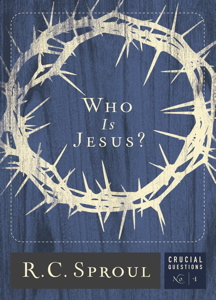
WHO IS JESUS? – R.C. Sproul (2010)

“Who is Jesus?” is the name of the book.  In a short 105 page treatment, Dr. R.C. Sproul provides the answer.  Writing with the simplicity and the profundity that we have grown to love over the years, Sproul delivers a satisfying and biblical answer.  
He begins by challenging the liberal view of Jesus – the view that has more in common with a cartoon character than what the New Testament presents.  Sproul sets forth the evidence in a way that any thoughtful person can understand.  He encourages readers to build their understanding of Jesus in the Scriptures: “When we go back to the biblical sources, we recognize that any attempt to understand Jesus must take into account the dangers imposed by our own minds.”  Wise words that many times go unheeded.

Sproul continues his discussion by guiding readers through a prism of titles.  He presents Christ as the “Messiah,” “Son of David,” “Suffering Servant of Israel,” “Son of Man,” “Lord,” “Son of God,” “Logos, and “Savior.”

The book concludes with a guided tour of Jesus’ life.  Sproul includes his birth, baptism, temptation, passion, ascension, and  resurrection.  The author highlights the ascension (a doctrine that is too often ignored): “The ascension is the apex of Christ’s exaltation, the acme of redemptive history to this point.  It is the pregnant moment of Christ’s coronation as King.  Without it, the resurrection ends in disappointment and Pentecost would not be possible.”

Sproul does a fine job answering the question posed in the book.   His answer is short and to the point.  The book serves several noteworthy purposes:

  • A general introduction to Christology
  • A great discipleship tool
  • A discussion starter for skeptics
  • A welcome gift for guests in a local church

WHAT WE TALK ABOUT WHEN WE TALK ABOUT GOD – Rob Bell (2013)

0062049666_lI am a disturbed man.  I am disturbed because people compromise the truth.  I am disturbed because people marginalize the truth and swerve away from biblical reality.  I am disturbed because a great communicator with a bright mind and a love for people continues down a rocky path.  On Tuesday, March 12, Rob Bell unveiled his newest book, What We Talk About When We Talk About God.  I am disturbed because one group of people uncritically accepts anything that comes off the end of Bell’s pen.  On the other hand, I am disturbed by Christians who refuse to debate civilly with the likes of Bell.   Instead, they cast stones and call names.  They protest outside at his speaking events and drop nasty one liners on Facebook.   Surely, there must be a better way!

In Bell’s previous offering,  Love Wins,  several fundamental doctrines were undermined, most notably the doctrine of hell.  Bell argued then, “If we want hell, if we want heaven, they are ours.  That’s how love works.  It can’t be forced, manipulated, or coerced.  It always leaves room for the other to decide.  God says yes, we can have what we want, because love wins.”  The author continues, “Restoration brings God glory; eternal torment doesn’t.  Reconciliation brings God glory; endless anguish doesn’t.  Renewal and return cause God’s greatness to shine through the universe; never-ending punishment doesn’t.”

The author continues the dialogue (according to emergent standards)  in What We Talk About When We Talk About God.  The writing is witty and inquisitive.  Bell has mastered the art of asking questions and has adjusted his eyes and tuned his ears in order to understand postmodern culture.

One of Bell’s central claims in the book is this: “We have a problem with God.”  He argues that many people are rethinking the nature of God.  Personally, I think that Bell is on to something here.  He is keenly aware of a shift that appears to be taking place in the minds of some people that concerns the nature of God.  Consider some of the ways that the nature of God has been recast in recent years, especially with the rise of open theism, inclusivism, and universalism.   Bell is not only aware of this “mind-shift” that has to do with the nature of God; he embraces it himself.  He compares God to the classic Oldsmobile.  This old car served many people in its day but has since been proven irrelevant.  Bell ponders what he calls the “tribal God” – “…  the one who’s always right (which means everybody else is wrong) – is increasingly perceived to be small, narrow, irrelevant, mean, and sometimes just not that intelligent.”  Bell quips, “Is God going to be left behind? Like Oldsmobiles?”

What We Talk About When We Talk About God essentially argues that the old view of God (the Oldsmobile view) is outdated and needs to be updated.  The argument revolves around three words: “With, For, and Ahead.”  Essentially, Bell argues that God is with us, for us, and ahead of us –  all of us.

With: God is with us.  He is the “energy, the glue, the force, the life, the power, and the source of all we know to be the depth, fullness, and vitality of life from the highest of highs to the lowest of lows and everything in between.”

For: God is for us.  “I believe God is for every single one of us, regardless of our beliefs or perspectives or actions or failures or mistakes or sins or opinions about whether God exists or not.”

Ahead: God is ahead of us.  “It’s as if human history were progressing along a trajectory, an arc, a continuum; and sacred history is the capturing and recording of those moments when people became aware that they were being called and drawn and pulled forward by the divine force and power and energy that gives life to everything.”

These affirmations are all very interesting and will likely receive much positive feedback.  But do they stand up to the scrutiny of Scripture?  I offer four specific critiques that go to the core of the book.

1. Being Certain About Certitude

Bell stands shoulder to shoulder with postmodern thinkers who mock the possibility of certitude.  Anyone who has studied the Enlightenment (Christian and non-Christian alike) will admit a posture of arrogance during these days.  But certitude does not necessarily entail an arrogant attitude.  Indeed, even Bell is pleading for a particular kind of knowledge that is wedded with humility.   Orthodoxy should include bold propositions and large doses of humility.

What is troubling about Bell’s discomfort with certitude is that certitude appears throughout the book.  His certitude about the world, the laws of physics, and the nature of God conflicts with the argument against certitude!

2. A Failure to Distinguish Between Law and Gospel

I am increasingly aware of and concerned with Christian thinkers who fail to distinguish between law and gospel.  What is concerning about this particular work is that neither emerge clearly.  When the author argues that “God is for every single one of us” law is essentially extinguished.  Additionally, the gospel appears to be inclusive; it is a gospel that appears to cut across all kinds of theological traditions, including traditions that fall outside the pale of orthodoxy.

3. A Failure to Distinguish Between the Creator and the Creature    

The notion that God is “with us,” “for us,” and “ahead of us leads readers away from the importance of the Creator-creature distinction.  The apostle Paul made this distinction plain in his message to the philosophers in Athens: “The God who made the world and everything in it, being the Lord of heaven and earth, does not live in temples made by man, nor is he served by human hands, as though he needed anything, since he himself gives to all mankind life and breath and everything” (Acts 17:24-25, ESV).

Acts 17:22-31 reveals a Creator God who is the cosmos shaper, the kingdom shaker who lives above creation.  He is the all-sufficient Ruler, Life Giver, and Destiny Maker.  And he is the righteous Judge who “commands all people everywhere to repent, because he has fixed a day on which he will judge the world in righteousness by a man whom he has appointed …” (Acts 17:30-31, ESV).

And Scripture speaks of the creature who was created by God (Gen. 2:7).  The creatures (Adam and Eve) were originally free from sin but fell and as a result became sinners by nature and by choice (Gen. 3:1-7).  As such, these sinful creatures have no inherent righteousness, no desire for God (Rom. 3:10-11).  Subsequently, all creatures are born with a hatred in their hearts for God (Rom. 8:7-8).  They are dead in sin (Eph. 2:1-3), and they are enslaved in sin; totally unable to come to Christ apart from God’s empowerment (John 6:44).  These creatures are dependent upon God for everything.  These creatures, while given the ability to make free choices, are determined (Acts 17:26; Prov. 19:21; 21:1).  And these creatures are accountable to a righteous and sovereign Judge (Rom. 2:5-11).

4. A Failure to Reveal the Whole Truth About God

The notion that God is “with us,” “for us,” and “ahead of us (every single one of us) may sound good initially but falls short of the biblical model.  It is true that God is with his people.  We see this especially in the incarnation of Jesus, the One who is named Immanuel – or God with us (Matt. 1:23).  Yet God is not “with” the man who  has rejected the revelation of God in Christ.  “… Whoever does not obey the Son shall not see life, but the wrath of God remains on him” (John 3:36).

It is true that God is “for us” – that is to say, he is for his people.  “For I am sure that neither death nor life, nor angels nor rulers, nor things present nor things to come, nor powers, nor height nor depth, nor anything else in all creation, will be able to separate us from the love of God in Christ Jesus our Lord” (Romans 8:38–39, ESV).  Yet God is not “for” the man who has rejected the promises and purposes of God.  He resists the proud (Jas. 4:6; 1 Pet. 5:5).

And it is true that God is “ahead of us” – he works on behalf of his people (Isa. 64:4).  Indeed, he works all things for good – but not for all.  The promise in Romans 8:28 is this: “And we know that for those who love God all things work together for good, for those who are called according to his purpose” (Romans 8:28, ESV).  And Scripture is clear on this point: God does not give sovereign grace to all people.  “For many are called, but few are chosen”” (Matthew 22:14, ESV).  The one who resists God’s authority; the one who refuses to take refuge in God will endure the wrath of almighty God (Ps. 2:12; Deut. 32:35; Rom. 1:18-24).

The model presented in What We Talk About When We Talk About God  appears to have something in common with panentheism which says that the world is “in” God.  So in the final analysis, the book appears to make much of God’s immanence and make light of his transcendence.

A.W. Tozer rightly said, “What comes into our minds when we think about God is the most important thing about us.”    Tozer continues, “Among the sins to which the human heart is prone, hardly any other is more hateful to God than idolatry, for idolatry is at bottom a libel on His character.  The idolatrous heart assumes that God is other than He is – in itself a monstrous sin – and substitutes for the true God one made after its own likeness.”  Therefore, we must beware of our propensity to fashion a god that suits our particular needs.  We must always subject our vision of God to the Scriptures and allow God’s Word to have the final say.

My plea to fellow evangelicals who disagree with Bell is to engage with biblically minded sensibility.  Name calling and ad hominem attacks must stop.  May our debates with those whom we disagree be filled with kindness, humility, meekness, and patience (Col. 3:12).  And when we talk about God, may our talk reflect the biblical vision of God that emerges in Scripture.  May we bow before his transcendent majesty.  May his holiness stop us dead in our tracks.  May we find comfort in his immanence – for he finds great delight in working for his people.  May we marvel at and worship this great God who tends “his flock like a shepherd and gathers the lambs in his arms” (Isa. 40:11).

Soli Deo Gloria!


17 CENTS AND A DREAM – Daniel Milstein (2012)

1720866517 Cents and a Dream is an inspiring story about Daniel Milstein, a Ukrainian boy who fled from the Soviet Union just before the collapse.  Milstein’s family settled in Michigan where they worked hard while they awaited the day when they could be sworn in as citizens of the United States.  Milstein’s “rags to riches” story is a testament to a hard-working man and a country worth fighting for.  A quick read and a reminder that freedom is a precious commodity that most Americans seem to take for granted these days.

The Real Scandal of the Evangelical Mind – Carl Trueman (2011)

0802405746_lIn 1994, Mark Noll dropped a land mine on the ecclesiastical world with his excellent work, The Scandal of the Evangelical Mind.  Noll argued persuasively that “the scandal of the evangelical mind is that there is not much of an evangelical mind.”  Noll’s conclusion appears to be in agreement with the thesis of Harry Blamires who said, “There is no longer a Christian mind.”  Carl Trueman picks up where Noll and Blamires left off with the publication of his little book, The Real Scandal of the Evangelical Mind.

Trueman questions the functionality of the term “evangelical” which according to David Bebbington is marked by four characteristics:

  • A high regard for the Bible as the primary source of truth
  • A focus on the cross work of Christ
  • A belief in the necessity of personal conversion
  • A public display of the gospel

Trueman is rightly concerned that the doctrinal boundaries which define an evangelical are too broad.  He wisely states, “Ironically, the minimal doctrinal confessions of some evangelical institutions can exacerbate, rather than mitigate the problem of boundary drawing.”  Trueman continues, “A movement that cannot or will not  draw boundaries, or that allows the modern cultural fear of exclusion to set its theological agenda, is doomed to lose its doctrinal identity.”  Indeed, the propensity of evangelicals to be inclusive and draw blurry boundaries will in the final analysis, harm the evangelical mind.   Ignoring Trueman’s counsel will prove detrimental to evangelicalism as a movement.

The author identifies a trend in the evangelical world that is growing increasingly more tolerant with subjects such as universalism or homosexuality.  Some might agree that this broadens the appeal but this brazen compromise does not come without a steep price.  Truly, this is weak-kneed, spineless, and tepid.  And it bears no resemblance to the robust faith of the Puritans and Protestant Reformers.  This is not a “faith” to die for.  This is a “faith” that is marginalized and ineffective.Trueman argues that the net result of this theological compromise will come under “huge strain” in the days ahead.  The author posits, “The impact of this wider cultural shift on evangelical institutions and organizations will be dramatic.”  Simply put, Christ-followers who stand for the truth will not be tolerated.  Christ-followers who think Christianly (to borrow Schaeffer’s language) will be marginalized.  Christ-followers who refuse to compromise the truth will pay a heavy price in the marketplace of ideas.

Trueman gives a brilliant example of where the scandal of the evangelical mind is heading.  He challenges evangelical leaders to weigh in on the matter of homosexuality.  Is it a legitimate lifestyle or not?  “All Christians,” says Trueman, “evangelical and otherwise, will face the question, and their answer to it will determine whether they have credibility in the wider culture.”  Evangelicals have not and will not be unified in answering this question because the evangelical world is not “defined by doctrinal commitments.”  One recalls the strong and vigorous challenges of the 20th century from Carl Henry and Francis Schaeffer; calls to maintain fidelity to biblical authority.  Since those calls have gone largely unheeded, the evangelical mind is in trouble.

Here is the rub: “Do we want to be culturally credible, and how much ground are we willing to surrender in order to do so?”  The author reminds anyone tempted by such a tantalizing thought, “Cultural relevance can be a cruel mistress.”  So will Christians leaders stand up and risk being marginalized at best and scorned and persecuted at worst.  That remains a question that has yet to be answered.

Trueman goes one step beyond Mark Noll and his conclusion is not as half-baked as it appears on the surface.  He maintains, “It is not that there is no mind, but rather that there is no evangelical.”  He predicts that Christianity will be viewed as a cult, much like the 1st-century believers in Rome.

The cure, according to Trueman comes not in cultural concession or compromise but in narrowing the boundaries and refining our doctrinal distinctives.  A return to the historic creeds (what the author refers to in another work as the Creedal Imperative) may be in order.  Minimizing doctrine never helps combat theological error – it only exacerbates it!

Trueman concludes on a somber note: “The real scandal of the evangelical mind currently is not that it lacks a mind, but that it lacks any agreed-upon evangel.”  The Real Scandal of the Evangelical Mind is a timely book that should be placed in the hands of as many Christ-followers as possible.  It is a warning; it is a call to arms; it is a wake-up call!  May this book spur church leaders to refuse to loosen up (which is the trend in so many circles today).  The real call is to tighten up!  The real call involves courage in order to rebuild the Christian mind that values orthodoxy, cherishes the historic creeds and confessions, and elevates the gospel in a way that magnifies and glorifies Christ.

Semper Reformanda!

5 stars

TO TRY MEN’S SOULS – Newt Gingrich and William R. Forstchen (2009)

0312592876_l“Victory or Death …” General George Washington made these words famous in the famous campaign to overtake Trenton on December 26, 1776.  Former Speaker of the House, Newt Gingrich and William Forstchen combine forces in their historical thriller, To Try Men’s Souls.

Washington combines a mixture of stealth, wisdom, and careful military strategy as they overran British forces at Trenton.  Gingrich and Forstchen make the story come alive with vivid detail and rich storytelling.  To Try Men’s Souls is a fresh reminder that freedom is not free.  It tells the tale of a tattered army on the verge of extinction.  It virtually shouts at present day Americans; especially Americans who are ignorant of our nations history.  But most of all, this is a story about leadership.  The courage and bravery of General Washington is unsurpassed.  His bold leadership in the face of adversity will inspire the downtrodden and lift the spirits of the discouraged.

Indeed, it is a tragedy that so few Americans can stand alongside men like George Washington.  Perhaps a man like Washington is exactly what this nation needs, which totters on the edge of the precipice.

4 stars

THE HEROIC BOLDNESS OF MARTIN LUTHER – Steven J. Lawson (2013)

RTP_2701_DUSTJACKET_martin_luther_sept12a.inddDr. Steven Lawson has done it again.  The Heroic Boldness of Martin Luther  is the fifth installment of the excellent series, edited by Dr. Lawson,  A Long Line of Godly Men.  The series reaches back into the halls of church history and unearths the great heroes of the Christian faith, men who have faithfully served God and proclaimed the truth of God – John Calvin, Jonathan Edwards, John Knox, and Charles Haddon Spurgeon.  The newest offering is a riveting account of the life and legacy of the great Protestant Reformer, Martin Luther.

Chapter one surveys Luther’s pilgrimage from spiritual death to spiritual life and his ascent to the pulpit.  Readers familiar with Roland Bainton’s classic work, Here I Stand: A Life of Martin Luther will appreciate Lawson’s approach here.   They will certainly appreciate Lawson’s unique ability to weave many details of Luther’s life into a few short pages.

The remaining chapters which comprise the core of the book focus on Luther’s preaching.  The author examines Luther’s deep conviction concerning God’s Word, his commitment to toiling hard in the study, his commitment to the text of Scripture, his passion in the pulpit, and his fearless approach to preaching God’s Word.

Once again, Steve Lawson has done a great service for the church.  This short volume will no doubt awaken a sleeping church.  It will alert them to indispensable need for expository preaching; preaching that is faithful to Scripture.  Faithful preaching, of course always magnifies the doctrines of grace, which is to exalt the Lord Jesus Christ – so that nations will treasure him above all.

5 stars

STOP ASKING JESUS INTO YOUR HEART – J.D. Greear (2013)

1433679213_l

Ask any Christian if he or she has ever wrestled with the idea of assurance of salvation.  You will find that a majority have at some point or still do struggle with assurance.  J.D. Greear’s latest offering, Stop Asking Jesus Into Your Heart not only addresses the question; it goes to the heart of the issue by dealing with:

1) Converted people who doubt their salvation (and shouldn’t)

2) Unconverted people who don’t question their standing with God (and should)

Paige Patterson writes the forward and truly does the book a disservice by confessing his chagrin over the title of the book and by going so far to say that he “might disagree with some interpretations here or there.”  But once the reader is through the starting gate, the rest of the book is a true feast for the soul.

Greear attacks the problem of assurance with witty doctrinal precision and humor.  But make no mistake, this book contains serious theological assertions that will drive readers to the cross and stay there for the rest of their lives.  Greear does a magnificent of job of cutting through the lies of religion (especially Roman Catholic soteriology) and straight to the gospel.

Here is what I really appreciate about J.D. Greear’s approach – and I offer this as the highest of compliments.  While he writes in a popular style (some might even consider his style somewhat akin to a hipster pastor meets theologian), I hear the great heroes of the faith cheering him on.  As he stands at the center of the stage, I see the nodding head of Jonathan Edwards.  I see the approval of John Bunyan.  I see the grin of John Calvin.  And I see the God-centered resolve of Luther.  These are the kinds of theologians that fuel the fire for Stop Asking Jesus Into Your Heart.  This is the kind of book that needs to be passed out like candy in youth groups.  This is the kind of book that needs to be read by new believers.  My prayer is that Greear’s book will sell like wildfire.  May God use this little book to fuel the Reformation fire that has been set ablaze by the Reformers and the English Puritans!

5 stars

EMBRACING OBSCURITY – Anonymous (2012)

1433677814_lEmbracing Obscurity is written by a nameless author. That’s right, the author is anonymous. And while “anonymous” must ultimately lift the veil for the IRS and reveal a name in order to “donate” a portion of his/her royalties, this clever ploy, is in the final analysis, an ingenious move – a move that reveals a heart of humility, which goes to the core of the book’s purpose.

I must admit, I was skeptical when I approached this book. I read with an extra dose of discernment. After all, it would be just like a liberal to worm his way into the Christian publishing industry and import a host of heretical musings to deceive the faithful.

But the more I read, the more I was impressed. Several highlights stand out that make the book noteworthy. First, the author writes in a popular style that is in touch with contemporary culture. The book does not come across as a theological treatise but has the feel of a devotional book with strong challenges at the end of each chapter.

Second, the author does a good job at introducing Christian theology in a way that is understandable and appealing. While it is certainly not to be confused with a theological diatribe; make no mistake – this author has his theological head screwed on correctly. I hear strong statements that concern the person and work of Christ; clear statements that mark the ministry of the Holy Spirit – in drawing the elect to God, and sanctifying the elect to the glory of God.

Third, the author consciously directs the attention of the reader to the kingdom of God – which is the true barometer of success: “One of the beauties of focusing our priority energies on kingdom work is that we don’t have much to lose if our earthly pursuits don’t turn out the way we hope … Live your life worthy of the gospel of Christ. This is true success.”

Embracing Obscurity is a call to radical discipleship; it is as the title suggests, a call to obscurity.  In the event that God should extend the influence of a person who accepts this call, the author notes, “The purpose of my influential position is to make God’s name great, to advance His kingdom on earth, and to serve others.”  Embracing Obscurity is a call to a life of humble service; service that is patterned after Christ’s example.

“Let’s allow the profound simplicity of Christ’s godly ambitions to overshadow our worldly dreams and desires. Let’s daily incinerate our pride on the altar. As we learn to embrace our humble King, we might just come to appreciate our true and right place in the world.” – Anonymous

“Living for an audience of One is at the heart of embracing obscurity.” – Anonymous

A BRIEF HISTORY OF THOUGHT: A Philosophical Guide to Living – Luc Ferry (2011)

0062074245_lA Brief History of Thought by Luc Ferry is a fascinating account of the history of western thought.  Ferry begins by answering the thorny question, “What is philosophy?”  One of the answers that emerges has to do with the so-called quest for salvation.  Ferry brilliantly surveys the history of philosophy and presents various answers to the question from the ancient Greeks to the Renaissance and Enlightenment thinkers, and concludes by examining the thought of Nietzsche and Heidegger.  Ferry demonstrates how Christianity dominated and displaced Greco-Roman pagan thought and played a key role in the history of ideas.

While Ferry does not accept the conclusion of historic Christianity at the end of the day, his honest and open-minded treatment of the dominant philosophical questions is commendable and encouraging.  Strawman arguments are nowhere to be found in this work.  At play is an author who is honestly wrestling with ideas and assessing the facts as he sees them.  The broad sweep of historical thought that he presents is very helpful.