Michael J. Kruger, The Bully Pulpit: Confronting the Problem of Spiritual Abuse in the Church (Grand Rapids: Zondervan, 2022), 164 pp.
Spiritual abuse is one of the last topics that people want to discuss in the church. But it is imperative that this problem is explored and addressed. Better yet, the problem of spiritual abuse in the church needs to be rooted out once and for all. Michael J. Kruger tackles this challenge in his book, Bully Pulpit: Confronting the Problem of Spiritual Abuse in the Church.
Dr. Kruger documents several cases of spiritual abuse including men such as Ravi Zacharias, James McDonald, Bill Hybels, and Mark Driscoll. These examples are indicative of the kind of spiritual abuse that plagues the church. One of the problems that surfaces is that churches place a high priority on the competency of leaders, while neglecting the character qualities that Scripture commends and commands. This oversight tends to attract narcissistic pastors, which only perpetuates the problem.
The author defines spiritual abuse in clear and unambiguous terms:
Spiritual abuse is when a spiritual leader – such as a pastor, elder, or head of a Christian organization – wields his position of spiritual authority in such a way that he manipulates, domineers, bullies, and intimidates those under him as a means of maintaining his own power and control, even if he is convinced he is seeking biblical and kingdom-related goals.
The symptoms of spiritual abuse, according to Kruger, include various signs such as cruelty, threatening behavior, defensiveness, and being hyper-critical. Perhaps the most dominant quality of a spiritual abuser is manipulation.
Kruger surveys the long history of spiritual abuse in both the Old and New Testament, helping readers understand that his problem goes back to the Fall of man. It is a problem and sin, nonetheless, that needs to be addressed and uprooted.
The Bully Pulpit does not claim to have all the answers. But it does address the vexing problem in a straightforward and biblical way. Dr. Kruger describes the problem and offers helpful prescriptions for dealing with spiritual abuse and preventing it. He writes boldly and graciously, confronting sin and consoling those who have been sinned against. In short, The Bully Pulpit strikes a biblical balance that is much-needed in our day. May the church rise up and confront every spiritual abuser and may victims move down a path of wholeness and healing as they cling to the cross of Christ and his gospel.
The legacy of President Ronald Reagan is securely established in history. Liberals can scoff and moan but the fact remains; Ronald Wilson Reagan is one of the most influential Americans of all time. Indeed, Reagan is not only one of the loved and respected presidents in American history; he is also one of the most effective.
Most books focus on the life of President Reagan and work hard to establish his presidential accomplishments. Craig Shirley’s new masterpiece, Last Act: The Final Years and Emerging Legacy of Ronald Reagan takes a different approach. Shirley sets out to help readers see Reagan in a different light and in a different context. This book serves as a lens for Americans to view President Reagan in his post-presidential days, including the days which followed his diagnosis of Alzheimer’s disease.
Last Act begins with President Reagan on his deathbed. The author highlights Reagan’s life and legacy from different perspectives – including friends, family, and foes. One of the constant themes that weave through the book is the deep and abiding love that America has for the 40th president of the United States.
We would do well to listen to the words of Reagan’s old arch nemesis, Senator Ted Kennedy who offered these fitting words, upon hearing of Reagan’s death:
He brought a special grace to the White House and the country in everything he did. We often disagreed on specific issues, but he had an undeniably unique capacity to inspire and move the Nation. On foreign policy, he will be honored as the President who won the cold war. It was more than the fact that he was a superb communicator. Some attributed at least part of his success to the fact that he was a superb communicator. Some attributed at least part of his success to the fact that he had been an actor. But his deepest convictions were matters of heart and mind and spirit, and on them, he was no actor at all.
Last Act: The Final Years and Emerging Legacy of Ronald Reagan bears the marks of a book which is informed by thorough research and careful study. Craig Shirley should be commended for his clear writing and respect for the 40th president of the United States. Last Act is not only a tribute to one of the most beloved leaders in American history; it is a gift to the American people.
The legacy of Ronald Wilson Reagan speaks for itself and will continue to reverberate throughout history. Antonin Scalia notes, “Ronald Reagan needs no one to sing his praises.” Justice Scalia may be on target. But the fact remains: History will not stand by in silence. The legacy of Ronald Reagan will endure for generations.
I received this book free from the publisher. I was not required to write a positive review.
I affirm the sovereignty of God in salvation and embrace a Calvinistic worldview where the glory and supremacy of God are the end of all things. Seven fundamental realities compel me to embrace Calvinism, what C.H. Spurgeon referred to as a “nickname for biblical Christianity.”1
Calvinism is rooted in Scripture. The sovereignty of God over all things, including the salvation of his elect is a pervasive theme in the Bible (Jonah 2:9; Isa. 46:9-10; Eph. 1:11).
Calvinism upholds the dignity of mankind and his total inability in proper tension (Gen. 1:27; 6:5; Ps. 8:5).
Calvinism upholds the sovereignty of God in all things (Ps. 115:3; Dan. 4:34-35).
Calvinism upholds the responsibility of mankind and God’s sovereign control over all things.
Calvinism upholds the joy of the Creator and the joy of the creature. This God-centered joy is captured in the popular acrostic, TULIP:
Total depravity is not just badness, but blindness to beauty and deadness to joy.
Unconditional election is how God planned, before we existed, to complete our joy in Christ.
Limited atonement is the assurance that indestructible joy in God in infallibly secured for us by the blood of Jesus.
Irresistible grace is the sovereign commitment of God to make sure we hold on to superior delights instead of the false pleasures that will ultimately destroy us.
Perseverance of the saints is the almighty work of God, to keep us through all affliction and suffering, for an inheritance of pleasures at God’s right hand forever.2
Calvinism underscores the five solas of the Reformation:
I believe that sinners are saved by God’s grace alonebecause apart from his grace we do not have the ability nor the desire to please him or earn his favor – Grace Alone (Eph. 2:1-5).
I believe that we are saved by faith in Jesus Christ alone apart from any human merit, works or ritual. Genuine faith produces Christ-glorifying fruit in the people of God for the glory of God – Faith Alone (Eph. 2:8-10).
I believe that we are saved by Christ alone, who is fully God and fully man. Christ was our substitute who died for our sins on the cross and was raised from the dead on the third day – Christ Alone (1 Cor. 15:3-4).
I believe the Bible is God’s absolute truth for all people, for all times; it is our final authority for discerning truth – Scripture Alone (2 Tim. 3:16).
I believe in the triune God who exists in three distinct Persons (Father, Son, and Spirit) who created, sustains and sovereignly rules over all things, and to whom belongs all the glory forever and ever – To the Glory of God Alone (Rom. 11:36).
7. Calvinism is God-centered. “A Calvinist is someone who has seen God in His majestic glory and has been overwhelmed.”3
The world may mock and the world may scorn. But the truth holds fast: I am a Calvinist.
I deny the notion of hyper-Calvinism which minimizes human responsibility, promotes passivity, and fails to proclaim the gospel to all peoples. ↩
John Piper, Cited in Tony Reinke, The Joy Project: The True Story of Inescapable Happiness (Minneapolis: Desiring God Ministries, 2015), 6. ↩
Ian Hamilton, What is Experiential Calvinsim (Grand Rapids: Reformation Heritage Books, 2015), Loc. 202. ↩
The opening verses of Psalm 2 unveil the rebels who resist the authority of God. This passage reveals the posture of rebels who are poised to dethrone God. These rebels rage against God and plot against him (v. 1). They oppose the LORD and his anointed (v. 2). These rebels make autonomy their ultimate goal (v. 3). They want to be free from God’s demands. They want to be free from God’s laws. And these recalcitrant rebels seek freedom from God’s reign and his rule.
Here’s the fascinating irony: Every rebel who searches for freedom apart from God is in bondage, and will, in the final analysis, be subjected to the almighty wrath of God. When you flee from Christ to be free from Christ you build a self-imposed prison around your life. Stated another way, when you submit to Christ’s lordship, you will rest securely in your newfound freedom.
The essential message of Psalm 2:1-5 is this: We enter the danger zone when we resist God’s rule and reign in our lives. How then, should people live before God? Psalm 2:6-12 provides an important answer. We will learn that rebels must recognize Christ’s right to rule and respond reverently to his kingly authority. Then and only then, will we find ourselves in the safety zone.
RECOGNIZE HIS RIGHT TO RULE
God possesses royal authority. He is a transcendent and majestic God who deserves our unhindered reverence and obedience. Notice several aspects of his kingly reign.
The Components of God’s Kingly Reign
First, the installation of the King (v. 6). There is a crucial distinction here between the Father and the Son: “As for me, I have set my King on Zion, on my holy hill.” Note the exalted status of his kingly reign. To set someone in a particular place suggests a unique position.
Christ is presented as his enemies’ King. C.H. Spurgeon says, “What are all the mighty men, the great, the honorable men of the earth to Jesus Christ? They are but like a little bubble in the water; for if all the nations, in comparison to God, be but as the drop in the bucket, or the dust in the balance (Isa. 40:25), how little they must be the kings of the earth!”1 Christ is presented as his saints’ King. Christ rules “over their wills, over their affections, over their judgments and understandings, and nobody hath anything to do here but Christ,” writes Spurgeon.2 Christ is presented as his Father’s King. Christ not only rules in the hearts of his people; he rules over a “providential kingdom, by which he rules the affairs of this world, and so he is the king of nations.”3
Psalm 99:1-5 emphasizes this reign. Indeed, his reign is righteous, sovereign, and omnipotent. His is a just and holy reign. This is the kind of King you would want to serve. This is the kind of King you would want to submit to. This is the kind of King you can find refuge in!
Second, we learn about the position of the King (v. 7). The Son speaks of a decree: “God’s decrees are the wise, free, and holy acts of the counsel of his will, whereby, from all eternity, he hath, for his own glory, unchangeably foreordained whatsoever comes to pass in time.”4
The decree tells of the eternal begetting of the Son. The Nicene Creed (revised in 381) confesses faith in “one Lord Jesus Christ, the only-begotten Son of God, begotten from the Father before all time, Light from Light true God from true God, begotten not created.”
John Frame helps us understand the meaning of the term, begotten:
Among human beings, begetting normally occurs in a sexual relationship. It occurs in time so that a human being who did not exist at one time comes into existence at a later time. But eternal begetting is surely neither sexual nor temporal, nor does it bring into existence someone who otherwise would not have existed, for God is a necessary being, and all three divine persons share the attribute of necessary existence.5
Third, Psalm 2:8 describes the inheritance of the King: “As of me, and I will make the nations your heritage, and the ends of the earth your possession.” The inheritance of Christ is absolutely comprehensive. There is nothing outside the scope of his sovereign control. That is, his kingly reign knows no bounds. He owns everything; he rules over everything and everyone. He is sovereign over the nations; he is sovereign over rulers; he is sovereign over our decisions; he is sovereign over our wills; he is sovereign over all. “For from him and through him and to him are all things. To him be the glory, forever. Amen” (Rom. 12:36). Abraham Kuyper rightly observes, “There is not a square inch in the whole domain of our human existence over which Christ, who is Sovereign over all, does not cry, ‘Mine!’”
Fourth, Psalm 2:9 describes the judgment of the King. The focus on verse 9 is on them. The focus is on the rebels who resist God’s rightful rule and reign in their lives. The focus is on the rebels who refuse to recognize Christ’s right to rule. John Stott describes the judgment of God as his “steady, unrelenting, unremitting, uncompromising, antagonism to evil in all its forms and manifestations.”6
Are you numbered among the rebels who refuse to recognize Christ’s right to rule and reign in your life? There comes a time when every person is faced with a reality check. Christ has been installed as the King. He has a high and holy position. Indeed, he is exalted above everything and everyone. He will judge every person who resists his rightful rule and reign. His wrath will fall on every person who refuses to recognize his sovereign rule. With the reality before us, the psalmist helps rebels understand this important principle: We must not only recognize Christ’s right to rule; we must respond reverently to his kingly authority!
RESPOND REVERENTLY TO HIS KINGLY AUTHORITY
Pay careful attention! This passage is marked off by the words, “Now, therefore” (v. 10). The psalmist urges us to “be wise.” He urges us to “be warned.” Three responses, therefore, are appropriate from those who respond reverently to his kingly authority.
Three Responses
First, serve Christ. ”Serve the LORD with fear, and rejoice with trembling” (Ps. 2:11). The Hebrew term for serve means “to work; to toil; to accomplish something.” But the word also has the flavor of worship:
““And now, Israel, what does the Lord your God require of you, but to fear the Lord your God, to walk in all his ways, to love him, to serve the Lord your God with all your heart and with all your soul,” (Deuteronomy 10:12, ESV).
“You shall walk after the Lord your God and fear him and keep his commandments and obey his voice, and you shall serve him and hold fast to him.” (Deuteronomy 13:4, ESV)
“Serve the Lord with gladness! Come into his presence with singing!” (Psalm 100:2, ESV)
Serving Christ, according to Psalm 2:11 involves serving the LORD with fear. “Genuine faith is expressed in, and animated by, a reverential awe, and this is the basic meaning of the biblical idea of the fear of God. Unless there is personal awareness of the awesome and majestic sovereignty of God, it is impossible to have a meaningful faith existing in one’s heart.”7 God-centered fear is struck with the majesty of God, which expresses reverence to him. God-centered fear involves a mixture of rejoicing and trembling. When we come into his presence, we are filled with joy and Christ-exalting awe!
Second, submit to Christ. ”Kiss the Son, lest he be angry, and you perish in the way …” (v. 12a). Remember, this King as been installed. His is a lofty position. And his inheritance includes all things. Our responsibility, then, is to kiss the Son. That is, we must submit to the One who is sovereign over all things:
We submit to him when he calls us to love our neighbors.
We submit to him when he calls us to love our enemies.
We submit to him when he calls us to put him first – above all things.
We submit to him when he demands us to repudiate our idols.
We submit to Christ by laying down our arms, turning from our rebellion, and by turning to him in faith.
We kiss the Son.
The consequences are terrible and traumatic for anyone who refuses to submit to God and kiss the Son, namely, the almighty wrath of God. This is a punishment that the unrepentant will endure eternally. John writes, “Whoever believes in the Son has eternal life; whoever does not obey the Son shall not see life, but the wrath of God remains on him” (John 3:36, ESV).
Responding reverently to Christ’s authority involves serving him and submitting to him. But there is a third requirement, namely, satisfaction in Christ. The Bible speaks of the one who takes refuge in Christ. To seek refuge is to find safety. To find safety is to be satisfied and to find refuge under his wings (Ps. 36:7; Ruth 2:12). God is called a child for those who take refuge in him (2 Sam. 22:31). Over and over again, we are told in Scripture that the one who takes refuge in Christ will be blessed:
“But let all who take refuge in you rejoice; let them ever sing for joy, and spread your protection over them, that those who love your name may exult in you.” (Psalm 5:11, ESV)
“Oh, taste and see that the Lord is good! Blessed is the man who takes refuge in him!” (Psalm 34:8, ESV)
“The Lord is good, a stronghold in the day of trouble; he knows those who take refuge in him.” (Nahum 1:7, ESV)
The sum total of service, submission, and finding satisfaction in Christ boils down to this: it involves living a repentant life; one that responds reverently to his kingly authority. You show me a person who refuses to serve Christ, submit to Christ, and find satisfaction in him and I’ll show you a person who has no clue about living a repentant life. Robert Letham says, “In short, the believer is a repentant believer or he is no believer at all.”
But you show me a person who recognizes Christ’s right to rule and responds reverently to his kingly authority, I’ll show you a person who is truly blessed; a person who is living in the safety zone.
What is the proper response to Christ’s kingly authority? We are to respond reverently by serving him, submitting to him, and finding our satisfaction in him. Each response is an act of worship.
Are you responding reverently to Christ’s kingly authority? Can you say that your service to God is a reflection of how you respond to him? Do you submit to his authority? Do you humbly submit to the authority of your employer? Wives, do you humbly submit to the authority of your husband? Children, do you humbly submit to the authority of your parents? Each of these questions is a snapshot of how you respond to the kingly authority of the Lord Jesus Christ.
Conclusion
We must recognize Christ’s right to rule and respondreverently to his kingly authority. And we respond reverently to his kingly authority by serving Christ, submitting to Christ, and finding our satisfaction in Christ.
Recognizing Christ’s right to rule and responding reverently to his kingly authority is another way of saying that you are exercising faith in God. Several years ago, I served at a church that tore down a building that was packed with asbestos. We hired a firm to remove the hazardous material. Here’s what we were told: Anyone on the premises must wear a hazmat (hazardous materials) suit which is combined with a self-contained breathing apparatus.
Faith in Christ is the “hazmat suit” that shields us from the wrath of God. Don’t presume upon God’s grace. All rebels will face God’s almighty wrath. But everyone who believes in Christ and his triumphant work on the cross will know eternal life and stand secure in the safety zone!
We must recognize Christ’s right to rule and respond reverently to his kingly authority. And we respond reverently to his kingly authority by serving Christ, submitting to Christ, and finding our satisfaction in Christ. Then and only then, will we find ourselves standing in the safety zone.
Soli Deo Gloria!
C.H. Spurgeon, The Treasury of David (Peabody: Hendrickson), 16. ↩
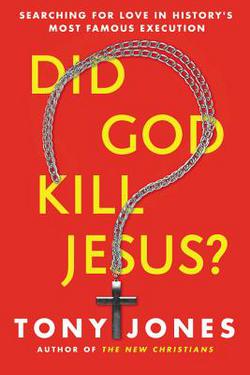
It takes 234 pages for Tony Jones to answer the central question in his new book, Did God Kill Jesus? The author is a self-described “theological provocateur,” so the question posed in his book should not surprise anyone. The answer that emerges on page 234 is crystal clear: “No, God did not kill Jesus,” says Dr. Jones. Readers will find that the path to this answer is paved with doubt and skepticism. Frankly, it is a path fraught with theological compromise.
Tony Jones has a knack for asking questions. He has an uncanny ability to question the theological status quo and force readers to decide, even re-evaluate their cherished views. Unfortunately, some of the answers that Jones provides do not match the biblical record or pass the test of orthodoxy.
The author sets out to examine the various views of the atonement which have been offered up throughout church history. The questions he fires at these theories are fair enough:
What does the model say about God?
What does it say about Jesus?
What does the model say about the relationship between God and Jesus?
How does it make sense of violence?
What does it mean for us spiritually?
Where’s the love?
Ultimately, none of the theories fully satisfy the author. But the one he finds the most repugnant is penal substitutionary atonement. Jones argues that this view, which he labels the payment model is currently in vogue “largely because it appeals to our sense of justice and our understanding of law and penalties.” And he is not particularly bashful about how he feels about penal substitutionary atonement. In his previous book, A Better Atonement: Beyond the Depraved Doctrine of Original Sin, Jones writes, “I’m on no quest to reject the penal substitutionary theory of the atonement (PSA). (I merely intend to dethrone it).” However, what he fails to see is this: when penal substitutionary atonement is dethroned, the gospel of Jesus Christ is thrown into the ash heap and the hope of every person perishes.
In his explanation of penal substitutionary atonement, the author assures readers that “God is holy, and we are less-than-holy.” This appears to be a strange starting point since all who hold to penal substitutionary atonement embrace the biblical idea of total depravity – which is quite a leap from “less-than-holy.” However, Jones’ starting point makes perfect sense (just not biblical sense) when one discovers that he has also discarded the doctrine of original sin:
“What I’ve come to realize is that the idea of original sin is not, in fact, God Eternal Truth. It is, instead, like so many other items of faith, historically conditioned.”
To be fair Jones’ acknowledges the existence of sin. However, he rejects the “notion that human beings are depraved from birth.”
Jones caricatures the doctrine of penal substitutionary atonement by placing God the Father in an untenable position by “sending his perfect Son to Earth, then letting him – or making him – die as a substitute for the billions of human beings past and future who are incapable of paying off the debt incurred by their sin. That’s the Payment model” according to Tony Jones.
The biggest disappointment in this book is the repudiation of penal substitutionary atonement, the doctrine which contains the very core of the gospel message. As noted above, the path which leads to the ultimate question in the book is riddled with “rocks” and “weeds” and “branches” that careful readers should navigate in order to understand the position the author takes. Two of these stumbling blocks are noted below:
1. Dishonoring God
A.W. Tozer was certainly on target when he wrote, “What we think about God is the most important thing about us.” Yet what we find here is a view that has much in common with process theology. The author writes, “… We can surmise that in Jesus, God was learning.” He continues, “But on the cross, something else happened altogether, possibly something that even God did not expect.” The implication here appears to be a compromise of God’s comprehensive omniscience, a troubling turn of events to be sure.
Additionally, the author promotes what he refers to as the “weakness of God.” He adds,
Here is the guiding idea: God has forsaken power in order to give creation freedom. In other words, God’s primary posture in the world is that of weakness, not strength. This is a tough pill for many Christians to swallow – we’ve been taught to claim God’s power in our lives, to pray for power, and to trust God’s power and perfect plan for our lives …
A “tough pill” to swallow? You bet! Discerning readers would do well to keep that “pill” out of their mouths, especially when the testimony of Scripture points to a God who is completely sovereign and omnipotent over everything and everyone in the cosmos. Swallowing such a “pill” will leave readers spiritually sick.
2. Destroying the Heart of the Atonement
Jones makes it clear early in the book that he along with other liberals have “grown increasingly uncomfortable with the regnant interpretation of Jesus’ death as primarily the propitiation of a wrathful God.”
Yet, when one reduces the cross to a mere display of love and refuses to acknowledge that Jesus bore the wrath of God, the gospel is utterly stripped of its saving power. Such a move is to destroy the very heart of the atonement.
Summary
In the final analysis, the answer to the question of this book is not a simple yes or no answer. The Scripture makes it plain that both God and man killed Jesus Christ.
… let it be known to all of you and to all the people of Israel that by the name of Jesus Christ of Nazareth, whom you crucified, whom God raised from the dead—by him this man is standing before you well. (Acts 4:10, ESV)
… for truly in this city there were gathered together against your holy servant Jesus, whom you anointed, both Herod and Pontius Pilate, along with the Gentiles and the peoples of Israel, to do whatever your hand and your plan had predestined to take place. (Acts 4:27–28, ESV)
This is a book that should upset a lot of people. Frankly, I’m glad Jones wrote the book because it will rally conservatives around the truth of the gospel. This book should motivate pastors and scholars to go deeper into the reality of the gospel and prompt God-centered reverence and worship as they glory in the beauty of penal substitutionary atonement.
Evangelicals need to pay careful attention to books like this that grow more and more popular. Jones urges readers to participate in what he calls, “the smell test.” Unfortunately, something doesn’t smell right about this book.
Admittedly, Tony Jones stands in a theological stream that is more liberal-minded. One important distinction between Jones and many other liberals is that he actually affirms the bodily resurrection of Jesus. For this, we can be thankful. However, since he rejects penal substitution and as a result softens (or even eliminates) the wrath that Jesus bore on the cross, the scandal of the cross is blurred and even obscured. Indeed, as Jeffery, Ovey, and Sach have rightly written, “If we blunt the sharp edges of the cross, we dull the glittering diamond of God’s love.”
Whenever wrath is removed from the cross, something crucial is missing, which is to say, the gospel is at stake. For this reason, the view promoted here does not pass the “smell test.”
Readers are encouraged to explore the God-honoring doctrine of penal substitutionary atonement in three powerful and provocative books which include: The Apostolic Preaching of the Cross – Leon Morris, Pierced For Our Transgressions – Steve Jeffery, Michael Ovey, Andrew Sach, and It is Well: Expositions on Substitutionary Atonement – Mark Dever and Michael Lawrence.
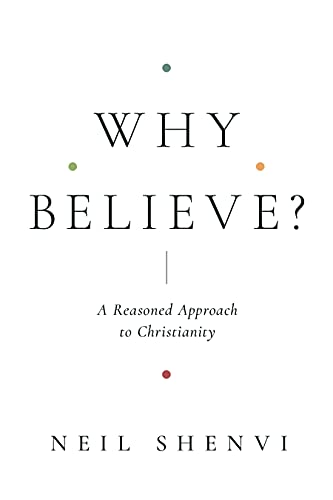
Neil Shenvi, Why Believe? (Wheaton: Crossway Books, 2022), 269 pp.
Why Believe? by Neil Shenvi is an intermediate book on apologetics that stresses a reasoned approach to Christianity. The author focuses his attention on several themes that include the reliability of the gospels, the claims of Christ, the deity of Christ, and the resurrection of Christ.
Dr. Shenvi interacts with philosophy (both Christian and non-Christian alike). One of the great strengths of this book is the author’s gracious tone. He never compromises the truth of Scripture but he is kind to his opponents.
The closing chapters that focus on the gospel prove to be very helpful as the author discusses the uniqueness of Christianity, sin, and salvation. He contrasts historic Christianity with the major world religions.
The conclusion is worth the price of the book as Shenvi challenges readers to repent and believe in the Lord Jesus Christ. Shenvi’s work draws on classical thought but does not deviate from Scripture. This work is recommended especially for skeptics and anyone who wrestles with the arguments of historical Christianity.
I received this book free from the publisher. I was not required to write a positive review.
Scripture affirms that men and women are equal in importance and personhood, created in the image of God, and created to reflect his glory (Gen. 1:26-27; Isa. 43:7).
Scripture affirms important distinctions of roles between men and women and establishes a biblical framework for authority, including male headship, which was instituted prior to the Fall (1 Cor. 11:7-9; Eph. 5:21-33; Col. 3:18-19; 1 Tim. 2:11-15).
While the Fall created gender confusion and distorted God’s intended design for men and women, the redemptive work of God in Christ seeks to erase the distortions that were inaugurated at the curse.
In this biblical model, husbands are called to love their wives as Christ loved the church (Eph. 5:25-30). Wives happily submit to this sacrificial love (Eph. 5:22-24). When men and women fulfill their God-ordained roles by living according to his design, namely, for husbands to love their wives and for wives to respect their husbands, they put the glory of God on display!
The Trinity provides a model for interpersonal relationships.
The Trinity helps us see equality that exists among men and women, clergy and laypeople, employers and employees, etc.
The Trinity helps us see the role distinctions between men and women.
The Trinity provides us with a framework for authority; i.e. the Son submits to the Father, and the Holy Spirit submits to the Son, etc.
The Trinity shows how to find joy in a relationship where there are clearly defined role distinctions.
As a complementarian, I affirm the responsibility of biblically qualified men to serve as elders in the household of God and to lead and shepherd the people of God (1 Tim. 2:11-15; 1 Cor. 14:34-36; 11:2-16).1 Therefore, the office of elder/pastor is reserved for men.
I deny an egalitarian framework that rejects role distinctions between men and women.2
“1 Timothy 2:8-15 imposes two restrictions on the ministry of women: they are not to teach Christian doctrine to men and they are not to exercise authority directly over men in the church.” See Douglas Moo, John Piper and Wayne Grudem, Ed. Recovering Biblical Manhood & Womanhood (Wheaton: Crossway, 1991), 180. ↩
Mark Dever alerts us to the troubling trend of egalitarianism: “… There may be no way the authority of Scripture is being undermined more quickly or more thoroughly in our day than through the hermeneutics of egalitarian readings of the Bible. And when the authority of Scripture is undermined, the gospel will not long be acknowledged.” Cited in Wayne Grudem, Evangelical Feminism: A New Path to Liberalism (Wheaton: Crossway, 2006), 19. ↩
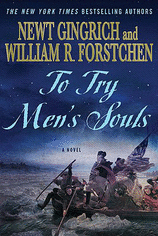
“Victory or Death …” General George Washington made these words famous in the famous campaign to overtake Trenton on December 26, 1776. Former Speaker of the House, Newt Gingrich, and William Forstchen combine forces in their historical thriller, To Try Men’s Souls.
Washington combines a mixture of stealth, wisdom, and careful military strategy as they overran British forces at Trenton. Gingrich and Forstchen make the story come alive with vivid detail and rich storytelling. To Try Men’s Souls is a fresh reminder that freedom is not free. It tells the tale of a tattered army on the verge of extinction. It virtually shouts at present-day Americans; especially those who are ignorant of our nation’s history. But most of all, this is a story about leadership. The courage and bravery of General Washington is unsurpassed. His bold leadership in the face of adversity will inspire the downtrodden and lift the spirits of the discouraged.
Indeed, it is a tragedy that so few Americans can stand alongside men like George Washington. Perhaps a man like Washington is exactly what this nation needs, which totters on the edge of the precipice.
Once there was a day when the nib of a pen would intersect with a piece of paper, revealing the contemplations of a thoughtful person. The end result would yield a letter that would inspire a willing recipient and breathe fresh courage into a human soul.
Less than 200 years ago, letter-writing flourished in the American colonies. Yet, the convenience of technology has all but extinguished the power of the pen. The convenience of text messages and emails have replaced the personal touch of the letter. Indeed, the art of letter writing is nearly dead. For this reason, it is time to revive the lost art of letter writing.
A Rekindled Friendship
The strained friendship between John Adams and Thomas Jefferson is well known and documented. Thankfully, Dr. Benjamin Rush intervened and convinced Adams to renew his friendship with Jefferson. The second president of the United States responded with a letter to Jefferson. Subsequently, the two men exchanged letters back and forth until their respective deaths, which occurred on the same day – July 4, 1826. The power of pen and ink combined with some thoughtful words supercharged a friendship on the brink of collapse.
A Rekindled Art
A handful of letters have arrived in my mailbox over the past several years that left a meaningful mark and provided much-needed fuel to propel me in a Godward direction:
An affirming letter from my father
A letter of personal counsel from Dr. John Piper
A letter of encouragement from my grandfather, Samuel Barger
A letter from Pastor Wayne Pickens, who mentored me in the defining years of pastoral ministry
One letter from my 89-year-old friend, Bruce who recently went to be with the Lord sits permanently in my study:
“Knowing you is to learn, as our Lord measures it, more than just the message of Scripture. You sow also of yourself in His name. More than His word you teach by example, tireless sacrificial giving for His glory and in furtherance of His love …”
Each of the letters above are safely preserved and serve as a permanent reminder of a special time in my life.
Opening a timely and encouraging letter is like receiving oxygen at the summit of Mt. Everest after a grueling climb. It is like salve on a wound in need of healing. A letter is a welcome guest that is never turned away.
It is not too late to revive letter writing in our generation. I suggest we revive the art of letter writing for at least five reasons.
1. Personal Touch
First, a letter is personal. Taking time to compose words on a page, sealing the letter in an envelope, and dropping it in the mail involve a series of additional steps and effort but the payoff is worth it. The personal touch of a letter deeply impacts the one who receives it.
2. Powerful Memories
Second, a letter helps enshrine memories that preserve friendships, provide a permanent record of significant thoughts, and instill hope for the future. When I read a memorable letter, it helps recall significant thoughts and feelings that may have otherwise been forgotten.
3. Permanent Keepsake
Third, a letter becomes a personal and powerful memento. An email can be cataloged in Evernote or saved in some other digital format. An email can even be printed and tucked away for future reference. But an email can never replace the special quality of the written letter.
4. Portrays Selflessness
Next, a letter is an act of selflessness. It takes a certain amount of discipline, time, and creativity to craft a meaningful letter. Such a pursuit, then, involves an intentional act of kindness or selflessness as the one composing the letter must think of others before herself. One might say that letter writing is a way of fulfilling the Golden Rule: “Do to others whatever you would like them to do to you. This is the essence of all that is taught in the law and the prophets” (Matthew 7:12, NLT).
5. Proclaims a Blessing
Finally, a letter is a way of proclaiming a blessing. At the heart of a blessing is the need for acceptance. “Genuine acceptance,” writes John Trent, “radiates from the concept of the blessing.”1 A letter has a way of unleashing a person to become all that God intends them to be. It is a way of communicating the kind of support that is empowering and life-changing. A letter has a way of inscribing an indelible seal of blessing on the soul of one of God’s image-bearers.
A simple letter has the power to inspire hope, instill confidence, and initiate action. A letter communicates devoted love and lifts the human spirit. A letter unshackles the hands and feet, inspires hearts and minds, and communicates love and support to the people we care about.
Reviving the lost art of letter writing begins with you. Who will you influence or encourage today with a simple letter? Who will be the recipient of your timely wisdom or counsel? Who will be inspired to take a step into the great unknown because they received a letter from you? Who will be challenged by your courageous words? Whose life will be changed forever because you took the time to craft a well-thought-out letter? Let us, then, revive the lost art of letter writing – one letter at a time.
John Trent, The Blessing (Nashville: Thomas Nelson, 1986), 28. ↩
Is beauty in the eye of the beholder? Carolyn Mahaney and Nicole Whitacre tackle the sensitive topic of beauty in their book, True Beauty. The “benchmarks for beauty” are constantly changing and most of the criteria is propaganda which caters to worldliness. This book, on the other hand has a simple goal, namely – to point women to true beauty which is found in the pages of Scripture.
True Beauty challenges readers to see things from God’s perspective. Henry Scougal writes, “The worth and the excellency of a soul is to be measured the object of its love.” Herein lies the real value and beauty of a woman – as she contemplates and worships her Savior, the Lord Jesus Christ: “He is the ultimate, unchanging, eternal standard of beauty. He is the Author, Creator, and Bestower of beauty. His beauty transcends time and culture. It never changes and never fades.” Therefore, true beauty is not fleeting. True beauty is not bound by cultural expectations. True beauty is rooted in the radiant beauty and majesty of the living God. He is the most beautiful Being in the universe. Therefore, all beauty must be measured according to his design.
Mahaney and Whitacre alert readers to the final standard of beauty – which is found in Jesus Christ. Women, must therefore, develop a “taste for beauty.” However, “sin has blinded us to the beauty of God, and when we lost sight of this beauty, we lost interest.” So instead of delighting in God, we delight in other things – things that are in the final analysis, tantamount to idolatry. This fascination with the mundane, with anything less than God is nothing new. Israel struggled mightily with the sin of idolatry: “Has a nation changed its gods, even though they are no gods? But my people have changed their glory for that which does not profit. Be appalled, O heavens, at this; be shocked, be utterly desolate, declares the LORD, for my people have committed two evils: they have forsaken me, the fountain of living waters, and hewed out cisterns for themselves, broken cisterns that can hold no water” (Jer. 2:11-13, ESV).
One of the central arguments in the book is that the “gospel of Jesus Christ transforms our taste for beauty … True beauty is to behold and reflect the beauty of God.” And to behold the great God of the universe is to trust him implicitly. The authors add, “Apply trust in God, with good works (1 Tim. 2:9-10) and you will not fail to become genuinely beautiful.” Indeed, this is the touchstone as Mahaney and Whitacre weave this important reality through the remainder of the book and discuss the relationship of beauty to hearts, bodies, clothes, trust, and work.
Frankly, I cannot say enough about True Beauty. It avoids the pitfalls of legalism and props up the pillars of a gospel-centered worldview. It is gracious and thoughtful in tone. It is saturated through and through with Scripture. It affirms beauty and challenges women to pursue the highest standard of beauty – which again, is the Lord Jesus Christ. My hope is that True Beauty receives a wide readership and strengthens and edifies a new generation of women who grow more beautiful as they pursue their Savior.
… but let your adorning be the hidden person of the heart with the imperishable beauty of a gentle and quiet spirit, which in God’s sight is very precious (1 Peter 3:4, ESV).







 Veritas et Lux