I Am a Complementarian

  1. Scripture affirms that men and women are equal in importance and personhood, created in the image of God, and created to reflect his glory (Gen. 1:26-27; Isa. 43:7).
  2. Scripture affirms important distinctions of roles between men and women and establishes a biblical framework for authority, including male headship, which was instituted prior to the Fall (1 Cor. 11:7-9; Eph. 5:21-33; Col. 3:18-19; 1 Tim. 2:11-15).
  3. While the Fall created gender confusion and distorted God’s intended design for men and women, the redemptive work of God in Christ seeks to erase the distortions that were inaugurated at the curse.
  4. In this biblical model, husbands are called to love their wives as Christ loved the church (Eph. 5:25-30). Wives happily submit to this sacrificial love (Eph. 5:22-24). When men and women fulfill their God-ordained roles by living according to his design, namely, for husbands to love their wives and for wives to respect their husbands, they put the glory of God on display!
  5. The Trinity provides a model for interpersonal relationships.
  • The Trinity helps us see equality that exists among men and women, clergy and laypeople, employers and employees, etc.
  • The Trinity helps us see the role distinctions between men and women.
  • The Trinity provides us with a framework for authority; i.e. the Son submits to the Father, and the Holy Spirit submits to the Son, etc.
  • The Trinity shows how to find joy in a relationship where there are clearly defined role distinctions.

As a complementarian, I affirm the responsibility of biblically qualified men to serve as elders in the household of God and to lead and shepherd the people of God (1 Tim. 2:11-15; 1 Cor. 14:34-36; 11:2-16).1 Therefore, the office of elder/pastor is reserved for men.

I deny an egalitarian framework that rejects role distinctions between men and women.2

  1. “1 Timothy 2:8-15 imposes two restrictions on the ministry of women: they are not to teach Christian doctrine to men and they are not to exercise authority directly over men in the church.” See Douglas Moo, John Piper and Wayne Grudem, Ed. Recovering Biblical Manhood & Womanhood (Wheaton: Crossway, 1991), 180.
  2. Mark Dever alerts us to the troubling trend of egalitarianism: “… There may be no way the authority of Scripture is being undermined more quickly or more thoroughly in our day than through the hermeneutics of egalitarian readings of the Bible. And when the authority of Scripture is undermined, the gospel will not long be acknowledged.” Cited in Wayne Grudem, Evangelical Feminism: A New Path to Liberalism (Wheaton: Crossway, 2006), 19.

The Christian Pilgrim – Jonathan Edwards

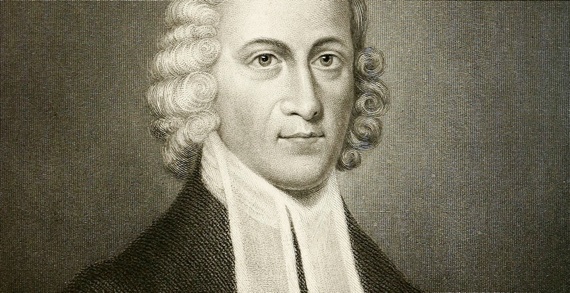
Jonathan_Edwards_engravingOn this day March 22, 1758, Jonathan Edwards reached the shores of the Celestial City. Edwards reminds readers that there are on a journey towards heaven. The title of the message is The Christian Pilgrim.

Section 1 – A Pilgrimage to Heaven

“We ought above all things to desire a heavenly happiness; to be with God; and dwell with Jesus Christ,” argues the Puritan divine. This is a journey to heaven, which is the way of holiness. Such a journey requires travelers to set aside anything that hinders progress to our heavenly home (Heb. 12:1). Edwards continues,

We should travel on in the way of obedience to all God’s commands, even the difficult as well as the easy; denying all our sinful inclinations and interests. The way to heaven is ascending; we must be content to travel up hill, though it be hard and tiresome, and contrary to the natural bias of our flesh. We should follow Christ; the path he travelled, was the right way to heaven … The way to heaven is a heavenly life; an imitation of those who are in heaven, in their holy enjoyments, loving, adoring, serving, and praising God and the Lamb. Even if we could go to heaven with the gratification of our lusts, we should prefer a way of holiness and conformity to the spiritual self-denying rules of the gospel.

The highway to heaven is a difficult journey; one that will be met with hardship along the way. However difficult the journey may be, travelers must be constantly growing in holiness: “We should be endeavoring to come nearer to heaven, in being more heavenly; becoming more and more like the inhabitants of heaven … We ought to be hungering and thirsting after righteousness; after an increase in righteousness” (1 Pet. 2:2).

Section 2 – Why the Christian’s Life is a Pilgrimage

Edwards marks out four specific reasons that our life on this earth is a mere pilgrimage.

  1. This world is not our abiding place.
  2. The future world was designed to be our settled and everlasting abode.
  3. Heaven is that place alone where our highest end, and highest good, is to be obtained.
  4. Our present state, and all that belongs to it, is designed by him that made all things, to be wholly in order to another world.
Section 3 – Instruction Afforded by the Consideration that Life is a Pilgrimage to Heaven

Edwards infuses his readers with heavenly perspective in section three. He is quick to remind them of the heavenly lot of Christ-followers: “If they lived a holy life, then their lives were a journey towards heaven. And why should we be immoderate in mourning, when they are got to their journey’s end? Death, though it appears to us with a frightful aspect, is to them a great blessing. Their end is happy, and better than their beginning.”

Section 4 – An Exhortation in the Journey to Heaven

Edwards concludes by encouraging his readers to think much about heaven: “Labour to obtain such a disposition of mind that you may choose heaven for your inheritance and home; and may earnestly long for it, and be willing to change this world, and all its enjoyments, for heaven.”

Reformed Systematic Theology, Volume 3: Spirit and Salvation – Joel R.Beeke and Paul M. Smalley

Joel R. Beeke and Paul M. Smalley, Reformed Systematic Theology, Volume 3: Spirit and Salvation (Wheaton: Crossway Books, 2022), 1171 pp.

Theology should draw readers close to the heart of God. It should stimulate and stretch the mind. It should warm and elevate the affections. It should soothe the soul. It should convict the heart. And it should move hands and feet forward in Christian service. Indeed, theology should prompt the unhindered and passionate worship of the living God.

The third volume of Reformed Systematic Theology by Joel R. Beeke and Paul M. Smalley accomplishes all of the above objectives. It has been my pleasure to read and review each volume in this excellent series. Like the first two volumes, the authors draw from the deep well of Reformed thought and alert readers to the importance of systematic theology. Volume 3 focuses on pneumatology and soteriology. The chapters have a rigorous, yet devotional feel. The authors leave no stone unturned. They wrestle with competing views with grace and respect but are also quick to reveal their own convictions.

I’m happy to offer a wholehearted endorsement of this installment. It is a treasure chest, filled with biblical jewels that will encourage and equip followers of Jesus Christ for many years to come.

I received this book free from the publisher. I was not required to write a positive review.

Love Thy Body: Answering Hard Questions About Life and Sexuality – Nancy Pearcey

pNancy Pearcey, Love Thy Body: Answering Hard Questions About Life and Sexuality Grand Rapids: Baker, 2018, 337 pp. $15.31

The publication of Nancy Pearcey’s book, Total Truth: Liberating Christianity From Its Cultural Captivity sent shockwaves throughout the evangelical world and help equip a new generation of apologists. Total Truth confronted the notion that scientific knowledge and moral knowledge are separated into two domains. The lower story includes objective truths that are public and valid for all people. This is the realm of empirical science. These truths are true and verifiable. The upper story includes the realm of moral knowledge which is private, relative, and subjective. Hence, the so-called unified concept of truth was obliterated and separated into two domains.

Pearcey’s previous works, Saving Leonardo: A Call to Resist the Secular Assault on Mind, Morals, and Meaning and Finding Truth: 5 Principles for Unmasking Atheism, Secularism, and Other God Substitutes have also left an indelible mark on the church and culture at large. The impact of these books on me personally, cannot be overstated. My suspicion is that many people would concur.

Nancy Pearcey’s newest offering, Love Thy Body: Answering Hard Questions about Life and Sexuality pick up where the other titles left off. The overarching goal of Love Thy Body is to “uncover the worldview that drives the secular ethic.” Ultimately, the book is designed to “show that a secular morality doesn’t fit the real universe.”

Readers familiar with Pearcey will quickly see the influence of Francis Schaeffer on her thought. It was Schaeffer who originally exposed the so-called “fact/value” split which has created a fractured epistemology that continues to be propagated today.

Pearcey shows the practical outgrowth of this fragmented worldview (or the two-story worldview) by pointing to several contemporary culture matters including abortion, euthanasia, “same-sex marriage,” and transgenderism. She helps readers understand how these various worldviews have been smuggled into our culture and links each of them to the two-story dichotomy.

Readers will be encouraged and challenged to walk through the argument of Love Thy Body and will be better equipped to not only contend with culture but also reach out to people who have been deceived by a pagan worldview.

Readers will discover that Pearcey’s argument is not combative. Rather, her heart cries for people who have been co-opted by this deviant worldview. She pleads with readers to reach out and love people with Christ-centered love: “Christians must present biblical morality in a way that reveals the beauty of the biblical view of the human person so that people actually want it to be true.”

Love Thy Body is a book that is filled with description and prescription. Facts and figures run through the book but the author is not content to leave her readers with data alone. She sets forth a workable prescription which is set on helping people and healing them at the deepest level. Therefore, “We must work to educate and persuade on a worldview level,” writes Pearcey. Such an approach is imperative if Christ-followers have any hope of reaching a lost world with the saving message of the gospel. Running through the book is a mindset that Pearcey, no doubt, learned from Schaeffer, namely, sharing the gospel with a tear in one’s eye.

Love Thy Body is riveting, challenging, educational, a shot to the heart, a challenge for the mind, and bold push for the feet. It will spark controversy in some venues and may even precipitate debate in the local church. Surely, this kind of debate is necessary as Christians seek to influence culture for God’s glory.

I received this book free from the publisher. I was not required to write a positive review.

When the Gavel Falls

It has been said that one of the greatest problems that plagues contemporary people is unresolved guilt. Sin squeezes the life out of unwitting victims. Sins of omission, sins of commission, sins of regret, neglect, fear, ungodly anger, broken relationships, and insubordination pose a massive threat to the well-being of well-meaning people.

No one is excluded from this sinful parade. We have all committed sin. We are sinners by nature and by choice – and as a result, guilt rears its ugly head. Sometimes the guilt waits to surface until we’re all alone. For some of us, guilt is a constant note on the musical score sheet of our lives. For others, the only time we feel guilt is when we hear a preacher remind us about our sin.

Here is the problem: Apart from the grace of God, we all stand before the bar of God’s justice – and we stand condemned. Apart from the grace of God – we are guilty.

The sound of the gavel is unmistakable in a courtroom setting. When the gavel falls, it reminds us that a verdict has been reached. It announces the guilt or innocence of the defendant.

In 1 John 2, the apostle John ushers us into the celestial courtroom and answers the question, “What is the greatest need of sinners when the gavel falls?” As we enter the heavenly tribunal, I invite you to encounter the divine standard and the divine representative.

THE DIVINE STANDARD

If you ever have the opportunity to attend a trial in a courtroom one of the first memories you will have is when the Judge enters the courtroom. The bailiff announces, “All rise!” John the apostle introduces the presiding Judge of the universe in 1 John 1:5. He writes, “This is the message we have heard from him and proclaim to you, that God is light, and in him is no darkness at all.”

The Presiding Judge of the Divine Standard

He is the majestic God of the universe. The psalmist proclaims, “O Lord, our Lord, how majestic is your name in all the earth! You have set your glory above the heavens” (Ps. 8:1, ESV). Moses says, “Who is like you, O Lord, among the gods? Who is like you, majestic in holiness, awesome in glorious deeds, doing wonders?” (Exod. 15:11).

He is the transcendent God of the universe. “For thus says the One who is high and lifted up, who inhabits eternity, whose name is Holy: “I dwell in the high and holy place, and also with him who is of a contrite and lowly spirit, to revive the spirit of the lowly, and to revive the heart of the contrite” (Isa. 57:15).

He is the sovereign God of the universe. The psalmist reminds us, “Our God is in the heavens; he does all that he pleases” (Ps. 115:3,). Daniel 4:34-35 says, “At the end of the days I, Nebuchadnezzar, lifted my eyes to heaven, and my reason returned to me, and I blessed the Most High, and praised and honored him who lives forever, for his dominion is an everlasting dominion, and his kingdom endures from generation to generation; all the inhabitants of the earth are accounted as nothing, and he does according to his will among the host of heaven and among the inhabitants of the earth; and none can stay his hand or say to him, “What have you done?””

And he is the holy God of the universe. “This is the message we have heard from him and proclaim to you, that God is light, and in him is no darkness at all” (1 John 1:5). The psalmists adds, “But the Lord sits enthroned forever; he has established his throne for justice, and he judges the world with righteousness; he judges the peoples with uprightness” (Psalm 9:7–8). The heavenly Judge has the authority to issue the particulars of the divine standard. This is the divine standard we turn our attention to.

The Particulars of the Divine Standard

John gives his readers an inside look at the motivation for his writing: “My little children, I am writing these things to you so that you may not sin …” (v. 1). John calls his readers to live holy lives, what he refers to as “walking in the light.” Notice the particulars, then, of this divine standard.

First, the call to holiness began in eternity past. Scripture reveals that God chose his people before the creation of the cosmos: “even as he chose us in him before the foundation of the world, that we should be holy and blameless before him …” (Eph. 1:4).

Second, we are called out of darkness to proclaim the excellencies of God. “But you are a chosen race, a royal priesthood, a holy nation, a people for his own possession, that you may proclaim the excellencies of him who called you out of darkness into his marvelous light” (1 Pet. 2:9).

Third, we are called to conduct ourselves in a holy manner. “As obedient children, do not be conformed to the passions of your former ignorance, but as he who called you is holy, you also be holy in all your conduct, since it is written, “You shall be holy, for I am holy”” (1 Pet. 1:14–16).

The heart of the apostle John is to communicate the divine standard to Christians: “so that you may not sin.” Indeed, this is God’s standard – this is the divine standard. But there is a problem we must acknowledge: we do sin (1 John 1:5-10).

To sin means to miss the mark, specifically in our relationship to God. The Westminster Shorter Catechism says, “Sin is any want of conformity unto, or transgression of, the law God.”1 “Sin is disobedience to God’s revealed law,” writes Martyn Lloyd-Jones.2 And John Piper summarizes, “What does not come from satisfaction in God, and through the guidance of God, and for the glory of God, is God-less – it is sin.”3

Since we fail to the divine standard in every respect, John introduces the Divine Representative.

THE DIVINE REPRESENTATIVE

The apostle John presents three marks of the Divine Representative: “My little children, I am writing these things to you so that you may not sin. But if anyone does sin, we have an advocate with the Father, Jesus Christ the righteous” (1 John 2:1).

First, Jesus is righteous. The author of Hebrews helps us understand that the Divine Representative is sinless: “For we do not have a high priest who is unable to sympathize with our weaknesses, but one who in every respect has been tempted as we are, yet without sin” (Heb. 4:15). Jesus is without sin. Jesus is righteous.

Second, Jesus stands face-to-face with the Father. In the Gospel of John, in the book that bears his name, the apostle writes, “In the beginning was the Word, and the Word was with God, and the Word was God” (John 1:1). The preposition translated “with” comes from the Greek term prós which means “face-to-face.” From all eternity, Jesus has been with the Father.

Third, Jesus is our Advocate. An advocate is a helper or an intercessor. An advocate acts as a representative for someone. In this case, the advocate stands before the Father and represents sinners like you and me. This Advocate stands in our defense. He pleads our case. Lloyd-Jones adds, “Unlike a defense attorney who may argue that his client is innocent of all charges, this defense attorney recognizes your guilt before God. The Advocate turns to the Father and says, ‘… I am here just to remind You that the law has been fulfilled, that the death has died, the punishment has been enacted; they are free because I died for them.”4

And so we fail to meet the divine standard. The Divine Representative stands in our defense. All these things clear the path for the divine accomplishment, which John unfolds in 1 John 2:2 – “He is the propitiation for our sins, and not for ours only but also for the sins of the whole world” (1 John 2:2).

When the gavel falls, a verdict will be rendered. Will you bear the weight of your sin and thus, endure 10,000 degrees of white-hot wrath? Or will you trust Jesus to stand in your defense? When the gavel falls, will you stand condemned or will Christ’s sacrificial death pardon you, grant peace (Rom. 5:1), and welcome you into his presence where you will enjoy the pleasures of God forever (Ps. 16:11)?

  1. Westminster Shorter Catechism, Question 14.
  2. Martin Lloyd-Jones, Walking With God (Wheaton: Crossway Books, 1993), 14.
  3. John Piper, Future Grace (Sisters: Multnomah Books, 1995), 324.
  4. Lloyd-Jones, Walking With God, 15.

Blackout: How Black America Can Make Its Second Escape from the Democrat Plantation

Blackout: How Black America Can Make Its Second Escape from the Democrat Plantation by Candace Owens will irritate and offend many people. But this is a book that needed to be written. More importantly, this is a book that deserves to be read and internalized.

Owens explores how liberals have consistently manipulated and marginalized black Americans. She tackles controversial subjects ranging from family, faith, and feminism. But she also focuses her attention on socialism, education, media, culture, and slavery.

Owens is an unashamed black conservative woman. She has a dizzying intellect and a charismatic personality. But the most impressive thing about Owens is that she is bold and courageous. She is willing to tell the truth about the liberal elites and is more than prepared for the fallout.

The author is deeply in touch with the plight of the black community. And she links that plight to the purposeful ploy of leftists who have and continue to pander to African Americans and hold them captive to their liberal worldview and ideology.

Owens passionately encourages black America to stand and be counted. She urges black America to make its second escape from the Democrat plantation: “If black America finds its free voice; if there is a blackout from the liberal establishment, and if the occasional voices of those freed from the mental slavery of the left turn instead into a chorus, then black America will finally find that its suffering may turn a corner …”

Owens raises the banner and admonishes black America to reclaim their freedom and move forward with bold and courageous resolve:

The gates of the castle are under attack. We must now batter them down and storm the fortress of the liberal order. Join the ideological battle now. Let us turn the lights off in the liberal establishments of America as we shut the door behind us. Let us make this blackout a reality.

Blackout should be required reading for every thinking American – both black and white and everyone in between. It should certainly be read by every high school and university student. Those who read with an open mind will be challenged and moved to action.

Thanks to Candace Owens for courageously wielding the sword of truth in these perilous times!

The Rise and Triumph of the Modern Self – Carl R. Trueman

Carl R. Trueman, The Rise and Triumph of the Modern Self (Wheaton: Crossway, 2020), 425.

The sexual revolution of the 60’s fundamentally changed the cultural landscape in North America. Yet, percolating beneath the surface was an even more diabolical worldview; a worldview that many are unfamiliar with. Even those who have engaged with the history of Western civilization may be jolted when the implications become clear.

The Rise and Triumph of the Modern Self by Carl R. Trueman pulls back the veil and alerts us to the underlying ideologies that have catapulted our current views about self and sexuality in the Western world. Trueman shows readers in a precise and shocking way how men have forgotten God and presents reasons for their tragic decision.

The driving argument of Trueman’s work is this:

The issues we face today in terms of sexual politics are a symptom or manifestation of the deeper revolution in selfhood that the the rise and triumph of expressive individualism represents.

The emphasis we find in Trueman bears some similarity to John Piper’s recent contention that “the essence of sin is minimizing God and making much of self.”1

Several negative reviews have been submitted that are not sympathetic to Trueman’s work. What these reviews fail to understand is that The Rise and Triumph of the Modern Self is neither a lament nor a polemic. It is in the words of Trueman, “an attempt to explain how the revolution of the self came to take the form it has in the West and why that is so culturally significant.” The goal of the author is achieved and is undergirded by meticulous research from multiple angles – theological, sociological, psychological, and beyond.

The Rise and Triumph of the Modern Self should be celebrated for its candor and penetrating analysis of the human condition. It sufficiently lays the groundwork for more study and deeper discussions in the coming days.

I received this book free from the publisher. I was not required to write a positive review.

  1. John Piper, Providence (Wheaton: Crossway Books, 2021), 127.

Christian Ethics: An Introduction to Biblical Moral Reasoning

grudemWayne Grudem, Christian Ethics: An Introduction to Biblical Moral Reasoning (Wheaton: Crossway Books, 2018), 1212 pp.

Wayne Grudem has become a household name in evangelical circles over the years. His landmark book, Systematic Theology, is used in Bible Colleges and Seminaries around the world. I have personally taught through his excellent book at least six times. As a result, hundreds of men and women have been equipped and edified in the Christian faith.

Dr. Grudem’s newest offering, Christian Ethics: An Introduction to Biblical Moral Reasoning is a wonderful companion to Systematic Theology. The book weighs in at over 1,200 pages and will likely turn some readers away. But walking away from Grudem’s book would be like gazing at a massive treasure chest and refusing to open it for lack of time or desire. Both responses would be tantamount to foolishness.

The introduction alone is worth the price of the book as the author establishes the foundation for Christian ethics by grounding his discussion in the holy character of God and sacred Scripture. Indeed, the essence of Christian ethics is living Coram Deo, and to the glory of God.

The remainder of the book is organized around the Ten Commandments. The basic outline is as follows:

  • Protecting God’s Honor
  • Protecting Human Authority
  • Protecting Human Life
  • Protecting Life
  • Protecting Property
  • Protecting Purity of Heart

Grudem does not leave any stone unturned here. Every ethical topic imaginable is explored. Each topic, of course, is subjected to uncompromising biblical standards.

Christian Ethics is a breath of fresh air that will embolden followers of Jesus Christ and challenge them to live with God-centered resolve in a postmodern ethos that has forgotten God. It is not only a response to the zeitgeist that surrounds us; it is a rally-cry for faithful Christians to live in a way that pleases the triune God!

I received this book free from the publisher. I was not required to write a positive review.

Rejoice in God!

Open the morning newspaper. Watch the evening news. Pay careful attention to the culture that surrounds us. You will be prompted to protest. You will be cajoled to complain. You will feel the steady pull of pundits who invite you to join their campaign. Emotions will range from fear to frustration. Anger dominates much of the time. When anger doesn’t reign, anxiety is sure to take its place.

Followers of Jesus Christ have a higher calling. We must be discerning and live distinctly Christian lives (1 Pet. 1:14-17). A little phrase is tucked away in Romans 5:11 that helps refocus our attention on what really matters:

“More than that, we also rejoice in God through our Lord Jesus Christ, through whom we have now received reconciliation.”

“We also rejoice in God.” This is exactly the opposite of what our culture demands. Rejoicing in God, then, is countercultural. It is also commanded!

Paul’s argument in this unit of thought in Romans chapter 5 ends on a high note. The guilty have been pardoned (v. 9). The condemned have been saved (v. 9). Enemies have been reconciled (v. 10). The posture of rebellion has turned to a posture of joy!

Do you want to impact lives? Do you want your life to be a reflection of God? Do you want to glorify the great God of the universe? Refuse to bow down to the idols of the age. Refuse to get caught up in the pettiness that characterizes our day. Choose today to rejoice in God!

The Trial of the 16th Century: Calvin & Servetus – Jonathan Moorhead

Jonathan Moorhead, The Trial of the 16th Century: Calvin & Servetus (Geanies House, Fern, Ross-shire: Christian Focus, 2021), 99 pp.

Church history has its heroes and villains. Tragically, some heroes are unfairly caricatured as villains. One such man is John Calvin. While he has been accused of being mean-spirited, bigoted, and narrow-minded, nothing could be further from the truth. Even in the days after he was exiled from Geneva, he refused to grow bitter. He resisted the urge to feel sorry for himself. He rejected the urge to retaliate. Rather, he pursued a posture of humility. He encouraged his friend, William Farel, to tread upon this God-centered path: “Let us humble ourselves, therefore, unless we wish to strive with God when He would humble us”1 Calvin not only commended this path to others; he was constrained to walk this path himself. By God’s grace, he maintained the posture of humility for the remainder of his earthly days.

Some refuse to acknowledge that Calvin was not only a godly man; he was a top-notch exegete and theologian. His works continue to be reprinted over 450 years after his death. Instead of celebrating Calvin, some choose to point the finger of blame for his role in the execution of the heretic, Servetus. Jonathan Moorhead clears up any misconception about this tragic event in church history in his book, The Trial of the 16th Century: Calvin & Servetus.

The great strength of Moorhead’s work is his clear-headed approach to church history and especially his view on Calvin’s role (or lack thereof) in Servetus’s execution. The author sets the stage by highlighting the heresies that were aggressively promoted by Servetus. He tracks Servetus’s steps that eventually led to his demise in Geneva. But he also gives readers an inside look at who is ultimately responsible for the death of the Spanish false teacher.

  1. Letters of John Calvin, (Edinburgh: Banner of Truth, 2018), xiii.