Christopher Yuan, Holy Sexuality and the Gospel (New York: Multnomah, 2018), 234 pp.
Rosaria Butterfield calls Christopher Yuan’s book, Holy Sexuality and the Gospel “the most important humanly composed book about biblical sexuality and godly living for our times.” That is quite a statement from such a respected woman. After a thorough reading, I concur that this indeed is a powerful and timely book.
Christopher Yuan is a professor at Moody Bible Institute who marks out our identity as human beings in this book. He clearly reveals that we are image bearers of God, created with a purpose for God’s glory. However, each creature has fallen short of God’s glory and has been plunged into a state of sinfulness – by nature and by choice. Yuan establishes biblical sexuality and builds upon this foundation by exploring the biblical basis for marriage and singleness.
The theme of holy sexuality is at the center of the book. Holy sexuality, which is radically contrary to the zeitgeist we’ve grown accustomed to consists of two paths: “Chastity in singleness and faithfulness in marriage.” Yuan explains, “Chastity is more than simply abstention from extramarital sex; it conveys purity and holiness. Faithfulness is more than merely maintaining chastity and avoiding illicit sex; it conveys covenantal commitment.”
Yuan maintains that the term holy sexuality is necessary since current terminology does not adequately or accurately reflect the biblical standard of sexual expression. He argues, “The purpose of this phrase is to transcend the current secular paradigm of sexual orientation that is unable to point toward God’s clear intent for sexual expression.” Holy Sexuality is meant to eliminate the confusing jargon which is usually associated with this controversial subject. Yuan adds, “Instead of deterring how we ought to live based on enduring patterns of erotic desires, God’s call for all humanity, quite simply, is holiness.”
The matter of homosexuality has been vigorously debated in recent days and has been especially elevated since the recent Supreme Court decision that legalized so-called “same-sex marriage.” Personally, I struggle with much of the literature that is either for or against “same-sex marriage.” It is hotly contested on both sides and generally produces more heat than light. But Dr. Yuan’s book takes a different path. Never once does he deviate from the biblical path to purity. He maintains the biblical boundaries of marriage between a man and a woman and sets forth a case that is both compelling and compassionate.
Christopher Yuan has written a thoughtful and compelling book. It is grounded in sacred Scripture and faithfully reflects the teaching of Scripture. Yuan’s convictions are uncompromising, yet he writes out of a deep and authentic love for people in the homosexual community. His tone is always charitable, yet he never compromises the teaching of God’s Word. Holy Sexuality and the Gospel is a much-needed corrective to the overly simplified approach that some Christian writers take. It avoids the pitfalls typically associated with this subject and leads readers to a place of faithfulness and fulfillment. Christian readers will be encouraged and challenged by Dr. Yuan’s heart. And readers who struggle with same-sex desires will be patiently instructed by a writer who writes with patience and biblical fidelity.
I received this book free from the publisher. I was not required to write a positive review.
I read an important book today. It is not a weighty theological treatise. It is not a book about spiritual formation. And it certainly is not written to inspire. This book is about homosexuality. Like it or not, in our culture, the topic of homosexuality has moved from stage left to center stage. Everyone is talking about it. Many people are affirming homosexual relationships – liberals and conservatives alike.
I recently read Steve Chalke’s booklet, A Matter of Integrity. The author, who happens to be a Baptist pastor, seeks to legitimize and normalize homosexuality. The booklet is written with tones of grace and the author appears very kind. The only problem – the book is dead wrong. The book opposes Scripture. And the book fails to glorify God.
Kevin DeYoung’s new book, What Does the Bible Really Teach About Homosexuality addresses a controversial topic with grace but never at the expense of truth.
Part One – Understanding God’s Word
The author guides readers through a maze of texts and helps them unravel what Scripture really says about homosexuality. His tone is gracious. Yet he is unafraid to proclaim what God proclaims – homosexuality is a sin to be repented of. Everyone who turns from their sin may find peace and forgiveness that flow freely from Jesus who paid to set sinners free. DeYoung is quick to demonstrate that homosexuality is not acceptable in God’s economy. But he is even more eager to point people to a God who forgives:
“The God we worship is indeed a God of love. Which does not, according to any verse in the Bible, make sexual sin acceptable. But it does, by the witness of a thousand verses all over the Bible, make every one of our sexual sins changeable, redeemable, and wondrously forgiveable.”
Part Two – Answering Objections
DeYoung has left no stone unturned here. In part two, he answers typical objections and responds with grace and truth. All his answers are supported by the weight of Scripture.
There is much to commend here; more than one review can cover. However, Kevin DeYoung helps readers understand what is at stake in this debate and uncovers four vital issues that every Christian should be concerned with. I urge readers to purchase the book and study these powerful warnings:
The moral logic of monogamy is at stake.
The integrity of Christian sexual ethics is at stake.
The authority of Scripture is at stake.
The grand narrative of Scripture is at stake.
What Does the Bible Really Teach About Homosexuality will not be the most inspiring book you’ll read all year. However, it may be the most important book you read. It is a book that may cause you discomfort. It is a book that will certainly cause you to reevaluate your position on homosexuality. Ultimately, this book will point you to the Book. And sacred Scripture clearly reveals God’s position on homosexuality. Homosexual behavior, like any other ungodly behavior, is sin; a sin which must be repented of and forgiven.
The Supreme Court has spoken. Their historic decision on June 26, 2015, will leave an indelible mark on American history. But God has also spoken. Our sovereign God has the final word on every subject and in every nation. Our response must be to submit to his authority and render joyful obedience. Unfortunately, obedience is being jettisoned in the highest court of the land.
May readers approach this subject with minds and hearts that are open to God’s revelation. May they be challenged and moved to obedience. And may the gospel open doors of hope so that many will find their rest in Christ the Savior!
I received this book free from the publisher. I was not required to write a positive review.
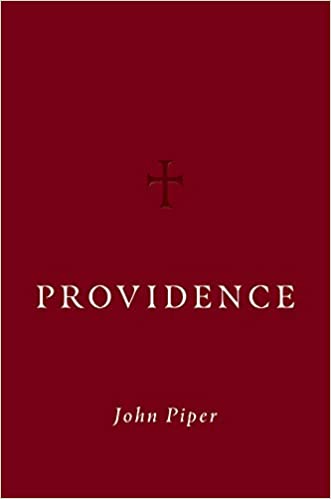
John Piper, Providence (Wheaton: Crossway Books, 2021), 710 pp.
2020 was a year of pain, suffering, and anguish. COVID-19 impacted countless lives, crushed the economy, overwhelmed our health care system, and influenced the presidential election. By mid-December, the virus claimed over 300,000 lives in the United States alone. We were told what is classified as “essential” and what is not deemed “essential.” Stay home-stay orders, social distancing, wearing masks became a normal part of daily lives.
The lockdowns had a devastating effect on thousands of people. Businesses were permanently closed, many churches stood at a stand-still, and hopelessness ruled in many hearts. One report suggested that suicide rates among young adults skyrocketed due to the pandemic.
In the midst of this crushing heartache, John Piper released his newest book, Providence. I received an advance copy and began diligently reading this massive book, weighing in at over 700 pages.
Dr. Piper lures in readers with a four-fold invitation:
An invitation into a biblical world of counterintuitive wonders.
An invitation to penetrate through words into reality. While the term “providence” is not found in Scripture, the reality of providence occurs on every page of the Bible.
An invitation into a God-entranced world.
An invitation to know God in a more intimate way.
Once readers become aware of the theological terrain that lies ahead, the 700 pages to follow are much less daunting.
The book is arranged in three parts. Part one explores a definition and a difficulty. The difficulty wrestles with the notion of divine self-exaltation. Piper discusses the typical negative creaturely response to a God who finds pleasure in exalting himself. The author demonstrates that anyone who resists the idea of a self-exalting God has fallen prey to a sinister mindset. Indeed, “The idea that God is unattractive to us because he acts for his own glory cloaks a deeper resistance: he is unattractive because he is God.”
Part two focuses on the ultimate goal of providence. Three areas are discussed which include:
God’s ultimate goal in providence before creation and in creation.
The ultimate goal of providence in the history of Israel.
The ultimate goal of providence in the design and enactment of the New Covenant
The great benefit of part two is delighting in the big picture of God’s providence. From before creation, to the cross, and the final glorification of the elect, we find God orchestrating every detail for his glory and for our good. As Piper writes, “God is supremely committed to the display of his glory for the admiration and enjoyment of all who will have it as their supreme treasure.”
Part three reveals the nature and extent of providence. The author skillfully demonstrates how God’s providence reigns over all things including the weather, world leaders, circumstances, and the demonic realm. Piper shows how God’s providence superintends over sin and triumphs in conversion.
In the end, Piper gloriously describes the final achievement of providence in the return of Christ, the glorification of his elect, and his reign on the New Earth. He writes, “The great goal of providence is the shining forth of the glory of God in the holiness and happiness of his people through Jesus Christ.”
My own experience as I neared the end of Providence was a keen sense of disappointment that the book was drawing to a close. Frankly, Providence helped me maintain a God-centered perspective, even in the midst of a tumultuous year.
Providence is a theological tour de force. It is heart-warming, mind-riveting, and soul-shaping. My hope is that Piper’s great accomplishment, dare I say his magnum opus, will have a similar impact on countless people around the world. There is no question that John Piper’s Providence will be one of the most read and treasured books of 2021.
I received this book free from the publisher. I was not required to write a positive review.
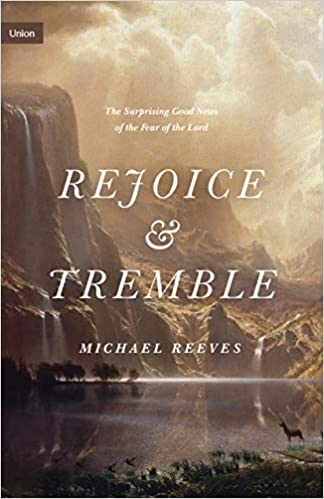
Michael Reeves, Rejoice & Tremble (Wheaton: Crossway Books, 2021), 179 pp.
I’ll never forget my visit to St. Andrews Chapel in Sanford, Florida. It was a rare opportunity to see Dr. R.C. Sproul preach. I entered the sanctuary to a bustle of people. Some were visiting. Others were preparing to worship. After several minutes of exploring, I made my way into the sanctuary. Posted above the main entryway were words that said in essence, “You are moving from the profane to the holy.”
I made my way to the fourth row where I engaged in some conversation with others. Before I knew it, an older woman seated in front of me turned around to face me, put one finger to her mouth, and made it clear that this was not the time to chit-chat. This woman was convinced that we had moved from the profane to the holy. Is it any wonder that R.C. Sproul says, “We have made our worship services more secular than sacred, more common than uncommon, more profane than holy.” Tragically, many churches fail to see the gravity of worship. They have turned worship into a three-stage circus.
One of the most reoccurring themes in Scripture is the command to fear the Lord. Michael Reeves drives this point home in his recent book, Rejoice & Tremble: The Surprising Good News of the Fear of the Lord. Reeves argues strenuously and persuasively that “the fear of God is just the tonic we need.”
Few books have been written that explore the theme of fearing God, so Dr. Reeves’s book is a much-welcomed and much-needed guest. In a stroke of biblical genius, the author distinguishes between “sinful fear” and “right fear.” It appears that many people have misunderstood what it means to fear God. Reeves is set on correcting this dilemma.
Sinful fear, of course, is prohibited in Scripture. Adam is the first example of one whose sinful fear caused him to flee from God. “This is the fear of God,” writes Reeves, “that is at odds with the love of God. Dreading, opposing, and retreated from God, this fear generates the doubt that rationalizes unbelief. It is the motor for both atheism and idolatry, inspiring people to invent alternative ‘realities’ in place of the living God.” The end result of this sinful fear leads to marginalizing God’s beauty and abandoning him, in the final analysis.
The solution, according to Dr. Reeves, is manifesting “right fear” of God, which involves a blend of fear and joy: “There is no tension between this fear and joy. Rather, this trembling “fear of God” is a way of speaking about the sheer intensity of the saints’ happiness in God. In other words, the biblical theme of the fear of God helps us to see the sort of joy that is most fitting for believers.” Reeves continues:
The fear of God as a strong biblical theme thus stands as a superb theological guard dog. It stops us from thinking that we are made for either passionless performance or a detached knowledge of abstract truths. It backs us into the acknowledgment that we are made to know God in such a way that our hearts tremble at his beauty and splendor, that we are remade at the deepest level. It shows us that entering the life of Christ involves a transformation of our very affections so that we begin actually to despise – and not merely renounce – the sins we once cherished, and treasure the God we once abhorred.
Rejoice & Tremble will challenge and encourages readers and push them forward in ways that are God-honoring. Indeed, this is only the tip of the iceberg as Michael Reeves challenges followers of Christ to make their ascent to the summit of God’s glory. In the end, as the author makes clear, the fear of the Lord subdues and eliminates fears that plague the people of God.
I received this book free from the publisher. I was not required to write a positive review.
The news of conservative talk show host, Rush Limbaugh’s death prompted responses around the country. He was affectionately referred to as “the Babe Ruth of talk radio.” Sean Hannity said, “He was an innovator. He was a pioneer. He was a trailblazer. He was a great patriot.” Brit Hume called Limbaugh “a giant.” Representative Jim Jordan called him “an icon, patriot, an American hero.” And former Speaker of the House, Newt Gingrich referred to Limbaugh’s death as “a tragic moment.” Gingrich added, “He was a wonderful man and one of the greatest heroic figures of the conservative movement.”
But not everyone was so quick to pay homage to the iconic talk show host. One sentence, in particular, caught my attention yesterday. The vitriolic remark that was directed at Limbaugh saddened and angered me. The comment was so inflammatory and mean-spirited, I’ve chosen not to quote it here. It was that bad.
Abusing Liberty
As Americans, we have been granted the gift of the first amendment which gives us the freedom to speak our minds. We have the freedom to disagree. We have the freedom to dissent. We have the freedom to differ with our ideological opponents. Benjamin Franklin said, “Without Freedom of Thought, there can be no such thing as Wisdom; and no such thing as public liberty, without Freedom of Speech.” And so we exercise our first amendment rights, in despite the current trend by Progressives to silence free speech. We offer our opinions and should be able to do so without fear of censorship or persecution.
As Christians, however, we have a higher calling than the first amendment. We are called to love our ideological opponents: “You have heard that it was said, ‘You shall love your neighbor and hate your enemy.’ But I say to you, Love your enemies and pray for those who persecute you, so that you may be sons of your Father who is in heaven. For he makes his sun rise on the evil and on the good, and sends rain on the just and on the unjust” (Matthew 5:43–45, ESV).
While we are protected by the first amendment in America, we run the risk of abusing our liberty when we zealously heap unfair insults and accusations on our ideological foes. We abuse our liberty when we “dance” on the tombstone of our ideological enemies. Such a path is simply not an option for a follower of Jesus Christ. “Our chief end,” according to the Westminster Confession of Faith is to “glorify God and enjoy him forever.” One of the ways we glorify God is by loving those with whom we disagree.
The Way Forward
Loving our enemies does not necessarily mean we agree with their worldview, support their ideology, or endorse their political convictions. It is entirely possible to actively oppose our opponents but maintain a posture of respect. For example, former Congressman Harold Ford, Jr. made the following comments after receiving word of Limbaugh’s death:
Sometimes I didn’t agree with him, but I admire him for what he was able to get accomplished. I hope Democrats and Republicans alike take what’s most important about him from him, which is don’t forget the betrayed, forgot, and marginalized in our society whatever they may look like. It turned out to behave, vengeful, try to help them. On his best days, that’s what he tried to do.
Ford is not a political conservative. Yet, he is able to show respect to Limbaugh and honor his legacy. The way forward requires clear thinking and hearts that submit to Scripture. Followers of Christ would do well to remember a few critical principles before we set foot in the graveyard of our enemies.
1. Remember that each person is created in the image of God
Genesis 1:27 says, “So God created man in his own image, in the image of God he created him; male and female he created them.” Since all people are made in God’s image and created to glorify him (Isa. 43:7), they have inherent dignity. Psalm 8:3-5 says, “When I look at your heavens, the work of your fingers, the moon and the stars, which you have set in place, what is man that you are mindful of him, and the son of man that you care for him? Yet you have made him a little lower than the heavenly beings and crowned him with glory and honor.” Helmut Thielicke beautifully expresses the truth of mankind’s dignity:
His greatness rests solely on the fact that God in his incomprehensible goodness has bestowed his love upon him. God does not love us because we are so valuable. We are valuable because God loves us … The primary controlling relation that leads to the definition of what is, therefore, the relation to God.1
2. Remember that Christian compassion should undergird our attitudes and actions
Scripture reminds us, “Put on then, as God’s chosen ones, holy and beloved, compassionate hearts, kindness, humility, meekness, and patience, bearing with one another and, if one has a complaint against another, forgiving each other; as the Lord has forgiven you, so you also must forgive. And above all these put on love, which binds everything together in perfect harmony” (Colossians 3:12–14, ESV).
3. Remember that our words will be read by our opponents family and friends
Each time I read a piece of angry rhetoric directed at Rush Limbaugh, I wonder how these words affect his wife, Kathryn or members of his family. Perhaps we should stop and think before we utter a series of words that might cause someone else to experience pain, especially someone who is grieving the death of a loved one.
4. Remember that we are accountable for our words
The Word of God reminds us, “I tell you, on the day of judgment people will give account for every careless word they speak, for by your words you will be justified, and by your words you will be condemned” (Matthew 12:36–37, ESV). Ours is a higher calling. Our challenge is to obey God’s divine standard: “Let no corrupting talk come out of your mouths, but only such as is good for building up, as fits the occasion, that it may give grace to those who hear” (Ephesians 4:29, ESV). J.C. Ryle says, “May we never care what men say of us, so long as we walk in the light of God’s Word. May we strive and pray to be wholly independent of, and indifferent to man’s opinion, so long as we please God.”2
Post-Mortem: A New Perspective
None of this is to suggest that we hide our views or change our convictions. John Adams said, “Let us dare to read, think, speak, and write.” Our first amendment rights give us the freedom to disagree with our opponents. So argue your case. Make your convictions known. Passionately plead your case and proclaim your worldview. Exercise your God-given rights. Disagree with Rush Limbaugh. Make your voice heard. But if you are unable to be respectful with your ideological opponents who are relegated to the graveyard, keep your opinion to yourself. Find somewhere else to “dance.”
Helmut Thielicke, Nihilism (New York: Harper and Row Publishers, 1961), 110-111. ↩
J.C. Ryle, Warnings to the Churches (Edinburgh: The Banner of Truth Trust, 1967), 37. ↩
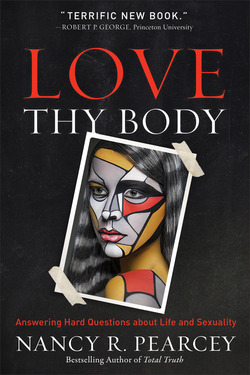
Nancy Pearcey, Love Thy Body: Answering Hard Questions About Life and Sexuality Grand Rapids: Baker, 2018, 337 pp. $15.31
The publication of Nancy Pearcey’s book, Total Truth: Liberating Christianity From Its Cultural Captivity sent shockwaves throughout the evangelical world and help equip a new generation of apologists. Total Truth confronted the notion that scientific knowledge and moral knowledge are separated into two domains. The lower story includes objective truths that are public and valid for all people. This is the realm of empirical science. These truths are true and verifiable. The upper story includes the realm of moral knowledge which is private, relative, and subjective. Hence, the so-called unified concept of truth was obliterated and separated into two domains.
Pearcey’s previous works, Saving Leonardo: A Call to Resist the Secular Assault on Mind, Morals, and Meaning and Finding Truth: 5 Principles for Unmasking Atheism, Secularism, and Other God Substitutes have also left an indelible mark on the church and culture at large. The impact of these books on me personally, cannot be overstated. My suspicion is that many people would concur.
Nancy Pearcey’s newest offering, Love Thy Body: Answering Hard Questions about Life and Sexuality pick up where the other titles left off. The overarching goal of Love Thy Body is to “uncover the worldview that drives the secular ethic.” Ultimately, the book is designed to “show that a secular morality doesn’t fit the real universe.”
Readers familiar with Pearcey will quickly see the influence of Francis Schaeffer on her thought. It was Schaeffer who originally exposed the so-called “fact/value” split which has created a fractured epistemology that continues to be propagated today.
Pearcey shows the practical outgrowth of this fragmented worldview (or the two-story worldview) by pointing to several contemporary culture matters including abortion, euthanasia, “same-sex marriage,” and transgenderism. She helps readers understand how these various worldviews have been smuggled into our culture and links each of them to the two-story dichotomy.
Readers will be encouraged and challenged to walk through the argument of Love Thy Body and will be better equipped to not only contend with culture but also reach out to people who have been deceived by a pagan worldview.
Readers will discover that Pearcey’s argument is not combative. Rather, her heart cries for people who have been co-opted by this deviant worldview. She pleads with readers to reach out and love people with Christ-centered love: “Christians must present biblical morality in a way that reveals the beauty of the biblical view of the human person so that people actually want it to be true.”
Love Thy Body is a book that is filled with description and prescription. Facts and figures run through the book but the author is not content to leave her readers with data alone. She sets forth a workable prescription which is set on helping people and healing them at the deepest level. Therefore, “We must work to educate and persuade on a worldview level,” writes Pearcey. Such an approach is imperative if Christ-followers have any hope of reaching a lost world with the saving message of the gospel. Running through the book is a mindset that Pearcey, no doubt, learned from Schaeffer, namely, sharing the gospel with a tear in one’s eye.
Love Thy Body is riveting, challenging, educational, a shot to the heart, a challenge for the mind, and bold push for the feet. It will spark controversy in some venues and may even precipitate debate in the local church. Surely, this kind of debate is necessary as Christians seek to influence culture for God’s glory.
I received this book free from the publisher. I was not required to write a positive review.
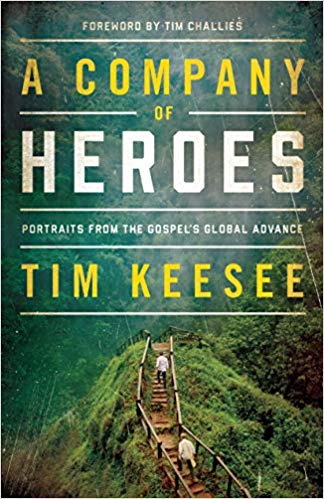
Tim Keesee, A Company of Heroes: Portraits From the Gospel’s Global Cause (Wheaton: Crossway, 2019), 286 pp.
Most young people aspire to be like someone. The people they emulate are athletes, rock stars, and actors. These people serve as heroes to the upcoming generation. But Tim Keesee has a different set of heroes in mind. Keesee is thinking about heroes who embrace biblical values, live according to a Christian worldview, and keep eternity in their range of sight. The kingdom of God is at the forefront of their minds.
In A Company of Heroes: Portraits From the Gospel’s Global Cause, Keesee presents a series of journal entries that he has written over the past several years. The entries tell the tale of a cadre of Christians who value the kingdom of God and strive to share the gospel with the nations.
The book is comprised of seventeen chapters that chronicle stories of God’s grace in the lives of His people. The brave warriors surveyed in this volume come from different backgrounds and serve in different parts of the world – from London to Leningrad and from Afghanistan to Armenia. Yet each hero has a common goal. Each hero has a passion to spread the supremacy of Jesus to every ethnos for the glory of God!
One sentence sums up the whole book as Keesee refers to some missionaries faithfully gave their lives for the sake of the gospel. Here’s the glorious sentence:
When I first visited, these missionaries were blazing trails both linguistically and literally as they traveled as far as the road would take them – and then walked on in order to spread the fame of Jesus to every corner of this remote borderland.
This sentence may as well appear on every page of the book. For the gospel pulsates on every page. Jesus is exalted in every story. Resurrection hope permeates this volume.
A Company of Heroes should be devoured by Christians who cherish the gospel and have a passion for the nations. This book will help shape readers’ passion for evangelism and world missions. It will inspire, encourage, and may even convict a few people.
The gospel’s global cause is growing and the mighty work of the Holy Spirit cannot be stopped. So let the nations be glad!
I received this book free from the publisher. I was not required to write a positive review.
Nate Pickowicz, How to Eat Your Bible (Chicago: Moody Publishers, 2021), 143 pp.
Reading the Bible is one of the most neglected spiritual disciplines in our day. Well-intentioned people set the Word of God aside for a multitude of reasons, none of which are valid excuses. How to Eat Your Bible by Nate Pickowicz provides a biblical corrective as well as a prescription for moving forward in a way that promotes spiritual health and vitality.
One of the great strengths of this book is its simplicity. It reads like a first-year Bible College text books for students needing some basic encouragement. Pickowicz begins by challenging readers to affirm the great worth of the Bible. Appealing to the Reformed principle of sola Scriptura, he urges readers to see that God’s Word is profitable for teaching, reproof, correction, and training in righteousness (2 Tim. 3:16). But he also shows how the Bible radically changes God’s people when they read it, study it, meditate upon it, and memorize it. It changes our minds, spirits, emotions, and wills. Indeed, as Pickowicz writes, “The Word of God is sufficient to minister to every part of our condition and has the power to transform us in all the way of godliness.” The conclusion: The people of God should hunger and thirst for Scripture.
The author also adds some basic exegetical and hermeneutical help that will serve readers well as they dig into Scripture. With that, he introduces the seven- year Bible study method. This approach is distinct from the typical strategy that encourages Bible readers to move from Genesis to Revelation in a year’s time.
Pickowicz presents a strategy that he developed (inspired by John MacArthur’s method). The strategy involves reading books of the Bible multiple times with an eye on detail and a motive for understanding and transformation.
How to Eat Your Bible should be required reading for every new Christian. But people who have been walking with God for some time will receive benefit from this excellent volume as well. In the end, the author is pleading for people to open their Bibles and be revolutionized. How to Eat Your Bible is just what the doctor ordered!
I received this book free from the publisher. I was not required to write a positive review.
The Unity of the Bible by Daniel P. Fuller sets out to discover the theme that gives coherence to the teaching of Scripture. It presents the logic behind God’s unfolding revelation from Genesis to Revelation. Dr. Fuller writes, “Only by seeing the whole of God’s purpose in creation and redemptive history can one appreciate God’s individual actions in realizing this purpose.” The author sees a need to summarize the whole Bible along the time line of redemptive history, instead of getting trapped in timeless categories that have been popularized in the discipline of systematic theology. The bottom line: God does everything in the creation of the world and its history in order to uphold the glory of his name (Isa. 48:9-11).
Part One
Dr. Fuller maintains the Bible proceeds according to a plan. Beginning with the creation of the world, it then relates and interprets a series of historical events that lead to the grand climax and goal of the world’s history. He overviews the formation of the Old Testament canon and points out that God has always been in the business of working for the benefit of his people so long as they trust in him (Isa. 64:4). The emergence of the New Testament canon is presented with careful attention given to the closing of the Apostolic age.
Part Two
Part two is devoted to explaining the foundations of redemptive history by doing an inductive study of Genesis 1:1-3:24 and by demonstrating God’s necessary work of being a Trinity. Fuller argues persuasively that God’s purpose in creation and redemption is “that the earth might be filled with the glory of his desire to service people and … to do them good with his whole heart and soul.” The author proceeds to explain man’s responsibility in responding to God’s purpose and outlines the purpose of hell (for those who fail to respond to God’s purpose) and the riches of God’s mercy demonstrated on the cross.
Part Three
Part three details the Abrahamic covenant and a comprehensive treatment of faith’s futuristic and past orientation is presented. Specific steps are given for battling attitudes of unbelief. The author argues that the justified and forgiven sinner always perseveres in faith. The purpose of the law is also discussed and is seen by Fuller to be in continuum with the gospel rather than in contrast.
Part Four
Part four explain the plan of God in getting the gospel to the world and includes an important discussion on the kingdom of God and the conversion of Israel.
Summary
Dan Fuller writes with clarity and backs his views up with solid biblical theology and thorough exegesis. The author maintains a Berean mindset as he surfaces key points which challenge my Bible study habits and encourage me to dig deeper. This book like no other has challenged my thinking in significant ways and has influenced my approach to studying redemptive history and teaching practical issues of the Christian life. The Unity of the Bible is an underrated masterpiece. It is a true encouragement for those weary of classical dispensational charts that are riddled with proof texts. This work offers a better approach – a true biblical theology that is sure to encourage many in the days ahead.
Sinclair Ferguson, Some Pastors and Teachers. Edinburgh: The Banner of Truth Trust, 2017, 802 pp. $45.00
The day that Sinclair Ferguson’s new book, Some Pastors and Teachers arrived, I was like a kid in a candy store; a monkey in a banana factory; a shark in blood-infested waters. Gazing at the table of contents caused my heart to race, which is a testimony of my deep love for the church, theology, and pastoral ministry.
It was immediately apparent that Dr. Ferguson was attaching a high degree of importance to the past by acknowledging some of the great pastor-teachers in church history – men like John Calvin, John Owen, John Murray, and the Puritans.
Some Pastors and Teachers is a mixture of biography, systematic and biblical theology, and pastoral theology. Ferguson writes with theological precision and pastoral compassion and experience. He writes with a gravitas that is both weighty and inspirational.
While each of the thirty-nine chapters are commendable in their own right, chapter thirty-seven, was especially meaningful to me. Ferguson argues with great force that “all truly biblical preaching is preaching to the heart.” This kind of preaching is marked by several characteristics:
A right use of the Bible which must first be directed to the mind. Ferguson adds, “When we preach to the heart, the mind is not so much the terminus of our preaching, but the channel through which we appeal to the whole person, leading to the transformation of the whole life.
Nourishment of the whole person. Ferguson makes it clear that spiritual nourishment must be carefully defined: “There is a difference between a well-instructed congregation and a well-nourished one.”
An understanding of the condition of hearers.
The use of the imagination.
Grace in Christ.
This behemoth of a book is filled with rich material that promises deep pastoral encouragement, comfort, and instruction. This “doxological Calvinism” is the best of all worlds. Such a theological framework strengthens minds, nourishes hearts, and ultimately equips pastors to feed, lead, love, and protect the flock – all for God’s glory.
 Christopher Yuan, Holy Sexuality and the Gospel (New York: Multnomah, 2018), 234 pp.


 Nancy Pearcey, Love Thy Body: Answering Hard Questions About Life and Sexuality Grand Rapids: Baker, 2018, 337 pp. $15.31
 Tim Keesee, A Company of Heroes: Portraits From the Gospel’s Global Cause (Wheaton: Crossway, 2019), 286 pp.

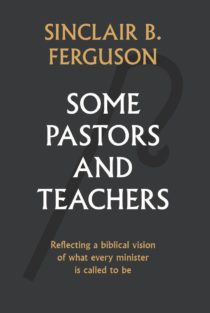 Sinclair Ferguson, Some Pastors and Teachers. Edinburgh: The Banner of Truth Trust, 2017, 802 pp. $45.00
 Veritas et Lux