Stand Strong for Christ

man wearing brown leather dress shoes stepping on brown wood

We are living through one of the most tumultuous times in American history. It seems like every day a new challenge surfaces. We face trials, temptations, suffering, and grief. We hear rumors about the fate of our Republic. Conspiracy theories are at a fevered pitch. None of this should surprise us. In Jesus’s day he told his disciples:

And you will hear of wars and rumors of wars. See that you are not alarmed, for this must take place, but the end is not yet. For nation will rise against nation, and kingdom against kingdom, and there will be famines and earthquakes in various places. All these are but the beginning of the birth pains. “Then they will deliver you up to tribulation and put you to death, and you will be hated by all nations for my name’s sake. And then many will fall away and betray one another and hate one another. And many false prophets will arise and lead many astray. And because lawlessness will be increased, the love of many will grow cold. But the one who endures to the end will be saved. And this gospel of the kingdom will be proclaimed throughout the whole world as a testimony to all nations, and then the end will come (Matthew 24:6–14, ESV).

Jesus has a way of bringing us back to ground zero. He always tells the truth and he always has our best interests in mind. Is it any wonder that Paul admonished the Ephesian believers to put on the armor of God? He writes:

Stand therefore, having fastened on the belt of truth, and having put on the breastplate of righteousness, and, as shoes for your feet, having put on the readiness given by the gospel of peace. In all circumstances take up the shield of faith, with which you can extinguish all the flaming darts of the evil one; and take the helmet of salvation, and the sword of the Spirit, which is the word of God, praying at all times in the Spirit, with all prayer and supplication. To that end, keep alert with all perseverance, making supplication for all the saints, and also for me, that words may be given to me in opening my mouth boldly to proclaim the mystery of the gospel, for which I am an ambassador in chains, that I may declare it boldly, as I ought to speak (Ephesians 6:14–20, ESV).

In order to be battle ready, we need the courage of Christ. We need to put on the armor of Christ. And we need to stand strong for Christ.

The Puritan William Gurnall writes, “To stand is the opposite of to flee or to surrender. A captain who sees his men retreating or on the verge of surrender gives the order, ‘Stand!’ and every soldier worthy of his calling responds at once to his captain’s voice. In like manner, every Christian is to respond to God’s call to ‘Stand!’ – or, in other words, steadfastly to resist and never yield to the attacks of Satan.”1 Taking such a stand means that we not only stand for Christ; we also stand against some things. We stand against:

  • An ungodly world. Paul warns us about the kosmos (world) in his letter to the church in Colossae. He writes, “See to it that no one takes you captive by philosophy and empty deceit, according to human tradition, according to the elemental spirits of the world, and not according to Christ” (Colossians 2:8).
  • An ungodly agenda. Scripture describes the essence of this agenda in 2 Timothy 3:1-5. I encourage you to read through this section of Scripture and become familiar with this ungodly agenda.
  • An ungodly enemy. Satan is our enemy, a foe who is backed by a horde of evil demons. They are Satanic ambassadors who do the bidding of the prince of darkness. They seek to hinder the work of the ministry (1 Thes. 2:18). They work with all their might to stir up pride among the people of God. Ultimately, their aim is to destroy (John 10:10).
Prepared for Battle

Are you battle ready?

  • Do you have the courage of Christ?
  • Are you wearing your spiritual armor each day?
  • Are you standing strong for Christ?

J.C. Ryle reminds us, ““Take away the gospel from a church and that church is not worth preserving. A well without water, a scabbard without a sword, a steam-engine without a fire, a ship without compass and rudder, a watch without a mainspring, a stuffed carcass without life, all these are useless things. But there is nothing so useless as a church without the gospel.”2

Let us stand strong for the sake of Christ.

  1. William Gurnall, The Christian in Complete Armor (Edinburgh: Banner of Truth Trust, 1655), 285.
  2. J.C. Ryle, Light From Old Times (Edinburgh: The Banner of Truth, 2015), 45.

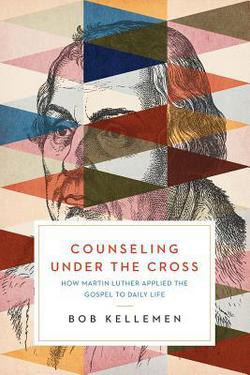
Counseling Under the Cross: How Martin Luther Applied the Gospel to Daily Life

kel

Bob Kellemen, Counseling Under the Cross: How Martin Luther Applied the Gospel to Daily Life Greensboro: New Growth Press, 2017, pp. 246.

One man blazed a trail in the sixteenth century that laid the groundwork for countless numbers of Christians. Martin Luther was the primary agent who God used in a mighty way as he hammered his 95 theses on the castle door at Wittenberg on October 31, 1517. He unleashed a theological revolution known as the Protestant Reformation, where the doctrines of grace were recovered and the gospel began to exert a powerful influence in the lives of people.

Counseling Under the Cross by Bob Kellemen explores the life and legacy of Martin Luther and reveals how his theological framework influenced his counseling ministry.

What Shaped Martin Luther’s Pastoral Counseling?

Part one explores Luther’s background and alerts readers to the oppressive environment that was so common in the sixteenth century. Luther fought desperately to find peace with God but was doomed to failure apart from completed work of Christ which is received by grace alone through faith alone.

Kellemen explains how Luther’s anxiety impacted his life in his early adult years. Luther admits, “For I had hoped I might find peace of conscience with fasts, prayers, and the vigils with which I miserably afflicted my body, but the more I sweated it out like this, the less peace and tranquillity I knew.”

The author continues, “Before he came under the influence of the cross, Luther lived life as a man terrified that he would never find peace with God because his God was not a God of peace. Luther lived with a constant sense of guilt and dread in the face of a terrifying, angry, and unforgiving God.”

The only way Luther found relief is by casting all his hope and future on a sovereign God, by grace alone through faith alone. Kellemen writes, “The Christ of the cross transformed Luther the man terrified before God into Luther the man at peace with God.” This newly converted man now saw God in a different light which not only radically affected his life; it altered his ministry at every level.

What is the Shape of Martin Luther’s Pastoral Counseling?

“Luther’s counseling reflects his theology – it is cross-shaped and gospel-centered.” Part two reveals the shape of Luther’s pastoral counseling. The author examines Luther’s approach to pastoral counseling by exploring two primary angles.

First, soul care: comfort for suffering.Luther’s theology and methodology of sustaining and healing are presented with specific examples of how the Reformer encouraged and edified the saints.

Second, spiritual direction: confrontation for sinning.Specifically, Luther’s theology and methodology of reconciling and guiding are presented here. Again, the author paints a pastoral portrait of Luther and shows him at work among the Body of Christ. While soul care (noted above) involves comforting and encourages Christians, spiritual direction involves a confrontation with people. Kellemen adds, “In reconciling soul care, we seek to startle one another with the gospel.” Such a nouthetic approach is mandated in Scripture (Col. 1:28) and plays a vital role in biblical counseling.

EVALUATION

Counseling Under the Cross is a treasure chest of gospel nuggets. Bob Kellemen does a beautiful job of explaining how Martin Luther applied the gospel to everyday life. One of the most helpful aspects of the book is the emphasis on indicatives and imperatives. The author makes it clear that both are important aspects of the Christian life: “Salvation in Christ (gospel indicatives) frees, empowers, and motivates us through faith to serve others in love (gospel imperatives). Progressive sanctification is faith active in love – exercising the love that comes from faith in the grace of Christ.”

I strongly urge pastors, counselors, and church leaders to prayerfully study Counseling Under the Cross. Additionally, I urge readers to pick up a copy of my book, Bold Reformer: Celebrating the Gospel-Centered Convictions of Martin Luther, as a companion volume to Bob Kellemen’s excellent work.

I received this book free from the publisher. I was not required to write a positive review.

A Godward Gaze: The Holy Pursuit of John Calvin

calMy recent book, A Godward Gaze: The Holy Pursuit of John Calvin is available now! Here’s a brief synopsis.

“… But this is the one to whom I will look: he who is humble and contrite in spirit and trembles at my word” (Isaiah 66:2).

A Godward Gaze is a snapshot of a man on a mission. It is about one man who set his sights on the Celestial City and never looked back. His name is John Calvin. He was a pious man, driven by God’s glory and a love for Scripture. His holy pursuit was rare among men and a model for followers of Christ. David Steele points readers to a truly remarkable man – a biblical expositor, a theologian, and a courageous reformer. Calvin changed a city and helped changed the world. His godly example may change your life.

Pick up your copy today. https://www.amazon.com/Godward-Gaze-Holy-Pursuit-Calvin/dp/1095816462/ref=sr_1_fkmr0_1?keywords=a+godward+gauze+david+steele&qid=1559651630&s=gateway&sr=8-1-fkmr0

The Rise and Triumph of the Modern Self – Carl R. Trueman

Carl R. Trueman, The Rise and Triumph of the Modern Self (Wheaton: Crossway, 2020), 425.

The sexual revolution of the 60’s fundamentally changed the cultural landscape in North America. Yet, percolating beneath the surface was an even more diabolical worldview; a worldview that many are unfamiliar with. Even those who have engaged with the history of Western civilization may be jolted when the implications become clear.

The Rise and Triumph of the Modern Self by Carl R. Trueman pulls back the veil and alerts us to the underlying ideologies that have catapulted our current views about self and sexuality in the Western world. Trueman shows readers in a precise and shocking way how men have forgotten God and presents reasons for their tragic decision.

The driving argument of Trueman’s work is this:

The issues we face today in terms of sexual politics are a symptom or manifestation of the deeper revolution in selfhood that the the rise and triumph of expressive individualism represents.

The emphasis we find in Trueman bears some similarity to John Piper’s recent contention that “the essence of sin is minimizing God and making much of self.”1

Several negative reviews have been submitted that are not sympathetic to Trueman’s work. What these reviews fail to understand is that The Rise and Triumph of the Modern Self is neither a lament nor a polemic. It is in the words of Trueman, “an attempt to explain how the revolution of the self came to take the form it has in the West and why that is so culturally significant.” The goal of the author is achieved and is undergirded by meticulous research from multiple angles – theological, sociological, psychological, and beyond.

The Rise and Triumph of the Modern Self should be celebrated for its candor and penetrating analysis of the human condition. It sufficiently lays the groundwork for more study and deeper discussions in the coming days.

I received this book free from the publisher. I was not required to write a positive review.

  1. John Piper, Providence (Wheaton: Crossway Books, 2021), 127.

The White Flag Unfurled

wf

These are troubling times. We live in a day which is marked by theological error and apostasy. Leaders are falling, truth is routinely maligned, and compromise is celebrated. A glance across the cultural milieu reveals an unfurled white flag. The white flag has been hoisted high and a diabolical deal has been struck. This flag reveals a horrifying reality which must be addressed, namely – final surrender in the church.

The White Flag: When Compromise Cripples the Church diagnoses our current condition and offers biblical action steps for marching forward in a way that glorifies God. It is call to faithfulness in age that is characterized by weak knees, passivity, and capitulation. It instills courage in weary Christ-followers who toil in a post-Christian era.

“Here is a passionate call from a pastor’s heart, from a man widely read, who sees with great clarity the difficult situation the church now faces, with opposition without and weakness and compromise within, who believes the battle will be won by the faithful believing and by the courageous teaching and proclaiming of the Word of God.”

DR. PETER JONES, Director, TruthXchange, Author of “The Other Worldview,” Escondido, CA

“David Steele is a champion for the truth of God’s word.The White Flag not only exposes the destructive enemy of doctrinal compromise that threatens the contemporary church; it inspires godly courage in all believers to stand firm in defending the truth of Scripture no matter the cost. Read this excellent book to be blessed and emboldened by its timely message.”

WAYNE PICKENS, Founding pastor of Homestead Country Gathering, La Grande, OR

“Dr. David Steele exposes a clear and present danger threatening our churches. This is a biblical, bold, urgent call-to-arms reminding us that our Commander-in-Chief has entrusted us to a “Precious Treasure” that must be protected as well as proclaimed.”

NATE PICKOWICZ, Author of Reviving New England and How to Eat Your Bible.

Order your copy of The White Flag: When Compromise Cripples the Church here!

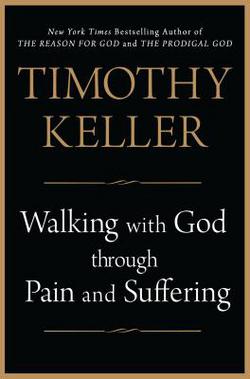
Walking With God Through Pain and Suffering – Timothy Keller

kellerI have yet to meet a person who enjoys pain and suffering.  Yet suffering is a part of the warp and woof of life.  It is not a part of God’s original intent for creation.  Since Adam’s first sin, pain and suffering have been an abnormal part of the cosmos.  Suffering is an unwelcome guest who bullies his way to the table and makes demands – much like a  soldier on a bloody battlefield.

Walking With God Through Pain and Suffering by Timothy Keller addresses this topic with candor and clarity.  Keller leaves no stone unturned here.  The book is organized into three sections:

Understanding the Furnace

Keller introduces the problem of pain and suffering and explores some of the philosophical challenges that Christ-followers must understand and address:

Nothing is more important than to learn how to maintain a life of purpose in the midst of painful adversity,” writes Keller.  Yet our culture has a tendency to respond to suffering in ways that are helpful and wrongheaded.  The moralist response to suffering is to “do good.

The fatalist’s response to suffering is to “hang in there” and “endure.”  The dualist response to suffering is “purified faithfulness.”  And the secular response to suffering is focussed on “technique.”  A combination of these erroneous responses to suffering litter the current milieu and produce a generation of confused and discouraged people.

Keller rightly alerts readers to the importance of worldviews and their relation to the subject of pain and suffering.  Ultimately, the matter of pain and suffering is a matter of faith.  “Faith,” writes Keller “is the promise of God.”  He adds:

We can be fully accepted and counted legally righteous in God’s sight through faith in Christ, solely by free grace … It means freedom from fear of the future, from any anxiety about your eternal destiny.  It is the most liberating idea possible and it ultimately enables you to face all suffering, knowing that because of the cross, God is absolutely for you and that because of the resurrection, everything will be all right in the end.

Facing the Furnace

Part two provides readers with the theological muscle – a crucial part of the battle.  Keller unpacks the doctrine of God’s sovereignty and provides a painful but biblical rationale for the role of suffering the lives of people.

At the heart of this discussion is an important look at the suffering of the Lord Jesus Christ.  The author summarizes, “That is, in order to satisfy justice, in order to punish sin so that in love he could forgive and receive us, God had to bear the penalty for sin within himself.  God the Son took the punishment we deserved, including being cut off from the Father.  And so God took into his own self, his own heart, an infinite agony – out of love for us.”

Keller’s treatment in part two travels great distances to help resolve the problem of evil – the so-called “Achilles heal” of the Christian faith: “So while Christianity never claims to be able to offer a full explanation of all God’s reasons behind every instance of evil and suffering – it does have a final answer to it.  The answer will be given at the end of history and all who hear it and see its fulfillment will find it completely satisfying, infinitely sufficient.”

While Keller never attempts to provide a comprehensive answer to the problem of evil, his treatment of this thorny subject is some of the best in print.  He may not satisfy the disciples of David Hume, Voltaire, or Sam Harris – but he does give ample ammunition for believers who are looking for honest answers.

Walking With God in the Furnace

Parts one and two explore the philosophical and theological angles of pain and suffering.  Part three helps readers with practical application.  They are given practical tools for “walking with God in the furnace.”  The very notion of walking with God in the furnace assumes pain – pain that some are unwilling to admit.  But practical experience reveals that we live in a broken world; a world which has been torn to shreds by the consequences of sin.

Keller urges readers to walk with God in suffering: “If you go into the furnace without the gospel, it will not be possible to find God in there.  You will be sure he has done terrible wrong or you have and you will feel all alone.  Going into the fire without the gospel is the most dangerous thing anyone can do.”  So the gospel is the first and last defense of every Christ-follower; indeed it is the hope of the watching world.

Second, the author stresses the importance of weeping during seasons of adversity.  Elijah serves as an example of a man who cried out in great agony.  He was a man unafraid of weeping.  Such an approach is not only honest – it is a sign of emotional health.

Third, Keller demonstrates the need for trusting in God during days of pain and adversity.    Joseph is portrayed as an example of a man who trusted: If the story of Joseph and the whole of the Bible is true, then anything that comes into your life is something that, as painful as it is, you need in some way.”  Jesus too demonstrated trust in his Father and points believers in the identical direction.  Keller continues to alert readers to other tools that they should utilize during their dark days.

Walking With God Through Pain and Suffering is a watershed book that deserves to be read.  Christ-followers will no doubt be encouraged by this Christ-exalting book; a book which drives readers to the cross of the suffering Savior.

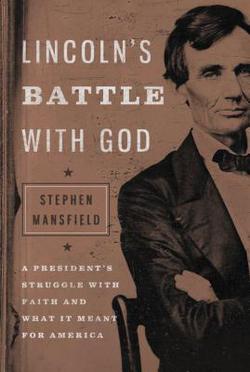
Lincoln’s Battle With God: A President’s Struggle With Faith and What It Meant For America (2012)

linStephen Mansfield, Lincoln’s Battle With God: A President’s Struggle With Faith and What It Meant For America Nashville: Thomas Nelson, 2012, 254 pp. $13.31

The sixteenth president of the United States is dearly beloved by conservatives and liberals alike. He is known for his exemplary leadership, uncompromising character, and love for liberty. Yet his approach to God and the Christian life is something that is either assumed or neglected altogether. Either option shows a certain amount of naivety and must be challenged. Stephen Mansfield’s book, Lincoln’s Battle With God: A President’s Struggle With Faith and What it Meant for America addresses this matter in a way that is educational and inspiring.

Mansfield presents Lincoln as one who was raised in a strict Calvinistic home which was discarded during his teenage years. During his legislative years in Illinois, he was referred to by friends and associates as the “infidel.” One friend spoke candidly about Lincoln’s early rejection of the Christian faith: “Lincoln denies that Jesus was the son of God as understood and maintained by the Christian world.”

Yet, when Lincoln began his bid for the White House, his antipathy toward historic Christianity appears to cool. In his earlier days, some considered him to be an atheist, yet as he progressed in politics, his worldview begins to shift. He is a man who as Mansfield writes, “believes in a God who exerts some degree of sovereign rule in human affairs … whatever the case, he appears to have emerged from his season of ‘infidelity’ and moved toward a less skeptical view of Christian truth.”

Pastor James D. Smith may have played an important role in Lincoln’s view of religion. Smith was a scholar in his own right and was welcomed by Lincoln for his rational approach to Scripture. He stood head and shoulders about some of the revivalists who were excessive in their methodology, not to mention their theological foibles. Whatever the case, Smith was convinced that Lincoln was converted under his ministry. “It is a very easy matter to prove,” writes Smith, “that while I was Pastor of the 1st Presbyterian Church of Springfield, Mr. Lincoln did avow his belief in the Divine Authority and Inspiration of the Scriptures.” Considerable debate has taken place and continues to this day whether or not Lincoln put his faith in Christ at this point.

But in 1850, Lincoln son Eddie grew ill and eventually died on February 1. Most agree that significant change in Lincoln’s worldview occurred during this time. Mansfield writes, “Had Lincoln become a Christian? We cannot know definitively. We do have reason to suspect, though, that something had changed in his ongoing battle with God … A process of spiritual broadening had clearly begun.”

The author continues to document the ongoing theological development in Lincoln and argues convincingly that a work of grace had likely taken place. Later speeches and letters force one to conclude that at the very least, Lincoln had turned a theological corner; at the very best, a true conversion had taken place. Much of Lincoln’s correspondence and especially his speeches give evidence of a truly converted man.

Lincoln’s Battle With God is an illuminating look at one of the most influential leaders in American history. Mansfield writes objectively and provides a depth of research that guides readers into the inner recesses of our 16th president’s heart. I commend Steven Mansfield for offering such a heartfelt book and encourage many to enjoy the fruit of his labor.

The Conscience of a Conservative for the 21st-Century

0804138109_bThe reason that I am a Conservative can be summarized by three important influences:

1. The influence of my parents and grandparents.

2. The leadership of President Ronald Reagan which restored American exceptionalism.

3. The Conscience of a Conservative by Barry Goldwater

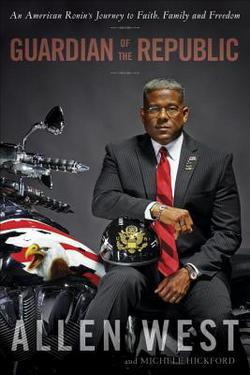
The Conscience of a Conservative was written by Barry Goldwater in 1961.  I didn’t read it until I was a high school student and later read it as an adult.  It left a profound mark on me and continues to wield a mighty influence.  But a new book by former U.S Representative Allen West could easily serve as the new barometer for Conservatives.  Indeed, it could easily be considered The Conscience of a Conservative for the 21st century.  Guardian of the Republic is Congressman West’s plea to restore the vision of the founding fathers.  It is his earnest appeal to return to the ideological roots that make America great.

Part I: My Conservative Roots

Part one explores the background of Congressman West, a Lt. Colonel in the military who was raised in Atlanta and influenced by his parents which shaped him into the man he is today.

Part II: Conservative Principles

Part two is a primer on a conservative ideology which stands in the tradition of President Ronald Reagan.  The author includes the basic philosophical and historical framework which undergirds a strong conservative stance.  Among these principles include limited government, fiscal responsibility, a free market, individualism, a strong national defense, and an understanding that all of man’s liberty come ultimately from God.

West includes three “pillars of conservative thought” which include effective and efficient conservative government, peace through strength, and traditional American values.

None of these are new ideas.  But the reframing of these conservative principles is a welcome reminder which should call America back to her founding principles.

Part III: Conservatism in the Black Community

Part three may be the most interesting section.  The author calls black Americans to return to their roots – for they “fail to understand the soul of [their] souls.”  West reminds readers the reason for the establishment of the Republican Party: “the abolition of slavery through the passage of the Thirteenth Amendment.”  Yet many social programs only create dependency on the government and enslave people in the final analysis.  What’s the bottom line?  West argues that these programs are tantamount to a “twenty-first-century economic plantation.”  Slavery ended long ago, yet a new brand of slavery continues – a kind of slavery that needs to be abolished once again.

Part IV: The Future of the American Republic

Congressman West pleads with Americans to stand alert.  He challenges Americans to wrestle with some critical questions that will have an impact on the future direction of our country:

Do we want an opportunity society or a dependency society?

Do we prioritize preeminence or the individual,  dominance of the state?

Will we choose individual exceptionalism or collective relativism?

Do we value wealth creation and expansion, or wealth redistribution?

Will we bet on economic freedom or economic enslavement?

Do we stand for principle or for party?

Do we want policy or politics?

West warns readers, “If there is to be a future for this republic, we must elect good leaders, not highly marketed, well-politicized petty usurpers and impostors.”

While Congressman West has been caricatured as an “outcast” by some and a “war criminal” by others, nothing could be further from the truth.  He has been falsely maligned and his character has been unjustly impugned – all in keeping with Saul Alinsky’s horrible diatribe, Rules For Radicals.  Allen West is a breath of fresh air in a day when political expediency and opinion polls appear to rule the floor of Congress and the White House.  Congressman West is a man who says what he means and means what he says.  He is unmoved by the banter of political pundits.  And he refuses to be intimidated by the progressive agenda which is steeped in the ruinous ideology of socialism.  Allen West has led by example.  He has served our nation well.  He has guarded the Republic with honor, courage, and dignity.  Perhaps he can wield his influence in the Oval Office one day.  America would be a better place with this principled man behind the most powerful desk in the world.

Sinners in the Hands of a Loving God – Brian Zahnd

zhand

COMMENDING JONATHAN EDWARDS

I will never forget a very special evening with a small group of Christ-followers at the McLean home.  My good friend, Don suggested that we read Sinners in the Hands of an Angry God by Jonathan Edwards in one sitting – on our knees.  And so a group of middle-aged adults gathered in Don’s living room alongside several children (whose knees were much more nimble) – and we read Edward’s classic sermon – on our knees.  It is a moment I will not soon forget.  We were humbled.  We were drawn into the very presence of God.  And like the 18th-century congregation in Enfield – we were cut to the quick.

Sinners in the Hands of an Angry God is not only one of the most well-known sermons in American history; it is one of the most powerful sermons ever preached on American soil.  In one sermon, the Puritan divine highlights both the awesome wrath of a holy God and the matchless grace and tenderhearted love of Jesus Christ.

The sermon is derived from Deuteronomy 32:35 – “Their foot shall slide in due time.”  The doctrine that Edwards sets forth is simple: “There is nothing that keeps wicked men at one moment out of hell, but the mere pleasure of God.”

Edwards concludes with a strong application which is meant to awaken sinners and flee from the wrath of God.  Current readers (along with the original Enfield congregation) are faced with a momentous decision as Edwards warns them to the sobering reality of God’s wrath: “There is the dreadful pit of the glowing flames of the wrath of God; there is hell’s wide gaping mouth open; and you have nothing to stand upon, nor anything to take hold of; there is nothing between you and hell but the air; it is only the power and mere pleasure of God that holds you up.”

Readers are challenged to take advantage of “the door of mercy wide open” which beckons them to receive the grace of God in Christ. The concluding words of the sermon leave sinners with an important decision; the most important decision they will ever make: “Therefore, let every one that is out of Christ, now awake and fly from the wrath to come.  The wrath of Almighty God is now undoubtedly hanging over a great part of this congregation.  Let every one fly out of Sodom: “Haste and escape for your lives, look not behind you, escape to the mountain, lest you be consumed.”

CONDEMNING JONATHAN EDWARDS

The congregation in Enfield was humbled and mercifully drawn to the Savior as literally, thousands have since been Edwards first preached his sermon on July 8, 1741. But not everyone is eager to receive the biblical message that Edwards preaches. Sinners in the Hands of an Angry God has received a fair amount of criticism over the years.  It has been and continues to be maligned and caricatured.  Often found on a list of required reading for college English courses, the sermon is mocked for its candid language and scary images.  Many readers simply cannot stomach the God that Edwards presents or submit to the God that Edwards loves and serves.

Brian Zahnd’s new book, Sinners in the Hands of a Loving God: The Scandalous Truth of the Very Good News is the latest thunderbolt against the Edwardsean vision of God. Zahnd argues that Edwards depicts God as a “sadistic juvenile dangling spiders over a fire.”1 He likens Edwards’s vision of hell to “the Almighty’s eternal Auschwitz.”2 And Edwards’s vision of God is compared to a “sadistic monster.”3

Zahnd’s work is a best-selling release in the Christology category on Amazon. It has been highly touted by well-known authors. And it has received rave reviews on Amazon as readers are drawn to a softer version of God and a worldview which is miles away from Reformed theology. But does this popular book stand up to the scrutiny of Scripture? Does Mr. Zahnd’s critique of Reformed stalwarts like Jonathan Edwards and John Calvin have any merit? At least four major concerns surface in Mr. Zahnd’s book.

CONCERNS WITH SINNERS IN THE HANDS OF A LOVING GOD
The Portrait of God

The first concern is regarding the portrait of God. Readers will quickly discover that the portrait of God in this book is painted with a different kind of brush which renders an altogether different portrayal of God. What we find is a God utterly devoid of wrath. To be fair, Mr. Zahnd affirms the existence of God’s wrath and divine anger in Scripture but maintains these biblical realities are only metaphors, none of which are designed to be taken literally. And “liberalizing a divine metaphor,” according to Zahnd “always leads to error. We easily acknowledge that God is not literally a rock and not literally a hen, but we have tended to literalize the metaphor of divine anger.”4 But Zahnd confuses anthropomorphic language that attributes body parts to God or compares him to a rock or a hen or an eagle with the reality of God’s wrath. Instead of affirming the plain teaching of Scripture, Zahnd simply says, “God is not wrath.”5

Once the author dispenses with any literal notion of God’s wrath, he is able to make the following sweeping statement about God’s character: “The revelation that God’s single disposition toward sinners remains one of unconditional love does not mean we are exempt from the consequences of going against the grain of love. When we live against the grain of love we suffer the cards of self-inflicted suffering. This is the ‘wrath of God.’”6

So instead of facing God’s all-consuming wrath, unrepentant sinners are merely enduring a season of “self-inflicted suffering.” Time does not permit a detailed examination of the myriad of passages that point to God’s wrath. But notice, for example, a holy God’s response to sin in Psalm 5:5-7.

For you are not a God who delights in wickedness; evil may not dwell with you. The boastful shall not stand before your eyes; you hate all evildoers. You destroy those who speak lies; the LORD abhors the bloodthirsty and deceitful man.

R.C. Sproul helps dismantle the idea that God loves all sinners unconditionally:

I can think of no more pernicious lie to destroy people’s souls than this, which some preachers are spreading around the world: God loves you unconditionally. No, he does not. If we do not meet the conditions that he established for us in creation, then God will send us to hell forever. That is what the Bible says, even though the culture does not. He requires perfect obedience. Unless that condition is met, none of us will ever step inside the courts of heaven. Unless the terms of the covenant of creation are kept perfectly, we will rendezvous in hell, where we justly belong because of our disobedience.7

God’s response to sin in Psalm 5:5-7 may sound severe to the typical postmodern ear. But the Scriptural reality of God’s wrath stands. Despite the overwhelming biblical evidence, though, Zahnd categorically rejects the wrath of God. He argues, “You have nothing to fear from God. God is not mad at you. God is never going to be mad at you.”8

“The true biblical test of any theology,” writes Stephen Wellum, “is whether it accounts for all of the biblical data.”9 While a few select passages that concern God’s wrath are selected from the Old Testament in Zahand’s work (and ultimately explained away as “metaphors”), the New Testament reality of God’s wrath is simply set aside. Passages such as Matthew 3:7; John 3:36; Romans 1:18-19; 2:5; 5:9 and Colossians 3:6 are strangely missing. One wonders how 2 Thessalonians 1:5-10 would be explained in a book that discounts the wrath of God:

This is evidence of the righteous judgment of God, that you may be considered worthy of the kingdom of God, for which you are also suffering— since indeed God considers it just to repay with affliction those who afflict you, and to grant relief to you who are afflicted as well as to us, when the Lord Jesus is revealed from heaven with his mighty angels in flaming fire, inflicting vengeance on those who do not know God and on those who do not obey the gospel of our Lord Jesus. They will suffer the punishment of eternal destruction, away from the presence of the Lord and from the glory of his might, when he comes on that day to be glorified in his saints, and to be marveled at among all who have believed because our testimony to you was believed.

A.W. Tozer was deeply concerned about views concerning God that failed to match the teaching of Scripture. He writes, “It is my opinion that the Christian conception of God current in these middle years of the twentieth century is so decadent as to be utterly beneath the dignity of the Most High God and actually to constitute for professed believers something amounting to a moral calamity.”10 The pattern that Tozer identified in those days continues in our day, even among people who bear the name of Christ. That pattern is repeated in Sinners in the Hands of a Loving God.

The Prescription for Forgiveness

Like many other popular pastors and teachers, Zahnd repudiates penal substitutionary atonement. Influenced by Jürgen Moltmann’s, Crucified God, the author makes these general assertions:

  • “The cross is many things, but it is not a quid pro quo to mollify an angry God.”11
  • “Yes, it was a murder that God knew would happen – because of our addiction to sin and violence – but God’s foreknowledge of this killing doesn’t mean that it was God’s will for Jesus to be murdered.”12
  • “The cross is not a picture of payment; the cross is a picture of forgiveness. Good Friday is not about divine wrath; Good Friday is about divine love.”13
  • “The cross is not the place where God vents his wrath on Jesus. The cross is the place where human fear and anger are absorbed into God’s eternal love and recycled into the saving mercy of Christ.”14

All these statements are clear indications that the author rejects penal substitutionary atonement. Zahnd echoes the rantings of Steve Chalke who has likened penal substitution to “cosmic child abuse.” Zahnd writes, “The cross is not where God finds a whipping boy to vent his rage upon; the cross is where God saves the world through self-sacrificing love. The only thing God will call justice is setting the world right, not punishing an innocent substitute for the petty sake of appeasement.”15

Zahnd agrees with the conclusion of Tony Jones’ book, Did God Kill Jesus? Both writers agree and emphatically declare that God did not kill Jesus. Zahnd continues, “Among the many problems with Calvin’s theory of the cross is that it turns God into a petty tyrant and a moral monster. Punishing the innocent in order to forgive the guilty is monstrous logic, atrocious theology, and a gross distortion of the idea of justice.”16 Zahnd continues, “A theory of the cross that says it was God who desired the torture and murder of Jesus on Good Friday turns the Father of Jesus into a cruel and sadistic monster. It’s salvation by divine sadism.” 17

What are we to make of these revealing statements which ridicule penal substitutionary atonement? To begin with, anyone who compares God to a “sadistic monster” should rethink their strategy and repent. The reality is this: “Penal substitution,” writes Roger Nicole, is the vital center of the atonement, the linchpin without which everything else loses its foundation.”18 Emil Brunner cuts through the theological fog and offers this timely advice: “… He who understands the Cross aright – this is the opinion of the Reformers – understands the Bible, he understands Jesus Christ.”19

Zahnd maintains that God knew about the cross but never “willed” the horrific events of the cross. However, two passages in the book of Acts show the sovereignty of God in salvation and demonstrate God’s involvement in the cross from start to finish:

Men of Israel, hear these words: Jesus of Nazareth, a man attested to you by God with mighty works and wonders and signs that God did through him in your midst, as you yourselves know— this Jesus, delivered up according to the definite plan and foreknowledge of God, you crucified and killed by the hands of lawless men (Acts 2:22–23, ESV).

for truly in this city there were gathered together against your holy servant Jesus, whom you anointed, both Herod and Pontius Pilate, along with the Gentiles and the peoples of Israel, to do whatever your hand and your plan had predestined to take place (Acts 4:27–28, ESV).

Affirming the love and mercy of God at the cross but discounting his wrath is wrongheaded, dangerous, and unbiblical. R.C. Sproul laments, “A god who is all love, all grace, all mercy, no sovereignty, no justice, no holiness, and no wrath is an idol.”

Finally, the reckless abandonment of penal substitutionary atonement undercuts the gospel of Jesus Christ. Penal substitutionary atonement is not an invention of Calvin – it is the plain teaching of Scripture. Christ bore the penalty for our sins. Christ was the substitute for every sinner that would ever believe.

We deserved wrath – yet Jesus stands in as our substitute (Heb. 9:26). We were the enemies of God and separated from him because of our sin – yet Jesus reconciled us to God (Isa. 59:2; Col. 1:20-22; 2 Cor. 5:18-19). We were slaves to sin, yet Jesus was our redeemer (John 8:34, 36; Mark 10:45; Col. 1:13; Eph. 1:7). We deserved the wrath of God – yet Jesus was our propitiation (Rom. 3:25; 1 John 2:2, 4:10) and satisfied the righteous demands of the law by absorbing the white-hot wrath of the Father.

We have an unshakable hope because we are saved from the wrath of God and saved through the Son of God. These realities give rise to a new way of living. These realities spark new motivation. These truths propel us into the future and enable us to live our lives to the glory of God!

The Paltry Nature of Scripture

The problems in Zahnd’s book intensify when one considers his view of Scripture. To be clear, the author claims to have a high view of Scripture. However, his view must be clarified:

When I point out that the Bible is the penultimate word of God that points us to the ultimate Word of God who is Jesus, I do so as a person with a high view of Scripture and a lifelong commitment to the Bible. When we speak of the Word of God, Christians should think of Jesus first and the Bible second. It’s Jesus who is the true Word of God, not the Bible.20

Earlier, in an attempt to strip the Bible from any kind of wrath, Zahnd writes emphatically, “The Bible is not the perfect revelation of God; Jesus is.” This convenient hermeneutic allows the author to bypass any form of divine wrath and bears a strange resemblance to the neo-orthodox notion that the Bible is not the Word of God; rather it contains the word of God.

“Jesus is greater than the Bible,” according to Zahnd. Indeed, “Jesus is the Savior of all that is to be saved … including the Bible. Jesus saves the Bible from itself! Jesus shows us how to read the Bible and not be harmed by it.”21 This unwarranted pitting of the Bible against Christ is a subtle move that opens a Pandora’s box which only invites doctrinal error and confusion. It is an unnecessary hermeneutical hurdle that trips the unsuspecting and ultimately undermines the authority, infallibility, and inerrancy of Scripture. Paul clearly affirms that Scripture is “breathed out” by God (2 Tim. 3:16).

We believe, however, that the Bible is God’s absolute truth for all people, at all times; it is our final authority for discerning truth. And we reject any clever hermeneutical hurdles that minimize doctrinal propositions, even realities that make us uncomfortable.

The Preoccupation with Mystical Experience

The final concern in Sinners in the Hands of a Loving God makes sense of the previous unsettling theological problems, namely, a preoccupation with mystical experience. Listen to the author as he explains the pathway that led him away from the biblical vision of God: “But it wasn’t primarily reading theologians like Hans Urs von Balthasar, Henri Nouwen, and Stanley Hauerwas that led me away from an angry-God theology; it was mostly mystical experiences in prayer …”22 Zahnd continues, “… But having learned to sit with Jesus in contemplative prayer, I have discovered by my own experience (emphasis mine) that what John said is true: God is light and in him there is no darkness at all. God is the eternal life of self-giving love. There is no darkness. No anger. No violence. No retribution. Only love.”23

But do we come to understand the purposes, plans, and attributes of God through contemplative prayer? Certainly not! There are only two clear routes to knowing God. First, we come to a knowledge of God through general revelation (Ps. 19:1-4). General revelation will not lead people to a saving knowledge of Christ but it makes them sufficiently accountable to God (Rom. 1:19-20).

Second, we come to a knowledge of God through special revelation. We know God through the Lord Jesus Christ (John 17:3). We come to know him by becoming familiar with his attributes. Thomas Watson says, “God’s glory lies chiefly in his attributes, which are the several beams by which the divine nature shines forth.”24

And we come to know God through the Scriptures. It is the Bible that reveals an accurate portrait of God for us. One must never make human experience the starting point in theology. “To do so,” Louis Berkhof warns, “drags God to man’s level. It stresses God’s immanence at the expense of his transcendence. The final result is God made in the image of man.”25 This is exactly what emerges in Sinners in the Hands of a Loving God. Whenever experiences trumps Scripture, the inevitable result is theological error.

HOW SHALL WE THINK ABOUT GOD?

A false representation of God and the gospel of the Lord Jesus Christ is simply unacceptable. Yet, false views of the living God continue to be proclaimed and variations of the gospel continue to be propagated. A.W. Pink lamented, “How vastly different is the God of Scripture from the ‘god’ of the average pulpit!”26

I offer three important principles that will help shape the Christian mind and enable readers to approach God with reverence and worship him in a way that is consistent with Scripture.

1. Always distinguish between the Creator and the creature

Tozer writes, “To think of the creature and Creator alike in essential being is to rob God of most of His attributes and reduce Him to the status of a creature. It is, for instance, to rob Him of His infinitude: there cannot be two unlimited substances in the universe. It is to take away His sovereignty: there cannot be two absolutely free beings in the universe, for sooner or later two completely free wills must collide.”27

2. Banish idolatrous thoughts of God

Tozer adds, “Low views of God destroy the gospel for all who hold them.”28 We must strive to worship God rightly and maintain steadfast allegiance to his Word, which is our reliable guide for determining his plans, purposes, and attributes. For “among the sins to which the human heart is prone, hardly any other is more hateful to God than idolatry, for idolatry is at bottom a libel on His character. The idolatrous heart assumes that God is other than He is – in itself a monstrous sin …”29

3. Commit to thinking biblically about God

Steven Lawson offers a fitting challenge that every person needs to hear: “I believe that the greatest issue facing the church in any century is a proper understanding of who God is. What is needed in the contemporary church today is a steady diet of the attributes and perfections of God. It is our high theology that produces high doxology … Until there is a right knowledge of God, there will never be the right knowledge of self, nor the proper remedy applied to our own inners lives.”30

Sinners in the Hands of a Loving God will no doubt attract the attention of many people. It will be received by people who are unwilling to submit to the biblical portrait of God. My desire is not to be argumentative or divisive but to invite Brian Zahnd to reconsider his assertions concerning God. For Zahnd’s views lead the unsuspecting down a path that rejects a biblical portrait of God and repudiates penal substitutionary atonement. Such views lead readers on a trajectory that will, in the final analysis, lead to a spiritual wasteland. These views are bolstered by other popular writers. But truth is not a matter of majority rule – Truth is determined by God and his infallible Word.

CONCLUSION

God is still angry with sinners. His wrath is being revealed from heaven against ungodly people (Rom. 1:18). And the wrath of God will be unleashed on every person who refused to turn from sin and trust in the Lord Jesus Christ: “If a man does not repent, God will whet his sword; he has bent and readied his bow; he has prepared for him his deadly weapons, making his arrows fiery shafts” (Ps. 8:12-13).

The words of Jonathan Edwards were true on July 8, 1741. And Edwards’ words remain true today: “The bow of God’s wrath is bent and the arrow made ready on the string, and justice bends the arrow at your heart and strains the bow; and it is nothing but the mere pleasure of God, and that of an angry God, without any promise or obligation at all, that keeps the arrow one moment from being made drunk with your blood.”31

But Edwards was never content to leave his hearers without hope. He was always eager to draw the attention of people to the saving grace and mercy that flows freely from the cross: “God has magnified his free grace towards you, and not to others; because he has chosen you, and it pleased him to set his love upon you. O! what cause is here for praise! What obligations you are under to bless the Lord who hath dealt bountifully with you, and magnify his holy name! What cause for you to praise God in humility, to walk humbly before him.”32

The lament of A.W. Tozer gives us pause and instructs us in a day which is fraught with theological error: “What comes into our minds when we think about God is the most important thing about us.”33 May be bow low in humility before this great and awesome God. May we delight in him and affirm each attribute that the Scriptures reveal. May our minds be ignited with zeal for his name. May our hearts be filled with joy as we contemplate his majesty. May our lips proclaim his goodness and his glory. And may our hands and feet be mobilized to share the saving message of the gospel for the joy of the nations!

I received this book free from the publisher. I was not required to write a positive review.

  1. Brian Zahnd, Sinners in the Hands of a Loving God (Colorado Springs: Waterbrook, 2017), 3.
  2. Ibid, 5.
  3. Ibid, 11-12.
  4. Ibid, 17.
  5. Ibid, 202.
  6. Ibid, 18.
  7. R.C. Sproul, Truths We Confess: A Layman’s Guide to the Westminster Confession of Faith – Volume One: The Triune God (Phillipsburg: P&R Publishing, 2006), 216-217.
  8. Ibid, 19.
  9. Stephen Wellum, Christ Alone: The Uniqueness of Jesus as Savior (Grand Rapids: Zondervan, 2017), 228.
  10. A.W. Tozer, The Knowledge of the Holy (Lincoln: Back to the Bible, 1961), 2.
  11. Brian Zahnd, Sinners in the Hands of a Loving God, 82.
  12. Ibid, 84.
  13. Ibid, 86.
  14. Ibid, 115.
  15. Ibid, 86.
  16. Ibid, 101.
  17. Ibid, 102.
  18. Roger Nicole, Cited in Stephen Wellum, Christ Alone: The Uniqueness of Jesus as Savior  (Wheaton: Crossway, 2017), 194.
  19. Emil Brunner, Cited in Ibid, 195.
  20. Ibid, 50.
  21. Ibid, 57.
  22. Ibid, 204.
  23. Ibid, 205.
  24. Thomas Watson, A Body of Divinity (Edinburgh: Banner of Truth, reprint 1692), 55.
  25. Louis Berkhof, Systematic Theology (Grand Rapids: Eerdmans, 1939), 54.
  26. A.W. Pink, The Attributes of God (Grand Rapids: Baker Book House, 1975), 11.
  27. A.W. Tozer, The Knowledge of the Holy, 8.
  28. Ibid, 3.
  29. Ibid.
  30. Steven J. Lawson, Expositor: A Conversation on Preaching – Preaching the Pastoral Epistles (May/June 2015), 39.
  31. The Works of Jonathan Edwards, vol. 2 Sinners in the Hands of an Angry God, ed. Edward Hickman (Carlisle: The Banner of Truth Trust, 1834), 9.
  32. The Works of Jonathan Edwards, vol. 1, The Justice of God in the Damnation of Sinners, ed. Edward Hickman (Carlisle: The Banner of Truth Trust, 1834), 679.
  33. A.W. Tozer, The Knowledge of the Holy (Lincoln: Back to the Bible, 1961), 1.

The Happiness of God – Part 3

person walking on snowfield near mountain range

God is eternally happy. Over the past few days, we have been learning about the reality of God’s happiness and the reasons for God’s happiness. We conclude this brief study by focusing on our response to this happy God.

The Response to our Happy God

I’m convinced that one of the biggest reasons that many followers of Christ are unhappy is that they fail to realize and embrace the biblical reality of God’s eternal happiness. Notice, then, four key responses to our happy God.

We model after God by striving for happiness

George Müller was a happy and contented Christian man. He impacted the city of London in unprecedented ways. He said:

Above all things see to it that your souls are happy in the Lord … It is of supreme and paramount importance that you should seek above all things to have your souls truly happy in God Himself.1

There is no need, therefore, to choose between happiness and holiness. We need to forever ditch this notion that has been popularized in the church and Christian circles. “If you keep my commandments, says Jesus, “you will abide in my love, just as I have kept my Father’s commandments and abide in his love. These things I have spoken to you, that my joy may be in you, and that your joy may be full” (John 15:10-11, ESV).

When you live a holy life, you will experience firsthand what it means to be a happy person when you find your happiness in Christ (Ps. 37:4). John Piper adds, “God is most glorified in us when we are most satisfied in him.” If we are called by God to reflect his glory, then it follows that we should be the happiest people on the planet. When we fail to be happy Christians, we misrepresent the God who is infinitely happy!

We have the privilege of joining in the same happiness that God enjoys

Moses asks God an important question that helps us understand the inner-workings of God: Moses said, “Please show me your glory.” And he said, “I will make all my goodness pass before you and will proclaim before you my name ‘The LORD.’ And I will be gracious to whom I will be gracious, and will show mercy on whom I will show mercy” (Exodus 33:18–19, ESV).

Daniel Fuller adds, “God’s glory consists in his goodness, that is, that he alone is both able and disposed to bring people made in his image, into the ultimate happiness of sharing with in his delight in his glory.”2

We find happiness by delighting in God and the gospel of his Son

When we consider what God has delivered us from, the sin that Christ has saved us from and the inheritance that is our in Christ, we will overflow with gratitude and happiness. “Our eternal joy will flourish,” writes Tony Reinke, “when we are the objects of God’s sovereign grace.”3

Randy Alcorn beautifully describes this blessing in his book, Happiness”4

  • Happy are those who believe in Jesus.
  • Happy are those facing trials for Jesus’ sake.
  • Happy are those who see and hear Jesus for who he is.
  • Happy are those who serve God faithfully.
  • Happy are those who trust God’s promises.
  • Happy are those who obey God’s Word.
  • Happy are those who help and serve others.
  • Happy are those who have been forgiven by the Lord.
  • Happy are those who see unhappiness as a warning sign.
  • Happy are those who are prepared for Christ’s return.
  • Happy are those who will spend eternity with God.
  • Happy are those who are also holy.

Conclusion

To the extent that we fail to find our happiness in God, we fail to glorify him. “Because you did not serve the LORD your God with joyfulness and gladness of heart, because of the abundance of all things …” (Deut. 28:47, ESV). Indeed, the joy of the Lord is our strength (Neh. 8:10).

The Scriptures are packed with commands to rest in and find our joy in our sovereign LORD:

Let the heavens be glad, and let the earth rejoice, and let them say among the nations, “The LORD reigns!” (I Chron. 16:31).

Be glad in the LORD, and rejoice, O righteous, and shout for joy, all you upright in heart! (Ps. 32:11).

Shout for joy in the LORD, O you righteous! Praise benefits the upright (Ps. 33:1).

Let the righteous one rejoice in the LORD and take refuge in him! Let all the upright in heart exult! (Ps. 64:10).

Oh, come, let us sing to the LORD; let us make a joyful noise to the rock of our salvation! (Ps. 95:1).

Through him we have also obtained access by faith into this grace in which we stand, and we rejoice in the hope of the glory of God (Rom. 5:2).

Finally, my brothers, rejoice in the Lord. To writes the same things to you is no trouble to me and is safe for you (Phil. 3:1).

Happy are those who believe the gospel. Spurgeon reminds us of this great reality:

The Gospel is like wine which makes us glad. Let a man turly know the Grace of our Lord Jesus Christ, and he will be a happy man! And the deeper he drinks into the spirit of Christ, the more happy will he become! … He made the world, studied the happiness of His creatures. You cannot help thinking, as you see everything around you, that God has diligently, with the most strict attention, sought ways of pleasing man. He has not just given us our absolute necessities, He has given us more – the flowers … the stars … the hill and the valley – all these things were intended not merely because we needed them, but because God would show us how He loved us and how anxious He was that we should be happy! Now, it is not likely that the God who made a happy world would send a miserable salvation! He who is a happy Creator will be a happy Redeemer.5

Where do we receive our joy? From our God who is a happy Sovereign. Where do we rest and find refuge? From our God who is a happy Sovereign. Where do we turn to for the most satisfying relationship, one that can never be severed? From our God who is a happy Sovereign. Where do we turn to for freedom and forgiveness from all our sins? From our God who is a happy Sovereign.

““Everything hangs on the unbounded joy in the triune God from all eternity. This is the source of God’s absolute self-sufficiency as a happy Sovereign. And every true act of free grace in redemptive history depends on it.”6 May we cling to and trust in our God who is eternally happy.

  1. George Müller, cited in Randy Alcorn, Happiness, 225.
  2. Daniel Fuller, The Unity of the Bible.
  3. Tony Reinke, The Joy Project (Minneapolis: Desiring God, 2015), 8.
  4. Randy Alcorn, Happiness, 203-208.
  5. C.H. Spurgeon, cited in Randy Alcorn, Happiness, 119.
  6. John PIper, The Pleasures of God, 35.

The Happiness of God – Part 1

The Happiness of God – Part 2