The Bucket List

The Bucket List, starring Morgan Freeman and Jack Nicholson is about two very different men who are both diagnosed with terminal diseases. One of the men, upon learning of his condition, decides to draft a “bucket list.” The list would include achievements and things to see before he “kicks the bucket.” After viewing the film, I began to re-visit my bucket list:

  • Attend a baseball game at every major league park in America
  • Visit the Metropolitan Tabernacle in London
  • Walk the streets of Geneva where John Calvin ministered
  • Stand at the Castle Door in Wittenberg
  • Climb the stairs of the Lincoln Memorial

A bucket list is an important tool because it helps a person discern what is most important in life. What is on your bucket list? Who would you want to see? What would you want to accomplish? Where would you travel?

We know that the Apostle Paul had some important goals in his life. But if Paul had a bucket list, what would be on it? Philippians 1:12-18 is a window into the heart of Paul:

I want you to know, brothers, that what has happened to me has really served to advance the gospel, so that it has become known throughout the whole imperial guard and to all the rest that my imprisonment is for Christ. And most of the brothers, having become confident in the Lord by my imprisonment, are much more bold to speak the word without fear. Some indeed preach Christ from envy and rivalry, but others from good will. The latter do it out of love, knowing that I am put here for the defense of the gospel. The former proclaim Christ out of selfish ambition, not sincerely but thinking to afflict me in my imprisonment. What then? Only that in every way, whether in pretense or in truth, Christ is proclaimed, and in that I rejoice …

At the top of Paul’s “bucket list” is that the gospel of Jesus Christ would spread to every man and woman and every boy and girl in great power to the glory of God. And indeed, the gospel spread like wildfire in the ancient world. The gospel would eventually explode in Europe and Africa and China. The gospel would ignite all around the world! What caused this gospel to progress with such great power?

The Gospel Progressed Because of Ferocious Persecution

The Method God Used

Imagine serving on a team that was commissioned to help promote the flourishing of the gospel. What methodology would you employ? Would you initiate a massive advertising campaign? Would you pump money into a missions program? Or perhaps you enlist the help of an army of volunteers?

In the first century, God providentially used Paul’s imprisonment to cause the powerful spread of the gospel. This persecution came as no surprise to the apostle and should not surprise us either. Jesus told the disciples,

Behold, I am sending you out as sheep in the midst of wolves, so be wise as serpents and innocent as doves. Beware of men, for they will deliver you over to courts and flog you in their synagogues, and you will be dragged before governors and kings for my sake, to bear witness before them and the Gentiles. When they deliver you over, do not be anxious how you are to speak or what you are to say, for what you are to say will be given to you in that hour” (Matt. 10:16–19, ESV).

One of the methods that God used and continues to use to advance the gospel is persecution.

The Meaning Behind God’s Method

Paul refers to the advance of the gospel. The word advance comes from the Greek term prokopei which refers to the progress of an army. It comes from a verb that means “to cut down in advance.” It describes the removing of any barriers which would hinder the progress of an army.1 Paul’s imprisonment took place so that the gospel might advance in a mighty way. The end result is that people would benefit greatly and God would be greatly glorified.

Verse 13 describes a flourishing gospel; one that became known “thought the whole imperial guard.” “The praetorian guard,” writes John MacArthur, was likely a group of nearly ten thousand soldiers who were stationed throughout Rome to keep the peace and protect the emperor.”2 Paul glories in this gospel which became known “to all the rest” for the great name sake of Jesus, his Savior.

The Model Prisoner

The apostle Paul was chained to a Roman guard (Acts 28:16). Consequently, the guards circulated in and out as their shifts changed which gave Paul a remarkable opportunity to bear witness to Christ. No doubt, the guards would have witnessed his body language and learned things about him that would have otherwise been difficult if not impossible. In short, God used this model prisoner to serve as an ambassador for Christ.

No less than one hundred years later (A.D. 155), Polycarp of Smyrna would also serve as a model prisoner and give his life for his Savior. After his arrest, the judge ordered Polycarp to renounce Jesus. The judge promised that if he would swear by the emperor and curse Christ, he would be set free. Polycarp’s response is priceless: “For eighty-six years I have served him, and he has done me no evil. How could I curse my king, who saved me?”3When the judge threatened to burn him in the pyre, Polycarp simply answered that the fire would only last a moment, whereas the eternal fire would never be extinguished. After Polycarp was tied to the post in the pyre, he gazed into the heavens and prayed aloud, “Lord Sovereign God … I thank you that you deemed me worthy of this moment, so that, jointly with your martyrs, I may have a share in the cup of Christ … I bless and glorify you.”4The gospel progressed because of ferocious persecution. Notice two principles that will serve us in our generation.

First, remember to maintain an eternal perspective. God’s in his providence permits persecution so that Christ might be proclaimed. We may reason, “In order for the gospel to progress in a country like China, communism must be rooted out.” But the reality is this: Communism continues and the underground church is flourishing! God’s providence may close doors that open others doors. Paul maintained an eternal perspective. He maintained his passion for the spread of the gospel and made the best of every opportunity.

Second, allow persecution to strengthen your resolve for proclaiming the gospel of Christ. When you are ridiculed for believing in a personal Creator who fashioned the world, be encouraged. Continue to proclaim the truth, despite the ferocious persecution. When you are mocked for believing in absolutes, be encouraged in that truth and proclaim it despite the ferocious persecution. And when you are challenged for believing that Jesus is the only One who can forgive sin, be encouraged in that truth and proclaim it, despite the ferocious persecution.

How did the gospel progress in the first century? It progressed in large measure because of ferocious persecution. But the gospel also progressed because it was fearlessly proclaimed.

The Gospel Progressed as it was Fearlessly Proclaimed

The persecution of Paul not only helped advance the cause of the gospel; it strengthened the resolve of Christians to preach the uncompromising message of the gospel.

The Definition of Proclamation

The Greek term for preach in verse 15 means “to be a herald; to proclaim with authority.” This message must be listened to and obeyed. Paul sets forth this imperative to herald the truth in 2 Timothy 4:2-4. He writes,

Preach the word; be ready in season and out of season; reprove, rebuke, and exhort, with complete patience and teaching. For the time is coming when people will not endure sound teaching, but having itching ears they will accumulate for themselves teachers to suit their own passions, and will turn away from listening to the truth and wander off into myths.

Martin-Lloyd Jones says, “The most urgent need in the Christian church today is true preaching; and as it is the greatest and most urgent need in the church, it is the greatest need of the world also.”5 And Steven Lawson adds, “True biblical preaching is authoritative in nature and body proclaims God’s Word without compromise or apology.”6 Such is the call of every Christ-follower who fearlessly proclaims the truth.

The Defining Marks of Proclamation

Two marks, in particular, emerge in Philippians 1:14-17. First, proclamation must be confident. Peithō, the Greek term which is translated, confident means “to have faith; to be persuaded of a thing concerning a person – in this case, the Lord Jesus Christ.” Romans 8:38-39 highlights the confidence that believers enjoy: “For I am sure (peithō) that neither death nor life, nor angels nor rulers, nor things present nor things to come, nor powers, nor height nor depth, nor anything else in all creation, will be able to separate us from the love of God in Christ Jesus our Lord” (Romans 8:38–39).

Second, proclamation must be bold and fearless. Paul stresses the importance of speaking the word boldly without fear (Phil. 1:14). The word translated bold means to “endure; to have courage.” Dr. Luke refers readers to the courage of Paul the apostle, who proclaimed the truth “with all boldness and without hindrance” (Acts 28:31). Such a ministry marks the one who is committed to the proclamation of God’s Word.

William Tyndale was a man who modeled the marks of bold proclamation. Born in 1494, he attended Oxford, Magdalen Hall, and Cambridge Universities. A student and adherent of the Protestant Reformation, Tyndall engaged in numerous debates with Roman Catholics. One Catholic leader mocked Tyndale: “We are better to be without God’s laws than the Pope.” Never content to put up with heresy, Tyndale replied, “I defy the Pope and all his laws. If God spare my life ere many years, I will cause the boy that drives the plow to know more of the scriptures than you.”

Tyndale was a confident, bold, and fearless theologian and scholar who translated the Bible into an early form of Modern English, likely with Luther’s help in Wittenberg. But he was arrested and imprisoned for 500 days. He was tried for heresy and treason in a kangaroo court and ultimately convicted. He was sent to be strangled and burnt at the stake in the prison yard on October 6, 1536. The final words were, “Lord, open the king of England’s eyes.”

Unfortunately, not everyone has the courage of Tyndale. In fact, Paul tells us that there are two different kinds of preachers.

The Different Kinds of Preachers

Some preach Christ “from envy and rivalry” (v. 15). Paul explains that this man proclaims Christ out of selfish ambition. Such a man is not sincere and proves to be unfaithful in the final analysis (v. 17).

Some preach Christ from “good will.” Paul says the motivation of this man is love (v. 16). Such a man understands that the apostle was providentially placed in prison for the defense of the gospel.

The Gospel Progressed as it was Faithfully Proclaimed

“What then? Only that in every way, whether in pretense or in truth, Christ is proclaimed, and in that I rejoice. Yes, and I will rejoice” (Phil. 1:18).

The gospel refers to the “glad tidings of the kingdom of God” or the “good news.” It is the proclamation of the grace of God which is manifest and pledged in Christ.

Jesus was born of the Virgin Mary. He lived a perfect life and was tempted in every way as we are, yet without sin (Heb. 4:15). He perfectly kept the law of God. Jesus died for our sins in accordance with the Scriptures; he was buried and raised on the third day in accordance with the Scriptures (1 Cor. 15:3). Jesus was glorified and seated at the right hand of the Father. He bore the wrath of God on the cross for everyone who would ever believe (Rom. 3:25). He redeemed us from the curse of the law by becoming a curse for us (Gal. 3:13). Jesus became our substitute on the cross (2 Cor. 5:21). He reconciled us to God by making peace by the blood of his cross (Col. 1:20). He made us right with God so that we might have peace with God (Rom. 5:1). And Jesus forgives sinners and enables them to stand holy in the very presence of God.

CONCLUSION

In the first century, the gospel progressed because of ferocious persecution, fearless proclamation, and faithful preaching. It was the gospel of Jesus Christ that motivated the apostle Paul. Proclaiming Christ and hearing that Christ was being preached was his passion. The apostle writes, “But I do not account my life of any value nor as precious to myself, if only I may finish my course and the ministry that I received from the Lord Jesus, to testify to the gospel of the grace of God” (Acts 20:24).

I had the pleasure of visiting a small church in a former communist country a few years ago. The pastor was so proud of the little structure which was smaller than most elementary school classrooms. I noticed a sign above the pulpit, written in a language unfamiliar to me. I asked the pastor, “What does that sign say?” With a smile on his face, he said through a translator, “We preach Christ crucified!

What would it look like if each one of us committed ourselves to fearlessly and faithfully proclaiming the gospel of Jesus Christ? What would it look like if we committed ourselves to fearlessly and faithfully proclaiming the gospel in the sphere where God has placed us?

The gospel progressed because of ferocious persecution, fearless proclamation, and faithful preaching. Will you make it a goal to proclaim the gospel of Jesus fearlessly and faithfully, despite the persecution that surrounds you? May gospel proclamation become a part of every Christ-followers bucket list!

  1. See William Barclay, The Letters to the Philippians, Colossians, and Thessalonians (Philadelphia: The Westminster Press, 1975), 20.
  2. John F. MacArthur, Philippians (Chicago: Moody Press, 2001), 61.
  3. Cited in Justo L. Gonzalez, The Story of Christianity – Vol. 1 (San Francisco: Harper Collins Publishers, 1984), 44.
  4. Ibid, 44.
  5. Martin Lloyd-Jones, Preaching and Preachers (Grand Rapids: Zondervan Publishing House, 1971), 9.
  6. Steven J. Lawson, Famine in the Land: A Passionate Call For Expository Preaching (Chicago: Moody Publishers, 2003), 42.

Susie: The Life and Legacy of Susannah Spurgeon – Ray Rhodes

Ray Rhodes Jr, Susie: The Life and Legacy of Susannah Spurgeon (Chicago: Moody Press, 2018), 294 pp.

Behind every great man is a great woman – or so the saying goes. The same could be said about the mighty men of God: “Behind every godly man is a godly woman.” Such is the case of the Prince of Preachers, Charles Haddon Spurgeon. In his book, Susie: The Life and Legacy of Susannah Spurgeon, Ray Rhodes Jr. introduces Spurgeon’s wife and reveals how this godly woman stood behind the famous Baptist pastor.

Very little has been written about Susannah Spurgeon. This makes Rhodes’ book somewhat of a landmark book that will educate and encourage students of Spurgeon. The book is an inside look at the Spurgeon’s marriage and ministry and helps readers understand how they navigated their way through trials, including physical suffering and persecution.

The book reveals the stalwart faith of Susannah Spurgeon and highlights her rock-solid support of her husband. It also shows how she ministered to poor pastors in London and around the world through her Book Fund and was instrumental in planting a church in the memory of her beloved husband.

This work is best summed up in Susie’s timeless words, “Look to Jesus.” “This message,” writes the author, “she offered to non-Christians and Christians alike. She would say to every Christian grieving over, fighting against, and hating their sin, or suffering through physical or emotional pain to look to Christ for help.”

Susie: The Life and Legacy of Susannah Spurgeon is a deeply moving book – one that is sure to inspire many and encourage anyone who is enduring the loss of a loved one. Susannah Spurgeon is a model of Christian maturity who lived Coram Deo, ”before the face of God.”

I received this book free from the publisher. I was not required to write a positive review.

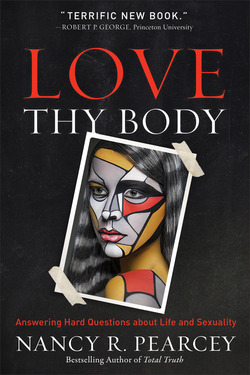
Love Thy Body: Answering Hard Questions About Life and Sexuality – Nancy Pearcey

pNancy Pearcey, Love Thy Body: Answering Hard Questions About Life and Sexuality Grand Rapids: Baker, 2018, 337 pp. $15.31

The publication of Nancy Pearcey’s book, Total Truth: Liberating Christianity From Its Cultural Captivity sent shockwaves throughout the evangelical world and help equip a new generation of apologists. Total Truth confronted the notion that scientific knowledge and moral knowledge are separated into two domains. The lower story includes objective truths that are public and valid for all people. This is the realm of empirical science. These truths are true and verifiable. The upper story includes the realm of moral knowledge which is private, relative, and subjective. Hence, the so-called unified concept of truth was obliterated and separated into two domains.

Pearcey’s previous works, Saving Leonardo: A Call to Resist the Secular Assault on Mind, Morals, and Meaning and Finding Truth: 5 Principles for Unmasking Atheism, Secularism, and Other God Substitutes have also left an indelible mark on the church and culture at large. The impact of these books on me personally, cannot be overstated. My suspicion is that many people would concur.

Nancy Pearcey’s newest offering, Love Thy Body: Answering Hard Questions about Life and Sexuality pick up where the other titles left off. The overarching goal of Love Thy Body is to “uncover the worldview that drives the secular ethic.” Ultimately, the book is designed to “show that a secular morality doesn’t fit the real universe.”

Readers familiar with Pearcey will quickly see the influence of Francis Schaeffer on her thought. It was Schaeffer who originally exposed the so-called “fact/value” split which has created a fractured epistemology that continues to be propagated today.

Pearcey shows the practical outgrowth of this fragmented worldview (or the two-story worldview) by pointing to several contemporary culture matters including abortion, euthanasia, “same-sex marriage,” and transgenderism. She helps readers understand how these various worldviews have been smuggled into our culture and links each of them to the two-story dichotomy.

Readers will be encouraged and challenged to walk through the argument of Love Thy Body and will be better equipped to not only contend with culture but also reach out to people who have been deceived by a pagan worldview.

Readers will discover that Pearcey’s argument is not combative. Rather, her heart cries for people who have been co-opted by this deviant worldview. She pleads with readers to reach out and love people with Christ-centered love: “Christians must present biblical morality in a way that reveals the beauty of the biblical view of the human person so that people actually want it to be true.”

Love Thy Body is a book that is filled with description and prescription. Facts and figures run through the book but the author is not content to leave her readers with data alone. She sets forth a workable prescription which is set on helping people and healing them at the deepest level. Therefore, “We must work to educate and persuade on a worldview level,” writes Pearcey. Such an approach is imperative if Christ-followers have any hope of reaching a lost world with the saving message of the gospel. Running through the book is a mindset that Pearcey, no doubt, learned from Schaeffer, namely, sharing the gospel with a tear in one’s eye.

Love Thy Body is riveting, challenging, educational, a shot to the heart, a challenge for the mind, and bold push for the feet. It will spark controversy in some venues and may even precipitate debate in the local church. Surely, this kind of debate is necessary as Christians seek to influence culture for God’s glory.

I received this book free from the publisher. I was not required to write a positive review.

When Character Was King: A Story of Ronald Reagan – Peggy Noonan

A number of years ago, I began devouring books about my favorite president, Ronald Reagan  When Character Was King by Peggy Noonan emerges as one of the most thoughtful and inspiring books about the former president.

Noonan paints a compelling portrait of President Reagan; a portrait that is an exceedingly human portrayal of a man who feared God, loved his country, and cherished freedom.  The author writes, “As president, Ronald Reagan believed without question that tyranny is temporary, and the hope of freedom is universal and permanent; that our nation has unique goodness, and must remain uniquely strong; that God takes the side of justice, because all our rights are His own gifts.”

Reagan opposed the godless ideology that held millions of Russians hostage from 1917 to 1991.  Lenin said in 1920, “We repudiate all morality that proceeds from supernatural ideas that are outside class conceptions. Morality is entirely subordinate to the interests of class war. Everything is moral that is necessary for the annihilation of the old exploiting social order and for uniting the proletariat.”  In contrast, Reagan knew that virtue and morality are directly related to one’s relationship with God.

A few quotes reveal the man we know as President Reagan:

We had strayed a great distance from our Founding Fathers’ vision of America.  They regarded the central government’s responsibility as that of providing national security, protecting our democratic freedoms, and limiting the government’s intrusion in our lives – in sum, the protection of life, liberty and the pursuit of happiness.  They never envisioned vast agencies in Washington telling our farmers what to plant, our teachers what to teach, our industries what to build.

Don’t give up your ideals.  Don’t compromise.  Don’t turn to expediency.  And don’t for heaven’s sake, having seen the inner workings of the watch, don’t get cynical.

All of these things – learning to control the government, limiting the amount of money it can take from us, protecting our country through a strong defense – all of these things revolve around one word, and that word is ‘freedom.’

President Reagan was and continues to be a breath of fresh air in an increasingly pessimistic political climate.  He was unafraid to stare evil in the face.  He courageously stood for the cause of freedom.  Indeed, he was jealous to see the flag of freedom fly in every land.  He opposed despotism, communism, and socialism.  He promoted free enterprise.  President Reagan refused to capitulate in the face of adversity.

Nothing But the Truth

Scripture warns, “See to it that no one takes you captive by philosophy and empty deceit, according to human tradition, according to the elemental spirits of the world, and not according to Christ” (Col. 2:8, ESV). As followers of Christ, we need to be vigilant, constantly on guard, and discerning good from evil. One of the ways that the worldly system “takes us captive” is by marginalizing truth or eliminating it altogether. It is important to understand that the worldly system militates against the Christian view of truth. Is it any wonder, then, that the importance of truth is highlighted so much in Scripture?

David Understood the Importance of Truth

King David acknowledged that since God is truth, he expects his people to live truthful lives. He writes, “Behold, you delight in truth in the inward being, and you teach me wisdom in the secret heart” (Ps. 51:6, ESV).

The implications of David’s words are massive as we consider our inward motivations, conversations, and the way we conduct our lives. Ask yourself, “Am I a person that is committed to the truth?” “Does the love for truth undergird my life and worldview?”

Paul Spoke Often About the Truth

The apostle begins the book of Titus with these revealing words: “Paul, a servant of God and an apostle of Jesus Christ, for the sake of the faith of God’s elect and their knowledge of the truth, which accords with godliness” (Titus 1:1, ESV) . Notice the relationship between truth and godliness. Indeed, they are intimately connected. “The truth of the Gospel,” writes Warren Wiersbe, “changes a life from ungodliness.”1 As Christians, we unapologetically adhere to the truth. We must not only adhere to the truth; it must stand at the very center of our lives.

Additionally, Paul referred to the church as ” … a pillar and buttress of the truth” (1 Tim. 3:15, ESV). The church, then, is God’s appointed means of declaring the word of God to the nations. Ask yourself, “How is God using me to declare the truth to my community?” “How is God using me to declare the truth to the nations?”

Paul Warned People Who Abandon the Truth

Scripture is packed with examples of people who abandoned the truth. Paul writes, “This testimony is true. Therefore rebuke them sharply, that they may be sound in the faith, not devoting themselves to Jewish myths and the commands of people who turn away from the truth” (Titus 1:13–14, ESV). Tragically, this trend continues in our generation. Young people are turning away from the truth by the thousands. College students are manipulated and deceived by professors who peddle a worldview that opposes historic Christianity. Hearts are cold to God’s revealed truth. Ask yourself, “Am I pursuing the truth or am I fleeing from the truth?” “Do I have a sinful unbelieving heart that is turning away from the living God?” (Heb. 3:12).

Peter Pressed Home the Importance of Truth.

Peter is an interesting character to be sure. Here is a man who denied Jesus, the very embodiment of truth – three times! Yet, he was forgiven and restored and was used in a mighty way to spread a passion for the truth of God:

Having purified your souls by your obedience to the truth for a sincere brotherly love, love one another earnestly from a pure heart … (1 Peter 1:22, ESV).

Ask yourself, “Do I obey the truth?” “Am I established in the truth?”

John Had a Passion for the Truth.

The apostle John was a warm-hearted Christian thinker who had a passion for the truth. Listen to how this God-centered man expressed his love for the truth:

Little children, let us not love in word or talk but in deed and in truth (1 John 3:18, ESV).

I have no greater joy than to hear that my children are walking in the truth (3 John 4, ESV) .

Jesus Spoke Plainly About the Truth

Finally, we turn our attention to Jesus, the One who made the startling claim that he was in fact the way, the truth, and the life (John 14:6). The importance that Jesus attaches to truth cannot be denied:

Sanctify them in the truth; your word is truth (John 17:17, ESV).

… and you will know the truth, and the truth will set you free (John 8:32, ESV)

Conclusion

All spiritual growth is based on a knowledge of truth. Yet countless people, even people in the church are discarding truth and walking down paths that fail to honor and glorify God. Al Mohler warns, “Departing a Christian worldview leads to a distrust of final truth and a rejection of universal authority, which then hides the way back to the God of the Bible.”2 As followers of Jesus Christ, may we cling to the truth, proclaim the truth, and defend the truth. May we stand with the men and women throughout redemptive history who were willing to lay their lives down for the great cause of truth. May the cry of our hearts be, “nothing but the truth!”

  1. Wiersbe, W. W. (1996). The Bible exposition commentary (Vol. 2, p. 260). Wheaton, IL: Victor Books.
  2. Albert Mohler, The Gathering Storm: Secularism: Culture, and the Church (Nashville: Thomas Nelson, 2020), 11.

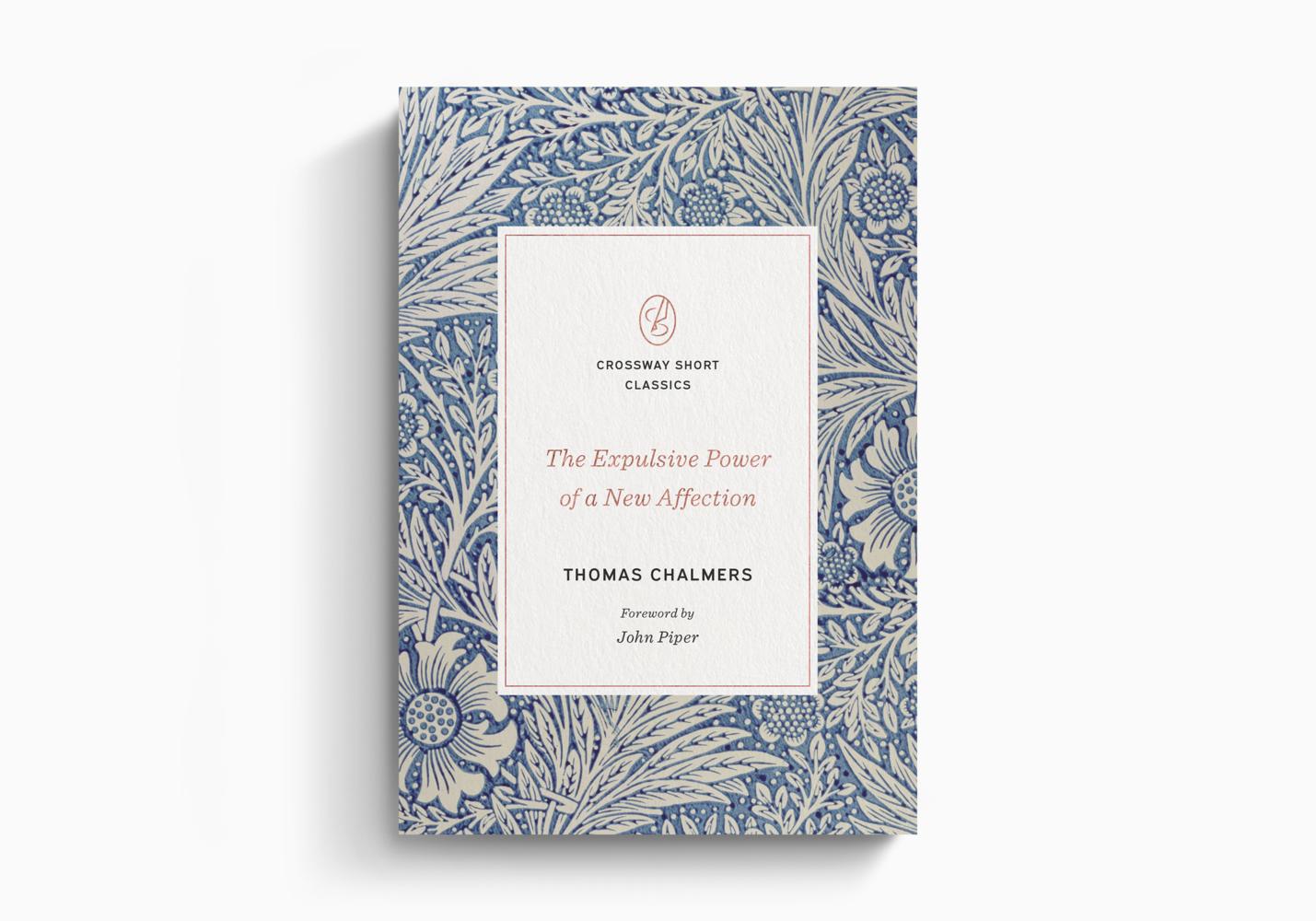
The Expulsive Power of a New Affection – Thomas Chalmers

Thomas Chalmers, The Expulsive Power of a New Affection (Wheaton: Crossway Books, 2020), 72 pp.

“The heart is not so constituted, and the only way to dispossess it of an old affection is by the expulsive power of a new one.” So says Thomas Chalmers (1780-1847), professor of philosophy and theology at the University of St. Andrews and the University of Edinburgh.

The heart is the target of Chalmers in his short book, The Expulsive Power of a New Affection. Part of the Crossway Short Classics, this work shows the inner workings of Chalmers and the solution he proposes for sinners. The author uses 1 John 2:15 as a launching pad that will be of immense help for his readers:

Do not love the world or the things in the world. If anyone loves the world, the love of the Father is not in him.

Chalmers maintains that there are two approaches for Christians who seek to obey this first. They may either flee from the world or foster godly affections. The second approach is not only preferred; it is the approach that renders power to followers of Christ. Chalmers holds that the former approach is “altogether ineffectual” while “the latter method will alone suffice for the rescue and recovery of the heart for the wrong affection that domineers over it.”

The author develops this theme as prescribes the expulsive power of a new affection. In other words, only a heart that has been regenerated may move in the direction of obedience. And by definition, a regenerate heart is one that is being renewed day by day (2 Cor. 3:18). The regenerate heart is being sanctified by the Spirit.

I received this book free from the publisher. I was not required to write a positive review.

Strangely Bright – Joe Rigney

Joe Rigney, Strangely Bright (Wheaton: Crossway, 2020), 117 pp.

“Can you love God and enjoy this world?” This question drives Joe Rigney’s newest book, Strangely Bright. Such a question often generates more heat than light as many people are accustomed to downplaying earthly things and emphasizing heavenly things. After all, the well-known hymn encourages us to:

Turn your eyes upon Jesus, look full on his wonderful face, and the things of earth will grow strangely dim, in the light of his glory and grace.

The admonition seems sound and even reasonable. But Rigney argues something that may run counter to conventional wisdom. His argument is essentially this:

Enjoy God in everything and everything in God, knowing he is greater and more satisfying than any and all of his gifts.

The path that leads to Rigney’s conclusion is set up by examining the passages that help clarify the biblical tension. First, the author reveals the biblical texts that place an emphasis on complete devotion to Christ. Such passages are referred to as totalizing passages and include Colossians 3:1-2, Philippians 3:7-8, and Psalm 73:25-26. These texts are contrasted with things of the earth passages that include James 1:17, 1 Timothy 4:4, and 1 Timothy 6:17. These passages emphasize God’s good gift that creatures are meant to enjoy.

In the end, Rigney skillfully demonstrates how glorifying God and enjoying his good gifts are not at odds: “All of God’s gifts are invitations – they display who he is and invite us to know him and delight in him.” The author borrows a page from John Piper’s Christian Hedonism that was introduced in his book, Desiring God that was first published in 1986. “God is most glorified in us when we are most satisfied in him,” argued Piper.

Strangely Bright is a stunning retelling of Piper’s original thesis. This is a thrilling and liberating book. It skillfully crushes legalistic tendencies and warns readers to steer clear from any form of idolatry. The author strikes the biblical balance and leads readers on a path that is sure to encourage many.

Highly recommended.

I received this book free from the publisher. I was not required to write a positive review.

Blackout: How Black America Can Make Its Second Escape from the Democrat Plantation

Blackout: How Black America Can Make Its Second Escape from the Democrat Plantation by Candace Owens will irritate and offend many people. But this is a book that needed to be written. More importantly, this is a book that deserves to be read and internalized.

Owens explores how liberals have consistently manipulated and marginalized black Americans. She tackles controversial subjects ranging from family, faith, and feminism. But she also focuses her attention on socialism, education, media, culture, and slavery.

Owens is an unashamed black conservative woman. She has a dizzying intellect and a charismatic personality. But the most impressive thing about Owens is that she is bold and courageous. She is willing to tell the truth about the liberal elites and is more than prepared for the fallout.

The author is deeply in touch with the plight of the black community. And she links that plight to the purposeful ploy of leftists who have and continue to pander to blacks and hold them captive to their liberal worldview and ideology.

Owens passionately encourages black America to stand and be counted. She urges black America to make its second escape from the Democrat plantation: “If black America finds its free voice; if there is a blackout from the liberal establishment, and if the occasional voices of those freed from the mental slavery of the left turn instead into a chorus, then black America will finally find that its suffering may turn a corner …”

Owens raises the banner and admonishes black America to reclaim their freedom and move forward with bold and courageous resolve:

The gates of the castle are under attack. We must now batter them down and storm the fortress of the liberal order. Join the ideological battle now. Let us turn the lights off in the liberal establishments of America as we shut the door behind us. Let us make this blackout a reality.

Blackout should be required reading for every thinking American – both black and white and everyone in between. It should certainly be read by every high school and university student. Those who read with an open mind will be challenged and moved to action.

Thanks to Candace Owens for courageously wielding the sword of truth in these perilous times!

Everything is Spiritual – Rob Bell

Rob Bell, Everything is Spiritual (New York: St. Martin’s Publishing Group, 2020), 310 pp.

In 2011, I reviewed Love Wins, my first book by Rob Bell. The piece prompted praise by conservatives and vicious scorn by progressive Christians and liberals. Whatever anyone thinks about Bell, one thing is for sure: the guy can write. He is a master communicator. And whenever he writes or talks, people listen.

Anyone familiar with Rob Bell knows that he is somewhat of a gadfly among evangelicals. And “gadfly” is a massive understatement. But there is something endearing about Bell. Some point to his skill. Others are impressed with his intellect. For me, I’ve always been drawn to Bell’s ability to communicate what he’s truly feeling – including insecurity, childhood pain, or unfulfilled expectations. He identifies a “generational lack of grace,” a trait that is found too often in the church. His transparency is refreshing and his candor is something that is greatly needed in our day.

While I applaud Bell’s transparency, I have expressed deep concern with some of the theological and philosophical assertions that he has proposed. His most recent book, Everything Is Spiritual is no exception. Michael Eric Dyson’s endorsement of the book provides a revealing summary:

“In Everything Is Spiritual, Rob Bell updates Teilhard de Chardin’s Catholic mysticism, makes sexier Werner Heisenberg’s quantum physics, and baptizes Jewish Kabbalah in an exciting vision of the future of human evolution. Bell challenges the notion that science and belief are at war, with his sublime fusion of Christian faith and modern evolutionary science. Bell’s book is the perfect antidote to the plague of an evangelical worldview that is captive to imperial dreams and a literalism that kills the spirit of Christianity …”

I will argue in this review that while Michael Eric Dyson truly does capture the essence of Bell’s intentions in Everything Is Spiritual, the end result is unhelpful and spiritually dangerous. Instead of illumination, readers will be left in a quagmire – with more questions than answers. And they will wander aimlessly in a spiritual wasteland, armed with an inaccurate portrait of God that leaves them hopeless without the biblical gospel.

No Final Answer

One of the common themes in Bell’s writing is ambiguity. He extinguishes certitude and exalts mystery (both of which are fundamental tenets of postmodernism). Careful readers will notice that the author is quick to pay lip service to Christian theology but swiftly degenerates into a subtle (or not so subtle man-made philosophy). The Bible warns, “For the time is coming when people will not endure sound teaching, but having itching ears they will accumulate for themselves teachers to suit their own passions, and will turn away from listening to the truth and wander off into myths” (2 Tim. 4:3-4, ESV).

Tragically, many have been deceived by Bell’s “spirit myths” over the years. For instance, in Bell’s book, What We Talk About When We Talk About God, he argues that God is “with us, for us, and ahead of us – all of us.” The notion that God is “with us,” “for us,” and “ahead of us (every single one of us) may sound good initially but falls short of the biblical model. It is true that God is “with” his people. We see this especially in the incarnation of Jesus, the One who is named Immanuel – or God with us (Matt. 1:23). Yet God is not “with” the man who has rejected the revelation of God in Christ. God is not “with” the one who rejects the Lord Jesus Christ and his gospel. “… Whoever does not obey the Son shall not see life, but the wrath of God remains on him” (John 3:36).

It is true that God is “for us” – that is to say, he is for his people. “For I am sure that neither death nor life, nor angels nor rulers, nor things present nor things to come, nor powers, nor height nor depth, nor anything else in all creation, will be able to separate us from the love of God in Christ Jesus our Lord” (Rom. 8:38–39, ESV). Yet, God is not “for” the man who repudiates the promises and purposes of God. The holy God opposes the proud (Jas. 4:6; 1 Pet. 5:5).

I referred to Paul’s warning in 2 Tim. 4:3-4 again and again as I read Everything is Spiritual. Indeed, doctrine is downplayed and orthodoxy is questioned. But not everything is ambiguous. As he did in Love Wins, Bell dogmatically casts aside the doctrine of hell: “Because some stories are better than others. Stories about a God who tortures people forever in hell shouldn’t be told. They’re terrible stories. They make people miserable. They make people want to kill themselves. Stories that insist that a few human beings are going to be okay and every other human being ever is doomed for eternity are horrible stories.”

In a magical twist, certitude suddenly reappears! Alas, the painful reality is obvious here: Anyone who bemoans doctrine is in fact, dogmatic themselves! It appears, then, that the dogmatic bark is worse than the bite.

No Final Authority

To make matters worse, no final authority is offered in Everything Is Spiritual. It is difficult to determine if Bell embraces pantheism, panentheism or some other theological construct. Whatever the case, the book makes much of God’s immanence and downplays his transcendence.

But what is missing here is a distinction between the Creator and the creature. Missing is a Creator who is sovereign over creation and rules over all. Bell’s account of God is noted in the biblical exchange with Moses who refers to himself as I AM. So far so good. But notice how Bell’s understanding of God undermines the Creator/creature distinction:

“Moses wants to locate God, and what Moses gets is Everywhere. Moses wants something to wrap his mind around, and what he gets is All of it.

“What an answer. Another way you could say I AM is Being Itself.

“That’s past, that’s present, that’s future. All of it. Being Itself, the formless beyond any one form, animating all forms. The electricity the entire thing is plugged into. The water it’s all swimming in.”

“That’s every you that ever was and ever will be. All your yous.”

Later, Bell refers once again to “Being Itself. I AM.” He writes, “You ground yourself in that, and you’re all of it. You root yourself in the source and Spirit beyond all these forms and categories and labels, you listen to that and follow that and you keep going.” Bell refers to this as the “collective unity of humanity,” or “the body of Christ.” He adds, “All of us humans ever, across time, all together, adding up to something. The body of Christ.”

Not only does this line of reasoning militate against the Creator/creature distinction; it misleads readers into believing that they are members of Christ’s body, when the unbelieving world is described as enemies of God and under his holy wrath.

Acts 17:22-31 reveals a Creator God who is the cosmos shaper, the kingdom shaker who lives above creation. He is the all-sufficient Ruler, Life-Giver, and Destiny Maker. And he is the righteous Judge who “commands all people everywhere to repent, because he has fixed a day on which he will judge the world in righteousness by a man whom he has appointed …” (Acts 17:30-31, ESV).

And Scripture speaks of the creature who was created by God (Gen. 2:7). The creatures (Adam and Eve) were originally free from sin but fell and as a result became sinners by nature and by choice (Gen. 3:1-7). As such, these sinful creatures have no inherent righteousness, no desire for God (Rom. 3:10-11). Subsequently, all creatures are born with a hatred in their hearts for God (Rom. 8:7-8). They are dead in sin (Eph. 2:1-3), and they are enslaved in sin; totally unable to come to Christ apart from God’s empowerment (John 6:44). These creatures are dependent upon God for everything. While they have the ability to make free choices, these choices are determined in eternity past (Acts 17:26; Prov. 19:21; 21:1). And these creatures are accountable to a righteous and sovereign Judge (Rom. 2:5-11).

As such, there is no final authority in Everything is Spiritual. Bell writes, “God is not detached from the world, up there, or above, or somewhere else, that would make God a form like everything else.” So, we are left with the strange and unbiblical blending of the Creator and the creature.

No Exclusive Path

One of the reasons that people are drawn to Bell is because he refuses to be boxed in by a religious system or creed. He is quick to jettison the traditional path and proudly promotes another route: “And then there was soul. This deeper voice within me telling me another truth, coaxing me to rethink what success even is. I had my own path, and it wasn’t this, and what you do with a path is you walk it … But walking your path, when you’re surrounded by multiple voices with strong opinions about what you should be doing, that takes tremendous spinal fortitude.”

“Spinal fortitude,” is to be commended. The problem is that Scripture points to one path – the path that Jesus describes as “narrow.” Jesus says, “Enter by the narrow gate. For the gate is wide and the way is easy that leads to destruction, and those who enter by it are many. For the gate is narrow and the way is hard that leads to life, and those who find it are few” (Matt. 7:13-14).

One of the primary arguments in Bell’s book is that “everything is spiritual.” He refers to Christ, who holds all things together: “All of it. All of us. Everybody, everywhere, in Christ.” He rightly notes how every person is created with dignity and honor and possesses “infinite worth and value.” But things take a tragic turn for the worse. For the one who pursues his own path, according to Bell, is something of a radical. In a stunning admission, Bell acknowledges: “The radical is not the person who wandered off the path into the deep weeds. The radical is the one who went back to the origins, to the roots, to how it all began. Sometimes the tribe has lost its way, sometimes the ones claiming to be orthodox, correct, pure ones have gone off the rails, sometimes it’s the mother ship that has lost its bearing, and it’s the radical who’s actually rediscovering the true path.”

Radicals like Jan Hus and Martin Luther rediscovered the true path when they embraced biblical authority and the gospel of Jesus. But Bell is not referring to these stalwarts of the faith. Rather, he is referring to those who dare to break free from the chains of orthodoxy. After all, writes Bell, “You aren’t an object, you aren’t a pawn … you possess Spirit. Personal, intimate, infinite, knowing, Spirit. You reflect the divine, present in each of us. You’re in Christ.

No exclusive path is necessary since we are “in Christ,” according to Bell. This theme emerged clearly in Love Wins as Bell undercut sovereign grace by arguing that God draws all people to himself. He writes, “ … We see that Jesus himself, again and again, demonstrates how seriously he takes his role in saving and rescuing and redeeming not just everything, but everybody.”

But Scripture stands in opposition to this theme. The Bible never declares that all people are “in Christ” as Bell supposes. Rather, each person is born in Adam and experiences death as a result (Rom. 5:12-21). Jesus never promises to rescue and redeem all people. Rather, people are assured that they will receive eternal life and forgiveness if they turn from their sin and trust the Lord Jesus Christ (John 3:15-16; 6:37, 47; 7:38; 8:12; Acts 4:12; Rom. 10:9-13, 17). When a person trusts in Christ alone for their salvation, then and only then, are they truly “in Christ.”

Bell’s “gospel” is described as “the divine announcement that you are loved and accepted exactly as you are, that everything has been taken care of, that everything you’ve been striving to earn has been yours the entire time, that you belong, in exactly this condition that you are currently in, nothing additional required or needed.” Readers are left, then, with more ambiguity. Whose “gospel” is Bell describing? And does this “gospel” tolerate sin? Does this “gospel” lay down demands? Is surrender required? Belief? Repentance? Is this “gospel” inclusive or is it exclusive? Is this “gospel light?” Or is this the “gospel” that Scripture refers to as a “different gospel” (Gal. 1:6)?

The matter of the gospel has eternal implications. The apostle Paul warns the Christians in Galatia to beware of those who “distort the gospel of Christ” (Gal. 1:7). He continues, “But even if we or an angel from heaven should preach to you a gospel contrary to the one we preached to you, let him be accursed. As we have said before, so now I say again: If anyone is preaching to you a gospel contrary to the one you received, let him be accursed” (Gal. 1:8-9, ESV).

The biblical gospel or the “good news” of God begins with God. It declares that God is sovereign and holy. It tells us that God created people for his glory (Isa. 43:7). It tells us that people are sinners by nature and by choice (Rom. 3:23; 5:12). The gospel warns us that God is just and that he has the right to punish sin and that unrepentant people will endure the wrath of God for eternity (Rom. 6:23; John 3:36). The gospel tells us about a Savior who will destroy death and rescue his creatures from the power of sin and the penalty of sin. And one day this gospel will rescue followers of Jesus from sin’s very presence.

The gospel distinguishes between the Creator and the creature. Peter Jones adds, “The Bible warns us not to worship the creation but to worship and serve only the Creator. The starting point of gospel truth is that God the Creator, in the three persons of the divine Trinity – Father, Son and Holy Spirit – is the one and only God and that all which is not God was created by him … The Christian faith maintains a separateness between God and His creation.”1 The gospel makes provision for sin, exalts the crucified and risen Savior, and reconciles sinners to a holy God.

Tragically, the biblical gospel is jettisoned in Everything is Spiritual. The gospel is reduced to a “divine announcement” of acceptance. This soft, inclusive “gospel” is a different gospel that Scripture condemns (Gal. 1:6, 9).

Summary

“Everything is spiritual.” The very idea sounds so very, well … spiritual. And people who flock to read the musings of Bell continue in a trancelike state like they’ve been doing for years. But the author makes a very revealing statement near the end of the book. He writes, “I want to help people rediscover the wonder and awe of their existence.” Yet, no final answer is given. No final authority is offered. And no exclusive path is revealed. Instead of rediscovering “the wonder and awe of their existence,” readers are left wandering in an existential fog, unaware of the Creator God who made all things for his glory; the transcendent God who sovereignly rules and reigns; the God who sent his Son to rescue sinners, redeem them, and bless them with eternal life.

Michael Eric Dyson refers to Bell’s book as “a perfect spiritual antidote to the plague of an evangelical worldview that is captive to imperial dreams and a literalism that kills the spirit of Christianity.” Nothing could be further from the truth. The message that Rob Bell presents in this book is anything but spiritual. Instead, it offers a syncretistic concoction of worldly philosophy that leads the unsuspecting on a path to divine judgment. That’s a far cry from an antidote. Poison doesn’t cure disease. Poison kills the unsuspecting.

  1. Peter Jones, Gospel Truth, Pagan Lies: Can You Tell the Difference? (Enumclaw: Winepress Publishing, 1999), 23-24.

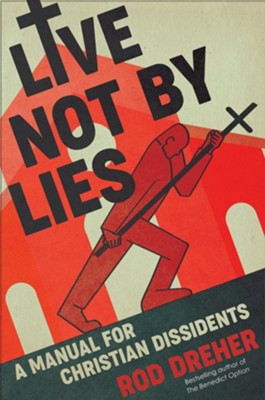
Live Not By Lies: A Manual for Christian Dissidents – Rod Dreher (2020)

Rod Dreher, Live Not by Lies (New York City: Sentinel Books, 2020), 240 pp.

When Aleksandr Solzhenitsyn was annexed from the country he loved, he published a parting message to the Russian people. “Live Not by Lies” was a bold challenge to the brutal totalitarian system that raved countless thousands of people.

Rod Dreher picks up where Solzhenitsyn left off in his new book, Live Not By Lies: A Manual for Christian Dissidents. This riveting work helps readers discover what it means to live not by lies. The author interviews Christians who endured the days of totalitarianism behind the Iron Curtain and gains a wealth of information that both inform and inspire us today.

Part One: Understanding Soft Totalitarianism

Part one explores the underbelly of what Dreher refers to as soft totalitarianism. “A totalitarian state,” according to Hannah Arendt, “is one that aspires to nothing less than defining and controlling reality. Truth is whatever the rules decide it is.” Mussolini defined totalitarianism as, “Everything within the state, nothing outside the state, nothing against the state.” Wherever this worldview reigns, mankind declines, and decays.

The author explains the essence of soft totalitarianism:

Today’s totalitarianism demands allegiance to a set of progressive beliefs, many of which are incompatible with logic – and certainly with Christianity. Compliance is forced less by the state than by elites who form public opinion, and by private corporations that, thanks to technology, control our lives far more than we would like to admit.

A cursory glance at culture reveals the rise of social justice, the “woke revolution,” radical environmentalism, acceptance of sexual deviancy, reverse racism, and identity politics. Soft totalitarianism includes educational propaganda like the “1619 Project,” an attempt to brainwash students and cause them to abandon the principles that help birth the United States of America. The list goes on and on. Yet more and more people are willing to accept this radical ideology for the sake of convenience.

Dreher adds, “And this is the thing about soft totalitarianism: It seduces those – even Christians – who have lost the capacity to love enduringly, for better or for worse. They think love, but they merely desire. They think they follow Jesus, but in fact, they merely admire him.”

The author warns that Christians who refuse to speak up and resist soft totalitarianism will pay a heavy price. Literary critic and poet, Czeslaw Milosz agrees: “Their silence will not save them and will instead corrode them.”

Part Two: How to Live in Truth

Part two helps readers respond biblically and decisively. It shows them how to “live in truth.” The principles that Dreher shares are invaluable and will be a great encouragement as Christians navigate their way through the social sludge.

Dreher encourages readers to fight for and defend free speech. “To grow indifferent, even hostile to free speech is suicidal for a free people,” writes the author. He encourages truth-telling that is wisdom-based and prudent.

Dreher admonishes readers to foster cultural memory. He says, “Everything about modern society is designed to make memory – historical, social, and cultural – hard to cultivate. Christians must understand this not only to resist soft totalitarianism but also to transmit the faith to the coming generations.”

The author urges Christians to cultivate strong family units. “Christian parents”, writes Dreher, “must be intentionally countercultural in their approach to family dynamics. The days of living like everybody else and hoping our children turn out for the best are over.” Fathers, in particular, must lead their families and help them exercise biblical discernment. They must fight for the truth.

Dreher promotes religion as the “bedrock of resistance.” He continues, “This is the uncompromising rival religion that the post-Christian world will not long tolerate. If you are not rock-solid in your commitment to traditional Christianity, then the world will break you. But if you are, then this is the solid rock in which that world will be broken. And if those solid rocks are joined together, they form a wall of solidarity that is very hard for the enemy to breach.”

We must stand in solidarity. “Only in solidarity with others can we find the spiritual and communal strength to resist,” says Dreher. He adds:

And this is the thing about soft totalitarianism: it seduces those – even Christians – who have lost the capacity to love enduringly, for better or for worse. They think they love, but they merely desire. They think they follow Jesus, but in fact, they merely admire him.

Each of us thinks we would be like that. But if we have accepted the great lie of our therapeutic culture, which tells us that personal happiness is the greatest good of all, then we will surrender at the first sign of trouble.

Conclusion

There is much more to explore in this fascinating book. I challenge readers to dig deeply into this “treasure chest.” In the end, both varieties of totalitarianism enslave people. Dreher reminds us, “Hard totalitarianism depends on terrorizing us into surrendering our free consciences; soft totalitarianism uses fear as well, but mostly it bewitches us with therapeutic promises of entertainment, pleasure, and comfort.” It is to this end that we must resist soft totalitarianism with all our might or we, along with the proverbial frog in the kettle will slowly boil in a kettle that appears safe but will, in the final analysis, result in a grizzly death.

Live Not By Lies delivers a powerful and unforgettable message. The price of liberty is costly. This much is true. “There is no escape from the struggle,” writes Dreher. “The price of liberty is eternal vigilance – first of all, over our own hearts.” Live Not By Lies is a must-read book for freedom-loving Christians. To ignore the principles that Dreher sets forth would be foolhardy at best. Heeding the warning of the author will help pave the way for fruitful discussion and greater liberty in the coming days.