The Bucket List

The Bucket List, starring Morgan Freeman and Jack Nicholson is about two very different men who are both diagnosed with terminal diseases. One of the men, upon learning of his condition, decides to draft a “bucket list.” The list would include achievements and things to see before he “kicks the bucket.” After viewing the film, I began to re-visit my bucket list:

  • Attend a baseball game at every major league park in America
  • Visit the Metropolitan Tabernacle in London
  • Walk the streets of Geneva where John Calvin ministered
  • Stand at the Castle Door in Wittenberg
  • Climb the stairs of the Lincoln Memorial

A bucket list is an important tool because it helps a person discern what is most important in life. What is on your bucket list? Who would you want to see? What would you want to accomplish? Where would you travel?

We know that the Apostle Paul had some important goals in his life. But if Paul had a bucket list, what would be on it? Philippians 1:12-18 is a window into the heart of Paul:

I want you to know, brothers, that what has happened to me has really served to advance the gospel, so that it has become known throughout the whole imperial guard and to all the rest that my imprisonment is for Christ. And most of the brothers, having become confident in the Lord by my imprisonment, are much more bold to speak the word without fear. Some indeed preach Christ from envy and rivalry, but others from good will. The latter do it out of love, knowing that I am put here for the defense of the gospel. The former proclaim Christ out of selfish ambition, not sincerely but thinking to afflict me in my imprisonment. What then? Only that in every way, whether in pretense or in truth, Christ is proclaimed, and in that I rejoice …

At the top of Paul’s “bucket list” is that the gospel of Jesus Christ would spread to every man and woman and every boy and girl in great power to the glory of God. And indeed, the gospel spread like wildfire in the ancient world. The gospel would eventually explode in Europe and Africa and China. The gospel would ignite all around the world! What caused this gospel to progress with such great power?

The Gospel Progressed Because of Ferocious Persecution

The Method God Used

Imagine serving on a team that was commissioned to help promote the flourishing of the gospel. What methodology would you employ? Would you initiate a massive advertising campaign? Would you pump money into a missions program? Or perhaps you enlist the help of an army of volunteers?

In the first century, God providentially used Paul’s imprisonment to cause the powerful spread of the gospel. This persecution came as no surprise to the apostle and should not surprise us either. Jesus told the disciples,

Behold, I am sending you out as sheep in the midst of wolves, so be wise as serpents and innocent as doves. Beware of men, for they will deliver you over to courts and flog you in their synagogues, and you will be dragged before governors and kings for my sake, to bear witness before them and the Gentiles. When they deliver you over, do not be anxious how you are to speak or what you are to say, for what you are to say will be given to you in that hour” (Matt. 10:16–19, ESV).

One of the methods that God used and continues to use to advance the gospel is persecution.

The Meaning Behind God’s Method

Paul refers to the advance of the gospel. The word advance comes from the Greek term prokopei which refers to the progress of an army. It comes from a verb that means “to cut down in advance.” It describes the removing of any barriers which would hinder the progress of an army.1 Paul’s imprisonment took place so that the gospel might advance in a mighty way. The end result is that people would benefit greatly and God would be greatly glorified.

Verse 13 describes a flourishing gospel; one that became known “thought the whole imperial guard.” “The praetorian guard,” writes John MacArthur, was likely a group of nearly ten thousand soldiers who were stationed throughout Rome to keep the peace and protect the emperor.”2 Paul glories in this gospel which became known “to all the rest” for the great name sake of Jesus, his Savior.

The Model Prisoner

The apostle Paul was chained to a Roman guard (Acts 28:16). Consequently, the guards circulated in and out as their shifts changed which gave Paul a remarkable opportunity to bear witness to Christ. No doubt, the guards would have witnessed his body language and learned things about him that would have otherwise been difficult if not impossible. In short, God used this model prisoner to serve as an ambassador for Christ.

No less than one hundred years later (A.D. 155), Polycarp of Smyrna would also serve as a model prisoner and give his life for his Savior. After his arrest, the judge ordered Polycarp to renounce Jesus. The judge promised that if he would swear by the emperor and curse Christ, he would be set free. Polycarp’s response is priceless: “For eighty-six years I have served him, and he has done me no evil. How could I curse my king, who saved me?”3When the judge threatened to burn him in the pyre, Polycarp simply answered that the fire would only last a moment, whereas the eternal fire would never be extinguished. After Polycarp was tied to the post in the pyre, he gazed into the heavens and prayed aloud, “Lord Sovereign God … I thank you that you deemed me worthy of this moment, so that, jointly with your martyrs, I may have a share in the cup of Christ … I bless and glorify you.”4The gospel progressed because of ferocious persecution. Notice two principles that will serve us in our generation.

First, remember to maintain an eternal perspective. God’s in his providence permits persecution so that Christ might be proclaimed. We may reason, “In order for the gospel to progress in a country like China, communism must be rooted out.” But the reality is this: Communism continues and the underground church is flourishing! God’s providence may close doors that open others doors. Paul maintained an eternal perspective. He maintained his passion for the spread of the gospel and made the best of every opportunity.

Second, allow persecution to strengthen your resolve for proclaiming the gospel of Christ. When you are ridiculed for believing in a personal Creator who fashioned the world, be encouraged. Continue to proclaim the truth, despite the ferocious persecution. When you are mocked for believing in absolutes, be encouraged in that truth and proclaim it despite the ferocious persecution. And when you are challenged for believing that Jesus is the only One who can forgive sin, be encouraged in that truth and proclaim it, despite the ferocious persecution.

How did the gospel progress in the first century? It progressed in large measure because of ferocious persecution. But the gospel also progressed because it was fearlessly proclaimed.

The Gospel Progressed as it was Fearlessly Proclaimed

The persecution of Paul not only helped advance the cause of the gospel; it strengthened the resolve of Christians to preach the uncompromising message of the gospel.

The Definition of Proclamation

The Greek term for preach in verse 15 means “to be a herald; to proclaim with authority.” This message must be listened to and obeyed. Paul sets forth this imperative to herald the truth in 2 Timothy 4:2-4. He writes,

Preach the word; be ready in season and out of season; reprove, rebuke, and exhort, with complete patience and teaching. For the time is coming when people will not endure sound teaching, but having itching ears they will accumulate for themselves teachers to suit their own passions, and will turn away from listening to the truth and wander off into myths.

Martin-Lloyd Jones says, “The most urgent need in the Christian church today is true preaching; and as it is the greatest and most urgent need in the church, it is the greatest need of the world also.”5 And Steven Lawson adds, “True biblical preaching is authoritative in nature and body proclaims God’s Word without compromise or apology.”6 Such is the call of every Christ-follower who fearlessly proclaims the truth.

The Defining Marks of Proclamation

Two marks, in particular, emerge in Philippians 1:14-17. First, proclamation must be confident. Peithō, the Greek term which is translated, confident means “to have faith; to be persuaded of a thing concerning a person – in this case, the Lord Jesus Christ.” Romans 8:38-39 highlights the confidence that believers enjoy: “For I am sure (peithō) that neither death nor life, nor angels nor rulers, nor things present nor things to come, nor powers, nor height nor depth, nor anything else in all creation, will be able to separate us from the love of God in Christ Jesus our Lord” (Romans 8:38–39).

Second, proclamation must be bold and fearless. Paul stresses the importance of speaking the word boldly without fear (Phil. 1:14). The word translated bold means to “endure; to have courage.” Dr. Luke refers readers to the courage of Paul the apostle, who proclaimed the truth “with all boldness and without hindrance” (Acts 28:31). Such a ministry marks the one who is committed to the proclamation of God’s Word.

William Tyndale was a man who modeled the marks of bold proclamation. Born in 1494, he attended Oxford, Magdalen Hall, and Cambridge Universities. A student and adherent of the Protestant Reformation, Tyndall engaged in numerous debates with Roman Catholics. One Catholic leader mocked Tyndale: “We are better to be without God’s laws than the Pope.” Never content to put up with heresy, Tyndale replied, “I defy the Pope and all his laws. If God spare my life ere many years, I will cause the boy that drives the plow to know more of the scriptures than you.”

Tyndale was a confident, bold, and fearless theologian and scholar who translated the Bible into an early form of Modern English, likely with Luther’s help in Wittenberg. But he was arrested and imprisoned for 500 days. He was tried for heresy and treason in a kangaroo court and ultimately convicted. He was sent to be strangled and burnt at the stake in the prison yard on October 6, 1536. The final words were, “Lord, open the king of England’s eyes.”

Unfortunately, not everyone has the courage of Tyndale. In fact, Paul tells us that there are two different kinds of preachers.

The Different Kinds of Preachers

Some preach Christ “from envy and rivalry” (v. 15). Paul explains that this man proclaims Christ out of selfish ambition. Such a man is not sincere and proves to be unfaithful in the final analysis (v. 17).

Some preach Christ from “good will.” Paul says the motivation of this man is love (v. 16). Such a man understands that the apostle was providentially placed in prison for the defense of the gospel.

The Gospel Progressed as it was Faithfully Proclaimed

“What then? Only that in every way, whether in pretense or in truth, Christ is proclaimed, and in that I rejoice. Yes, and I will rejoice” (Phil. 1:18).

The gospel refers to the “glad tidings of the kingdom of God” or the “good news.” It is the proclamation of the grace of God which is manifest and pledged in Christ.

Jesus was born of the Virgin Mary. He lived a perfect life and was tempted in every way as we are, yet without sin (Heb. 4:15). He perfectly kept the law of God. Jesus died for our sins in accordance with the Scriptures; he was buried and raised on the third day in accordance with the Scriptures (1 Cor. 15:3). Jesus was glorified and seated at the right hand of the Father. He bore the wrath of God on the cross for everyone who would ever believe (Rom. 3:25). He redeemed us from the curse of the law by becoming a curse for us (Gal. 3:13). Jesus became our substitute on the cross (2 Cor. 5:21). He reconciled us to God by making peace by the blood of his cross (Col. 1:20). He made us right with God so that we might have peace with God (Rom. 5:1). And Jesus forgives sinners and enables them to stand holy in the very presence of God.

CONCLUSION

In the first century, the gospel progressed because of ferocious persecution, fearless proclamation, and faithful preaching. It was the gospel of Jesus Christ that motivated the apostle Paul. Proclaiming Christ and hearing that Christ was being preached was his passion. The apostle writes, “But I do not account my life of any value nor as precious to myself, if only I may finish my course and the ministry that I received from the Lord Jesus, to testify to the gospel of the grace of God” (Acts 20:24).

I had the pleasure of visiting a small church in a former communist country a few years ago. The pastor was so proud of the little structure which was smaller than most elementary school classrooms. I noticed a sign above the pulpit, written in a language unfamiliar to me. I asked the pastor, “What does that sign say?” With a smile on his face, he said through a translator, “We preach Christ crucified!

What would it look like if each one of us committed ourselves to fearlessly and faithfully proclaiming the gospel of Jesus Christ? What would it look like if we committed ourselves to fearlessly and faithfully proclaiming the gospel in the sphere where God has placed us?

The gospel progressed because of ferocious persecution, fearless proclamation, and faithful preaching. Will you make it a goal to proclaim the gospel of Jesus fearlessly and faithfully, despite the persecution that surrounds you? May gospel proclamation become a part of every Christ-followers bucket list!


  1. See William Barclay, The Letters to the Philippians, Colossians, and Thessalonians (Philadelphia: The Westminster Press, 1975), 20.
  2. John F. MacArthur, Philippians (Chicago: Moody Press, 2001), 61.
  3. Cited in Justo L. Gonzalez, The Story of Christianity – Vol. 1 (San Francisco: Harper Collins Publishers, 1984), 44.
  4. Ibid, 44.
  5. Martin Lloyd-Jones, Preaching and Preachers (Grand Rapids: Zondervan Publishing House, 1971), 9.
  6. Steven J. Lawson, Famine in the Land: A Passionate Call For Expository Preaching (Chicago: Moody Publishers, 2003), 42.

Reviving the Lost Art of Letter Writing

Once there was a day when the nib of a pen would intersect with a piece of paper, revealing the contemplations of a thoughtful person. The end result would yield a letter that would inspire a willing recipient and breathe fresh courage into a human soul.

Less than 200 years ago, letter-writing flourished in the American colonies. Yet, the convenience of technology has all but extinguished the power of the pen. The convenience of text messages and emails have replaced the personal touch of the letter. Indeed, the art of letter writing is nearly dead. For this reason, it is time to revive the lost art of letter writing.

A Rekindled Friendship

The strained friendship between John Adams and Thomas Jefferson is well known and documented. Thankfully, Dr. Benjamin Rush intervened and convinced Adams to renew his friendship with Jefferson. The second president of the United States responded with a letter to Jefferson. Subsequently, the two men exchanged letters back and forth until their respective deaths, which occurred on the same day – July 4, 1826. The power of pen and ink combined with some thoughtful words supercharged a friendship on the brink of collapse.

A Rekindled Art

A handful of letters have arrived in my mailbox over the past several years that left a meaningful mark and provided much-needed fuel to propel me in a Godward direction:

  • An affirming letter from my father
  • A letter of personal counsel from Dr. John Piper
  • A letter of encouragement from my grandfather, Samuel Barger
  • A letter from Pastor Wayne Pickens, who mentored me in the defining years of pastoral ministry

One letter from my 89-year-old friend, Bruce who recently went to be with the Lord sits permanently in my study:

“Knowing you is to learn, as our Lord measures it, more than just the message of Scripture. You sow also of yourself in His name. More than His word you teach by example, tireless sacrificial giving for His glory and in furtherance of His love …”

Each of the letters above are safely preserved and serve as a permanent reminder of a special time in my life.

Opening a timely and encouraging letter is like receiving oxygen at the summit of Mt. Everest after a grueling climb. It is like salve on a wound in need of healing. A letter is a welcome guest that is never turned away.

It is not too late to revive letter writing in our generation. I suggest we revive the art of letter writing for at least five reasons.

1. Personal Touch

First, a letter is personal. Taking time to compose words on a page, sealing the letter in an envelope, and dropping it in the mail involve a series of additional steps and effort but the payoff is worth it. The personal touch of a letter deeply impacts the one who receives it.

2. Powerful Memories

Second, a letter helps enshrine memories that preserve friendships, provide a permanent record of significant thoughts, and instill hope for the future. When I read a memorable letter, it helps recall significant thoughts and feelings that may have otherwise been forgotten.

3. Permanent Keepsake

Third, a letter becomes a personal and powerful memento. An email can be cataloged in Evernote or saved in some other digital format. An email can even be printed and tucked away for future reference. But an email can never replace the special quality of the written letter.

4. Portrays Selflessness

Next, a letter is an act of selflessness. It takes a certain amount of discipline, time, and creativity to craft a meaningful letter. Such a pursuit, then, involves an intentional act of kindness or selflessness as the one composing the letter must think of others before herself. One might say that letter writing is a way of fulfilling the Golden Rule: “Do to others whatever you would like them to do to you. This is the essence of all that is taught in the law and the prophets” (Matthew 7:12, NLT).

5. Proclaims a Blessing

Finally, a letter is a way of proclaiming a blessing. At the heart of a blessing is the need for acceptance. “Genuine acceptance,” writes John Trent, “radiates from the concept of the blessing.”1 A letter has a way of unleashing a person to become all that God intends them to be. It is a way of communicating the kind of support that is empowering and life-changing. A letter has a way of inscribing an indelible seal of blessing on the soul of one of God’s image-bearers.

black and silver fountain pen

A simple letter has the power to inspire hope, instill confidence, and initiate action. A letter communicates devoted love and lifts the human spirit. A letter unshackles the hands and feet, inspires hearts and minds, and communicates love and support to the people we care about.

Reviving the lost art of letter writing begins with you. Who will you influence or encourage today with a simple letter? Who will be the recipient of your timely wisdom or counsel? Who will be inspired to take a step into the great unknown because they received a letter from you? Who will be challenged by your courageous words? Whose life will be changed forever because you took the time to craft a well-thought-out letter? Let us, then, revive the lost art of letter writing – one letter at a time.

  1. John Trent, The Blessing (Nashville: Thomas Nelson, 1986), 28.

The End of Creation: Soli Deo Gloria

The Sum of the Matter

The first verse in the Bible is a monumental statement that reverberates with earth-shattering implications for the formation of a Christian worldview: “In the beginning, God created the heavens and the earth” (Gen. 1:1, ESV). Do not miss the magnitude of this statement. Do not downplay the significance of this vital piece of revelation. And be careful to embrace what the Scriptures affirm. Ignoring the clear revelation of God’s truth, in the final analysis, proves to be a costly mistake that will have consequences that extend into eternity.

The German astronomer, Johannes Kepler, accepted biblical revelation and understood the importance of giving credit where credit is due: “The chief aim of all investigations of the external world should be to discover the rational order and harmony which has been imposed on it by God.”1To do any less would be tantamount to theological treason. So Kepler does not minimize God’s creative activity; he magnifies it. He does not marginalize the miracle of creation; he marvels at it!

A Tragic Turn

Tragically, some thinkers have not followed Kepler’s lead. These skeptics have discounted Genesis 1:1 and cast the revelation of God into the cosmic rubbish bin. Charles Darwin, who popularized the notion of “natural selection” in his book, Origin of Species also rejected the clear account of creation. Ironically, he is buried in Westminster Abbey. Darwin may be gone but his atheistic ideology continues to dominate the thoughts of many minds, especially in the university.

Carl Sagan, who was a great champion of Darwinian evolutionary theory penned these well-known words: “The Cosmos is all that is or was or ever will be. Our feeblest contemplations of the Cosmos stir us – there is a tingling in the spine, a catch in the voice, a faint sensation, as if a distant memory, of falling from a height. We know we are approaching the greatest of mysteries.”2 He continues, “Evolution is a fact, not a theory.”3 Such banter may appeal to the itching ears of evolutionists but fails to hold up when scrutinized at the tribunal of truth.

Or consider Richard Dawkins, another defender of Darwin’s evolutionary theory. His rejection of the creation account leads him to a view of God which is blasphemous at best: “The God of the Old Testament is arguably the most unpleasant character in all fiction: jealous and proud of it; a petty, unjust, unforgiving control-freak; a vindictive, bloodthirsty ethnic cleanser; a misogynistic, homophobic, racist, infanticidal, genocidal, filicidal, pestilential, megalomaniacal, sadomasochistic, capriciously malevolent bully.”4 The Word of God offers a stern rebuke to this kind of unbelieving thought.

A Rational Christian Response

It doesn’t take long to discern some of the catastrophic consequences of giving God’s revelation a vote of “no-confidence.” Francis Schaeffer understood the vast importance of Genesis 1:1. He understood that if we set aside the reality of creation, our worldview collapses. He writes, “Unless our epistemology is right, everything is going to be wrong.”5 The discipline of epistemology addresses the matter of knowledge. That is, it helps unpack what we know about what we know. Schaeffer continues, “The infinite-person God is there, but also he is not silent; that changes the whole world.”6Schaeffer helps us understand that God exists and he has revealed himself, that is, he has spoken. Or to use Schaeffer’s words, “He is not silent.”

The End for Which God Created the World

That fact that God not only exists but has also revealed himself is a massive reality that every person must come to terms with. This stunning truth should find us on our knees with outstretched arms. It should prompt a humble offer thanksgiving to the living God. But there’s more – Jonathan Edwards understands the motive behind God’s act of creation. He argues that the end for which God created the world was self-communication: ”Seeing that Christ created the world only to communicate his excellency and happiness, hence we learn, that all the excellency, virtue and happiness of the godly is wrought in them by Jesus Christ.”7 The implication of this Edwardian vision of creation are far-reaching and have important practical implications.

So the end of creation is uniquely focused upon God. That is, creation is Godward. Creation is God-centered. In one of his greatest literary achievements, A Dissertation Concerning the End For Which God Created the World, Jonathan Edwards demonstrates this God-centeredness: “What God says in his word, naturally leads us to suppose, that the way in which he makes himself his end in his work or works, which he does for his own sake, is in making his glory his end … God communicates himself to the understanding of the creature, in giving him the knowledge of his glory; and to the will of the creature, in giving him holiness, consisting primarily in the love of God; and in giving the creature happiness, chiefly consisting in joy in God. These are the sum of that emanation of divine fulness called in Scripture, the glory of God.8

Consider three important implications of discounting the biblical creation account:

First, discounting the reality of biblical creation leads to a skewed epistemology. And a skewed epistemology, will by definition, influence the way we think about everything else. When God is taken out of the picture or removed from the marketplace, we are left wandering in a wasteland in search of answers. “If God does not exist,” writes Dostoevsky, “then everything is permitted.” The eclipse of God leaves us helpless, hopeless, and lost in a quagmire of meaninglessness.

Second, discounting the reality of biblical creation impugns the character and trustworthiness of God. Scripture is clear about the creation account:

For by him all things were created, in heaven and on earth, visible and invisible, whether thrones or dominions or rulers or authorities—all things were created through him and for him. And he is before all things, and in him all things hold together. (Colossians 1:16–17, ESV)

When you send forth your Spirit, they are created, and you renew the face of the ground. (Psalm 104:30, ESV)

Where were you when I laid the foundation of the earth? Tell me, if you have understanding. Who determined its measurements—surely you know! Or who stretched the line upon it? On what were its bases sunk, or who laid its cornerstone, (Job 38:4–6, ESV)

When you send forth your Spirit, they are created, and you renew the face of the ground. (Psalm 104:30, ESV)

Anyone who discards what God has made plain calls God’s character into question and heaps a great insult upon the worth of his name. Anyone who dares impugn the character of God stands on the precipice of eternal judgment.

Third, discounting the reality of biblical creation fails to glorify God, which is the end of creation. Isaiah 43:7 says, “Everyone who is called by my name, whom I created for my glory, whom I formed and made.” Think about the tragic irony of rejecting the creation account. The creature who was created to glorify God stands in defiance and mocks the One who gave him breath.

The glory of God is the end of creation. The heavens declare his glory (Ps. 19:1). Is it any wonder that sinful men seek to distort what God has made plain in Scripture?

Soli Deo Gloria!

  1. Johannes Kepler, Cited in Charles Colson and Nancy Pearcey, How Now Shall We Live? (Wheaton: Tyndale House, 1999), 51.
  2. Carl Sagan, Cosmos (New York: Ballantine Books Trade, 1980), 1.
  3. Ibid, 27.
  4. Richard Dawkins, The God Delusion (Boston: Houghton Mifflin Company, 2006), 31.
  5. Francis A. Schaeffer, The Complete Works of Francis A. Schaeffer: A Christian Worldview, Volume One, A Christian View of Philosophy and Culture (Wheaton: Crossway Books, 1982), 275-276.
  6. Ibid, 276.
  7. Jonathan Edwards, The Works of Jonathan Edwards, vol. 13, The “Miscellanies,” ed. Thomas A. Schaefer, (New Haven: Yale University Press, 1994), 277.
  8. The Works of Jonathan Edwards, vol. 1, A Dissertation Concerning the End For Which God Created the World, ed. Edward Hickman (Carlisle: The Banner of Truth, 1834), 107, 119.

Walking With God Through Pain and Suffering – Timothy Keller

kellerI have yet to meet a person who enjoys pain and suffering.  Yet suffering is a part of the warp and woof of life.  It is not a part of God’s original intent for creation.  Since Adam’s first sin, pain and suffering have been an abnormal part of the cosmos.  Suffering is an unwelcome guest who bullies his way to the table and makes demands – much like a  soldier on a bloody battlefield.

Walking With God Through Pain and Suffering by Timothy Keller addresses this topic with candor and clarity.  Keller leaves no stone unturned here.  The book is organized into three sections:

Understanding the Furnace

Keller introduces the problem of pain and suffering and explores some of the philosophical challenges that Christ-followers must understand and address.

“Nothing is more important than to learn how to maintain a life of purpose in the midst of painful adversity,” writes Keller.  Yet our culture has a tendency to respond to suffering in ways that are helpful and wrongheaded.  The moralist response to suffering is to “do good.”  The fatalist’s response to suffering is to “hang in there” and “endure.”  The dualist response to suffering is “purified faithfulness.”  And the secular response to suffering is focussed on “technique.”  A combination of these erroneous responses to suffering litter the current milieu and produce a generation of confused and discouraged people.

Keller rightly alerts readers to the importance of worldviews and their relation to the subject of pain and suffering.  Ultimately, the matter of pain and suffering is a matter of faith.  “Faith,” writes Keller “is the promise of God.”  He adds, “We can be fully accepted and counted legally righteous in God’s sight through faith in Christ, solely by free grace … It means freedom from fear of the future, from any anxiety about your eternal destiny.  It is the most liberating idea possible and it ultimately enables you to face all suffering, knowing that because of the cross, God is absolutely for you and that because of the resurrection, everything will be all right in the end.”

Facing the Furnace

Part two provides readers with the theological muscle – a crucial part of the battle.  Keller unpacks the doctrine of God’s sovereignty and provides a painful but biblical rationale for the role of suffering the lives of people.

At the heart of this discussion is an important look at the suffering of the Lord Jesus Christ.  The author summarizes, “That is, in order to satisfy justice, in order to punish sin so that in love he could forgive and receive us, God had to bear the penalty for sin within himself.  God the Son took the punishment we deserved, including being cut off from the Father.  And so God took into his own self, his own heart, an infinite agony – out of love for us.”

Keller’s treatment in part two travels great distances to help resolve the problem of evil – the so-called “Achilles heal” of the Christian faith: “So while Christianity never claims to be able to offer a full explanation of all God’s reasons behind every instance of evil and suffering – it does have a final answer to it.  The answer will be given at the end of history and all who hear it and see its fulfillment will find it completely satisfying, infinitely sufficient.”

While Keller never attempts to provide a comprehensive answer to the problem of evil, his treatment of this thorny subject is some of the best in print.  He may not satisfy the disciples of David Hume, Voltaire, or Sam Harris – but he does give ample ammunition for believers who are looking for honest answers.

Walking With God in the Furnace

Parts one and two explore the philosophical and theological angles of pain and suffering.  Part three helps readers with practical application.  They are given practical tools for “walking with God in the furnace.”  The very notion of walking with God in the furnace assumes pain – pain that some are unwilling to admit.  But practical experience reveals that we live in a broken world; a world which has been torn to shreds by the consequences of sin.

Keller urges readers to walk with God in suffering: “If you go into the furnace without the gospel, it will not be possible to find God in there.  You will be sure he has done terrible wrong or you have and you will feel all alone.  Going into the fire without the gospel is the most dangerous thing anyone can do.”  So the gospel is the first and last defense of every Christ-follower; indeed it is the hope of the watching world.

Second, the author stresses the importance of weeping during seasons of adversity.  Elijah serves as an example of a man who cried out in great agony.  He was a man unafraid of weeping.  Such an approach is not only honest – it is a sign of emotional health.

Third, Keller demonstrates the need for trusting in God during days of pain and adversity.    Joseph is portrayed as an example of a man who trusted: If the story of Joseph and the whole of the Bible is true, then anything that comes into your life is something that, as painful as it is, you need in some way.”  Jesus too demonstrated trust in his Father and points believers in the identical direction.  Keller continues to alert readers to other tools that they should utilize during their dark days.

Walking With God Through Pain and Suffering is a watershed book that deserves to be read.  Christ-followers will no doubt be encouraged by this Christ-exalting book; a book which drives readers to the cross of the suffering Savior.

Highly recommended!

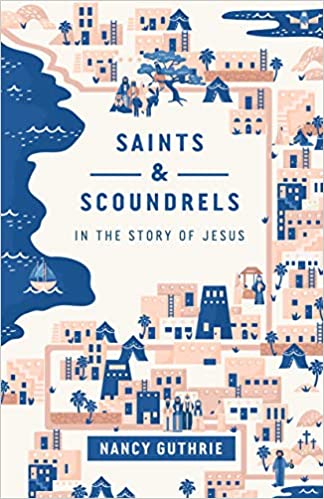
Saints & Scoundrels in the Story of Jesus – Nancy Guthrie (2020)

Saints & Scoundrels in the Story of Jesus by Nancy Guthrie is a fascinating book that focuses on various characters in the Bible and helps readers understand how sovereign grace transforms even the most wretched and defiled.

At the heart of the book is a plea to receive mercy and grace from God. An example of Guthrie’s writing prowess is captured in this moving sentence:

“And if you are someone who doesn’t really believe that you will receive mercy, I pray that God will open your eyes to see the kindness and generosity of your Great High Priest who loves to lavish mercy on people who don’t deserve it.”

Saints & Scoundrels in the Story of Jesus is a book that is characterized by grit, the gospel, and the glory of God. The author is to be commended for her careful historical work, exegetical precision, and practical application.

I received this book free from the publisher. I was not required to write a positive review.

Reviving the Lost Art of Letter Writing

Once there was a day when the nib of a pen would intersect with a piece of paper, revealing the contemplations of a thoughtful person. The end result would yield a letter that would inspire a willing recipient and breathe fresh courage into a human soul.

Less than 200 years ago, letter-writing flourished in the American colonies. Yet, the convenience of technology has all but extinguished the power of the pen. The convenience of text messages and emails have replaced the personal touch of the letter. Indeed, the art of letter writing is nearly dead. For this reason, it is time to revive the lost art of letter writing.

A Rekindled Friendship

The strained friendship between John Adams and Thomas Jefferson is well known and documented. Thankfully, Dr. Benjamin Rush intervened and convinced Adams to renew his friendship with Jefferson. The second president of the United States responded with a letter to Jefferson. Subsequently, the two men exchanged letters back and forth until their respective deaths, which occurred on the same day – July 4, 1826. The power of pen and ink combined with some thoughtful words supercharged a friendship on the brink of collapse.

A Rekindled Art

A handful of letters have arrived in my mailbox over the past several years that left a meaningful mark and provided much-needed fuel to propel me in a Godward direction:

  • An affirming letter from my father
  • A letter of personal counsel from Dr. John Piper
  • A letter of encouragement from my grandfather, Samuel Barger
  • A letter from Pastor Wayne Pickens, who mentored me in the defining years of pastoral ministry

One letter from my 89-year-old friend, Bruce who recently went to be with the Lord sits permanently in my study:

“Knowing you is to learn, as our Lord measures it, more than just the message of Scripture. You sow also of yourself in His name. More than His word you teach by example, tireless sacrificial giving for His glory and in furtherance of His love …”

Each of the letters above are safely preserved and serve as a permanent reminder of a special time in my life.

Opening a timely and encouraging letter is like receiving oxygen at the summit of Mt. Everest after a grueling climb. It is like salve on a wound in need of healing. A letter is a welcome guest that is never turned away.

It is not too late to revive letter writing in our generation. I suggest we revive the art of letter writing for at least five reasons.

1. Personal Touch

First, a letter is personal. Taking time to compose words on a page, sealing the letter in an envelope, and dropping it in the mail involve a series of additional steps and effort but the payoff is worth it. The personal touch of a letter deeply impacts the one who receives it.

2. Powerful Memories

Second, a letter helps enshrine memories that preserve friendships, provide a permanent record of significant thoughts, and instill hope for the future. When I read a memorable letter, it helps recall significant thoughts and feelings that may have otherwise been forgotten.

3. Permanent Keepsake

Third, a letter becomes a personal and powerful memento. An email can be cataloged in Evernote or saved in some other digital format. An email can even be printed and tucked away for future reference. But an email can never replace the special quality of the written letter.

4. Portrays Selflessness

Next, a letter is an act of selflessness. It takes a certain amount of discipline, time, and creativity to craft a meaningful letter. Such a pursuit, then, involves an intentional act of kindness or selflessness as the one composing the letter must think of others before herself. One might say that letter writing is a way of fulfilling the Golden Rule: “Do to others whatever you would like them to do to you. This is the essence of all that is taught in the law and the prophets” (Matthew 7:12, NLT).

5. Proclaims a Blessing

Finally, a letter is a way of proclaiming a blessing. At the heart of a blessing is the need for acceptance. “Genuine acceptance,” writes John Trent, “radiates from the concept of the blessing.”1 A letter has a way of unleashing a person to become all that God intends them to be. It is a way of communicating the kind of support that is empowering and life-changing. A letter has a way of inscribing an indelible seal of blessing on the soul of one of God’s image-bearers.

black and silver fountain pen

A simple letter has the power to inspire hope, instill confidence, and initiate action. A letter communicates devoted love and lifts the human spirit. A letter unshackles the hands and feet, inspires hearts and minds, and communicates love and support to the people we care about.

Reviving the lost art of letter writing begins with you. Who will you influence or encourage today with a simple letter? Who will be the recipient of your timely wisdom or counsel? Who will be inspired to take a step into the great unknown because they received a letter from you? Who will be challenged by your courageous words? Whose life will be changed forever because you took the time to craft a well-thought-out letter? Let us, then, revive the lost art of letter writing – one letter at a time.

  1. John Trent, The Blessing (Nashville: Thomas Nelson, 1986), 28.

Unified – Tim Scott & Trey Gowdy

unifiedTim Scott & Trey Gowdy, Unified  (Carol Stream: Tyndale, 2018), 220 pp.

We may live in one of the most divided times in American history. The cultural climate is rising without any hope of resolution in sight. Senator Tim Scott and Congressman, Trey Goudy recognize the problems in our land. Yet, they both have a realistic outlook, which is laced with optimism. Their book, Unified invites readers to pursue racial reconciliation and restoration, which will strengthen the fabric of our fractured nation.

Unified is a very basic book that reads like a conversation between two lawmakers. These conservative thinkers, who have become the best of friends, bring their unique conservative perspectives to the table. Their mutual love and respect for one another are apparent from the outset. These two men, who are both committed Christ-followers model what friendship can and should look like.

Senator Scott and Congressman Gowdy steer clear of politics, however. Their aim is to promote an optimistic vision of hope for the future of our nation:

“We believe that our nation can be united and transformed by conversations and friendships that lead to reconciliation and understanding. As Americans, we must uphold the ideals of freedom, equality, justice, and opportunity, even as we continue to work together to make those ideals a reality for all. We must come together, find solutions, and get to a point where we can see that our strength as a nation is rooted in all that is good in our world.”

There are no quick fixes here. The authors understand and acknowledge that legislation will not cure the illness in American culture. True and lasting change must take place in the lives of people. In what may prove to be the most important insight in the book, Senator Scott writes, “We will change the nation only by changing the condition of the human heart.” This change, undergirded by the gospel of grace has the power to change individuals and families. Then and only then, will our nation see a renewal.

Unified is a worthy read by two men of integrity; men who are striving to make America a better place. This is the first of many steps but it is a step in the right direction.

I received this book free from the publisher. I was not required to write a positive review.

TRUE BEAUTY – Carolyn Mahaney and Nicole Whitacre (2014)

true beautyIs beauty in the eye of the beholder?  Carolyn Mahaney and Nicole Whitacre tackle the sensitive topic of beauty in their book, True Beauty.  The “benchmarks for beauty” are constantly changing and most of the criteria is propaganda which caters to worldliness.  This book, on the other hand has a simple goal, namely – to point women to true beauty which is found in the pages of Scripture.

True Beauty  challenges readers to see things from God’s perspective.  Henry Scougal writes, “The worth and the excellency of a soul is to be measured the object of its love.”  Herein lies the real value and beauty of a woman – as she contemplates and worships her Savior, the Lord Jesus Christ: “He is the ultimate, unchanging, eternal standard of beauty.  He is the Author, Creator, and Bestower of beauty.  His beauty transcends time and culture.  It never changes and never fades.”  Therefore, true beauty is not fleeting.  True beauty is not bound by cultural expectations.  True beauty is rooted in the radiant beauty and majesty of the living God.  He is the most beautiful Being in the universe.  Therefore, all beauty must be measured according to his design.

Mahaney and Whitacre alert readers to the final standard of beauty – which is found in Jesus Christ.  Women, must therefore, develop a “taste for beauty.”  However, “sin has blinded us to the beauty of God, and when we lost sight of this beauty, we lost interest.”   So instead of delighting in God, we delight in other things – things that are in the final analysis, tantamount to idolatry.  This fascination with the mundane, with anything less than God is nothing new.  Israel struggled mightily with the sin of idolatry: “Has a nation changed its gods, even though they are no gods?  But my people have changed their glory for that which does not profit.  Be appalled, O heavens, at this; be shocked, be utterly desolate, declares the LORD, for my people have committed two evils: they have forsaken me, the fountain of living waters, and hewed out cisterns for themselves, broken cisterns that can hold no water” (Jer. 2:11-13, ESV).

One of the central arguments in the book is that the “gospel of Jesus Christ transforms our taste for beauty … True beauty is to behold and reflect the beauty of God.”  And to behold the great God of the universe is to trust him implicitly.  The authors add, “Apply trust in God, with good works (1 Tim. 2:9-10) and you will not fail to become genuinely beautiful.”  Indeed, this is the touchstone as Mahaney and Whitacre weave this important reality through the remainder of the book and discuss the relationship of beauty to hearts, bodies, clothes, trust, and work.

Frankly, I cannot say enough about True Beauty.  It avoids the pitfalls of legalism and props up the pillars of a gospel-centered worldview.  It is gracious and thoughtful in tone.  It is saturated through and through with Scripture.  It affirms beauty and challenges women to pursue the highest standard of beauty – which again, is the Lord Jesus Christ.  My hope is that True Beauty receives a wide readership and strengthens and edifies a new generation of women who grow more beautiful as they pursue their Savior.

 … but let your adorning be the hidden person of the heart with the imperishable beauty of a gentle and quiet spirit, which in God’s sight is very precious (1 Peter 3:4, ESV).

Highly recommended!

5 stars

God, Greed, and the (Prosperity) Gospel – Costi Hinn (2019

hinnCosti W. Hinn, God, Greed, and the (Prosperity) Gospel (Grand Rapids: Zondervan, 2019), 223 pp.

The so-called prosperity gospel has been a virtual “wrecking ball,” inflicting damage on the unsuspecting, infiltrating local churches with a diabolical message of health and wealth, and inviting the wrath of a holy God. The prosperity gospel is not another version of the gospel. It is “a different gospel,” one that not only devastates and deceives – this gospel damns.

The apostle Paul addressed the church in Galatia and confronted the false gospel of his day:

“I am astonished that you are so quickly deserting him who called you in the grace of Christ and are turning to a different gospel- not that there is another one, but there are some who trouble you and want to distort the gospel of Christ. But even if we or an angel from heaven should preach to you a gospel contrary to the one we preached to you, let him be accursed.As we have said before, so now I say again: If anyone is preaching to you a gospel contrary to the one you received, let him be accursed” (Gal. 1:6-9, ESV).

False gospels must be confronted, as Paul addressed the Galatians who turned to the “gospel” of the Judaizers in the first-century. Costi W. Hinn confronts the prosperity gospel in his latest book, God, Greed, and the (Prosperity) Gospel. Hinn clearly defines the poisonous effects of this pernicious movement: “The prosperity gospel is here to stay and is spanning the globe, doing damage to the true gospel of Jesus Christ. It is an evil that poses as a blessing but is truly a curse. It appears to be a loving extension of God’s goodness but is arguably the most hateful and abusive kind of false teaching plaguing the church today.”

Hinn describes how he grew up and was groomed to serve alongside his famous uncle, Benny Hinn and how God revealed the diabolical underpinnings of the prosperity gospel, which led to his repentance, conversion, and departure from the movement.

The author describes the origins of the prosperity gospel and the core elements with all of its trappings. He demonstrates from Scripture why prosperity teaching is abominable and warns readers to flee from its deadly influence. Hinn reveals ten reasons that the prosperity gospel is antithetical to Scripture:

  1. It distorts the biblical gospel.
  2. It insults God’s nature.
  3. It confuses the atonement.
  4. It demeans Jesus Christ.
  5. It twists Scripture.
  6. It is motivated by love for money.
  7. It produces false converts.
  8. It overcomplicates faith.
  9. It ruins Christianity’s witness.
  10. It abuses vulnerable people.

Thoughtful and discerning readers will take these principles to heart and be careful to guard the biblical gospel.

Costi Hinn does not shy away from controversy. But he also speaks the truth in love and his arguments are grounded in grace. God, Greed, and the (Prosperity) Gospel is sure to raise eyebrows. Hinn’s work is a labor of love that will serve the church well. And it will surely draw some people out of this false system and lead them to the truth.

I received this book free from the publisher. I was not required to write a positive review.

Coronavirus and Christ – John Piper

John Piper is a trusted biblical scholar and pastor who has shared his wisdom in writing for decades. I first encountered Dr. Piper as a young man. I remember eagerly devouring his book, Desiring God: Meditations of a Christian Hedonist when it was originally published in 1986. Since those days, John Piper has without a doubt, shaped my Christian worldview and theological framework more than any other living writer.

Standing on the Solid Rock of Christ

In his latest work, Dr. Piper provides a well-reasoned and biblical response to the current global pandemic. Coronavirus and Christ is not only saturated with Scripture; it is also a deeply personal book. Piper shares his battle with cancer and empathizes with anyone who is suffering during this season of sorrow.

The book presents the biblical vision of who God who is sovereign over everyone and everything. This God works all things according to the counsel of his will (Eph. 1:11). Piper adds, “This is not a season for sentimental views of God.” Therefore, the vision of God here is deeply helpful and satisfying.

The book concludes with a series of ways that the author sees God using the coronavirus in our world for his glory. Readers will be educated, refreshed, comforted, and challenged – in the midst of the horrible pandemic. They will, in the final analysis, be confronted with the majestic God who offers salvation through his Son, the Lord Jesus Christ for anyone who turns from their sin and trusts his completed work on the cross.

Coronavirus and Christ is a must-read book; one that will make a huge impact around the world.