 Donald Miller raises the banner for “fuzzy thinking” in a recent blog post entitled, “The Problem with Black-and-White Thinking“(re-posted on relevantmagazine.com). His main thought: “Black-and-white, either-or thinking polarizes people and stunts progressive thought.” Additionally, he holds that this kind of thinking stunts our “ability to find truth.”
DEFENDING THE GOOD IN MILLER’S PROPOSAL
Miller admits that there is such a thing as right and wrong. He also admits the existence of absolute truth. So Miller does not advocate full-fledged relativism. For this, we can be thankful. In fact, even though his posting is loaded with difficulties, Miller does include some helpful suggestions worth considering:
First, Miller suggests, “Disengage your ego from your ideas.” This point is well taken because many times a particular view is so tied to one’s ego that it becomes virtually impossible to separate fact from fiction.
Second, Miller encourages, “Understand there is much you don’t understand.” He rightly adds, “We begin to think in black-and-white when we assume we know everything.” While he does not press the point of Christian humility (as he should – pardon the black- and white thinking), it seems to be a part of his overall argument.
Third, Miller seems to argue in essence, that charity and grace ought to be a part of conversations and even arguments. This implied pointer ought to be a part of daily life, where conversations and arguments produce more light than heat and stimulate deeper thinking about a given subject.
DISMANTLING THE BAD IN MILLER’S PROPOSAL
There are four problems that emerge, including unwarranted assumptions that must be dismantled.
Black-and-White Thinking Demonizes the Opposition
Miller advances the common notion that black-and-white thinking is polarizing; a bad thing. Again, “Black-and-white, either-or thinking polarizes people and stunts progressive thought.” He adds, “… We begin to believe whatever thought-camp we subscribe to is morally good and the other morally bad, thus demonizing a threatening position.”
But this is not necessarily the case. One can advance a dogmatic view but do so in a humble, yet decisive way. After gaining a hearing with the philosophers in Athens, Paul presents an argument that could be construed as black-and-white: “The times of ignorance God overlooked, but now he commands all people everywhere to repent, because he has fixed a day on which he will judge the world in righteousness by a man whom he has appointed; and of this he has given assurance to all by raising him from the dead” (Acts 17:30, ESV).
Paul does polarize his audience. Notice their response. “Now then they heard of the resurrection of the dead, some mocked. But others said, ‘We will hear you again about this'” (Acts 17:32). The polarization that occurs is a necessary part of proclaiming the gospel message. “For the word of the cross is folly to those who are perishing, but to us who are being saved it is the power of God” (1 Cor. 1:18, ESV).
Jesus employs a similar strategy when he confronts the Jews in John 8: “Whoever is of God hears the words of God. The reason why you do not hear them is that you are not of God” (v. 47, ESV). Jesus does not demonize his hearers. He merely tells them the truth. Again, polarizing – but necessary.
These Jews maintained, “We are offspring of Abraham and have never been enslaved to anyone. How is it that you can say, ‘You will become free?'” (John 8:33, ESV). Jesus polarizes his Jewish audience when he says,”Truly, truly, I say to you, everyone who commits sin is a slave to sin” (John 8:34, ESV). Oh, the horror of polarization! But Jesus does not leave them without hope. He adds, “So if the Son sets you free, you will be free indeed” (John 8:36).
I would argue that when people are polarized, this can prove to be very helpful. When a truth claim is presented, one either accepts or rejects the claim. If one accepts the claim but disagrees, thoughtful dialogue may continue. So instead of “stunting progressive thought” and “stunting our ability to think and find truth” as Miller claims, black-and-white thinking can actually lead to the discovery of truth.
Black-and-White Thinking Assumes Arrogance
Miller continues in his diatribe against black-and-white thinking: “It [black-and-white thinking] allows us to feel intelligent without understanding, and once we are intelligent, we feel superior. People who don’t agree with us are just dumb.” Honestly, Miller’s charge may prove quite accurate at times. It is true that black-and-white thinking may lead to arrogant behavior and a haughty spirit. But this does not have to be the case. One can embrace and promote a dogmatic view and do so in a spirit of gentleness and humility. This much is demanded in the Scripture.
Scripture instructs believers to “speak the truth in love” (Eph. 4:15) and demonstrate compassion, kindness, humility, meekness, and patience with one another (Col. 3:12). Additionally, God’s Word instructs believers to speak in a way that demonstrates gentleness and respect (1 Pet. 3:16). Paul admonishes Timothy, “And the Lord’s servant must not be quarrelsome but kind to everyone, able to teach, patiently enduring evil, correcting his opponents with gentleness …” (2 Tim. 2:24-25a). In other words, there is a place for admonition (which by the way requires black-and-white thinking). But the admonition must be laced with gentleness and kindness.
For instance, Jesus says, “I am the light of the world. Whoever follows me will not walk in darkness, but will have the light of life” (John 8:12, ESV). What is Jesus saying here? He graciously tells his listeners that if they reject his lordship, they will walk in darkness. Again, he polarizes his audience but speaks the truth in love. There is no hint of arrogance. Indeed, this is the sinless Son of God! Jesus adds, “I told you that you would die in your sins, for unless you believe that I am he you will die in your sins” (John 8:24, ESV).
It is simply naive to automatically assume that black-and-white thinking inevitably leads to arrogance. Christ-followers, then, must make truth claims with boldness and humility. Recognizing the danger of pride and arrogance, they must season their words with grace and gentleness. They must be winsome in their approach to communicating the truth.
Black-and-White Thinking Discourages Open Dialogue
This point is implied when Miller encourages people to walk away from a conversation that becomes characterized as black-and-white. He says, “When the conversation becomes about defending one’s identity, it’s time to politely move on.” He goes on to say that “these discussions go nowhere and don’t help me find truth.” Miller unfairly draws a conclusion that black-and-white arguments result in “defending one’s identity.” This is certainly a possibility – but is not inevitable.
A few years ago, Whoopi Goldberg and Joy Behar walked off their own set on The View when the conversation got heated with Bill O’Reilly. They walked away from a black-and-white conversation as Miller encourages. O’Reilly who was and is usually unashamedly black-and-white was construed as an uncaring and insensitive person, based on some comments he made about the 911 attacks. Some would argue that Miller’s prediction came to pass; that O’Reilly’s strong stand was tied to his identity. The fact is that when Goldberg and Behar made their exit, the dialogue stopped – and became even more heated and controversial. Moreover, O’Reilly was not the only person on the set who promoted black-and-white thinking!
Black-and-White Thinking Assumes the Impossibility of Certainty
Built into the framework of Miller’s argument is at the very least, an implicit suspicion of certainty. Since Miller admits the existence of absolute truth and since he rejects relativism, he must embrace that some truth is certain. But where will this suspicion of certainty lead in the long run?
Some progressive-types may be tempted to hop on the postmodern bandwagon and condemn “certainty” as a worn out product of the Enlightenment (a position that is amusing because it is dripping with so much certainty!)
I am less concerned with Don Miller at this point. He’s too smart to make absolute statements against absolute truth. What concerns me is what some will do with his antipathy to black-and-white thinking. What concerns me deeply are those who take the next step into uncertainty because they have not examined the logic (or irrationality) of their presuppositions. What concerns me is that full-fledged relativism is just around the corner.
John Piper sums up the essence of relativism: “No one standard of true and false, right and wrong, good and bad, or beautiful and ugly, can preempt any other standard. No standard is valid for everyone” (Think: The Life of the Mind and the Love of God, 98). This relativistic way of thinking is knocking on the door of the church and in some cases has already barged in.
DISTURBING ELEMENTS OF FUZZY THINKING
Fuzzy Thinking Does Not Work in the Real World
Fuzzy thinking will not fly when it comes to raising children: “Please be home by 10:00 p.m. or feel free to do whatever you want.” Fuzzy thinking will not fly when a police officer stops you for speeding. Fuzzy thinking doesn’t work very well at the bank. It doesn’t work on the basketball court. And it certainly does not fare well on the operating table. Fuzzy thinking will always lead to a bad grade in philosophy class (and every other course). Fuzzy thinking cannot stand up to the brutal reality of absolute truth.
Fuzzy thinking didn’t work for Jesus either. Imagine the difficulty in pointing sinners to the Father in John 14 if Jesus had employed fuzzy thinking. He would have been forced to say, “I am one of the many ways to the Father. Everyone gets to heaven so long as their motives are right.” But instead, Jesus speaks in absolute, black-and-white terms: “I am the way, and the truth, and the life. No one comes to the Father except through me” (John 14:6, ESV). He not only makes an absolute truth claim concerning his identity; he utilizes a universal negative and makes it clear that “no one comes to the Father except through me.”
Jesus utilizes black-and-white thinking throughout his ministry. Notice his absolute truth claims:
“Whoever believes in the Son has eternal life; whoever does not obey the Son shall not see life, but the wrath of God remains on him” (John 3:36, ESV).
“But whoever drinks of the water that I will give him will never be thirsty forever. The water that I will give him will become in him a spring of water welling up to eternal life” (John 4:14, ESV).
“God is spirit, and those who worship him must worship in spirit and truth” (John 4:24, ESV).
“Truly, truly, I say to you, whoever hears my word and believes him who sent me has eternal life. He does not come into judgment, but has passed from death to life” (John 5:24).
Fuzzy Thinking Does Not Work in the Pyre
If fuzzy thinking does not work in the real world, then it certainly does not work in the midst of persecution. The martyrs of historic Christianity lived and died because of black-and-white thinking.
On his way to martyrdom, Ignatius wrote seven black-and-white letters that have proven to be very valuable documents to help our understanding of early Christianity.
When Polycarp faced execution for his Christian faith, the judge promised a quick release if Polycarp swore allegiance to the Emperor and vowed to curse Christ. Polycarp responded, ““For eighty-six years I have served him, and he has done me no evil. How could I curse my King, who saved me?”
When the judge threatened him with burning him alive, Polycarp simply answered that the fire that was about to be lit would only last a moment, whereas the eternal fire would never go out. After Polycarp was tied to the post in the pyre, he looked up and prayed out loud: “Lord Sovereign God . . . I thank you that you have deemed me worthy of this moment, so that, jointly with your martyrs, I may have a share in the cup of Christ . . . For this . . . I bless and glorify you” (Justo L. Gonzalez, The Story of Christianity – Volume I, 39-48).
And consider the example of William Tyndale. Tyndale courageously opposed anyone who quenched the work of the Spirit or despised God’s Word. Again, Spirit enabled black-and-white thinking fueled his resolve.
One time a clergyman told Tyndale, “We are better without God’s laws than the pope’s.” Tyndale’s black-and-white thinking prompted a decisive response: “I defy the Pope and all his laws; and if God spares my life, I will cause the boy who drives the plow in England to know more of the Scriptures than the Pope himself.”
Ignatius, Polycarp, and Tyndale held fast to the good (1 Thes. 5:21). John MacArthur describes this imperative as “a militant, defensive, protective stance against anything that undermines the truth or does violence to it in any way. We must hold the true securely; defend it zealously; preserve it from all threats. To placate the enemies of truth or lower our guard is to violate this command.”
Fuzzy Thinking Minimizes the Role of Reason and Logic
Miller argues that black-and-white thinking would never make it “through the door of an undergraduate course in logic.” Much to the contrary, the law of non-contradiction teaches us that a statement and its opposite cannot both be true at the same time and in the same sense.
Ron Nash reminds us, “The presence of contradiction is always a sign of error. Hence, we have a right to expect a conceptual system to be logically consistent, both in its parts (its individual propositions) and in the whole. A conceptual system is in obvious trouble if it fails to hang together logically” (Worldviews in Conflict, 55).
In other words, every worldview needs to be subjected to the law of non-contradiction. When a contradiction emerges, the worldview must be abandoned. Without black-and-white thinking, this worldview test passes by the wayside and discernment vanishes.
The root of this discussion concerning black-and-white thinking is tied to the formation of a worldview. And in order for a worldview to be plausible, it must be able to be lived out in the real world. Francis Schaeffer reminds us, “We must be able to live consistently with our theory” (The God Who is There, 121).
So in the final analysis, black-and-white thinking is not problematic. Indeed, black-and-white thinking is not only philosophically tenable; it is an essential part of living the Christian life. Without black-and-white thinking, it would be impossible to choose between two competing alternatives. Without black-and-white thinking, theological and philosophical assertions would all receive equal acclaim, which is to say that truth at the end of the day is a matter of personal preference.
Whenever someone begins to back away from absolutes, reason and logic suddenly become unwelcome in the house of irrationality; a house that is destined to collapse under its own weight. Peter Kreeft demonstrates the importance of logic: “If an argument has nothing but clear terms, true premises, and valid logic, its conclusion must be true” (Socratic Logic, 32). Fuzzy thinking, however, tends to minimize the role of reason and logic, which at the end of the day proves not only unrealistic, but irrational.
Additionally, fuzzy thinking militates against the Law of the Excluded Middle. James Nance and Douglas Wilson define this law: “Any statement is either true or false … it excludes the possibility of a truth value falling somewhere in the middle of truth or false” (Introductory Logic, xi).
Here’s the funny thing. I am quite certain that Miller embraces these philosophical laws. The problem is when he discourages black-and-white thinking, he unwittingly begins to whittle away at laws of logic which flow from the nature of God. The downhill descent eventually leads to full-blown relativism. Again, I am not concerned so much with Miller. I am convinced that he would never go this route. I am concerned, however, with those who are convinced by his arguments against black-and-white thinking.
DETERMINING A PROPOSAL REGARDING BLACK-AND-WHITE THINKING
Donald Miller focuses on the so-called problems of black-and-white thinking. I argue that Christian testimony and gospel witness will begin to erode to the degree that black-and-white thinking deteriorates. Indeed, the essence of the gospel will erode to the degree we embrace fuzzy thinking. Therefore, I submit the following proposal:
1. Black-and-White Thinking Should be Encouraged – Not Discouraged
Black-and-white thinking should be encouraged on biblical, philosophical, and practical grounds. Sometimes, such thinking is criticized as “hair-splitting.” Yet this black-and-white “hair-splitting” was indispensable as Athanasius challenged the arch-heretic, Arius. This kind of thinking was a necessary part of formulating the doctrine of the Trinity and affirming the two natures of Christ; i.e. fully God and fully man.
Black-and-white thinking led to the formation of the major creeds and catechisms including the Apostles’ Creed, Nicene Creed, Chalcedonian Creed, the Heidelberg Catechism, and the Westminster Confession of Faith.
Black-and-white thinking should be encouraged. For whenever black-and-white thinking is discouraged, the net result is theological error and irrationality.
2. Black-and-White Thinking is Essential to Christian Epistemology
Francis Schaeffer warned the church in 1968: “We are fundamentally affected by a new way of looking at truth. This change in the concept of the way we come to knowledge and truth is the most crucial problem facing America today” (The God Who Is There, 6). In other words, “absolutes imply antithesis.” The working antithesis is that God exists objectively (in antithesis) to his not existing.
The loss of antithesis (or repudiating black-and-white thinking) in American culture led to what Dr. Schaeffer coined the “line of despair” or giving up all hope of achieving a rational unified answer to knowledge and life.
So Christians must rise above the level of despair and affirm a Christ-saturated epistemology. They recognize that truth is a unified whole. They understand that there is no disparity between faith and reason. In other words, faith and reason are not out of contact with each other. They embrace what Nancy Pearcey refers to as “total truth.”
3. Black-and-White Thinking is Essential to Healthy Christian Living
Christ-followers who recognize that truth is unified understand this fundamental reality: They know that black-and-white thinking is essential to the Christian life. They recognize real good and real evil: “Ponder the path of your feet; then all your ways will be sure. Do not swerve to the right or to the left; turn your foot away from evil” (Prov. 4:26-27, ESV).
Because Christians understand that “absolutes imply antithesis” they speak and live in terms of black-and-white:
“Whoever is steadfast in righteousness will live, but he who pursues evil will die. Those of crooked heart are an abomination to the LORD, but those of blameless ways are his delight. Be assured, an evil person will not go unpunished, but the offspring of the righteous will be delivered” (Prov. 11:19-21).
“Whoever speaks the truth gives honest evidence, but a false witness utters deceit” (Prov. 12:17).
4. There Should Be No Dichotomy Between Bold, Black-and-White Convictions and a Gracious Offering of Truth Claims
For instance, Jesus proclaims a series of woes on the Pharisees in Matthew 23. His black-and-white thinking is actually stunning. Yet at the end of chapter 23, we find him lamenting over Jerusalem: “O Jerusalem, Jerusalem, the city that kills the prophets and stones those who are sent to it! How often would I have gathered your children together as a hen gathers her brood under her wings, and you would not!” (v. 37).
5. Black-and-White Truth Claims Should be Set Forth With Decisive Humility
On the one hand, Christ-followers must maintain their commitment to absolute truth claims. They must do so vigorously and decisively. They must boldly proclaim the truth in the marketplace of ideas. And they must point to Christ, who is the essence of truth, apart from whom, knowledge is impossible.
On the other hand, Christ-followers must believe, proclaim, and defend black-and-white truth with Spirit-enabled humility: “But this is the one to whom I will look: he who is humble and contrite in spirit and trembles at my word” (Isa. 66:2b, ESV). They must passionately proclaim truth “with all humility and gentleness, with patience, bearing with one another in love …” (Eph. 4:2, ESV). And they must teach and defend the truth and embrace the framework of 2 Timothy 2:24. “And the Lord’s servant must not be quarrelsome but kind to everyone, able to teach, patiently enduring evil, correcting his opponents with gentleness …”
SUMMARY
I hear what Don Miller is saying and I suspect that he’s concerned with Christ-followers who demonstrate less than loving behavior. He would be right to be concerned. Indeed, Christ is the most loving person that ever existed or will ever exist. But Christ was also a black-and-white thinker. The prophets were black-and-white thinkers. The apostles were black-and-white thinkers. And the martyrs were black-and-white thinkers.
Miller’s position could be construed to mean something like this: “We need less truth and more love and grace.” I am quite confident that this is not his intention. Similarly, my position could be construed to promote the following: “We need less love and more truth.” Of course, this is not my argument either. Rather, as Christians, we are called to both! We are called to speak the truth – and we are called to engage in this ministry of proclamation with love, gentleness, and humility.
The funny thing is that Miller uses black-and-white thinking to argue against black-and-white thinking. So at worst, his argument is self-refuting. At best, perhaps there is hope for the future because, in the final analysis, Miller embraces black-and-white thinking after all!
If Miller is concerned primarily with the promotion of personal opinions, fine. If he is concerned with soliciting dogmatic statements in gray areas that concern cultural matters like music and one’s choice of the best Italian restaurant, I have no quarrel. But when it comes to matters of eternal significance, black-and-white thinking is essential.
We live in a world of absolutes. And absolutes demand humble and decisive proclamation. May Christians continue to proclaim and defend black-and-white propositional truth to the glory of Jesus Christ. My black-and-white proposal: Farewell to fuzzy thinking!
“I know that truth stands and is mighty forever, and abides eternally, with whom there is no respect of persons.” – John Hus, Czech reformer, black-and-white thinker and martyr (1412)
Veritas et Lux!
 A comprehensive assessment of A Puritan Theology: Doctrine for Life by Joel Beeke and Mark Jones is something akin to sharing one’s thoughts or emotions while gazing at the Grand Canyon, Niagara Falls, the Statue of Liberty, or the Lincoln Memorial. This magnum opus is like oxygen for the barren soul, light for a blind man, a symphony for a deaf man, and a Super Bowl ring for a lame man.



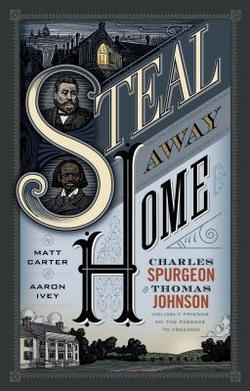 Matt Carter and Aaron Ivey, Steal Away Home, Nashville: B&H Publishing Group, 2017, 294 pp. $14.60
 Derek W.H. Thomas and John W. Tweeddale, Ed. John Calvin: For a New Reformation (Wheaton: Crossway, 2019), 608 pp.
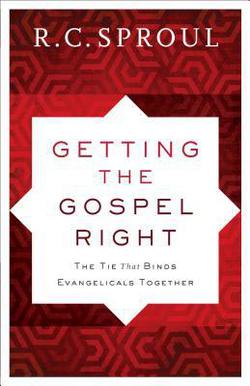 R.C. Sproul, Getting the Gospel Right: The Tie That Binds Evangelicals Together Grand Rapids: Baker Books, 2017, 235 pp. $10.70
 Veritas et Lux