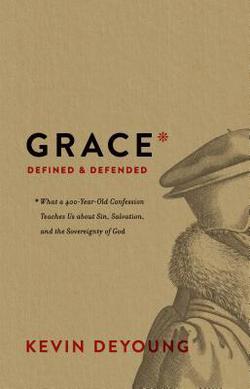
Grace Defined and Defended – Kevin DeYoung

calKevin DeYoung, Grace Defined and Defended (Wheaton: Crossway, 2019), 130.

Whenever Kevin DeYoung pens a book, I devour it – quickly. DeYoung writes with biblical precision. He writes with clarity. And his writing exalts the Lord Jesus Christ. His latest book, Grace Defined & Defended is no exception.

This short book is a summary and exposition of the Canons of Dort. The Synod convened from 1618-1619 and crystallized the Reformed position concerning soteriology.

DeYoung reproduces the historical Canon of Dort and provides a short commentary that explains and defends the content. Misconceptions are erased and the doctrinal ore is successfully mined and served up in a readable and devotional manner.

The selling-point of Grace Defined & Defended is its ability to drive readers to the Canons of Dort – a document that most contemporary believers have never heard about, let alone read.

DeYoung’s ability to unpack and explain this 400-year old confession is unparalleled and should be devoured by followers of Jesus. Readers who affirm historic Calvinistic orthodoxy will be edified and encouraged. Fence-sitters and Arminians will be challenged and convinced. And all readers, in the final analysis, will exalt the person and work of the Lord Jesus Christ.

Soli Deo gloria!

I received this book free from the publisher. I was not required to write a positive review.

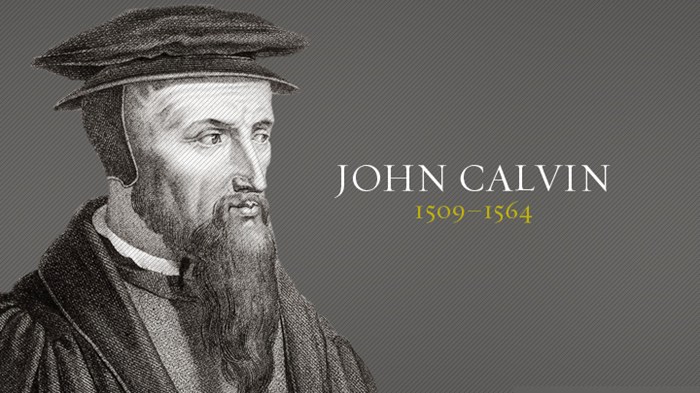
A Godward Gaze: The Holy Pursuit of John Calvin

calMy recent book, A Godward Gaze: The Holy Pursuit of John Calvin is available now! Here’s a brief synopsis.

“… But this is the one to whom I will look: he who is humble and contrite in spirit and trembles at my word” (Isaiah 66:2).

A Godward Gaze is a snapshot of a man on a mission. It is about one man who set his sights on the Celestial City and never looked back. His name is John Calvin. He was a pious man, driven by God’s glory and a love for Scripture. His holy pursuit was rare among men and a model for followers of Christ. David Steele points readers to a truly remarkable man – a biblical expositor, a theologian, and a courageous reformer. Calvin changed a city and helped changed the world. His godly example may change your life.

Pick up your copy today. https://www.amazon.com/Godward-Gaze-Holy-Pursuit-Calvin/dp/1095816462/ref=sr_1_fkmr0_1?keywords=a+godward+gauze+david+steele&qid=1559651630&s=gateway&sr=8-1-fkmr0

An Introduction to the Greek New Testament – Dirk Jongkind

greekDirk Jongkind, An Introduction to the Greek New Testament (Wheaton: Crossway, 2019), 115 pp.

An Introduction to the Greek New Testament by Dirk Jongkind paints a vivid portrait of the work and scholarship behind The Greek New Testament Produced at Tyndale House. “The aim of this book,” writes the author, “is to help you read Tyndale’s House Edition without any nagging and distracting questions about the text or the edition.”

Jongkind accomplishes his objective in this short book as he unpacks how interpretive decisions are made and also includes a helpful section on the Byzantine Text and the Texts Receptus.

Greek students and Seminarians will be fascinated by this introductory work and will give them the necessary details behind The Greek New Testament Produced at Tyndale House. A disclaimer: The material is designed for people who have a background in Koine Greek.

I received this book free from the publisher. I was not required to write a positive review.

Our Ancient Foe: The History, Activity, and Demise of the Devil – Ronald L. Kohl, Ed

foeRonald L. Kohl, Our Ancient Foe: Satan’s History, Activity, and Ultimate Demise (Phillipsburg: Presbyterian & Reformed, 2019), 151 pp.

Our Ancient Foe is edited by Ronald L. Kohl. The subtitle of the book is a fitting description of the contents, namely – Satan’s History, Activity, and Ultimate Demise. Kohl has assembled a team of scholars and expository preachers to unveil the diabolical devices of the devil. The likes of Tom Nettles, Derek Thomas, Joel Beeke, Kent Hughes, and Sinclair Ferguson make solid contributions that help readers understand how the enemy of our souls operates.

Each essay is deeply grounded in Scripture as the activity of the evil one is explored. The contributors explore Satan’s character, his schemes, and how believers are delivered from him.

The final chapter proves especially helpful. Sinclair Ferguson writes about the consummation of all things in a chapter entitled, All Things New. The writing is basic enough for new believers but also challenges readers who have been walking with Christ for some time.

I received this book free from the publisher. I was not required to write a positive review.

Between Life and Death – Kathryn Butler

deathKathryn Butler, Between Life and Death (Wheaton: Crossway, 2019), 214 pp.

These are perilous times. Our day is marked by pragmatism and situational ethics. The current milieu, for the most part, is not informed or undergirded by biblical principles.

As our loved ones reach the end of their days, it is important that we refuse to allow culture to dictate our medical and ethical decisions. Between Life and Death by Kathryn Butler helps navigate the bumpy path which ends in death. Butler is a trained physician and trauma surgeon who recently left her medical practice to homeschool her children. She brings a wealth of biblical wisdom to light and offers guidance which is a reflection of the counsel of the holy.

Personally, Between Life and Death was a difficult book for me. No one likes to think about the implications of death but Dr. Butler forces the issue with truth and grace. Each chapter is laced with take-home points which apply the truths of a given chapter.

The strength in this book is the author’s commitment to biblical authority and its emphasis on people made in the image of God. These image-bearers have great worth and dignity in the sight of God. As a result, each person must be treated with kindness and respect.

When the life of an image-bearer hangs in the balance, each person must “determine whether treatment promises recovery or only prolongation of suffering and death,” writes Butler.

Another helpful feature in Butler’s book is the example of a Sample Directive. This helpful tool may be used as a sort of template that readers can apply to their own unique situation.

Overall, Between Life and Death is a helpful book, one that is sure to educate people and guide them on a biblical path that glorifies the Lord.

I received this book free from the publisher. I was not required to write a positive review.

Grace Defined and Defended – Kevin DeYoung

calKevin DeYoung, Grace Defined and Defended (Wheaton: Crossway, 2019), 130.

Whenever Kevin DeYoung pens a book, I devour it – quickly. DeYoung writes with biblical precision. He writes with clarity. And his writing exalts the Lord Jesus Christ. His latest book, Grace Defined & Defended is no exception.

This short book is a summary and exposition of the Canons of Dort. The Synod convened from 1618-1619 and crystallized the Reformed position concerning soteriology.

DeYoung reproduces the historical Canon of Dort and provides a short commentary that explains and defends the content. Misconceptions are erased and the doctrinal ore is successfully mined and served up in a readable and devotional manner.

The selling-point of Grace Defined & Defended is its ability to drive readers to the Canons of Dort – a document that most contemporary believers have never heard about, let alone read.

DeYoung’s ability to unpack and explain this 400-year old confession is unparalleled and should be devoured by followers of Jesus. Readers who affirm historic Calvinistic orthodoxy will be edified and encouraged. Fence-sitters and Arminians will be challenged and convinced. And all readers, in the final analysis, will exalt the person and work of the Lord Jesus Christ.

Soli Deo gloria!

I received this book free from the publisher. I was not required to write a positive review.

Passions of the Heart – John D. Street

street

John D. Street, Passions of the Heart (Phillipsburg: Presbyterian and Reformed, 2019), 308 pp.

We find ourselves in the midst of a culture that is awash in sexual sin. Yet ironically, there are very few resources available to help people deal with this vexing problem. Some books minimize sexual sin and even ignore its pernicious effects on the lives of people. Other books address the subject aggressively but fail to subject it to the weight of biblical revelation. Instead of approaching sexual sin through the lens of the gospel, it is dealt with psychologically, which in the final analysis is unhelpful.

John D. Street offers a different approach; one that is biblical, timely, and practical. The book is arranged in three parts.

Part One: The Nature of the Heart and Its Passions

Dr. Street sets the stage by helping readers understand the complex nature of the human heart. If the human heart is an “idol factory,” as Calvin says, this section shines the spotlight on the idols that are produced daily in hearts and lives around the world.

The author’s aim is to highlight the deception nature of the heart. Such a view runs counter to conventional wisdom that says lays claim to the autonomous heart. I need, “Trusting your feelings and allowing them to dictate your choices is the dogma of the day.”

Ultimately, trusting one’s heart will lead to catastrophe and ultimately, damnation. True repentance is evidenced by the pursuit of purity, righteous indignation, pursuing holy fear, deep desire for God, zeal for truth, and a desire for justice.

The author shows how “heart idolatry” manifests itself and how the end result is enslavement, in this case, sexual sin.

Part Two: The Motivations of Sexual Idolatry

The author digs deeper into the heart of sexual sin by revealing its hidden motivations. Various desires such as self-pity, discontentment, anger, and fear are exposed as sinful motivations that undergird sexual sin.

A helpful diagnostic test is offered that helps clarify heart motivations. Honest interaction is sure to lead to spiritual benefits, including a conscience which is cleansed and freedom from sin’s guilt.

Part Three: The Characteristics of a Pure Heart

The final section proves to be the most helpful as Dr. Street sets forth the criteria for lasting heart change, which is found exclusively in the gospel: “The gospel is intended to be not only a message of salvation to the unbeliever but also an ongoing message of change for the believer.” In my mind, this observation is missing in many churches. As a result, it is neglected in many Christian lives.

The gospel reveals sin and applying the truth of the gospel brings death to the flesh. Street adds, “The heart ruled by sexual lust must be ministered to in such a faithful and determined way that the Holy Spirit may use the gospel to transform the enslaved person by the power of God. This is the beginning of lasting change from stubborn and enslaving sexual sin.”

Summary

Passions of the Heart: Biblical Counsel for Stubborn Sexual Sins contains a wealth of biblical resources that will both equip biblical counselors and challenge sexual sinners to turn from their sin and cast all their hope upon their Savior, banking on his redemptive benefits found in the gospel.

Highly recommended.

I received this book free from the publisher. I was not required to write a positive review.

Dark Clouds, Deep Mercy – Mark Vroegop

darkMark Vroegop, Dark Clouds, Deep Mercy (Wheaton: Crossway, 2019), 211 pp.

Life is a series of events that is filled with moments of intense joy and seasons of pain and suffering. Dark Clouds, Deep Mercy by Mark Vroegop is concerned with the later. The author is acutely aware that people who live in a fallen world will inevitably face what William Cowper refers to as the “dark clouds of Providence.”

There have been a few notable contributions in recent days that address the subject of suffering. Tim Keller’s, Walking With God Through Pain and Suffering and Paul David Tripp’s, Suffering are two examples of books that tackle the subject of suffering that are faithful to Scripture and offer readers a glimpse of hope through the prism of Scripture. Like the aforementioned books, Vroegrop wrestles with subject. But Dark Clouds, Deep Mercy is unique in that is focuses on the subject of lament.

“The aim of this book,” writes Vroegrop, “is to help you discover the grace of lament – to encourage you to find deep mercy in the dark clouds.” His mission is accomplished in three parts:

Part 1: Learning to Lament/Psalms of Lament

Part 2: Learning from Lament: Lamentations

Part 3: Living with Lament: Personal and Community Applications

The author defines lament as “a prayer that leads to trust.” Such a prayer leads to two crucial questions:

  • “Where are you, God?”
  • “If you love me, why is this happening?”

Lament, then, is “the transition between pain and promise.”

With this solid foundation, the author shows how Christians are both commended and commanded to make lament to God.

Ultimately, painful seasons of life can be “platforms for worship.” These seasons lead the people of God to trust him fully and deeply. “Trust,” writes Vroegop, “is believing what you know to be true even though the facts of suffering might call that belief into question. Lament keeps us turning toward trust by giving us language to step into the wilderness between our painful reality and our hopeful longings.”

I found Dark Clouds, Deep Mercy to be an immensely helpful and practical book. This book gives believers permission to grieve – even wail and mourn. But after grief comes another day, which leads to worship.

Dark Clouds, Deep Mercy is intimately tied to the Word of God and directs the people of God to the pathway that leads to him. Indeed, as the author notes, “Lament is the language of those stumbling in their journey to find mercy in dark clouds.”

Five takeaways are offered as a means of encouragement:

  • “Lament is how we tunnel our way to truth.”
  • “Lament is how we experience grace no matter what we face.”
  • “Lament gives us hope because it gives us a glimpse of truth.”
  • “Lament vocalizes a desire for justice that is unfulfilled.”
  • “In dark clouds, there is deep mercy as we discover the grace of lament.”

Readers will truly discover how to apply the grace of God in this well-written and deeply God-honoring book.

I received this book free from the publisher. I was not required to write a positive review.

Finding Quiet – J.P. Moreland (2019)

jpJ.P. Moreland, Finding Quiet (Grand Rapids: Zondervan, 2019), 225 pp.

J.P. Moreland is one of the most influential Christian philosophers and thinkers of our generation. His writing has wielded a powerful influence in my life for nearly twenty-five years. His most recent book, Finding Quiet, is his most personal, transparent book to date.

In Finding Quiet, Dr. Moreland recounts his battle with panic attacks, anxiety, and depression. Moreland has a God-given gift to communicate complex ideas in an understandable way. Anyone familiar with his writing will be familiar with his scholarly approach. But this book, as mentioned above, is deeply personal and gut-wrenching. I found myself moved at various points throughout the book and was encouraged by the author’s willingness to share some of the deepest pits that nearly consumed his life. This kind of transparency is difficult to find, especially in the academic world.

The author not only tells his grim tale; he guides readers along a path that helps them understand how he gained victory over anxiety and relief from panic attacks. One of the most beneficial aspects of this work are the many tools that Moreland shares; tools that enable readers to walk toward wholeness and healing and conquer anxiety and depression.

To be clear, Moreland is firmly tethered to the Word of God, a reality that he makes plain throughout the book:

“Properly understood, we will see that presenting two members of your body – your brain and your heart muscle – to God as instruments of righteousness (which includes emotional flourishing and overall health) can be important in replacing anxiety and worry with deep peace and joy.”

But he is also committed to utilizing the latest research and resources that help anxious souls find relief and solace. For instance, as the author notes, “Anxiety is largely a habit wired or grooved into one’s brain and nervous system that becomes activated when one encounters certain triggers.” In response, several tools are offered to assist people in their quest for peace. Moreland graciously presents these tools, not as dogmatic solutions, but as options that people can consider that matches their unique needs.

Some Reformed thinkers (myself included) may find some of the discussion uncomfortable and even objectionable but thoughtful consideration of Dr. Moreland’s recommendations is suggested.

Personally, the two most powerful principles that the author presents include the commitment to living a life of gratitude and treasuring key Scriptures to help win important emotional battles. Several practical tips are offered to help cultivate an attitude of gratitude and Scriptures are offered that have been personally meaningful to the author.

I urge readers to explore Finding Quiet and benefit from Dr. Moreland’s God-centered wisdom. Again, not everyone across the board will agree with each of his conclusions – but all can certainly benefit from the fruit of his labor. My prayer is that this book will be a mighty source of strength for many people who battle depression and anxiety.

I received this book free from the publisher. I was not required to write a positive review.

None Greater: The Undomesticated Attributes of God – Matthew Barrett

noneMatthew Barrett, None Greater: The Undomesticated Attributes of God (Grand Rapids: Baker Books, 2019), 283 pp.

None Greater: The Undomesticated Attributes of God by Matthew Barrett is a book for our times. Better put, it is a book that is desperately needed in this generation. Many books that explore the subject of theology proper are fraught with errors. Barrett’s book is quite the opposite.

None Greater takes readers on a journey which is undergirded by the theological wisdom of Anselm, Augustine, and Aquinas. Barrett stands on Anselm’s shoulders in particular and argues, “God is someone whom none greater can be conceived.” This theme strikes a welcome chord in a culture that is drowning in views of God which are weak, fragile, and unbiblical. At the outset, the vision of God is one of grandeur and glory; a vision that is a vivid portrayal of the God of the Bible.

Barrett invites readers to explore God in all his glory by exploring a series of attributes including infinity, aseity, simplicity, immutability, impassibility, timeless eternity, omnipresence, omnipotence, omniscience, ommisapience, righteousness, goodness, love, jealousy, and glory.

The chapter on impassibility is especially helpful as the author presents a very difficult doctrine in terms that are easily understood and digested. Each attribute is discussed in light of Anselm’s helpful view that God is someone than whom none greater can be conceived.

The net result leads readers not only to a better understanding of God, but one that leads to a worshipful response. Barrett shows the practical benefits of following and worshiping this great and glorious God: “The same infinite power of the Almighty that raised Jesus from the tomb is at work in us who believe.”

This work stands in a solidly Reformed tradition, but is designed for pastors and laymen. It is my pleasure to highly commend this book. I trust that it will receive a wide reading and impact the next generation for God’s glory!

I received this book free from the publisher. I was not required to write a positive review.