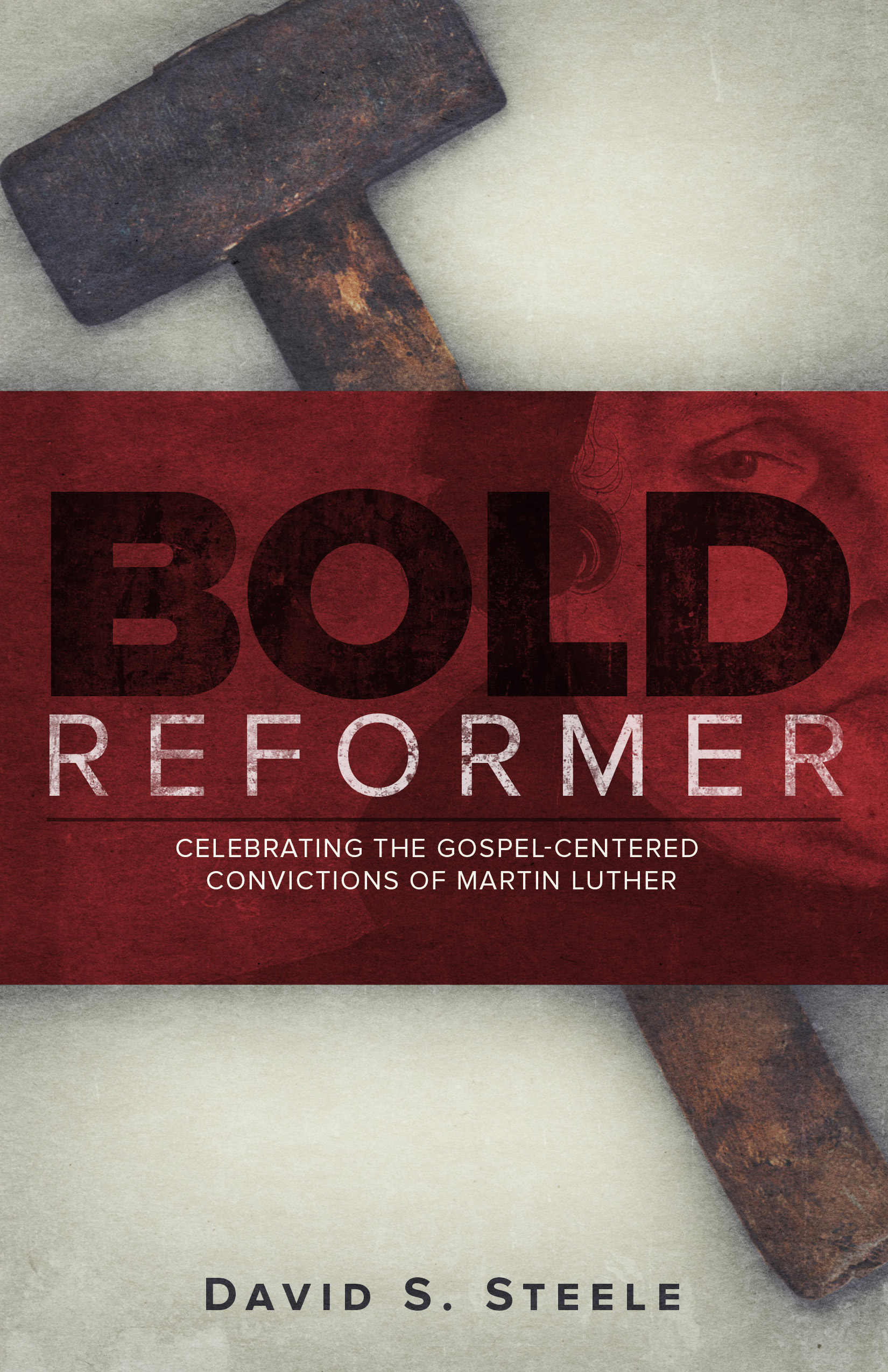
Gaye B. Clark, Loving Your Adult Children: The Heartache of Parenting and the Hope of the Gospel (Wheaton: Crossway Books, 2024), 163 pp.
Relationships can be complex. Sometimes the connection between a parent and an adult child can be especially challenging. Gaye Clark helps unpack some helpful solutions in her book, Loving Your Adult Children.
Credit goes out to the author for writing such a practical and thought-provoking book. Clark writes from the heart, sharing some of her own unique challenges in this area. Her authentic approach to this subject is very helpful in navigating a fruitful path forward.
Beyond the author’s authenticity, the next thing that is greatly appreciated is her gospel-centered mindset. She resists psychological tactics and turns again and again to the gospel for hope and strength in loving adult children. The fruit of the Spirit is the great theme of this book and challenges parents to submit afresh to the ministry of the Holy Spirit.
I anticipate many readers will greatly benefit from Clark’s timely work and hope that relationships will be strengthened between parents and their adult children as a result of reading this excellent book.
I received this book free from the publisher. I was not required to write a positive review.
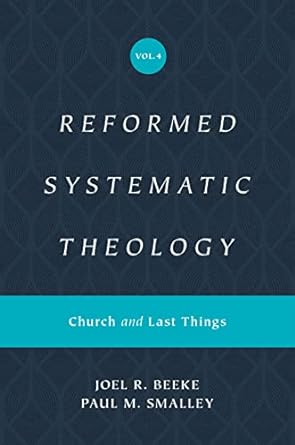
David Gibson & Jonathan Gibson, Ed., Ruined Sinners to Reclaim (Wheaton: Crossway Books, 2024), 998 pp.
In 2013, Crossway Books published From Heaven He Came and Sought Her: Definite Atonement in Historical, Biblical, Theological, and Pastoral Perspective edited by David Gibson and Jonathan Gibson. This formidable work was widely received and eventually became the first in a series of books entitled The Doctrines of Grace Series.
The second book in the series, also edited by David Gibson and Jonathan Gibson, addressed the matter of sin. Ruined Sinners to Reclaim: Sin and Depravity in Historical, Biblical, Theological, and Pastoral Perspective a theological tour de force. The subtitle accurately describes the essence of the book. Like the previous volume, this book includes contributions from Bible scholars and pastors, all of whom embrace the Reformed faith. As such, there is no wiggle room for compromise. No stone is left unturned here. Readers are confronted with the tragic nature of the fall and the historical, biblical, theologically and pastoral implications.
The rubber meets the road when the preacher stands in the pulpit. Will he proclaim the unadulterated gospel, which includes a robust teaching on the radical corruption of mankind? Al Mohler provides a much-needed perspective on this important matter:
One immediate realization that must come to the preacher is that there is no mediating position between the rejection of the concept of sin and its biblical affirmation. A little bit of the doctrine of sin will do no one any good. Recovery will be found – and salvation of sinners can come—only when the word is rightly preached and when sin is powerfully demonstrated in its biblical fullness—and its biblical horror.
I commend this book and look forward to the forthcoming volumes in The Doctrines of Grace series.
Soli Deo gloria!
I received this book free from the publisher. I was not required to write a positive review.
Thomas R. Schreiner, The Justice & Goodness of God: A Biblical case for the Final Judgment (Wheaton: Crossway Books, 2024), 145 pp.
Justice is a hot topic in our world. Distinguishing between that which is just and unjust touches at the core of humanity. Of even greater importance, however is the justice of God. Thomas Schreiner addresses this matter in his book, The Justice & Goodness of God: A Biblical Case for the Final Judgment.
The book is written for Christians, acccording to Dr. Schreiner, “to remind us that judgment is fundamental to the message we proclaim so that we will not be ashamed of or neglect speaking about judgment.” Schreiner’s encouragement is greatly needed in this hour as many people either neglect the topic of justice or ignore it altogether.
The foundation of this work leans on the unshakable foundation of God’s holiness. The author reminds readers that the reason God judges sin is owing to his majestic holiness.
The hideous nature of sin is addressed early in the book and calls to mind its “uncleanness, defilement, and impurity.” According to Schreiner, “Sin is a kind of insanity —— a form of self-destruction where we turn against what fulfills and satisfies us.” In the final analysis, sin leads us away from God and places us under his holy justice.
The book presents a wide-angle view of God’s justice from three important vantage points – judgment in the Gospels and Acts, judgment in the epistles, and judgment in the book of Revelation.
The author summarizes his argument by showing the practical importance of God’s justice. This sobering reality leads us to the critical step of fearing God and striving to live in a way that glorifies the greatness of his worth.
While every sinner deserves God’s justice, we can praise him, for he grants grace and forgiveness through his Son, the Lord Jesus Christ. “The justice of God,” writes Schreiner, “is satisfied in the atoning sacrifice of his Son.”
I trust that many will read and benefit from the wisdom in The Justice & Goodness of God. May Christians rest in God’s grace and may unbelievers turn from their sin and trust in a good God who promises to set each person free who banks on the gospel.
I received this book free from the publisher. I was not required to write a positive review.
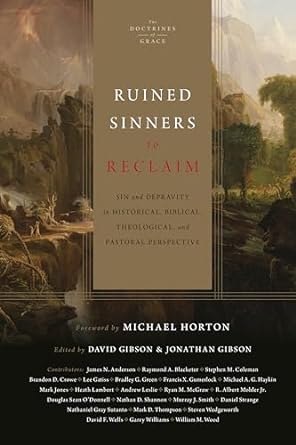
R. Scott Pace & Jim Shaddix, Expositional Leadership: Shepherding God’s People From the Pulpit (Wheaton: Crossway Books, 2024), 148 pp.
Shepherding the people of God is a multi-faceted task. Pastors are called upon to lead, feed, love, and protect the people of God. R. Scott Pace and Jim Shahddix understand this weighty responsibility and have set forth a remarkable book that will encourage elders to carry out their God-given task.
Expositional Leadership is designed to shepherd church members with authority and integrity. The book is arranged in six chapters, each of which is centered around the pulpit. The themes include:
Scriptural Leadership
Spiritual Leadership
Strategic Leadership
Servant Leadership
Situational Leadership
Sensible Leadership
Each theme includes biblical encouragement and admonition for pastors that intend to fulfill the goal of expositional leadership. The term is defined as follows:
Expositonal leadership is the pastoral process of shepherding God’s people through the faithful exposition of his word to conform them to the image of his Son by the power of the Spirit.
My hope is that pastors make good use of the principles in this timely book. May expositional leadership help shape the next generation of Christ-followers!
I received this book free from the publisher. I was not required to write a positive review.
Andrew David Nasseli, Predestination: An Introduction (Wheaton: Crossway Books, 2024), 240 pp.
The Bible says that God chose some people in eternity past (Eph. 1:3-4; 1 Tim. 1:9; 1 Pet. 1:1-2). Many Scriptures build a strong case for the doctrine of predestination. Yet many people struggle with the important doctrine. In his book Predestination: An Introduction,Andrew David Naselli helps establish the biblical framework and guide readers through the maze of verses that point to this doctrine.
Part one answers the question, “What does the Bible teach about election?” The author carefully unpacks the doctrine of election by focusing on various themes, including foreknowledge, free will, and the goal of election, to name a few. Ten chapters build progressively to show how this doctrine emerges in the Word of God.
Part two focuses on the vessels of wrath and answers the question, “What does the Bible teach about reprobation?” This may be one of the most hotly contest doctrines among Christians. Yet, Nasselli does a formidable job in explaining reprobation in a way that is both biblical and compelling.
Predestination: An Introduction is accessible for the layperson but will prove valuable for those pastors and theologians alike. The author writes with charity without compromising any biblical reality along the way. I commend this excellent work and trust that many doubters will be convinced about the importance of this God-glorifying doctrine.
I received this book free from the publisher. I was not required to write a positive review.
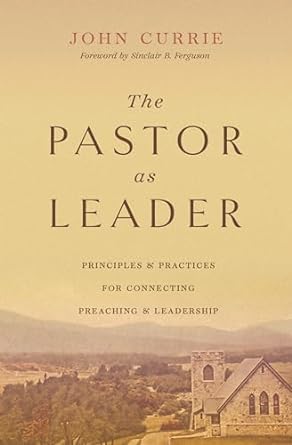
John Currie, The Pastor as Leader (Wheaton: Crossway Books, 2024), 220 pp.
Pastoral ministry is a grind. Ask any pastor and he will tell you about long weeks, challenging scenarios, critical congregants, and a plethora of problems that occur on a regular basis. Pastors are often lulled into succumbing to the tyranny of the urgent. As a result, the most important things slide into oblivion. John Currie addresses the unnecessary disconnect between preaching and leadership in pastoral ministry in his book, The Pastor as Leader.
In part one, the author sets forth principles that help establish the groundwork for a strong pastoral ministry. He argues, “Pastoral leadership is the process where, for the glory of God, a man of God, appointed by the Son of God and empowered by the Spirit of God, proclaims the word of God so that the people of God are equipped to move forward into the purposes of God together.” Currie focuses on the pastor’s mission, leadership, being empowered by the Holy Spirit, and showing Christ-like character.
In part two, Currie sets his sights on the practices of God-centered pastors. He explores the importance of prayer, leadership, communicating biblical vision, and biblical strategy.
Since pastors live with an unhealthy disconnect between preaching and leadership, some choose one over the other. The ones who neglect leadership miss out on shepherding opportunities and jettison one of the critical aspects of the ministry. But the ones who neglect leadership fail to take preaching seriously and leave the flock malnourished. The Pastor as Leader helps establish the biblical priorities in a way that both encouraging and motivating. Pastors will be wise to pay close attention to the wealth of information in this timely book.
I received this book free from the publisher. I was not required to write a positive review.
On this date, in 1521, Martin Luther made his bold stand at the Diet of Worms. Prior to entering the city, Luther remarked, “Unless I am held by force, or Caesar revokes his invitation, I will enter Worms under the banner of Christ against the gates of hell.” The Roman Catholic Church pleaded for him to repent. Luther responded, This shall be my recantation at Worms: “Previously, I said the pope is the vicar of Christ. I recant. Now I say the pope is the adversary of Christ and the apostle of the Devil.”
Thomas R. Schreiner, Covenant and God’s Purpose For the World, Wheaton: Crossway Books, 2017, 136 pp. $9.97
Biblical theology is the discipline that reveals the storyline of Scripture. It looks at the big picture, which begins at creation and culminates with the new earth, where God makes all things new. “The purpose of biblical theology,” according to James Hamilton “is to sharpen our understanding of the theology contained in the Bible itself through an inductive, salvation-historical examination of the Bible’s themes and the relationships between those themes in their canonical context and literary form.”1
Thomas Schreiner contributes significantly to the field of biblical theology with his latest work, Covenant and God’s Purposes For the World. This volume, which is part of Crossway’s Short Studies in Biblical Theology Series is not as extensive as Hamilton’s work noted above or Peter Gentry and Stephen Wellum’s, excellent volume, Kingdom Through Covenant. But the brevity of Schreiner’s short book is a real strength, as we shall see.
Dr. Schreiner’s book unpacks the various covenants that unfold in Redemptive history including the covenant with creation, Noah, Abraham, Israel, David, and the new covenant. “The covenants,” writes Schreiner, “help us, then, to see the harmony and unity of the biblical message.” Ultimately, the author achieves this goal as he alerts readers to the apex of God’s saving work: “The promises of Abraham are fulfilled in the new covenant that Jesus brings, for he is the true offspring of Abraham, and all those who belong to him are the children of Abraham. The land promise is fulfilled in an inaugural way in his resurrection and then in a consummate way in the new creation.”
Covenant and God’s Purposes For the World demolishes the “cookie cutter” approach to hermeneutics that Dispensationalism offers. In its place, is a clear portrait of God’s redemptive plans for his people – a plan that promises “a new world of peace and righteousness is coming in which God the Lamb will reign … The promise that David won’t lack a man on the throne is fulfilled in Jesus Christ. He reigns now from heaven at God’s right hand as the son of David, as and Lord and Christ.”
I received this book free from the publisher. I was not required to write a positive review.
James Hamilton, God’s Glory in Salvation Through Judgment (Wheaton: Crossway, 2010), 47. ↩
Voddie Baucham, Fault Lines: The Social Justice Movement and Evangelicalism’s Looming Catastrophe (Washington D.C.: Salem Books, 2021), 251 pp.
Trouble has been brewing for some while now. Social justice warriors have taken to the streets, courtroom, and universities. Most recently, social justice has penetrated the church walls. While many applaud the social justice movement, including well-known evangelical leaders, a few are standing strong and voicing deep concern. One such man is Dr. Voddie T. Baucham. In his most recent book, Fault Lines: The Social Justice Movement and Evangelicalism’s Looming Catastrophe, Dr. Baucham exposes the underbelly of the social justice movement. He sees a looming catastrophe on the horizon as scores of professing Christians begin assimilating the tenets of social justice into the fabric of their lives and worldviews.
The Goal
Fault Lines has a specific goal in mind. Dr. Baucham speaks in clear terms:
I want to unmask the ideology of Critical Theory, Critical Race Theory, and Intersectionality in hopes that those who have imbibed it can have the blinders removed from their eyes, and those who have bowed in the face of it can stand up, take courage, and ‘contend for the faith that was once delivered to the saints’ (Jude 3).
The author accomplishes his goal by beginning with a personal narrative. He reveals several pertinent points about his background, including family, faith, and some of the racial tension that was a regular part of his life as a young person. Readers unfamiliar with Baucham’s background will be humbled by his candor and encouraged by a marvelous story of God’s grace.
Grace is the theme that dominates in this book. While some parts may appear combative in tone, the author’s heart is revealed throughout. This is a man who has been conquered by the sovereign grace of God. This mighty work of grace not only saved Voddie from sin, death, and hell; it has propelled him to a platform where he is quick to warn people about the dangers of the social justice movement.
The Warning
Baucham clears up any misconceptions at the beginning of the book. When critics ask, “What does Critical Race Theory have to do with the church?” “What does social justice have to do with the church?” Baucham’s answer: “Everything.”
The author explains the origins of Critical Social Justice (CSJ) with the rise of Antonio Gramsci and the Frankfurt School. He cites Helen Pluckrose and James Lindsay who argue that these theories are “geared toward identifying and exposing problems to facilitate revolutionary political change.” Such an explanation puts “meat on the bones” and enables readers to see behind much of the social justice agenda.
The warning is set forth with evangelicals in mind. John MacArthur calls it “the greatest threat to the gospel in his lifetime.” Baucham’s task is to unveil the threat in a way that is understandable and compelling for people in the pews.
Baucham sounds the alarm, much like Paul warned the Colossian believers. He urged them to:
See to it that no one takes you captive by philosophy and empty deceit, according to human tradition, according to the elemental spirits of the world, and not according to Christ. (Colossians 2:8, ESV)
Baucham reveals how the various fault lines are impacting the church as leaders succumb to the spirit of the age. He unpacks the false narratives that are being promoted in the media and willingly consumed by Americans.
The author sets forth the unbiblical underpinnings of CRT, intersectionality, white fragility, etc. In the end, what is revealed is a strategic worldview that is being propagated. At the heart of this worldview is the radical promotion of the hegemony – the group of people who are white, heterosexual, native-born, able-bodied, and male. Anyone not a part of this group is considered a minority. But more importantly, this minority is numbered among the oppressed. In classic Marxist fashion, the oppressed must rise up and overtake the hegemony.
In this fabricated arrangement, there is no forgiveness. There is no gospel. The only thing left are the oppressors and the oppressed. In this scheme, original sin is redefined as “racism.” The agenda of social justice, which is presented as a worldview renders the gospel invalid and impotent.
According to Baucham, the antiracist goal is “equitable outcomes.” Readers who are paying attention to the worldview shifts in our culture will recognize these themes. Gone are the days when equality is emphasized. The new buzzword is equity. The author maintains this goal “is neither biblical, reasonable, nor achievable.” Instead of grace, the only thing that remains is law.
Baucham cites Albert Schweitzer who said, “A heavy guilt upon us from what the whites of all nations have done to the colored peoples. When we do good to them, it is not benevolence – it is atonement.” Such a sentiment drill deep into the heart and soul of antiracism. Tragically, this worldview is invading the church. It is anti-gospel.
The Way Forward
Baucham believes that the coming catastrophe is unavoidable: “These fault lines are so deeply entrenched, and the rules of engagement so seriously complex, that the question is not if but when the catastrophe will strike.” The way forward will require clear thinking and Christian courage. The way forward involves faithful allegiance to the gospel of Jesus Christ. Ringing in my ears is a line from a sermon that John Piper preached many years ago, where he exhorted his readers to “out rejoice all their enemies.” Like Athanasius, we must rise up and live contra mundum. But living against the world does not suggest that we stop loving people in the world. As Baucham notes, “We must love each other with a tenacious, biblical, Christlike love.”
The author concludes by urging his readers to 1) take every thought captive, 2) confront the lie and hold to the truth, 3) listen with discernment, and 4) correct people who are peddling a worldview that opposes the truth of the gospel.
Fault Lines is a greatly needed book. Dr. Baucham’s work is a true labor of love, which is grounded in the gospel of Jesus Christ. Readers should read this work carefully and thoughtfully and make it their aim to move into the marketplace of ideas, armed with the truth of God’s Word, and ready to make a difference in a world that is desperately in need of Jesus’s saving work on the cross.
The Word of God is emphatic about our role as we enter the marketplace of ideas. The apostle Paul sounds the warning in Colossians 2:8 – “See to it that no one takes you captive by philosophy and empty deceit, according to human tradition, according to the elemental spirits of the world, and not according to Christ.” Scripture instructs Christ-followers, “For the weapons of our warfare are not of the flesh but have divine power to destroy strongholds. We destroy arguments and every lofty opinion raised against the knowledge of God, and take every thought captive to obey Christ …” (2 Corinthians 10:4–5, ESV).
John Frame maintains and promotes such a mindset in his latest offering, A History of Western Philosophy and Theology (HWPT). The discipline of philosophy, which is defined as “the disciplined attempt to articulate and defend a worldview,” is broken down into three subdivisions including metaphysics, epistemology, and value theory. Readers familiar with Frame’s work will immediately recognize his commitment to perspectivalism, a powerful grid for thinking which includes three perspectives: normative, situational, and existential. This commitment has been clearly articulated and defended in his Lordship series, a series of books which are essential tools in every pastor’s library.
HWPT is dedicated to Dr. Cornelius Van Til, whose influence is evident throughout the book. Readers who are entrenched in Van Til’s methodology will quickly recognize themes such as the Creator-creature distinction and the charge that non-Christian thought lapses into the intellectual bankruptcies of rationalism and irrationalism.
On a large-scale, HWPT leads readers on a fascinating journey that educates, contextualizes, and warns.
Education
Frame has a reputation for educating not only his seminary students but a rather broad reading audience. HWPT is no exception. The author gives readers an up-close look at the history of western thought. Unlike the typical tour of philosophy and theology, Dr. Frame provides readers with the proper lens with which to view such ideas. The book is built on the immutable, authoritative, infallible, inerrant Word of God. Readers are alerted in advance that the author carries certain presuppositions, above all – an allegiance to sacred Scripture. The author clearly reveals the presuppositions which guide his writing and inform his worldview:
As a Christian, I am committed to a worldview that comes from the Bible: God the Creator, the world as his creation, man made in his image, sin and its consequences as our predicament, Christ’s atonement as our salvation, his return as the consummation of all things.
Such an admission is rare in the world of philosophy. Frame’s candor should be respected and greatly appreciated by believer and non-believer alike.
Context
HWPT stands alone by contextualizing the various philosophic movements and the thinkers who represent those movements. The author helps readers understand how various philosophers influence future generations and worldviews. Such an approach is greatly needed, especially among undergraduate students who often see philosophy in bits and pieces instead of a unified whole.
Warning
The most helpful aspect of HWPT is the warning extended by Dr. Frame, a warning that takes Colossians 2:8 and 2 Corinthians 10:5 to heart. The author demonstrates how various philosophers have influenced generations and have contributed to the erosion of the Christian mind. These thinkers, most of whom continue to rule from the grave are exposed and for their futile thinking, which generally follows Van Til’s charge of being rationalistic and irrational at the same time.
I commend HWPT to pastors, Bible College students, seminary students and Christ-followers who have a passion to see the picture in the world of philosophy and theology. HWPT is a serious book for serious Bible students. It is a book that I will return to again and again. May God use John Frame’s latest work to glorify the great God of the universe and encourage a new generation of Christian theologians, philosophers, pastors, and leaders.
Soli Deo Gloria!
I received this book free from the publisher. I was not required to write a positive review.