12 Faithful Men: Portraits of Courageous Endurance in Pastoral Ministry

12Collin Hansen and Jeff Robinson, Eds. 12 Faithful Men (Grand Rapids: Baker Books, 2018), 187 pp.

12 Faithful Men is a collection of portraits that capture the lives and ministries of godly men, scattered throughout church history. These men come from a variety of backgrounds and have all made significant contributions to the kingdom of God.

Collin Hansen and Jeff Robinson serve as editors of this project and enlist the help of several other pastors and scholars who paint short portraits of these faithful men. What makes this volume so valuable is that each of the twelve men has faced significant pain, suffering, or persecution in ministry. The men include the apostle Paul, John Calvin, John Bunyan, Jonathan Edwards, John Newton, Andrew Fuller, Charles Simeon, John Chavis, C.H. Spurgeon, J.C. Ryle, Janani Luwum, and Wang Ming-Dao.

Most of the faithful men featured in this book are well-known names. The portraits are painted with skill, passion, and biblical wisdom. They are short introductions that will likely prompt some readers to do a more in-depth study. A few of the faithful men in this volume are lesser known figures, most notably, Janani Luwum and Wang Ming-Dao.

Each portrait is an invitation to pursue a life and ministry, which is tethered to sacrifice and suffering. The clear message is that ministry entails suffering and that God uses adversity to mark a man and make a man. And while each portrait provides a basic glimpse of one of these twelve faithful men, the greater message is that God is exalted and glorified in each of these men.

I received this book free from the publisher. I was not required to write a positive review.

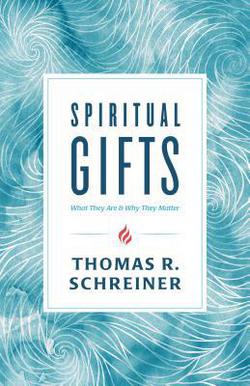
Spiritual Gifts: What They Are and Why They Matter – Thomas Schreiner (2018)

schreinerThomas R. Schreiner, Spiritual Gifts: What They Are & Why They Matter (Nashville: B&H Publishing Group, 2018), 172 pp.

The subject of spiritual gifts is an ongoing topic in the church that often times generates more heat than light. The matter of the sign gifts, in particular, is especially controversial. Continuationists set forth arguments in favor of the sign gifts. And advocates of cessationism do the same, marshaling arguments in the opposite direction. It is not unusual for the two sides to polarize, leading brothers and sisters in Christ in opposite directions.

Thomas R. Schreiner’s book, Spiritual Gifts: What They Are & Why They Matter offers a different approach, which seeks to unify continuationists and cessastionists. Alert readers will notice that Dr. Schreiner dedicates the book to three well-known continuationists: Wayne Grudem, John Piper, and Sam Storms. They are referred to as “Beloved friends and coworkers in the gospel of Christ.” So immediately, it is apparent that Schreiner has motives which are virtuous and seek to unify.

The author begins by noting the general strengths and weaknesses of the charismatic movement. This delicate task is done in a humble, tasteful manner.  After establishing the pros and cons of the charismatic movement, Schreiner launches into a discussion that concerns the spiritual gifts. He defines these gifts and offers ten foundational truths that help establish their importance.

The sign gifts are discussed in general as Schreiner presents the nature and significance of the gift of tongues in particular. Additionally, the author familiarizes readers with some erroneous arguments for cessatioinism. But the book concludes with the central argument for cessastionism. Schreiner writes, “The basis for cessationism is the claim that the church was ‘built on the foundation of the apostles and prophets’ (Eph. 2:20). This argument is developed and convincingly presented.

Whether readers agree or disagree with the presentation and conclusions of the author, all will appreciate his careful exegesis, humility, and desire to build bridges with brothers and sisters whose hearts yearn to please the Lord.

I received this book free from the publisher. I was not required to write a positive review.

A Call For Courage – Michael Anthony (2018)

callMichael Anthony, A Call For Courage (Nashville: Thomas Nelson, 2018), 219 pp.
A Call For Courage by Michael Anthony seeks to embolden and inspire readers and spur them to live courageous Christian lives. The book is specifically designed to “spark a genuine spiritual awakening” which will spill over into every arena of daily life.

Anthony sets the stage by providing relevant facts that pertain to the postmodern times we find ourselves in. He makes it clear that truth is disregarded and sometimes even discarded. The remedy involves Christian courage which withstands every assault and persecution that is unleashed by people who are hostile to biblical principles.

Courageous Humility in Action

Each chapter concludes with a point of practical application, which is entitled courageous humility in action. The very idea of courageous humility is countercultural in and of itself is the most commendable aspect of this volume. It is rare to find someone who incarnates these both courage and humility. People tend to be courageous, yet lack humility. Or they manifest the quality of humility but they battle a subtle cowardice. The author strikes the biblical balance by combining these two necessary character qualities.

One criticism is worth noting as readers are encouraged to “rediscover, re-embrace, and reteach the Declaration of Independence, the Bill of Rights, and our Constitution, along with the historical contexts in which they were forged.” I certainly understand the sentiment and personally celebrate these documents. But turning to the founding documents, in the final analysis, is not the solution to the postmodern dilemma. The solution lies in turning to the Lord Jesus Christ, turning from our sins, and living according to the Word of God.

This objection notwithstanding, A Call For Courage is a helpful book, one that will spark good discussion and instill humble courage in the hearts of God’s people.

I received this book free from the publisher. I was not required to write a positive review.

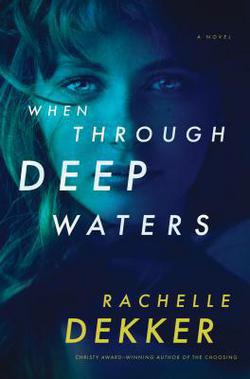
When Through Deep Waters – Rachelle Dekker

dekRachelle Dekker, When Through Deep Waters (Carol Stream: Tyndale House Publishers, 2018), 370 pp.

When Through Deep Waters is the latest book from thriller writer, Rachelle Dekker.  This gifted writer tells the tale of a young woman who tragically stares into the face of evil after the death of her young daughter. Gripped with deep spiritual and psychological sorrow, Alicen McCaffrey makes her way to the Clover Mountain Retreat Center in Deer Lodge Montana for help and healing.

Dekker does a marvelous job recounting Alicen’s pain and the guilt associated with her circumstances. In the midst of her misery, Alicen encounters strange psychological phenomena that readers must decipher on their own. Victoria is another character who emerges in the story. At first glance, she appears eager to help Alicen but not only has baggage of her own; she plans her own brand of evil, in the final analysis.

When Through the Deep Waters beautifully showcases the writing ability of Rachelle Dekker. She writes with the precision of Stephen King and the perception of C.S. Lewis. Dekker has a unique ability to paint pictures with words, tell stories with extraordinary clarity, and hauntingly draws readers into the narrative.

Dekker forces readers to wrestle with evil and spiritual warfare. But the higher purpose of her writing is to alert readers to the reality of grace, which is precisely where this review takes an unfortunate turn. The theme that reaches a crescendo in this book is self-forgiveness. When Alicen discovers grace, what she ultimately discovers is the importance of “forgiving herself.” This notion is a reoccurring theme in the evangelical world – a mantra that I hear often in personal conversations and read in many so-called Christian books.  However, “forgiving oneself” is never found in the pages of Scripture. Instead, sinners are both invited and commanded to “Believe in the Lord Jesus, and you will be saved …” (Acts 16:31, ESV).“ Sinners are never once commanded to “forgive themselves.” Rather, they are invited to come to the cross to receive forgiveness. “Blessed are those whose lawless deeds are forgiven, and whose sins are covered,“ says Romans 4:7. And Colossians 2:13 reveals that “God made alive together with him, having forgiven us all our trespasses.” Instead of “forgiving ourselves,” Scripture calls us to trust in Jesus, our Substitute (2 Cor. 5:21). He is the only One qualified to forgive us and cleanse us from unrighteousness.

When Through Deep Waters is a book I wanted to like. The storytelling is compelling. And the characters are interesting. But the underlying theology is not helpful and leads readers down a path that is not an accurate presentation of the biblical gospel.

I received this book free from the publisher. I was not required to write a positive review.

Rediscovering Humility – Christopher A. Hutchinson

huChristopher A. Hutchinson, Rediscovering Humility (Greensboro: New Growth Press, 2018), 252 pp.
For some strange reason, there are very few books that discuss the topic of humility. Rediscovering Humility: Why the Way Up Is Down by Christopher A. Hutchinson makes an appearance and offers a book that is biblical and bold.

The central thesis of the author is stated succinctly: “Humility is the chief of virtues, the best paradigm of all proper Christian thought, word, and deed – the very foundation of what it means to have a Christian worldview.”

The book is arranged in three sections, according to the Pauline matrix of “faith, hope, and love” (1 Corinthians 13:13). Each section contains a handful of chapters that unwrap the gift of humility and exalt the Lord Jesus Christ.

Rediscovering Humility is a blessing to be sure. It is a solid offering which will encourage many people in the days to come!

I received this book free from the publisher. I was not required to write a positive review.

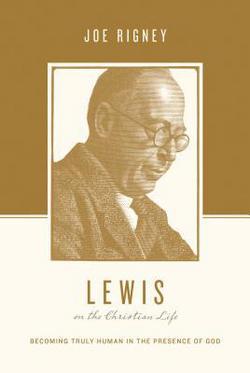
Lewis On the Christian Life – Joe Rigney

lewisJoe Rigney, Lewis on the Christian Life: Becoming Truly Human in the Presence of God (Wheaton: Crossway, 2018), 310 pp.

He is the author of several best selling children’s books that guide young readers into the land of Narnia. He is the novelist from the United Kingdom and popular professor at both Cambridge and Oxford who single-handedly captured the hearts and minds of thousands (if not millions) of people around the globe.

Clives Staples Lewis is the subject of the most recent offering of Crossway’s Theologians of the Christian Life series, edited by Justin Taylor and Stephen Nicole. This book, penned by Joe Rigney is an excellent overview of the worldview and intellectual contributions of C.S. Lewis.

Rigney writes as an unashamed Lewis bibliophile and liberally dispenses praise for his hero’s accomplishments. While the work alerts readers to the highpoints of Lewis’s’ life, the majority of the book is devoted to major themes that emerge in his life. Topics include the gospel, prayer, the problem of evil, the devil, the church, and hell, to name a few.

Most refreshing is Rigney’s transparency concerning some of the weakness in C.S. Lewis’s theological framework – especially his view of the atonement. Rigney is able to disagree with deep respect but still offer a critique that is helpful and God-honoring.

I have read several books which tap into the genius of C.S. Lewis. Rigney’s work is among the best of them. It is a solid contribution to the Crossway series – one that will be celebrated by many in the years to come.

I received this book free from the publisher. I was not required to write a positive review.

How To Be a Perfect Christian

perfectioinHow To Be a Perfect Christian (New York: Multnomah, 2018) 192 pp.

How To Be a Perfect Christian is a user manual for the spiritually motivated zealot. The subtitle perfectly expresses the inner longings of such a person: Your Comprehensive Guide to Flawless Spiritual Living.

In a mere 192 pages, the authors wonderfully capture the essence of the perfect Christian life. Step-by-step instructions are given that denote which church to attend, which music to listen to, which churches and movies to avoid, and the critical practices that don the ecclesiastical vita of the person seeking Christian perfection.

The authors admonish, “Keep the plates of self-righteousness spinning to prevent your carefully constructed facade from cracking.” This sentence cuts through all the satirical edginess that permeates the book and brings readers back to reality.

But in the final analysis, How To Be a Perfect Christian actually guides spiritual zealots away from self-righteousness and straight to the cross of the Lord Jesus Christ: “Instead of faking smiles and completing checklists, the Christian life would be about beholding the unspeakable glory of the Creator and living to please Him and make Him known in a dying world.”

How To Be a Perfect Christian will make genuine Christ-followers laugh. It will prompt wide smiles. But it will also lead to deep reflection about the lengths many of us have gone to live in our own strength in order to merit favor in the eyes of a holy God. This book (despite all its silliness and wittiness) is a stern rebuke to anyone who is trapped by legalism. As such, it will anger the Pharisee. It will spur the Sadducee. And it will draw the ire of the religious fundamentalist. For these reasons, How To Be a Perfect Christian is a stunning success.

I received this book free from the publisher. I was not required to write a positive review. @WaterBrookMultnomah #Partner”

Expository Exultation – John Piper

pipJohn Piper, Expository Exultation: Christian Preaching as Worship (Wheaton: Crossway Books, 2018) 328 pp.

Expository Exaltation by John Piper is the final installment of a three-part series. Piper launched the series with A Peculiar Glory, which addressed the truthfulness of Scripture. Reading the Bible Supernaturally focussed on reading the Bible for the ultimate purpose of worshipping God. Expository Exaltation not only completes the trilogy – it satisfies the thirst of preachers around the world who have eagerly anticipated a new book on preaching by Dr. Piper:

“This God-glorifying, Christ-exalting, Spirit-sustained worship – expressed in worship services, daily sacrifices of love, and eternal perfection – is the goal of Expository Exaltation.”

These words encapsulate the intentions and goals of the author and alert readers to the treasure chest that lies ahead. But before he gets started, the author makes sure that readers understand the purpose of preaching:

“The purpose is that God’s infinite worth and beauty be exalted in the everlasting, white-hot worship of the blood-bought bride of Christ from every people, language, tribe, and nation.”

In a word, Expository Exultation is enthralling. I cannot overemphasize the importance of this book, which may, in the final analysis, turn out to be one of the most important books that John Piper has penned to date. Piper captures the essence of the preaching task and marshalls an army of resources to support his claims.

Expository Exultation should be read by rookie and veteran preachers alike. It should be read and re-read. Every Bible College and Seminary professor should immediately add this work to their list of required reading for preaching courses.

I received this book free from the publisher. I was not required to write a positive review.

Three Days in Moscow: Ronald Reagan and the Fall of the Soviet Empire

reaMay 31, 2018, is the thirtieth anniversary of President Reagan’s speech at Moscow State University. On that day, our 40th president stood before a packed house of enthusiastic students who listened to a message of freedom and hope. Lurking behind Reagan was a mural of the Russian revolution and the bust of Vladimir Lenin. When press secretary Marlin Fitzwater was asked about this strange pairing, he replied, “If anybody would ever appreciate Lenin having to spend an hour and a half looking at the backside of Ronald Reagan, it would be the president.”

Three Days in Moscow: Ronald Reagan and the Fall of the Soviet Empire by Bret Baier celebrates the life and legacy of President Ronald Reagan. Baier provides an inside look at the Reagan administration and the events leading up to his monumental speech at the Moscow State University.

President Reagan inspired hope in each of the participants that day:

Standing here before a mural of your revolution, I want to talk about a very different revolution that is taking place right now, quietly sweeping the globe without bloodshed or conflict. Its effects are peaceful, but they will fundamentally alter our world, shatter old assumptions, and reshape our lives.

We do not know what the conclusion will be of this journey, but we’re hopeful that the promise of reform will be fulfilled. In this Moscow spring, this May 1988, we may be allowed that hope: that freedom, like the fresh green sapling planted over Tolstoy’s grave, will blossom forth at last in the rich fertile soil of your people and culture. We may be allowed to hope that the marvelous sound of a new openness will keep rising through, ringing through, leading to a new world of reconciliation, friendship, and peace.

Baier comments, “He was a messenger of hope, seducing them with their own longings, which he knew they had. How could they resist the poignant cry of their countryman?”

One cannot help but recall that President Barack Obama uttered similar words, namely, to “fundamentally transform America.” But the vision Obama was after had more to do with big government, higher taxes, escalated regulation, and minimized religious freedom. Reagan demanded the opposite and he understood that the Soviet people yearned for this kind of freedom.

At the end of the speech, the audience gave Reagan a standing ovation. Baier reports, “Reagan later quipped that while they were cheering, he’d glanced behind him and seen Lenin weeping.”

Three Days in Moscow: Ronald Reagan and the Fall of the Soviet Empire is a stirring historical tale of freedom that chronicles the ascent of Ronald Reagan to the highest office in the land. Brett Baier accurately and passionately recounts the details of his presidency and the leadership gifts he shared with the American people and the world.

Devouring Freedom: Can Big Government Ever Be Stopped? – W. James Antle III (2013)

freedomThere are three unshakable realities in life: Death, taxes, and an ever-expanding government.  The reality of death is one that each person must face.  Taxes are indeed a reality, but as every conservative argues, taxes in America must decrease or the economy will inevitably falter.  And while every American must deal with the reality of death and taxes, the growing federal government can and should be marginalized.  This final reality can and should be altered.  The new reality should be a smaller, leaner, more efficient government.  Herein lies the argument in W. James Antle’s book, Devouring Freedom: Can Big Government Ever Be Stopped?

The author has done his homework in this well-written book.  Ten chapters guide readers on a journey that informs, educates, and most importantly, warns.  Any thoughtful American will appreciate the contrast between the big government promoted by the current president and the smaller government that was prompted by our nations greatest president, Ronald Wilson Reagan.

W. James Antle is no pushover Republican.  He not only warns readers about the manifold dangers of big government.  He also reports some of the Republican failures and compromises which have not served our nation well.

The author does not offer “pie in the sky” solutions either.  In fact, he is critical of any conservative who suggests such an approach.  Rather, he recognizes the rocky road before our great nation and suggests practical steps to smooth our path to greater prosperity.  But he does not write under any delusional pretense or promote a utopian vision.  He understands the road to a smaller government will not be easy.  He writes, “Sometimes it will seem impossible.  But like a parent yanking his child to safety at the last second before he dashes into the street, Divine Providence has pulled this nation back from the abyss before.”  Indeed, the path forward will be marked with pain.  But the pain now will be worth it in the days to come.

Conservatives must be prepared for the rocky road to smaller government.  The author rightly adds, “Conservatives who stick to their principles on taxes and spending get the Grover Norquist treatment.”  That is to say, anyone who argues for lower spending, lower taxes and smaller government will be unfairly demonized.  The attack adds against Paul Ryan during the last election cycle prove this sad point.

While the author sets forth several points which militate against big government, none is more important than the principle of liberty.  In President Reagan’s farewell address, he articulated this bold principle in vivid terms: “There is a clear cause and effect there that is as neat and predictable as a law of physics: as government expands, liberty contracts.”  However, Reagan’s law is evidently not etched into the liberal mindset as liberals and progressives seek to expand the federal government.  With this expansion comes the erosion of liberty.  The author aptly sums up this matter: “As government grows beyond its constitutional boundaries, it really does devour freedom.”

Devouring Freedom: Can Big Government Ever Be Stopped?  The author asks the right question and gives the right answer.  The only question is this: Do we have the courage to move in the direction of a smaller federal government?  Any negative answer will result in an erosion of freedom; the same freedom that was such an integral part of the dream which was articulated by the founding fathers.