Top Books of 2017

2017 was another great year for books.  Here are my top 10 in order.  Be sure to click on the titles to read a more detailed review.

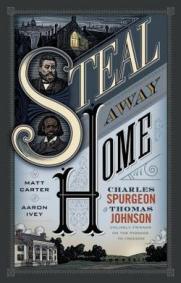
Number 1: Steal Away Home – Matt Carter & Aaron Ivey

steal

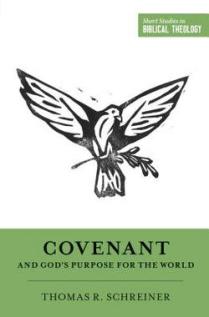
Number 2: Covenant and God’s Purpose For the World – Thomas Schreiner

cov

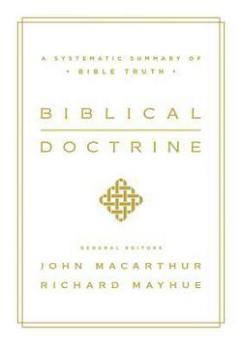
Number 3: Biblical Doctrine: A Systematic Summary of Bible Truth – John MacArthur

mac

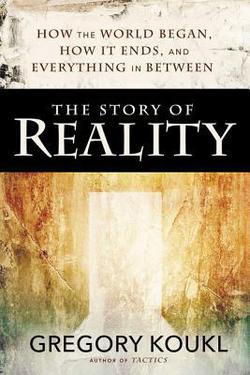
Number 4: The Story of Reality – Greg Koukl

kouk

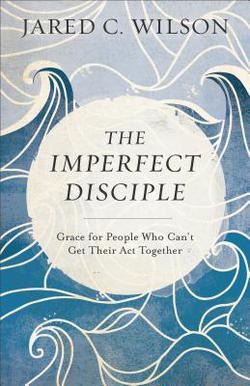
Number 5: The Imperfect Disciple: Grace for People Who Can’t Get Their Act Together – Jered Wilson

wilson

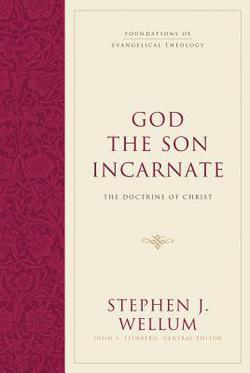
Number 6: God the Son Incarnate  – Stephen Wellum

well

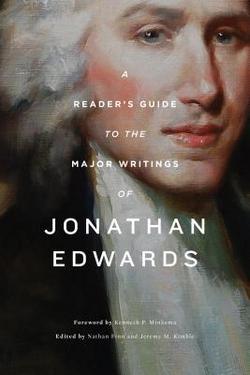
Number 7: A Reader’s Guide to the Major Writings of Jonathan Edwards – Nathan Finn and Jeremy Kimble

ed

Number 8: The Gospel According to Paul – John MacArthur

paul

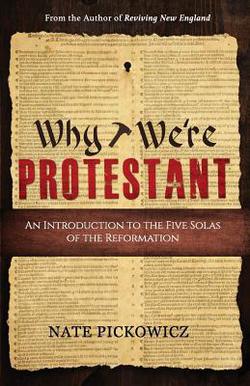
Number 9: Why We’re Protestant: An Introduction to the Five Solas of the Reformation – Nate Pickowicz

nate.jpg

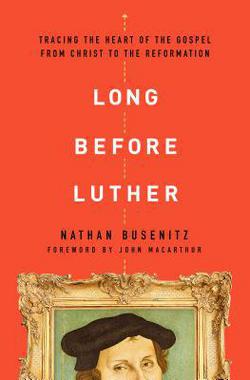
Number 10: Long Before Luther – Nathan Busentiz

long.jpg

Honorable Mention: House of Spies – Daniel Silva (no review)

spy

A Tribute to R.C. Sproul

On December 14, 2017 Dr. R.C. Sproul entered into the presence of his Lord and Savior, Jesus Christ. Dr. Sproul was a graduate of Westminster College (B.A. in Philosophy), Pittsburgh Theological Seminary (B.D.), Free University of Amsterdam (Drs.) and received additional recognition from Geneva College (Litt. D) and Grove City College (L.H.D.) in 1993.

Dr. Sproul was ordained in 1965 by the Presbyterian Church in America (PCA) and taught at Westminster College (1965 – 1966), Gordon College (1966 – 1968), Conwell School of Theology (1968 – 1969), Gordon Conwell Theological Seminary (1971 – 1981) and held the John Trimble, Sr. Chair of Systematic Theology at Reformed Theological Seminary (1987 – 1995). He served on the Executive Committee for the International Council on Biblical Inerrancy (1977 – 1983). He held various leadership roles with the Coalition for Christian Outreach (1971 – 1976), Evangelism Explosion III, International (1980 – 1981), and Prison Fellowship (1979 – 1984).

In addition to several other teaching roles at theological Seminaries, including Knox Theological Seminary and Reformed Theological Seminary, Dr. Sproul served on the pastoral staff at Saint Andrews Chapel in Sanford, Florida.

Dr. Sproul was the founder and Chairman of Ligonier Ministries, a non-profit organization dedicated to providing theological education for the church. Ligonier provided and continues to provide a myriad of teaching resources by Dr. Sproul and others, which are primarily directed toward the laity.

Many tributes will be posted for several days and weeks to come which will celebrate Sproul’s life and legacy. My small contribution will be personal in nature as I recount the ways that my life was impacted by his ministry.

The Sovereignty of God in Salvation

R.C. Sproul was greatly used by God as he reintroduced Reformed theology to the evangelical church. He articulated the doctrines of grace with passion, courage, conviction, and authority. He spoke about the depth of our depravity and reminded us that the “flesh profits nothing” (John 6:63). Indeed, as Luther said, “Nothing is not a little something!” “Sin is cosmic treason,” writes Sproul. “Sin is treason against a perfectly pure Sovereign. It is an act of supreme ingratitude toward the One to whom we owe everything, to the One who has given us life itself. Have you ever considered the deeper implications of the slightest sin, of the most minute peccadillo? What are we saying to our Creator when we disobey Him at the slightest point? We are saying ‘no’ to the righteousness of God.” R.C. Sproul powerfully proclaimed the hideous effects of sin on a fallen race.

He not only spoke of the depth of depravity; he proclaimed the beauty of sovereign grace. He helped us understand the importance of election and predestination. Chosen by God served an especially important purpose in my life. This book was a theological battering ram. Chosen by God smashed my preconceived Arminian notions. It shattered my Semi-Pelagian understanding of free will and petty arguments against Calvinism.

Positively, Chosen by God elevated my understanding of God’s sovereignty. However, it would be more accurate to say that Sproul catapulted my view of God’s sovereignty into the stratosphere. “If there is any part of creation outside of God’s sovereignty,” writes Sproul, “then God is simply not sovereign. If God is not sovereign, then God is not God.”

Chosen by God helped shift my understanding of mercy into biblical categories. Previously, I held the view that God was obligated to offer mercy to sinners. But Sproul’s theological battering ram obliterated my presuppositions about mercy. I’ll never forget reading these words: “If God is not pleased to dispense his saving mercy to all men, then I must submit to his holy and righteous decision. God is never, never obligated to be merciful to sinners. That is the point we must stress if we are to grasp the full measure of God’s grace.”

R.C. Sproul captivated us with the wonder of effectual grace. And he spoke often of the perseverance of the saints, or better yet, as he was fond of saying, “the preservation of the saints.” Indeed, “the doctrine teaches that if you have saving faith you will never lose it, and if you lose it, you never had it.”

R.C. not only equipped a new generation of Reformed thinkers; he alerted the body of Christ to theological error. He lamented the rise of theological wolves and deceitful hucksters. And he warned us about the Pelagian Captivity of the Church. Sproul notes, “One thing is clear: that you can be purely Pelagian and be completely welcome in the evangelical movement today. It’s not simply that the camel sticks his nose into the tent; he doesn’t just come in the tent — he kicks the owner of the tent out.”

The first time I saw Dr. Sproul preach at a live event, I stood in line for at least an hour to say “hello” and get a signature in his latest book, Not a Chance. It was a typical scene where several hundred hungry theology students gathered for a chance to visit for a moment with one of the premier theological minds of the day. Sproul was signing books and carrying on in casual conversations. When my time came, I uttered these words: “Dr. Sproul, I want to thank you for your ministry. Before I began reading your books, I was a total Arminian.” Those words caught his attention. He lowered his reading glasses and looked me straight in the eye: “Weren’t we all Arminians at one time!” The crowd roared but R.C.’s infectious laugh overcame the whole room.

Dr. Sproul confronted the love affair with free will in the church: “The semi-Pelagian doctrine of free will prevalent in the evangelical world today is a pagan view that denies the captivity of the human heart to sin. It underestimates the stranglehold that sin has on us.”

Pursuing Church History

Dr. Sproul awakened in me a love for church history that was previously non-existent in my life. He had a special gift for storytelling that invited listeners to enter the world of Augustine, Calvin, Luther, and Edwards. His passion for uncovering the treasures of church history was something to behold. These giants of the faith came to life when R.C. spoke of their courage, tenacity, and faithfulness in proclaiming the unadulterated Word of God.

Passion for the Holiness of God

R.C. Sproul authored at least sixty books, most of which I digested over the past thirty years. Those books are filled with highlights, notes, and observations. But the book that impacted me above all was The Holiness of God. R.C. writes, “We fear God because He is holy. Our fear is not the healthy fear that the Bible encourages us to have. Our fear is servile fear, a fear born of dread. God is too great for us; He is too awesome. He makes difficult demands on us. He is the Mysterious Stranger who threatens our security. In His presence we quake and tremble. Meeting Him personally may be our greatest trauma.”

The Holiness of God caught me completely by surprise in my early twenties. My mind was transfixed. My heart was warmed. And my life was forever changed as I poured over the pages of this book which will no doubt be in print for many years to come.

Defender of the Gospel

Finally, R.C. Sproul was a teacher, preacher, and defender of the gospel of Jesus Christ. He articulated the deep realities of the gospel in simple terms and invited anyone with ears to hear to come along for the ride. R.C reminded us that we are “saved by faith alone but that faith is never alone.” He made sure that we memorized Luther’s famous line that, “justification is that article upon which the church stands or falls.”

It is difficult to summarize the life of a man who carried such a huge weight of influence for over thirty years. A few short paragraphs hardly seem fitting for a man who helped change the face of evangelicalism.

In a recent sermon, Steven Lawson admonished his audience, “Give us some men who know the truth.” R.C. Sproul was such a man. R.C. taught the truth, defended the truth, and worked tirelessly to proclaim the truth to the nations.

Dr. R.C. Sproul (1939 – 2017) fought the good fight. He finished the race. And he kept the faith. Enter into the joy of your Savior where you will reign with him unto all eternity.

Sinners in the Hands of a Loving God – Brian Zahnd (2017)

davidsteele1966's avatarVeritas et Lux

zhand

Brian Zahnd, Sinners in the Hands of a Loving God, Colorado Springs: Waterbrook, 2017, 210 pp. $10.19

COMMENDING JONATHAN EDWARDS

I will never forget a very special evening with a small group of Christ-followers at the McLean home.  My good friend, Don suggested that we read Sinners in the Hands of an Angry God by Jonathan Edwards in one sitting – on our knees.  And so a group of middle-aged adults gathered in Don’s living room alongside several children (whose knees were much more nimble) – and we read Edward’s classic sermon – on our knees.  It is a moment I will not soon forget.  We were humbled.  We were drawn into the very presence of God.  And like the 18th-century congregation in Enfield – we were cut to the quick.

Sinners in the Hands of an Angry God is not only one of the most well-known sermons in American…

View original post 4,103 more words

Truth Unhinged in Edinburgh Square

davidsteele1966's avatarVeritas et Lux

My wife and I recently spent five days in Edinburgh, Scotland. While there is much to commend in this very beautiful city, it did not take long to realize that God is no longer welcome for many of the inhabitants there.

On the last evening in Edinburgh, I watched a young street preacher proclaiming the gospel from a makeshift podium on Royal Mile Street, which stands in the shadow of St. Giles Cathedral. Here, the mighty John Knox wielded the mighty sword of God’s Word, which brought reformation to Scotland in the sixteenth century. Knox prayed, “Give me Scotland or I will die,” demonstrating his great love for God and his countrymen.

However, the days of the Reformation are long gone in Scotland. The scoffs of the crowd which were directed at the street preacher bore witness to that:

“Who created God?” one man shouted. “What about the holocaust?” another…

View original post 1,086 more words

Systematic Theology: An Introduction to Christian Belief – John Frame (2013)

a frameHow does one review a systematic theology by one of the leading minds of the evangelical world?  How does one summarize the thoughts of a 1,100-page book that towers with truth; a book that takes readers to the top of the theological mountain?  Anyone who attempts to read and devour Systematic Theology by John Frame will be faced with such questions.  Indeed, while the oxygen is scarce at the top of this theological peak, readers will be delighted to enjoy the view that Dr. Frame presents.  As one might expect, every branch of systematic theology is explored.  The author invites readers on a journey which introduces them to God who relates to creatures as their covenant Lord.  The three lordship attributes are articulated throughout the book – control, authority, and presence.

Several thoughts help capture the essence of this incredible book.  While some will be put off by such thoughts, my hope is that a majority of readers will be motivated and inspired to pick up Dr. Frame’s work.  This powerful book is marked by at least ten features:

  1. It is God-Centered
  2. It is Scripture-soaked
  3. It is unashamedly Calvinistic
  4. It is conservative
  5. It exposes liberal scholarship and lays bare its erroneous presuppositions
  6. It is biblical
  7. It is mind-penetrating
  8. It is heart-softening
  9. It is personal
  10. It leads readers to worship God

Systematic Theology: An Introduction to Christian Belief by John Frame is a theological tour de force.   This weighty volume is drenched with Scripture and is drowning with biblical wisdom.  I cannot think of any other writer who has influenced my thinking, outside of Jonathan Edwards himself.  This work is a true labor of love, a gift to the church, and a tool that will sharpen the minds of Christ-followers and serve as a heart-tenderizer for many years to come!

Highly recommended

5 stars

Set An Example – Tim Challies

exampleTim Challies, Set An Example Cruciform, Quick, 2017, 49 pp. $3.99

Tim Challies has established himself as a faithful Christian and writer who seeks to serve and encourage the church. For several years, Challies has made many significant contributions on his popular blog encouraged many through his writing ministry. His latest project features a series of booklets which address foundational matters of Christian living.

Set An Example is a short but powerful exposition of 1 Timothy 4:12 – “Let no one despise you for your youth, but set the believers an example in speech, in conduct, in love, in faith, in purity.” What makes this book especially meaningful is that the author targets Christian young people in particular.

Challies compares the Christian life to a canvas: “God means for your life to be a canvas, the setting for a beautiful work of art. And he also expects this work of art will be seen, admired, imitated.”

The booklet is arranged in six chapters that follow the basic pattern in 1 Timothy 4:12. As such, readers are encouraged to set an example in:

  • Speech
  • Conduct
  • Love
  • Faith
  • Purity

Challies admonishes young believers, “The biggest way, the best way, the primary way to serve your church is to pursue godliness, to grow in wisdom and knowledge, in character and obedience. Set an example, be an example. Make your life a beautiful work of art.” Each of the external and internal qualities that Paul refers to in 1 Timothy 4:12 are explored, explained, and illustrated in a way that young people can understand.

It is difficult in such a short review to articulate how powerful this little booklet really is. The writing is direct and challenges readers without being overbearing. A major benefit of this work is Challies’ emphasis on the local church. Young readers will quickly see the importance and benefit of plugging into their respective churches and serving with zeal and faithfulness. Discussion questions are included at the end of each chapter which challenges readers to apply what they have learned.

“This is your challenge as a young person in the church today. You are to have faith, faith that is rooted and grounded in God as he reveals himself through the Word … Be a man or woman of the Word. Devote yourself to Scripture. As you do this, your faith will grow, and as your faith grows, so will your faithfulness,” writes Tim Challies. Set An Example is the kind of material that should be absorbed by youth groups and utilized by fathers who seek to disciple their children. I recommend it highly!

The Prayer of the Lord – R.C. Sproul (2009)

Much of what passes for “prayer” these days is either geared to the heretical health and sproulwealth gospel or is drowning in neo-Gnostic babel.  Subjectivism, emotionalism, and narcissism dominate such thinking and have no place at the evangelical table.

R.C. Sproul brings clarity to the subject of prayer in his book, The Prayer of the Lord.  Dr. Sproul guides readers through the Lord’s prayer in a way that we have grown accustomed to for over 40 years.  Sprouls’ treatment is practical and deeply theological.  He counters some of the erroneous arguments that are set forth concerning prayer and sets forth the crucial principles for maintaining a vigorous prayer life.

Sproul’s work is a terrific place for new believers to start and will serve as an encouragement for seasoned Christians as well.

A Reader’s Guide to the Major Writings of Jonathan Edwards

edNathan A. Finn and Jeremy M. Kimble, A Reader’s Guide to the Major Writings of Jonathan Edwards Wheaton: Crossway, 2017, 240 pp. $14.88

He was the greatest mind America ever produced, a theologian/philosopher extraordinaire. He was one of the most well-known pastors to stand behind the “preacher’s desk.” And he was a prolific author, missionary, and college president. Despite his impressive pedigree, this man was fired and continues to be the object of much scorn and ridicule. The man under consideration is Jonathan Edwards (1703 – 1758). He is the subject of Nathan Finn and Jeremy Kimble’s recent book, A Reader’s Guide to the Major Writings of Jonathan Edwards which takes readers on an unforgettable journey into the worldview of a remarkable pastor-theologian.

Drs. Finn and Kimble serve as general editors who enlist the help of several noteworthy scholars who make contributions to their project. Some of the contributors are pastors. Others are professors or publishers. Each one, however, is a proven scholar.

The various chapters cover the major works written by Jonathan Edwards. Readers will be blessed to survey key Edwardsean texts such as Religious Affections, Freedom of the Will, and A History of the Work of Redemption to name a few. The chapters also include sections that explore Edwards’s revival writings and his affectional ethics.

Dr. Dane Ortlund is tasked with the chapter entitled, How to Read Jonathan Edwards which stands out as a major highlight of the book. Ortlund has the pleasure of introducing Jonathan Edwards to newcomers, welcome back readers who left Edwards in the cold and nurture the faith of those currently immersed in the writings of Jonathan Edwards.

Ortlund argues, “You must be born again to read and profit spiritually from Jonathan Edwards.” This insight speaks volumes about the criticism that has been directed at Jonathan Edwards over the past two generations.

A Reader’s Guide to the Major Writings of Jonathan Edwards should be praised for its accessibility and readability. It successfully introduces the major works of Jonathan Edwards without watering down the content or overburdening the reader with unnecessary theological minutia. It is the perfect combination of scholarship and practical application which will clearly attract a diverse audience.

Dane Ortlund adds, “His writings are for tired Christians who on the one hand have tasted them sweetness of knowing Christ but on the other hand find this sweetness constantly getting fizzled out through boredom, weakness, failure, loneliness, disappointment, or weariness. There is simply no one like Jonathan Edwards when it comes to deoxygenating us back into the sweetness, the blanketing shalom, the sun-like nature of walking through life with Christ as our beautiful and beauty-nurturing friend.”

Jonathan Edwards deserves to be read and re-read. Finn and Kimble’s work acknowledges this fact on every page. Highly recommended.

I received this book free from the publisher. I was not required to write a positive review.

Finding Truth (2015)

Finding Truth, by Nancy Pearcey is another fine contribution thataa deserves to be read.  The author maintains with Romans 1 that all people have access to general revelation. As such:

  • We all have access to evidence for God through creation.
  • We all suppress the evidence for God from creation.
  • We all create idols to take the place of God.
  • God gives us up to the consequences of our idols to a “debased” mind.
  • God gives us up to the consequences of our idols – to “dishonorable” behavior.

Pearcey builds upon her earlier works, both of which are best sellers.  Total Truth argued for a unified view of truth and the obliteration of sacred/secular split.   Saving Leonardo   sought to help people develop skills in critical thinking.  Finding Truth  introduces readers to five principles which help make sense of competing worldviews and make a positive case for historic Christianity.  The five strategic principles are summarized below:

  1. Identify the Idol.  Anything which is presented as eternal and unchanging is an idol.  This principle helps us get to the heart of mankind’s propensity to erect idols and bow down to them.  By way of contrast, Christianity refuses to begin with creation and an epistemological starting point.  Rather, the beginning of knowledge rests in a transcendent Creator who is sovereign over all things.
  2. Identify the Idol’s Reductionism.  Pearcey notes, “The link is that idols always lead to a lower view of human life … When one part of creation becomes deified, the other part will be denigrated.”  Reductionism, is therefore, a fool’s errand as the creation is elevated to a status that God never intends.
  3. Test the Idol: Does it Contradict What We Know About the World?  Since idols always fail to satisfy, people will begin to realize that they cannot live according to the logic of their presuppositions.  They are either forced to live in the real world – which is to oppose their worldview or they live in accordance with their worldview which contradicts reality.
  4. Test the Idol: Does it Contradict Itself?  The competing worldview, at this point becomes self-defeating.  The author notes, “Everyone who proposes a reductionist worldview must make a tacit exception for his own thinking – at least, at the moment he is stating his claims.  But that too, creates a logical inconsistency.”  Thus the worldview fails.
  5. Replace the Idol: Make a Case for Historic Christianity.  As it becomes apparent that a competing worldview fails, the apologist must make a strong case for the viability and truthfulness of the Christian worldview.  “By identifying the points where non-Christians are free-loading, we can be confident that we are addressing areas where they sense the need for something more.”

Finding Truth is an essential toolbox for thinking Christians.  Pearcey does a dual service for readers as she not only instructs them to analyze and demolish competing worldviews (2 Cor. 10:5); she encourages readers to go deeper in the Christian faith which is informed by biblical reality and rock-solid facts.   A more accurate description, however, would be a treasure chest.  This is required reading which will only enrich one’s Christian life and effectiveness in the marketplace of ideas!

5 stars

I received this book free from the publisher.   I was not required to write a positive review. 

The Puritanical Genius of Mike Pence

A recent Washington Post article revealed some fascinating tidbits about Vice President Mike Pence and his wife, Karen. At the top of the list, was Pence’s proclamation in 2002 that, “he never eats alone with a woman other than his wife.”1 The article revealed what many Americans have learned in recent months about Mike and Karen Pence, namely, that these people fear God and take their wedding vows seriously.

One would think that such a story would not draw much press or criticism. Think again, as the liberal media pounced on Pence and sought to portray his views as Puritanical and out of step with the modern milieu. Such views are better relegated to the stone age, at least in the minds of “cultured” people.

For example, Jessica Valenti writes that Pence’s position is “all a part of his deeply retrograde worldview.”2 Writing with deep sarcasm, Valenti considers the values of Pence to militate against the tenor of the times: “It’s an insulting view of men, a limiting role for women – we’re there to either entice or domesticate – and an archaic take on gender roles more generally.”3Valenti accuses Pence of being a “misogynist,” a truly bizarre accusation, especially in light of the honor that the Vice President pays to his wife. This egalitarian banter is both unfair and unproductive, putting words in Pence’s mouth and making judgments which are simply untrue. And these ridiculous accusations are light-years away from anything that resembles graciousness. So much for left-wing tolerance.

While the liberal media wastes precious time and ink, attacking the Vice President with straw man arguments, perhaps there are some lessons to learn for the rest of us. What kind of wisdom does Vice President Pence possess that other men could learn from? How can we learn from the Puritanical genius of Mike Pence?

He Understands the Power of the Flesh

The Vice President is well aware what Scripture says about the human heart. Jeremiah 17:9 says, “The heart is deceitful above all things, and desperately sick; who can understand it?” The Bible clearly states that people of faith battle indwelling sin; this sin is smoldering in the heart of every person and will make the best of every opportunity. It will strike when we least expect it. The apostle Paul, a man who penned much of the New Testament, was aware of the diabolical nature and strategy of sin: “For I know that nothing good dwells in me, that is, in my flesh. I have the desire to do what is right, but not the ability to carry it out. For I do not do the good I want, but the evil I do not want is what I keep doing. Now if I do what I do not want, it is no longer I who do it, but sin that dwells within me” (Rom. 7:18-20, ESV).

The Puritanical genius of Mike Pence is his keen awareness of the power of the flesh and the wisdom to steer clear from this ominous monster, no matter what the cost.

He Upholds the Sanctity of Marriage

The Vice President made a vow of faithfulness to his wife, Karen. Unlike some men in our culture, Mike Pence intends on making good on those vows. The standards that guide his life honor both his wife and honor his God. These standards demonstrate a rock-solid allegiance to Karen and help him love her in a sacrificial way, as Christ loved the church (Eph. 5:25). These standards place his marriage above the expectations of the world. Such a stance will no doubt draw the ire of his detractors but his aim is to please his Savior, not the attention of worldly people (Acts 5:29).

The Puritanical genius of Mike Pence is his deep understanding of his marriage vows and commitment to keep his word.

He Undermines Any Attempts to Question His Character

When the Vice President chooses to live above reproach, as we have recently learned, he short-circuits anyone who would seek to destroy him or cast a dark shadow on his life and reputation. Of course, anyone can cast stones and make spurious claims. But the wisdom of Pence helps protect him from any unsubstantiated claims. Such wise living is consistent with biblical principles and sound judgment, for “One who is wise is cautious and turns away from evil, but a fool is reckless and careless” (Proverbs 14:16, ESV).

The Puritanical genius of Mike Pence is his wisdom to avoid any situations that might do harm to his personal life or marriage.

He Underscores the Value of Integrity

The former congressman, J.C. Watts once opined, “Character is doing the right thing when nobody’s looking. There are too many people who think that the only thing that’s right is to get by, and the only thing that’s wrong is to get caught.” Vice President Pence understands the importance of integrity and demonstrates this valuable virtue in the way he lives his daily life and in the way he leads. He understands that integrity takes a lifetime to build but can be destroyed in a moment.

The Bible unveils the importance of integrity which supports the values that Mr. Pence embraces:

“May integrity and uprightness preserve me, for I wait for you.” (Psalm 25:21, ESV)

“He stores up sound wisdom for the upright; he is a shield to those who walk in integrity,” (Proverbs 2:7, ESV)

“Whoever walks in integrity walks securely, but he who makes his ways crooked will be found out.” (Proverbs 10:9, ESV)

“The integrity of the upright guides them, but the crookedness of the treacherous destroys them.” (Proverbs 11:3, ESV)

“Whoever walks in integrity will be delivered, but he who is crooked in his ways will suddenly fall.” (Proverbs 28:18, ESV)

The Puritanical genius of Mike Pence involves living a life that is marked by integrity.

Final Thoughts

We have seen that some people consider the worldview of Mike Pence to be “retrograde.” Such criticism argues that his values are a negative influence on our culture and that his views move us in the wrong direction. Of course, nothing could be further from the truth. The worldview that Pence promotes helps advance a cause that all Americans should cherish – one that values faithfulness, honesty, and integrity.

J.I. Packer compares the New England Puritans to “California’s Redwoods”4 which tower above the earth and demand the attention of onlookers. Packer says, “The Puritans made me aware that all theology is also spirituality, in the sense that it has an influence, good or bad, positive or negative, on its recipients’ relationship or lack of relationship to God.”5Mike Pence is not a Puritan in the strict sense and never claimed to be one. Yet the Puritans would be proud of the his values he cherishes. They would commend Pence for his influence on people in the executive branch. And they would compliment him for the example he sets forth for the American people

God made a promise to Solomon that we would do well to remember: “And as for you, if you will walk before me, as David your father walked, with integrity of heart and uprightness, doing according to all that I have commanded you, and keeping my statutes and my rules …” (1 Kings 9:4, ESV).

The wisdom that the Vice President displays in maintaining proper relationships and boundaries is consistent with 1 Kings 9:4. This kind of wisdom is desperately needed at the highest levels of the federal government. But it is also needed across America – in our classrooms, boardrooms, courtrooms, sanctuaries, and media outlets.

When the dust settles, the Vice President may be battered and bruised by the liberal press.  He may bear the marks of unjust persecution.  But his strong values and commitment to purity will help preserve a strong marriage.  He will stand side-by-side with his treasured bride and enjoy the benefits of a clean conscience.

Americans should pray for Mr. Pence and ask God to enable him to walk with integrity before his God. We should pray that God protects his marriage and family. We should pray for God to grant much wisdom as he serves our nation in the days ahead. We as Americans should be thankful for the Puritanical genius of Vice President Mike Pence.

  1. See Ashley Parker, Karen Pence is the Vice President’s “Prayer Warrior,” Gut Check and Shield (Washington Post, 28 March, 2017).
  2. Jessica Valenti, The Real Reason Mike Pence Refuses to Dine Alone with Women (Alternet, 31 March, 2017).
  3. Ibid.
  4. J.I. Packer, A Quest For Godliness: The Puritan Vision of the Christian Life(Wheaton: Crossway Books, 1990), 11.
  5. Ibid, 15.