
“O, may God send us more thorough gospel men, who will preach sovereign grace as the glory of the gospel.”
– Charles Haddon Spurgeon, Spurgeon’s Sermons: Volume 2, A View of God’s Glory (Baker Books, p. 212)
Truth and Light for Postmodern Pilgrims
“O, may God send us more thorough gospel men, who will preach sovereign grace as the glory of the gospel.”
– Charles Haddon Spurgeon, Spurgeon’s Sermons: Volume 2, A View of God’s Glory (Baker Books, p. 212)
 It has been rightly said that there is no “I” in team. Patrick Lencioni reminds leaders that teamwork is indispensible to successful organizations. The Five Dysfunctions of a Team provides readers with a practical model for building an effective team.
Much of the book is a fictional account of a newly appointed CEO and chronicles her struggle to build a cohesive team
The model summarizes the five dysfunctions of a team, including absence of trust, fear of conflict, lack of commitment, avoidance of accountability, and inattention to results. Lencioni remarks, “… Teamwork deteriorates if even a single dysfunction is allowed to flourish.”
Effective teams seek to reverse the dysfunctions which results in mutual trust, engaging in unity around ideas, making commitments to decisions and action plans, accountability, and focusing on achieving results.
The most useful section of this work focuses on each of the five dysfunctions and provides helpful solutions for overcoming these paralyzing tendencies.

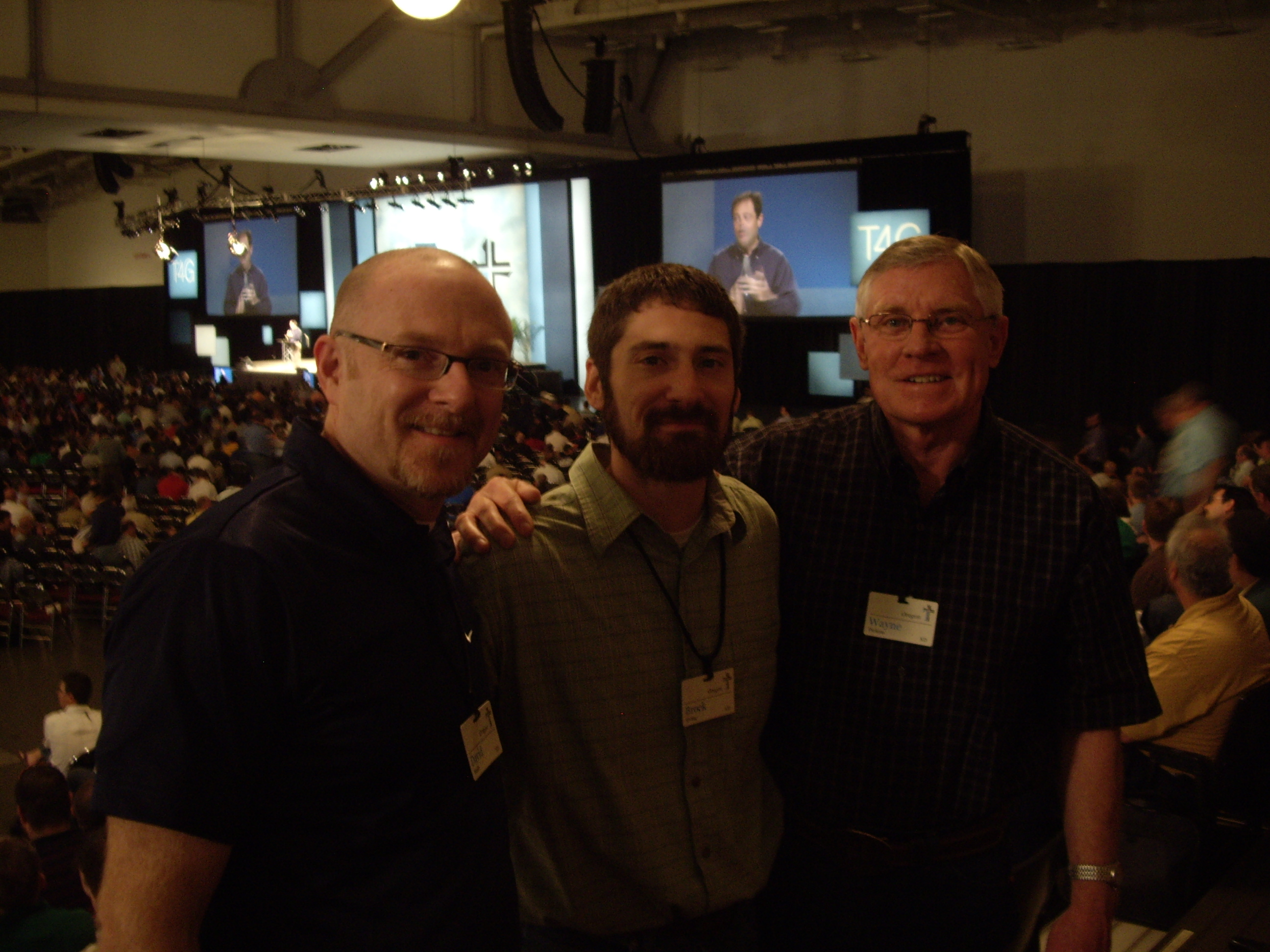 John Piper preached on Wednesday evening. His influence in my life is impossible to measure. I’ll never forget the first time I read Desiring God almost twenty years ago. His Christ-saturated approach to God’s Word began to slowly reshape my pursuit of and passion for God.
The primary question that Dr. Piper’s message addresses is: “Did Jesus and Paul preach the same gospel?” Piper urges, “Read all Gospels in the shadow of the Cross.”
Piper begins by noting three things about people who claim to trust in Christ (Luke 18:9-14). There is the person whose righteousness is “moral.” Next, there is the person whose righteousness is religious/ceremonial. Finally, there is the person whose righteousness is a gift from God.
Piper explains the Luke narrative with the intention of unpacking seven crucial principles (the manuscript is available at http://www.desiringgod.org).
1. Jesus taught justification by faith on the basis of imputed righteousness, not inherited righteousness.
2. No matter how religious you are, don’t trust in it. Only trust in Christ alone.
3. Take heart in your struggle with indwelling sin. When you feel like a failure — look to Christ alone.
4. All moral transformation is the fruit, not the root of justification.
5. Never forget – All good works, words, and deeds will serve to strengthen, not ground your justification.
6. The gospel is universally and globally needed.
7. Give Christ all his glory in the work of salvation!
The grand purpose in the universe is for Christ to be glorified. Piper’s conclusion: Indeed Jesus and Paul preached the same gospel.
C.J. Mahaney concluded Together for the Gospel with an excellent message from 2 Timothy 4:1-5. Mahaney unpacks the biblical description of the pastors’ charge. He notes, “We all have different gifts — but the same charge.”
Mahaney admonishes pastors, be faithful to the message (v. 2). Pastors must preach the Word, which is to say, they must preach the gospel. “Never assume that people have an exhaustive knowledge of the gospel.” “Never altar or add to the story.” “Be committed to unoriginality. Don’t lose sight of what matters most.”
Remaining faithful to the message requires pastoral wisdom (vv. 2-3). Mahaney urges, “We must be familiar with those we are addressing.” In other words, we must know the people. We must understand the hurts of the people.
Remaining faithful to the message requires godly character in general and patience in particular (v. 2). Impatience reveals pride and self-righteousness. And remember that sanctification is a process. “Be patient with people who process truth slowly.” “Don’t assume that you are sufficiently patient.”
Pastors must be faithful to their ministry. They must do the work of an evangelist. They must endure suffering.
Finally, pastors must be faithful to their Savior. Mahaney’s message was a deeply encouraging message for each pastor and an appropriate way to conclude the conference. What a blessing to sit under the ministry of the Word!
I am thankful for the chance to serve side by side with two men of God, Brock Ewing and Wayne Pickens. Brock has proven to be an exceptional intern and has faithfully served in a multitude of ways. And my Senior Pastor is not only my boss. He is one of my best friends in the world!
I am also thankful for a home church who is not only expects their shepherds to faithfully feed the sheep; but a church who joyfully send the sheep from time to time to be fed themselves. These shepherds are ready to come home!
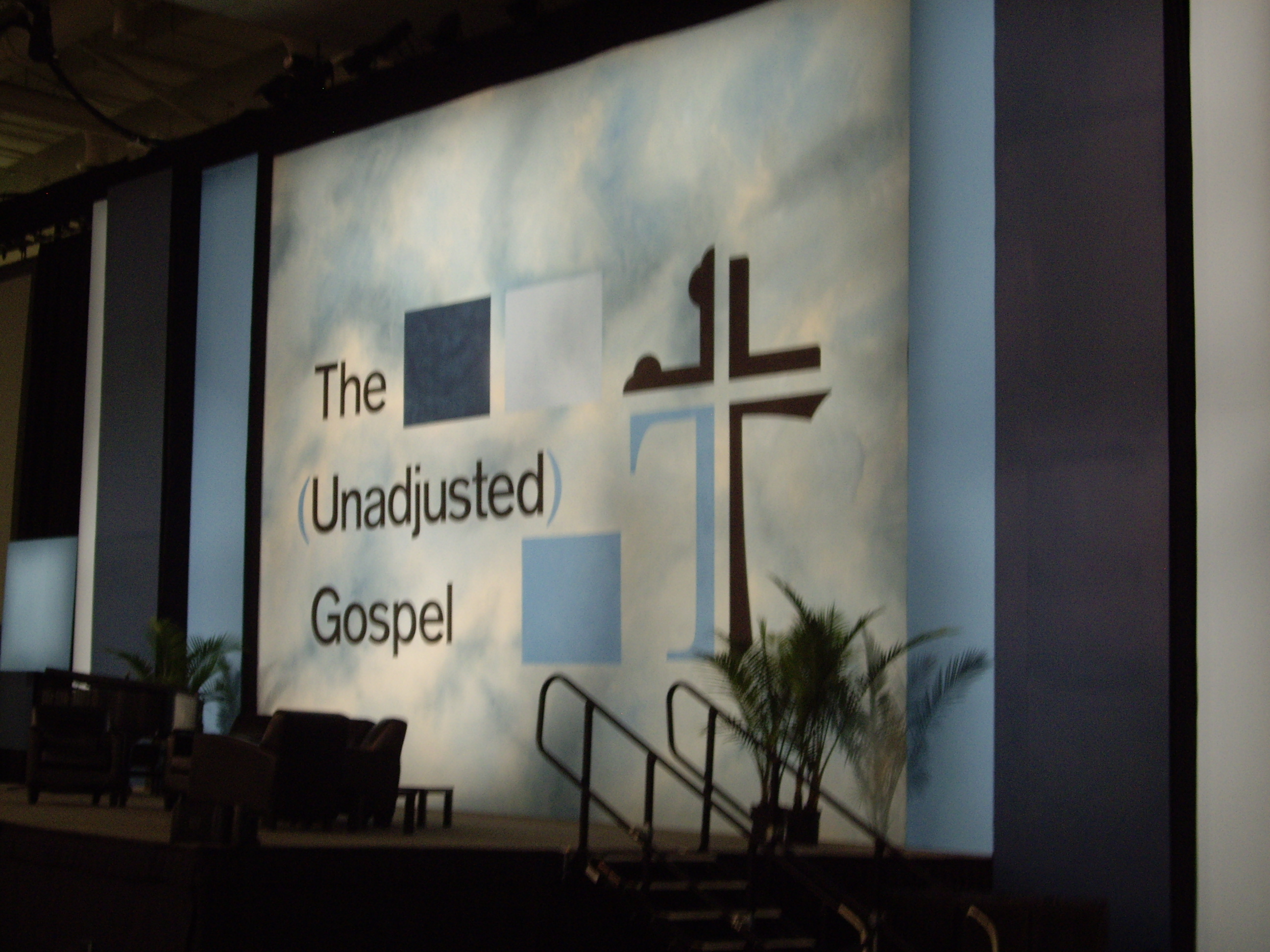 Thabiti Anyabwile stepped up to the plate on Wednesday at Together for the Gospel. Thabiti’s life and message prove that God is in the business of drawing Muslims to himself! This converted Muslim delivered a powerful message that addressed the ever-popular evangelical manta that calls Christ-followers to engage the culture.
Thabiti was clear from the beginning: “If we set out to engage the culture, the gospel may be adjusted if we’re not careful.” This really was a truly vital message, especially in a day when evangelicals are pursuing cultural transformation at a feverish pace. Indeed, a cultural mandate emerges for God’s people in the Genesis account. Thabiti acknowledges this at the outset. Yet he is rightly concerned that many of those who seek to “transform the culture” often times do it in a compromising way and miss the point of Paul’s purpose, philosophy, practices, and perspective.
Paul’s purpose is set forth in Colossians 1:24-2:5, namely, that he might make God’s Word known so people would be mature. The goal is conformity to Christ. We too, must be ruthless as we pursue this purpose of Christ-likeness. Therefore, Thabiti urges, we must “engage culture by engaging the church.”
Second, note Paul’s cultural philosophy (Col. 2:6-7). Here the apostle urges people to live according to the gospel. They must embrace a high Christology. The danger according to Col. 2:8 is to underestimate the power of the world’s philosophy and become captured by her man-centered principles. Thabiti urges in classic Van Tillian tone, “Don’t soft-peddle antithesis.”
Third, pay close attention to Paul’s practices (Col. 2:16-23). He warns against self-made religion and restrictions concerning food, etc. Rather, our focus my center exclusively on Christ.
Finally, note Paul’s perspective. “If then you have been raised with Christ, seek the things that are above, where Christ is, seated at the right hand of God. Set your minds on things that are above, not on things that are on earth. For you have died, and your life is hidden with Christ in God. When Christ who is your life appears, then you also will appear with him in glory” (Col. 3:1-4, ESV).
Thabiti concludes with a strong admonition. Cultural engagement must focus on Christ and the gospel exclusively. Our purpose is rooted in Christ. Our philosophy is centered in Christ. Our practices and perspective must revolve around Christ. Therefore, when one wrongly engages culture, the gospel is inevitably adjusted. May this never be!
John MacArthur delivered the next pitch. His careful exposition of Mark 4:26-29 was unpacked like a gift from a shepherd who has been carefully unwrapping God’s Word for over forty years.
He began by noting the Neo-Finney and Pelagian tendencies in American evangelistic strategy. MacArthur points to another strategy for evangelism, the strategy that emerges in Mark 4. In this passage, readers are called to sow the seed and wait for God to work a sovereign miracle. “We are secondary agents but not the primary cause. We are the means, not the power [behind salvation].” Regeneration is the sovereign work of God.
MacArthur points to four key principles of evangelism. First, we must be humble. Our message is the cross and resurrection of Jesus. Salvation is his doing (1 Cor. 1:30). Our responsibility is not to change the heart. Our responsibility is to faithfully and persistently sow the seed and wait for God’s sovereign hand. Jonathan Edwards remarks, “True conversion is marked by broken-hearted love for God.”
Second, we must be obedient because we know that we are the light that God uses in evangelistic ways.
Third, we must be diligent in our evangelistic endeavors. Our usefulness in evangelism is linked to eternal reward.
Finally, we must be confident for God has determined and exponential outcome.
Once again, MacArthur delivers a Christ-centered message with strong admonition to the people of God, especially shepherds of Christ’s bride.
 Dr. Al Mohler concluded the first night of Together for the Gospel by unpacking eight trajectories that have contributed to an adjusted gospel.
1. The Modern Trajectory is the liberal worldview that embraces naturalism and includes the Bultmann’s project and the so-called Quest for the Historical Jesus.
2. The Post-Modern Trajectory includes the denial of propositional truth and the ascendency of relativism. Mohler rightly maintains that the post-moderns are running out of doctrines to deny! He also warned pastors to beware of the danger of doctrinal fatigue, i.e. giving up the fight for orthodoxy which would result in disaster.
3. The Moral Trajectory compromises the gospel by denying key doctrinal realities such as the substitutionary atonement, propitiation, the wrath of God. This trajectory makes an appeal to “fairness.” Mohler compared the writings of Brian McLaren to Fosdick and contends that “McLaren is light years from Fosdick!”
4. The Aesthetic Trajectory simply recoils at difficult doctrines.
5. The Therapeutic Trajectory sees mankind as sick instead of evil as the Bible portrays. This trajectory is a serious threat to the gospel and is rooted in the ideology of James, Freud, Jung, and Oprah.
6. The Pragmatic Trajectory compromises the gospel by placing emphasis on results.
7. The Emotional Trajectory focused on the doctrinal compromises of Schleirmacher.
8. The Materialist Trajectory focused on misplaced affection on the things of this world.
Dr. Mohler’s message was a powerful polemic that reaffirmed the importance of maintaining clear orthodox sideboards and refusing to adjust the gospel. His message was a vivid reminder that any addition or subtraction to the gospel is in reality a false gospel.
This week, I am in Louisville, Kentucky for T4G – Together for the Gospel. 7,000 men are gathered to reaffirm the biblical gospel, celebrate the truth of the gospel, and to worship the God of the gospel.
Mark Dever kicked the conference off by warning, “You can lose the gospel by no proclaiming it clearly or living it.” A faithful proclamation includes four key components, namely, God, man, Christ, and response.
God is holy and calls his church to be marked by holiness. He is also the God of authority. Therefore the church must clearly reflect God’s nature by rightly using authority in a way that honors him.
Man is sinful and has broken God’s holy law. Consequently, man’s depraved condition must be presented, i.e. a proper diagnosis must be given.
Christ is the solution to man’s sin problem. “We the church must make him visible.” The person and work of Christ must be clearly portrayed to sinners who need a mediator, forgiver, and Savior.
Sinners must respond to the gospel call. Churches must teach and model faith and repentance.
Dever reminded us that preaching God’s Word is central to the life of the church. Indeed, the church is the gospel made visible.
R.C. Sproul preached a powerful message entitled, The Defense and Confirmation of the Gospel. Dr. Sproul reflected on fifty years of ministry and reflected on two concerns that have threatened the message of the gospel.
R.C.’s first concern: “the danger of messing with Mr. Inbetween.” He focused on the Old Testament problem with syncretism and chronicled the history of intellectual thought including the twisted worldviews of Kant, Hegel, Marx, Barth, Bruner, and Bultmann. Sproul gave special consideration to the rise of neo-orthodoxy that does not leave room for inspired, inherent Scripture.
He presented a bird’s-eye view of other movements that have infected our culture, namely, liberation theology, logical positivism, death of God theology, and open theism.
Sproul’s second concern: “the danger of messing with the gospel.” His chief concern is the Reformation reality, sola fide. Three concerns emerged here including the so-called lordship controversy, the ECT document, and Evangelicals who seek to improve the gospel.
R.C. concluded by strongly encouraging pastors to remain faithful to the gospel. His admonition was timely, especially in light of the situation we find ourselves in where crucial doctrines such as justification by faith are either being compromised or discarded all-together.
Thank God for men like Mark Dever and RC Sproul who faithfully wield the Word of God and encourage pastors to guard the good deposit.
 Timothy Witmer sets high standards for biblical leaders in his book, The Shepherd Leader. Witmer’s work is a clarion call to all elders who strive to shepherd to flock of God to the glory of God. Indeed, it is a breath of fresh air in culture that tends to ignore biblical qualifications for elders, not to mention biblical responsibilities for elders.
Alexander Strauch laid the theological framework in his excellent book, Biblical Eldership. Witmer enhances that framework and provides a wide array of practical suggestions for elders who seek to shepherd the people of God.
Part one begins by setting up the biblical and historical foundations. Witmer walks the reader through the Old Testament and builds a strong case for biblical leadership. He argues with Ezekiel that some shepherds are not doing their job. He stresses the plurality and parity of church leadership.
Part two provides a very helpful look at the job description of a biblical shepherd leader. Shepherds know the sheep, feed the sheep, lead the sheep, and protect the sheep. This comprehensive framework is the most helpful section in the book. It will certainly encourages elders who have chosen to adhere to the Scriptural mandate. And it serves as a “spur” for those who have grown complacent in their responsibility to shepherd the flock.
Part three offers practical suggestions for putting the proposed principles to work. The author makes several shepherding tools available at http://www.theshepherdleader.com which include help with delegation, overview sheets, and a monthly shepherding team report.
The Shepherd Leader is bound to become the new gold standard in the field. It should not be seen as a replacement of Strauch’s Biblical Eldership. Rather it is a valuable companion that will serve and strengthen the church for years to come.
4.5 stars

“The flock of Christ cannot be fed except with pure doctrine which is alone our spiritual food”
– John Calvin, Commentaries (Grand Rapids: Baker, 1984), 22:144
 I coached high school tennis in the late 80’s. One of my most vivid memories is my team’s disdain for fundamentals. The first day of practice I told my players to “drop their rackets.” Shocked and perplexed, they wondered what we could possibly accomplish without a tennis racket. “The first week of practice, we will focus on fundamentals, footwork, teamwork, and conditioning,” I said. The groans were deafening!
I am convinced that fundamentals are key in any sport. Fundamentals are critical in the business world. And fundamentals are essential when considering biblical Christianity.
It seems to be fashionable in the church these days to not only neglect fundamentals but to arrogantly dismiss them. I hear it all the time as people bemoan the ancient creeds and confessions. I hear it when people react negatively to theological terminology. And this reaction to the fundamentals of biblical Christianity has led to a steady erosion of the gospel.
For these reasons, Greg Gilbert’s What is the Gospel? is a vital book. It is a return to the fundamentals, a return to the gospel message. This is not a social gospel, a health and wealth gospel, or a gospel that promises mere “fire insurance.” This is the gospel that makes demands: “Take up your cross and follow me” (Luke 9:24). This is the gospel that makes an astonishing claim: Jesus came to rescue sinners from hell (John 3:36). Gilbert unpacks the gospel message by rehearsing the fourfold scheme popularized by Mark Dever: God, man, Christ, response.
The gospel begins with God. This God is the creator. He is holy and righteous and commands people to glorify him.
Man is a sinner and is separated from God apart from grace. He is dead in trespasses and sins (Eph. 2:1-3) and is in desperate need of salvation.
Christ who is fully God and man came to rescue sinners from hell by standing in their place on the cross as a substitute, bearing the wrath of God, reconciling his people to God, and redeeming them from the slave market of sin.
Sinners must respond to the gospel. They must repent and believe (which are two sides of the same coin). Gilbert writes, “Repentance is not just an optional plug-in to the Christian life. It is absolutely crucial to it, marking out those who have been saved by God from those who have not.”
What is the Gospel? is a very basic book. But it is also a very important book. We live in a world where few understand the core message of the gospel message. Gilbert’s book cuts through the fog of health and wealth “gospel”, the non-lordship “gospel,” and the cultural transformation “gospel.”
Utilize this little book in discipleship for new believers and membership classes. Give copies to unbelieving friends. And re-read this great book and become refreshed by the reality of the gospel!
4.5 stars
 Brian McLaren comes out fighting in his newest book, A New Kind of Christianity. Indeed, his savvy style and fancy footwork would make Rocky Balboa proud! I suspect that McLaren, however, would not be comfortable with the fighting metaphor. “Dialogue,” “conversation,” and “exchange” would be more appropriate for this emergent leader. So step out of the “ring” and into the safe confines of a comfortable cafe and enjoy a chai tea latte as we dialogue, converse, and respond to A New Kind of Christianity.
First, I appreciate McLaren’s willingness to receive criticism. He is crystal clear about this. He is very open about the controversial proposals that he sets forth. He expects response and for this we should be grateful.
Second, McLaren’s quest for a new kind of Christianity is commendable as far as it goes: “So our quest calls us first and foremost to nurture a robust spiritual life – not only a deep commitment to serve God, but also a deep desire to know and love God …” His goal may appear admirable enough on the surface; however the means he utilizes in order to achieve the ends are deeply troubling. This short review seeks to surface some of the more troubling aspects of McLaren’s work.
The author begins by alerting readers to the need for a fresh set of questions and likens his pursuit to Luther’s 95 theses which caused a firestorm in the 16th century and implies a revived firestorm in the 21st century. McLaren’s 96th thesis is as follows: “It’s time for a new quest, launched by new questions, a quest across denominations around the world, a quest for new ways to believe and new ways to live and serve faithfully in the way of Jesus, a quest for a new kind of Christian faith.” McLaren’s so-called 96th thesis sets the stage for ten questions to follow which compromise the main content of the book. They include:
1. The Narrative Question: What is the overarching story line of the Bible?
2. The Authority Question: How should the Bible be understood?
3. The God Question: Is God violent?
4. The Jesus Question: Who is Jesus and why is he so important?
5. The Gospel Question: What is the gospel?
6. The Church Question: What do we do about the church?
7. The Sex Question: Can we find a way to address human sexuality without fighting about it?
8. The Future Question: Can we find a better way of viewing the future?
9. The Pluralism Question: How should followers of Jesus relate to people of other religions?
10. What-Do-We-Do-Now Question: How can we translate our quest into action?
McLaren makes it clear that his assertions are merely responses, not answers. But it becomes painfully clear throughout the book that his assertions are in fact answers, especially in his denial of the Fall, original sin, and the biblical description of hell and eternal torments. Most important is coming to this understanding: McLaren’s answers (pardon me, his responses) are rooted in his refutation of the traditional biblical plot-line.
The author challenges and condemns this plot-line, namely, the way of reading redemptive history in the following categories: “Eden, the Fall, Condemnation, Salvation, Heaven/Hell.” In this context, he writes, “We might question conventional theories of atonement or the nature and population of hell or whether concepts like original sin or total depravity need to be modified” (p. 35). He maintains the traditional overarching storyline in the Bible is the narrative that Plato taught and was the social and political narrative of the Roman Empire, what McLaren refers to as “the Greco-Roman narrative.” McLaren argues that we must “exit the Greco-Roman narrative – quietly and courageously walk out the door and leave its six straight lines behind …” (p. 45).
McLaren is concerned with matters of authority, and rightly so in a culture where God’s Word has been replaced with human autonomy. However, his approach is less than desirable and places readers on the slippery slope of compromise. He rejects the notion of reading the Bible as a “Constitution.” Instead of timeless principles, the author sees the Bible as an “inspired portable library.” Instead of “brick and mortar to construct a building of certainty,” the author sees “hammers and chisels in the form of stories and questions.” Instead of propositional truth, the author views Scripture as an “event or discovery” an “encounter that occurs to readers when they engage with the text in faith.” Instead of “revelation is” the author sees “revelation happening to us.” And instead of viewing the Bible as authoritative and placing the reader “under” the text, the author sees the reader standing “in” the text.
A more lengthy review is necessary in order to respond to McLaren’s beliefs in an open future, his views on the person and work of Jesus, hell, homosexuality, pluralism, and his repudiation of the traditional Reformed understanding of the sovereignty of God, the doctrine of election, and the biblical reality that God ordains everything that comes to pass.
A New Kind of Christianity offers nothing short of a radical reformulation of the historic Christian worldview that results in a marginalized, compromised, watered-down caricature of biblical Christianity. What emerges may appear “new” at first glance, but has more to do with a neo-orthodox approach to Scripture. Indeed, a new emergent liberalism is alive and well. One recalls Barth’s repudiation of propositional revelation and immediately recognizes the similarities of this “old” belief system.
Thoughtful Christians must return to the “ring” where men like Gresham Machen, Carl Henry, and Francis Schaeffer fought long and hard to maintain high standards of biblical fidelity and orthodoxy in the 20th century. These men were firm in their resolve to “contend for the faith that was once for all delivered to the saints” (Jude 3, ESV). How can serious-minded Christ-followers do any less? How can faithful Christ-followers discard the biblical plot-line that emerges in redemptive history, namely, Creation, Fall, Redemption, and Restoration?
Brian McLaren and his version of what he describes as “new Christianity” may appear to be more comfortable in the cafe than the boxing ring. Let the reader decide.
 Veritas et Lux