Brett McCracken and Ivan Mesa Jr. Ed., Scrolling Ourselves to Death: Reclaiming Life in a Digital Age (Wheaton: Crossway Books, 2025), 243 pp.
The internet has changed life as we know it for the foreseeable future. Despite the benefits of recent technological tools, we are experiencing a phenomenon that should be of grave concern to pastors, parents, and Christian leaders. Some notable authors have highlighted how technological advances are hindering learning and even re-wiring the brain.
Brett McCracken and Ivan Mesa continue the discussion in their recent book, Scrolling Ourselves to Death: Reclaiming Life in a Digital Age. The editors of this fine book lock arms with a formidable team of pastors and Christian thinkers who are committed to offering biblical solutions in a world that is being manipulated by technological pirates, through artificial intelligence and algorithms.
The book draws some of its most potent material from Neil Postman’s book, Amusing Ourselves to Death, first published in 1985. Postman’s warning was à propos at the end of the twentieth century. It is even more serious now. Scrolling Ourselves to Death begins by focusing on Postman’s insights. Patrick Miller writes insightfully, “Your phone is a digital syringe. It’s a gateway to lifelong, brain-altering, relationship-destroying addiction.” Such a warning should readers to pause and reflect, leading them to the next section.
The book continues by noting some practical challenges that face Christian communicators. Matters of apologetics, epistemology, and theology are explored, all subjects that make good use of Postman’s timely observations. Thaddeus Williams makes the keen observation that “Christianity scratches humanity’s deepest existential itches for relationship, freedom, mystery, beauty, awe, hope, and more.” This powerful reality is seen throughout the book and serves as a testament to the authority of God’s word.
The book concludes with a section that provides insight on how the church can minister to a “scrolling death” world. Technological advances are not cast aside here; rather, their use is encouraged with the caveat of caution. In an especially illuminating chapter, Read Mercer Schuchardt never repudiates the use of technology or media. But he admonishes readers to embrace their mission. He writes:
Go touch grass. Put down the phone, give up the screen, and initiate: no matter your age, stop scrolling and start your life. You need only ten thousand hours of deliberate practice to get good at something worth doing, and you’ve got that in spades if you give up the 10.85 hours per day currently devoted to media. That’s just 749 days to get really good at your skill, art, trade, or craft; that’s just two years, which is half the time it takes to acquire a college education.
Scrolling Ourselves to Death is a much-needed work. The authors pick up where Postman left off and offer readers a smorgasbord of practice tools for moving into the future with an eye on the gospel and a heart for the kingdom of God.
I received this book free from the publisher. I was not required to write a positive review.
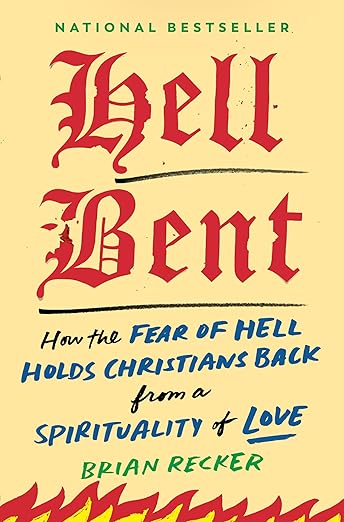
Brian Recker, Hell Bent: How the Fear of Hell Holds Christians Back from a Spirituality of Love (New York: Tarcher, 2025), 254 pp.
It is refreshing to open a book by an author who is vulnerable and authentic, one who shares everyday struggles with life. Brian Recker’s book, Hell Bent: How the Fear of Hell Holds Christians Back from a Spirituality of Love is indeed vulnerable and transparent. He shares how he gave up a career as a pastor, a decision that cost him a network of friends and a life he anticipated would last for decades. He describes a marriage that crumbled and a transition to life as a single father. Mr. Recker’s authentic approach to writing is refreshing and rare. But tragically, he does not write in a way that is faithful to the Scripture.
The author’s primary concern is to convince readers that hell, as conceived of for hundreds of years of church history and by evangelical Christians, is a myth. Unlike contemporary annihilationists, who believe in hell but reject conscious eternal torment, Mr. Recker repudiates the notion of hell altogether. Recker writes, “Hell — with the fear it inspires, the exclusivity it demands, the judgment it promotes, and the punitive God it portrays — corrupts Christian spirituality.” Questioning and rethinking the doctrine of hell led the author down his own path of deconstruction, which, in his words, is “the term used by a growing movement of people who have begun to investigate the premises of their faith with new eyes.” Recker makes his goal clear at the outset: “I deeply hope that Christians – and everyone else – reject the doctrine of hell.”
But readers will get more than they bargained for in Hell Bent. Brian Recker not only abandons the doctrine of hell (including conscious eternal torment), he also rejects the doctrine of original sin, the inerrancy of Scripture, and penal substitutionary atonement. Additionally, he rejects the gospel as it is presented in Scripture and opts for a social justice model and, not surprisingly, embraces universalism, the idea that all people will be reconciled to God, in the final analysis. To make matters worse, the author affirms the LGBTQ movement, promotes liberation theology (commending authors like James Cone and Margus Borg) and progressive Christianity (commending authors like Richard Rohr and Paul Tillich). Instead of seeing sinners who need to be reconciled to God and redeemed by the blood of Christ, he promotes what he calls, healthy spirituality, defined as “getting in touch with your divine self.” “Whatever makes me feel connected to myself, to God, and to others,” writes Recker, “this is spiritual for me.”
Hell Bent presents another gospel. In the words of the author, “The gospel – the good news – is that you are already fully loved and accepted … Salvation is just a way of describing the moment we come to know and believe that we are already loved, that we have always been loved.” Recker writes, “Hell makes it very hard to believe in our belovedness. The terrifying consequences of our supposed innate wickedness do not leave room for the possibility that God may actually rejoice over us, exactly as we are … God is not going to damn you, especially not for being the way God created you.”
While the author rejects the historical and biblical teaching concerning hell, he posits a cavalier view of hell, which is essentially the hell we create for ourselves. Recker writes, “Hell is real, but it’s not a place. Hell is a metaphor, and as a metaphor, it’s as real as anything.” Commenting on Matthew 25:45-46, where Jesus warns the unrepentant of “going away into eternal punishment,” Recker argues, “Jesus is warning us that when we neglect vulnerable, marginalized people, we create hell for ourselves and for other people.” He continues, “Hell is the natural consequence of our actions, not punishment from God. God does not punish sin in the way we punish each other. Sin is its own punishment.” He approvingly cites the Franciscan priest, Richard Rohr: “We are punished not for our sins, but by our sins.”
Even though Mr. Recker repudiates some fundamental doctrines of historical Christianity, he still professes to be a Christian. He affirms, “Although I’m a Christian, I do not believe it’s essential for people to become Christians to experience healthy spirituality or be connected to God.” He continues, “Jesus invites everyone to a banquet, and the very nature of hell is refusing to join the party.” As one who rejects the doctrine of original sin, he views everyone as “clean.” He argues, “Hell is what happens when we fail to recognize our connection to each other.”
Evaluation
Hell Bent is a complete recasting and reformulation of Scripture. The author picks and chooses the doctrines he likes and abandons the doctrines that fail to meet his personal criteria. The reasons below highlight why I cannot commend this book to any serious-minded follower of Christ.
A flawed view of God
A. W. Tozer says, “What comes into our minds when we think about God is the most important thing about us.” The god in Hell Bent is only loving and never judging. He is presented as “a universal Spirit who does not have genitals.” This god excuses sin and tolerates sinful creatures. Or, in the words of the author, “The advance of the LGBTQ rights is another libertine move of the Spirit.”
Tozer adds, “Wrong ideas about God are not only the fountain from which the polluted waters of idolatry flow; they are themselves idolatrous. The idolater simply imagines things about God and acts as if they were true.”
Hell Bent is packed with wrong ideas about God; ideas that will lead the unsuspecting reader down a pathway of idolatry.
A false gospel
Hell Bent promotes a false gospel that bears no resemblance to the gospel that Jesus and the apostles preached. This is not the first time a false gospel has appeared on the scene. The apostle Paul wrote to the Galatian church, “I am astonished that you are so quickly deserting him who called you in the grace of Christ and are turning to a different gospel — not that there is another one, but there are some who trouble you and want to distort the gospel of Christ.” (Gal. 1:6-7). Paul warned the young pastor, Timothy, to beware of such erroneous theology: “Those who have believing masters must not be disrespectful on the ground that they are brothers; rather, they must serve all the better since those who benefit by their good service are believers and beloved. Teach and urge these things. If anyone teaches a different doctrine and does not agree with the sound words of our Lord Jesus Christ and the teaching that accords with godliness, he is puffed up with conceit and understands nothing. He has an unhealthy craving for controversy and for quarrels about words, which produce envy, dissension, slander, evil suspicions, and constant friction among people who are depraved in mind and deprived of the truth, imagining that godliness is a means of gain” (1 Timothy 6:2b-5).
One of the glaring errors in Hell Bent is the watering down and minimizing of Christ’s cross. The author writes, “The cross shows me what God is like: love, all the way down. A never-stopping love, for the victims and the perpetrators. This is a God who would rather suffer loss for their enemies than punish them … The good news is, God’s presence with you and love for you are not dependent on what you believe about the cross. The cross itself shows us that you couldn’t break free from God’s love if you tried.” This is a far cry from John 3:36 – “Whoever believes in the Son has eternal life; whoever does not obey the Son shall not see life, but the wrath of God remains on him.” Or as Romans 2:5-8 says, “But because of your hard and impenitent heart you are storing up wrath for yourself on the day of wrath when God’s righteous judgment will be revealed. He will render to each one according to his works: to those who by patience in well-doing seek for glory and honor and immortality, he will give eternal life; but for those who are self-seeking and do not obey the truth, but obey unrighteousness, there will be wrath and fury.”
A fatal theology
While Hell Bent advances so-called spirituality, these pages are nothing more than a left-leaning progressive theology that advances inclusivity and syncretism. Such ideals appeal to many people these days, but the words of Proverbs 16:25 remind us, “There is a way that seems right to a man, but its end is the way to death.”
A futile attempt to debunk the doctrine of eternal conscious torment
Recker maintains (as the subtitle suggests) that “the fear of hell holds Christians back from a spirituality of love.” However, he never proves his case for the abolition of hell. While valiant in his attempt, the case against hell is weak at best and fails to uphold the teaching of God’s Word concerning the final judgment of the unbelieving and the unrepentant.
SUMMARY
I write chiefly as a Christian who upholds the authority of Scripture and orthodoxy, but also as a pastor critiquing the work of a former pastor who has clearly lost his way. I urge readers to turn away from the folly in Hell Bent and find refuge in a God who is altogether holy; a God who sent his Son to live the life that sinful creatures could never live and die a death they all deserve to die. Flee to the Savior for eternal life!
The Spirit and the Bride say, “Come.” And let the one who hears say, “Come.” And let the one who is thirsty come; let the one who desires take the water of life without price. (Rev. 22:17)
It has been said that one of the greatest problems that plague contemporary people is unresolved guilt. Sin squeezes the life out of unwitting victims. Sins of omission, sins of commission, sins of regret, neglect, fear, ungodly anger, broken relationships, and insubordination pose a massive threat to the well-being of well-meaning people.
Everyone is included in this sinful parade. We have all committed sin. We are sinners by nature and by choice – and as a result, guilt rears its ugly head. Sometimes the guilt waits to surface until we’re all alone. For some of us, guilt is a constant note on the musical scoresheet of our lives. For others, the only time we feel guilt is when we hear a preacher reminds us about our sin.
Here is the problem: Apart from the grace of God, we all stand before the bar of God’s justice – and we stand condemned. Apart from the grace of God, we are guilty.
The sound of the gavel is unmistakable in a courtroom setting. When the judge slams the gavel, it reminds us that a verdict has been reached. It announces the guilt or innocence of the defendant.
In 1 John 2, the apostle John ushers us into the celestial courtroom and answers the question, “What is the greatest need of sinners when the gavel falls?” As we enter the heavenly tribunal, I invite you to encounter the divine standard and the divine representative.
THE DIVINE STANDARD
If you ever have the opportunity to attend a trial in a courtroom, one of the first memories you will have is when the Judge enters the courtroom. The bailiff announces, “All rise!” John the apostle introduces the presiding Judge of the universe in 1 John 1:5. He writes, “This is the message we have heard from him and proclaim to you that God is light, and in him is no darkness at all.”
The Presiding Judge of the Divine Standard
He is the majestic God of the universe. The psalmist proclaims, “O Lord, our Lord, how majestic is your name in all the earth! You have set your glory above the heavens” (Ps. 8:1, ESV). Moses says, “Who is like you, O Lord, among the gods? Who is like you, majestic in holiness, awesome in glorious deeds, doing wonders?” (Exod. 15:11).
He is the transcendent God of the universe. “For thus says the One who is high and lifted up, who inhabits eternity, whose name is Holy: “I dwell in the high and holy place, and also with him who is of a contrite and lowly spirit, to revive the spirit of the lowly, and to revive the heart of the contrite” (Isa. 57:15).
He is the sovereign God of the universe. The psalmist reminds us, “Our God is in the heavens; he does all that he pleases” (Ps. 115:3,). Daniel 4:34-35 says, “At the end of the days I, Nebuchadnezzar, lifted my eyes to heaven, and my reason returned to me, and I blessed the Most High, and praised and honored him who lives forever, for his dominion is an everlasting dominion, and his kingdom endures from generation to generation; all the inhabitants of the earth are accounted as nothing, and he does according to his will among the host of heaven and among the inhabitants of the earth; and none can stay his hand or say to him, “What have you done?””
And he is the holy God of the universe. “This is the message we have heard from him and proclaim to you, that God is light, and in him is no darkness at all” (1 John 1:5). The psalmists adds, “But the Lord sits enthroned forever; he has established his throne for justice, and he judges the world with righteousness; he judges the peoples with uprightness” (Psalm 9:7–8). The heavenly Judge has the authority to issue the particulars of the divine standard. This is the divine standard we turn our attention to.
The Particulars of the Divine Standard
John gives his readers an inside look at the motivation for his writing: “My little children, I am writing these things to you so that you may not sin …” (v. 1). John calls his readers to live holy lives, what he refers to as “walking in the light.” Notice the particulars, then, of this divine standard.
First, the call to holiness began in eternity past. Scripture reveals God chose his people before the creation of the cosmos: “Even as he chose us in him before the foundation of the world, that we should be holy and blameless before him …” (Eph. 1:4).
Second, we are called out of darkness to proclaim the excellencies of God. “But you are a chosen race, a royal priesthood, a holy nation, a people for his own possession, that you may proclaim the excellencies of him who called you out of darkness into his marvelous light” (1 Pet. 2:9).
Third, we are called to conduct ourselves in a holy manner. “As obedient children, do not be conformed to the passions of your former ignorance, but as he who called you is holy, you also be holy in all your conduct, since it is written, “You shall be holy, for I am holy”” (1 Pet. 1:14–16).
The heart of the apostle John is to communicate the divine standard to Christians: “so that you may not sin.” Indeed, this is God’s standard – this is the divine standard. But there is a problem we must acknowledge: we do sin (1 John 1:5-10).
To sin means to miss the mark, specifically in our relationship with God. The Westminster Shorter Catechism says, “Sin is any want of conformity unto, or transgression of, the law God.”1 “Sin is disobedience to God’s revealed law,” writes Martyn Lloyd-Jones.2 And John Piper summarizes, “What does not come from satisfaction in God, and through the guidance of God, and for the glory of God, is God-less – it is sin.” 3
Since we fail to the divine standard in every respect, John introduces the Divine Representative.
THE DIVINE REPRESENTATIVE
The apostle John presents three marks of the Divine Representative: “My little children, I am writing these things to you so that you may not sin. But if anyone does sin, we have an advocate with the Father, Jesus Christ the righteous” (1 John 2:1).
First, Jesus is righteous. The author of Hebrews helps us understand that the Divine Representative is sinless: “For we do not have a high priest who is unable to sympathize with our weaknesses, but one who in every respect has been tempted as we are, yet without sin” (Heb. 4:15). Jesus is without sin. Jesus is righteous.
Second, Jesus stands face-to-face with the Father. In the Gospel of John, in the book that bears his name, the apostle writes, “In the beginning was the Word, and the Word was with God, and the Word was God” (John 1:1). The preposition translated “with” comes from the Greek term prós which means “face-to-face.” From all eternity, Jesus has been with the Father.
Third, Jesus is our Advocate. An advocate is a helper or an intercessor. An advocate acts as a representative for someone. In this case, the advocate stands before the Father and represents sinners like you and me. This Advocate stands in our defense. He pleads our case. Lloyd-Jones adds, “Unlike a defense attorney who may argue that his client is innocent of all charges, this defense attorney recognizes your guilt before God. The Advocate turns to the Father and says, ‘… I am here just to remind You that the law has been fulfilled, that the death has died, the punishment has been enacted; they are free because I died for them.”4
And so we cannot meet the divine standard. The Divine Representative stands in our defense. All these things clear the path for the divine accomplishment, which John unfolds in 1 John 2:2 – “He is the propitiation for our sins, and not for ours only but also for the sins of the whole world” (1 John 2:2).
When the gavel falls, a verdict will be rendered. Will you bear the weight of your sin and thus endure 10,000 degrees of white-hot wrath? Or will you trust Jesus to stand in your defense? When the gavel falls, will you stand condemned or will Christ’s sacrificial death pardon you, grant peace (Rom. 5:1), and welcome you into his presence where you will enjoy the pleasures of God forever (Ps. 16:11)?
Andrew Atherstone, Ryle on the Christian Life: Growing in Grace (Wheaton: Crossway Books, 2025), 188 pp.
We live in an age of unprecedented compromise. Courage has been eclipsed by cowardice. Conviction has been hijacked by capitulation. The spirit of syncretism is gaining ground. The bishop of Liverpool, J.C. Ryle (1816-1900) lamented the lack of courage and conviction that characterized so many Christians in the United Kingdom. He bemoaned the cowardice that dominated the theological landscape, especially among young people:
It produces what I must venture to call a ‘jellyfish’ Christianity in the land: that is, a Christianity without bone, or muscle, or power. A jellyfish is a pretty and graceful object when it floats in the sea, contracting and expanding like a little, delicate, transparent umbrella. Yet the same jellyfish, when cast on the shore, is a mere helpless lump, without capacity for movement, self-defense, or self-preservation. Alas! It is a vivid type of much of the religion of the day, of which the leading principle is, ‘No dogma, no distinct tenets, no positive doctrine.’
Ryle on the Christian Life by Andrew Atherstone celebrates the life and legacy of this faithful man. Rather than writing a strict biography, Atherstone draws the attention of readers to the highlights of Ryle’s ministry and his core convictions.
The doctrine of Scripture was the driving force of Ryle’s life. Here is a man who stood on the solid ground of the Bible. He embraced the authority, inerrancy, infallibility, and sufficiency of Scripture throughout his life – and never wavered. Ryle lamented the rampant compromise concerning the Bible in the United Kingdom in the nineteenth century and would be deeply discouraged to see the slide that continues to this day, especially in the UK and America.
Atherstone focuses on Ryle’s orthodox views on sin and salvation. Ryle was never shy about his doctrinal commitments. His allegiance to Reformed theology was proclaimed with passion and faithfulness – in the pulpit and with his pen. He consistently preached about the doctrine of the Trinity. He argued, “that the work of all three Persons in the blessed Trinity, is absolutely and equally needful to the salvation of every saved soul.” Ryle was quick to emphasize the person and work of the Holy Spirit. He maintained that “without the intervention of the Holy Spirit, no one can ever turn to God in repentance and faith.” Ryle’s commitment to an Augustinian theological framework is clear. It is a commitment he maintained throughout his life and ministry.
Ryle was a man of action – and he expected his listeners to follow in his stead. The theme of discipleship recurs in his preaching as well as his writing ministry. “Holy practice will not flourish without sound doctrine.” He was concerned that God’s people were doctrinally sound, but doctrine is never alone. He constantly pushed people to move their feet and open their mouths.
Ryle focused on personal sanctification, as is evidenced in his well-known book, Holiness. He critiqued the “higher life” movement (also known as Keswick) and focused his attention on the necessity of fighting for holiness. Of course, he believed that the Holy Spirit sanctifies the people of God, but never apart from personal responsibility. The popular moniker, “Let go and let God,” had no place in the vocabulary of J. C. Ryle. He urged Christians to “keep up a perpetual war” against their sins.
Dr. Atherstone also touches on the importance of preaching in Ryle’s life. The bishop of Liverpool held to the indispensability of preaching. His little book, Simplicity in Preaching, is a gold mine of information for preachers – a resource that should be read and re-read. The author notes, “He never flagged in his conviction that lively proclamation of the gospel – whether from the pulpit or with the pen – is the God-ordained means of conversion and spiritual growth, essential to reviving the church and establishing healthy Christian disciples.”
The book concludes by drawing the attention of readers to Ryle’s experience with sorrow and affliction, and eventually in death. Ryle is a man who consistently maintained an eternal perspective. He constantly urged the unconverted to repent and believe in Christ for their salvation. He warned unbelievers about eternal judgment. But he also prepared Christians as they chart their path to the heavenly City.
Ryle on the Christian Life is an encouraging and educational read, designed for the man who stands behind the pulpit and anyone seated in the pew. This timely book will encourage the timid, prod the lazy, and challenge every reader. I commend this excellent work, a fitting addition to the Crossway series, Theologians of the Christian Life.
I received this book free from the publisher. I was not required to write a positive review.
2025 was a great year for books. Here are my top ten reads in no particular order.
Meet the Puritans – Joel Beeke, Randall Pederson, and Fraser Jones
Meet the Puritans is exactly what the title suggests. This powerful book is a second edition, revised and expanded. The new edition includes:
45 New Biographies for a total of 190 English and American Puritans, seventeenth-century Scottish Presbyterians, and Dutch Further Reformation divines.
278 New Summaries of Puritan works, with annotated bibliographies of modern reprints.
Comprehensive Revision of the entire previous edition.
200 New Titles Added to the select bibliography of secondary sources.
New, Expanded Glossary plus an updated, expanded list of Puritan publishers.
This book is nothing to trifle with. It is a veritable tome that weighs in at over 1,200 pages. But readers should not be intimidated by the sheer volume; rather they should make their way through this valuable book, noting key insights and marking Puritan writers they were previously unfamiliar with and delighting in old friends from years gone by.
Meet the Puritans is a labor of love that should be cherished by the church for years to come. It should be read for its helpful theological insight. It should be read devotionally. The contents are bound to equip, encourage, and rebuke. For me personally, the Puritans have been a deep source of encouragement, especially concerning the nature of God, the promises of God, the sovereignty of God, the lordship of Christ, sanctification, and the ministry of the Holy Spirit. Of course, no one surpasses the courage demonstrated by the Puritans as they sought to faithfully live the Christian life in the power of the Spirit.
It is not uncommon for people in our generation to marginalize and malign the Puritans. Even more disturbing, it is not unusual to find people who caricature the Puritans or assign false motives. I know of one personally who accused the Puritans of becoming Unitarians! Much to the contrary, the Puritans were a godly lot who battled sin and believed the promises of God, forever faithful on their pilgrimage to the Celestial City. Oh, that we would learn the lesson of church history well and seek to emulate the Puritans. May their love of Christ and his gospel permeate our hearts and minds. May their hatred of sin enter the arena of our lives. May their disdain for the triple-headed monster – the world, the flesh, and the devil be weaved into the fabric of our worldviews. And may their passion for God’s Word and holiness become a part of the warp and woof of our lives.
2. Heart Aflame for God: A Reformed Approach to Spiritual Formation – Matthew Bingham
A Heart Aflame for God: A Reformed Approach to Spiritual Formation by Dr. Matthew Bingham is a book for our times. Bingham defines spiritual formation as “the conscious process by which we seek to heighten and satisfy our Spirit-given thirst for God through divinely appointed means and with a view toward working out our own salvation with fear and trembling.” Tragically, many churches have few resources that point parishioners in a God-Centered direction. A Heart Aflame is a step in the right direction.
The author begins by constructing a foundation that will help orient Christians to growing spiritually. At the heart of this foundation is the Bible’s command to “keep the heart.” Proverbs 4:23 says, “Keep your heart with all vigilance, for from it flow the springs of life.” Puritan authors are utilized to drive home the importance of keeping the heart. This involves an intense battle with sin, but also entails fighting for joy. In the end, this activity is designed to push us toward Christian maturity and godliness, or sanctification.
The five solas of the Reformation are reflected upon that serve both the head and the heart. Bingham writes, “If we believe that the Reformation got the gospel right, then we should be equally attentive to the way a Reformation vision of spiritual formation follows from that same understanding of the gospel.”
There is no pitting of the head and the heart in this work, which proves to be one of its greatest strengths. Indeed, as Bingham notes, “the affections of regenerate Christians are primarily stirred through reflecting on God’s truth as revealed in his word.” Thus, we find a marriage of both the head and the heart, which is in keeping with the thought of the New England Puritans.
Bingham carefully unpacks the crucial spiritual practices that God’s Word sets forth for his people to grow in godliness, namely – Bible intake (hearing from God), meditation (reflecting on God), and prayer (responding to God). A chapter for each discipline (which Bingham refers to as the Reformation Triangle) is included that educates and inspires.
A Heart Aflame for God is a much-needed balm for the soul, a book that is sure to warm hearts and ignite minds for the great cause of the gospel.
3. Spurgeon: A Life – Alex DiPrima
Spurgeon: A Life by Alex DiPrima is a pastoral look at the Prince of Preachers. DiPrima opens a refreshing new window on the life and ministry of Charles Haddon Spurgeon. No stone is left unturned. The faithful ministry of a mighty man of God is set forth in a way that is accessible and educational.
4. The Sin of Empathy: Compassion and Its Counterfeits – Joe Rigney
Joe Rigney skillfully cuts through the fog that has settled on the church and academy. Highly recommended.
5. Stockholm Syndrome Christianity: Why Christian Leaders Are Falling – and What We Can Do About It – John G. West
John West alerts readers to the compromise that has crippled Christian Universities.
6. Mark Twain – Ron Chernow
Ron Chernow has done it again. Mark Twain is an illuminating account of an enigmatic figure who continues to capture the imagination of the American mind.
7. The 1916 Project: The Lyin’, the Witch, and the War We’re In – Seth Gruber
Seth Gruber skillfully exposes the lies that undergird the abortion industry.
8. The British Are Coming: The War for America, Lexington to Princeton, 1775-1777 – Rick Atkinson
The British is Coming is a sweeping account of American history that explores the events leading up to the founding of the most pivotal nation on earth. Required reading for history enthusiasts.
Remembering Heaven: Meditations on the World to Come for Life in the Meantime – Matthew McCullough
Heaven is not only the final resting place for the people of God; it is what they long for the most. Yet, too many times, Christians become fixated on earthly things. Matthew McCullough’s book, Remember Heaven: Meditations on the World to Come for Life in the Meantime is an encouraging reminder to focus on our future home.
McCullough sets the parameters early in the book. He writes, “I want to show that the issue is not whether you love this world and its joys, its people and their needs. The question is whether you have any hope beyond this world and what it has to offer. In other words, he reframes the trajectory for Christians and challenges them to orient their hearts and minds heavenward. He adds, “Heavenly-mindedness is absolutely vital because what we want or expect from our future has a huge effect on our experience in the meantime. We humans are future-oriented creatures whether we like it or not.”
The author argues his case for heaven with skill and biblical fidelity. Seven chapters drive readers deeper into the reality of heaven, each one touching on a theme that resounds with gospel hope. The wisdom of the Puritans saturates this work, which bolsters its credibility and invites a more thorough investigation of our heavenly home.
Remember Heaven is an invitation to “set your minds on things that are above, not on things that are on earth” (Col. 3:2).
9. Spies, Lies, and Cybercrime – Eric O’Neil
Scariest book I’ve read in recent memory. Tons of timely wisdom and help for people in a world dominated by tech.
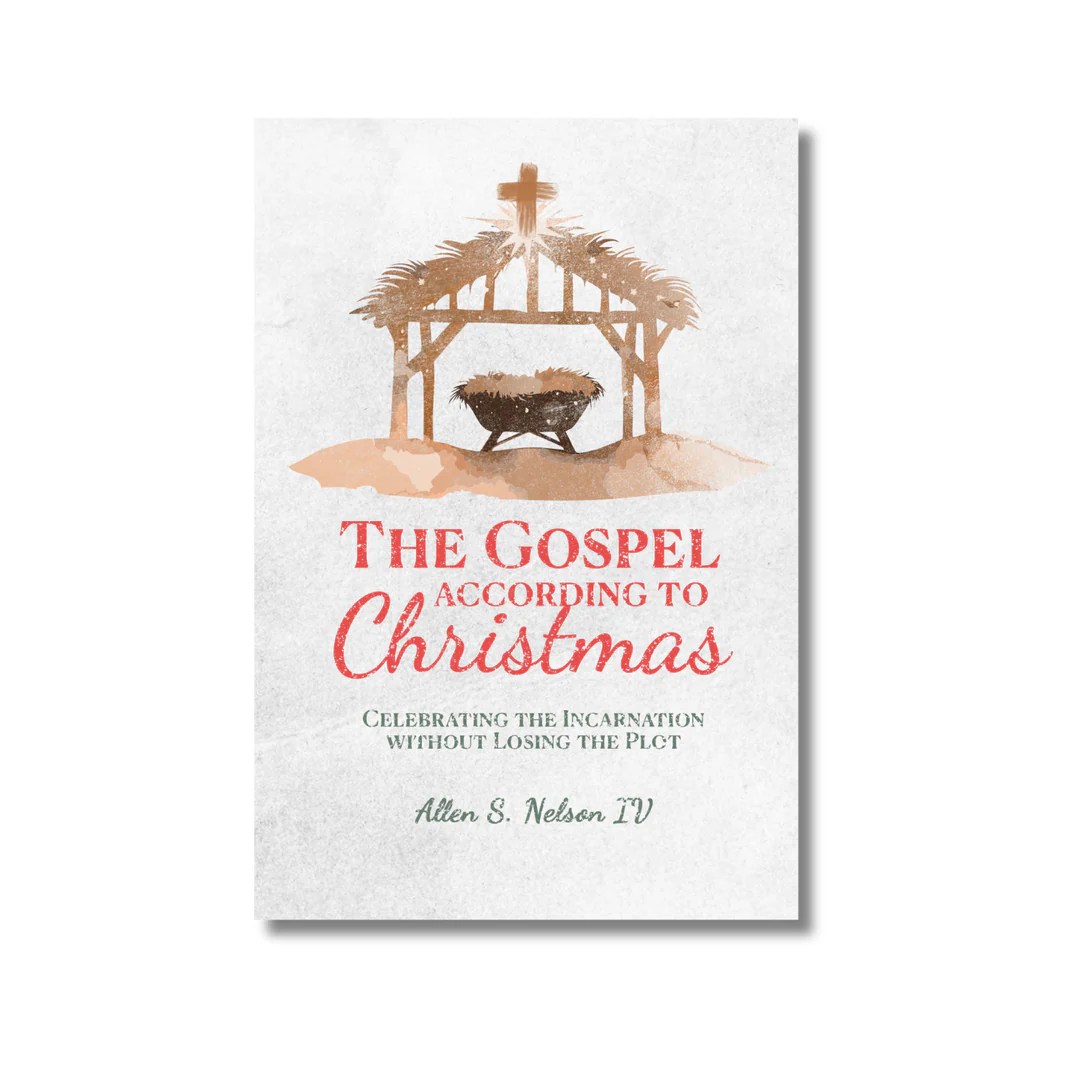
10. The Gospel According to Christmas – Allen Nelson IV
Allen Nelson’s book, The Gospel According to Christmas, is a battering ram to human pride and the pagan notions that have subtly crept into the church. This timely gift shines the light of the biblical gospel through the glorious lens of 1 Peter 2:24 by pointing readers to Jesus, who came to pay the price on the cross for sinners, and rise triumphantly from the grave on the third day.
There is a gaping chasm in the evangelical church. This chasm is a result of compromise and capitulation. It is the result of lazy thinking and lethargic living. This chasm has been produced by years of theological neglect, educational apathy, and lackadaisical leadership. The ungodly leaders that have emerged from the church have spawned a new generation of pragmatists which breeds a brand of progressive Christianity that helps no one.
We need more Christians like John Calvin – people whose gaze is Godward. We are in desperate need of leaders who are humble, contrite, and tremble before the Word of God. This is their holy pursuit. We need more Christian leaders like Calvin who trod faithfully on the path the leads to the Celestial City.
I Offer My Heart to God as a Sacrifice
In many respects, we are far removed from Calvin’s day. In April 1538, Calvin was driven out of Geneva when he refused to compromise his biblical convictions, which concerned the administration of the Lord’s Supper. Just over two years later, in October 1540, Calvin was invited back to Geneva by his friend, William Farel. The prospect of returning to this place caused fear to rise within his soul: “There is no place under heaven that I am more afraid of – I would submit to death a hundred times rather than to that cross on which I had to die daily a thousand deaths.”
In a letter addressed to Peter Viret, Calvin refers to Geneva as “that place of torture.” Yet, this godly Reformer was determined to obey God and follow the prompting of the Holy Spirit. His response to Farel vividly shows the mixture of fear and reverence that consumed him: “If I had any choice I would rather do anything than give in to you in this matter, but since I remember that I no longer belong to myself, I offer my heart to God as a sacrifice.”
As Calvin packed his bags and make his way back to Geneva, he penned these words to Farel: “And for myself, I protest that I have no other desire than that, setting aside all consideration of me, they may look only to what is most for the glory of God and the advantage of the Church.” Calvin chose to boldly walk the path of obedience instead of treading on the convenient path of pragmatism. He writes, “Therefore I submit my will and my affections, subdued and held fast, to the obedience of God; and whenever I am at a loss for counsel of my own, I submit myself to those by whom I hope that the Lord himself will speak to me.”
This is exactly what we need in the church today. We need men and women of courage and conviction. We need people of character. We need people who say what they mean and mean what they say. We need nothing less than people who willingly and joyfully submit to the authority of God and his Word. We need more Christians like John Calvin.
In a stirring letter to William Farel dated October 24, 1538, Calvin points his dear friend, Godward: “But since the truth of the Lord remains firm and unshaken, let us stand resolutely upon the watchtower even to the end, until the kingdom of Christ, which is now hidden and obscured, may shine forth.”
We need more Christians like Calvin because his desire was to be Christ-like. Scripture tells us of the single-minded resolve of the Lord Jesus Christ: “And being found in human form, he humbled himself by becoming obedient to the point of death, even death on a cross” (Phil. 2:8).
More Alive Than Ever Before
Today is the 461st anniversary of John Calvin’s death. On May 27, 1564, Calvin breathed his last breath. They buried him in a common grave, a final act of humility, fulfilling one of Calvin’s last requests. The earthly life of the Genevan Reformer came to an end. But Calvin’s death only signified the beginning of a new life with his Savior in his heavenly home. D. L. Moody reminds us that death is not the final chapter for a follower of Jesus Christ: “Soon you will read in the newspaper that I am dead. Don’t believe it for a moment. I will be more alive than ever before.”
David W. Hall beautifully summarizes the life of the French reformer. He writes of Calvin: “A single man with heart aflame changed the world.” Calvin’s influence began in Geneva as he faithfully exercised the gifts God bestowed upon him. He taught God’s Word, preached God’s Word, counseled with God’s Word, and shepherded the flock with great care and patience. His pastoral ministry soon spread to the corners of Europe and eventually made its way around the world. His ultimate aim had nothing to do with building his platform or attracting the eye of men. Rather, the aim of Calvin was to glorify the great God of the universe.
A Godward Gaze
John Calvin was a man whose gaze was Godward. His gaze was fixated upon his heavenly home. “Whom have I in heaven but you? And there is nothing on earth that I desire besides you” (Ps. 73:25). Calvin’s life echoed the words of the psalmist as he gazed heavenward.
Calvin riveted his gaze upon his Savior. “My flesh and my heart may fail, but God is the strength of my heart and my portion forever” (Ps. 73:26). For much of his adult life, Calvin battled poor health. Yet, he continued to gaze upon his Savior. There was no wavering in this man. His faith in Jesus was solid until the end. This man fought the good fight. He finished the race. He kept the faith. And when he entered into his heavenly rest, his gaze was Godward.
Oh, that we would follow the lead of this godly man. May our lives be marked by humility, contrition, and trembling before God’s Word. Then, and only then, will our gaze be Godward.
Holly Pivec and R. Douglas Geivett, Counterfeit Kingdom: The Dangers of New Revelation, New Prophets, and New Age Practices in the Church (Nashville: B&H Publishing, 2022), 257 pp.
Turn on the radio or walk into almost any evangelical church. One of the first things you will hear are songs by Bethel Worship or Jesus Culture. Young people are especially attracted to these songs. The production quality and musicianship is top-notch. The Jesus Culture website says, “Jesus Culture is not a band, but a family with a collection of songs that reflect what God is doing in their church and their lives. The heart of Jesus Culture has always been to not just sing songs, but to encounter God and see lives changed through those encounters.”
Tragically, few people (and few churches) are examining the doctrinal foundations of these ever-popular and growing groups. Both Bethel Worship and Jesus Culture are products of Bethel Church, located in Redding, California. Two authors have researched the Bethel movement and present their findings in Counterfeit Kingdom: The Dangers of New Revelation, New Prophets, and New Age Practices in the Church.
The book narrows its focus on the practices of the so-called New Apostolic Reformation (NAR) and the various ways that it influences music and ministry in churches around the world. The authors reveal that more than 3.5 million people in America alone, attend churches that embraced NAR. These churches are governed by so-called “prophets” and “apostles.”
Pivec and Geivett alert readers to the theological infrastructure and polity that governs Bethel Church. They uncover the controversial practices of “angelic slumber,” “grave sucking,” “holy laughter,” “laughter in the Spirit,” “the fire tunnel,” “destiny cards,” “communication with the dead,” and the promotion of the so-called “glory cloud.” These occult activities are not only dangerous; they are expressly forbidden in Scripture (Deut. 18:9-12).
Counterfeit Kingdom includes a series of helpful warnings that Christians must heed when evaluating assertions that come out of churches like Bethel. Also included are the various “control tactics” that are being used to deceive unsuspecting people. The authors encourage Christians to read the Bible broadly and develop basic skills in hermeneutics.
The book discusses biblical revival and helps readers discern what is authentic and synthetic. “In short, revival is measured in terms of obedience and holiness. Anything short of that is a counterfeit,” argues Pivec and Geivett.
The Passion Translation of the Bible is discussed. The authors reveal that it is anything but a translation. “Simmons” (the author) has crafted a Bible that would gladden the heart of a narcissist while slighting the sovereign exercises of God’s will through us.” Thus this erroneous “translation” should be marked and avoided.
One of the most helpful chapters included a discussion of the dangers of Bethel worship, which smuggles in NAR theology. Bethel worship should also be avoided.
Now is the time for followers of Christ to be discerning. We must pay close attention to our life and doctrine. We must carefully evaluate our music and the books we read. Counterfeit Kingdom is a book for our times; one that should be studied and passed along to unsuspecting people.
John Cooper, Wimpy, Weak, and Woke: How Truth Can Save America From Utopian Destruction (2023), 506 pp.
On November 14, 2023, “Wimpy, Weak, and Woke: How Truth Can Save America From Utopian Destruction,” written by Skillet frontman, John Cooper, hit the shelves. Within a few scant hours, several one-star reviews appeared on Amazon. Since I had already read one-third of the book and benefited from Cooper’s content, I posted a short line on Facebook in a show of support for the book:
Disregard all the petty and cowardly reviews of the new John Cooper book.Wimpy, Weak, and Woke is an important book for followers of Christ to digest and meditate on.
Almost immediately, leftists assaulted my Facebook wall with inflammatory language, targeting both John Cooper and me. Within 48 hours, I received almost three hundred negative responses to my post.
What is it that draws the ire of this small army of protesters? Several themes emerge in Wimpy, Weak, and Woke. First, this book is unashamedly biblical. John Cooper is a man of the Book. He is unwilling to compromise the truth of Scripture. Page after page, he articulates a Christian worldview that is faithful to the testimony of Scripture. For that reason, his critics mock him with vicious criticism and scathing reviews.
Second, Cooper’s writing is bold. This writer pulls no punches. He is quick to tell the truth and is unafraid of confronting the wolves. His writing is reminiscent of J.C. Ryle, who wrote:
Strive to live a courageous life. Confess Christ before men. Whatever station you occupy, in that station confess Christ. Why should you be ashamed of him? He was not ashamed of you on the cross. He is ready to confess you now before his Father in heaven. Why should you be ashamed of him? Be bold. Be very bold. The good soldier is not ashamed of his uniform. The true believer ought never to be ashamed of Christ (Holiness, 302).
Third, Wimpy, Weak, and Wokeexposes the lies of the enemy. Mr. Cooper addresses the social justice movement. He confronts cultural Marxism and gnosticism. And he deals with sexual sin directly. Cooper writes, “Do I sound extreme when I say that Marxism and its offshoots are diabolical, demonic, or satanic? Frankly, what I find extreme is how sympathetic modern Christians have become to atheistic worldviews, desperately attempting to find common ground with the doctrine of demons.” He clearly states at the beginning of the book, “This is the woke gospel: salvation through virtue signaling.”
Fourth, this book uncovers the truth about postmodernism and “progressive Christianity.” The ugly underbelly of each movement is revealed, which is moral relativism made popular in our generation. Cooper writes:
Christians have embraced progressivism as a counterfeit way of expanding what they believe is the gospel of the Kingdom. Progressives are attempting to build their perfect world – utopia. When Christians cannot discern the difference between the Kingdom of God and utopia, they get duped into building secular utopia, which often makes them the tip of the spear against utopia’s number one enemy – traditional Christianity.
John Cooper put everything on the line in this book. Clearly, he understands the stakes. He writes, “These days it is the person who is devoted to biblical truth who is accused of being divisive. Those who hold fast to the inspired, inerrant, and infallible Word of God are treated as outdated and retrograde. We are viewed as the religious leaders of Jesus’ day who rejected Him.”
I commend Wimpy, Weak, & Woke to the next generation of Christian leaders. John Cooper will encourage you to be faithful in the Christian life. He will embolden you to stand strong when the persecution is fierce. And he will inspire you to march steadily to the shores of the Celestial City.
Matthew McCullough, Remember Death: The Surprising Path to Living Hope (Wheaton: Crossway Books, 2018), 185 pp.
The subject of death is off limits in our culture. Sadly, many churches say very little about death. For this reason, Matthew McCullough’s book, Remember Death: The Surprising Path to Living Hope is a much-need tonic.
McCullough guides readers down the pathway to hope by first acknowledging the reality of death. He establishes this trajectory early in the book:
Before you long for a life that is imperishable, you must accept that you are perishing along with everyone you care about. You must recognize. that anything you might accomplish or acquire in this world is already fading away. Only then will you crave the unfading glory of what Jesus has accomplished and acquired for you. And you need to recognize you are going to lose everything you love in this world before you will hope in an inheritance kept in heaven for you.
One of the great strengths of Remember Death is facing the subject without equivocation. McCullough writes, “Death is an intrusion into the perfect world of the Creator designed by that same Creator to make a point. Death is a punishment for human pride. It exposes our foolish confidence in our freedom to be whoever we want to be.” But the reader is never left dangling. At every juncture, hope is offered and the vista of heaven is on the horizon.
Ultimately, death reveals what awaits each one of God’s elect, a heavenly home, where sin is extinguished forever. The author returns to this theme throughout the book by directing the reader’s attention to the Word of God, his promises, and the triumphant gospel of Jesus Christ.
Remember Death is a much-needed antidote to the pragmatism and man-centeredness that pervades the church. I commend it without reservation.
I received this book free from the publisher. I was not required to write a positive review.
The book addresses the insipid kind of “Christianity” that has subtly slipped into the church. It carefully diagnoses the decline of Christian courage and traces its tragic demise. The book sets forth a carefully crafted plan for recovering lost ground in our generation. And it presents biblical strategies for restoring our spiritual muscle and sets a course for moving forward with bold courage and conviction in a world that is hostile to the historic Christian faith.
Endorsements
“Every generation of church history demonstrates that the people of God must exercise courage and conviction in order to pass on the truth to the next. In our own generation, we have seen countless men and women capitulate God’s truth in exchange for cultural relevancy. Spineless is the manifesto we so desperately need. Thoroughly biblical, David Steele has served the church well by setting courage and conviction as the necessary virtues that will ensure that believers never surrender the high ground of God’s truth in Christ.”
–DR. DUSTIN BENGE, Provost and Professor of Church History, Union School of Theology, Bridgend, Wales
“Spineless is a call for courageous and convictional Christianity in the midst of an evangelicalism that is often more prone to capitulation than to fearless proclamation Author David Steele, identifies the problems afflicting both the church and the world but he is not content to simply “curse the darkness”; he shines the light back to the path of courageous Christianity. The need is great. The stakes are high. The time is now to stand up for truth and to stand confidently on God’s inerrant Word. Steele skillfully utilizes history, theology, and worldview scholarship as he illustrates the biblical call to courage. This book is biblical, timely, and needed. You will learn, grow, and be challenged to a life of courageous faithfulness. I recommend this excellently written work.”
–DR. RAY RHODES, JR., Author of Yours, Till Heaven: The Untold Love Story of Charles and Susie Spurgeon and Susie: The Life and Legacy of Susannah Spurgeon.
“This is a timely call from Pastor Steele to avoid, in a time of great opposition to the Christian faith, the sin Christians fall into of passivity and cowardice. It is a helpful reminder of the importance of staying rooted in Scripture and being helped by the example of heroes of the faith, like the OT prophets, the apostles, the Reformers, the Huguenots, and the Puritans. Also being instructed by theologians like Luther, Calvin, Bavinck, Martyn Lloyd-Jones, J.I. Packer, C. S. Lewis, Francis Schaeffer and Al Mohler in his book, The Gathering Storm. Specifically, strong Christians must settle the matter of worldviews, and be aware of the stark contrast between biblical Christianity and false religious and philosophical systems of our day, knowing that only the Christian worldview is sufficient.”
–DR. PETER JONES, Director, TruthXchange; author of The Other Worldview, Escondido, CA
“My comrade in ministry has hit another home run with this book. One of the most detrimental quotes attributed to Francis of Assisi so many Christians have latched onto is the saying, “Preach the gospel at all times and when necessary, use words.” Dr. Steele balances this ancient pragmatism with the facts that those who have most, and will most transform society are those who know the Word, are convinced and convicted of its authority and truth, and apply it daily in their thoughts, hearts, actions and proclamation of the gospel. Never more than today do we need men and women of conviction that know their Bibles and proclaim and live its message boldly with grace and truth. Thanks again, Dr. Steele for such a motivational manifesto to be theologically and theocentrically courageous in our time by speaking and proclaiming the gospel clearly and loudly.”
–DR. DAVID P. CRAIG, Lead Pastor, Valley Baptist Church, San Rafael, CA
“In his latest book, Spineless: Restoring Courage and Conviction to the People of God, David Steele takes readers by the hand and guides them as only a pastor-theologian par excellence can into the rich soil of biblical-theological convictions that will help shape their lives. In our day, we need Christians who are unafraid of the truth and unashamed to stand upon God’s Word. David, in this work not only gives the correct diagnosis, but the remedy to the ills of why many Christians lack a backbone by steadying our gaze upon the biblical text and the person and work of Jesus Christ. By doing so, he helps his readers discover from the Bible and Church History how men and women of God have stood upon the truth of God’s Word with courage and conviction. Wherever you are at in your walk with the Lord and whatever station you have in the church reading, Spineless will help you grow and be shaped by the Word of God, for a life lived under the gaze of God, for the glory of God.”
–DAVE JENKINS, Executive Director, Servants of Grace Ministries, Executive Editor, Theology for Life Magazine, Host, Equipping You in Grace, Teacher, Servants of Grace and Warrior of Grace Podcasts
“Drawing from the rich legacy of bold and courageous men of church history, and chock-full of sound biblical teaching, Spineless is a must read for all Christians who desire to boldly live with courage and conviction in an age of timidity and rampant compromise.”
–JEREMY PICKENS, Senior Pastor, Good Shepherd Church, Ferndale, WA
“I not only highly recommend this book to you, but just as importantly, its author. Dr. David Steele doesn’t just write words well, he lives them out. His character is worthy of emulating and his writings should be read and reflected on. We need more men like Pastor Steele, men of Gospel grit, who confront our age’s spinelessness with courage and boldness.”
–BRYAN PICHURA, Senior Pastor, Mount Olivet Church, Huron, SD
“The negative effects of pride and domineering church leadership have been well documented, but not enough has been said and written about the perils of cowardice and passivity. Drawing from Scripture, church history, and personal life experience, Dr. David Steele pens a well-researched book for Christians to get serious about being men and women of courage. The amount of relevant church history references in this book is stunning. It’s the kind of book that will be particularly suitable for young Christians.”
–DAVID QAOUD, Associate Pastor, Blogger, Bethesda Evangelical Church, St. Louis, MO gospelrelevance.com