When Christians Disagree – Tim Cooper

Tim Cooper, When Christians Disagree (Wheaton: Crossway Books, 2024), 167 pp.

Scripture proclaims, “Behold, how good and pleasant it is when brothers dwell in unity!” (Psalm 133:1, ESV). Yet, too often, Christians are at each other’s throats and not only disobey their Lord; they miss out on the rich blessing of walking in unity. Tim Cooper’s book, When Christians Disagree explores how two titans of the faith were at odds with one another and draws out some practical lessons for us over four hundred years later.

Cooper introduces the two titans of the Christian faith, John Owen and Richard Baxter. Both Puritans, born at the beginning of the seventeenth century, these men fought vigorously about their understanding of Scripture. Even when they met face to face, their animosity was not quelled, but maximized.

While the controversy that ensued between these two men is complex, the author is quick to sum up the point of contention:

Owen worried about the Arminians: they would be aided by anyone who emphasized, as Baxter did, human response and responsibility. Baxter worried about the antinomians: they would be aided by anyone who emphasized, as Owen did, God’s eternal decrees and the exact price for sin paid by Christ on the cross. These underlying fears made it extremely difficult for each man to see in the other the many points they held in common. Rather, each one saw the other as aiding and abetting the enemy. (p. 69)

While the historical debate between Owen and Baxter proves interesting, the larger lesson for contemporary readers is how we benefit from this tragic clash of personalities in our lives and ministries. Cooper shares a bit of advice that is timely: “I was once told that there is no problem in the world that cannot be solved by humility – humility from all those involved.” This rich counsel combined with other biblical wisdom makes this book incredibly important.

Instead of casting blame on Owen and Baxter, we should learn from their sinful responses to one another and strive to be united in our interactions with others. “By this all people will know that you are my disciples, if you have love for one another.” (John 13:35, ESV)

I received this book free from the publisher. I was not required to write a positive review.

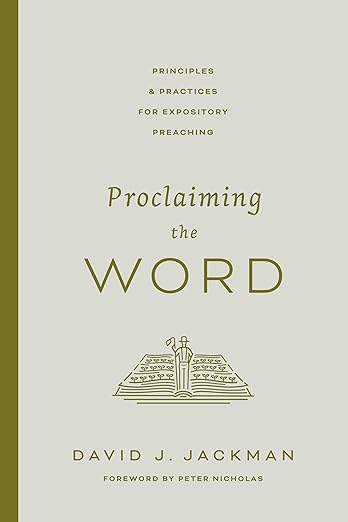
Proclaiming the Word – David J. Jackman

David J. Jackman, Proclaiming the Word (Wheaton: Crossway Books, 2024), 249 pp.

The task of preaching is the most important priority for any lead pastor. As such, pastors must devote enormous amounts of time, energy, and prayer in order to feed the people of God in the way he requires. David Jackman’s book, Proclaiming the Word is an encouraging book for expositors who need an additional tool for their preaching toolbox.

Part 1: Basic Principles

The first part explores eight principles that help ground preachers in the Word of God. The author focus on a range of topics from relevancy, the case for expository preaching, challenges, preparation tips, and perseverance in the pulpit. Each chapter is short and to the point and is sure to elevate the commitment of preaching God’s Word. The insight is deeply biblical, constantly drawing readers back to the sacred text, bolstering their confidence and beckoning them to faithfully wield the sword of truth.

Part 2: Developing Skills

Part two what one would expect in a preaching book. Jackman helps preachers refine their preaching skills by issuing cautions and setting forth basic guidelines for biblical homiletics. Like the first part, the counsel is rooted in Scripture. The author draws on years of personal preaching experience and shares a wealth of knowledge with his readers.

Part 3: Rightly Handling the Word of Truth

The concluding section explores basic hermeneutics that alert preachers to the importance of sound interpretation. Continuity and discontinuity is discussed along with the importance of maintaining a redemptive historical approach to Scripture, with Christ at the center of God’s purposes.

Proclaiming the Word: Principles & Practices For Expository Preaching is a worthy book that should be devoured by every expositor. It is a welcome addition to the growing number of resources committed to developing expository preachers.

I received this book free from the publisher. I was not required to write a positive review.
Three Days in Moscow: Ronald Reagan and the Fall of the Soviet Empire

reaMay 31, 2018, is the thirtieth anniversary of President Reagan’s speech at Moscow State University. On that day, our 40th president stood before a packed house of enthusiastic students who listened to a message of freedom and hope. Lurking behind Reagan was a mural of the Russian revolution and the bust of Vladimir Lenin. When press secretary Marlin Fitzwater was asked about this strange pairing, he replied, “If anybody would ever appreciate Lenin having to spend an hour and a half looking at the backside of Ronald Reagan, it would be the president.”

Three Days in Moscow: Ronald Reagan and the Fall of the Soviet Empire by Bret Baier celebrates the life and legacy of President Ronald Reagan. Baier provides an inside look at the Reagan administration and the events leading up to his monumental speech at the Moscow State University.

President Reagan inspired hope in each of the participants that day:

Standing here before a mural of your revolution, I want to talk about a very different revolution that is taking place right now, quietly sweeping the globe without bloodshed or conflict. Its effects are peaceful, but they will fundamentally alter our world, shatter old assumptions, and reshape our lives.

We do not know what the conclusion will be of this journey, but we’re hopeful that the promise of reform will be fulfilled. In this Moscow spring, this May 1988, we may be allowed that hope: that freedom, like the fresh green sapling planted over Tolstoy’s grave, will blossom forth at last in the rich fertile soil of your people and culture. We may be allowed to hope that the marvelous sound of a new openness will keep rising through, ringing through, leading to a new world of reconciliation, friendship, and peace.

Baier comments, “He was a messenger of hope, seducing them with their own longings, which he knew they had. How could they resist the poignant cry of their countryman?”

One cannot help but recall that President Barack Obama uttered similar words, namely, to “fundamentally transform America.” But the vision Obama was after had more to do with big government, higher taxes, escalated regulation, and minimized religious freedom. Reagan demanded the opposite, and he understood that the Soviet people yearned for this kind of freedom.

At the end of the speech, the audience gave Reagan a standing ovation. Baier reports, “Reagan later quipped that while they were cheering, he’d glanced behind him and seen Lenin weeping.”

Three Days in Moscow: Ronald Reagan and the Fall of the Soviet Empire is a stirring historical tale of freedom that chronicles the ascent of Ronald Reagan to the highest office in the land. Brett Baier accurately and passionately recounts the details of his presidency and the leadership gifts he shared with the American people and the world.

The Long Road Home – Sarah Walton

Sarah Walton, The Long Road Home (Wheaton: Crossway Books, 2024)

Jesus loved children. He loved telling stories. And he especially enjoyed teaching his disciples parables. I’m convinced the master storyteller also loves children’s books. This thought occurred to me for the first time while reading Sarah Walton’s new book, The Long Road Home.

The Long Road Home combines the best of Bunyan’s The Pilgrim’s Progress and Jesus parable of the prodigal son. The story is recast in a contemporary way for children in the current milieu. Two children named Goodness and Wander are promised an inheritance from their father. Wander grows impatient and demands his inheritance. Like the son in Jesus’ parable, Wander squanders his wealth as he travels to faraway places like the town of Perfection, the city of Prosperity, and the Village of Desperation.

Wander eventually comes to the end of himself, realizing that wealth never satisfies. He returns home and is received by his loving father. A celebration ensues, which enrages his brother, Goodness. The father’s never-ending love is at the center of the story as he expresses his heart to his prideful son, Goodness: “Son, you are loved not because of what you have or haven’t done for me, but because you’re my child. All that I have has always been yours.”

Jerry Bridges said, “Our worst days are never so bad that you are beyond the reach of God’s grace. And your best days are never so good that you are beyond the need of God’s grace.” This powerful truth runs through Walton’s beautifully illustrated books (thanks to Christina Yang). Parents are given a golden opportunity to talk about the wonders of the gospel as they walk their children through this beautiful little book. I urge moms and dads to read and re-read The Long Road Home and use it as a springboard for gospel opportunities with their children.

I received this book free from the publisher. I was not required to write a positive review.
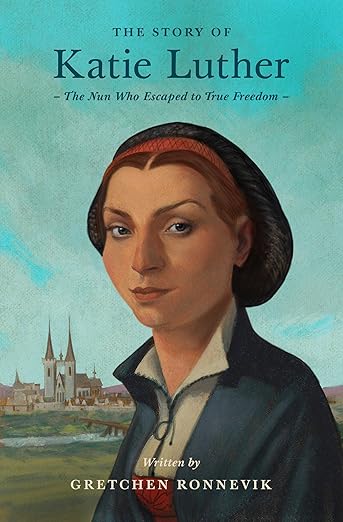
A Christian Reading Manifesto: A New Resurgence of Learning

Reading is a discipline that allows us to explore new frontiers and supercharge our intimacy with God. It is one of God’s appointed means of helping us grow in our knowledge of Christ and love for him. Yet many Christians are reluctant to read and as a result, are spiritually malnourished.

A Christian Reading Manifesto is a brief rationale and apologetic for Christ-followers. It is both a challenge and an invitation to enter the world of reading to help accelerate sanctification and Christian growth.

Endorsements

“Dr. David Steele is a reader! I don’t know another person as deeply committed to a daily, disciplined pattern of reading and learning as this seasoned pastor and author. His new book, A Christian Reading Manifesto: A New Resurgence of Learning, is designed to help other Christians embark on a literary journey. Steele begins by pointing out how reading fuels our minds for productive thinking and ignites our hearts with a greater love for God. Recognizing the obstacles which hamper serious reading, the author offers helpful insights on how to avoid the lure of digital media and mind-numbing images. I was personally motivated by his encouragement to read ‘with the aim of becoming a lifelong learner.’ The ‘added value’ of Steele’s book is a list, categorized topically, of books he has read and recommends. This bibliography is a treasure that is worth the price of the book! I enthusiastically endorse and recommend David Steele’s, A Christian Reading Manifesto.”

— DR. J. CARL LANEY, Professor Emeritus, Western Seminary, Portland, OR; author of The Divorce Myth.

“Dr. Steele provides a fresh look at an age-old idea: that believers should know what they believe and prioritize their lives accordingly. A Christian Reading Manifesto is a must-read for any believer making an effort to reorient their lives toward that which matters: to return to the purer and baser points of spirituality, to take their souls seriously, to remind themselves that there are resources that have been and are being neglected, and to love God with all of their minds. I highly recommend Dr. Steele’s work and will be recommending it to my congregation.”

— DR. DANNY GARDNER, Senior Pastor, Highland Baptist Church, Westminster, CO

“As a Christian Educator, I am grateful for Dr. Steele’s faithfulness to doctrinal truth, the written Word and the great books of the faith. A Christian Reading Manifesto is a timely and compelling call to action that inspires the next generation of Christians to sharp eyes, soft hearts and sanctified minds.

I had the blessing and honor of studying school leadership under David Steele’s father. David continues his father’s legacy of clear, faithful teaching that balances faith, excellence and scholarship. This book is a clear reflection of those values. I want to encourage you to prayerfully join Dr. Steele in his celebration and call to become a Christian reader!”

— BOB RUHLMAN, Superintendent of Schools, Christian Unified Schools, El Cajon, CA

“Whether you are new to the Christian faith or a seasoned saint, I encourage you to read A Christian Reading Manifesto. Your mind will be enriched, your heart will be encouraged, and your feet will be set to action as you are exhorted to put into practice what you’ve read, while continuing in your journey of studying sound Christian literature. A Christian Reading Manifesto is a treasure to help you to grow in your discernment so that your faith can be Word-grounded and Word-shaped in this present age.”

— DAVE JENKINS, Executive Director, Servants of Grace Ministries, Executive Editor, Theology for Life, Host and Producer, Equipping You in Grace, and Contending for the Word; author of Contentment: The Journey of a Lifetime.

Pick up your copy of A Christian Reading Manifesto today!

The Eclipse of God – Erwin Lutzer

Erwin W. Lutzer, The Eclipse of God (Eugene: Harvest House, 2024), 291 pp.

Fyodor Dostoevsky said, “If God did not exist, everything would be permitted.” The Russian novelist words ring true in a haunting way as American culture has all but eliminated God from public discourse. Erwin Luther’s book, The Eclipse of God picks up on Dostoevsky’s theme and explores the ramifications of life without God.

The purpose of the book “is to help us see that first and foremost the church must return to God – we must return to the God of fire, the God who is both merciful and just, the God who redeems but also judges. We must renew our understanding of His sovereignty and holiness.”

Part 1: Searching for Light in a World of Darkness

Dr. Lutzer chronicles the eclipse of God by pointing to three pivotal figures – Karl Marx, Charles Darwin, and Sigmund Freud. The author adds, “They created a contagion, a debilitating virus, that has infiltrated every one of our institutions, our lives, and our families.” Marx attacked God as ruler, Darwin attacked God as creator, and Freud attacked God as lawgiver. Each of these enemies of God is explained, explored, and laid bare. Lutzer demonstrates his keen grasp on these men who continue to rule from the grave.

Part 2: Returning to the God of Our Fathers

The author confronts the various lies and paves a path forward – one that is true to God’s Word and faithful. Lutzer confronts moral relativism, epistemological confusion, the theory of evolution, and man-centered views of God – to name a few.

While much of the book is descriptive (and rightly so), Dr. Lutzer ends on a note of triumph by arguing that Christians must live lives of theological integrity. “If we can stay focused on Christ in the darkness, we will gladly redouble our efforts to shine the light of the gospel as far and wide as possible. We know that the darkness never retreats on its own; only light can push back the darkness. We will serve the Lord with joy, despite the cultural headwinds, and we will not see ourselves as victims, but victors.”

The Eclipse of God is a book for our times. It is packed with cultural analysis and sharp, biblical thinking. Lutzer has done great service by gifting this book to the church as readers Christian minds will be educated, inspired, cultivated, and challenged.

Beholding the Triune God: The Inseparable Work of Father, Son, and Spirit – Matthew Y. Emerson and Brandon D. Smith

Matthew Y. Emerson and Brandon D. Smith, Beholding the Triune God: The Inseparable Work of Father, Son, and Spirit (Wheaton: Crossway Books, 2024), 142 pp.

One of the most important subjects for Christians to consider is the doctrine of the holy Trinity. St. Augustine wrote, “And I would make this pious and safe agreement … above all, in the case of those who inquire into the unity of the Trinity, of the Father and the Son and the Holy Spirit; because in no other subject is error more dangerous, or inquiry more laborious, or the discovery of truth more profitable.” The bishop from Hippo understood the gravity of this topic and commended it to followers of Christ.

Matthew Y. Emerson and Brandon D. Smith’s book, Beholding the Triune God: The Inseparable Work of the Father, Son, and Spirit is short and readable. It rivets the attention of readers on seven important areas including revelation, providence, creation, salvation, mission, communion, sanctification, and judgment.

The task of the authors is to behold the Trinity through his inseparable operations, a doctrine that teaches that one “cannot separate the acts of God between the persons of God. Every act of God is a singular act of Father, Son, and Spirit … Thus, every act of God is the act of the one God – Father, Son, and Spirit are each God but are not each other.” The central theme of the book, then, is to demonstrate that every thing God does is the work of the triune God.

Emerson and Smith work diligently to prove the unity of the Trinity in the seven specific areas noted above. They highlight pertinent biblical texts and draw learners into a deeper understanding of the triune God’s activity in the world and specifically in the church.

I received this book free from the publisher. I was not required to write a positive review.
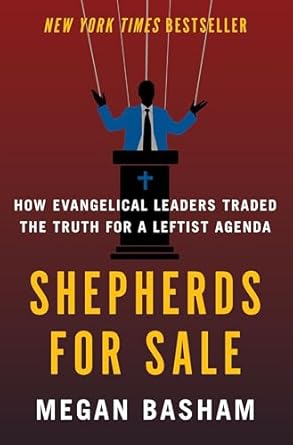
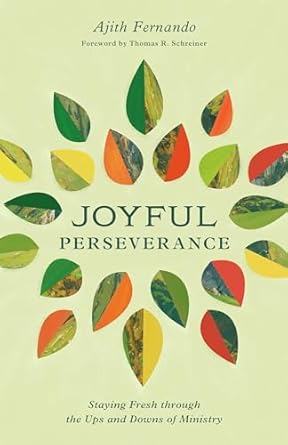
The Unhurried Pastor – Brian Croft and Ronnie Martin

Brian Croft and Ronnie Martin, The Unhurried Pastor (The Good Book Company, 2024), 173 pp.

Pastoral ministry moves at a breakneck pace. Tragically, many pastors begin their ministries in crisis mode and never turn back. The results are usually devastating. Some pastors leave the ministry, discouraged. Others succumb to sin and leave the ministry defeated.

Brian Croft and Ronnie Martin’s book, The Unhurried Pastor is a helpful antidote for busy pastors. The subtitle accurately reflects the intent of the authors: Redefining Productivity for a More Sustainable Ministy. Croft and Martin offer gracious encouragement for men who need to reevaluate and recharge to gain a solid footing in their ministries.

The authors provide practical help and tools for pastors to consider, all of which is grounded in Scripture. A helpful appendix is included that helps pastors evaluate various factors, including communion, contemplation, and commencement. This valuable tool will enable men to honestly assess their ministries and move forward in health and vitality.

Praise the Lord for two men of God who see the struggles that many pastors face. May many be encouraged as they wade into the calm “waters” of this excellent book.

I received this book free from the publisher. I was not required to write a positive review.
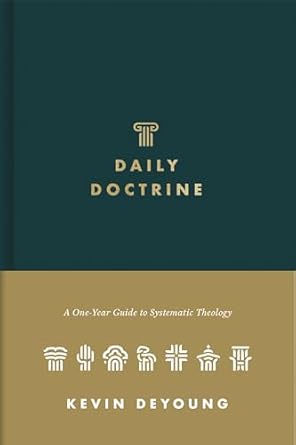
Tracing God’s Story: An Introduction to Biblical Theology – Jon Nielson

Jon Nielson, Tracing God’s Story: An Introduction to Biblical Theology (Wheaton: Crossway Books, 2024), 359 pp.

Tracing God’s Story by Jon Nielson is a helpful introduction to biblical theology that reaches across a diversity of interest levels and educational backgrounds. The book is basic enough for newcomers to biblical theology but contains enough detail to please more seasoned students.

Nielson’s work is arranged in eight scenes, including:

  1. God’s Creation and a Crisis
  2. God’s Promise of a People
  3. God’s People Grow
  4. God’s Kingdom – Rise and Fall
  5. God’s People – Captive and Coming Home
  6. God’s Salvation
  7. God’s Church
  8. God’s Eternity

Tracing God’s Story presents the big story of redemptive history, which begins with creation and culminates with a New Heaven and New Earth. Each section contains two chapters respectively that invite readers to read significant portions of Scripture with broad descriptions of the narrative, a helpful review section, and a challenge to pray through the material presented. The author is careful to keep the focus on the Lord Jesus Christ – from creation to the cross, culminating in eternity future.

I received this book free from the publisher. I was not required to write a positive review.
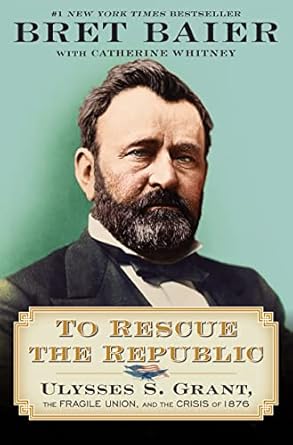
On the Christian Life: A New Translation – John Calvin

John Calvin, On the Christian Life: A New Translation (Wheaton: Crossway Books, 2024), 73 pp.

John Calvin was a man with holy pursuits. He was a man with a Godward gaze. His pilgrimage began in Noyon, France on July 10, 1509. His mother died when he was only five years of age. In 1521, Calvin enrolled in the College de Montage in Paris. Here, he would study logic, rhetoric, and the arts – the very essence of a classical education. Additionally, he would labor over three languages – Latin, Greek, and Hebrew.

The next stop on Calvin’s educational pilgrimage was Bourges and Orleans, where he would study law from 1528-1533. However, sometime between 1533-1534, he experienced a “sudden conversion” and fled from Paris to Basel, Switzerland, where he would begin writing the first edition of the Institutes of the Christian Religion. As one might expect, Calvin devoured the Bible and pursued the Protestant cause with great passion. Listen to how he expresses his deepest desire and how God turned the key to his heart: “In short, while the one great object was to live in seclusion without being known, God so led me about through different turnings and changes that he never permitted me to rest in any place, until in spite of my natural disposition, he brought me forth to public notice.” The turning of this “divine key” set Calvin on a Christ-centered trajectory that changed his life personally and professionally, and would soon change the world. Calvin completed the first edition of the Institutes in 1536.

On the Christian Life – A New Translation contains highlights from book 3 in Calvin’s Institutes. The section is entitled, “How We Obtain the Grace of Christ.” The four chapters help readers understand the role of God’s Word, self-denial, meditation, and developing an eternal perspective. Calvin writes in an unusually contemporary fashion, always directing our gaze to the Scriptures and the Lord Jesus Christ.

On the Christian Life would be a superb introduction to anyone who may be intimidated by the depth and breadth of Calvin’s Institutes. It is educational, illuminating, and God-centered.

Highly recommended!

I received this book free from the publisher. I was not required to write a positive review.