Modern technology has launched us into the stratosphere of learning. With the click of a mouse or a few keystrokes, we can access information from around the world and gain a treasure chest of knowledge. Smartphones are at the forefront of the new technological frontier and provide users with a massive array of educational and intellectual tools. These ingenious devices have “thirty thousand times the processing speed of the seventy-pound onboard navigational computer that guided Apollo 11 to the surface of the moon.” Never before have we been able to access so much information. In addition, the rise of podcasting and audiobooks allow us to connect with current and previous generations in a way that was once impossible.
Despite the benefits of recent technological tools, we are also experiencing a phenomenon that should be of grave concern to pastors and Christian leaders. Many people, especially millennials (people born between 1981 and 1995) are eager to learn but appear resistant to reading. They are “on the verge,” in the prophetic words of Neil Postman, “of amusing themselves to death.” They may eagerly listen to a podcast or watch a YouTube video, but a growing number of people pass when it comes to the written page. They are quick to listen but slow to read. Thus, we stand at the crossroads. We have a wealth of information at our fingertips but many resist the challenge to read books. Pastors should be especially concerned as they seek to train and equip the next generation of Christian leaders, who are in many cases, reluctant to read.
UNPACKING THE CHRISTIAN READING MANIFESTO
Mark Noll laments, “The scandal of the evangelical mind is that there is not much of an evangelical mind.” Thirty years earlier, Harry Blamires offered an even grimmer assessment: “There is no longer a Christian mind; there is no shared field of discourse in which we can move at ease as thinking Christians by trodden ways and past established landmarks.” These allegations should serve as a warning and alert Christians, thus refueling their resolve for learning and spiritual growth. My own view is one of cautious optimism. That is, I maintain (despite of the evidence) that there is still hope for the evangelical mind. But a new awakening will require a commitment to, you guessed it … reading.
I offer this Christian Reading Manifesto as a brief rationale and apologetic for evangelicals, especially young people. My hope is that many will respond to the challenge and enter a new era of learning which will accelerate their Christian growth and sanctification. Lord willing, this new resurgence of learning will impact countless lives in the coming days and help spark a new Reformation.
1. Reading forces us to think
The very act of reading is an act of the mind. Our culture invites and even demands us to have “open minds” about everything under the sun – religion, philosophy, and politics, to name a few. G.K. Chesterton warned, “Merely having an open mind is nothing. The object of opening the mind, as of opening the mouth, is to shut it again on something solid.” Given the current trajectory, the next generation of Christian leaders will be open to almost anything. Thus, they will fail to discern between truth and error. They will be “tossed to and fro by the waves and carried about by every wind of doctrine” (Eph. 4:14). Their failure to invest in the life of the mind will result in a gradual epistemological erosion that will affect generations to come. They will bear a strange resemblance to Paul’s kinsmen who had a zeal for God, but not according to knowledge (Rom. 10:2). They will, in the words of Hosea 4:6 be laid to ruin: “My people are destroyed for lack of knowledge; because you have rejected knowledge …”
God gave us minds. He expects us to use them. Paul charged Timothy, “Do your best to present yourself to God as one approved, a worker who has no need to be ashamed, rightly handling the word of truth” (2 Tim. 2:15). The Greek term translated, do your best means “to be eager or zealous; to show a keen interest in something.” One of the ways we present ourselves to God is through consistent study: “Study to shew thyself approved unto God …” (KJV). Paul’s command to Timothy is no less a command to each of us. The fruit of such diligent study has three important results.
First, such a person is approved. This person has been tested and is shown to be genuine. The prerequisite for this approval, however, is a zeal for the truth. The person who is approved has committed himself to study and has a passion to pursue the truth and practice the truth. “So I will keep Your law continually, forever and ever. And I will walk at liberty, For I seek Your precepts” (Psalm 119:44–45, NASB95).
Second, this kind of person has no need to be ashamed. This person is not open to blame. He is irreproachable. The great benefit of this quality is a life characterized by freedom. Lifelong learning characterizes the one who is committed to passionately pursuing the truth. But the prerequisite for such a pursuit involves reading.
Third, this kind of person handles the truth with precision. We get the term “orthodoxy” from the phrase translated as rightly handling. The person who commits to diligent study is in a position to handle the Word of God with accuracy. He is committed to reading and analyzing Scripture correctly. Such a person cuts it straight and maintains strict standards of orthodoxy. He will rise up with men like Athanasius by opposing false teaching and clinging to the truth.
Paul’s command to Timothy and every subsequent follower of Christ involves careful thinking. “Deep within the worldview of the biblical authors and equally within the minds of the earliest church fathers was the understanding that to be fully human is to think.” And careful thinking involves reading. There is simply no way around this principle. People who resist reading will likely be quick to appeal to other learning venues like audiobooks and podcasting. But the written word is the gold standard of learning. Reading the written word is the great equalizer. John Piper reminds us:
“The way we glorify him is by knowing him truly, by treasuring him above all things, and by living in a way that shows he is our supreme treasure … I am pleading that in all your thinking you seek to see and savor the Treasure. If thinking has the reputation of being only emotionless logic, all will be in vain. God did not give us minds as ends in themselves. The mind provides the kindling for the fires of the heart. Theology serves doxology. Reflection serves affection. Contemplation serves exultation. Together they glorify Christ to the full.”
To ignore reading, then, is tantamount to turning away from a treasure chest filled with precious jewels.
2. Reading cultivates discipline
While audiobooks and podcasting have their place, one of the major drawbacks is a passive approach to learning. Very few people will commit to sitting down with pen in hand during a podcast session. It is not unusual for audio content to go in one ear and out the other.
Reading, on the other hand, cultivates discipline. It forces us to follow the arguments, reasoning, and rationale of the author. It invites the learner to pay attention to key words and phrases. Reading requires taking notes and highlighting for future reference. The very act of reading promotes attentiveness. The precursor to attentiveness is discipline.
The connection between doctrine and discipline is unavoidable in 1 Timothy 4:6-8. Paul admonishes the young pastor:
“In pointing out these things to the brethren, you will be a good servant of Christ Jesus, constantly nourished on the words of the faith and of the sound doctrine which you have been following. But have nothing to do with worldly fables fit only for old women. On the other hand, discipline yourself for the purpose of godliness; for bodily discipline is only of little profit, but godliness is profitable for all things, since it holds promise for the present life and also for the life to come.”
Paul’s passion is that Timothy would be constantly growing and learning. Instead of fixating on worldly things, Paul instructs him to discipline (or train) himself for the purpose of godliness. Reading, therefore, is an essential aspect of Christian discipleship.
3. Reading forces us to reckon with words
The historic Christian faith is one that is built around words. In Genesis 1:1 God spoke the cosmos into existence. God uttered three words, “Let there be light,” and there was light (Gen. 1:3).
The Jewish people clung tenaciously to a tradition that was undergirded by words.
“Hear, O Israel: The LORD our God, the LORD is one. You shall love the LORD your God with all your heart and with all your soul and with all your might. And these words that I command you today shall be on your heart. You shall teach them diligently to your children, and shall talk of them when you sit in your house, and when you walk by the way, and when you lie down, and when you rise. You shall bind them as a sign on your hand, and they shall be as frontlets between your eyes. You shall write them on the doorposts of your house and on your gates” (Deut. 6:4–9, ESV).
Words, in all reality, are at the very center of the Christian faith. “God has revealed himself in words to minds. His revelation is a rational revelation to rational creatures.” Remember Paul’s challenge to Timothy, namely – to be “constantly nourished on the words of faith” (1 Tim. 4:6). Imagine where you would be as a Christian if you were unable to read. Kevin DeYoung highlights the importance of this emphasis on words: “We make no apology for being Word-centered and words-centered. Faith comes by hearing (Rom. 10:17). That’s how God designed it because that’s how he has chosen to reveal himself.” So reading forces us to pay careful attention to words. Instead of condemning words, then, we celebrate words and affirm their importance to historic Christianity.
4. Reading fuels our minds and ignites our hearts
R.C. Sproul spoke frequently about the rampant anti-intellectualism that dominates the postmodern theological landscape. “This same specter of anti-intellectualism rises regularly to haunt the Christian church,” wrote John R.W. Stott. Such is the case of a church that seeks entertainment over education. “We are” in the words of Neil Postman, “amusing ourselves to death.”
Reading, however, fuels our minds and ignites our hearts. It connects us with the great heroes of church history. Reading invites us into their world, helps us see things from their perspective, and acquaints us with their sufferings.
Reading leads us to the Word (logos). “In the beginning was the Word,” writes John, “and the Word was with God, and the Word was God” (John 1:1-2). In other words, reading introduces us to the Savior (Rom. 10:17) and helps cultivate our faith in Christ, leading us into deeper fellowship and communion with him (1 John 1:1-3).
The very act of reading, then, serves as a sort of kindling that helps fuel our minds and ignite our hearts. Reading is a great boon to the soul.
5. Reading helps us love God with our minds
Scripture commands us to love God with all our minds. Yet this imperative is routinely ignored by many: “And he said to him, “You shall love the Lord your God with all your heart and with all your soul and with all your mind” (Matt. 22:37). J.P. Moreland adds, “If we are going to be wise, spiritual people prepared to meet the crises of our age, we must be a studying, learning community that values the life of the mind.” John Piper takes it one step further: “Loving God with the mind means that our thinking is wholly engaged to do all it can to awaken and express the heartfelt fullness of treasuring God above all things.” Such a pursuit, as Moreland and Piper assert, is not optional. Rather, it is essential. Loving God with our minds stands at the very center of our Christian lives.
The Christian mind, therefore, must be nurtured and developed. It must be shaped by Scripture and learn to rejoice in God’s truth. At the same time, the Christian mind must reject worldly ideology and philosophy. “The mind of man,” writes Harry Blamires, “must be won for God.”
Cultivating a Christian mind requires a basic understanding of knowledge. David S. Dockery suggests that “the starting point of loving God with our minds, thinking Christianly, points to a unity of knowledge, a seamless whole, because all true knowledge flows forms the one Creator, to His one creation … all truth has its source in God, composing a single universe of knowledge.” Such a robust understanding of knowledge will enable us to take the first step to loving God with our mind. Reading facilitates this process and moves us in a decisively Godward direction.
6. Reading is essential for Christian growth
Paul was concerned for the spiritual growth of his friends in Colossae:
“And so, from the day we heard, we have not ceased to pray for you, asking that you may be filled with the knowledge of his will in all spiritual wisdom and understanding, so as to walk in a manner worthy of the Lord, fully pleasing to him: bearing fruit in every good work and increasing in the knowledge of God; being strengthened with all power, according to his glorious might, for all endurance and patience with joy” (Col. 1:9–11, ESV).
First, Paul prays that the Colossians would be consumed by the truth (v. 9). He prays a similar prayer for the Ephesian believers and asks God to grant them a spirit of wisdom and of revelation in the knowledge of God (Eph. 1:16-17). He prayed that the Philippian believers would grow in knowledge (Phil. 1:9). Paul understood that the marginalization of knowledge would be deadly to the sanctification process.
Second, Paul prays that the Colossians would be transformed by the truth (vv. 10-12). The progressive marks of ongoing transformation include worthy walking, bearing fruit, and increasing in the knowledge of God. “We must always make progress in the doctrine of godliness until death.” Such a commitment results in spiritual strength.
Reading, therefore, becomes an essential ingredient that helps fulfill the prayer that Paul prays for the people of God.
7. Reading builds humility
On one end of the spectrum, reading reminds us of what we don’t know. When we make a concerted effort to read, we come face-to-face with this reality: We don’t know as much as we think we do! Surely, this reminder will work wonders and help transform us into the humble people that God is looking for (Isa. 66:2; Jas. 4:6-10).
On the other end of the spectrum, reading will alert us to the dreadful deficiencies in our own personal pilgrimages. “Without strong theological traditions, many evangelicals lack a critical element required for making intellectual activity both self-confident and properly humble, both critical and committed. To advance responsible Christian learning, the vitality of commitment needs the ballast of tradition.” It is this realization that should prompt us to begin afresh and commit ourselves to reading, which will keep us on a path of humility.
A MODEST PROPOSAL
A fourth-century pagan heard a child mutter two Latin words that would change his life forever. “Tolle lege,” said the child. “Take up and read.” Augustine opened a Bible and read, “Let us walk properly as in the daytime, not in orgies and drunkenness, not in sexual immorality and sensuality, not in quarreling and jealousy. But put on the Lord Jesus Christ, and make no provision for the flesh, to gratify its desires (Rom. 13:13-14, ESV). The Spirit of God quickened the stone-cold heart of Augustine that day. A pagan was delivered from the darkness and transferred to the kingdom of Christ (Col. 1:13-14).
My concern is that those who will benefit the most from this article will never read it in the first place. In other words, the strange irony is that those who need this the most simply will not take the time to “take up and read.” While some young evangelicals bemoan the discipline of reading, they sever the root of the tree which is designed to help them grow and flourish. Malnourished and immature Christians will populate our pews and propagate a new breed of spiritual immaturity.
Despite the current state of the church, however, there are some encouraging signs on the horizon. Even Mark Noll who has offered a grim assessment on the Christian mind has recently written, “We are indeed witnessing improvement in Christian intellectual life from evangelical, but this improvement does not point toward the development of a distinctly evangelical mind.” A move in the right direction will require a concerted effort. It will require discipline, as we have already seen. Therefore, I challenge Christians to set themselves to the task of reading. This modest proposal includes four basic goals that anyone can implement immediately.
1. Commit to reading
The first challenge is to begin reading. It should go without saying that the Bible should be foremost in our reading diet. A cursory glance reminds us of the importance of daily time in God’s Word:
“The law of the LORD is perfect, reviving the soul; the testimony of the LORD is sure, making wise the simple; the precepts of the LORD are right, rejoicing the heart; the commandment of the LORD is pure, enlightening the eyes; the fear of the LORD is clean, enduring forever; the rules of the LORD are true, and righteous altogether. More to be desired are they than gold, even much fine gold; sweeter also than honey and drippings of the honeycomb. Moreover, by them is your servant warned; in keeping them there is great reward” (Psalm 19:7-11, ESV).
“For the word of God is living and active, sharper than any two-edged sword, piercing to the division of soul and of spirit, of joints and of marrow, and discerning the thoughts and intentions of the heart” (Heb. 4:12, ESV).
“I will meditate on your precepts and fix my eyes on your ways. I will delight in your statutes; I will not forget your word. Deal bountifully with your servant, that I may live and keep your word. Open my eyes, that I may behold wondrous things out of your law” (Psalm 119:15—18, ESV).
“Your words were found, and I ate them, and your words became to me a joy and the delight of my heart, for I am called by your name, O LORD, God of hosts” (Jer. 15:16, ESV).
The Scripture “is the foundation of the Christian mind. A biblical worldview – a view of the world informed and shaped by the Bible – has always marked the most developed and formidable of Christian minds.” Therefore, the Word of God should have priority in our reading goals.
Additionally, we should commit ourselves to a steady diet of Christian books. The average American reads twelve books per year. That figure is likely inflated. Whatever the case, there is a desperate need to introduce good Christian books as a part of our daily lives.
Reading the right kind of books is as important as reading the books themselves. I recommend getting started with these solid resources:
1. The Holiness of God—R.C. Sproul
2. Desiring God – John Piper
3. The Gospel According to Jesus – John MacArthur
4. The Cross-Centered Life – C.J. Mahaney
5. The Pilgrim’s Progress – John Bunyan
6. The Prodigal God – Timothy Keller
Each of these books are relatively short, readable, and readily accessible. But most important, these books are gospel-centered, Christ-saturated, and biblical. They will encourage you greatly and help you move forward on your pilgrimage to the Celestial City. The key is to get started and make a commitment to reading.
2. Set an annual reading goal
When I got married, I began reading books regularly. I began with one or two books a month. Year by year, the number increased. These days, I generally read between ten and fifteen books per month. The number of books is not important. What is important is that you get in the habit of reading.
Once an annual reading goal is established, begin to track your books on Goodreads.com. This site gives you the ability to share your reading progress with others and leave reviews for books if you so choose. One of the great benefits of Goodreads is that you will learn about new books that you can add to your future reading list.
3. Read broadly
The mistake I made early on was to limit my reading to one subject—theology. Over the years, I began to broaden my reading appetite which also included history, philosophy, biography, leadership, management, business, personal growth, health and wellness, popular culture, and politics. Be intentional about the books you read. Reading broadly will make you a well-rounded person and will enable to engage in conversation with people from diverse backgrounds, nationalities, and worldviews.
4. Read joyfully
Jonathan Edwards urged his congregation to delight in God. He said, “God is glorified not only by His glory’s being seen, but by its being rejoiced in.” We do that same when we read for joy. Reading enables us to know who God is and what he requires of us.
“And we are writing these things so that our joy may be complete.” When the apostle John penned these words in 1 John 1:4, he assumed that someone would read his words. And upon reading, their joy would be complete.
The simple act of reading transformed Augustine as we have seen. When he heeded the words of a child in the garden, he read for joy that day. The very act of reading joyfully will revitalize your whole approach. Gone are the days of duty-filled reading. Why? Because you have purposed to set your gaze upon the Savior.
Summary
I urge you to make this Christian Reading Manifesto a part of your daily life. Begin with the Bible. Jesus says, “These things I have spoken to you, that my joy may be in you, and that your joy may be full” (John 15:11, ESV). And read a steady stream of good Christian books that will serve to strengthen and edify you. Perhaps one day, you’ll say with Erasmus, “When I have a little money, I buy books; and if I have any left, I buy food and clothes.”
📚📚
Thanks to Dr. Ismael Gurrolla for posing the question which prompted this article.
- Tony Reinke, 12 Ways Your Phone is Changing You (Wheaton: Crossway, 2017), 41. ↩
- Neil Postman, Amusing Ourselves to Death (New York: Penguin Books, 1985), 4. ↩
- Mark Noll, The Scandal of the Evangelical Mind (Grand Rapids: Eerdmans, 1994), 3. ↩
- Harry Blamires, The Christian Mind (Ann Arbor: Servant Publications, 1963), 4. ↩
- James Emery White, A Mind for God (Downers Grove: IVP, 2006), 15. ↩
- John Piper, Think: The Life of the Mind and the Love of God (Wheaton: Crossway, 2010), 15, 183-184. ↩
- Stott, Your Mind Matters, 20. ↩
- Kevin DeYoung, The Ten Commandments (Wheaton: Crossway, 2018), 46. ↩
- John R.W. Stott, Your Mind Matters (Downers Grove: IVP, 1972), 8. ↩
- John Piper, Think: The Life of the Mind and the Love of God, 19. ↩
- Harry Blamires, The Christian Mind, 81. ↩
- David S. Dockery, Renewing Our Minds (Nashville: B&H Academic, 2008), 15-16. ↩
- John Calvin, Galatians, Ephesians, Philippians, and Colossians (Grand Rapids: Eerdmans Publishing Company, 1965), 305. ↩
- Mark Noll, Jesus Christ and the Life of the Mind (Grand Rapids: Eerdmans, 2011), 165. ↩
- Mark Noll, Jesus Christ and the Life of the Mind (Grand Rapids: Eerdmans Publishing Company, 2011), 165. ↩
- James Emery White, A Mind for God, 47. ↩
- “Miscellanies” in The Works of Jonathan Edwards, vo. 13, ed. Thomas Schaefer (New Haven: Yale University Press, 1994), 495 (Miscellany 448). ↩





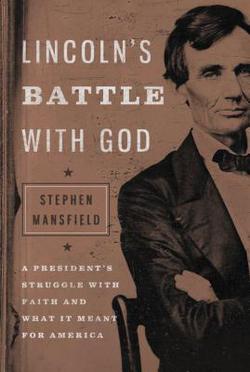 Stephen Mansfield, Lincoln’s Battle With God: A President’s Struggle With Faith and What It Meant For America Nashville: Thomas Nelson, 2012, 254 pp. $13.31
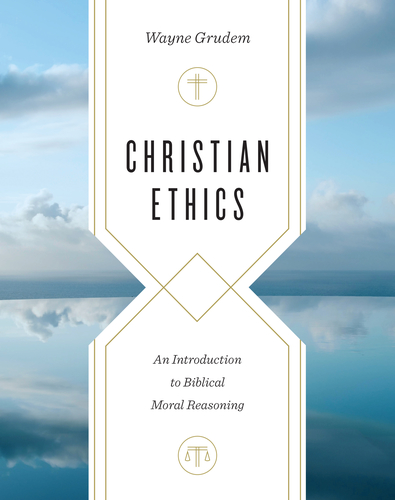 Wayne Grudem, Christian Ethics: An Introduction to Biblical Moral Reasoning (Wheaton: Crossway Books, 2018), 1212 pp.
 Veritas et Lux