The Pursuit of Excellence – George Sweeting

exGeorge Sweeting, The Pursuit of Excellence (Chicago: Moody Press, 2019), 196 pp.

Our days are characterized by a general lack of discipline and lethargy. Even many Christians have been afflicted by mediocrity and aimlessness. Dr. George Sweeting’s recent book, The Pursuit of Excellence is an encouragement for anyone weary of these troubling trends.

Sweeting is the former president of Moody Bible Institute, a true veteran of the Christian faith. I had the honor of sitting under his teaching in my doctoral program in the late ’90s  in Seattle. His commitment to the faithfulness to Scripture and allegiance to the lordship of Christ has never wavered. The Pursuit of Excellence is yet an another example of Dr. Sweeting’s influence in the evangelical world.

His recent work begins with a bold challenge that calls Christians to a life of excellence. Such a challenge is grounded in the very character of God who is the source of all excellence: “O LORD, our Lord, how excellent is Your name in all the earth, who have set Your glory above the heavens” (Psalm 8:1). Sweeting adds, “Excellence is never cheap. It’s costly … Excellence requires desire plus discipline plus determination.” The remainder of the book is a powerful reminder of this fundamental reality.

The author unpacks nine qualities that help define a life of excellence. The qualities include faith, character, action, single-mindedness, love, suffering, prayer, wisdom, and staying power. These combined qualities are the building blocks that followers of Christ must pursue to lead a life of excellence. All the aforementioned qualities, of course, are grounded in the grace of God and his sovereign purposes for his people.

The book concludes with an examination of Christians who emulate the qualities outlined in the book. Leaders like William Carey, C.H. Spurgeon, and Joni Eareckson Tada are presented as exemplars of excellence.

Dr. Sweeting has been writing since the early ’70s and continues to encourage and bless the church with his gifts. This book is no exception. It is sure to encourage and equip many followers of Christ and help them pursue a life of excellence!

I received this book free from the publisher. I was not required to write a positive review.

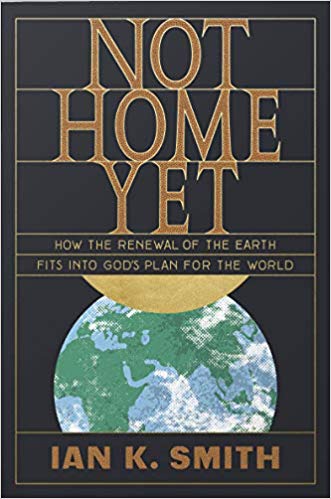
Not Home Yet – Ian K. Smith

not homeIan K. Smith, Not Home Yet (Wheaton: Crossway, 2019), 167 pp.

One of the recent encouraging developments in the church is an interest in biblical theology. 2 Peter 3:13 says, “According to his promise we are waiting for new heavens and a new earth in which righteousness dwells.” This grand promise is the theme of Ian K. Smith’s recent book, Not Home Yet.

Dr. Smith argues, “Home is where we belong.” Therefore, he urges readers to set their sights and affections on their heavenly home. But some will be surprised to learn that “Jesus’s return to this earth is the focus of the Christian’s hope, and this return will not just be for a visit, to pick us up and take us home to heaven. He is coming to stay. The new Jerusalem will descend to earth, and we will be at home, with Jesus, on earth.”

“The aim of this book,” writes Ian Smith “is to reawaken (resurrect even), a biblical understanding of the earth and God’s mission to it.” The author skillfully guides readers along the biblical plot line that leads them to their heavenly home on the new earth, where they will reside for all of eternity.

Smith’s work is a rich combination of scholarship, yet he never isolates those who have not enjoyed the benefit of a theological education. His writing is clear, straight to the point, a biblical from start to finish. In the end, he accomplishes his objective by re-engaging readers and helping them understand God salvific plan and redemptive purposes for his people.

I received this book free from the publisher. I was not required to write a positive review.

Vulnerable: Rethinking Human Trafficking – Raleigh Sadler (2019)

vulRaleigh Sadler, Vulnerable (Nashville: B&H Publishing Group, 2019), 267 pp.

“Preach the gospel – and if necessary use words.” This pithy quote by St. Francis of Assisi has captured the hearts and minds of many. The sentiment sounds right and may even feel right but fails in the final analysis to do justice to the gospel. Yes, the gospel is meant to be lived. Yes, the gospel makes a difference in the lives of others and demands sacrificial service. But St. Francis falls short in the matter of proclamation. We may serve people and love them but if we fail to proclaim the message of the good news, the “gospel” loses its efficacy.

Raleigh Sadler’s book, Vulnerable: Rethinking Human Trafficking works hard to maintain a commitment to proclaiming the gospel and reaching people by engaging them at every level. The heart of the author is unveiled at the beginning of the book and serves as the general theme of the book: “Jesus Christ motivates vulnerable people, like you and me, to love other vulnerable people for us, to the point of death.” Christ’s vulnerability, then, serves as a supreme example for his people and motivates them to love others.

Sadler exposes the trafficking industry and calls Christians to make a difference. His ultimate aim is to eradicate all human trafficking. Vulnerable is filled with stories of people who have been marginalized, manipulated, or trafficked in some way. The interview with Michael Horton is the highlight of the book as Dr. Horton weighs in on the subject of trafficking. “I’m not a co-redeemer with Christ when I’m opposing human trafficking; rather I’m witnessing to that redemption that Christ has already won, and will one day consummate when he returns bodily,” writes Horton. Such a perspective provides a keen biblical balance that remains obedient to Scripture but also steers clear from any liberalizing proclivities of the so-called “social justice” movement.

Vulnerable is not an easy book to read. The pain and suffering that the author reveals, however, is a reality that Christians must face. The only answer is the saving message of the gospel of Jesus Christ.

I received this book free from the publisher. I was not required to write a positive review.

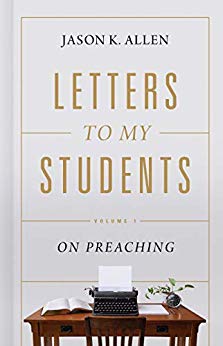
Letters to My Students: On Preaching (Vol. 1) – Jason Allen (2019)

letJason K. Allen, Letters to My Students – On Preaching (Vol. 1) (Nashville: B&H Publishing Group, 2019), 173 pp.

In 1869, Charles Haddon Spurgeon published Lectures to My Students. The book is packed with preaching helps and anecdotes that pastors have benefited from for almost one hundred and fifty years. Jason Allen, president of Midwestern Baptist Theological Seminary takes a play out of Spurgeon’s playbook in his recent book, Letters to My Students.

The first in a series of books addresses the subject of preaching and is arranged in three sections: 1) Preparing to Be a Preacher, 2) Preparing Your Sermon, and 3) Growing in Your Preaching

The great advantage of Dr. Allen’s book is that contains a wealth of practical instruction for beginning preachers and veterans alike. While the book is introductory in nature, it does a good job holding the attention of experienced preachers. Frankly, much of the basic material is necessary review for men who have stood in the pulpit for most of their adult lives.

I’m eager to see Letters to My Students reach the next generation of preachers for Christ and build up men who have been serving for some time.

I received this book free from the publisher. I was not required to write a positive review.

Free to Focus – Michael Hyatt

hyattMichael Hyatt, Free to Focus (Grand Rapids: Baker Books, 2019), 250 pp.

The subtitle of Michael Hyatt’s newest book, Free to Focus is a fitting summary of the content – A Total Productivity System to Achieve More by Doing Less. Readers familiar with Hyatt know that he has created a unique reputation as being a successful businessman who is committed to efficiency and impacting the lives of people.

Free to Focus accomplishes its intended aim as the author unfolds a three-step process which promises a more productive life that achieves more by doing less.

The three step process to productivity includes STOP, CUT, and ACT. Stop is a foundational step that encourages a time of reflection. Readers are urged to formulate a plan: “Productivity should ultimately give you back more time, not require more of you.” Hyatt borrows Stephen Covey’s popular “true north” model, which sets the stage for greater productivity. The author comments, “True productivity is about doing more of what is in your Desire Zone and less of everything else.” Such a strategic move creates margin, which in turn creates personal freedom.

Critical to this process is the step which involves rejuvenation, what Hyatt refers to as “energy flexing.” Rejuvenation, then, involves sleep, eating a healthy diet, exercise, connecting relationally with other people, play, reflecting, and unplugging electronic devices. Hyatt adds,

Amazing things happen when we Stop. We create space to Formulate, to get a clear picture of where we want to go and what we want our lives to become. We take the time to Evaluate, understanding exactly where we are and what our current situation looks like. And we make the time to Rejuvenate, investing in ourselves and our energy reserves through intentional steps forward in our best, health, and relationships.

Step 1, then, is the place to begin for anyone who seeks to become a more productive person.

Cut is the second step, which entails three critical elements. First, eliminate everything that falls outside the Desire Zone. Several practical tips are offered to enable people on the go to “say no” to special requests and projects.

Second, automate involves implementing steps such as self-automation or routines that help build consistency into the ebb and flow of life. Hyatt also includes an emphasis on template automation, which helps create margins and relieve stress in one’s life.

Third, delegate ”boosts well-being by reducing our number of stressful, disliked tasks, and by helping us regain a sense of control over our schedules.” Most people resist delegation but the author insists on implementing it for maximum productivity. Indeed, “to become a master delegate,” writes Hyatt, “you must develop the patience and attentiveness to match the task to the person. When you do, you’ll set yourself up for unbelievable success.

Act is the final step in Free to Focus. The author focuses on three more critical elements. Consolidate helps prioritize one’s weekly calendar. Designate helps priorities tasks. Various tools are offered to make this a reality. Activate is the author’s way of encouraging readers to eliminate distractions and interruptions. His counsel is extremely valuable here and we are bombarded with distractions, especially of the digital variety, throughout the day.

Summary

Free to Focus is a helpful book that makes a solid contribution to the growing number of resources that address personal productivity. Michael Hyatt refers to “free to focus tools,” which can be accessed online and includes several templates that help gain the necessary clarity and disciplines to move toward a more productive life. In the final analysis, Hyatt’s goal to help readers achieve more by doing less is accomplished in spades.

I received this book free from the publisher. I was not required to write a positive review.

A Godward Gaze: The Holy Pursuit of John Calvin

godward gaze pixPick up a copy of my latest  book for less than a buck in this Amazon Kindle Countdown!
https://www.amazon.com/Godward-Gaze-Holy-Pursuit-Calvin-ebook/dp/B07SJJM1GP/ref=tmm_kin_title_sr?_encoding=UTF8&qid=1565006219&sr=8-1

A Godward Gaze: The Holy Pursuit of John Calvin is a snapshot of a man on mission. It is about one man who set his sights on the Celestial City and never looked back. His name is John Calvin. He was a pious man, driven by God’s glory and a love for Scripture. His holy pursuit was rare among men and a model for followers of Christ. David Steele points readers to a truly remarkable man – a biblical expositor, a theologian, and a courageous reformer. Calvin changed a city and helped changed the world. His godly example may change your life.

A Godward Gaze: The Holy Pursuit of John Calvin

godward gaze pixI am happy to announce that the Kindle version of my latest book, A Godward Gaze: The Holy Pursuit of John Calvin is available for 0.99 cents for a limited time.

https://www.amazon.com/Godward-Gaze-Holy-Pursuit-Calvin-ebook/dp/B07SJJM1GP/ref=tmm_kin_title_sr?_encoding=UTF8&qid=1564624486&sr=8-1

A Godward Gaze is a snapshot of a man on a mission. It is about one man who set his sights on the Celestial City and never looked back. His name is John Calvin. He was a pious man, driven by God’s glory and a love for Scripture. His holy pursuit was rare among men and a model for followers of Christ. You will be captivated by a truly remarkable man – a biblical expositor, a theologian, and a courageous reformer. Calvin changed a city and helped changed the world. His godly example may change your life.

Pick up a copy today or send a gift to a friend!

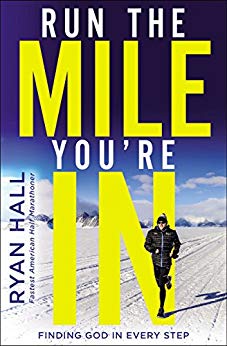
Run the Mile You’re In – Ryan Hall

raceRyan Hall, Run the Mile You’re In(Grand Rapids: Zondervan, 2019), 217 pp.

Run the Mile You’re In by Ryan Hall is an inspirational book for athletes who are looking for some extra motivation from one who is a Christian and a seasoned athlete. As the fastest American half marathoner, Hall’s athletic accomplishments are impressive indeed. The book is cleverly arranged in “twenty-six miles”, to match the distance of a marathon (less two-tenths of a mile)! Each chapter includes tips and motivational resources for athletes, most of which point to a faith-based model.

I admire the author’s grit, talent, and desire to magnify the Lord Jesus Christ and prompt others to do the same. Yet an honest review compels me to highlight a few concerns – and they’re significant.

First, throughout the book, Hall makes reference to hearing from God. To his credit, he refers often to the Bible but not always in the context of “hearing from God.” That is, there is a subtle undercutting of the sufficiency of Scripture. I often tell the people in the church I pastor, “If you want to hear from God, open his Word.” 2 Peter 1:3 clearly reveals the sufficiency of God’s Word: “His divine power has granted to us all things that pertain to life and godliness, through the knowledge of him who called us to his own glory and excellence…” While the author never makes a claim to extra-biblical revelation, one is left wondering what the purpose of these encounters with God are designed to accomplish. Our direct line to God is found exclusively in his Word. Anything else subtly undercuts the sufficiency of Scripture.

Some may surmise that my objection to Hall at this point leads to dry, abstract Christianity. Nothing could be further from the truth. Notice how Jonathan Edwards refers to his experience with God:

And as I was walking there, and look up on the sky and the clouds; there came into my mind, a sweet sense of the glorious majesty and grace of God, that I know not how to express. I seemed to see them both in a sweet conjunction: majesty and meekness joined together: it was a sweet and gentle, and holy majesty; and also a majestic meekness; an awful sweetness; a high, and great, and holy gentleness.

After this my sense of divine things gradually increased, and became more and more lively, and had more of that inward sweetness. The appearance of everything was altered: there seemed to be, as it were, a calm, sweet cast, or appearance of divine glory, in almost everything (Works 16, 793-794).

Edwards is communing with God and experiencing his sweet presence here, which is similar but so different than what Hall promotes. While Edwards enjoys fellowship with God, he never claims to hear the voice of God apart from Scripture.

Second, the author encourages readers to “declare” the dreams of their heart. Such a practice is very similar to what is promoted in the Word of Faith movement, i.e. “name it and claim it.” The author even compares this approach to a dangerous book associated with a new age book: “To some, the concept of declarations may seem eerily similar to a popular book called The Secret, whose premise is that you can get whatever you want in life if you just envision it and wish for it. Though I do not believe that to be totally true, I think there is some truth to the power of declarations.” Hall continues, “If I am made in God’s image and likeness, having His powerful Spirit inside me, so too I am able to speak with declarations and create life in any hopeless situation.” These admissions reveal a lack of biblical discernment that readers must take into account. At best, this kind of approach to the Christian life undercuts and compromises the sovereignty of God over all things. At worse, it elevates the creature to a level that is only designated for God.

Run the Mile You’re In is not meant to be a theology book – far from it. The intent of the author is to encourage readers to persevere, set goals, and live with the glory of God as their primary objective. But a closer look reveals that the theological foundations are shaky at best. I urge readers to embrace what is helpful here and discard the rest.

I received this book free from the publisher. I was not required to write a positive review.

The Soul of an American President: The Untold Story of Dwight D. Eisenhower’s Faith

ikeAllan Sears and Craig Osten, The Soul of an American President: The Untold Story of Dwight D. Eisenhower’s Faith (Grand Rapids: Baker Books, 2019), 235 pp.

The Soul of an American President by Alan Sears and Craig Osten tells the fascinating tale of Dwight Eisenhower. While many historical details are uncovered about Ike, the authors primary attention is on his Christian faith. The president who was hailed by Time magazine as “The Man Who Beat Hitler” is portrayed as rock-solid figure who clings to his Savior, one who maintained a solid and stable faith.

The authors do not shy away from controversial details such as Eisenhower’s baptism, which took place shortly after his first inauguration. Skeptics can scoff and pundits can pontificate, but the faith of President Eisenhower was the real thing, according to Sears and Osten.

The Soul of an American President clearly reveals the Christian commitment and faith of Dwight D. Eisenhower. It is a book of fresh air in our political charged environment where negativity generates more heat than light. The courage, integrity, perseverance, and leadership of President Eisenhower are inspiring marks that should inform the next generation and remind them what our nation cherished in a day gone by.

I received this book free from the publisher. I was not required to write a positive review.

Talk the Walk – Steve Brown (2019)

talkSteve Brown, Talk the Walk (Greensboro: New Growth Press, 2019), 152 pp.

Whenever I read the work of Steve Brown, I am challenged, encouraged, and forced to think deeply. And sometimes, he is downright irritating! Dr. Brown’s newest book, Talk the Walk is no exception. Longtime readers will recognize Brown’s witty way with words, self-effacing personality, love for the gospel, and his uncanny ability to back you into a corner.

Talk the Walk is a book about evangelism. But it’s not a typical book about sharing one’s faith. Rather, it is a book about effective evangelistic influence. Tragically, the influence of some Christians has been found wanting, to put it mildly. Brown laments this sobering reality and urges his readers to pursue is different path, one that is filled with both grace and truth.

The subtitle of the book, How To Be Right Without Being Insufferable is an accurate description of the content and the heart of the author. Brown acknowledges up front that Christians are a people of the truth. In short, they are right. Christians are beneficiaries of a meta narrative (a big story that unveils ultimate reality) – the correct meta narrative. But the theme of the book is more about conveying the truth in a way that is compelling and winsome. Instead of focusing on theological minutiae, Brown challenges readers to look outward in order to make an impact on the lives of hurting people. People need the truth but they also need to see the truth modeled before their eyes.

The author reveals several ways that Christians can put the truth to good use in the marketplace of ideas. Instead of merely “being right,” Brown encourages his brothers and sisters to “live right” and to live in light of the truth.

Careful readers will notice that Steve Brown loves the Word of God. He loves the gospel. And he loves the truth. But he is unwilling to abandon a strong Christian testimony. This is unacceptable and is fittingly mocked along the way.

I personally benefitted from Talk the Walk and trust that many more will be prompted to move beyond the church walls to make a difference for the sake of the gospel. Then and only then, will they talk the walk.

I received this book free from the publisher. I was not required to write a positive review.