The End of Creation: Soli Deo Gloria

The Sum of the Matter

The first verse in the Bible is a monumental statement that reverberates with earth-shattering implications for the formation of a Christian worldview: “In the beginning, God created the heavens and the earth” (Gen. 1:1, ESV). Do not miss the magnitude of this statement. Do not downplay the significance of this vital piece of revelation. And be careful to embrace what the Scriptures affirm. Ignoring the clear revelation of God’s truth, in the final analysis, proves to be a costly mistake that will have consequences that extend into eternity.

The German astronomer, Johannes Kepler, accepted biblical revelation and understood the importance of giving credit where credit is due: “The chief aim of all investigations of the external world should be to discover the rational order and harmony which has been imposed on it by God.”1To do any less would be tantamount to theological treason. So Kepler does not minimize God’s creative activity; he magnifies it. He does not marginalize the miracle of creation; he marvels at it!

A Tragic Turn

Tragically, some thinkers have not followed Kepler’s lead. These skeptics have discounted Genesis 1:1 and cast the revelation of God into the cosmic rubbish bin. Charles Darwin, who popularized the notion of “natural selection” in his book, Origin of Species also rejected the clear account of creation. Ironically, he is buried in Westminster Abbey. Darwin may be gone but his atheistic ideology continues to dominate the thoughts of many minds, especially in the university.

Carl Sagan, who was a great champion of Darwinian evolutionary theory penned these well-known words: “The Cosmos is all that is or was or ever will be. Our feeblest contemplations of the Cosmos stir us – there is a tingling in the spine, a catch in the voice, a faint sensation, as if a distant memory, of falling from a height. We know we are approaching the greatest of mysteries.”2 He continues, “Evolution is a fact, not a theory.”3 Such banter may appeal to the itching ears of evolutionists but fails to hold up when scrutinized at the tribunal of truth.

Or consider Richard Dawkins, another defender of Darwin’s evolutionary theory. His rejection of the creation account leads him to a view of God which is blasphemous at best: “The God of the Old Testament is arguably the most unpleasant character in all fiction: jealous and proud of it; a petty, unjust, unforgiving control-freak; a vindictive, bloodthirsty ethnic cleanser; a misogynistic, homophobic, racist, infanticidal, genocidal, filicidal, pestilential, megalomaniacal, sadomasochistic, capriciously malevolent bully.”4 The Word of God offers a stern rebuke to this kind of unbelieving thought.

A Rational Christian Response

It doesn’t take long to discern some of the catastrophic consequences of giving God’s revelation a vote of “no-confidence.” Francis Schaeffer understood the vast importance of Genesis 1:1. He understood that if we set aside the reality of creation, our worldview collapses. He writes, “Unless our epistemology is right, everything is going to be wrong.”5 The discipline of epistemology addresses the matter of knowledge. That is, it helps unpack what we know about what we know. Schaeffer continues, “The infinite-person God is there, but also he is not silent; that changes the whole world.”6Schaeffer helps us understand that God exists and he has revealed himself, that is, he has spoken. Or to use Schaeffer’s words, “He is not silent.”

The End for Which God Created the World

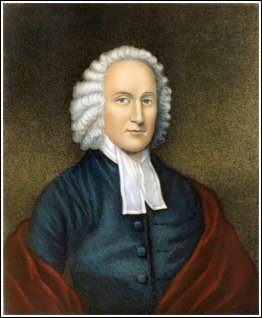
That fact that God not only exists but has also revealed himself is a massive reality that every person must come to terms with. This stunning truth should find us on our knees with outstretched arms. It should prompt a humble offer thanksgiving to the living God. But there’s more – Jonathan Edwards understands the motive behind God’s act of creation. He argues that the end for which God created the world was self-communication: ”Seeing that Christ created the world only to communicate his excellency and happiness, hence we learn, that all the excellency, virtue and happiness of the godly is wrought in them by Jesus Christ.”7 The implication of this Edwardian vision of creation are far-reaching and have important practical implications.

So the end of creation is uniquely focused upon God. That is, creation is Godward. Creation is God-centered. In one of his greatest literary achievements, A Dissertation Concerning the End For Which God Created the World, Jonathan Edwards demonstrates this God-centeredness: “What God says in his word, naturally leads us to suppose, that the way in which he makes himself his end in his work or works, which he does for his own sake, is in making his glory his end … God communicates himself to the understanding of the creature, in giving him the knowledge of his glory; and to the will of the creature, in giving him holiness, consisting primarily in the love of God; and in giving the creature happiness, chiefly consisting in joy in God. These are the sum of that emanation of divine fulness called in Scripture, the glory of God.8

Consider three important implications of discounting the biblical creation account:

First, discounting the reality of biblical creation leads to a skewed epistemology. And a skewed epistemology, will by definition, influence the way we think about everything else. When God is taken out of the picture or removed from the marketplace, we are left wandering in a wasteland in search of answers. “If God does not exist,” writes Dostoevsky, “then everything is permitted.” The eclipse of God leaves us helpless, hopeless, and lost in a quagmire of meaninglessness.

Second, discounting the reality of biblical creation impugns the character and trustworthiness of God. Scripture is clear about the creation account:

For by him all things were created, in heaven and on earth, visible and invisible, whether thrones or dominions or rulers or authorities—all things were created through him and for him. And he is before all things, and in him all things hold together. (Colossians 1:16–17, ESV)

When you send forth your Spirit, they are created, and you renew the face of the ground. (Psalm 104:30, ESV)

Where were you when I laid the foundation of the earth? Tell me, if you have understanding. Who determined its measurements—surely you know! Or who stretched the line upon it? On what were its bases sunk, or who laid its cornerstone, (Job 38:4–6, ESV)

When you send forth your Spirit, they are created, and you renew the face of the ground. (Psalm 104:30, ESV)

Anyone who discards what God has made plain calls God’s character into question and heaps a great insult upon the worth of his name. Anyone who dares impugn the character of God stands on the precipice of eternal judgment.

Third, discounting the reality of biblical creation fails to glorify God, which is the end of creation. Isaiah 43:7 says, “Everyone who is called by my name, whom I created for my glory, whom I formed and made.” Think about the tragic irony of rejecting the creation account. The creature who was created to glorify God stands in defiance and mocks the One who gave him breath.

The glory of God is the end of creation. The heavens declare his glory (Ps. 19:1). Is it any wonder that sinful men seek to distort what God has made plain in Scripture?

Soli Deo Gloria!

  1. Johannes Kepler, Cited in Charles Colson and Nancy Pearcey, How Now Shall We Live? (Wheaton: Tyndale House, 1999), 51.
  2. Carl Sagan, Cosmos (New York: Ballantine Books Trade, 1980), 1.
  3. Ibid, 27.
  4. Richard Dawkins, The God Delusion (Boston: Houghton Mifflin Company, 2006), 31.
  5. Francis A. Schaeffer, The Complete Works of Francis A. Schaeffer: A Christian Worldview, Volume One, A Christian View of Philosophy and Culture (Wheaton: Crossway Books, 1982), 275-276.
  6. Ibid, 276.
  7. Jonathan Edwards, The Works of Jonathan Edwards, vol. 13, The “Miscellanies,” ed. Thomas A. Schaefer, (New Haven: Yale University Press, 1994), 277.
  8. The Works of Jonathan Edwards, vol. 1, A Dissertation Concerning the End For Which God Created the World, ed. Edward Hickman (Carlisle: The Banner of Truth, 1834), 107, 119.

True Grace, Distinguished From the Experience of Devils – Jonathan Edwards (1752)

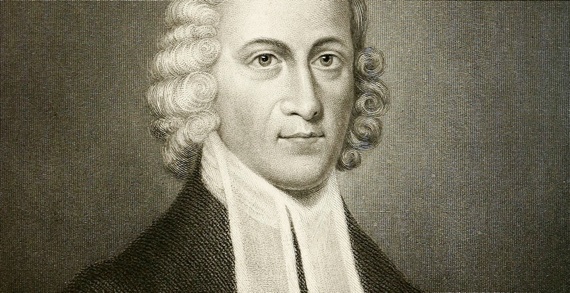
Jonathan_Edwards_engravingOn September 28, 1752, Jonathan Edwards was invited to preach a sermon before the Presbyterian Synod of New York.  His son-in-law, Aaron Burr (who had recently married his daughter Esther) was the president of the College of New Jersey and undoubtedly had an influence in the invitation that Edwards received.

James 2:19 is the text that Edwards utilizes – You believe that God is one; you do that well.  Even the demons believe – and shudder!

Doctrine

Nothing in the mind of man, that is of the same nature with what the devils experience, or are the subjects of, is any sure sign of saving grace.

Edwards essentially argues this: there is no sign of grace in demons.  Three propositions drive the doctrine which he presents.

  1. The devils have no degree of holiness: and therefore, those things, which are nothing beyond what they are the subjects of, cannot be holy experiences.
  2. The devils are not only absolutely without all true holiness, but they are not so much as the subjects of any common grace.
  3. It is unreasonable to suppose, that a person’s being in any respect as the devil is, should be a certain sign, that he is very unlike, and opposite to him; and hereafter, shall not have his part with him.

Edwards includes a series of improvements or inferences which assist his hearers and instruct them in the Christian faith.

First, Nothing that damned men do, or ever will experience, can be any sure sign of grace.

Second, No degree of speculative knowledge of things of religion, is any certain sign of saving grace.

Third, For persons merely to yield to a speculative assent to the doctrines of religion as true, is no certain evidence of a state of grace.

Fourth, [Converted men] have been the subjects of very great distress and terrors of mind, through apprehensions of God’s wrath, and fears of damnation.

Fifth, It may be further inferred from the doctrine, that no work of the law on men’s hearts, in conviction of guilt, and just desert of punishment, is a sure argument, that a person has been savingly converted. 

Sixth, It is no certain sign of grace, that persons have earnest desires and longings after salvation.

Seventh, Persons who have no grace may have a great apprehension of an external glory.

Edwards demonstrates in stroke after stroke how and why the devils lack saving grace.  He applies his thesis to the hearts of men as noted above.  Once again, the Puritan divine accurately diagnoses the human condition apart from grace.  But he concludes by contrasting the graceless state of devils with the gracious state of a person who trusts Christ: “By this, above all other things, do men glorify God.   By this, above all other things, do the saints shine as lights in the world, and are blessings to mankind.”    It is here where Edwards draws his readers and those who would listen to this sermon – to the fountain of grace which never ends!


Bold Reformer and Reformation Day

1632960702_b

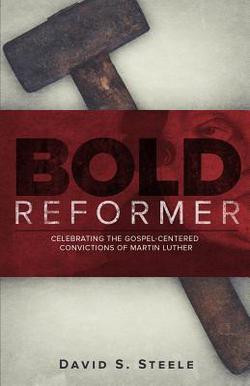
The paperback version of my book, Bold Reformer: Celebrating the Gospel-Centered Convictions of Martin Luther is now available on Amazon for $11.78, but only for a limited time.  The Kindle version is also available for $2.99.

On October 31, 1517, Martin Luther nailed the ninety-five theses to the castle door in Wittenberg. One act of courage sparked a theological firestorm in Germany that set the world ablaze in a matter of days. Spreading like wildfire, thousands were introduced to the gospel which is received by grace alone, through faith alone, in Christ alone.

Bold Reformer: Celebrating the Gospel-Centered Convictions of Martin Luther takes readers on a journey through a remarkable period of church history. It will challenge contemporary readers to learn the lessons of courage, and perseverance. It will inspire a new generation of people to follow Jesus, obey Jesus, and worship the Savior with all their heart, soul, mind, and strength. It invites a new generation of Christ-followers to recover the gospel in their generation and make their stand as a bold reformer.

Bold Reformer is born out of personal pastoral turmoil and inspired by the courage of Martin Luther.  My hope is that many pastors, Christian leaders, and Christ-followers will be encouraged as a result of reading this book; that God will propel them into the future by his grace and for his glory.

Endorsements:

“David Steele’s Bold Reformer is a book for our times! As we celebrate the 500th anniversary of the Reformation, how appropriate to look afresh at ways the bold faith and action of Martin Luther can inspire and instruct our own faith and work. Christians today need strength of character and boldness of conviction. Steele’s presentation of Luther’s life moves readers to live bold lives that adorn the gospel of grace alone, by faith alone, in Christ alone.”

Dr. Bruce A. Ware, T. Rupert and Lucille Coleman Professor of Christian Theology, Chairman of the Department of Christian Theology, The Southern Baptist Theological Seminary

“Pastoral ministry is often mingled with both blessing and despair. Many pastors experience seasons of opposition that result in discouragement and even depression. David Steele’s new work, Bold Reformer is an exploration into the gospel-centered convictions of the stalwart reformer, Martin Luther. Luther faced many pastoral hardships during his ministry, but emerged victorious because of his unwavering faith in the gospel of Jesus Christ. I encourage you to drink from the refreshing waters of this book and use the life of Luther as an example that emboldens you to stand strong in the midst of the fiery trial.”

Dr. Steven J. Lawson, President, OnePassion Ministries, Dallas, Texas

Unshackled: The god of WM. Paul Young

liesWM. Paul Young, Lies We Believe About God, New York: Atria Books, 2017, 273 pp. $13.48

Lies We Believe About God is the latest book from the author of The Shack, WM. Paul Young. The author originally penned The Shack at the request of his wife as a Christmas gift to his six children. First published in 2007, this book has sold over 20 million copies and was recently unveiled as a feature film.

The Shack struck a central chord in people, many of whom confess that the storyline helped them overcome personal pain and tragedy, what the author refers to as, the Great Sadness. Wes Yoder, who endorses The Shack summarizes the ideas in this story. He writes, “The Shack is a beautiful story of how God comes to find us in the midst of our sorrows, trapped by disappointments, betrayed by our own presumptions.” Eugene Peterson adds, “This book has the potential to do for our generation what John Bunyan’s Pilgrim’s Progress did for his. It’s that good.”

But many reviewers of The Shack were less sympathetic. In the minds of some, the nature of God was compromised and the boundaries of orthodoxy were broached. But since The Shack is a novel, the line between fact and fiction became blurred and the theological intentions of the author were difficult to discern.

Young’s most recent offering, Lies We Believe About God, puts to rest any speculation about his views of God and Christian theology. The truly impressive feature about Young’s most recent offering is its transparency and honesty. The author presents twenty-eight “lies we believe about God” in terms that are unmistakable. Readers will no longer be able to sweep the theological statements in Young’s previous novels under the carpet. His views concerning God are set forth in plain terms, giving readers a better understanding of what was proposed in his previous novels.

The question for discerning readers to ask is whether or not Young’s views measure up to the scrutiny of God’s Word. Three critical areas of concern surface in the book, Lies We Believe About God.

A Flawed View of God

It is a great irony that a book which sets out to challenge the so-called “lies we believe about God,” does in fact, promote views of God that fail to match the biblical record. First, Young promotes a soft view of God. Specifically, he argues that God is not in control.

Instead of accepting God’s will of decree, which is settled in eternity past, the author questions God’s sovereign control: “Does God have a wonderful plan for our lives? Does God sit and draw up a perfect will for you and me on some cosmic drafting table, a perfect plan that requires a perfect response? If God then left to react to our stupidity or deafness or blindness or inability, as we constantly violate perfection through our own presumption?”1 John, one of the characters in Young’s novel, Eve concurs: “When it comes to plans and purposes, God is not a Draftsman but an Artist, and God will not be God apart from us.”2

Instead of accepting a sovereign God who ordains everything that comes to pass, Young posits a God who reigns by love and relationship alone. “The sovereignty of God is not about deterministic control … Love and relationship trump control every time. Forced love is no love at all,”3 writes the author.

Yet, Scripture contradicts what Young would have us believe. The Bible presents a God who exercises control in creation, providence, and miracles. Proverbs 21:1 illustrates the control of God in vivid terms: “The king’s heart is a stream of water in the hand of the LORD; he turns it wherever he will.” In Ezra 6:22, the LORD “turned the heart of the king of Assyria.” In Ecclesiastes 7:13-14, God’s providential control over all things is clearly illustrated: “Consider the work of God: who can make straight what he has made crooked? In the day of prosperity be joyful, and in the day of adversity consider: God has made the one as well as the other, so that man may not find out anything that will be after him.” And Ephesians 1:11 shows us the overarching purposes of our God: “In him we have obtained an inheritance, having been predestined according to the purpose of him who works all things according to the counsel of his will.” Indeed, God exercises sovereign control over all things.

The Westminster Catechism argues, “The decrees of God are his eternal purpose, according to the counsel of his will, whereby for his own glory he hath foreordained whatsoever comes to pass.” That is, God is the sovereign king who does as he pleases (Ps. 115:3). God reigns (Ps. 99:1-5). His control knows no boundaries. God acts in order to advance his glory (Exod. 14:4). And we rest in the infinite wisdom of God’s plan, knowing that his purposes can never be thwarted (Isa. 46:9-10; Job 42:2).

Charles Hodge has a sharp disagreement with the soft view of God presented in Lies We Believe About God. Hodge writes,

“This is the end which our Lord proposed to himself. He did everything for the glory of God; and for this end, all his followers are required to live and act … If we make the good of the creature the ultimate object of all God’s works, then we subordinate God to the creature, and endless confusion and unavoidable error are the consequence. It is characteristic of the Bible that it places God first, and the good of the creation second.”4

The errors which result from promoting a God who is not fully in control, as Hodge maintains, will have serious consequences and have tragic consequences on one’s perception of God.

Second, Young presents a God who submits to people. The notion that God submits to the creature emerges in The Shack as well. The Holy Spirit figure, Sarayu, tells Mack, “We have limited ourselves out of respect for you … Relationships are never about power, and one way to avoid the will to power is to choose to limit oneself.”5 And Papa sympathetically responds to Mack who is reluctant to demonstrate emotion: “That’s okay, we’ll do things on your terms and time.”6

The Jesus of The Shack confesses to Mack, “Submission is not about authority and it is not obedience; it is all about relationships of love and respect. In fact, we are submitted to you in the same way.”7

In Young’s novel, Eve, Adonai says to Adam, “Our Love will not withhold from you the consequences of your choices. We honor and respect you, so We consent and submit to you” (emphasis mine).8 Later in the story, Adonai makes a similar remark to Lily: “Look up and into My face. I am here and will never leave you. In any dance you sometimes lead, but always both submit. So now, dear Lilly, you must choose, and I submit to you.”9

In Lies We Believe About God, the author maintains that the word control is not a part of God’s vocabulary: “God submits,” writes Young “rather than controls and joins us in the resulting mess of relationship, to participate in co-creating the possibility of life, even in the face of death.”10

Yet, we never find God submitting to the creature in Scripture. To the contrary, the creature submits to the Creator. Job learned a quick lesson when he tried to turn the tables on God. He learned the importance of submitting to God, not the other way around (Job 38-41).

John Frame helps us understand the importance of God’s authority and the proper response of the creature: “The first thing, and in one sense the only thing, we need to know about God is that he is Lord …This is a confession of lordship: that Yahweh, the Lord, is the one and only true God, and that therefore he deserves all of our love and allegiance.”11

The soft view of God who submits to the creature must be rejected as it fails to stand the test of biblical faithfulness.

A Fallacious View of Humanity

Young rightly holds that humans are created by God in the imago Dei. Since humans are created in God’s image, they have inherent worth and significance. The author should be commended for highlighting this important aspect of anthropology, which admittedly, is neglected by some Christians.

Additionally, the author believes that humans are sinners. However, sin is redefined and fails to measure up to the biblical test. “Blind, not depraved, is our condition,”12 writes Young. He continues, “Sin, then, is anything that negates or diminishes or misrepresents the truth of who you are, no matter how pretty or ugly that is.”13 Such a view find no biblical support and is a foreign concept in Christian theology.

Young acknowledges that sin involves “missing the mark.” But he adds, “The mark is not perfect moral behavior. The ‘mark’ is the Truth of your being.”14 But Young goes one step further in his redefinition of sin: “And what does the truth of your being look like? God. You are made in the image of God, and the truth of your being looks like God.”15

Now that Young has redefined sin, he is in a position to pose an additional question: Does sin separate us from God? Young argues that the notion of sinners being separated from God is a lie: “A lot of ‘my people’ will believe that the following statement is in the Bible, but it isn’t: ’You have sinned, and you are separated from God.’” 16 The biblical proof he offers is Romans 8:38-39, that is, “nothing can separate us from the love of God.” Such an explanation, however, fails to consider the context of Romans 8 which is a clear promise to the elect of God, not the entirety of the human race.

Two responses are in order. First, Young’s reformulation of sin is inadequate as the Bible clearly teaches that all people are sinners by nature and choice. John MacArthur sheds light on the real meaning of sin:

“Sin must be understood from a theocentric or God-centered standpoint. At its core, sin is a violation of the Creator-creature relationship. Man only exists because God made him, and man is in every sense obligated to serve his Creator. Sin causes man to assume the role of God and to assert autonomy for himself apart from the Creator. The most all-encompassing view of sin’s mainspring, therefore, is the demand for autonomy.”17

When sin is redefined from a man-centered viewpoint, this only strengthens the resolve of his quest for autonomy. Yet this is exactly what we find in Young’s version of sin – a Creator catering to the needs of the creature and satisfying his autonomous bent.

The Scriptures paint a portrait of sinful creatures which is undeniable and devastating: “The Lord saw that the wickedness of man was great in the earth, and that every intention of the thoughts of his heart was only evil continually.” (Gen. 6:5, ESV) Indeed, “The heart is deceitful above all things, and desperately sick; who can understand it?” (Jer. 17:9, ESV) Edwin Palmer writes, “Total depravity means that natural man is never able to do any good that is fundamentally pleasing to God, and, in fact, does evil all the time.”18 The biblical evidence for total depravity is overwhelming and conclusive (Ps. 51:5; Isa. 53:6; 64:6; Eph. 2:1-3; Rom. 3:23; 5:12).

Second, the Bible clearly teaches that sinners are separated from God. Apart from grace, sinners are without hope and are utterly cut off and separated from God. Isaiah 59:2 says, “But your iniquities have made a separation between you and your God, and your sins have hidden his face from you so that he does not hear.” In his letter to the Ephesians, Paul demonstrates that sinners are separated from Christ. He refers to them as “having no hope and without God in the world” (Eph. 2:12). Our only hope, then, is found in Christ alone who came to forgive us and reconcile us to a holy God (Eph. 2:13-22).

A Faulty View of Salvation

Two major problems can be summarized here. First, Young promotes universal reconciliation. In The Shack, Papa answers Mack’s questions concerning the efficacy of the cross. Papa says, “Honey, you asked me what Jesus accomplished on the cross; so now listen to me carefully: through his death and resurrection, I am now fully reconciled to the world.”19 Mack asks, “The whole world? You mean those who believe in you, right?”20 Papa answers resolutely, “The whole world, Mack. All I am telling you is that reconciliation is a two-way street, and I have done my part, totally, completely, finally.”21

In a stunning admission, Young says,

“The Good News is not that Jesus opened up the possibility of salvation and you have been invited to receive Jesus into your life. The Gospel is that Jesus has already included you into His life, into His relationship with God the Father, and into His anointing in the Holy Spirit … God has acted decisively and universally for all humankind.”22

If there is any question about the universalism here, the author removes any cause for doubt: “Are you suggesting that everyone is saved? That you believe in universal salvation? That is exactly what I am saying?”23 He continues, “Here’s the truth: every person who has ever been conceived was included in the death, burial, and resurrection, and ascension of Jesus. When Jesus was lifted up, God ‘dragged’ all human beings to Himself.24

The Bible paints a very different portrait. The Bible speaks of people apart from grace who are enemies of God (Col. 1:21; Rom. 5:10) and children of wrath (Eph. 2:1-3). Only the redeemed are reconciled to God.

Appealing to passages like John 12:32 is insufficient and fails to build the case for universal reconciliation. Jesus says, “And I, when I am lifted up from the earth, will draw all people to myself.” All people must either mean “all without exception” or “all without distinction.” As we compare Scripture with Scripture, clearly the later is in view.

Jesus proclaims, “Enter by the narrow gate. For the gate is wide and the way is easy that leads to destruction, and those who enter it are many. For the gate is narrow and the way is hard that leads to life, and those who find it are few” (Matt. 7:13-14). ). Jesus speaks of two trees, the healthy and the diseased. Speaking of the diseased tree, Jesus says, “Every tree that does not bear good fruit is cut down and thrown into the fire” (Matt. 7:19). Moreover, Jesus teaches about two kinds of houses, the one that is built on the rock and one that is built on the sand. “And everyone who hears these words of mine and does not do them will be like a foolish man who built his house on the sand. And the rain fell, and the floods came, and the winds blew and beat against that house, and it tell, and great was the fall of it” (Matt. 7:26-27). Indeed, every person who refuses to build his “house” on the rock and build his or her life on the promises of God; every person who rejects the Son and his work on the cross will endure an eternity of wrath (John 3:36; Rom. 2:8; 2 Thes. 1:9). “At the end of the day, there are only two ways – the way of the kingdom or the way of death.” Scripture is clear: not everyone will pursue the way of the kingdom. Universal reconciliation is a lie.

Second, Young argues that the cross was not God’s idea. The author poses the question, “Who originated the Cross?” Young’s answer is disturbing, to say the least: “If God did, then we worship a cosmic abuser, who in Divine wisdom created a means to torture human beings in the most painful and abhorrent manner … Better no god at all, than this one.”25 In a few words, the author not only repudiates the reality of God’s involvement in the cross of Christ; he casts aside penal substitutionary atonement.

The apostle Paul speaks of the power of the cross (1 Cor. 1:17-18), “making peace by the blood of his cross (Col. 1:20) and even boasts in the cross (Gal. 6:14). However, Young says, “Nothing not even the salvation of the entire cosmos, could ever justify a horrific torture device called a cross.”26

When we contrast the Bible with Young’s view, we find that the cross was God’s idea after all. Two passages in the book of Acts show the sovereignty of God in salvation and demonstrate God’s involvement in the cross from start to finish:

“this Jesus, delivered up according to the definite plan and foreknowledge of God, you crucified and killed by the hands of lawless men. God raised him up, loosing the pangs of death, because it was not possible for him to be held by it.” (Acts 2:23–24, ESV)

“for truly in this city there were gathered together against your holy servant Jesus, whom you anointed, both Herod and Pontius Pilate, along with the Gentiles and the peoples of Israel, to do whatever your hand and your plan had predestined to take place.” (Acts 4:27–28, ESV)

The faulty view of salvation which is promoted in Lies We Believe About God is deeply troubling and must be rejected by discerning Christians.

Conclusion

Paul Young has shared openly and honestly about some of the hurts in his life. Pain and suffering, while inevitable in this life are regrettable realities. The dark night of the soul will likely affect most of us. And so we sympathize with Young and his Great Sadness and pray that God will minister in deep and abiding ways. But no amount of personal tragedy or loss can excuse the propagation of false views of God.

It is a great tragedy when an author writes a book that minimizes God or misrepresents God. A.W. Tozer helps us understand the importance of understanding God rightly: “Worship is pure or base as the worshipper entertains high or low thoughts of God.”27 How we think about God matters! For “there is nothing more important than knowing God.”28 Our view concerning his essence and attributes is not a mere academic debate among theologians. Our view of God affects how we approach him and how we worship him. Tozer continues, “For this reason the gravest question before the Church is always God himself, and the most portentous fact about any man is not what he at a given time may say or do, but what he in his deep heart conceives God to be like.”29

“God does not lower his standards to accommodate us.”30 Therefore, our responsibility is to view God rightly, worship God rightly, and approach God rightly and reverently. Indeed, “What comes into our minds when we think about God is the most important thing about us.”31

The chief problem in Lies We Believe About God is an undermining of biblical authority.  It ultimately caters to the creature and encourages the autonomy that he craves. When the authority of the Bible is compromised the people of God always pay a price. It’s not too late to get unshackled.  True freedom is found in submitting to Scripture, trusting and obeying Jesus Christ who loves sinners, and worshipping God in the way that he demands!

  1. WM. Paul Young, Lies We Believe About God  (New York: Atria Books, 2017), Loc. 329.
  2. WM. Paul Young, Eve (New York: Howard Books, 2015), 181.
  3. Ibid, Loc. 347.
  4. Charles Hodge, Systematic Theology – Volume I (Grand Rapids: Eerdmans Publishing Company, reprint 1995), 536.
  5. Young, The Shack, (Newbury Park: Windblown Media, 2007)106.
  6. Ibid, 83.
  7. Ibid, 145.
  8. WM. Paul Young, Eve (New York: Howard Books, 2015), 239.
  9. Ibid, 258.
  10. Young, Lies We Believe About God, Loc. 355.
  11. John Frame, The Doctrine of God (Phillipsburg: Presbyterian and Reformed, 2002), 21-22.
  12. WM. Paul Young, Lies We Believe About God, Loc. 296.
  13. Ibid, Loc. 1645.
  14. Ibid, Loc. 1643.
  15. Ibid, Loc. 1645.
  16. Ibid, Loc. 1663.
  17. John MacArthur and Richard Mayhue, Biblical Doctrine: A Systematic Summary of Bible Truth (Wheaton: Crossway Books, 2017), 453.
  18. Edwin H. Palmer, The Five Points of Calvinism (Grand Rapids: Baker Books, 1972), 13.
  19. William P. Young, The Shack, 82.
  20. Ibid.
  21. Ibid.
  22. Young, Lies We Believe About God, Loc. 889.
  23. Ibid, Loc. 898.
  24. Ibid.
  25. Ibid, Loc. 1101.
  26. Ibid, 329.
  27. A.W. Tozer, The Knowledge of the Holy (San Francisco: HarperCollins Publishers, 1961), 1.
  28. John Frame, The Doctrine of God (Phillipsburg: Presbyterian and Reformed, 2002), 1.
  29. A.W. Tozer, The Knowledge of the Holy, 1.
  30. R.C. Sproul, The Holiness of God (Wheaton: Tyndale House Publishers, 1995), 88.
  31. Tozer, The Knowledge of the Holy, 1.

Unified – Tim Scott & Trey Gowdy

unifiedTim Scott & Trey Gowdy, Unified Carol Stream: Tyndale, 2018, 220 pp. $16.50

We may live in one of the most divided times in American history. The cultural climate is rising without any hope of resolution in sight. Senator Tim Scott and Congressman, Trey Goudy recognize the problems in our land. Yet, they both have a realistic outlook, which is laced with optimism. Their book, Unified invites readers to pursue racial reconciliation and restoration, which will strengthen the fabric of our fractured nation.

Unified is a very basic book that reads like a conversation between two lawmakers. These conservative thinkers, who have become the best of friends, bring their unique conservative perspectives to the table. Their mutual love and respect for one another are apparent from the outset. These two men, who are both committed Christ-followers model what friendship can and should look like.

Senator Scott and Congressman Goudy steer clear of politics, however. Their aim is to promote an optimistic vision of hope for the future of our nation:

“We believe that our nation can be united and transformed by conversations and friendships that lead to reconciliation and understanding. As Americans, we must uphold the ideals of freedom, equality, justice, and opportunity, even as we continue to work together to make those ideals a reality for all. We must come together, find solutions, and get to a point where we can see that our strength as a nation is rooted in all that is good in our world.”

There are no quick fixes here. The authors understand and acknowledge that legislation will not cure the illness in American culture. True and lasting change must take place in the lives of people. In what may prove to be the most important insight in the book, Senator Scott writes, “We will change the nation only by changing the condition of the human heart.” This change, undergirded by the gospel of grace has the power to change individuals and families. Then and only then, will our nation see a renewal.

Unified is a worthy read by two men of integrity; men who are striving to make America a better place. This is the first of many steps but it is a step in the right direction.

I received this book free from the publisher. I was not required to write a positive review.

THE MARRIAGE COVENANT: An Indissoluble Union

Books on marriage are a dime-a-dozen these days, even from a Christian perspective.  However, only a handful of books on marriage pass the test of biblical fidelity.  John Piper’s book, This Momentary Marriage passes both tests..  In fact, it ranks among the best books I’ve read on marriage to date.

Readers familiar with Piper will instantly drawn in to his argument for marriage.  Over and over Piper pounds the theme of the book into the ground for maximum effect: The ultimate purpose of marriage is “the display of Christ’s covenant keeping grace.”  To that end, the author develops several items worth mentioning.

1. The author grounds his central argument in rich soil by reiterating that marriage is “the doing of God.”

And in a final sense, “marriage is the display of God.”  He continues, “The ultimate things we can say about marriage is that it exists for God’s glory.  That is, it exists to display God … Marriage is patterned after Christ’s covenant relationship to his redeemed people, the church.  And therefore, the highest meaning and the most ultimate purpose of marriage is to put the covenant relationship of Christ and his church on display.”  And this is the primary reason why divorce is so odious to God: “Therefore, what makes divorce and remarriage so horrific in God’s eyes is not merely that it involves covenant-breaking to the spouse, but that it involves misrepresenting Christ and his covenant” (emphasis mine).

2. Piper focuses on the priority of covenant love.

Remember the theme of the book that marriage is means to display Christ’s covenant keeping grace.  Therefore, the author argues that “staying married is not mainly about staying in love.  It’s about covenant-keeping.”  The foundation for this covenant-keeping is the rock-solid covenant between people and God.  Therefore, Piper continues, “Marriage exists to display the merciful covenant-keeping love of Christ and the faithfulness of his bride.”

It is here that the book takes an important and decisive turn – for the author shows the relevance of the doctrine of justification by faith alone and how it relates to marriage.  Piper adds, ” God requires two thing of us: punishment for our sins and perfection for our lives.”  He continues to describe how the vertical reality of justification must be “bent horizontally to our spouses if marriage is to display the covenant-making, covenant-keeping grace of God.”  The takeaway is profound: “Let the measure of God’s grace to you in the cross of Christ be the measure of your grace to your spouse.”  This is a perfect example of the Christ-saturated wisdom that permeates the book.

Piper continues to give practical advice to husbands and wives throughout the book; advice that is bathed in biblical wisdom; advice that is ultimately rooted in our God who keeps covenant with his people.  Biblical headship is discussed – so husbands are encouraged to lead well: “Headship is the divine calling of a husband to take primary responsibility for Christlike, servant leadership, protection, and provision in the home.”  The husband’s leadership involves physical and spiritual protection and physical and spiritual provision.Biblical submission is explored: “Submission is the divine calling of a wife to honor and affirm her husband’s leadership and help carry it through according to her gifts.”   What strikes me about the section on headship and submission is this: in a few short pages, Piper delivers an exegetical bombshell that utterly destroys the prevailing notion of egalitarianism.  This God-dishonoring view that sees no distinction between male and female roles is left begging for mercy; tattered and torn in the shadow of Piper’s sound exposition.

The concluding chapters discuss the permanence of the marriage covenant.   In what may be one of the most important statements in the book, Piper suggests that “if Christ ever abandons and discards his church, then a man may divorce his wife.  And if the blood-bought church, under the new covenant, ever ceases to be the bride of Christ, then a wife may legitimately divorce her husband.  But as long as Christ keeps his covenant with the church, by the omnipotent grace of God, remains the chosen people of Christ, then the very meaning of marriage will include: What God has joined, only God can separate.”

The author boldly goes where few pastors dare to go by suggesting that remarriage is prohibited so long as the previous spouse is still alive.  His arguments are exegetically sound and compelling.  Readers who disagree are encouraged to survey the case that Piper presents and prayerfully consider his arguments.

This Momentary Marriage is a landmark book.  It is a theological landmine that will undoubtedly shatter many preconceived notions about marriage.  It is solid food that Christians need to digest.  And it is timely ointment that is designed to heal wounds and promote strong marriages in the difficult days ahead.

Highly recommended!

Developing Emotionally Mature Leaders – Aubrey Malphurs

leadAubrey Malphurs, Developing Emotionally Mature Leaders Grand Rapids: Baker Books, 2018 239 pp. $16.99

Developing Emotionally Mature Leaders by Aubrey Malphurs is designed with a specific purpose in mind – “to come up with a process or pathway that challenges Christian leaders to become more aware of, understand, and manage their emotions and those of others so that they can be emotionally mature leaders who relate well with and truly inspire.”

The book is arranged in three parts. Part One sets the stage by introducing readers to the concept of emotional intelligence (EI). Six assumptions about emotional intelligence undergird this section:

  1. Emotionally mature Christians are spiritually mature believers.
  2. The Godhead is characterized by emotions.
  3. The hope of the world is an emotionally mature church.
  4. Emotional intelligence is critically important to God-honoring leadership.
  5. Scripture undergirds the importance of emotional maturity.
  6. Emotions are central to what it means to be human and live life.

The author stresses the importance of emotions. “Great leaders,” writes Malphurs, “lead through the emotions. They move us. They ignite our passion and inspire the best in us.”

Part Two demonstrates the importance of emotional intelligence, which is defined as “an awareness of our emotions and the emotions of others around us so that we can handle well our emotions and theirs, with the result that we relate in a Christlike manner with those within or outside the body of faith.”

A biblical theology of emotions is presented and also includes a chapter that helps assess emotional maturity.

Part Three helps readers move forward in order to become emotionally mature. Several models are set forth here. Readers are encouraged to pick and choose the models that fit their unique situation.

Finally, this work includes an extensive set of appendices. A series of diagnostic tools are offered, which enable readers to honestly assess where they stand on the emotional intelligence continuum.

Summary

Developing Emotionally Mature Leaders effectively argues the necessity of managing one’s emotions and moving forward in a way that glorifies and pleases God. The theme of sanctifying grace runs through these pages and urges readers to pursue a life of holiness.

One disappointing development is the absence of any insight by Jonathan Edwards. I cannot think of anyone in church history who more adequately addressed the matter of the affections. Jettisoning the fine work of Edwards is a critical oversight.

I received this book free from the publisher. I was not required to write a positive review.

One or Two – Peter Jones (2010)

One or Two, another important book by Peter Jones contrasts paganism with historic Christianity.  Jones refers to these worldviews as one-ism and two-ism respectively.

One-ism is the erroneous belief that all reality is one. One-ism believes “that all is one and shares the same essential nature.”

Two-ism, which describes the historic Christian faith acknowledges a Creator-creature distinction.  “Two-ism believes that while all of creation shares a certain essence (everything apart from God is created), the Creator of nature, namely God, is a completely different being, whose will determines the nature and function of all created things.” God is outside his creation (but is at the same time intimately involved with it) and is sovereign over all.

The book is divided into three parts.  Part One describes a church that desperately needs to return to the truth set forth in Romans 1.  Jones describes two kinds of worship, one in which the creation is worshiped (which represents one-ism and is a lie).  The other kind of worship, namely, biblical and God-centered worship is fixated on the Creator (which represents two-ism and is the truth).

Jones warns, “Neo-pagans infects the church by dressing up as the Christian faith.”  The author clearly sets forth the purpose behind the book: “Only a clear understanding of the two worldviews based on either the Truth (Two-ism) or the Lie (One-ism), will open our mouths to speak the truth with love and courage that honors the person of the triune God.”

Part Two is an exposition of Romans 1 in light of the concerns raised in the previous section.  The author skillfully contrasts the Truth and the Lie by pointing to specific examples. Three critical issues are contrasted, namely, the truth and lie concerning God, spirituality, and sexuality.  Jones demonstrates how the three areas are interrelated.  He argues, “Mess with your sexuality, and you will mess with your worship.  Mess with your worship and you will mess with your thinking about God.  Mess with your thinking about God and you will mess with your sexuality.  No matter which exchange you make, you will begin to adopt a Oneist spirituality and ultimately expose yourself to the judgment of God.”

Part Three focuses on personal application.  Jones challenges readers to soberly examine the choices that stand before them.  He clearly describes the deception of One-ism: “One-ism exchanges the God of Two-ism for ‘the god of this world,’ who is not a god but a creature, the epitome of Evil.  Without the true personal God, without the heavenly Father, we creatures – lonely orphans in an impersonal universe, worshiping idols of their own making – are left to ourselves to devour one another.”

Once again, Peter Jones strikes at the core of neo-Pagan lie.  He clearly and lovingly warns readers to steer clear of this diabolical worldview.  But the warning also includes joyful proclamation, namely, the hope of eternal life found in Jesus Christ.  Jones is a straight shooter.  He combines an informed mind with a warm heart and sounds a necessary alarm in a culture that is growing increasingly secular and pagan.


DEATH BY LIVING – N.D. Wilson (2013)

_225_350_Book.903.cover

Grasshoppers, swings, dirt, traffic jams, puppy dogs, and blue skies. N.D. Wilson appears to be captivated by everyday objects and everyday situations. He appears to be captivated by life. Living life is what his new book is meant to convey – really living life. But living also means dying.  So the author wordsmiths his way into the heart of readers by painting portraits of life and death – most of which arise from his own life and the lives of his family and extended family.

Death by Living is a plea for people to live life as God intends. In other words, to quote Red from Shawshank Redemption, “Get busy livin’ or get busy dying.” Wilson challenges readers to get busy living which of course will culminate with death: “How much of the vineyard can we burn first? How fast can we run? How deeply can we laugh?  Can we ever give more than we receive? How much gratitude can we show? How many of the least of these can we touch along the way? How many seeds will we get into the ground before we ourselves are planted?”

A theme that runs through Wilson’s work is that life is a story. Life is a story that each of us participates in. Indeed, we write our stories every day.  But the author maintains, “there is a difference between asserting that life is a story and actually living life like a story. And there is another difference between living life-like a story and living life like a good story.”  Living life like a story, therefore, is part and parcel of the Christian life.

The author helps readers see what real living looks like: “Grabbing will always fail. Giving will always succeed … Our children, our friends, and our neighbors will all be better off if we work to accumulate for their sakes … Don’t leave food uneaten, strength unspent, wine undrunk.”

Wilson urges readers to live with all their might. And while he never mentions Jonathan Edwards, I hear a strong Edwardsian influence throughout the book. Edwards himself penned 70 resolutions that reflect many of the propositions in Death by Living. One of those resolutions is to “live with all my might, while I do live” (Resolution 6). Nate Wilson argues in the same vein, which of course, is undergirded by America’s greatest intellectual: “Laugh from your gut.  Burden your moments with thankfulness. Be as empty as you can be when that clock winds down. Spend your life.  And if time is a river, may you leave a wake.”

Death by Living will elicit laughter – lots of laughter.  I found myself reading portions of Wilson’s work to my wife and she would laugh with me.  In fact, I haven’t laughed so hard in a while!  Some won’t find Wilson’s humor funny – which makes me laugh even harder!

Death by Living may prompt tears. There is a realism here that is hard to come by these days. This author speaks in candid terms.  Taking prisoners simply isn’t an option.  All the cards are on the table.  Readers are left to determine a whether the “hand they’ve been dealt” will result in joyful, Christ-saturated living or death by a thousand qualifications.  Far too many have simply thrown in the towel.  Wilson argues from an entirely different perspective as he encourages readers that “life is meant to be spent.”

One reviewer compares Wilson to John Eldredge – what is likely meant to be a compliment. Sure, whatever.  I prefer as I have done elsewhere [See my review: Notes From the Tilt-a-Whirl] to compare Wilson to Dennis Miller, G.K. Chesterton, and C.S. Lewis – no doubt a true compliment!  Death by Living is about the gospel but it never comes across in “preachy” tones.  It’s a celebration of a life lived and ended well.  It’s about a life that is lived passionately and faithfully.  Death by Living is about living with gusto; about living with passion; about living to honor Christ.  But real living also requires dying.  We are called to finish strong and die well – all to the glory of God!

I received this book free from the publisher through the BookSneeze®.com  book review bloggers program. I was not required to write a positive review. 


15 Things Seminary Couldn’t Teach Me – Collin Hansen and Jeff Robinson

semCollin Hansen & Jeff Robinson, Ed. 15 Things Seminary Couldn’t Teach Me Wheaton: Crossway Books, 2018, 155 pp. $16.19

It’s been nearly twenty years since I graduated from seminary. Those days were filled with loads of coursework, Greek, Hebrew, and theology classes. I look back with a sense of wonder as I remember some of the deep lessons that captured my heart and informed my mind. In Seminary, I was introduced to the Puritans. During these days, I became friends with Jonathan Edwards, Martin Luther, John Owen, and John Bunyan. These were rich days that helped prepare me for a lifetime of pastoral ministry and teaching.

But seminary has some weaknesses that need to be addressed. 15 Things Seminary Couldn’t Teach Me tackles these weaknesses with tact and pastoral care. Edited by Collin Hansen and Jeff Robinson, this book pays homage to seminary education but acknowledges some areas that fall short.

Seasoned pastors present fifteen areas that are typically not covered in seminary. An overview will set the stage and will welcome seminaries to devour this excellent book:

  1. Knowledge and Credentials Aren’t Enough
  2. What to Do When My Church Is Dying
  3. How to Shepherd My Wife
  4. How to Pastor People Who Are Different From Me
  5. How to Follow My Lead Pastor When We Disagree
  6. How to Lead My Leaders
  7. How to Raise My Kids to Love the Church
  8. How to Shepherd My Congregation through Season of Suffering
  9. When to Accept a Call or Leave a Church
  10. How to Handle Conflict
  11. The Need to Fight for My Relationship with God
  12. The Time it Takes to Become a Shepherd
  13. The Temptation to Make a Name for Myself
  14. The Joy I Can Know Over a Long Tenure
  15. What to Do When No Church Hires Me

Each chapter is loaded with real-life help from pastors who have been through the trenches. Two areas are unaddressed, however, and should be included in future editions. First, the matter of loneliness should be addressed. Second, the matter of discouragement/depression should be broached.

This is a deeply encouraging book that will serve pastors well in the days to come. This book should be required reading for every seminarian. The lessons taught here will be a significant source of strength for the next generation of shepherds.

I received this book free from the publisher. I was not required to write a positive review.