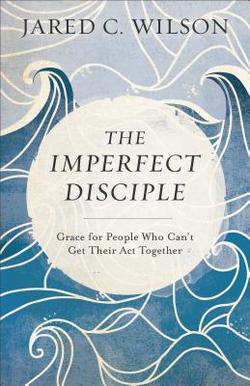
The Imperfect Disciple

discJared C. Wilson, The Imperfect Disciple: Grace for People Who Can’t Get Their Act Together, Grand Rapids: Baker Books, 2017, 233 pp.  $13.21

I have a large section of books in my library devoted to the topic of discipleship and Christian living. I also have a much smaller section of books devoted to discipleship and Christian living – books that are actually worth reading and re-reading and focus on the life-transforming message of the gospel. These books emphasize the life, death, burial, and resurrection of Jesus. These books glory in the gospel. The books in the small section are written by men like Jonathan Edwards, John Owen, C.H. Spurgeon, John Calvin, John Piper, and — Jared C. Wilson.

The Imperfect Disciple: Grace for People Who Can’t Get Their Act Together is Jared Wilson’s latest offering and it does not disappoint. The subtitle is enough to drive away Pharisee-types and self-righteous do-gooders. The rest of us who stand among the sinful and spiritually marginalized will benefit from this outstanding book.

Wilson articulates the gospel in clear and concise terms. His explanations are not only practical; they are deeply personal. What emerges in The Imperfect Disciple is soul-food for starved Christians. The book is a gold mine for weary travelers. The author has a way of reminding readers that apart from grace they lose; apart from grace they abandon hope; apart from grace, life is only humdrum.

After speaking in plain terms about the sinfulness of sin and addressing people who struggle to get their act together, Wilson pours the grace – and he pours it liberally: “And there is the key to following Jesus not as a defeated person of confidence, of hope, of glory: you are free to own up to your true sinful self because you are set free from your true sinful self.”

For readers who are under the impression that they have their act together, I have a simple plea: Do not read this book. It will only frustrate you, anger you, and cause your self-righteousness to swell. Sinners in need of grace should drink deeply, however, from The Imperfect Disciple. They should see the glory of Christ and recognize that nothing else truly satisfies. And they should turn away from petty idols, what Lewis referred to as “mud pies.” Wilson adds, “Truly I think one reason we aren’t captivated by Christ’s glory is because we have a diminished capacity to be captivated by anything big. We are preoccupied with small things.”

The Imperfect Disciple is one of those landmark books that makes a gigantic splash in the publishing world by challenging minds and transforming hearts. My prayer is that many will dive into this wonderful book and be changed for the better as they become reacquainted with the Savior and taste of his matchless grace.

I received this book free from the publisher. I was not required to write a positive review.

Simple Church (2006)

It’s been several years since I first read Simple Church by Thom Rainer and Eric 0805447997_b
Geiger.  The second time through was a good refresher as the authors remind readers about the importance of returning to “God’s process for making disciples.”

Simple Church argues that healthy churches have a simple plan for making disciples.  Four key words describe the process that is presented in the book:

  1. Clarity
  2. Movement
  3. Alignment
  4. Focus

Clarity sets forth the ministry blueprint.  Clarity is “the ability of the process communicated and understood by the people.  Without understanding, commitment wanes.  Understanding precedes commitment.”

Movement is the “sequential steps in the process that cause people to move to greater areas of commitment.  Movement is about flow.  It is about assimilation.  Movement is what causes a person to go to the next step.”

Alignment is “the arrangement of all ministries and staff around the same simple process.  Alignment to the process means that all ministry departments submit and attach themselves to the same overarching process.”

Focus is “the commitment to abandon everything that falls outside of the simple ministry process.  Focus requires saying “yes” to the best and “no” to everything else.”

Each of the above steps gives church leaders the necessary framework to begin with a simple plan for making disciples.  This model will require a radical paradigm shift in most churches.  Some sacred cows will die.  But more disciples will be nurtured in the long run.  Simple Church is an important contribution and contains some critical components that lead to the establishment of a healthy church.

Gospel-Centered Teaching

Gospel-Centered Teaching by Trevin Wax is a practical book that waxadmonishes readers to put Jesus at the center of every lesson and sermon.  Indeed, Spurgeon’s plea in the 19th century to preach the text and then “make a bee-line to the cross” is at the core of this work.  The author adds, “Unless you understand the power of life transformation is in the gospel, you’ll run after anything and everything else trying to manufacture life change.”  So we make it our aim to return again and again to Jesus and his gospel.

Gospel-Centered Teaching is a powerful book that reminds readers that the gospel is not merely for the unconverted.  Indeed, it not only saves us; it also sustains us in the Christian life.  I am reminded of the gentlemen who left a church I served in.  The accusation went something like this: “I left the xyz church because all I ever heard from the pulpit was the gospel.”  This person failed to see that the gospel is not only for salvation; it is life itself and propels Christ-followers into the future by his grace and for his glory.

Wax further elaborates another reason why we must place the gospel at the centered of every lesson and sermon:

“We progress in holiness the more we immerse ourselves in the truth that Jesus Christ bled and died to save helpless sinners like you and me.  The more we see the depth of our sin, the more we understand the depth of God’s grace.  Going deep means we must remember there is nothing we can do to make ourselves more acceptable to God … The gospel-centered teacher understands that the unsaved need the gospel in order to come to know Christ, while the saved need the gospel in order to become more like Christ.”

Gospel-Centered Teaching is a necessary antidote in a culture awash in moralism.  This little book is sure to encourage pastors and teachers to not only maintain fidelity to the gospel; but to keep it at the center of all ministry.

4.5 stars

Notes From the Tilt-A-Whirl – N.D. Wilson

tilt

N.D. Wilson, Notes From the Tilt-A-Whirl, Nashville: Thomas Nelson, 2009, 197 pp.  $7.13

Notes From the Tilt-a-Whirl, by N.D. Wilson is a fascinating look at God’s creation from a creative perspective.

Several features are worth noting.  First, Wilson reminds readers of the importance of a personal Creator: “For those who believe in ex nihilo creation, the world is inevitably art, and it is inevitably art from top to bottom, in every time and in every place.  The world cannot exist apart from the voice of God.  It is the voicings of God.”  The author demonstrates the absurdity of a creation devoid of a personal Creator.

Second, Wilson demonstrates the utter foolishness of atheism, relativism, and Darwinian natural selection.  He chides the evolutionist and sets his eyes on God’s good creation.  He makes it clear (and rightly so) that he will enjoy God’s good creation.

Third, I appreciate Wilson’s interaction with philosophers like Hume and Kant.  But especially noteworthy is his interaction with the German philosopher, Nietzsche.  I sense he respects Nietzsche and would have savored the opportunity to sit and visit with him in a German tavern.  But Wilson admits a frustration with Nietzsche: “I want to ruffle his hair.  I want to take the poor Lutheran boy’s head in my hands and kiss his creased forehead.  It is all I can do.  I cannot set a bone, let alone a soul.”  Wilson continues with an unforgettable line: “He [Nietzsche] moves on, preaching unbelief to an empty street.”

Finally, the author effectively reminds readers of an eternal hell: “Heaven or Hell is about love and hate.  Do you love God or do you hate him?  Is He foul in your nostrils?  Do you see His art and wish your arm was long enough to reach His face?  Do you spit and curse like Nietzsche?  Would you trade places with the damned thief so that you might see Him die and know that God Himself heard your challenges?”  Wilson continues, “Then Hell is for you.  Hell is for you because God is kind and reserves a place for those who loathe Him to the end, an eternal exile, a joyless haven for those who would eternally add to their guilt, a place where blasphemy will be new every morning … If you displease Him, He will displease you.  He will put you away and remove the grace you have experienced in this world.  With the crutches of His goodness gone, He will leave people to themselves, leave them to their own corrupt desires and devices.”

Thankfully, the author does not leave the reader groveling in hopelessness at the prospect of an eternal hell: “If you want to love Him, then He has already begun giving you change.  He has already begun unclenching your fists, taking your filth to be laundered on the cross.”

Wilson demonstrates that he is well-read and tuned in theologically and philosophically.  For instance, one of my favorite lines in the book is directed Godward: “An infinite God is I AM, and all else must be measured in terms of His nature, His loves, and His loathings.”  This is heady, creative writing.  In fact, some of this stuff is pure genius!  The writing is a strange mixture of Don Miller, Dennis Miller, C.S. Lewis, and G.K Chesterton.

The goodness in Wilson’s work, however, is overshadowed at times by his insistence on using profanity.    For instance, the author skillfully demonstrates the foolishness of rejecting transcendent absolute standards and argues against a relativistic worldview:  “I look in the atheist’s mirror.  I look at his faith in the nonexistence of meaning.  I look at his preaching and painting.  I see nothing but a shi*-storm.”  This kind of banter is totally unnecessary and undercuts the weight of the otherwise legitimate argument.

This growing trend toward the glorification of the profane is an alarming trend in the church, one that needlessly offends and accomplishes absolutely nothing.  This kind of writing is clearly not consistent with the Scriptural mandate, especially Paul’s warning to the Ephesian church: “Let there be no filthiness nor foolish talk nor crude joking which are out-of-place, but instead let there be thanksgiving” (Eph. 5:4, ESV).  Colossians 3:8 makes it clear that Christ followers are to put away “obscene talk.”  For we have been “renewed in knowledge after the image of its creator” (Col. 3:10, ESV).  I can already anticipate the quick response I will receive from postmodern pastors, emergent sympathizers, and enthusiastic bloggers.  But I stand with Scripture on my side.  For “my conscience is held captive by the Word of God.  To go against conscience is neither right nor safe.”  Indeed, it is ironic to lay claim to Luther’s words, given his propensity to use vulgarity.  However, I argue that Luther should have taken the scrub brush to his mouth as well.

I know some Christ-followers who would toss this book into the ash heap because of the vulgarity.  I am not prepared to go that far.  I am not ready toss the baby out with the bathwater.  There is too much good in Notes From the Tilt-a-Whirl to justify such a knee-jerk reaction.

Notes From the Tilt-a-Whirl made me dizzy.  But it also made me think.  Sometimes it angered me.  At the end of the day, I am glad I came to the “carnival.”  I am glad I decided to jump on the ride.  At times, I felt as if I’d eaten too much cotton candy.  But other times, I felt like buying another “ticket” and riding again – and again!

Batting With the Bereans

One of the most exciting elements of spring is the beginning of baseball season. The outfield is mowed, the infield freshly groomed and the players make their way on to the field. Some players come prepared to play; others have managed to let the training program go by the wayside. Eventually, all the players get back in shape and are ready to go, come opening day.

The Christian life, however, does not have the luxury of an off-season. Each day presents a new challenge. And each obstacle affords an opportunity for Christians to be God-centered in word and deed.

The Scriptures present a group of God-centered people called the Bereans. These folks were intent on learning and obeying God’s standard as set forth in the Scriptures. Acts 17:11 gives us an inside look at this impressive bunch. “Now the Bereans were of more noble character than the Thessalonians, for they received the message with great eagerness and examined the Scriptures every day to see if what Paul said was true.”

Notice a few things about these godly people:

First, take a look at their personality.  They were noble in character or “noble-minded” as translated in the New American Standard. The reason for their exemplary character is directly tied to their passion; namely, a burning desire to receive God’s message. They received the message with great eagerness, or literally with a readiness of mind. The Bereans approached God and his Word with a sense of expectation and would not settle for anything less.

Second, the Bereans were proactive. They diligently searched the Scriptures to see if the teaching they were receiving lined up with God’s revealed Word. Notice that this searching process which involved sifting everything they heard was a daily occurrence. These people were serious about God’s Word!

One of the greatest ways to emulate the example of the Bereans is to plug into a group of like-minded followers of Christ.  Here you have the opportunity to open the Word of God, commune with him, and develop relationships with people who have similar priorities.

Let me challenge you to “step up to the plate” and take some batting lessons from the Bereans. Let us hold the Word of God high and approach the Christian life with passion, zeal, and joyful anticipation.

The Gospel According to Paul

paulJohn MacArthur, The Gospel According to Paul, Nashville: Thomas Nelson, 2017, 256 pp. $13.20

Nearly thirty years ago, Dr. John MacArthur wrote The Gospel According to Jesus. The book was a clear articulation of the gospel and a sharp repudiation of antinomianism and other views that failed to affirm the lordship of Jesus Christ in salvation. A firestorm erupted and sparked heated debate among evangelicals as a result of the book. Since that time, MacArthur has written several books that articulated the gospel and defended it from attacks, most of which were coming from professing evangelicals leaders.

MacArthur’s latest offering, The Gospel According to Paul, is less polemical in tone but no less powerful than his previous works. His intent is to survey the gospel through the eyes of Paul the apostle and consider several questions that are of utmost importance:

What is the gospel?

What are the essential elements of the gospel?

How can we be certain we have it right?

How should Christians be proclaiming the gospel to the world?

MacArthur adds, “The gospel was no sideline for the apostle Paul. ‘Jesus Christ and Him crucified’ was the principle theme of everything the apostle taught or preached” (129). So with passion and biblical precision, the author showcases the gospel according to Paul.

A wonderful summary of the book may be found in MacArthur’s explanation of Philippians 3:4-11:

“That is a remarkable testimony because of the way Paul weaves in several of his favorite gospel themes: the worthlessness of human works as a means of gaining merit with God; the pivotal role of faith; the principles of grace and imputed righteousness; the death and resurrection of the Savior; and above all the supreme value of knowing Christ over any earthly benefit, privilege, or treasure.”

MacArthur not only provides a masterful articulation of the gospel and penal substitutionary atonement; he defends it against the pernicious threat of antinomians, Pharisees, and other dangerous heretics.

The Gospel According to Paul is a clear explanation of the most important reality in the universe, namely, that “in Christ God was reconciling the world to himself” (2 Cor. 5:19). It unfolds the gospel with a decisively Reformed framework and rightly points readers to the magisterial Reformers and the truths they unearthed in the sixteenth century. And it is basic enough for new believers but also contains a treasure chest of Christ-glorifying truths that are guaranteed to encourage and equip longtime followers of Jesus.

Highly recommended!

This Momentary Marriage

Books on marriage are a dime-a-dozen these days, even from a Christian perspective. However, only a handful of books on marriage, pass the test of biblical fidelity. John Piper’s book, This Momentary Marriage passes both. In fact, it ranks among the best books I’ve read on marriage to date.

Readers familiar with Piper will be instantly drawn into his argument for marriage. Over and over Piper pounds the theme of the book into the ground for maximum effect: The ultimate purpose of marriage is “the display of Christ’s covenant-keeping grace.” To that end, the author develops several items worth mentioning.

Summary

  1. The author grounds his central argument in rich soil by reiterating that marriage is “the doing of God.”

And in a final sense, “marriage is the display of God.” He continues, “The ultimate things we can say about marriage is that it exists for God’s glory. That is, it exists to display God … Marriage is patterned after Christ’s covenant relationship to his redeemed people, the church. And therefore, the highest meaning and the most ultimate purpose of marriage is to put the covenant relationship of Christ and his church on display.” And this is the primary reason why divorce is so odious to God: “Therefore, what makes divorce and remarriage so horrific in God’s eyes is not merely that it involves covenant-breaking to the spouse, but that it involves misrepresenting Christ and his covenant” (emphasis mine).

  1. Piper focuses on the priority of covenant love.

The theme of the book is that marriage is meant to display Christ’s covenant-keeping grace. Therefore, the author argues that “staying married is not mainly about staying in love. It’s about covenant-keeping.” The foundation for this covenant-keeping is the rock-solid covenant between people and God. Therefore, Piper continues, “Marriage exists to display the merciful covenant-keeping love of Christ and the faithfulness of his bride.”

It is here that the book takes an important and decisive turn – for the author shows the relevance of the doctrine of justification by faith alone and how it relates to marriage. Piper adds, “God requires two things of us: punishment for our sins and perfection for our lives.” He continues to describe how the vertical reality of justification must be “bent horizontally to our spouses if marriage is to display the covenant-making, covenant-keeping grace of God.” The takeaway is profound: “Let the measure of God’s grace to you in the cross of Christ be the measure of your grace to your spouse.” This is a perfect example of the Christ-saturated wisdom that permeates the book.

Practical Biblical Wisdom

Piper continues to give practical advice to husbands and wives throughout the book; advice that is bathed in biblical wisdom; advice that is ultimately rooted in our God who keeps covenant with his people. Biblical headship is discussed – so husbands are encouraged to lead well: “Headship is the divine calling of a husband to take primary responsibility for Christlike, servant leadership, protection, and provision in the home.”  The husband’s leadership involves physical and spiritual protection and physical and spiritual provision. Biblical submission is explored: “Submission is the divine calling of a wife to honor and affirm her husband’s leadership and help carry it through according to her gifts.”  What strikes me about the section on headship and submission is this: in a few short pages, Piper delivers an exegetical bombshell that utterly destroys the prevailing notion of egalitarianism.  This God-dishonoring view that sees no distinction between male and female roles is left begging for mercy; tattered and torn in the shadow of Piper’s sound exposition.

The concluding chapters discuss the permanence of the marriage covenant.  In what may be one of the most important statements in the book, Piper suggests that, “if Christ ever abandons and discards his church, then a man may divorce his wife. And if the blood-bought church, under the new covenant, ever ceases to be the bride of Christ, then a wife may legitimately divorce her husband. But as long as Christ keeps his covenant with the church, by the omnipotent grace of God, remains the chosen people of Christ, then the very meaning of marriage will include: What God has joined, only God can separate.”

The author boldly goes where few pastors dare to go by suggesting that remarriage is prohibited so long as the previous spouse is still alive. His arguments are exegetically sound and compelling. Readers who disagree are encouraged to survey the case that Piper presents and prayerfully consider his arguments.

A Landmark Book on Marriage

This Momentary Marriage is a landmark book.  It is a theological landmine that will undoubtedly shatter many preconceived notions about marriage. It is solid food that Christians need to digest. And it is timely ointment that is designed to heal wounds and promote strong marriages in the difficult days ahead. I highly recommended it!


The Puritanical Genius of Mike Pence

A recent Washington Post article revealed some fascinating tidbits about Vice President Mike Pence and his wife, Karen. At the top of the list, was Pence’s proclamation in 2002 that, “he never eats alone with a woman other than his wife.”1 The article revealed what many Americans have learned in recent months about Mike and Karen Pence, namely, that these people fear God and take their wedding vows seriously.

One would think that such a story would not draw much press or criticism. Think again, as the liberal media pounced on Pence and sought to portray his views as Puritanical and out of step with the modern milieu. Such views are better relegated to the stone age, at least in the minds of “cultured” people.

For example, Jessica Valenti writes that Pence’s position is “all a part of his deeply retrograde worldview.”2 Writing with deep sarcasm, Valenti considers the values of Pence to militate against the tenor of the times: “It’s an insulting view of men, a limiting role for women – we’re there to either entice or domesticate – and an archaic take on gender roles more generally.”3

Valenti accuses Pence of being a “misogynist,” a truly bizarre accusation, especially in light of the honor that the Vice President pays to his wife. This egalitarian banter is both unfair and unproductive, putting words in Pence’s mouth and making judgments which are simply untrue. And these ridiculous accusations are light-years away from anything that resembles graciousness. So much for left-wing tolerance.

While the liberal media wastes precious time and ink, attacking the Vice President with straw man arguments, perhaps there are some lessons to learn for the rest of us. What kind of wisdom does Vice President Pence possess that other men could learn from? How can we learn from the Puritanical genius of Mike Pence?

He Understands the Power of the Flesh

The Vice President is well aware what Scripture says about the human heart. Jeremiah 17:9 says, “The heart is deceitful above all things, and desperately sick; who can understand it?” The Bible clearly states that people of faith battle indwelling sin; this sin is smoldering in the heart of every person and will make the best of every opportunity. It will strike when we least expect it. The apostle Paul, a man who penned much of the New Testament, was aware of the diabolical nature and strategy of sin: “For I know that nothing good dwells in me, that is, in my flesh. I have the desire to do what is right, but not the ability to carry it out. For I do not do the good I want, but the evil I do not want is what I keep doing. Now if I do what I do not want, it is no longer I who do it, but sin that dwells within me” (Rom. 7:18-20, ESV).

The Puritanical genius of Mike Pence is his keen awareness of the power of the flesh and the wisdom to steer clear from this ominous monster, no matter what the cost.

He Upholds the Sanctity of Marriage

The Vice President made a vow of faithfulness to his wife, Karen. Unlike some men in our culture, Mike Pence intends on making good on those vows. The standards that guide his life honor both his wife and honor his God. These standards demonstrate a rock-solid allegiance to Karen and help him love her in a sacrificial way, as Christ loved the church (Eph. 5:25). These standards place his marriage above the expectations of the world. Such a stance will no doubt draw the ire of his detractors but his aim is to please his Savior, not the attention of worldly people (Acts 5:29).

The Puritanical genius of Mike Pence is his deep understanding of his marriage vows and commitment to keep his word.

He Undermines Any Attempts to Question His Character

When the Vice President chooses to live above reproach, as we have recently learned, he short-circuits anyone who would seek to destroy him or cast a dark shadow on his life and reputation. Of course, anyone can cast stones and make spurious claims. But the wisdom of Pence helps protect him from any unsubstantiated claims. Such wise living is consistent with biblical principles and sound judgment, for “One who is wise is cautious and turns away from evil, but a fool is reckless and careless” (Proverbs 14:16, ESV).

The Puritanical genius of Mike Pence is his wisdom to avoid any situations that might do harm to his personal life or marriage.

He Underscores the Value of Integrity

The former congressman, J.C. Watts once opined, “Character is doing the right thing when nobody’s looking. There are too many people who think that the only thing that’s right is to get by, and the only thing that’s wrong is to get caught.” Vice President Pence understands the importance of integrity and demonstrates this valuable virtue in the way he lives his daily life and in the way he leads. He understands that integrity takes a lifetime to build but can be destroyed in a moment.

The Bible unveils the importance of integrity which supports the values that Mr. Pence embraces:

“May integrity and uprightness preserve me, for I wait for you.” (Psalm 25:21, ESV)

“He stores up sound wisdom for the upright; he is a shield to those who walk in integrity,” (Proverbs 2:7, ESV)

“Whoever walks in integrity walks securely, but he who makes his ways crooked will be found out.” (Proverbs 10:9, ESV)

“The integrity of the upright guides them, but the crookedness of the treacherous destroys them.” (Proverbs 11:3, ESV)

“Whoever walks in integrity will be delivered, but he who is crooked in his ways will suddenly fall.” (Proverbs 28:18, ESV)

The Puritanical genius of Mike Pence involves living a life that is marked by integrity.

Final Thoughts

We have seen that some people consider the worldview of Mike Pence to be “retrograde.” Such criticism argues that his values are a negative influence on our culture and that his views move us in the wrong direction. Of course, nothing could be further from the truth. The worldview that Pence promotes helps advance a cause that all Americans should cherish – one that values faithfulness, honesty, and integrity.

J.I. Packer compares the New England Puritans to “California’s Redwoods”4 which tower above the earth and demand the attention of onlookers. Packer says, “The Puritans made me aware that all theology is also spirituality, in the sense that it has an influence, good or bad, positive or negative, on its recipients’ relationship or lack of relationship to God.”5Mike Pence is not a Puritan in the strict sense and never claimed to be one. Yet the Puritans would be proud of his values as he cherishes. They would commend Pence for his influence on people in the executive branch. And they would compliment him for the example he sets forth for the American people

God made a promise to Solomon that we would do well to remember: “And as for you, if you will walk before me, as David your father walked, with integrity of heart and uprightness, doing according to all that I have commanded you, and keeping my statutes and my rules,” (1 Kings 9:4, ESV)

The wisdom that the Vice President displays in maintaining proper relationships and boundaries is consistent with 1 Kings 9:4. This kind of wisdom is desperately needed at the highest levels of the federal government. But it is also needed across America – in our classrooms, board rooms, court rooms, sanctuaries, and media outlets.

When the dust settles, the Vice President may be battered and bruised by the liberal press.  He may bear the marks of unjust persecution.  But his strong values and commitment to purity will help preserve a strong marriage.  He will stand side-by-side with his treasured bride and enjoy the benefits of a clean conscience.

Americans should pray for Mr. Pence and ask God to enable him to walk with integrity before his God. We should pray that God protects his marriage and family. We should pray for God to grant much wisdom as he serves our nation in the days ahead. We as Americans should be thankful for the Puritanical genius of Vice President Mike Pence.

  1. See Ashley Parker, Karen Pence is the Vice President’s “Prayer Warrior,” Gut Check and Shield (Washington Post, 28 March, 2017).
  2. Jessica Valenti, The Real Reason Mike Pence Refuses to Dine Alone with Women (Alternet, 31 March, 2017).
  3. Ibid.
  4. J.I. Packer, A Quest For Godliness: The Puritan Vision of the Christian Life(Wheaton: Crossway Books, 1990), 11.
  5. Ibid, 15.

A Theology for Christian Education

ALLISONA Theology For Christian Education, edited by James Estep, Michael Anthony, and Gregg Allison is a well-rounded primer which is suited for pastors in the local church and Bible College/Seminary professors in the classroom.

The first five chapters are foundational in scope. They deal with questions that concern:

  1. The Nature of Theology and Education
  2. What Makes Education Christian
  3. Biblical Principles for a Theology of Christian Education
  4. Revelation, Scripture, and Christian Education
  5. The Triune God and Christian Education

One might consider the first five chapters as the backbone of the book. These chapters help shape the philosophy of education so that the educator has biblical framework for building into the lives of students.

The remaining chapters deal with the finer points of Christian education and address matters of Christology, pneumatology, anthropology, hamartiology, soteriology, and ecclesiology. Students of systematic theology will be familiar with these categories which run through the fabric of this excellent work.

Pastors and professors will be challenged and encouraged by the content here. There is plenty of encouragement in these pages; encouragement that most pastors and professors could benefit from.

The End of Creation: Soli Deo Gloria

The first verse in the Bible is a monumental statement that reverberates with earth-shattering implications for the formation of a Christian worldview: “In the beginning, God created the heavens and the earth” (Gen. 1:1, ESV). Do not miss the magnitude of this statement. Do not downplay the significance of this vital piece of revelation. And be careful to embrace what the Scriptures affirm. Ignoring the clear revelation of God’s truth, in the final analysis, proves to be a costly mistake that will have consequences that extend into eternity.

The German astronomer, Johannes Kepler, accepted biblical revelation and understood the importance of giving credit where credit is due: “The chief aim of all investigations of the external world should be to discover the rational order and harmony which has been imposed on it by God.”1To do any less would be tantamount to theological treason. So Kepler does not minimize God’s creative activity; he magnifies it. He does not marginalize the miracle of creation; he marvels at it!

Tragically, some thinkers have not followed Kepler’s lead. These skeptics have discounted Genesis 1:1 and cast the revelation of God into the cosmic rubbish bin. Charles Darwin, who popularized the notion of “natural selection” in his book, Origin of Species also rejected the clear account of creation. Ironically, he is buried in Westminster Abbey. Darwin may be gone but his atheistic ideology continues to dominate the thoughts of many minds, especially in the university.

Carl Sagan, who was a great champion of Darwinian evolutionary theory penned these well-known words: “The Cosmos is all that is or was or ever will be. Our feeblest contemplations of the Cosmos stir us – there is a tingling in the spine, a catch in the voice, a faint sensation, as if a distant memory, of falling from a height. We know we are approaching the greatest of mysteries.”2 He continues, “Evolution is a fact, not a theory.”3 Such banter may appeal to the itching ears of evolutionists but fails to hold up when scrutinized at the tribunal of truth.

Or consider Richard Dawkins, another defender of Darwin’s evolutionary theory. His rejection of the creation account leads him to a view of God which is blasphemous at best: “The God of the Old Testament is arguably the most unpleasant character in all fiction: jealous and proud of it; a petty, unjust, unforgiving control-freak; a vindictive, bloodthirsty ethnic cleanser; a misogynistic, homophobic, racist, infanticidal, genocidal, filicidal, pestilential, megalomaniacal, sadomasochistic, capriciously malevolent bully.”4 The Word of God offers a stern rebuke to this kind of unbelieving thought.

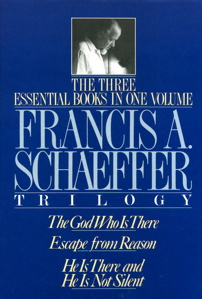
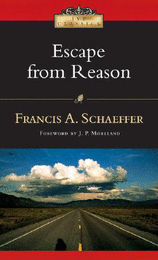
It doesn’t take long to discern some of the catastrophic consequences of giving God’s revelation a vote of “no-confidence.” Francis Schaeffer understood the vast importance of Genesis 1:1. He understood that if we set aside the reality of creation, our worldview collapses. He writes, “Unless our epistemology is right, everything is going to be wrong.”5 The discipline of epistemology addresses the matter of knowledge. That is, it helps unpack what we know about what we know. Schaeffer continues, “The infinite-person God is there, but also he is not silent; that changes the whole world.”6Schaeffer helps us understand that God exists and he has revealed himself, that is, he has spoken. Or to use Schaeffer’s words, “He is not silent.”

That fact that God not only exists but has also revealed himself is a massive reality that every person must come to terms with. This stunning truth should find us on our knees with outstretched arms. It should prompt a humble offer thanksgiving to the living God. But there’s more – Jonathan Edwards understands the motive behind God’s act of creation. He argues that the end for which God created the world was self-communication: ”Seeing that Christ created the world only to communicate his excellency and happiness, hence we learn, that all the excellency, virtue and happiness of the godly is wrought in them by Jesus Christ.”7 The implication of this Edwardian vision of creation are far-reaching and have important practical implications.

So the end of creation is uniquely focused upon God. That is, creation is Godward. Creation is God-centered. In one of his greatest literary achievements, A Dissertation Concerning the End For Which God Created the World, Jonathan Edwards demonstrates this God-centeredness: “What God says in his word, naturally leads us to suppose, that the way in which he makes himself his end in his work or works, which he does for his own sake, is in making his glory his end … God communicates himself to the understanding of the creature, in giving him the knowledge of his glory; and to the will of the creature, in giving him holiness, consisting primarily in the love of God; and in giving the creature happiness, chiefly consisting in joy in God. These are the sum of that emanation of divine fulness called in Scripture, the glory of God.8

Consider three important implications of discounting the biblical creation account:

First, discounting the reality of biblical creation leads to a skewed epistemology. And a skewed epistemology, will by definition, influence the way we think about everything else. When God is taken out of the picture or removed from the marketplace, we are left wandering in a wasteland in search of answers. “If God does not exist,” writes Dostoevsky, “then everything is permitted.” The eclipse of God leaves us helpless, hopeless, and lost in a quagmire of meaninglessness.

Second, discounting the reality of biblical creation impugns the character and trustworthiness of God. Scripture is clear about the creation account:

“For by him all things were created, in heaven and on earth, visible and invisible, whether thrones or dominions or rulers or authorities—all things were created through him and for him. And he is before all things, and in him all things hold together.” (Colossians 1:16–17, ESV)

“When you send forth your Spirit, they are created, and you renew the face of the ground.” (Psalm 104:30, ESV)

““Where were you when I laid the foundation of the earth? Tell me, if you have understanding. Who determined its measurements—surely you know! Or who stretched the line upon it? On what were its bases sunk, or who laid its cornerstone,” (Job 38:4–6, ESV)

“When you send forth your Spirit, they are created, and you renew the face of the ground.” (Psalm 104:30, ESV)

Anyone who discards what God has made plain calls God’s character into question and heaps a great insult upon the worth of his name. Anyone who dares impugn the character of God stands on the precipice of eternal judgment.

Third, discounting the reality of biblical creation fails to glorify God, which is the end of creation. Isaiah 43:7 says, “Everyone who is called by my name, whom I created for my glory, whom I formed and made.” Think about the tragic irony of rejecting the creation account. The creature who was created to glorify God stands in defiance and mocks the One who gave him breath.

The glory of God is the end of creation. The heavens declare his glory (Ps. 19:1). Is it any wonder that sinful men seek to distort what God has made plain in Scripture?

Soli Deo Gloria!

  1. Johannes Kepler, Cited in Charles Colson and Nancy Pearcey, How Now Shall We Live? (Wheaton: Tyndale House, 1999), 51.
  2. Carl Sagan, Cosmos (New York: Ballantine Books Trade, 1980), 1.
  3. Ibid, 27.
  4. Richard Dawkins, The God Delusion (Boston: Houghton Mifflin Company, 2006), 31.
  5. Francis A. Schaeffer, The Complete Works of Francis A. Schaeffer: A Christian Worldview, Volume One, A Christian View of Philosophy and Culture (Wheaton: Crossway Books, 1982), 275-276.
  6. Ibid, 276.
  7. Jonathan Edwards, The Works of Jonathan Edwards, vol. 13, The “Miscellanies,” ed. Thomas A. Schaefer, (New Haven: Yale University Press, 1994), 277.
  8. The Works of Jonathan Edwards, vol. 1, A Dissertation Concerning the End For Which God Created the World, ed. Edward Hickman (Carlisle: The Banner of Truth, 1834), 107, 119.