HAPPINESS by Randy Alcorn

1414389345_bRandy Alcorn. Happiness.  Carol Stream: Tyndale House Publishers, 2015.    480 pp. $14.45.

Randy Alcorn is an author who consistently places strong, biblical challenges before his readers. His newest work, Happiness, is no exception. The book is arranged in four parts and is arranged as is summarized below.

Part 1: Our Compelling Quest for Happiness

Alcorn lays the groundwork here by making the biblical case for happiness. He confronts the typical evangelical notion that God is only concerned with our holiness but disregards the need for happiness. Such views are not only unbiblical but harmful to Christian growth and progress.

The author argues that happiness is a part of the warp and woof of the Christian life. “Every man,” says Augustine, “whatsoever his condition, desires to be happy.” Ultimately, Alcorn reminds readers that their happiness is grounded and rooted in a relationship with God through Christ: “Longing for the happiness of humankind once knew, we can be drawn toward true happiness in Christ, which is offered us in the gospel.”

Part 2: The Happiness of God

Part two explores a theme that has been largely neglected in the church, not to mention, most works of Systematic Theology. Alcorn says, “Some people suppose happiness is uniquely human, unrelated to God’s nature: as he gave us a body and hunger, which he doesn’t have, he gave us a capacity for happiness, which he also doesn’t have. I believe. Something radically different – that God wants us happy because he’s happy.” Jonathan Edwards adds, “It is of infinite importance…to know what kind of being God is. For he is…the only foundation of our happiness.”

The author builds an unshakeable case for the happiness of God by pointing to key texts in Scripture (Zeph. 3:14, 17; Ps. 2:12; 16:11; Deut. 30:9; Ps. 35:27; Isa. 62:5).

At the heart of section two is the importance of the doctrine of the Trinity. For in the Trinity, we find a God who is eternally happy. Alcorn cites Michael Reeves who says, “The Trinity is the cockpit of all Christian thinking.” Indeed, as Alcorn writes, “The only way God’s happiness or love could be without beginning is if there exists within God himself a reasons for and object of his happiness and love.”

The author helps readers understand the earth-shattering consequences of a happy God and the impact this reality has on our worldview: “But God is fully happy, one day we will be fully happy.”

Part 3: The Bible’s Actual Words for Happiness

Part three is the most technical part of the book as Alcorn includes a detailed word study of happiness and all the related words in Scripture. One section is especially significant as the happiness which emerges from Scripture is set forth in vivid detail. A few samples include:

Happy are those who believe in Jesus.

Happy are those facing trials for Jesus’ sake.

Happy are those who see and hear Jesus for who he is.

Happy are those who serve God faithfully.

Happy are those who trust God’s promises.

Happy are those who obey God’s Word.

Happy are those who help and serve others.

Happy are those who have been forgiven by the Lord.

Happy are those who see unhappiness as a warning sign.

Happy are those who are also holy.

Ultimately, our joy is not optional. Rejoicing in the Lord is a command (Phil. 3:1; 4:4).

Part 4: Understanding and Experiencing Happiness in God

The concluding section includes several chapters that include practical ways to pursue happiness. The culmination of the book includes several meditations on the essence of our existence on the New Earth where we will experience unvarnished happiness in the presence of the Lord Jesus Christ.

Happiness is a breath of fresh air in a world that tends to minimize happiness. Alcorn aggressively confronts the popular notion that God is only interested in our holiness but has not interest in our happiness. He advocates the radical pursuit of joy, which by definition, necessitates holiness. Indeed, on cannot have one without the other.  The pursuit of joy and the commitment to holy living are not at odds!  Randy Acorn’s work is loaded with encouragement that lifts readers out of the clutches of mediocrity, discouragement, and complacency. He urges readers to pursue a higher calling, namely, happiness.  Such happiness is found in the gospel, in a relationship with the God of the universe and his Son the Lord Jesus Christ!

Highly recommended!
THE NATURE AND END OF EXCOMMUNICATION – Jonathan Edwards

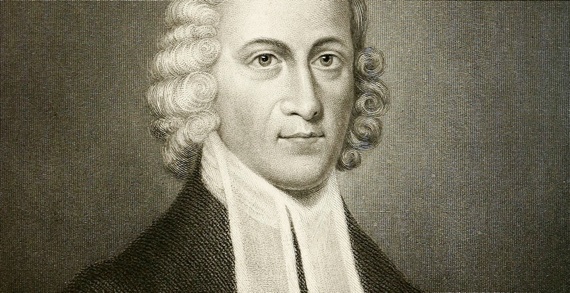
Jonathan_Edwards_engravingThe Nature and End of Excommunication is a timely and practical sermon.  For many churches in our generation simply refuse to exercise church discipline on the unrepentant.  This act of passivity is not only cause for grave concern; it is a violation of Scripture.

Edwards utilizes 1 Cor. 5:11 as his text:

But now I am writing to you not to associate with anyone who bears the name of brother if he is guilty of sexual immorality or greed, or is an idolater, reviler, drunkard, or swindler—not even to eat with such a one.” (1 Cor. 5:11, ESV)

DoctrineThose members of the visible Christian church who are visibly wicked, ought not be tolerate in the church, but should be excommunicated.

Edwards explains and articulates three main headings which support the doctrine.

1. The Nature of Excommunication

Edwards wastes no time explaining the essence of excommunication: “It is a punishment executed in the name and according to the will of Christ, whereby a person who hath heretofore enjoyed the privileges of a member of the visible church of Christ, is cast out of the church and delivered unto Satan” (c.f. 2 Cor. 2:6).

Ultimately, church discipline is meant for the good of the person in question and seeks their repentance and restoration to the body of Christ.  Edwards, adds, “Excommunication itself is to be performed as an act of benevolence.  We should seek their good by it; and it is to be used as a means of their eternal salvation.”

2. The Proper Subjects of Excommunication

Those who walk through the process of excommunication are the “visibly wicked.”  Two things mark such a person:

  • By gross sin 
  • By remaining impenitent in their sin

3. The End of Excommunication

Three specific ends are delineated by Edwards:

  • That the church may be kept pure, and the ordinances of God not be defiled.
  • That others may be deterred from wickedness.
  • That the persons themselves may be reclaimed, and that their souls may be saved.

Application

5 points of application are set forth by the preacher from Northampton:

  1. That you tolerate visible wickedness in your members, you will greatly dishonor God, and our Lord Jesus Christ, the religion which you profess, the church in general, and yourselves in particular.
  2. Your own good loudly calls you to the same thing.  From what hath been already said, you see how liable you, as individuals, will be to catch the contagion, which is easily communicated by reason of the natural depravity, in a degree at least, remaining in the best of men.
  3. The good of those who are without should be another motive.
  4. Benevolence towards your offending brethren themselves, calls upon you to maintain discipline in all its parts.
  5. But the absolute authority of Christ ought to be sufficient in this case, if there were no other motive.

These powerful reminders should beckon every church to seriously consider the high calling of operating in a God-glorifying way.  Edwards wonders out loud, “Now, how can you be the true disciples of Christ, if you live in the neglect of these plain positive commands?”  He concludes, “If you strictly follow the rules of discipline instituted by Christ, you have reason to hope for his blessing; for he is wont to bless his own institutions, and to smile upon the means of grace which he hath appointed.”

In this short sermon, Edwards demonstrated the necessity of carrying out church discipline on unrepentant church members.  How very far are so many churches from this biblical model?  How long will it take to come in alignment with the teaching of Scripture?

THE MARKS OF A SPIRITUAL LEADER – John Piper

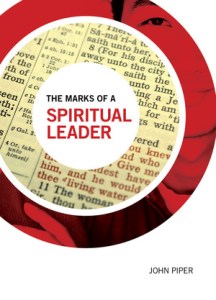
full_the-marks-of-a-spiritual-leader“Spiritual leadership is knowing where God wants people to be and taking the initiative to use God’s methods to get them there in reliance on God’s power.” John Piper’s definition permeates this little book, appropriately titled, The Marks of a Spiritual Leader. Piper maintains that the essence of spiritual leadership involves helping people move toward heart change. Of course, it is the Holy Spirit who transforms hearts, but in his mercy and grace, he sovereignly uses Christian leaders to play an important part of this process.

The author presents to aspects of spiritual leadership. First, the inner circle. The ultimate aim here is to glorify God. Piper urges, “The ultimate goal of all spiritual leadership is that other people might come to glorify God, that is, might so feel and think and act as to magnify the true character of God.” This is where people meditate on and pray over the Word of God. This is where people acknowledge their desperate need for God.

Piper cites the examples of Hudson Taylor and George Mueller as men who understood this inner circle, men who were committed to godliness and genuine heart change.

Second, the outer circle of spiritual leadership. This is the arena where leaders manifest qualities that are consistent with godliness. Piper presents several qualities that meet this criteria, including restlessness, optimism, intensity, self-control, thick-skin, energy, thinking ability, and being theologically oriented – among others.

The Marks of a Spiritual Leader is not meant to be a comprehensive guide to Christian leadership. Others have written more comprehensive books like Spiritual Leadership by J. Oswald Sanders and The Conviction to Lead by Al Mohler. Piper’s work is a helpful addition and will no doubt encourage many men as they walk the path of a spiritual leader.

True Worshipers: Seeking What Matters to God – Bob Kauflin (2015)

Bob Kauflin is no stranger to the local church, especially people in the church who are passionate about worship. kauflinIn his latest book, True Worshipers: Seeking What Matters to God, Mr. Kauflin unpacks the reason for our existence. He explores the very essence of worship and draws practical applications to our contemporary milieu.

Kauflin cites John Calvin approvingly: “We should consider it the great end of our existence to be found numbered among the worshipers of God.” Indeed, Calvin rightly reveals the end of our existence. And it is with this end in mind, that Bob Kauflin explores warp and woof of true worship.

The book is comprised of nine chapters, all of which describe the essence and reality of worship. Kauflin’s reflections are biblical and challenging. His words are warm and his tone attracts the ear of worshipers. While the author is good to explore many practical aspects of worship, he is quick to direct the attention of readers back to the true meaning of God-centered worship: “Any definition of true worship that denies or minimizes God’s supremacy, authority, and uniqueness is unbiblical and will lead to idolatry.”

This is a book worthy of commendation and should be well received by many in the church. I personally thank Bob Kauflin for his influence in my life, his Christ-saturated songs, and for leading the people of God to the throne room to worship our Triune LORD.

I received this book free from the publisher. I was not required to write a positive review.

LET THE EARTH HEAR HIS VOICE – Greg R. Scharf (2015)

earthPreaching is at the very heart of the New Testament church. Yet many preachers find themselves struggling to prepare, lack the exegetical and theological tools to research adequately, and struggle to deliver sermons that connect with people.

Greg R. Scharf identifies some of these homiletical struggles in his new book, Let the Earth Hear His Voice. His primary argument is that pastors have weaknesses which need to be identified in order to improve in the pulpit. He compares these struggles to bottlenecks that restrict the flow of God’s Word to his people. These bottlenecks need to be unclogged which will lead to a more effective preaching ministry.

Eight foundational principles are set forth in Scharf’s work. These principles provide pastors with the necessary “muscle” which will strengthen their pulpit ministries. The principles include:

  1. Trust God
  2. Speak as those assigned, equipped, and empowered to do so.
  3. Speak from the Bible in ways that reflect the Bible’s composition as a literary collection.
  4. Listen to God before they attempt to speak for God, discerning what he is saying.
  5. Understand those to whom God has called them to speak.
  6. Respect and reflect the clarity and orderliness of Scripture while discerning the way people hear.
  7. Respect and reflect the ways that Scripture communicates in stories, propositions, and images.
  8. Take seriously their role as messengers who also embody the message they proclaim.

Each principle is subsequently viewed in a negative way. That is to say, each principle is viewed as one of the eight bottlenecks. The author describes the bottlenecks (unbelief, unqualified or disqualified preacher, faulty text selection, inadequate understanding of the text, inadequate contextualization, faulty organization, inadequate balance of proposition and illustration, and flawed delivery).

Scharf carefully explains each bottleneck in the remaining chapters. He presents reasons for guarding against each respective bottleneck and strategies for overcoming them. The conclusion of each chapter contains practical exercises which are designed to help and encourage struggling shepherds.

Let the Earth Hear His Voice is not a typical preaching book. Frankly, it stands alone in a growing list of excellent books. Scharf’s work is a welcome addition and a complement to books like The Supremacy of God in Preaching by John Piper, Preaching & Preachers by D. Martyn Lloyd-Jones, A Biblical Theology of Preaching by Jason Meyer, The Kind of Preaching God Blesses by Steven J. Lawson, and He is Not Silent: Preaching in a Postmodern World by J. Albert Mohler. Pastors would do well to absorb the excellent material in this book. May God use this book to his glory as pastors learn and discern their weakness and faithfully wield the mighty sword for the edification of God’s people!

I received this book free from the publisher.   I was not required to write a positive review.

He is There and He is Not Silent- Francis Schaeffer (1972)

I first read He is There and He is Not Silent by Francis Schaeffer in 1992.  Multiple readings have ensued and I turn back to Schaeffer’s book again and again for help with apologetics.

Schaeffer argues for three basic areas of philosophical thought: metaphysics (being or existence), morals (the dilemma of man), and epistemology (the problem of knowing). Philosophy and religion are essentially devoted to the same questions, namely, metaphysics, morals, and epistemology.

Philosophy is concerned with either an academic subject or a person’s worldview.  It is the later, that Schaeffer is concerned with in this volume.  Schaeffer contends that every man is a philosopher of sorts because it is impossible for humans to live without a worldview.

Metaphysics

There are three basic answers to the question of metaphysics.  The first answer is that “everything that exists has come out of absolutely nothing.”  Naturalism’s answer suggests no energy, no mass, no motion, and no personality.  This answer is, as Schaeffer calls it, “nothing, nothing.”

The second answer is that everything had an impersonal beginning.  This answer leads automatically to reductionism.  “Beginning with the impersonal must be explained in terms of the impersonal plus time plus chance,” writes Schaeffer.  This answer poses many problems.  But the two primary problems fail to answer the major philosophical question: the need for unity and the need for diversity.

The third answer is the biblical answer.  The third answer is the only rational and satisfying answer.  This answer suggests that we must begin with a personal beginning.  And to have an adequate answer of a personal beginning, one must have a personal infinite God, and personal unity and diversity in God (found the holy Trinity).

Schaeffer concludes: “The reason we have the metaphysical answer is because the infinite-personal God, the full Trinitarian God is there and he is not silent.”

Morals

There are only two basic answers to the question of morals.  The first: Everything had an impersonal beginning.  The is the answer of atheism.  Schaeffer never minces words.  He writes, “Beginning with the impersonal, there is no explanation for the complexity of the universe or the personality of man.”  When one begins with the impersonal, one eliminates the possibility of morals or ethics.

The second answer is the biblical reality of a personal beginning.  Man was created by an infinite-personal God.  Man sinned or “made a decision to change himself” as Schaeffer notes.

“The starting point,” writes Schaeffer “to the answer (of the question of morals) as with metaphysics is the fact that God is there and he is not silent.”

Epistemology

Schaeffer concludes by setting forth the problem concerning epistemology and the epistemological answer.

The epistemological problem concerns the tension between nature (particulars) and grace (universals).  When nature becomes autonomous, the universal is lost with the hope of giving the particulars meaning.  The problem is that when nature becomes autonomous, nature “eats up” grace.  Schaeffer argues that when we are left with only particulars, we become lost in the areas of metaphysics, morality, and epistemology.

The epistemological answer was summarized by the Reformers.  The Reformers did not allow for a dichotomy between nature and grace.  The reason: they had verbal propositional revelation.  The Reformers were vocal about the reality of God’s existence and the reality of his revelation.  Schaeffer popularized this view in the title of his book, He is There and He is Not Silent.  God has spoken truly about himself.  However, he has not spoken exhaustively about himself.

Schaeffer urges readers to come face to face with two gigantic presuppositions – “the uniformity of natural causes in a closed system and the uniformity of natural causes in an open system and in a limited time span.”  Ultimately, readers must determine which worldview fits with the facts.

Schaeffer summarizes, then, the basic presuppositions in historic Christianity.

1. God is there.

2. God is the infinite-personal God who has made man in his image.

3. God made man a verbalizer in the area of propositions in his horizontal communications with other men.

4. God communicates to us on the basis of propositions, viz, he is there and his is not silent.

Schaeffer maintains, “Under the unity of the apex of the infinite-personal God, in all of these areas we can have meaning, we can have reality, and we can have beauty.”

He is There and He is Not Silent is an essential work of apologetics.  It should be required reading for every Bible College/Seminary student.  Schaeffer put his finger on the essential issues of the day – even in the early 70’s and especially in our day.


TOP TEN BOOKS OF 2015

2015 was an exceptional year for books.  Here are my top 10:

1. A History of Western Philosophy and Theology – John Frame

frame

The best overview of western philosophy and theology in print.

See my review


2. Finding Truth – Nancy Pearcey

pearc

Another landmark book by Nancy Pearcey.

See my review


3. Awe – Paul David Tripp

tripp

Prepare to be blown away by this breaktaking book.

See my review


4. We Cannot Be Silent – Al Mohler

mohler

Bold truth from a leading Evangelical thinker.

See my review


5. Luther and the Christian Life – Carl Trueman

luther

Helpful lessons from the “Wild Bull in the Vineyard.”

See my review


6. The Daring Mission of William Tyndale – Steven Lawson

DAR05BH_200x1000

A soul-shaking biography by my favorite preacher, Dr. Steven Lawson.

See my review


6. Preaching: Communicating Faith in an Age of Skepticism – Timothy Keller

kellr

The best book on preaching for 2015.

See my review


7. Help My Unbelief – Barnabas Piper

aabb

Pure encouragement!

See my review


8. Luther and Katerina – Judy Hedlund

lutherCompelling historical fiction about Martin Luther.

See my review


9.Experiencing the Trinity – Joe Thorn

thorn

Everything Joe Thorn writes is gold.

See my review


10. What is Experiential Calvinism – Ian Hamilton

calvinism

Extremely helpful little book for lovers of the doctrines of grace.

See my review

No Final Conflict – Francis Schaeffer (1975)

“It is my conviction that the crucial area of discussion for evangelicalism in the next years will be Scripture.  At stake is whether evangelicalism will remain evangelical.”  So stated Francis Schaeffer in his 1975 landmine, No Final Conflict.  While this treasure was penned nearly thirty years ago, it remains relevant and applicable to 21st-century culture.

It was not unusual for Schaeffer to warn Christians.  He did it often during the seventies and eighties.  His chief warning in No Final Conflict is to cling to the propositional truth of the Scriptures:  “We must say that if evangelicals are to be evangelicals, we must not compromise our view of Scripture … The issue is clear: Is the Bible truth without error wherever it speaks, including where it touches history and the cosmos, or is it only in some sense revelational where it touches religious subjects?”  Schaeffer smelled a “rat” in 1975.  He always had a good sense of smell!  The pesky “rat” that Schaeffer detected continues to scurry about in postmodern culture; in fact that “rat” has produced offspring.  The liberalism of the 70’s is flourishing in the 21st century.  Schaffer’s antidote is simple – We must embrace the truth of Scripture: “In our day that point is the question of Scripture.  Holding to a strong view of Scripture or not holding to it is the watershed of the evangelical world … We must say most lovingly but clearly: evangelicalism is not consistently evangelical unless there is a line drawn between those who take a full view of Scripture and those who do not.”

One of Schaeffer’s key points is to clear up the confusion between reason and faith.  Indeed, this was one of the major notes of his writing.  He saw a unity between faith and reason; a unity that is marginalized especially by the new atheists like Richard Dawkins and Sam Harris.  Schaeffer posits, “There may be a difference between the methodology by which we gain knowledge from what God tells us in the Bible and the methodology by which we gain it from scientific study, but this does not lead to a dichotomy as to the facts … if both studies can be adequately pursued, there will be no final conflict.”  Truth is unified as Nancy Pearcey has reminded us.  There is no conflict between reason and faith.

Dr. Schaeffer went to be with his Lord in 1984.  If he were still with us, I’m convinced that he would never have an “I told you so attitude.”  Rather, he would continue to admonish believers to hold to a strong uncompromising view of Scripture.  He would challenge Christ-followers to cling to the rock of propositional truth.  And he would warn disciples of Christ to flee from anything that looks like a rat, smells, like a rat, or walks like a rat.  His warnings mattered almost thirty years ago.  They continue to be as relevant as ever!


Why Francis Schaeffer Matters:The Role of the Church in Cultural Transformation – Part 9

Francis Schaeffer believes that the church has a heavy responsibility to promote community.  He holds that the first step in comprehending Christian community is understanding the individuals who make up the community.  The reason: The individual is important to God.  He adds, “I am convinced that in the twentieth century people all over the world will not listen if we have the right doctrine, the right polity, but are not exhibiting community” (The Church At The End Of The Twentieth Century, 64).

He stresses “existential living in the community.”  The horizontal relationships must all be rooted in the vertical, namely, a relationship with God.  He holds that the primary responsibility is developing community within the church.  He does not minimize the importance of reaching out to the lost but contends the community of the faithful must come first.

We Must Practice Purity

Schaeffer expresses his passion for maintaining purity in the church by appealing to the bride motif in Scripture.  “As the bride of Christ, the church is to keep itself pure and faithful which involve two principles that seem to work against each other” (The Church Before The Watching World, 115).  These principles include the practice of purity in regard to doctrine and life and the practice of an observable love and oneness among all true Christians regardless of who they happen to be.

Ultimately our task is to exhibit simultaneously the holiness and the love of God.  Schaeffer explains this complex responsibility.  “If we stress the love of God without the holiness of God, it turns out only to be compromise.  But if we stress the holiness of God without the love of God, we practice something that is hard and lacks beauty” (The Church Before The Watching World, 152).

The method for practicing purity within the church is the consistent practice of church discipline (noted above as one of the norms of the New Testament church).  Schaeffer unapologetically believes that anyone who rejects the teaching of Scripture in belief or practice should be placed under church discipline – the very purity of Christ’s church is at stake.

Drawing further on the bride motif, Schaeffer warns Christians from committing spiritual adultery:  “The bride of Christ can be led away and can become less than the bride should be.  As there can be physical adultery, so too there can be unfaithfulness to the divine Bridegroom – spiritual adultery” (The Church Before The Watching World, 139).  Further, “To turn away from the divine Bridegroom is to turn to unfufillment.  This is not only sin, it is destruction” (The Church Before The Watching World, 147).

The moment by moment experience with the Bridegroom is an extremely important issue in Schaeffer’s thinking.  He believes that evangelicals for the most part have banked on the doctrine of justification by faith alone but they have failed to live in the light of this teaching:  “As the bride puts herself in the bridegroom’s arms on the wedding day and then daily, and as therefore children are born, so the individual Christian is to put himself in the Bridegroom’s arms, not only once for all in justification, but existentially, moment by moment” (The Church Before The Watching World, 135).  Moreover, “We are to act as that we are.  We are not just going to heaven.  We are even now the wife of God.  We are at this moment the bride of Christ.  And what does our divine Bridegroom want from us?  He wants from us not only doctrinal faithfulness, but our love day by day” (The Church Before The Watching World, 148).

We Must Demonstrate the Reality of Christianity

Schaeffer does not stop with doctrinal and existential faithfulness to Christ.  He contends that we must also demonstrate the reality of the Christian faith in tangible ways to the watching world.  He holds that the essential quality of a believer is love for one another (John 13:35).

Despite Schaeffer’s vigorous attempts to provide a defense of the Christian faith, he contends that love for one another and a unified body provide the basis for the unbeliever to become interested in the Christian faith.  He calls this love and unity “the final apologetic.”  He offers this challenge to the evangelical church:  Our love will not be perfect, but it must be substantial enough for the world to be able to observe or it does not fit into the structure or the verses in John 13 and John 17.  And if the world does not observe this among true Christians, the world has a right to make two awful judgments which these verses indicate: that we are not Christians and that Christ was not sent by the Father (The Mark Of The Christian, 197).

We Must Engage in a Christian Revolution

Schaeffer contends that the evangelical church must return to the base of Scripture and embark on a Christian revolution.  He maintains the church must be pitted against everyone who has turned away from God and the revelation of the Word of God.  He believes the implications of revolution are threefold:  First, Christians must realize that there is a difference between being a cobelligerent and an ally.  Second, the church must take truth seriously (Here is the repeated emphasis on antithesis).  Third, the church must be a real place of community (as noted above).

He provides two basic principles for being a revolutionary Christian.  First, we need a Christianity that is strong, not a mere memory.  He simply calls this “hot Christianity.”  Second, our Christianity must become truly universal; relevant to all segments of society and all societies of the world.  He refers to this as “compassionate Christianity.”

Schaeffer does not believe, however, that mere revolution is enough.  He believes that the church in the modern generation also needs reformation and revival.  Reformation refers to a restoration to pure doctrine and a return to the teachings of Scripture.  Revival refers to a restoration in the Christian life and a proper relationship to the Holy Spirit.

Reformation and revival must occur simultaneously.  Or as Schaeffer puts it, “The great moments of church history have come when these two restorations have simultaneously come into action so that the church has returned to pure doctrine and the lives of the Christians in the church have known the power of the Holy Spirit.  There cannot be true revival unless there has been reformation; and reformation is not complete without revival” (Death In The City, 210).

We Must Reclaim the Culture for the Cause of Christ and His Kingdom

This final admonition for Dr. Schaeffer plays a central role in his thinking.  He sums up his view in his little book, Back To Freedom and Dignity.  “In short, Christians should prepare to take the lead in giving direction to cultural change.”

The primary issue at hand is a return to the Christian consensus; the Christian worldview.  “I tell you in the name of God He will judge our culture unless there is a return to a Christian base for the culture – and that begins with true repentance and renewal in the church” (The Church Before The Watching World, 147).

The most definitive look at Schaeffer’s view in this area is his popular work, A Christian Manifesto.  Inspired by Samuel Rutherford who wrote Lex Rex (law is king) in 1644, Schaeffer proceeds to describe the cultural responsibilities of the church.  He quotes John Witherspoon approvingly who writes, “A republic once easily poised must either preserve its virtue or lose its liberty.”

He addresses the problem of pluralism and believes “it is up to Christians to show that Christianity is the Truth of total reality in the open marketplace of freedom” (A Christian Manifesto, 440).

He addresses the problem of humanism and writes, “If we are going to join the battle in a way that has any hope of effectiveness – with Christians truly being salt and the light in our culture and our society – then we must do battle on the entire front” (A Christian Manifesto, 445).  He continues:

Most fundamentally, our culture, society, government, and law are in the conditions they are in, not because of a conspiracy, but because the church has forsaken its duty to be the salt of the culture.  It is the church’s duty (as well as its privilege ) to do now what it should have been doing all the time – to use freedom we do have to be that salt of the culture (A Christian Manifesto, 447).

The answer Schaeffer gives for the enduring problems that America faces is most interesting.  He endorses civil disobedience and goes so far to say that a given Christian is disobedient if she does not engage in necessary civil disobedience.

The foundation for Schaeffer’s adherence to civil disobedience may be found in the book,  Lex Rex.  It essentially proclaims that the law is king, and if the king and the government disobey the law they are to be disobeyed.  The logic is defined as follows:  All power is from God (Rom. 13) and government is ordained and instituted by God.  However, the state is to be administered according to the principles of God’s Law.  Acts of the state which contradict God’s Law are illegitimate and are considered acts of tyranny (defined as ruling without the sanction of God).

Therefore, the following principles apply to the Christian church:  First, since tyranny is satanic, not to resist it is to resist God.  Conversely, to resist tyranny is to honor God.  Second, since the ruler is granted conditional power, it follows that the people have the power to withdraw their sanction if the proper conditions are not fulfilled.  Third, Christians have a moral obligation to resist unjust and tyrannical government.

Rutherford further explains the steps for a private person engaging in civil disobedience.  The first step is to defend oneself by protest (in our society this would most likely take place by exerting legal action).  Second, one must flee if at all possible.  Finally, one may use force if necessary to defend himself.  Dr. Schaeffer mentions that potential protest or withholding of taxes may be used to protest immoral activity such as euthanasia.

Building on the principles set forth in Lex Rex, Dr. Schaeffer suggests a strategy for Christian force in an injustice such as abortion.  First, one should aggressively support a human life bill or a constitutional amendment that protects the unborn.  Second, one must enter the courts seeking to overturn the Supreme Court’s decision.  Third, legal and political action should be taken against hospitals and abortion clinics that perform abortions.  Fourth, the state must be made to feel the presence of the Christian community.

Schaeffer’s position is clear.  He maintains that the early church engaged in civil disobedience.  He uses Caesar as an example who commanded everyone to worship him.  The Christians in Rome willingly disobeyed and paid the ultimate price for their act of courage.

Schaeffer, then,  issues a challenge to the present day church.  “And we must demonstrate to people that there is indeed a bottom line.  To repeat: the bottom line is that at a certain point there is not only the right, but the duty to disobey the state (A Christian Manifesto, 485).

If there is no final place for civil disobedience, then the government has been made autonomous, and as such, it has been put in the place of the Living God.  If there is no final place for civil disobedience, then the government has been put in the place of the Living God, because then you are to obey it even when it tells you in its own way at the time to worship Caesar (A Christian Manifesto, 491).

To sum up, Dr. Schaeffer challenges the church to stand up and act.  The Christian church must respond to the cultural decay or find itself wanting.  Schaeffer’s warning in the late 60’s and early 70’s is even more relevant today!


Why Francis Schaeffer Matters: The Responsibility of the Church in Post-Modern Culture – Part 8

Francis Schaeffer has an extremely high view of the church and great expectations as any Christian should.  He details some solemn responsibilities that the church of Jesus Christ must consider.

We Must Adhere to the New Testament Boundaries for the Local Church

Schaeffer’s primary assertion is that Scripture mandates eight specific norms for the New Testament church (The Church At The End Of The Twentieth Century, 51-60).  The first norm: Local congregations are to exist and should be made up of Christians.   Schaeffer would have clearly opposed the so-called seeker sensitive movement that is so prevalent in the church today.  While he believed that the church ought to evangelize the lost, he would have had real problems with the present day fascination of catering to the non-believer.

Second, Dr. Schaeffer believed these congregations ought to meet in a special way on the first day of the week.  He clearly has Sunday as the specific meeting day in mind, although I am inclined to think that Schaeffer would be comfortable with the new trend toward Saturday evening services and the like.  The critical issue for him was that the church met regularly each week.

Third, the church should have elders who have a responsibility to shepherd the flock of God.

Fourth, there should also be deacons responsible for the community of the church in the area of material things.

Fifth, Schaeffer strongly believed that these elders and deacons should be qualified in accordance with the Pauline standards set forth in 1 Timothy 3:1-13 and Titus 1:5-9.

The sixth norm is that the church must engage in church discipline.  Schaeffer goes to great lengths to show the necessity and benefits of church discipline in accordance with the principle set forth by Jesus in Mathew 18.  Schaeffer explains, “The New Testament stresses such purity, for the church is not to be like an ameba so that no one can tell the difference between the church and the world.  There is to be a sharp edge.  There is to be a distinction between one side and the other – between the world and the church, and between those who are in the church and those who are not” (The Church At The End Of The Twentieth Century, 57).  He writes in no uncertain terms: “For a church not to have discipline in life and doctrine means that it is not a New Testament church on the basis of the New Testament norms” (The Church At The End Of The Twentieth Century, 57).

Finally, Schaeffer declares that a vital mark of the church is the administration of two ordinances: baptism and the Lord’s Supper.

These seven norms are non-negotiable principles in the thinking and ecclesiology of Francis Schaeffer.  These norms are commanded by God.  Any church that fails to engage in even one of these crucial norms forfeits the right to be called a true church.  However, Dr. Schaeffer believes there are many areas in which the church is left free.  There is a form and there is also a freedom.  “It is my thesis that as we cannot bind men morally except where the Scripture clearly commands (beyond that we can only give advice), similarly anything the New Testament does not command concerning church form is a freedom to be exercised under the leadership of the Holy Spirit for that particular time and place” (The Church At The End of The Twentieth Century, 59-60).

In many ways, Francis Schaeffer may be considered very conservative in his approach to “doing church.”  But in other ways, he is a bit of a radical.  His views on form and freedom leave room for creativity, spontaneity and a wide variety of ministry options.