
RUNNING SCARED – Edward T. Welch (2007)
 Running Scared by Edward T. Welch is a book for all people. The author is quick to point out the struggle that people have with fear:
Fear and worry run deep in us all.
Fear and worry have meaning. They say something.
Fear and worry say that the world is dangerous.
Fear and worry reveal us. They reveal the things that we love and value.
Dr. Welch explains fear, isolates fear, and exposes this cruel task master. Fear is examined in light of God’s Word which includes a penetrating answer for anyone willing to look carefully at God’s promises and embrace the hope held out in the gospel.
Running Scared contains over 300 pages of help for people who battle fear. My advice: Run quickly to your computer and order a copy of Running Scared!
4 stars
BEWARE OF HALF-TRUTHS

“A half-truth masquerading as the whole truth becomes a complete untruth.”
– J.I. Packer, A Quest for Godliness (Crossway Books, 1994), p. 126
OUR SOVEREIGN SAVIOR: THE ESSENCE OF THE REFORMED FAITH – Roger Nicole (2002)
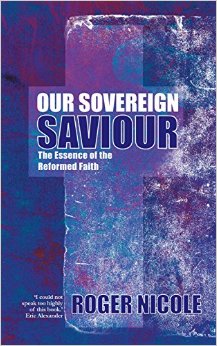 Roger Nicole is a new name for many people in the church. But in the academy, he is a well-known name and one of the key defenders of the Reformed faith.
Our Sovereign Savior: The Essence of the Reformed Faith is a collection of articles that explain and defend the primary tenets of the doctrines of grace. The author explores the doctrine of the Trinity, Calvinism, and specific aspects of salvation – reconciliation, propitiation, justification, and sanctification.
Nicole’s approach is typically gracious and is grounded by careful scholarship. The book is simple enough for a beginning theology student but should not be neglected by more advanced readers.
On December 11, 2010 Dr. Nicole went to be with his Savior. He was a gift to the church and will be missed. But his legacy lives on as a man who was committed to articulating the Reformed faith with faithfulness and precision.
Semper Reformanda!
THE TRUE EXCELLENCY OF A MINISTER OF THE GOSPEL – Jonathan Edwards
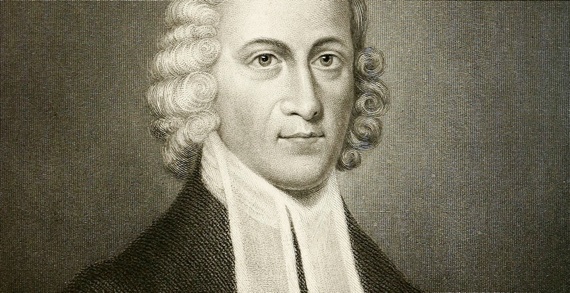 In this masterful sermon, Jonathan Edwards sets forth what sets apart
a minister of the gospel.
He establishes his doctrine at the beginning of the sermon:
‘Tis the excellency of a minister of the gospel to be both a burning and a shining light.
Six propositions guide the doctrinal assertion:
- I would show that Christ’s design, in the appointment of the order and office of ministers of the gospel is, that they may be lights to the souls of men.
- I would show what is implied in their being “burning lights.”
- I would show what is implied in their being “burning lights.”
- I would show that it is the proper excellency of ministers of the gospel to have these things united in them, to be both burning and shining lights.
- I would apply these things to all that Christ has called to the work of the gospel ministry, showing how much it concerns them earnestly to endeavor that they may be burning and shining lights.
- Show what ministers of the gospel ought to do that they may be so.
The sermon shines brightest in the first proposition as the Puritan divine explains the three-fold use of light, namely – to discover, to refresh, and to direct.
Indeed, pastors have a weighty responsibility, especially in the preaching task to show forth the light of the gospel in ways that are understandable, and in keeping with the truth of God’s Word.
HOPE BEYOND THE GRAVE WHEN A FRIEND DIES

JIM KENDALL (1967-2015)
VERSE 1
It is not death to die
To leave this weary road
And join the saints who dwell on high
Who’ve found their home with God
It is not death to close
The eyes long dimmed by tears
And wake in joy before Your throne
Delivered from our fears
CHORUS
O Jesus, conquering the grave
Your precious blood has power to save
Those who trust in You
Will in Your mercy find
That it is not death to die
VERSE 2
It is not death to fling
Aside this earthly dust
And rise with strong and noble wing
To live among the just
It is not death to hear
The key unlock the door
That sets us free from mortal years
To praise You evermore
© 2008 Integrity’s Praise! Music/Sovereign Grace Praise (BMI)
IF I HAD LUNCH WITH C.S. LEWIS – Alistair McGrath (2014)
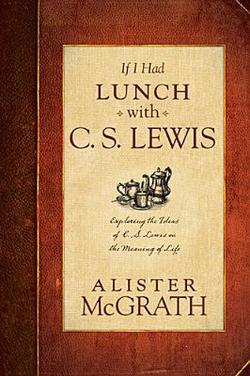 C.S. Lewis is widely trumpeted as one of the leading Christian thinkers and apologists of the 2oth century. His seminal works, Mere Christianity and The Problem of Pain have equipped a new generation of Christ-followers. Creative works like The Great Divorce have stimulating the imaginations of thousands. And who could forget his landmark series, The Chronicles of Narnia which continue to sell like hotcakes over fifty years later.
Alister McGrath is a leading authority on C.S. Lewis. Like Lewis, the author teaches at Oxford University where his interest in Lewis blossomed.
If I Had Lunch With C.S. Lewis is a basic introduction to the life and writing of the Oxford don. McGrath arranges a series of imaginary lunches with Lewis where they chat about subjects that matter – friendship, story-telling, learning, theology, apologetics, and suffering.
If I Had Lunch With C.S. Lewis is a perfect introduction to entry level readers who are not familiar with the literary genius. The book offers enough information to satisfy beginners but also contains plenty of fuel for readers more familiar with Lewis.
3.5 stars
FINISHING OUR COURSE WITH JOY: Guidance From God For Engaging With Our Aging – J.I. Packer (2014)
 Getting old is something everyone can relate to. But at eighty-eight years of age, J.I. Packer is uniquely qualified to share biblical principles that concern the subject of aging.
Most people know that Dr. Packer is a first-rate theologian who has influenced untold thousands of people over the years. Packer shares his God-given gifts and experience which include a tenure longer than most people can imagine in his latest book, Finishing Our Course: Guidelines For Engaging With Our Aging.
In a style that we’ve grown to love over the years, Packer expresses his heart in a youthful wittiness which is combined with a depth of theological and emotional maturity: “Aging is not for wimps,” he says.
Dr. Packer is careful to remind readers of the biblical perspective on aging: “The Bible’s view is that aging, under God and by grace, will bring wisdom, that is, an enlarged capacity for discerning, choosing, and encouraging.” He makes a strong case for being productive in the golden years: “And my contention is going to be that, so far as our bodily health allows, we should aim to be found running the last lap of the race of our Christian life, as we would say, flat out. The final sprint, so I urge, should be a sprint indeed.”
Such a worldview runs against conventional wisdom. The world notion is growing old includes focusing on self, spending money on self. There is a not so subtle brand of narcissism that is plaguing many adults; a narcissism that needs to be rooted out and replaced with God-centered ambition. Packer helps eradicate this selfishness which is all too common in American culture, especially.
I found Finishing Our Course to be helpful on so many levels. It contains the biblical wisdom that is necessary to inform and motivate anyone who desires to finish well – all to the glory of God.
THE PEACE WHICH CHRIST GIVES HIS TRUE FOLLOWERS – Jonathan Edwards (1750)
Imagine shepherding a congregation of people, only to find yourself
expelled from the church. That is exactly what happened to Jonathan Edwards – America’s greatest intellectual. Within a month of his dismissal, Edwards pens a series of sermons – one of which is entitled The Peace Which Christ Gives His True Followers.
The Text: John 14:27
Peace I leave with you; my peace I give to you. Not as the world gives do I give to you. Let not your hearts be troubled, neither let them be afraid.
The Doctrine
That peace which Christ, when he died, left as a legacy to all his true saints, is very diverse from all those things which the men of this world bequeath to their children when they die.
It is not surprising that Edwards is inclined to turn to John 14:27, especially in light of the recent events that turned his world upside down. Three central propositions support the doctrine.
1. Christ at his death, made over the blessings of the new covenant to believers, as it were in a will or testament.
Edwards clearly shows how Christ promised not only peace, but joy and grace and victory over the world. Indeed, we have a delightful inheritance.
2. A great blessing that Christ in his testament hath bequeathed to true followers, is his peace.
Two things are granted to believers in this monumental promise. First, Christ bestows true peace and comfort on every believer. Each believer experiences peace with God, peace with one another, and peace within themselves. Edwards notes, “By these means true saints are brought into a state of freedom from condemnation and all the curses of the law of God” (Rom. 8:34).
Second, Christ bestows his peace to his followers: “So Christ’s true disciples, though in the world they have tribulations, yet in God they have peace.”
3. This legacy of Christ to his true disciples is very diverse from all that the men of the world ever leave to their children when they die.
Edwards assures believers that Christ’s peace differs from worldly pleasures in four specific ways.
- Christ’s peace is a reasonable peace and rest of soul.
- Christ’s peace is a virtuous and holy peace.
- This peace greatly differs from that which is enjoyed by the me of the world, with regard to its exquisite sweetness.
- Christ’s peace infinitely differs from the world, in that it is unfailing and eternal peace.
Application
Edwards urges believers to cling to Christ and make good use of the peace he gives so freely. He urges unbelievers to receive the free offer of Christ or suffer the temporal and eternal consequences: “As long as you continue to reject those offers and invitations of Christ, and continue in a Christless condition, you never will enjoy any true peace or comfort; but in whatever circumstances you are, you will be miserable.”
Edwards choice of John 14:27 is certainly no surprise. His resolute handling of the text is no less bewildering, given his gospel-centered track-record as a pastor. The remarkable thing about this sermon is that Edwards forges into the future, unhindered by life-altering circumstances. His is an example of a Christ-exalting hope and a Christ-satisfied faith!
Hearken, therefore, to the friendly counsel that is given you this day: turn your feet into the way of peace; forsake the foolish and live. Forsake those things which are no other than the devil’s baits, and seek after this excellent peace and rest of Jesus Christ, that peace of God which passes all understanding.
Walking With God Through Pain and Suffering – Timothy Keller (2013)
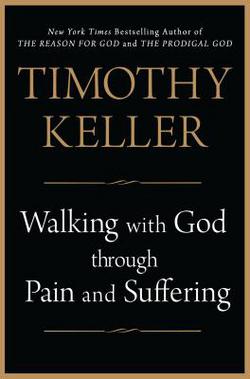 I have yet to meet a person who enjoys pain and suffering. Yet suffering is a part of the warp and woof of life. It is not a part of God’s original intent for creation. Since Adam’s first sin, pain and suffering have been an abnormal part of the cosmos. Suffering is an unwelcome guest who bullies his way to the table and makes demands – much like a soldier on a bloody battlefield.
Walking With God Through Pain and Suffering by Timothy Keller addresses this topic with candor and clarity. Keller leaves no stone unturned here. The book is organized into three sections:
Understanding the Furnace
Keller introduces the problem of pain and suffering and explores some of the philosophical challenges that Christ-followers must understand and address.
“Nothing is more important than to learn how to maintain a life of purpose in the midst of painful adversity,” writes Keller. Yet our culture has a tendency to respond to suffering in ways that are helpful and wrongheaded. The moralist response to suffering is to “do good.” The fatalist’s response to suffering is to “hang in there” and “endure.” The dualist response to suffering is “purified faithfulness.” And the secular response to suffering is focussed on “technique.” A combination of these erroneous responses to suffering litter the current milieu and produce a generation of confused and discouraged people.
Keller rightly alerts readers to the importance of worldviews and their relation to the subject of pain and suffering. Ultimately, the matter of pain and suffering is a matter of faith. “Faith,” writes Keller “is the promise of God.” He adds, “We can be fully accepted and counted legally righteous in God’s sight through faith in Christ, solely by free grace … It means freedom from fear of the future, from any anxiety about your eternal destiny. It is the most liberating idea possible and it ultimately enables you to face all suffering, knowing that because of the cross, God is absolutely for you and that because of the resurrection, everything will be all right in the end.”
Facing the Furnace
Part two provides readers with the theological muscle – a crucial part of the battle. Keller unpacks the doctrine of God’s sovereignty and provides a painful but biblical rationale for the role of suffering the lives of people.
At the heart of this discussion is an important look at the suffering of the Lord Jesus Christ. The author summarizes, “That is, in order to satisfy justice, in order to punish sin so that in love he could forgive and receive us, God had to bear the penalty for sin within himself. God the Son took the punishment we deserved, including being cut off from the Father. And so God took into his own self, his own heart, an infinite agony – out of love for us.”
Keller’s treatment in part two travels great distances to help resolve the problem of evil – the so-called “Achilles heal” of the Christian faith: “So while Christianity never claims to be able to offer a full explanation of all God’s reasons behind every instance of evil and suffering – it does have a final answer to it. The answer will be given at the end of history and all who hear it and see its fulfillment will find it completely satisfying, infinitely sufficient.”
While Keller never attempts to provide a comprehensive answer to the problem of evil, his treatment of this thorny subject is some of the best in print. He may not satisfy the disciples of David Hume, Voltaire, or Sam Harris – but he does give ample ammunition for believers who are looking for honest answers.
Walking With God in the Furnace
Parts one and two explore the philosophical and theological angles of pain and suffering. Part three helps readers with practical application. They are given practical tools for “walking with God in the furnace.” The very notion of walking with God in the furnace assumes pain – pain that some are unwilling to admit. But practical experience reveals that we live in a broken world; a world which has been torn to shreds by the consequences of sin.
Keller urges readers to walk with God in suffering: “If you go into the furnace without the gospel, it will not be possible to find God in there. You will be sure he has done terrible wrong or you have and you will feel all alone. Going into the fire without the gospel is the most dangerous thing anyone can do.” So the gospel is the first and last defense of every Christ-follower; indeed it is the hope of the watching world.
Second, the author stresses the importance of weeping during seasons of adversity. Elijah serves as an example of a man who cried out in great agony. He was a man unafraid of weeping. Such an approach is not only honest – it is a sign of emotional health.
Third, Keller demonstrates the need for trusting in God during days of pain and adversity. Joseph is portrayed as an example of a man who trusted: If the story of Joseph and the whole of the Bible is true, then anything that comes into your life is something that, as painful as it is, you need in some way.” Jesus too demonstrated trust in his Father and points believers in the identical direction. Keller continues to alert readers to other tools that they should utilize during their dark days.
Walking With God Through Pain and Suffering is a watershed book that deserves to be read. Christ-followers will no doubt be encouraged by this Christ-exalting book; a book which drives readers to the cross of the suffering Savior.
Highly recommended!
 Veritas et Lux