THE BOY ON THE WOODEN BOX – Leon Leyson (2013)

boxLeon Leyson recounts his personal nightmare in The Boy On The Wooden Box.  Leyson is a holocaust survivor and was among the Schindlerjuden, the Schindler Jews.  This fascinating story takes readers on a mind-chilling journey that leads Leyson through many brushes with death, only to be saved by Oskar Schindler, the German who was celebrated in Steven Spielberg’s blockbuster, Schindler’s List.

The Boy On The Wooden Box is a testament to the human spirit and serves as a magnifying glass that illuminates the depths of human evil and depravity.  Leyson provides enough details to keep young readers interested and beautifully weaves his personal story through the darkness days of the 20th century.

While the book is designed for younger readers, it will certainly captivate the attention of all kinds of book lovers, especially students of history.  Leyson is to be commended for retelling his story and celebrating the man who saved the lives of so many Jewish people.

4 stars

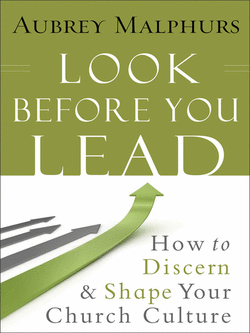
LOOK BEFORE YOU LEAD – Aubrey Malphurs (2013)

LOOK BEFORE YOU LEADI was greatly influenced and encouraged during my Seminary days by Dr. Aubrey Malphurs.  So when I learned about his newest book, Look Before You Lead I jumped at the chance to read it.  I wasn’t disappointed!

The subtitle of Malphur’s book is an accurate description of the tone and tenor of this leadership treasure: How to Discern and Shape Your Church Culture.

Part 1: The Basics of Congregational Culture

Part one is a primer on culture and how effective ministries navigate successfully in a given cultural milieu.  Malphurs writes encourages pastors to read their respective cultures: “If they fail to read the culture well, it will mean that the culture of the church will lead and manage them … The better a pastor knows his church’s culture, the better he’ll be able to lead his church.  To a great degree, leadership decisions are based on the knowledge of one’s culture as well as one’s gifts and abilities as a leader.”  Ultimately, churches must adapt to their culture, while at the same time, maintaining doctrinal integrity.

The author discusses congregational culture, which he compares to an apple.  The skin on the apple represents the church’s outward behavior.  The apple’s flesh represents the church’s values.  And the core of the apple represents the beliefs or doctrinal standards of the church.  These three elements combine to give the church its distinct flavor and character in the community.  Dr. Malphurs carefully unpacks the three distinguishing characteristics of the cultural apple and provides tools for pastors to determine their cultural niche.

Churches may respond to cultures in three specific ways, namely – isolation, accommodation, and contextualization.  Isolated churches will either cloister around a set of ideals and never make any difference in the world.  Eventually, they will die.

Church who accommodate to culture (like emergent churches) compromise by embracing the spirit of the age and adopting liberal theology and man-centered ideology that may look good externally, but will in the final analysis result in watered down temples of worldiness.

Churches who contextualize seek to communicate the gospel in ways that fit the cultural context without compromising the truth.  Malphurs rightly notes that, “the gospel is supracultural in its origin and essence but cultural in its interpretation and application.”  Therefore, Christians must be careful to differentiate between the gospel and their culture in order to effectively penetrate the lives of people.

Part 2: Reading Congregational Culture

Reading congregational culture involves a deeper understanding of the so-called cultural apple; that is to say, pastors must exegete their congregational culture.  The author includes numerous exercises that will lead to a proper reading of the congregational culture.  Additionally, he encourages pastors to address several critical issues:

  • Discern if the Culture is Spiritually Mature or Immature
  • Determine Where You as a Leader Will Be Most Effective

Malphurs encourages pastors to do an honest self-assessment.  Pastors must discover the origins of their cultural framework which include an uncovering of the leaders behavior, values and cherished beliefs.

Part 3: Shaping Congregational Culture

The final section includes several ways that pastors can and should shape their congregational culture.  Numerous exercises are included to help pastors effectively do this.  Practical help is offered for those who resist change.  Five levels of leadership need to be effectively saturated with the vision for maximum impact:

  • Governing board
  • Ministry staff and committees
  • Sunday school teachers and small group leaders
  • Leaders of support ministries
  • A patriarch and/or matriarch

“The wise leader,” writes Malphurs, “encourages change more by asking insightful questions than by offering directions or giving ultimatums.”  Good communication is paramount in the process.

The bad news is that at least 80 percent of churches are either on the plateau or are in a state of decline.  So pastors must navigate the waters of change with care, boldness, and determined vision.

Look Before You Lead is a terrific book that should receive a wide reading.  Dr. Malphurs offers a deep knowledge of strategic planning but offers advice with the heart of a seasoned shepherd.

LOVE DOES – Bob Goff (2012)

1400203759_bSometimes theologians need to read books to motivate and inspire.  Sometimes they just need to read something to make them laugh.  I read  a lot of pretty head stuff.  For instance, I just finished a 700 page book by Tom Schreiner called, The King in His Beauty.  To compare Schreiner’s book with Love Does by Bob Goff would be a little unfair.  Schreiner’s book is intended to be a serious book about biblical theology.  Goff’s book is not designed to be a theological treatise.  It’s designed to motivate and inspire.

A while back, I responded to a blog post by Donald Miller.  I entitled the post, A Black and White Proposal: Farewell to Fuzzy Thinking.  My good friend, Ron read the post and knows that I’m not a big fan of Miller’s book, Blue Like Jazz.  When I visited Ron in Okinawa, Japan he encouraged me to read Miller’s book, A Million Miles in a Thousand Years.  I resisted.  He persisted.  I had other important things to read.  He wouldn’t give up.  Ron said, “Dude, you’re a cyclist.  Miller’s a cyclist. You’re gonna dig this book.”  So because I love and respect my friend, I actually decided to read A Million Miles.  Ron was right.  I loved it.  In fact, I need to read it again!

There is a story that stood out to me in A Million Miles.  It was a story about a wide-eyed friend that Miller made somewhere along the way; a story about a guy who loves life and made a huge impression on Miller.  I’m not sure how I made the connection, but somehow it became clear to me that Miller’s friend was Bob Goff.  So I eagerly devoured his book, Love Does.

Love Does is a series of brief meditations; short stories that provide a window into the life, loves, and passions of Bob Goff.  The subtitle is an accurate reflection of what Goff intends to communicate in the book: Discover a Secretly Incredible Life in an Ordinary World.

While Love Does is not designed to be a theology book, the author does bring theological commitments to the table.  For instance, in Chapter 29 he admits that he quit attending what Christians call a “Bible study.”  The idea behind this practice is this: The author argues, “We don’t need to study Him anymore to know Him.”  I understand what Goff is getting at here.  He’s tired of storing theological facts in his brain that don’t make a difference in the real world.  And this is certainly commendable.  The problem is that Christ-followers are called to study the truth of God’s Word – which involves a careful study of Christ (2 Tim. 2:15).   And while the intentions appear commendable, the popular notion of “deeds not creeds” is, in the final analysis not Scriptural.  We are instructed to be “filled with a knowledge of his will in all spiritual wisdom and understanding, so as to walk in a manner worthy of the Lord, fully pleasing to him, bearing fruit in every good work and increasing in the knowledge of God” (Col. 1:9b-10).  So this is not an either-or proposition.  Christians are not given a choice to study or live out the claims of the gospel.  They are commanded to do both!  And living out the gospel (what Goff creatively calls, “Love does”) is a supernatural result of one’s knowledge.

Having said that, if readers approach Love Does with the right perspective, they’ll find it strangely liberating.  It is filled with encouraging stories and pithy bits of wisdom drawn from the real world of Bob Goff.  And this guy knows how to do life.  He truly is a breath of fresh air!  My encouragement would be – read this book.  Read it with discernment.  Allow Bob Goff to rub off on you.  And learn from his example of living life with passion and intentionality.  

3 stars

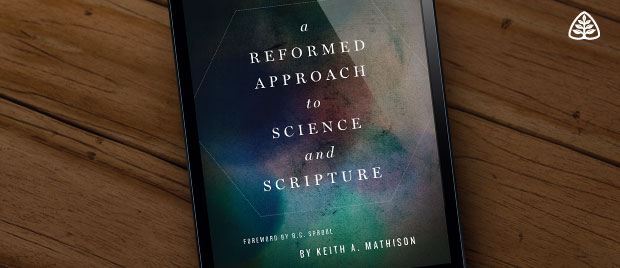
A REFORMED APPROACH TO SCIENCE AND SCRIPTURE – Keith Matthison (2013)

The battle over the age of the universe has been brewing and has reached a fevered pitch in some refdenominations and evangelical educational institutions.  Keith Matthison’s short book, A Reformed Approach to Science and Scripture is an attempt to speak into the debate with clear biblical insight and a measure of humility.

First, the foreword is written by R.C. Sproul who sets the stage for what follows: “All truth meets at the top.  This is so because all truth is God’s truth.  It is not only His truth because He possesses it and He yields sovereign control over it, but also because He is the source and fountainhead of all truth.”  Sproul adds the necessary epistemological groundwork and Scriptural footing to enable readers to walk carefully along the precipice.  He provides the guardrails for readers by adhering to the correspondence theory of truth, the notion that truth corresponds to reality.  Such a notion is repudiated by many postmodern thinkers which leaves them handicapped before the race begins.

The introduction begins with the age-old question, “How old is the universe?”  The author turns to R.C. Sproul who took time to answer the question at a recent Ligonier conference.  Sproul’s answer is typically saturated in Scripture but is also bathed in humility as he answers the question with a big, “I don’t know.”  Some readers will recoil at his response.  I was pleased by it.  For too many are dogmatically arguing their position without the necessary empirical evidence to support their unvarnished claim.

Enter Keith Matthison.  He was so struck with Dr. Sproul’s answer that he set out to write a book to defend his mentor’s candid claims.  He essentially argues that the notion, “all truth is God’s truth” is no stranger in Reformed circles:  “A God-centered view of the truth demands that we affirm that all truth is God’s truth.  That which is true is true because God said it, created it, or decreed it.”  Indeed, the very notion is apart of the very warp and woof of Reformed theology.

Matthison includes a very helpful section on general and special revelation.  The basic argument is this: Both special revelation and general revelation are infallible.   While some may balk at the very notion, they must recall that it is “God who is doing the revealing, and God is always infallible.”

The author rightly argues that “since general and special revelation both proceed from God, they cannot ultimately conflict.”  An appeal is made to the Chicago Statement on Biblical Inerrancy which maintains the complete truthfulness of God’s Word.  The specific denial in the Chicago Statement is crucial: “We further deny that scientific hypotheses about earth history may properly be used to overturn the teaching of Scripture on creation and the flood.”  Here is where many stumble by neglecting the Sola Scriptura principle and pitting science against faith.  At the end of the day, Matthison argues, “Any  scientific theory that claims natural phenomena arose from purely materialistic causes is necessarily wrong.”

The author reminds us that many theologians have erroneously interpreted Scripture, especially in the case of the geocentric worldview that was the dominant thinking in the 16th century.  Copernicus changed all that with his heliocentric bombshell but was still met with strict suspicion by some of the brightest theological minds of the day.

There is so much more that Matthison covers in this little book that readers can discover for themselves.  But he ends with a bold note of humility when it comes to making dogmatic statements that concern the age of the universe: “It is also wiser to say, ‘I don’t know,’ than to make ultimatums that may be based on misinterpretations of Scripture and/or God’s created works.”  Keith Matthison is on the right track.  Oh, that others would join in his parade!

4 stars

MY FAVORITE READS OF 2013

2013 proved to be a great year for books.  My top ten are listed below.

1. DEATH BY LIVING – N.D. Wilsonwilson

My number one pick for 2013 would be easy to pass by.  But passing over Wilson’s work would be a big mistake.  This little gem is filled with biblical insight that is destined to hit readers right between the eyes!  Wilson has a way of grabbing readers by the throat and encouraging them at the same time.  Death by Living is essential for real living.

See my review

2. THE KING IN HIS BEAUTY – Tom Schreiner

0801039398_b

Tom Schreiner’s, The King In His Beauty: A Biblical Theology of the Old and New Testaments is comprehensive in its scope and is simply breathtaking.  Schreiner wonderfully captures the essence of Christ in both testaments by putting his person and work on display.  Some books are meant to be read once.  I will turn to The King In His Beauty again and again.

Highly recommended!

See my review

3. STOP ASKING JESUS INTO YOUR HEART – J.D. Greear

GREER

My number three selection is a book that I recommend to all my Arminian friends.  Many Arminians I know embrace the doctrine of perseverance of the saints, albeit inconsistently.  Greear’s book is sure to make a difference in the lives of many people.

Stop Asking Jesus Into Your Heart is also a great pastoral tool.  The book is readable and packs a practical punch.

See my review

4. A WALK ACROSS THE SUN – Conrad Addison

WALK

This book stopped me dead in my tracks.  The author alerts readers to the dark world of trafficking which is not only prevalent in countries like India and Thailand; it also plagues American cities.

This book is dark and sinister but the message of redemption makes it well worth the read.

See my review


5. FIVE POINTS – John Piper

PIPER

There is no shortage of books describing the merits of five point Calvinism.  In fact, the acrostic has come under fire in recent days by theologians like Roger Nicole and J.I. Packer.  In J.I. Packer’s excellent introduction to From Heaven He Came (David Gibson and Jonathan Gibson, Ed), Packer critiques the “L” in Tulip: “Now, it is true that definite redemption is central to the Reformed understanding of the gospel and that atonement, a word meaning reconciliation, is an acceptable alternative for redemption; but limited is an inappropriate emphasis that actually sounds menacing.”  Perhaps  we’re do for a modification in terminology.

That said, Piper’s treatment of the five points is outstanding.  This book should be studied by critics of Calvinism and devoured by lovers of the doctrines of grace.

See my review

6. LIVING BY REVEALED TRUTH – Tom Nettles

SPURGEON

No English-speaking preacher has influenced so many people as the Prince of preachers, Charles Haddon Spurgeon.  Tom Nettles in his magnum opus, paints a stunning portrait of Spurgeon’s life, theology, and ministry on a canvas that will draw readers in and motivate them to get to know the British pastor for the remainder of their days.

Living by Revealed Truth is recommended reading for pastors, missionaries, and anyone who loves the gospel.  May the Prince of preachers focus your gaze with intensity on the Prince of Peace.

See my review

7. THE ENGLISH GIRL – Daniel Silva

ENGLISH GIRL

I read quite a few spy novels.  The English Girl by Daniel Silva stands head and shoulders over most other spy novels I’ve read.  Silva is no stranger to the world of espionage.  His best-selling thrillers have been flying off the shelf for well over a decade.  This guy just keeps getting better.

If you’re looking for some escape reading or want a plane ride across the country to whiz by, check out The English Girl by one of the best thriller writers alive, Daniel Silva.

STRANGE FIRE – John MacArthur

MAC

The Strange Fire Conference at Grace Community Church drew thousands of expectant listeners.  Many more tuned in online and several didn’t like what they heard.  My encouragement: Read the book.  For Strange Fire has a weightiness to it that will challenge your thinking about the contemporary charismatic movement.

MacArthur brings a lifetime of pastoral experience to the table in his newest book.  Here’s a challenge: If you haven’t read the book, you owe it to yourself to carefully read MacArthur’s reasoning.  Even if you disagree with his conclusions, you’ll appreciate the spirit in which he writes this important book.

See my review

9. SOJOURNERS AND STRANGERS – Gregg Allison

ALLISON

I’ll be honest.  Even though I’ve served as a pastor for nearly 25 years, most books on ecclesiology have one of two effects on me.  Their either bore me to death or they make me mad.  The ones the made me mad come from the emergent stream.  The ones that bore me tend to come from the Reformed community.  Greg Allison’s Sojourners and Strangers had neither effect.  Rather, I found this very long book to be informative, educational, thought-provoking and ruthlessly biblical.  Sojourners and Strangers will likely be the go-to text-book for Seminaries committed to Scripture.

See my review

10. DANGEROUS CALLING – Paul David Tripp

TRIPP

The title of this book says it all.   Tripp nicely summarized some of the complexities of pastoral ministry.  But the notion of complexity doesn’t go nearly far enough.  The facts indicate that pastoral ministry is dangerous business.  Paul David Tripp provides good biblical rationale for maintaining pastoral priorities that reflect a kingdom agenda.  A real winner!

See my review

Honorable Mention:

ECHOES OF EDEN – Jerram Barrs

ECHOES

The biggest reason I liked Echoes of Eden is this: It reminded me of Francis Schaeffer.  Many still remember the days when Schaeffer would skillfully weave a strong love for God’s Word with bold challenges to penetrate a pagan culture.  Barrs almost picks up where Schaeffer left off with his fine work, Echoes of Eden.

See my review

THE POETIC WONDER OF ISAAC WATTS – Douglas Bond (2013)

Steven J. Lawson serves as the general editor of A Long Line Of Godly Men Profiles, publishedwatts by Reformation Trust.  Douglas Bond adds to this excellent series with a biographical sketch of Isaac Watts.  The men set forth this series may disagree on secondary theological matters but “stood shoulder to shoulder” writes Lawson, “in championing these five biblical teachings (the five points of Calvinism) that magnify the sovereign grace of God in salvation.  They upheld the truth that ‘salvation is of the Lord.'”  Isaac Watts is no exception.

Watts was first and foremost a Bible-believing Christian.  Most recognize him as a poet, the author of at least 750 hymns.  Mr. Bond nicely summarizes the Christ-honoring pen of Isaac Watts: “He was unapologetically a biblical and theological poet who has given to all Christians a rich legacy of sung worship, full of imagination, skill, deep theological perception, vivid sensory insight, cheerfulness in the midst of suffering and disadvantages, and a contagious sense of wonder at the majesty of God.”

Bond is quick to give God the glory as he guides readers through the life and journey of Isaac Watts.  The book is a reminder of God’s sovereign grace which serves as an impetus to worship and serve him with faithfulness and Christ-saturated joy.

4 stars

BLOODGOOD – Dangerously Close (2013)

bloodgoodAlmost 30 years ago, I saw Bloodgood open for Stryper at the Paramount Theater in Seattle.  Even though I was fired up to see Stryper for the first time, I’ll never forget being blown away by Bloodgood.  They brought an energy to the stage that I’d never witnessed before.  But more important than energy was the gospel.  These four guys made it very clear they were Christians who just happened to be musicians who loved to rock.  The music never eclipsed the gospel; rather the gospel was only magnified by their music.

Bloodgood has returned stronger than ever with their first studio album in 22 years, Dangerously Close.  The rockers from Seattle are older and more seasoned.  David Zaffiro left the band years ago and has since been replaced by the virtuoso, Paul Jackson and more recently, Oz Fox from Stryper.

The album starts off strong with Lamb of God, an anthem that delights in the person and work of Christ:

He stretched out His arms to hold you/Gave up His life to know you/Lamb of God

On His knees He washed our feet/Poured His blood on the mercy seat/Told us to love one another/Lay down your life for your brother

Child on Earth  (a song that may prove to be the best track on the album) contrasts the righteousness of God and sinfulness of man in stark terms.  The Messiah is presented as the Virgin born, Son of God – the only One who can cover a sin-stained world.   It is a celebration of the protoevangelium (the first gospel) that articulates the redemptive purposes of the Messiah that Scripture prophecies in Genesis 3 and Isaiah 9:

My sin, my sin, has gone away/The Lord has set me free/My friend, my friend beginning and end, the Lord has died for me/Virgin birth, child on     earth/Crucified, pierced his side

The child grew and the cradle fell, crushing the head of the snake from hell

Several songs have a vertical dimension that catapult listeners to Scripture soaked lyrics.  I Will has a psalm-like feel that exalts the living God and expresses trust in his Providential care.  Bread Alone expresses complete confidence in God’s all-sufficient grace.  Pray is call to humble submission before a holy God who delights to answer the cry of His people.  And Run the Race challenges Christ-followers to live faithfully before God.

On a musical note: The guitar work on Dangerously Close is a feast for the ears.  These guys are a real delight to listen to.  I’ll admit my biases up front.  I’m a huge fan of Paul Jackson and Oz Fox, two guitar players who are underrated and deserve more attention.

Bloodgood is a different band with a different sound.    But one thing remains the same.  Bloodgood is committed to the gospel of the Lord Jesus Christ, a message that rings loudly throughout their new album.   The cross stands at the center of the lyrical content – an emphasis that is missing in a lot of Christian music these days.  Dangerously Close is a solid offering that should please longtime fans and welcome new listeners to a very good band.

4 stars

DEAD MEN TALKING – Part 6

8. Dead guys remind us about the power of the gospel and in so doing, lead us to the cross

calvin-john-reformed-theology-common-graceThe heroes of church history can rightly inspire us, motivate us, challenge us, and fuel our resolve for living the Christian life.  But in the final analysis, these godly people remind us about the power of the gospel, and in so doing, lead us to the cross of Christ.  “For in the cross of Christ, as in a splendid theater,” Calvin says, “the incomparable goodness of God is set before the whole world.  The glory of God shines, indeed, in all creatures high and below, but never more brightly than in the cross.”  Nothing would please the French Reformer more than when followers of Christ stand humbly at the foot of the cross.

Every one of the dead guys we have learned about over the last several days lived a long time ago; a time when everything was different.  Cultures were different.  Dress was different.  Technology was virtually non-existent, at least by our standards.  There was no internet, no television or radio.  No motor cars or airplanes.  Almost everything was different.  But there are two things that have not changed since those days: the sinful hearts of men and the grace of God expressed most vividly in the work of his Son on the cross.

The Bible says that every man will face eternal death apart from the grace of the Lord Jesus Christ.  Scripture says emphatically, “For the grace of God has appeared, bringing salvation for all people, training us to renounce ungodliness and worldly passions, and to live self-controlled, upright, and godly lives in the present age, waiting for our blessed hope, the appearing of the glory of our great God and Savior Jesus Christ, who gave himself for us to redeem us from all lawlessness and to purify for himself a people for his own possession who are zealous for good works” (Titus 2:11–14, ESV).

My prayer is that people will learn to love the dead guys.  May you learn from them, be inspired by them, be challenged by them.  When you run across a new name, dig in and learn something new about one of the great heroes of the Christian faith.  But ultimately, my encouragement is this: Follow the dead guys to the cross.  The cross is where they want us to go!

Dead men are talking.  Numbered among these giants of the Christian faith are Abraham, Isaac, Jacob, Sarah, Ruth, David, Solomon, Jeremiah, John, Paul, and Peter.  Gone are Augustine, Polycarp, Hus, Tyndale, Luther, Calvin, Edwards, Owen, Spurgeon, Bunyan, Lloyd-Jones, and Schaeffer.   They all worshipped and served the same God.  They all bear witness to the Lord Jesus Christ.   And each of them have a story to tell that tell of a glorious gospel.  Are you listening?

DEAD MEN TALKING – Part 5

grave5. The dead guys enrich us with rich theological treasures

There are many theological treasures that should attract our attention.  I mention only a few in this post.  First, consider the great creeds bestowed on us by the dead guys.  The Nicene Creed (A.D. 325), The Constantinople Creed (A.D. 381), the Chalcedonian Creed (A.D. 451), the Athanasian Creed, the Westminster Confession of Faith (1647), and the Heidelberg Catechism.

Second, we can be thankful for the many books that the dead guys wrote for our edification – works from Augustine, Calvin, Bunyan, Spurgeon, Owen, and Edwards.  The list goes on and on and provides a lifetime of godly counsel for Christian pilgrims.

Third, consider the great hymns of the faith.  The dead guys have written literally thousands of hymns to prompt God-centered worship.  I recently read Douglas Bond’s new book, The Poetic Wonder of Isaac Watts.  The book describes how Watts penned over 750 hymns, some of them great hymns – like When I Survey the Wondrous Cross, Jesus Shall Reign, Alas! and Did My Savior Bleed, and Joy to the World!

The dead guys enrich us with rich theological treasures that inform our Christian lives.  Do you hear them?  Dead men are talking!

6. The dead guys inspire us to live courageous Christian lives

“Be strong and courageous, for you shall cause this people to inherit the land that I swore to their fathers to give them (Joshua 1:6, ESV).  Over and over, the Scripture calls for courage and fearlessness in the face of danger and persecution.  The dead guys inspire us to live courageous Christian lives.  Some died of natural causes but faced constant persecution and even the threat of death – men like Luther, Calvin, and Spurgeon.

tyndale2.jpg_2Others actually gave their lives because of their Christian convictions – men like Polycarp, William Tyndale, Jan Hus, and John Rogers.  They inspire us to keep moving.  They motivate us to keep fighting the fight.  And they challenge us to keep our eyes fixated on the cross of Christ.

7. The dead guys teach us how to endure the trials of life and the flames of persecution

The apostle Paul admonished Timothy, “Indeed, all who desire to live a godly life in Christ Jesus will be persecuted” (2 Timothy 3:12, ESV).  Men like John Calvin, Isaac Watts, and C.H. Spurgeon endured physical pain most of their adult lives.  Spurgeon endured gout, kidney disease, and battled depression and melancholy.

Calvin endured more persecution than most of us will see in a lifetime combined.  When he returned to pastor in Geneva, the French Huguenots (Protestants from England and Scotland) who sought refuge from “Bloody Mary,” came to Geneva to sit at the feet of the French Reformer.  One of those refugees was John Knox who called Calvin’s church in Geneva, “the most perfect school of Christ that ever wa in the earth since the days of the Apostles” (Schaff, History of the Christian Church, Vol. 8, 518).  Many of the pastors and leaders who were trained by Calvin were sent out  to plant church in Europe.  Steven Lawson reports, “Since persecution was certain and martyrdom common for these saints, Calvin’s school of theology became known as ‘Calvin’s School of Death.'”

The dead guys serve as heroes to all of God’s people.  They teach us (via pen and through their example) how to endure the trials of life and the flames of persecution.