MEN NATURALLY GOD’S ENEMIES – Jonathan Edwards (Part 4)

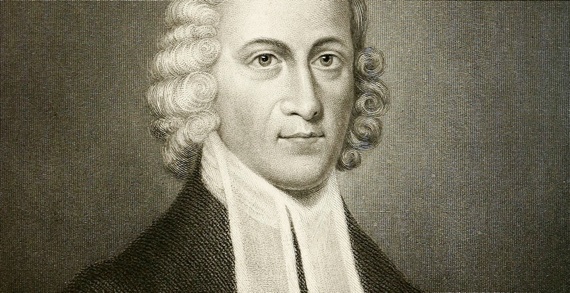
imagesThus far, we have seen Jonathan Edwards description of fallen men and their natural hatred for him.  Indeed, fallen men are enemies of God.  We have seen in what respects natural men are God’s enemies.  We have examined the degree of men’s natural enmity to God.  And we have seen on what account men are enemies to God.  Note the fourth and fifth argument that Edwards provides:

4. The Objection, That Men Are Not Conscious of This Enmity, Answered

Edwards take a detour in the next two headings.  He is concerned to answer objections; in specific, objections that have to do with the knowledge that natural men have about their hatred of  God.  He speaks directly to those who would object in a series of seven responses:

First, if you do but observe yourself, and search your own heart, unless you are strangely blinded, you may be sensible of those things, wherein enmity does fundamentally consist.

Second, one reason why you have not more sensibly felt the exercises of malice against God, is that your enmity is now exercised partly in your unbelief of God’s being; and this prevents its appearing in other ways.

Third, if you think there is a God, yet you do not realize it, that he is such a God as he really is.

Fourth, your having always been taught that God is infinitely above you, and out of your reach, has prevented your enmity being exercised in those ways, that otherwise it would have been.

Fifth, you have always been taught what a dreadful thing it is to hate God, and how terrible his displeasure; that God sees the heart and knows all the thoughts; and that you are in his hands, and he can make you as miserable as he pleases, and as soon as he pleases.

Sixth, one reason why you have not felt more sensible hatred to God may be, because you have not had much trial of what is in your heart.

Seven, actions are the best interpreters of the disposition: they show, better than any thing else, what the heart is.  It must be because you do not observe your own behavior, that you question whether you are an enemy of God.

5. The Objections That They Show Respect to God, and  Experience Some Religious Affections, Answered

 Edwards labors to demonstrate that will the natural man may appear to show outward signs of respect as evidenced by prayers or acts of piety, these are at the end of the day mere acts of hypocrisy.  And again, he addresses the natural man forcefully: “You only cover your enmity with a painted veil.  You put on the disguise of a friend, but in your heart you are a mortal enemy.  There is external honor, but inward contempt; there is a show of friendship and regard, but inward hatred.”

So Edwards lays the natural man bare.  He calls his bluff and peels the works-based exterior, showing with stark clarity the wickedness that lies deep in the heart of the natural, unconverted man.

MEN NATURALLY GOD’S ENEMIES – Jonathan Edwards (Part 3)

imagesJonathan Edwards continues his discussion on natural man’s enmity with God.

3. On What Account Men Are Enemies of God

Edwards argues that the general reason that God is “opposite” to them has to do with their propensity to worship idols: “The apostasy of man summarily consists in departing from the true God, to idols; forsaking his Creator, and setting up other things in his room.”  The enmity between God and man has not always existed, for Adam was created in an innocent condition and expressed a love for God.  “But when men fell, he departed from the true God, and the union that was between his heart and his Creator was broken: he wholly lost his principle of love to God.”

Edwards holds that when natural men casts God aside, by definition he must naturally cling to an idol: “Man will necessarily have something that he respects as his god.  If man do not give his highest respect to the God that made him, there will be something else that has the possession of it.”  We know from personal experience that the human heart is prone to bow down to lesser things; the depraved human heart is vulnerable to the sin of idolatry.  Indeed, as Calvin notes, “The human heart is an idol factory.”  And when natural man clings to a foreign idol, enmity “necessarily follows.”

Edwards notes three ways in which God opposes idolators:

First, he manifests his utter abhorrence of their attachment to their idols.  Edwards exposes the idolator and reveals the true colors of one who casts aside the living God and replaces him with temporal pleasures.  In short, “They love their idolatry; but God does not approve of it, but exceedingly hates it; he will by no means be reconciled to it; and therefore they hate him.”

Second, he utterly forbids their cleaving to those idols, and all the service that they do to them.  Edwards sets forth the divine standard that God reveals to every creature: [God] demands that they should worship him; serve him only, and give their hearts wholly to him: without tolerating any competitor … He requires a final parting with their idols.”

Third, he threatens them with everlasting damnation for service of their idols.  Here, Edwards lists a host of warnings that thunder from the throne of God:

  • He threatens them for his past idolatry.
  • He threatens them with his everlasting wrath for all exercises of inordinate love of worldly profit.
  • He threatens them for that disposition they have in their hearts to cleave to other gods.
  • He threatens every future act of their idolatry.
  • He threatens them with everlasting torments for their self-exaltation.

MEN NATURALLY GOD’S ENEMIES – Jonathan Edwards (Part 2)

Jonathan Edwards continues his discussion that concerns the natural enmity that sinners have toward a holy God.

2. The Degree of Men’s Natural Enmity to Godimages

Once the groundwork is established which demonstrates the natural antagonism that sinners have for God, Edwards proceeds to stress the degree of hostility that is a part of the inner workings of every sinner apart from grace.

First, they have no love to God; their enmity is mere enmity without any mixture of love.  The carnal mind is deceived when it assumes that there is a natural love for God.  Edwards demonstrates that “a natural man is wholly destitute of any principle of love to God … the heart of a natural man is as destitute of love to God, as a dead, stiff, cold corpse.”  Jesus confronted the Jews who refused to come to him (John 5:40) and argues in the same vein as Edwards – “But I know that you do not have the love of God within you” (John 5:42).

Second, every faculty and principle of action is wholly under the dominion of enmity against God.  In what would have been heard from scores of Puritan pulpits, is in many ways repudiated in the modern American pulpit.  Edwards rightly says, “The understanding is under the reigning power of this enmity against God, so that it is entirely darkened and blinded with regard to the glory and excellency of God. The will is wholly under the reigning power of it.  All the affections are governed  by enmity against God: there is not one affection, nor one desire, that a natural man has, or that he is ever stirred up to act from, but what contains in it enmity against God.  A natural man is as full of enmity against God, as any viper, or any venomous beast, is full of poison.”

Third, the power of the enmity of natural men against God, is so great, that it is insuperable by any finite power.  Here Edwards is concerned to how deep the enmity goes toward God.  Even a godly friend or neighbor is powerless to persuade a natural man to turn from sin because the hatred for God is so pervasive.  Gracious invitations of ministers go unheeded due to the natural enmity in the heart of unregenerate man: “The tongue of men or of angels cannot persuade them to relinquish their opposition to God.”  The hardened sinner remains steadfast in his rampage against God.

Fourth, they are mortal enemies to God.  “Natural men are enemies to the dominion of God; and their nature shows their good-will to dethrone him if they could!”  That is to say, unregenerate people are entirely opposed to the kingdom of God and the sovereign government of the Lord Jesus Christ.  Indeed, he wishes that God did not exist.  This line of reasoning turns the attention of Edwards to Psalm 14:1 which he remarks from the original Hebrew, “The fool hath said in his heart, No God.”

Fifth, natural men are greater enemies to God than they are to any other being whatsoever.  Edwards concludes by showing how deep the “rabbit hole of sin” goes: “But natural men, without a mighty work of God to change their hearts, will never get over their enmity against God.  They are greater enemies to God, than they are to the devil.”

So Edwards does not leave the natural man without hope.  It is only a mighty work of God that can deliver him from his sinful condition.  “For while we were still weak, at the right time Christ died for the ungodly.” Indeed, sovereign grace has the power to deliver the depraved and save him from the almighty wrath of God!

MEN NATURALLY ARE GOD’S ENEMIES – Jonathan Edwards (Part 1)

images“For if while we were enemies we were reconciled to God by the death of his Son …” (Rom. 5:10a) is the text that Jonathan Edwards has in mind when he sets out to write his miscellaneous discourse entitled, Men Naturally Are God’s Enemies. The book is arranged in eight sections. The Puritans were fond of presenting their sermons and treatises in two parts – doctrine and application. Hence, the first seven sections focus on doctrine. The eighth is devoted to application.

What follows is a six part post that will focus on Edwards’ notable assertions:

Edwards begins his treatment with a hopeful glance at the opening verses of Romans 5 by reminding readers of the blessed nature of their hope in Christ. He remarks, “The apostle’s argument is exceeding clear and strong. If God has done already so great a thing for us, as to give us Christ to die and shed his precious blood for us, which was vastly the greatest thing, we need not doubt but that he will bestow life upon us.”

The weightiness of Christ’s atonement for the people of God is set forth in vivid terms. As such, the author reminds his readers that anyone in Christ is a friend of God; he is no longer an enemy: “But in actually bestowing salvation on us after we are justified, we are not looked upon as sinners, but as perfectly righteous persons: he beholds no iniquity in us. We are no more enemies, but reconciled. When God gave Christ to die for the elect, he looked on them as they are in themselves; but in actually bestowing eternal life, he look on them as they are in Christ.”

Romans 5 clearly describes, then, the condition of sinners in and of themselves: they are without strength; they are ungodly; they are enemies of God. Edwards argues that most unregenerate people will admit the sinfulness of their hearts; most unregenerate people will admit their lack of love for God. But very few will acknowledge they are enemies of God. The concern of Edwards in this piece is to make the biblical point clear – Natural men are God’s enemies.

1. In What Respects Natural Men Are God’s Enemies

Edwards unpacks four specific ways that men demonstrate their opposition to God. Their antipathy to God is readily apparent. The language of their hearts is, “Who is the Lord, that I should obey his voice?” The author shows the utter contempt of sinners for God which is in agreement with the Pauline assertion, namely, unregenerate men are God’s enemies.

First, they are enemies in the natural relish of their souls. They have an inbred distaste of God’s perfections.” Jonathan Edwards would have been rightly horrified with the modern notion of “seeker sensitivity” where pastors tone down the message and soften the hard edges of the gospel – all to accommodate “seekers.” Rather, sinners naturally oppose God; they have an aversion to him. Edwards notes, “The natural tendency of the heart of man is to fly from God, and keep at a distance from him, as far off as possible. A natural man is averse to communion with God, and is naturally disinclined to those exercises of religion, wherein he has immediately to do with him.”

Second, their wills are contrary to his will. Never let it be said that Jonathan Edwards rejected the notion of freewill. Nothing could be further from the truth! Edwards merely embraced the biblical reality that men choose according to their strongest inclination. Of course, the general direction of the unregenerate heart is to fly from God; the general direction of the unregenerate heart is to oppose God. Sinners turn away from God, by nature. And they do so freely! Edwards adds, “God’s will and theirs are exceeding cross the one to the other … They are not loyal subjects, but enemies to God … They are enemies to God’s authority.”

Third, they are enemies to God in their affections. Edwards rightly notes that the hatred sinners have for God often lies unexpressed, secret if you will. But there is “in every natural man a seed of malice against God … wherein the heart is like a viper, hissing and spitting poison at God.” It is not surprising that some will respond negatively to the Edwardsean assertion. But Edwards merely sides with Scripture and paints a portrait of the human heart apart from grace. Their hearts, will in the final analysis be laid bare: “When wicked men come to be cast into hell, then their malice against God will appear. Then their hearts will appear as full of malice, as hell is full of fire … A natural man has a heart like the heart of the devil; only corruption is more under restraint in man than in devils.”

Fourth, they are enemies in their practice. The Puritan divine wastes no time in describing the natural bent of the unregenerate heart: “In their enmity against God, they are exceeding active. They are engaged in war against God … They oppose themselves to his honor and glory: they oppose themselves to the interest of his kingdom in the world: they oppose themselves to the will and command of God … They list under Satan’s banner, and are his willing soldiers in opposing the kingdom of God.”

PLASTIC DONUTS – Jeff Anderson (2013)

17288760Plastic Donuts by Jeff Anderson is a book that explores the important and hotly debated topic of financial stewardship.  At the heart of this little book is the biblical principle that giving is pleasing to God.  The author develops four principles, what he refers to as “acceptable gift truths.”

1. The amount matters.

2. We determine the amount.

3. We give according to our abilities.

4. The heart makes the gift count.

Anderson explains these four principles in simple, down-to-earth language and provides personal illustrations that drive home the respective lessons in meaningful and practical ways.  Each principle is supported with the weight of biblical authority which, in the final analysis makes the book significant.

Tithing in the local church appears to be at an all-time low.  Tragically, parents are not giving children instruction that concerns financial stewardship and tithing.  Pastors rarely offer biblical teaching in this crucial area.  Plastic Donuts is a good place to begin the discussion.  Readers should continue a series study by pursuing works by authors like Randy Alcorn and Larry Burkett for sound, biblical teaching on financial stewardship.

3.5 stars

ISCARIOT – Tosca Lee (2013)

1451683766_lTraitor.  Betrayer.  Disloyal.  Unfaithful.  Two-timing.  Treacherous.  Treasonous.  Faithless.  Son of Perdition.  Words that should never appear on the epitaph of any man.  Yet these words hardly begin to describe the man we know as Judas Iscariot.  But there is another side to Judas.  He was a man; a man made in the image of God.  He spent many days in Jesus’ inner circle.  He heard Jesus pray.  He saw Jesus teach.  He witnessed the miracles of the Messiah.  He was a real man.  He was a real man with real struggles.

Tosca Lee seeks to “humanize” the man who betrayed Jesus Christ in her latest historical fiction work, Iscariot.  Written entirely in the first person, the author goes to great lengths to “get into the head” of Judas.  We find him much like any other person.  In his case, hopes of raising a family and aspiration to be a scholar.  Readers witness the full range of emotions that Judas experiences – joy, frustration, regret, hope, fear, and loneliness.

Tosca Lee has truly done her homework on this one.  It is obvious that she has labored to understand middle eastern culture and it shows.  Iscariot not only reveals the human side of Judas.  It reveals the full humanity of the Messiah.  It is layered with fascinating historical insight and draws readers in to discover the inner psychological prison of the son of Perdition.  In one gripping scene, the moment where Judas betrays the Lord Jesus, the author shows the interplay between the two characters:

His whisper, when he spoke, was worn against my ear.  “Do what you came for, friend.”

Inexplicable tears – hot tears – coursed down my cheeks.

“Hail,” I whispered, and kissed him with trembling lips.

It was a greeting and goodbye.

4 stars

WHEN THE WORD LEADS YOUR PASTORAL SEARCH – Chris Brauns (2011)

When the Word Leads Your Pastoral Search by Chris Brauns should be required reading for churches who are seeking a new pastor.  This work stands in sharp distinction to much of the material in print that focuses on the pastoral search process.

This book  is distinct  in three respects.  First, as the title indicates, the Word of God is the basis for finding a new pastor.  Indeed, this immediately catapults the book to the top of the list.

Second, Braun’s work is distinct because it is militant and non-pragmatic.  Instead of driving a pastoral search with the typical categories that demand a pastor to possess an outgoing personality, specific education and expected abilities, this book encourages churches to find a man of God who will preach and teach the Word of God without compromise.

This leads to the third distinctive mark of Braun’s book, namely – the call to find a strong preacher of God’s Word.  Paul sets forth the critical imperative, “Preach the word, be ready in season and out of season, reprove, rebuke, and exhort, with complete patience and teaching” (2 Tim. 4:2, ESV).

The author includes helpful questions to ask during an interview and helpful suggestions for setting the tone to make a pastoral candidate feel welcome.

Strongly recommended.

THE MAN WHO CYCLED THE WORLD – Mark Beumont (2009)

0307716651_lSome people run marathons, others climb mountains.  Some men dream dreams.  Others live their dreams.  Mark Beaumont cycled around the world.  In doing so, he lived his dream.  Anyone who circumnavigates the world by bicycle in 194 days 17 hours (a total of 18,296) has a story to tell.  And Beumont tells his story well.  The Scottish adventurer recounts his long distance ride in his book, The Man Who Cycled the World.

Beumont holds the Guinness Book World record.  In fact, he demolished the record by a breathtaking 81 days.  His journey took place in a series of seven legs:

Leg 1: Paris to Istanbul

Leg: 2 Istanbul to Calcutta

Leg 3: Bangkok to Singapore

Leg 4: Perth to Brisbane

Leg 5: Dunedin to Auckland

Leg 6: San Francisco to St. Augustine

Leg 7: Lisbon to Paris

Beumont tells the story in rich detail.  His adventure includes new friends, enemies, car crashes, racism, cultural adjustment, rich food, horrible food to boot.  His story is an inspiration to athletes and a rebuke to lazy Americans who can barely drag themselves from their vehicles to walk 100 feet to the front door of WalMart.  It is a riveting tale of courage and perseverance; one that celebrates the tenacity of the human spirit.

CHURCH MEMBERSHIP – Jonathan Leeman (2012)

1433532379_l
Jonathan Leeman’s newest installment, Church Membership is his latest contribution to the 9Marks Healthy Church Series.  The author sets out to help readers understand what church membership is – since many appear to be confused or reject the very notion.

Leeman begins by arguing that the church is the highest kingdom authority on earth: “The local church is the authority on earth that Jesus has instituted to officially affirm and give shape to my Christian life and yours.”  So when God’s people gather together, they do so under the kingly authority of Jesus.

Additionally, the author maintains that the church is an embassy :  “A local church is a real-life embassy, set in the present that represents Christ’s future kingdom and his coming universal church.”  Leeman continues, “A church member is a person who has been officially and publicly recognized as a Christian before the nations, as well as someone who shares in the same authority of officially affirming and overseeing other Christians in his or her church.”

And the author presents a principle that really emerges as the theme of the book, namely – “Christians don’t join churches; they submit to them.”  This theme is developed later in the book as Leeman carefully develops the rationale for biblical submission.

Church Membership is a welcome addition to the 9Marks Series.  The arguments are clear and biblical.  The importance of church membership is emphasized in gracious tones that will captivate readers and spur them to action.

3.5 stars

SAVING EUTYCHUS – Gary Millar and Phil Campbell (2013)

I have a confession to make: I love books about preaching.  There’s something exhilarating about reading about God’ spoken word.  Indeed, every preacher is called to “preach the 31GoWsW2GhL._gospel … not with words of eloquent wisdom, lest the cross of Christ be emptied of its power” (1 Cor. 1:17).  Saving Eutychus: How To Preach God’s Word and Keep People Awake is unique in its own right.  It does not exhibit the strengths found in other preaching books, however.  For instance, it does not stress the gravitas of the spoken word like Steven Lawson’s The Kind of Preaching God Blesses.  It does not stress the importance of God-centeredness in preaching like John Piper’s work, The Supremacy of God in Preaching.  It does not address preaching in a postmodern milieu like Albert Mohlers’s, He is Not Silent: Preaching in a Post-Modern World.  And it doesn’t have the punch and power of Martyn Lloyd-Jones book, Preaching and Preachers.  But this is not to suggest that Millar and Campbell have missed the mark.  Nothing could be further from the truth!

Saving Eutychus is a refreshing reminder to pastors to preach sermons that aim for life transformation.  Preaching must change lives and transform hearts.  The thrust of their message is similar to the one I received in my D. Min program under Dr. Donald Sunukjian.  My professor stresses over and over that the primary job of the sermon was not to “inform but to transform.”

Additionally, Millar and Cambell drive home the importance of keeping the people in the pews engaged.   The book includes several practical suggestions for not only keeping people awake but keeping them engaged as well.  And the bottom line: When people are not engaged, it is usually not their fault.  Rather, it is the fault of the preacher.

Saving Eutychus echoes the main theme of Haddon Robinson’s, Biblical Preaching by presenting the importance of developing a sermonic big idea.  Don Sunukjian drilled this into my brain over ten years ago as well.  It is a lesson I’ve never forgotten.

Saving Eutychus includes a section on effective delivery that I found very helpful.  The authors call it the “delivery sphere” where pastors are encouraged to vary their pace, volume and pitch.  They rightly note, “Dull preaching shares a few characteristics.  Monotone delivery – locked on a fixed pitch – is hypnotic.”

Finally, whenever Don Carson recommends a book, potential readers should listen carefully.  Carson gets the last word here: “If I could, I would make this little book mandatory reading for seminarians everywhere, and then urge them to read it a couple more times during the course of their ministry.  It avoids cutesy and manipulative suggestions, and makes its practical points while urging integrity, faithfulness, and imagination.  Many books on preaching are published every year; this one is a ‘must.'”

4 stars