KING SOLOMON – Philip Graham Ryken (2011)

King Solomon: The Temptations of Money, Sex, and Power by Philip Graham Ryken is a candid look at the famous king who struggled with the flesh.
It is clear from the outset that the author has done his homework.  He paints historical detail onto the canvas of his exposition.  And he clearly presents the movements of Solomon’s life through the book of 1 Kings – the good, the bad, and the ugly.

The most important feature of this book is how the author weaves the gospel into the story of Solomon’s life.  The author’s conclusion is a fitting end to this gospel-saturated exposition: “Praise God for Jesus Christ, the risen King, the true and righteous Solomon of our salvation!  By the power of his resurrection, we will be able to serve God to the end of our days.  And afterwards we will rise with Solomon and all the children of God, to offer our Savior an eternity of praise.”

4 stars

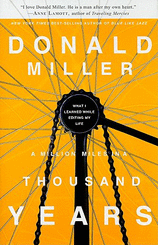
A MILLION MILES IN A THOUSAND YEARS – Donald Miller (2009)

I spent part of my day off with Don Miller.  I should say that I spent part of the day reading his book, A Million Miles in a Thousand Years.  This is interesting because I have critiqued some of his writing.  But make no mistake.  Agree or disagree with his views, Miller can write – and he writes well.

My buddy Ron urged me to read this book, which I resisted at first.  But Ron knew how to reel me in.  “It’s an interesting book.  I think you’ll like it,” Ron said.  “And it’s about bikes!”

Miller is interested in telling a story.  And he’s very good at it.  But the more important point concerns the story in the lives of people: “I believe God wants us to create beautiful stories, and whatever it is that isn’t God wants us to create meaningless stories, teaching the people around us that life just isn’t worth living.”

While I may disagree with Miller on some points, this book has made me realize – “Hey, I like this guy.”  Maybe it is his gut level honesty.  Maybe it his love for reading and writing.  But I think it mostly comes down to his love for life and his ability to communicate real life stories in a meaningful way.

A Million Miles in a Thousand Years made me think and ponder.  It made me re-evaluate.  It forced me to ask important questions – some of which may not have answers.  But at the end of the day, Miller’s work is worth reading.  It might even motivate you to hop on a bicycle.  I think you’ll “enjoy the ride.”

4 stars

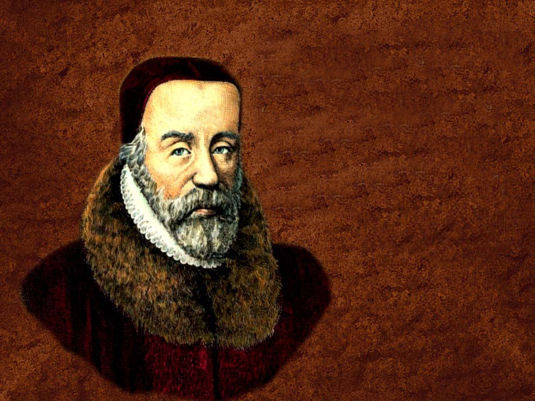
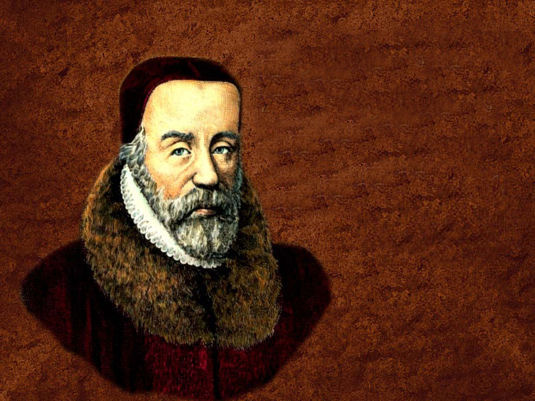
THE THEOLOGICAL BACKBONE OF WILLIAM TYNDALE (1494 – 1536)


Today  marks the anniversary of the martyrdom of William Tyndale.  This faithful man was born in 1494.  He attended Oxford, Magdalen Hall and Cambridge University.  A student and adherent of the Protestant Reformation, Tyndale engaged in numerous debates with Roman Catholics.    One leader in the Roman Catholic church mocked Tyndale: “We are better to be without God’s laws than the Pope.”  Tyndale, never one to mince words replied, “I defy the Pope and all his laws.  If God spare my life ere many years, I will cause the boy who drives the plow to know more of the Scriptures than you.”

Tyndale was a confident, bold, and fearless theologian and scholar who translated the Bible into an early form of Modern English, likely with Luther’s help in Wittenberg.  But Tyndale was arrested and imprisoned for 500 days in a kangaroo court, and ultimately convicted.  He was sent to be strangled and burn at the stake in the prison yard on October 6, 1536 – the same year that Calvin published the first edition of The Institutes of the Christian Religion.  His last words were, “Lord, open the king of England’s eyes.”

May God raise up a new generation of leaders like William Tyndale – courageous and bold; men with a theological backbone and rock solid integrity.  May God raise up  a new generation of men who say what they mean and mean what they say; men who are unashamed of the gospel; men who are utterly unwilling to compromise the truth; men who are willing to be burned at the stake for the sake of truth.

Semper Reformanda!

THE GOSPEL COMMISSION: Recovering God’s Strategy for Making Disciples – Michael Horton (2011)

Michael Horton has been on somewhat of a writing streak in recent days.  Earlier this year, he released his magnum opus, The Christian Faith, a systematic theology that ranks highly along with theologians such as Wayne Grudem and Robert Reymond.  In 2008 he embarked on an important study that included Christless Christianity and The Gospel Driven Life.  Horton completes this theological trilogy with The Gospel Commission: Recovering God’s Strategy for Making Disciples.

Horton’s work articulates the Great Commission in a compelling way that motivates followers of Christ to welcome others into God’s covenant family and challenges the presuppositions concerning the evangelistic task.  Horton wastes no time in critiquing ancient heresy and alerting readers to the  alarming contemporary trends associated with the emergent church.

The author helps recover the core elements of the Great Commission and invites readers to seriously consider the mandate before every Christ-follower.  The Gospel Commission is challenging and convicting.  It is an important reminder and calls God’s people to remain faithful to the task.

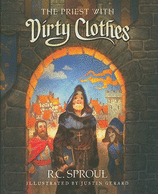
THE PRIEST WITH DIRTY CLOTHES – R.C. Sproul (2011)

On Sunday morning, I was  preparing for worship.  My ten year old son came bolting onto the platform.  He had important news to share – news that probably had something to do with a new video game or Lego set.  Nathan said with a smile on his face, “R.C. Sproul’s new book is out!”

We purchased the book and by 2:00 p.m. he had completed R.C.’s newest treasure.  My son says, “Dad, you’ve gotta read this book.  It’s really cool.” Who can argue with an eager ten-year old who is excited about a new book by R.C. Sproul?

The Priest With Dirty Clothes is story based on Zechariah 3:1-5.  The story illustrates the theological realities that emerge,  including justification by faith alone and imputation.  At the end of the day, Sproul intends to communicate rich biblical truth that make up the gospel message.  The story-telling vehicle is a creative way to drive these important truths into the hearts and minds of children.

Sproul’s book is beautifully illustrated and is appropriate for young children and pre-teens.  But the message Sproul communicates is for everyone – namely, sinners need a new set of clothes; they need a new heart.  And Christ, our great high priest is the only One qualified to grant what we need most.

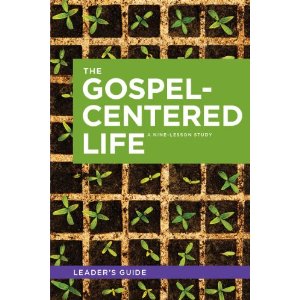
THE GOSPEL CENTERED LIFE – Bob Thune (2011)

The Gospel-Centered Life by Bob Thune is short, yet powerful study designed to help Christ-followers live in a way that reflects the Lord Jesus Christ and his gospel.

Each lesson is self-contained and includes helpful discussion questions and a short article that supplements the specific aim of the chapter.

The lessons are arranged as follows:

Lesson 1 – The Gospel Grid

Lesson 2 – Pretending and Performing

Lesson 3 – Believing the Gospel

Lesson 4 – Law and Gospel

Lesson 5 – Repentance

Lesson 6 – Heart Idolatry

Lesson 7 – Mission

Lesson 8 – Forgiveness

Lesson 9 – Conflict

The content is theologically informed and is rooted in the great truths of the Reformation.  Yet is it written in a way that will appeal to new believers and veterans of the Christian faith.

This resource will be  utilized best in small group ministry but may also be a helpful tool for individual Bible Study.  The Gospel-Centered Life is a vivid reminder that the gospel is more than a mere invitation to receive forgiveness and eternal life in Christ alone.  It is an invitation to enter life itself; a life that is centered on the claims of Christ and is propelled to joyful obedience which is empowered by the gospel.

5 stars


TELL THE TRUTH – Will Metzger (2002 Revised)

Books on evangelism are a dime a dozen these days.  Much of what passes for “evangelism” is watered-down, pragmatic, and in the final analysis promotes a different gospel (Gal. 1:6).  Tell the Truth by Will Metzger stands head and shoulders above every other book I’ve read about evangelism.

The subtitle is a nice summary of this excellent book: “the whole gospel to the whole person by whole people.”  Metzger’s Reformed approach to evangelism is saturated in Scripture and confronts the man-centered approach to evangelism with a vengeance.

The heart of the book is to communicate a proper view of God and a proper view man.  Metzger rightly adds, “We cannot explain the work of Christ unless we present a true picture of God.”  The author prizes God-centered theology and roots healthy evangelism in the biblical reality of predestination.  But note: there is no fatalism here.  Metzger embraces the notion popularized by Jonathan Edwards: “God ordains the ends and God ordains the means.”  To that end, the author promotes a rigorous approach to evangelism; a kind of evangelism that pleads with sinners to repent of their sin and place their faith in Christ alone for salvation.

Readers familiar with Spurgeon’s approach to evangelism will be instantly drawn to this work.  The sovereignty of God in salvation is emphasized.  As such, “sovereign saving grace gives power to obey, as well as grants a pardon for disobedience.”  But the responsibility of man is equally emphasized.  Simply put, the sinner (who is unable to believe apart from sovereign grace) must believe.

Metzger calls Christians to speak the truth in love (Eph.  4:15).  This is the high calling of every follower of Christ.  He reminds readers, “Action should be the fruit of sound doctrine.”  Tell the Truth is a powerful primer on the mandate to evangelize lost people.  Highly recommended!

4.5 stars

FEELINGS AND FAITH: Cultivating Godly Emotions in the Christian Life – Brian Borgman (2009)

The thesis of Jonathan Edwards’ landmark work, Religious Affections is clear: “True religion, in great part, consists in holy affections.”  This reality was embraced by the Reformers and the English Puritans.  Our forefathers not only stressed the importance of theology; they stressed the necessity of holy affections, to borrow Edwards phrase.

Tragically, however a shift has taken place in the evangelical world.  Emotionalism is sweeping through the church and in some circles a mystical approach to the Christian life is becoming readily accepted.  This preoccupation with the mystical at best minimizes theology and at worst, mocks the very notion of theological truth.

And some at the other end of the spectrum have embraced a dry form of rationalism – one where intellectual pursuit marginalizes any thing that resembles true God-centered emotion.

Feelings and Faith: Cultivating Godly Emotions in the Christian Life by Brian Borgman bridges the gap between both kinds of erroneous thinking described above.  The book contains four parts:

Part One – A Biblical Theological Foundation for Understanding Our Emotions

Part Two – Biblical Sanctification and Our Emotions

Part Three – Mortifying Ungodly Emotions

Part Four – Cultivating Godly Emotions

Borgman’s work is Bible saturated and in touch with daily life.  He promotes a Christ-saturated theological framework that results in holy affections to the glory of God.  He writes like a Puritan with contemporary illustrations that draw readers in.  Jonathan Edwards, John Owen, and John Bunyan would be proud of their student that they tutored from afar!

Feelings and Faith: Cultivating Godly Emotions in the Christian Life should be read and re-read by Christians who are serious about cultivating a doctrinally rich framework that leads to communion with God.

5 stars

THE FAITH OF JOSEPH: Pits and Pinnacles – Part 3

The faith of Joseph is a wonder to behold.  His life serves as an inspiration for all who profess faith in the Lord Jesus Christ.  In the past several posts, we have seen the faith of Joseph unfold in the emerging drama.  We have seen the role of doctrine in the life of Joseph.  The specific role involves Joseph’s proper understanding of doctrine.  This man had an accurate understanding of the character of God.  He had an accurate understanding of the purposes of God.

When we have an accurate understanding of God’s character and his all-wise purposes, we will be ready when the day of calamity arrives.  When we understand who God is and embrace the fact that he is in Providential control of everything, we may be shaken but we will not be moved.  B.B. Warfield rightly says, “The fundamental thought is the universal government of God.  All that comes to you is under his controlling hand.  The secondary thought is the favor of God to those that love him.  If he governs all, then nothing but good can befall those to whom he would do good.  The consolation lies in the shelter which we may thus find beneath his almighty arms.”  So when the waves of life threaten to sweep us away, we will stand like a rock – to the glory of God.

Question # 28 in the Heidelberg Catechism adds theological concrete to our foundation:

Q: How does the knowledge of God’s creation and providence help us?

A: We can be patient when things go against us, thankful when things go well, and for the future we can have good confidence in our faithful God and Father that nothing will separate us from his love.  All creatures are so completely in his hand that without his will they can neither move nor be moved.

May Joseph’s faith encourage you and embolden you in the days ahead.  And may a steady belief in the doctrine of Providence strengthen your resolve when the day of adversity arrives.

THE FAITH OF JOSEPH: PITS AND PINNACLES – Part 2

In our last post, we looked at the drama that unfolded in Joseph’s life and how he responded to betrayal and false accusation.  This humble man of God responded with a God-centered faith.  How did he do it?  What enabled this man to respond to his betrayers in a way that honored the Lord?  The answer is critically important.  Joseph understood the divine perspective.  And he embraced a theological framework that informed his actions and attitudes.

In the biblical account, we find Joseph clinging to doctrine; in particular, the doctrine of Providence.  The 1689 Baptist Confession of Faith summarizes this vital doctrine:

“God the good Creator of all things in his infinite power and wisdom doth uphold, direct, dispose and govern all creatures and things, from the greatest even to the least, by his most wise and holy providence, to the end for which they were created, according to his infallible foreknowledge, and the free and immutable counsel of his own will, to the praise of the glory of his wisdom, power, justice, infinite goodness and mercy.”

Several lessons flow from this critical statement.

First, God created all things and sustains all things (Gen. 1:1, 31; 2:18; Ps. 145:11; Prov. 3:19; Heb. 1:3; Col. 1:16-17).  Simply put, God sustains what he creates.  R.C. Sproul adds, “This refers to his absolute sovereignty, his eternal and inalienable right to govern and rule what he owns, and to dispose of those things according to the good pleasure of his will … We are under his authority and control.”  Our God is the great Sustainer of creation!   Sproul continues, “It is never arbitrary, frivolous, or capricious.  He governs not according to polls or political expediency, but by his most wise and holy counsel.”  God governs and sustains all things by his most wise and holy providence.

Second, God exercises absolute control over all things.  Isaiah 46:9-10 declares, “… Remember the former things of old; for I am God, and there is none like me, declaring the end from the beginning and from ancient times things not yet done, saying, ‘My counsel shall stand, and I will accomplish all my purpose.'”  God’s control over all things results in peace and security in the lives of Christians.  So Joseph, even in the midst of turmoil could rest in God’s Providential control of all things.

Third, this control includes  all creatures and their actions as well as events in the natural world.  Scripture is clear:

The God who made the world and everything in it, being Lord of heaven and earth, does not live in temples made by man, nor is he served by human hands, as though he needed anything, since he himself gives to all mankind life and breath and everything. And he made from one man every nation of mankind to live on all the face of the earth, having determined allotted periods and the boundaries of their dwelling place, that they should seek God, in the hope that they might feel their way toward him and find him. Yet he is actually not far from each one of us, for “ ‘In him we live and move and have our being’; as even some of your own poets have said, “ ‘For we are indeed his offspring.’” (Acts 17:24–28, ESV)

Absolutely nothing is outside the scope of God’s comprehensive providence.

Next, this absolute control mobilizes the plan of God.  Psalm 33:10-11 is instructive:  “The Lord brings the counsel of the nations to nothing; he frustrates the plans of the peoples. The counsel of the Lord stands forever, the plans of his heart to all generations.” (Psalm 33:10–11, ESV)

Finally, it is important to recognize that all these things manifest the glory of God.

In him we have obtained an inheritance, having been predestined according to the purpose of him who works all things according to the counsel of his will,” (Ephesians 1:11, ESV)

so that through the church the manifold wisdom of God might now be made known to the rulers and authorities in the heavenly places.” (Ephesians 3:10, ESV)

For the Scripture says to Pharaoh, “For this very purpose I have raised you up, that I might show my power in you, and that my name might be proclaimed in all the earth.”” (Romans 9:17, ESV)

The Baptist Confession of Faith continues to articulate a biblical view of providence:

“Although in relation to the foreknowledge and decree of God, the first cause, all things come to pass immutably and infallibly; so that there is not anything befalls any by chance, or without his providence; yet  by the same providence he ordereth them to fall out according to the nature of second causes, either necessarily, freely, or contingently.”

Notice three important principles.

First, there is no chance in God’s economy.

The lot is cast into the lap, but its every decision is from the Lord” (Proverbs 16:33, ESV).

Think about the implications of chance in God’s universe.  Such a notion would inevitably lead to randomness, chaos, and purposelessness.  “Mechanical fate is at the very heart meaningless, merciless, and hopeless.  But the certainty of divinely ordered providence is meaningful, merciful, and hopeful,” writes R.C. Sproul.  He continues, “Because God controls the universe, chance is ruled out, and because it is God who controls the universe, fate is ruled out also.”

Additionally, one must consider the doctrine of concurrence.  Wayne Grudem explains the doctrine in simple terms: “God cooperates with created things in every action, directing their distinctive properties to cause them to act as they do.”  Joseph is an example of concurrence – God directs Joseph and God directs his brothers to bring a purposeful conclusion.

God’s absolute sovereignty does not destroy the integrity of man’s liberty.  Sproul rightly says, “We are not puppets with no volition, freedom, or power, but we have no volition, freedom, or power beyond the power and freedom given to us by God.”  The doctrine of compatibalism teaches us that  God is sovereign and we are responsible.  So divine sovereignty is compatible with human freedom.

Finally, it is important to underscore this important reality, namely, the doctrine of providence does not deny the operation of secondary causes.  It is true that God ordains everything that comes to pass.  But God chooses to work, for the most part through means.  In other words, as Jonathan Edwards reminds us, “God ordains the ends and God ordains the means.”

Joseph’s God-centered faith was rooted in sound doctrine.  Is it any wonder that Christians who discard strong doctrinal moorings find themselves adrift and sail aimlessly to the distant shore of confusion?  Joseph reminds us about the importance of theology.  He reminds us that theology matters.  May the doctrine of God’s Providence strengthen and encourage us.  May our faith flourish as we stand on rock solid theological truths that will supply wind for our “sails” and lead us to the celestial shores – all to the glory of God!