Dane Ortlund, Is Hell Real? (Wheaton: Crossway Books, 2022), 48 pp.
The doctrine of hell is under attack. Voices that fuel the fire against the doctrine of hell come from philosophers, and university professors, and are tragically opposed by some pastors. Dane Ortund makes a biblical case for the doctrine of eternal punishment in his recent book, Is Hell Real? Ortund’s work is included in Church Questions, a series produced by 9Marks ministries.
Dr. Ortlund summarizes his work at the beginning: “Hell is needed, awful, close, and deserved by everyone – but there is a way to avoid getting there. This fitting summary becomes the basis for the remainder of the book as the author presents his case for the doctrine of hell. The book is clear, compelling, winsome, humble, and most of all – biblical.
Churches would do well to make this book available to people in the pews for instruction and help with evangelism.
I received this book free from the publisher. I was not required to write a positive review.
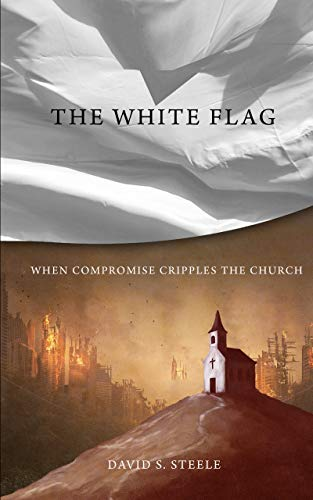
“Here is a passionate call from a pastor’s heart, from a man widely read, who sees with great clarity the difficult situation the church now faces, with opposition without and weakness and compromise within, who believes the battle will be won by the faithful believing and by the courageous teaching and proclaiming of the Word of God.”
DR. PETER JONES, Director, TruthXchange; author of The Other Worldview, Escondido, CA
“In every generation, believers are called to contend earnestly for the faith, and pastors must act as watchmen on the wall, protecting the flock from danger. David Steele does exactly that in The White Flag. This book is overwhelmingly biblical, meticulously thorough, and refreshingly practical. Frankly, I love books like this; books that inform the mind and stir the soul!”
NATE PICKOWICZ, pastor, author of Reviving New England and Why We’re Protestant
“Dr. David Steele exposes a clear and present danger threatening our churches. This is a biblical, bold, urgent call-to-arms reminding us that our Commander-in-Chief has entrusted to us a “Precious Treasure” that must be protected as well as proclaimed.”
WAYNE C. PICKENS, Senior Pastor, Homestead Country Gathering, La Grande, OR
“David Steele is a champion for the truth of God’s word. The White Flag not only exposes the destructive enemy of doctrinal compromise that threatens the contemporary church; it inspires godly courage in all believers to stand firm in defending the truth of Scripture no matter the cost. Read this excellent book to be blessed and emboldened by its timely message.”
STEVE BALVANZ, Senior Pastor, Spring Creek Bible Church, Bellingham, Washington
“A scholar with a shepherd’s heart, Dr. David Steele guides the reader through the waters of compromise. Desiring to see the church pure and sound in doctrine, he pours out his heart with the call to be alert, for the “wolves are growling at the gate.” Dr. Steele’s book is saturated with Scripture and seasoned by his own pastoral experience. A must-read for anyone who loves the church.”
BRYAN PICHURA, Associate Pastor, Valley Heights Community Church, BC Canada
“We are living in a day when not only is truth under attack, it is belittled, and dismissed. Our popular culture continues to churn out a message through the mainstream media that we can be all that we can be if only we will succumb to its message regarding gender roles, abortion, humanity, the climate, and more. Even as secular humanism continues to rise in our day, the Lord continues to raise up voices that challenge the status quo by calling Christians to remain faithful to biblical orthodoxy. One of these voices is Dr. David Steele. In his latest book, The White Flag: When Compromise Cripples the Church, Steele calls his readers to stand firm not in their own might, nor in their own righteousness, but in the righteousness of Christ. Along the way, he not only identifies the problem but points to the cure, Jesus Christ. Steele’s wise and biblical counsel will help new and seasoned Christians to navigate the shifting sands of compromise by buttressing themselves in the ancient paths of sound biblical orthodoxy. The White Flag is a welcome addition to the calls to reformation, revival, and renewal in the church. It not only diagnoses the problem, it lays out a biblical-theological vision grounded in the gospel that will help every Christian navigate the way forward in our hedonistic, humanistic post-Christian culture to the glory of God.”
DAVE JENKINS, Executive Director, Servants of Grace Ministries, Executive Editor, Theology for Life Magazine, Host, Equipping You in Grace Podcast
Graham A. Cole, Glorification: An Introduction (Wheaton: Crossway Books, 2022), 138 pp.
The three pillars of the Christian life are justification, sanctification, and glorification. Justification is a past event that takes place at a point in time. Sanctification is the necessary result of justification and takes place during the course of one’s Christian life. Glorification is a future event that every follower of Christ anticipates. Glorification: An Introduction by Graham A. Cole explores the wonder of this encouraging doctrine.
The author grounds his argument in a discussion that focuses on the glory of God. God’s glory is defined and described. The author is quick to suggest that God shares his glory with his creatures.
Dr. Cole explores what he refers to as “the glorious divine project,” where God reveals himself in the person and work of his Son and redeems a people for his own possession. It becomes apparent that the cosmos is not a place where accidents take place or where “chance” rules. Rather, God intentionally shares his glory with his creatures. “The glory Adam lost, Christ as the new Adam regains for us.”
These grand realities put us in a position where we are prepared to walk on the pathways to glory. Cole writes, “The prospect of glory provides motivation to live a godly life in the here and now.” The pathways to glory are marked out by the sovereign work of the Father, the Son, and the Spirit. This work eventually finds its culmination in the glorification of the elect.
Heaven is explored but must be seen as “penultimate.” For “the final home for God’s people is the new earth and the Jerusalem that has come down out of heaven to the renewed earth.” Here the Platonic vision of heaven is eschewed and the biblical model of real bodies on a real new earth is celebrated.
Glorification: An Introduction is a commendable book and recommended for anyone who wants to dig deeply into the subject of personal eschatology. Dr. Coles is a clear writer and engages fairly with authors who disagree. This work is an essential part of every growing theological library.
I received this book free from the publisher. I was not required to write a positive review.
Eric Ortlund, Suffering Wisely & Well: The Grief of Job and the Grace of God (Wheaton: Crossway Books, 2022), 191 pp.
Every follower of Christ will face suffering at some point. Some face more than others. Eric Ortlund’s book, Suffering Wisely & Well addresses the topic of suffering by analyzing the book of Job. As the title suggests, the book seeks to help Christ-followers suffer well by being wise about suffering.
Dr. Ortlund traces Job’s suffering and highlights key observations along the way. He examines the unbiblical counsel that Job receives from his friends and commends the “beauty of gospel friendship.” Job is set forth realistically. His godly character is noted and the struggles that he faces are dealt with honestly.
One of the most refreshing aspects of Suffering Wisely & Well is Ortlund’s ability to integrate biblical principles into daily life. He writes:
Our journey through the long and frustrating debate deepens our ability to journey with our friends in their Job-like ordeals without falling into the friends’ trap of condemning them, while also remembering that the dark things our suffering friends utter in their pain are not the final truth of their lives.
Each chapter concludes with a summary and concluding principles that readers may immediately put into action. Sufferers will be encouraged by Ortlund’s clear biblical presentation and come face to face with the hope held out in the gospel.
I received this book free from the publisher. I was not required to write a positive review.
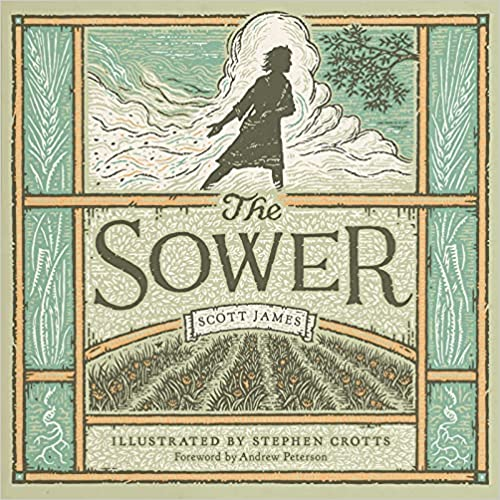
Scott James, The Sower (Wheaton: Crossway Books, 2022).
The Christian band Wolves at the Gate has a lyric that is a weighty theological reality and prompts much thought:
A bloody tree and empty tomb sends root below for life to bloom.
These words immediately came to mind when I read Stott James’ new children’s book, The Sower. This short book uses a creative narrative to draw in young readers, making them aware of God’s redemptive purposes. The book begins in eternity past:
Once there was a Voice in the darkness, full of life and life, it was the Voice of the Sower. With a word he sowed seeds, and a garden grew.
The author reveals the creating and sustaining power of the Sower and shows how sin separated the first parents and all of humanity from him. People stopped listening to the Sower and their hearts turned away from him.
Young readers will discover how the Sower pursued his sinful creatures and how he revealed himself in God’s Word and also in human flesh:
To mend broken people, to make them whole again, he took their brokenness and made it his own. He laid himself down, buried like a seed in the ground.
Ultimately, The Sower paints a beautiful picture of how the Lord Jesus redeems a people for his own possession. The Sower is a tool parent can use to introduce the Christian worldview to children. But more important, he rivets their attention on Jesus – the Sower, the One who came to set his people free.
Scott James teams up with Stephen Crotts who provides incredible art to accompany this powerful little book.
I received this book free from the publisher. I was not required to write a positive review.
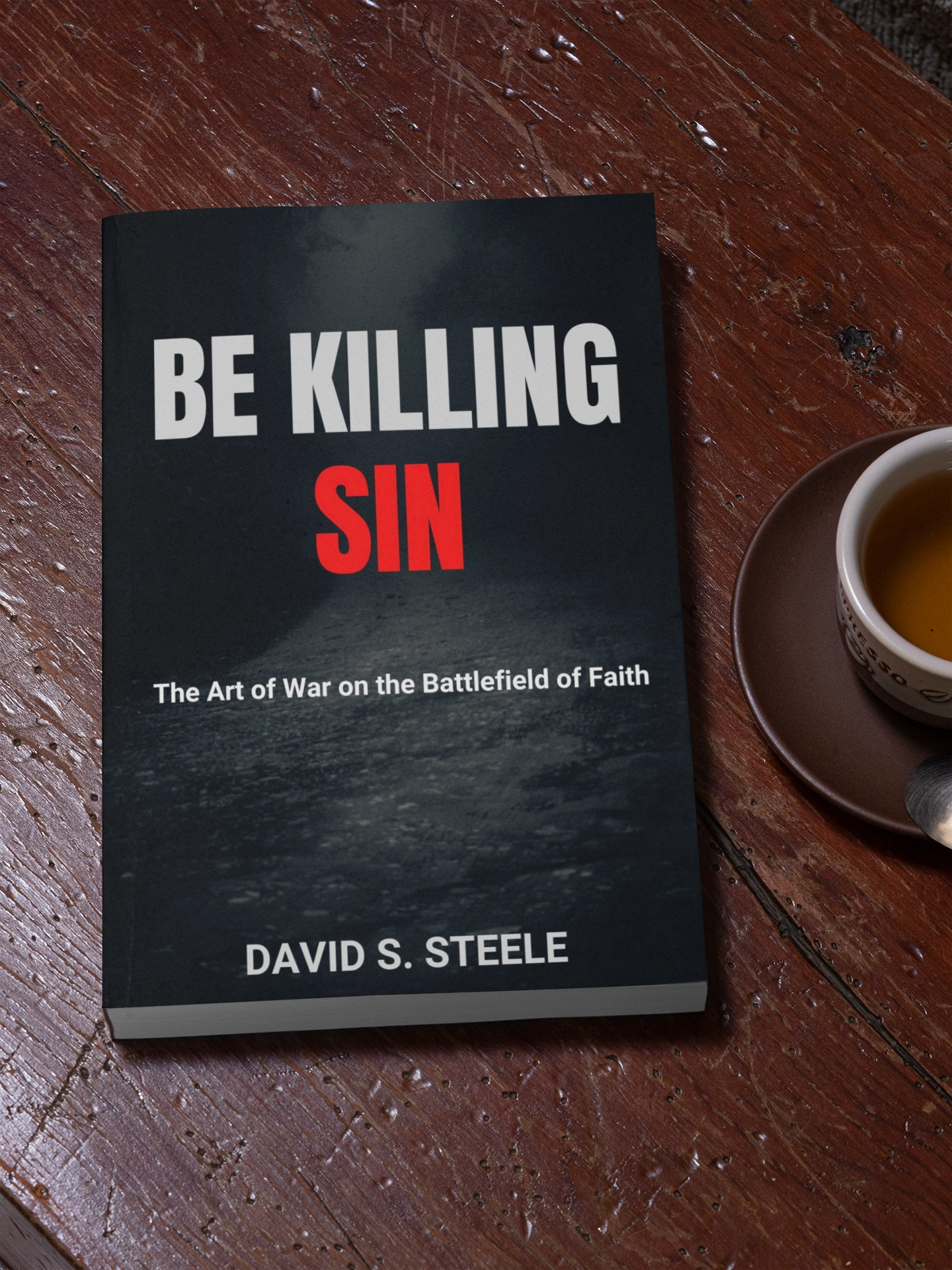
My newest book, Be Killing Sin: The Art of War on the Battlefield of Faith is available now!
The book guides followers of Christ on a journey that exposes the vicious monster of sin, explains the posture of sin and expounds on a plan to defeat it. The book leans heavily on the Puritans, those physicians of the soul who cherished God’s Word and offered godly counsel for spiritual soldiers.
“Be Killing Sin is a heart-penetrating read and profitable for both new and seasoned believers who sincerely desire to be exhorted regarding the danger of personal sin and educated on the biblical means of defeating sin in their lives. I highly recommend Dr. Steele’s uncompromising and practical book on this much-needed topic.”
STEVE BALVANZ, Senior Pastor, Spring Creek Bible Church, Bellingham, WA
“I highly recommend that you add this book to your library and read it repeatedly to fortify your soul against the temptations and struggles we all have with sin.”
BRUCE PARKER, Pastor Emeritus, Faith Bible Church, Hood River, OR
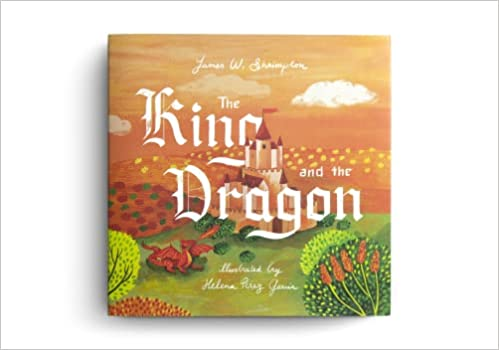
James W. Shrimpton, The King and the Dragon (Wheaton: Crossway Books, 2022), 32 pp.
The King and the Dragonis a creative tale for children. James W. Shrimpton teams up with Helena Perez Garia, a world-class illustrator in her own right. The story is about a King with a great golden throne. A Dragon tries to usurp the King’s throne and deceive his people. Thankfully, a child is born who grew up and fought the Dragon. The Dragon defeated the Knight but rose again on the third day, to rule with the King on his throne.
The purpose of the book is to give parents a creative tool to share with their children the story about God’s redemptive plan that unfolds with the birth, life, death, and resurrection of the Lord Jesus Christ.
The King and the Dragon is a creative book, short enough to keep the attention of small children, and helps parents begin to put the pieces of redemptive history together in a way that is understandable for children.
I received this book free from the publisher. I was not required to write a positive review.
Vern S. Poythress, Redeeming Our Thinking About History: A God-Centered Approach (Wheaton: Crossway Books, 2020), 247 pp.
Every person is a historian of sorts. Each person is not only a product of history but is also constantly interpreting it. “History,” according to Vern Poythress, “is indispensable in the Bible and in the Christian faith.” Such is the theme of the author’s most recent book, Redeeming Our Thinking About History: A God-Centered Approach.
The book is arranged in five parts:
What We Need in Order to Analyze History
History in the Bible
Understanding God’s Purposes in History
What Does History Writing Look Like?
Alternative Versions of How to Think About History
Part three is worth the price of the book as Dr. Poythress shows readers how God orchestrates historical events for his glory: “We believe from the Bible that God controls all of history. His purposes are present in everything that occurs. No events – even the smallest (Prov. 16:33; Matt. 10:29) – take place without his control over the causes.” The author also makes it clear that God operates via primary causation and secondary causation. Such a scheme enables God to ordain everything that comes to pass and also grants creatures the opportunity to exercise choices, which are always according to their strongest inclination.
The author reveals different ways to think about history. The model he commends is called Providentialism, which places God in a position of authority and divine purpose. He argues that Providentialism is supported in Scripture and gives us the responsibility for praising the work of his hands. It also reveals a God who is intimately involved in historical events – from the smallest to the greatest.
In the end, Redeeming Our Thinking About History accomplishes what it sets out to do. It helps establish the Christian mind and secure a God-centered approach to history. Such a theme is repeated in other works by Poythress that exalt the Lord Jesus Christ and proclaim his lordship over all things.
I received this book free from the publisher. I was not required to write a positive review.
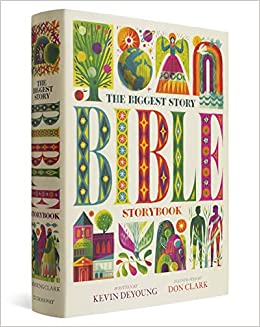
Kevin DeYoung and Don Clark, The Biggest Story Bible Storybook (Wheaton: Crossway Books, 2022), 529 pp.
The Biggest Story Bible Storybook by Kevin DeYoung is a book that every Christian parent should read and re-read to their children. DeYoung makes it clear that “this book is a storybook about the Bible, but it is not the Bible.” The aim of the book is to teach children the “grand, sweeping story of Scripture.” The book is arranged in seven parts:
The Pentateuch
History
Poetry
The Prophets
The Gospels
Acts and Epistles
Revelation
Each part contains basic narratives that help children see the big picture. Better yet, each page is beautifully illustrated by Don Clark. Clark is a gifted artist that brings biblical stories to life in a way that will keep children interested and drawn to God’s big story.
The great benefit of this book is that it opens the eyes of children to the wonder of theology and the greatness of God. It provides a basic framework for children to grasp systematic and biblical theology as they grow older. Children will discover that Christ is the focal point of Scripture – from the Garden of Eden to the New Earth.
I can’t say enough about The Biggest Story Bible Storybook. DeYoung is able to capture the essential elements in Scripture and does it in a compelling and creative way. Even though the book is designed for children, I recommend that every incoming Bible College student read this excellent book to provide a beautiful overview of God’s Word.
I received this book free from the publisher. I was not required to write a positive review.
Pornography has a stranglehold on countless men and women in our culture. There was a day when one needed to seek porn out but with the rise of the internet, pornography stalks the unsuspecting through means of a phone, computer, or television. Sadly, many of these are naively lured into grievous sin and find themselves in a pattern of defeat.
Ray Ortlund is burdened for people entrapped in the sin of pornography; he also has a burden to see the industry burn to the ground. In his book, The Death of Porn, the author addresses the hearts of men in particular. His aim is to see men become men of integrity who play a vital role in building a world of nobility.
The Death of Porn is a unique book, written with a personal and pastoral tone. It is a simple read and practical in nature. The driving factor in Ortlund’s book is not psychology or self-help. At the very center of the book is the gospel of Jesus Christ. In six short letters, Pastor Ortlund addresses Sons as he would address one of his own.
Part one, Reintroducing the Charactersfocuses on three specific characters: 1) Men who struggle with sexual sin, 2) Women who have been hurt by the porn industry, and 3) The Lord Jesus Christ. Jesus is presented as the conquering Lion, the One who reigns over sin and resurrected from the grave. But Jesus is also presented as the Lamb who was slain. At the heart of this discussion is the need to understand that Jesus is both the Lion and the Lamb:
It helps us that the roaring Lion and the sacrificial Lamb are one and the same person. He respects us enough to confront our sins. But he also values us enough to pay for our sins – at cost to himself alone. Jesus is building his new kingdom in a surprising way. He gives porn stars their dignity back, and he gives porn consumers their honor back. He loves doing this.
This Lion and Lamb calls sinners to the foot of the cross to repent and believe. He calls sinners to drink from the fountain of his grace, the only fountain that truly satisfies. Ortlund urges readers to draw near to the Lord Jesus Christ:
But this letter is about our true King. And I’m asking you to hand yourself over to him. Then he’ll plunge your past under his own blood. And he will provide everything you’re going to need – moment by moment – as he leads you into your future.
Part two, Reimagining the Future offers readers hope for the future as the death of porn becomes a reality. Ortlund assures his Son with timely encouragement: “You’re on the right side of history, not because of your resolve but because of his resurrection.” This is a crucial point as many struggling men attempt to break the power of porn via will-power or promises that are eventually broken. In the end, however, the only One who can rescue men from pornography is the Lord Jesus Christ and the message of the gospel.
The author builds on this hopeful theme by summarizing how to fight well. First, What You’re Fighting For. He adds, “When you take up the fight against evil, you are planning a noble thing. You are standing for a noble thing. If you ever feel like a coward in the face of the battle, you can pivot immediately, turn from your fear back to Jesus, and brace yourself again for the fight.”
Second, How You Can Fight Well. Ortlund encourages his Son to remember that God is with him and rejoices over him. This point assumes that the battle against sin is ongoing until we reach the shores of the Celestial City. He urges, “Let’s support one another as we fight for our integrity. But let’s never make room for sin – even in our thoughts.”
Third, What Winning Will Cost You. The author challenges his Son to be killing sin by the power of the Holy Spirit (Rom. 8:13). Such an endeavor will obviously be costly and will be worth every ounce of gospel-centered obedience. Ortlund concludes, “Jesus calls you to fight for his new world of nobility … joyously, decisively, repeatedly.”
In the fifth letter, Sons are encouraged to work together. The author exhorts him, “ … You, with your brothers, will create a new world of nobility. Moving forward shoulder to shoulder, you can starve that predatory Beast – the porn industry.”
Ortlund underscores the importance of transparency. He draws on James 5:16 and encourages his Son to confess sin, pray with like-minded brothers, which ultimately leads to healing. The sum of the matter is deeply encouraging:
Your brotherhood can go viral. It can easily multiply, leaping over barriers, reaching men far away, men you might never even meet in this life. But in our sick world, healing is a powerful force. Your new freedom of heart can flow out, by the grace of God, reaching even the darkest places of porn. God can do that through you – the real you, with other real men.
The final letter focuses on making a world of difference. Ortlund writes, “Jesus is calling you to build a new world of nobility, to the furthest extent of your influence, for the rest of your life. And he’s in the fight with you.” He includes practical proposals that will enable men to make a maximum impact in their world.
My hope is that The Death of Porn reaches thousands upon thousands of young men who need a strong and biblical challenge from a seasoned pastor who cares about the legacy of the next generation. That legacy involves men committed to holiness and integrity; men who are building a world of nobility.



 Veritas et Lux