A WALK ACROSS THE SUN – Corban Addison

In the nineteenth century, the British politician, William Wilberforce began a movement that led to the abolition of the slave trade.  His robust Christian faith fueled his 1402792808_bresolve to see tyranny destroyed and people created in the imago Dei set free.  Today, there are 27 million slaves in the world.  1.2 million are children, enslaved by the sex trade industry in India.  These horrifying realities are a painful reminder of the sin that pollutes our world; they harken back to the days of Wilberforce.  Yet today, very few appear willing to pick up the cause that Wilberforce began.

First time author, Corban Addison delivers a heart-wrenching, mind-rivetting, spine-tingling thriller that exposes the human trafficking/sex trade industry in his novel, A Walk Across the Sun.  Readers should be forewarned that this novel is not for the faint at heart.  The author paints a grizzly portrait of the underworld; a world that exploits women and children and panders to the diabolical deeds of men.

I can’t say enough about Corban Addison.  He writes with Grisham-like precision which ultimately leads to a redemptive end.  He gives enough details to educate readers to this horrifying industry which carries the ultimate aim of involvement, reformation, and the obliteration of slavery around the world.  The book is a mixture of unmitigated evil and unvarnished beauty.

Many thanks to my friends, Ron and Mark for alerting me to this book.  I’ll never doubt you again!

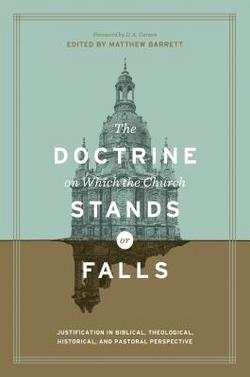
The Doctrine on Which the Church Stands or Falls – Matthew Barrett , Ed.

docMatthew Barrett, Ed. The Doctrine on Which the Church Stands or Falls (Wheaton: Crossway, 2019), 912 pp.

Martin Luther boldly declared, “Justification is the article upon which the church stands or falls.” John Calvin argued that justification is the “hinge on which religion turns.” In the sixteenth century, scores of people found these arguments both biblical and compelling. The Roman Catholic Church deemed Luther and Calvin as heretics.

Fast forward to the current generation. While much has changed over the past five hundred years, the biblical wisdom of Luther and Calvin still stands. Many in the church trumpet the grand reality of justification by faith alone. But some continue to deny or discount this critical doctrine. Tragically, some of the dissenters are preaching in Protestant churches. At stake is more than a mere doctrine, important as that is – what is at stake is the gospel of Jesus Christ.

The Doctrine on Which the Church Stands or Falls is edited by Matthew Barrett. Dr. Barrett comes with impeccable academic credentials and is supported by a cast of world-class scholars and theologians. This book both a theological tome and a treasure chest. It is not for the faint-hearted. And it is certainly not designed for the armchair theologian.

The Doctrine on Which the Church Stands or Falls is arranged in four parts:

  1. Justification in Biblical Perspective
  2. Justification in Theological Perspective
  3. Justification in Church History
  4. Justification in Pastoral Practice

This book leaves no stone unturned. The team that Barrett has assembled has examined every theological, biblical, and historical angle that pertains to the doctrine of justification. The fundamental standing of position before a holy God is addressed with depth, breadth, integrity, and God-centered wisdom. The combined efforts have yielded a work that should be used for generations to come and will be of great service to pastors, professors, and followers of Christ.

Those who discounted Luther and Calvin in the sixteenth-century did so at their own peril. Of greater importance is the repudiation of the doctrine of justification by faith alone. To discount this cardinal doctrine is not only dangerous; it is tantamount to theological treason.

I commend The Doctrine on Which the Church Stands or Falls and trust that it will receive a wide readership.

Highly recommended

I received this book free from the publisher. I was not required to write a positive review.

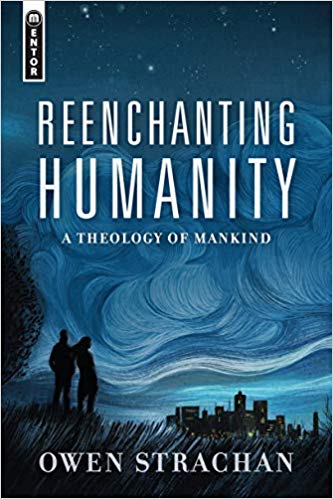
Reenchanting Humanity: A Theology of Mankind – Owen Strachan

owenOwen Strachan, Reenchanting Humanity: A Theology of Mankind (Geanies House: Christian Focus Publications, 2019), 418 pp.

I was recently asked by a parishioner to evaluate a professing Christian author. My response was tenuous as the author under consideration is notoriously difficult to nail down. Is he a Calvinist or an Arminian? A Complementarian or an Egalitarian? Does he affirm the authority, inherency, and infallibility of Scripture? One may never know. Frankly, it would be easier to nail jello to a wall than decipher the theological commitment of the author in question!

One of the many reasons, I appreciate Owen Strachan so much is that he is the polar opposite of the author above. Agree or disagree, readers always know where Dr. Strachan stands. His latest book is no exception.

Reenchanting Humanity: A Theology of Mankind is a book that is desperately needed by the church in our day. Many in the church have lost their bearings (some appear to have lost their minds). The journey to the Celestial City has been sidetracked by compromise, theological error, and political correctness. Instead of sailing to our heavenly home with biblical fidelity, scores of people have surrendered their oars and are dog-paddling in a different direction. Rather than affirming what the Scripture affirms about mankind, they embrace the ideology of the zeitgeist. Instead of tethering their view of mankind to Christ, they cling to the flimsy and flawed view of culture.

A Theological Antidote to Compromise

Reenchanting Humanity is a theological antidote to the rampant compromise which is currently polluting the church and corroding the pillars of the Christian mind. But Reenchanting Humanity is more than an antidote. It is more than a defensive reaction to the godless ideology that infects the church. Rather, it is an offensive biblical bombshell that destroys error and bolsters the Christian worldview.

The lofty aim of Reenchanting Humanity is “to give future pastors of Christ’s church great confidence in the doctrine of man.” Strachan’s hope is that “those facing many challenges to this doctrine from inside and outside the church, will gain strength from or rigorously biblical and theological study of theocentric anthropology.”

Rooted in the Imago Dei

Dr. Strachan’s goal is achieved in the space of 418 pages. He anchors this tour in anthropology by demonstrating that creatures are made in the imago Dei. In other words, we have been created by God – for his glory. As such we have intrinsic value. He rightly notes, “Mankind is not an accident; mankind is the special creation of almighty God. By recapturing the biblical account of human origins, we recapture human dignity, human worth, and our own identities.”

But the Bible clearly describes how creatures sinned and fell far from God. Strachan skillfully shows readers the many consequences of the fall and helps them decipher where work, sexuality, race and ethnicity, technology, and justice fit in a fallen world.

The chapter entitled, Contingency is thought-provoking, challenging, and illuminating. The author writes, “Humanity was, is, and will be contingent. We are wholly dependent on God, wholly under divine control, and wholly and unalterably beings made by God.” He continues, “We need God. We depend on him for existence, but just as significantly, we depend on him for purpose, meaning, and the discovery of hope. Take away the Lord, and all is futile.” And so the fact of contingency weighs heavily on creatures. Tragically, however, many either refuse to acknowledge their contingent status or give up entirely. But Strachan reminds us, “The biblical portrait of man’s temporality drives us not to despair but to worship God. Once reconciled to the reality of our finitude on the earth, we may reverse our natural instincts and adopt a mind-set of savoring all the wonder, mystery, beauty, pain, promise, challenge, and purposefulness of our God-given days.”

Consistent, Compelling, and Countercultural

Reenchanting Humanity is clear, consistent, compelling, comprehensive, and countercultural. These important attributes will likely make the book vulnerable to criticism and mark out the book as a target for detractors. But readers who maintain their allegiance to Scripture will appreciate Strachan’s approach, which is relentlessly biblical and faithful to the truth.

Quite frankly, I found Reenchangting Humanity enthralling. Strachan never backs away from controversy and he is unafraid of telling the truth about the condition of mankind. But the book concludes with a majestic crescendo as the author guides readers to the Lord Jesus Christ and the story of the second Adam: “Truly, he is the new humanity, and he is leading a new exodus to the new heavens and the new earth. He is the salvation and ontological restoration we so desperately need; his new covenant blood washes us clean, makes us new creations, and gives us new names.”

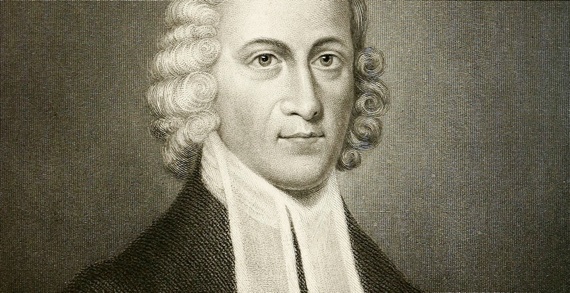
The Nature and End of Excommunication – Jonathan Edwards

Jonathan_Edwards_engravingThe Nature and End of Excommunication is a timely and practical sermon.  For many churches in our generation simply refuse to exercise church discipline on the unrepentant.  This act of passivity is not only cause for grave concern; it is a violation of Scripture.

Edwards utilizes 1 Cor. 5:11 as his text:

But now I am writing to you not to associate with anyone who bears the name of brother if he is guilty of sexual immorality or greed, or is an idolater, reviler, drunkard, or swindler—not even to eat with such a one.” (1 Cor. 5:11, ESV)

DoctrineThose members of the visible Christian church who are visibly wicked, ought not be tolerate in the church, but should be excommunicated.

Edwards explains and articulates three main headings which support the doctrine.

1. The Nature of Excommunication

Edwards wastes no time explaining the essence of excommunication: “It is a punishment executed in the name and according to the will of Christ, whereby a person who hath heretofore enjoyed the privileges of a member of the visible church of Christ, is cast out of the church and delivered unto Satan” (c.f. 2 Cor. 2:6).

Ultimately, church discipline is meant for the good of the person in question and seeks their repentance and restoration to the body of Christ.  Edwards, adds, “Excommunication itself is to be performed as an act of benevolence.  We should seek their good by it; and it is to be used as a means of their eternal salvation.”

2. The Proper Subjects of Excommunication

Those who walk through the process of excommunication are the “visibly wicked.”  Two things mark such a person:

  • By gross sin 
  • By remaining impenitent in their sin

3. The End of Excommunication

Three specific ends are delineated by Edwards:

  • That the church may be kept pure, and the ordinances of God not be defiled.
  • That others may be deterred from wickedness.
  • That the persons themselves may be reclaimed, and that their souls may be saved.

Application

5 points of application are set forth by the preacher from Northampton:

  1. That you tolerate visible wickedness in your members, you will greatly dishonor God, and our Lord Jesus Christ, the religion which you profess, the church in general, and yourselves in particular.
  2. Your own good loudly calls you to the same thing.  From what hath been already said, you see how liable you, as individuals, will be to catch the contagion, which is easily communicated by reason of the natural depravity, in a degree at least, remaining in the best of men.
  3. The good of those who are without should be another motive.
  4. Benevolence towards your offending brethren themselves, calls upon you to maintain discipline in all its parts.
  5. But the absolute authority of Christ ought to be sufficient in this case, if there were no other motive.

These powerful reminders should beckon every church to seriously consider the high calling of operating in a God-glorifying way.  Edwards wonders out loud, “Now, how can you be the true disciples of Christ, if you live in the neglect of these plain positive commands?”  He concludes, “If you strictly follow the rules of discipline instituted by Christ, you have reason to hope for his blessing; for he is wont to bless his own institutions, and to smile upon the means of grace which he hath appointed.”

In this short sermon, Edwards demonstrated the necessity of carrying out church discipline on unrepentant church members.  How very far are so many churches from this biblical model?  How long will it take to come in alignment with the teaching of Scripture?

The True Excellency of a Minister of the Gospel – Jonathan Edwards

Jonathan_Edwards_engravingIn this masterful sermon, Jonathan Edwards sets forth what sets apart
a minister of the gospel.

He establishes his doctrine at the beginning of the sermon:

‘Tis the excellency of a minister of the gospel to be both a burning and a shining light.

Six propositions guide the doctrinal assertion:

  1. I would show that Christ’s design, in the appointment of the order and office of ministers of the gospel is, that they may be lights to the souls of men.
  2. I would show what is implied in their being “burning lights.”
  3. I would show what is implied in their being “burning lights.”
  4. I would show that it is the proper excellency of ministers of the gospel to have these things united in them, to be both burning and shining lights.
  5. I would apply these things to all that Christ has called to the work of the gospel ministry, showing how much it concerns them earnestly to endeavor that they may be burning and shining lights.
  6. Show what ministers of the gospel ought to do that they may be so.

The sermon shines brightest in the first proposition as the Puritan divine explains the three-fold use of light, namely – to discover, to refresh, and to direct.

Indeed, pastors have a weighty responsibility, especially in the preaching task to show forth the light of the gospel in ways that are understandable, and in keeping with the truth of God’s Word.

Divine Blessing and the Fullness of Life in the Presence of God – William R. Osborne

William R. Osborne, Divine Blessing and the Fullness of Life in the Presence of God (Wheaton: Crossway Books, 2020), 159 pp.

The notion of “blessing” is familiar to most people. It has a broad range of meaning that ranges from the theological to the pragmatic. Yet, if we are honest, most have failed to probe deeply into the real meaning of what biblical blessing entails. William R. Osborne unpacks the true purpose of blessing in his excellent volume, Divine Blessing and the Fullness of Life in the Presence of God. Osborne’s volume is the most recent offering in Crossway’s Short Studies in Biblical Theology, a series that aims to capture the attention of untrained laymen.

Dr. Osborne explains the goal of his volume at the outset: “The purpose of this book is to establish a biblical-theological foundation of blessing by presenting a concise biblical theology that leans into how we view ourselves as living blessed lives as citizens of God’s kingdom.”

Two aspects of God’s benevolence are explored by way of introduction: “Divine blessing in the Bible is always physical and spiritual because it is fixed upon what the title of the book promises, namely, the reality of the fullness of life in the presence of God.” This critical principle underscores the importance of the blessing and helps readers view the topic through a decisively biblical lens.

The book shows readers how God’s blessing unfolds redemptive history for all the families of the earth – something that is intended to be material, spiritual, and relational. Experiencing such blessings comes as a direct result of living under the terms of the covenant. In the end, as Osbourne adds, “God’s people would come to experience the fullness of life in God’s presence, but not because God’s people would enter a land – their true King would come to theirs.”

Osborne summarizes the blessing: “From Genesis to Revelation, God’s plan has been to create life for his people in his presence … God’s plan to bless reached its fulfillment in the son of Abraham, who was the Son of God. For those of us united to Jesus by faith, we are to live as a blessing to the world in this present age while longing for our eternal blessings in the world to come.”

Divine Blessing and the Fullness of Life in the Presence of God is a fresh breath of theological “air.” It brings the people of God where they truly need to be: marveling at his grace and his gifts. Indeed, he is our covenant God and King!

I received this book free from the publisher. I was not required to write a positive review.

Nothing But the Truth

Scripture warns, “See to it that no one takes you captive by philosophy and empty deceit, according to human tradition, according to the elemental spirits of the world, and not according to Christ” (Col. 2:8, ESV). As followers of Christ, we need to be vigilant, constantly on guard, and discerning good from evil. One of the ways that the worldly system “takes us captive” is by marginalizing truth or eliminating it altogether. It is important to understand that the worldly system militates against the Christian view of truth. Is it any wonder, then, that the importance of truth is highlighted so much in Scripture?

David Understood the Importance of Truth

King David acknowledged that since God is truth, he expects his people to live truthful lives. He writes, “Behold, you delight in truth in the inward being, and you teach me wisdom in the secret heart” (Ps. 51:6, ESV).

The implications of David’s words are massive as we consider our inward motivations, conversations, and the way we conduct our lives. Ask yourself, “Am I a person that is committed to the truth?” “Does the love for truth undergird my life and worldview?”

Paul Spoke Often About the Truth

The apostle begins the book of Titus with these revealing words: “Paul, a servant of God and an apostle of Jesus Christ, for the sake of the faith of God’s elect and their knowledge of the truth, which accords with godliness” (Titus 1:1, ESV) . Notice the relationship between truth and godliness. Indeed, they are intimately connected. “The truth of the Gospel,” writes Warren Wiersbe, “changes a life from ungodliness.”1 As Christians, we unapologetically adhere to the truth. We must not only adhere to the truth; it must stand at the very center of our lives.

Additionally, Paul referred to the church as ” … a pillar and buttress of the truth” (1 Tim. 3:15, ESV). The church, then, is God’s appointed means of declaring the word of God to the nations. Ask yourself, “How is God using me to declare the truth to my community?” “How is God using me to declare the truth to the nations?”

Paul Warned People Who Abandon the Truth

Scripture is packed with examples of people who abandoned the truth. Paul writes, “This testimony is true. Therefore rebuke them sharply, that they may be sound in the faith, not devoting themselves to Jewish myths and the commands of people who turn away from the truth” (Titus 1:13–14, ESV). Tragically, this trend continues in our generation. Young people are turning away from the truth by the thousands. College students are manipulated and deceived by professors who peddle a worldview that opposes historic Christianity. Hearts are cold to God’s revealed truth. Ask yourself, “Am I pursuing the truth or am I fleeing from the truth?” “Do I have a sinful unbelieving heart that is turning away from the living God?” (Heb. 3:12).

Peter Pressed Home the Importance of Truth.

Peter is an interesting character to be sure. Here is a man who denied Jesus, the very embodiment of truth – three times! Yet, he was forgiven and restored and was used in a mighty way to spread a passion for the truth of God:

Having purified your souls by your obedience to the truth for a sincere brotherly love, love one another earnestly from a pure heart … (1 Peter 1:22, ESV).

Ask yourself, “Do I obey the truth?” “Am I established in the truth?”

John Had a Passion for the Truth.

The apostle John was a warm-hearted Christian thinker who had a passion for the truth. Listen to how this God-centered man expressed his love for the truth:

Little children, let us not love in word or talk but in deed and in truth (1 John 3:18, ESV).

I have no greater joy than to hear that my children are walking in the truth (3 John 4, ESV) .

Jesus Spoke Plainly About the Truth

Finally, we turn our attention to Jesus, the One who made the startling claim that he was in fact the way, the truth, and the life (John 14:6). The importance that Jesus attaches to truth cannot be denied:

Sanctify them in the truth; your word is truth (John 17:17, ESV).

… and you will know the truth, and the truth will set you free (John 8:32, ESV)

Conclusion

All spiritual growth is based on a knowledge of truth. Yet countless people, even people in the church are discarding truth and walking down paths that fail to honor and glorify God. Al Mohler warns, “Departing a Christian worldview leads to a distrust of final truth and a rejection of universal authority, which then hides the way back to the God of the Bible.”2 As followers of Jesus Christ, may we cling to the truth, proclaim the truth, and defend the truth. May we stand with the men and women throughout redemptive history who were willing to lay their lives down for the great cause of truth. May the cry of our hearts be, “nothing but the truth!”

  1. Wiersbe, W. W. (1996). The Bible exposition commentary (Vol. 2, p. 260). Wheaton, IL: Victor Books.
  2. Albert Mohler, The Gathering Storm: Secularism: Culture, and the Church (Nashville: Thomas Nelson, 2020), 11.

A Puritan Theology: Doctrine For Life – Joel Beeke and Mark Jones

A comprehensive assessment of A Puritan Theology: Doctrine for Life by Joel Beeke and Mark Jones is something akin to sharing one’s thoughts or emotions while gazing at the Grand Canyon, Niagara Falls, the Statue of Liberty, or the Lincoln Memorial.  This magnum opus is like oxygen for the barren soul, light for a blind man, a symphony for a deaf man, and a Super Bowl ring for a lame man.

A Puritan Theology is exactly what it suggests.  The authors meticulously walk readers through each branch of systematic theology and discuss the typical view that was embraced by the Puritans.  Where the Puritans disagree, the authors are careful to represent each side with graciousness.  The book is nothing to trifle with.  It is a veritable tome that just falls short of 1,000 pages.  But readers should not be intimidated by the sheer volume; rather they should make their way through this valuable book, noting key insights and marking Puritan writers they were previously unfamiliar with.

While the entire book is worthy of a careful read, several chapters stand out as especially significant.  I enjoyed Chapter 4 – Stephen Charnock on the Attributes of God, Chapter 5 – The Puritans on the Trinity, Chapter 6 – John Owen on Communion with the Triune God, Chapter 10 – The Puritans on Providence, and Chapter 44 – John Bunyan’s Preaching to the Heart.  A few additional chapters are worth examining in some detail.

Chapter 26 – The Puritans on Understanding and Using God’s Promises

Beeke and Jones’ remark, “The promises are the pathways where Christ meets the soul.”  It is critical to have a correct understanding of God’s promises.  Additionally, it is important to distinguish between different kinds of promises.  For instance, “Absolute promises make known a certain and sovereign purpose, while conditional promises reveal what God will do if the fulfillment of those promises glorifies Him and is best for His people.”

Christians must make right use of God’s promises.  The Puritan Andrew Gray is cited in this regard and notes ten specific ways to make right use of God’s promises:

1. Believing the promises greatly promotes the difficult work of mortification.

2. Believing the promises helps a Christian in the spiritual and heavenly performance of prayer.

3. Believing the promises upholds a Christian afflicted by spiritual desertions and temptations.

4. Believing fosters patience and submission in the midst of the saddest afflictions.

5. Believing helps a Christian distance himself from the world and live more as a pilgrim on earth.

6. Believing is the mother of much spiritual joy and divine consolation and helps a Christian to express praise.

7. Believing is a notable means to attain spiritual life.

8. Believing raises a Christian’s esteem of the thing promised.

9. Belief is the door through which the accomplishment of the promise enters.

10. Believing secures the advantages mentioned in 2 Peter 1:4: we are brought to the blessed conformity with God that we lost in the fall, and we put off the ugly defilements that are Satan’s images on our souls because of the fall.

The authors point to the Puritans who urged their readers to pray the promises of God which involve submission to the will and way of God.

Chapters 42 and 43 – The Puritans on Preaching 

My two favorite chapters in this work focused on the biblical mandate of preaching God’s Word.  The Puritans, the authors note, “had a profound sense that God built His church primarily by the instrument of preaching,” an appropriate place to begin, given the reluctance of so many men to preach strong, dogmatic, theologically-informed, expository sermons.   “The Puritans were earnest preachers who made it their aim to please God rather than people.”

The authors point to the power of Puritan preaching who “preached out of a biblical framework to address the mind, the conscience, and the heart.”  Beeke and Jones add, “The Puritans thus reasoned with sinners through plain preaching, using biblical logic to persuade each listener that because of the value and purpose of life as well as the certainty of death and eternity, it was foolish not to seek and serve God … The Puritans understood that a mindless Christianity fosters a spineless Christianity.

There is no doubt that the Puritans aimed straight for the mind – but never to the exclusion of the heart: “Puritan preaching wooed the heart passionately … The Puritans used compelling preaching, personal pleading, earnest praying, biblical reasoning, solemn warning, joyful living – any means they could – to turn sinners from the road of destruction and to God via the mind, the conscience, and the heart – in that order.”

The Puritans were convinced that preaching must by definition, be doctrinal preaching: “The Puritans believed that to live well, people must know doctrine.”  J.I. Packer concurs: “Doctrinal preaching certainly bores the hypocrites, but it is only doctrinal preaching that will save Christ’s sheep.  The preacher’s job is to proclaim the faith, not to provide entertainment for unbelievers.”

The Puritans simply believed that preaching was the primary way to nourish the flock of God.  John Owen writes, “The first and principal duty of a pastor is to feed the flock by diligent preaching of the Word.”  Beeke and Jones offer a challenge to readers: “It is not enough just to read the Puritans.  We need the authentic, biblical, intelligent piety of the Puritans in our hearts, our lives, our sermons, and our churches.”

The Puritan approach to the pulpit is a powerful antidote to the sappy preaching that is so prevalent, especially in American pulpits.  It is a vivid reminder that preaching stands at the center of God’s purposes for the church.

Chapter 52 – Puritan Theology Shaped by a Pilgrim Mentality

J.I. Packer notes, “Puritans saw themselves as God’s pilgrims traveling home, God’s warriors battling against the world, the flesh, and the devil; and God’s servants under orders to do all the good they could as they went along.”  The authors picks up on these pilgrim portrait by showing how the Puritans lived the Christian life in practical terms.  First, they had a biblical outlook.  Thomas Watson (my favorite Puritan) and John Cotton are given as examples of men who sought to live their lives in a biblical framework.

Second, they had a pietist outlook – that is to say, they feared the Lord.  Beeke and Jones continue, “The genius of genuine Reformed piety is that it marries theology and piety so that head, heart, and hand motivate one another to live for God’s glory and our neighbor’s well-being.”

Third, they had a churchly outlook.  The authors explain, “We can learn much from the Puritans, especially when so many churches today give scant attention to purity in worship and put all their emphasis on what pleases people rather than God.  The Puritans did the opposite.  Their goal was to please God through holy worship.  The question was never, ‘What do I want in worship?’ but always, ‘What does God want in worship?'”

Fourth, they had a warfaring outlook.  There was a battleground mentality that the Puritans embraced, striving always to battle “the triple-headed enemy” by the power of the Spirit, through the instrumentality of God’s Word.  The authors reflect the mentality of the typical Puritan: “The Christian fights against the devil, the world, and his old nature by looking to Jesus and using the armor of His provision to stay upright as he progresses from this world to the next.”

The Puritans were indeed on a spiritual pilgrimage.  In the final analysis, the authors note: “They can teach us, as no other group of writers in church history, how to live a disciplined life to God’s glory without falling into dead orthodoxy or deadly legalism.”

Summary

A Puritan Theology is a labor of love that should be cherished by the church for years to come.  It should be read for helpful theological insight.  It should be read devotionally.  The contents are bound to equip, encourage, and rebuke.  For me personally, the Puritans have been a deep source of encouragement, especially concerning the nature of God, the promises of God, the sovereignty of God, the lordship of Christ, sanctification, and the ministry of the Holy Spirit.  Of course, no one surpasses the courage demonstrated by the Puritans as they sought to faithfully live the Christian life in the power of the Spirit.

It is not uncommon for people in our generation to marginalize and malign the Puritans.  Even more disturbing, it is not unusual to find people who caricature the Puritans or assign them false motives.  I know of one personally who accused the Puritans of becoming Unitarians!  Much to the contrary, the Puritans were a godly lot who battled sin and believed the promises of God, forever faithful on their Christian pilgrimage.  Oh, that we would learn the lesson of church history well and seek to emulate the Puritans.  May their love of Christ and his gospel permeate our hearts and minds.  May their hatred of sin enter the area of our lives.  May their disdain for the triple-headed monster – the world, the flesh, and the devil be weaved into the fabric of our worldviews.  And may their passion for God’s Word and holiness become a part of the warp and woof of our lives.

Highly recommended!

Biblical Apologetics: How Shall We Respond to Unbelief?

photo of three person sitting and talkingUnbelief is in the air.  Unbelief is gaining ground in postmodern culture.  Over 100 years ago, the German philosopher, Friedrich Nietzsche wrote, “I call Christianity the one great curse, the one great innermost corruption, the one great instinct of revenge, for which no means is poisonous, stealthy, subterranean, small enough – I call it the one immortal blemish of mankind.”

The bankrupt philosophy of the so-called four horsemen of atheism continues to gain in popularity.  Why?  Apparently, unbelief is in.  Unbelief is hip.  But the question that is burning a hole in the table for Christians is this: How shall we respond to unbelief?  How shall we who have a heart for lost people answer when they malign the Christian faith and mock the very foundations of historic Christianity?

The apostle Peter instructs believers to respond rightly: “But in your hearts honor Christ the Lord as holy, always being prepared to make a defense to anyone who asks you for a reason for the hope that is in you; yet do it with gentleness and respect” (1 Peter 3:15, ESV).  In other words, we must develop the mindset of an apologist (ἀπολογία).  John Frame’s definition of apologetics of helpful: Apologetics is “the discipline that teaches Christians how to give a reason for their hope … it is the application of Scripture to unbelief.”  Cornelius Van Til writes, “Apologetics is the vindication of the Christian philosophy of life against the various forms of the non-Christian philosophy of life.”  Tragically, the mandate to engage in apologetics often turns ugly.  Well-meaning Christians have turned apologetics into a nasty slug fest.  Nothing could be further from the truth.  Notice six crucial principles of biblical apologetics.

1. Apologetics involves verbal proclamation

Christians are commanded to proclaim the good news.  The Greek word, “proclaim”  (κηρύσσω) means to announce or proclaim; to preach or publish.”  St. Francis of Assisi was on to something when he quipped, “Preach the gospel and if necessary, use words.”  The point: Make sure your life matches the gospel.  However, actions alone cannot convert.  Actions must be backed up with verbal proclamation.  “So faith comes from hearing, and hearing through the word of Christ” (Romans 10:17, ESV).  Simply put, the gospel is meant to be published.  The gospel must be proclaimed.  Postmodern gurus and emergent sympathizers may be quick to downplay preaching and promote a “deeds not creeds” mentality.  Jesus disagrees: “And this gospel of the kingdom will be proclaimed throughout the whole world as a testimony to the nations, and then the end will come” (Matt. 24:14, ESV).  The first principle of apologetics involves verbal proclamation.

2. Apologetics involves bold proclamation

The New Testament apostles boldly proclaimed the truth.  Paul prayed for an extraordinary boldness (Eph. 6:19).  And Luke made it clear how bold proclamation characterized his ministry: “He lived there two whole years at his own expense, and welcomed all who came to him, proclaiming the kingdom of God and teaching about the Lord Jesus Christ with all boldness and without hindrance” (Acts 28:30-31, ESV).  We too, must boldly proclaim the Word of God without apology.  Now is the time for bold and courageous proclamation.

3. Apologetics involves logical proclamation

Peter argues that we must “always being prepared to make a defense to anyone who asks you for a reason for the hope that is in you …” (1 Peter 3:15, ESV).  “Reason” (λόγος) involves a word, an utterance or reasonable speech.  The apostle Paul was quick to reason with the thinkers that flooded the first century marketplace of ideas:

  • “And Paul went in, as was his custom, and on three Sabbath days he reasoned with them from the Scriptures” (Acts 17:2, ESV).
  • “So he reasoned in the synagogue with the Jews and the devout persons, and in the marketplace every day with those who happened to be there” (Acts 17:17, ESV).
  • “And he reasoned in the synagogue every Sabbath, and tried to persuade Jews and Greeks” (Acts 18:4, ESV).

We must be able to spell out the gospel message.  We must clearly and logically explain how a holy God created men and women in his image.  These image-bearers fell from God when they sinned which separated them from a holy God.  But God in his mercy, sent Christ – born of a virgin to live a perfect life, obey the law of God and die on the cross.  Christ satisfied  the justice of God and extinguished the wrath of God for every person who would ever believe.  On the third day, Jesus rose from the dead, conquered sin and death, opening the way to a restored relationship with God for anyone who would repent of their sin and turn to Christ alone for forgiveness.  It is our privileged responsibility to proclaim the truth of the gospel in a logically compelling way.

4. Apologetics involves hopeful proclamation

We offer a message of hope!  We offer a message that promises liberation (John 8:36).  It tells  sinners they can be forgiven; that they can be delivered from the penalty and power of sin; and one day they shall be free from the presence of sin (Luke 1:66-67; Acts 5:31; Eph. 1:7; Col. 2:13; Rom. 4:7; 1 Pet. 2:9).  Apologetics involves hopeful proclamation.

5. Apologetics involves faithful proclamation

This message of hope is for everyone.  Therefore, our task is to share this hope with people as we are given opportunity:  “And he said to them, ‘Go into all the world and proclaim the gospel to the whole creation'” (Mark 16:15, ESV).  The Great Commission involves faithful proclamation to all peoples (Rev. 5:9).

6. Apologetics involves Christ-centered proclamation

Peter makes it clear: “but in your hearts honor Christ the Lord as holy, always being prepared to make a defense to anyone who asks you for a reason for the hope that is in you; yet do it with gentleness and respect” (1 Peter 3:15, ESV).  First, we must maintain an attitude of gentleness (πραΰτης), which implies humility or an unpretentious spirit.  It involves a kind answer.  Additionally, we must be respectful (φόβος) as we engage in apologetics, a term that conveys deep admiration for another person.

Our response to unbelief is crucial.  The world is watching.  May our apologetics match the biblical model.  And may we proclaim the gospel of Jesus Christ in a winsome and compelling way.  For in the final analysis, all of God’s elect will hear and believe.

“Therefore let it be known to you that this salvation of God has been sent to the Gentiles; they will listen” (Acts 28:28).

CHARLES HODGE: The Pride of Princeton – W. Andrew Hoffecker

0875526586_bWho says reviews don’t matter?  “I could not put Hoffecker’s book down.”  Seven simple words uttered by Dr. John Frame prompted me to pick up Charles Hodge: The Pride of Princeton by  W. Andrew Hoffecker.  The author makes a solid contribution to P & R’s American Reformed Biographies Series.

I first encountered Charles Hodge in Seminary.  His piece on the decrees of God made an indelible imprint on my mind and has influenced my thinking since those early days.  Hoffecker’s work puts skin on the bones that I was confronted with in my Seminary days.  Here we find a man of courage and a man of deep conviction.   Charles Hodge was a man willing to put his neck on the line and battle for truth.  He laid the groundwork for men who would follow and continue to fight on the theological battlefield; men like B.B. Warfield and Gresham Machen.

A few highlights worth mentioning include Hodges’ faithful fight against liberalism.  Like today, the liberalism of the 19th century was popular and would influence young minds if left unchallenged.  Hodge was not content to sit by idly.  He boldly confronted the pernicious error of 19th-century liberalism (which oddly enough is seeking to permeate the church once again – primarily through many emergent sympathizers).

The second highlight is Hodges’ unwavering commitment to Reformed theology.  Call him a guardian, a defender, an apologist – or just a diehard Reformed theologian.  Hodge may have been willing to sacrifice certain negotiable doctrinal points.  But he drew the line in the sand when it came to the doctrines of grace.

Charles Hodge is a model of teaching excellence.  He is a worthy example of what it means to stand for the truth in a dark world.  Young pastors and seasoned pastors alike would do well to emulate the courage and conviction of the Pride of Princeton – Charles Hodge.