The Nature and End of Excommunication – Jonathan Edwards

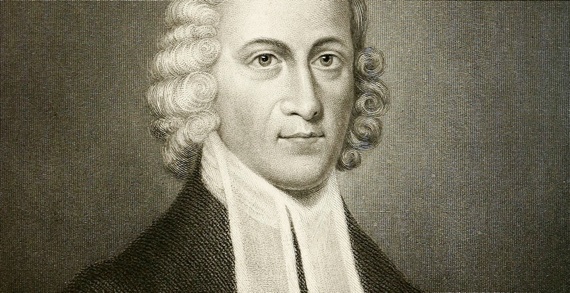
Jonathan_Edwards_engravingThe Nature and End of Excommunication is a timely and practical sermon.  For many churches in our generation simply refuse to exercise church discipline on the unrepentant.  This act of passivity is not only cause for grave concern; it is a violation of Scripture.

Edwards utilizes 1 Cor. 5:11 as his text:

But now I am writing to you not to associate with anyone who bears the name of brother if he is guilty of sexual immorality or greed, or is an idolater, reviler, drunkard, or swindler—not even to eat with such a one.” (1 Cor. 5:11, ESV)

DoctrineThose members of the visible Christian church who are visibly wicked, ought not be tolerate in the church, but should be excommunicated.

Edwards explains and articulates three main headings which support the doctrine.

1. The Nature of Excommunication

Edwards wastes no time explaining the essence of excommunication: “It is a punishment executed in the name and according to the will of Christ, whereby a person who hath heretofore enjoyed the privileges of a member of the visible church of Christ, is cast out of the church and delivered unto Satan” (c.f. 2 Cor. 2:6).

Ultimately, church discipline is meant for the good of the person in question and seeks their repentance and restoration to the body of Christ.  Edwards, adds, “Excommunication itself is to be performed as an act of benevolence.  We should seek their good by it; and it is to be used as a means of their eternal salvation.”

2. The Proper Subjects of Excommunication

Those who walk through the process of excommunication are the “visibly wicked.”  Two things mark such a person:

  • By gross sin 
  • By remaining impenitent in their sin

3. The End of Excommunication

Three specific ends are delineated by Edwards:

  • That the church may be kept pure, and the ordinances of God not be defiled.
  • That others may be deterred from wickedness.
  • That the persons themselves may be reclaimed, and that their souls may be saved.

Application

5 points of application are set forth by the preacher from Northampton:

  1. That you tolerate visible wickedness in your members, you will greatly dishonor God, and our Lord Jesus Christ, the religion which you profess, the church in general, and yourselves in particular.
  2. Your own good loudly calls you to the same thing.  From what hath been already said, you see how liable you, as individuals, will be to catch the contagion, which is easily communicated by reason of the natural depravity, in a degree at least, remaining in the best of men.
  3. The good of those who are without should be another motive.
  4. Benevolence towards your offending brethren themselves, calls upon you to maintain discipline in all its parts.
  5. But the absolute authority of Christ ought to be sufficient in this case, if there were no other motive.

These powerful reminders should beckon every church to seriously consider the high calling of operating in a God-glorifying way.  Edwards wonders out loud, “Now, how can you be the true disciples of Christ, if you live in the neglect of these plain positive commands?”  He concludes, “If you strictly follow the rules of discipline instituted by Christ, you have reason to hope for his blessing; for he is wont to bless his own institutions, and to smile upon the means of grace which he hath appointed.”

In this short sermon, Edwards demonstrated the necessity of carrying out church discipline on unrepentant church members.  How very far are so many churches from this biblical model?  How long will it take to come in alignment with the teaching of Scripture?

The Leadership Challenge – James Kouzes and Barry Posner (2007 Revised)

The Leadership Challenge by James Kouzes and Barry Posner assists people in furthering their abilities to lead others in order to get extraordinary things done.  Every person has the capacity to develop the necessary skills and character qualities to reach a level of measurable leadership effectiveness.  Leadership is defined at the outset as “the art of mobilizing others to want to struggle for shared aspirations.”

The central thesis of the book is that leaders are at their best when they participate at a heart level in five key areas.  Each chapter deals with these areas on a philosophical level and proceed to give practical suggestions on how to implement these principles.  Further, embedded in the five fundamental practices of effective leadership are behaviors that serve as the basis for learning to lead.  The authors call these the Ten Commitments.  These five fundamental areas of effective leaders as well as the Ten Commitments are spelled out below.

First, leaders are at their best when they challenge the process.  Kouzes and Posner suggest that effective leaders constantly challenge the status quo.  They are never satisfied and consistently monitor progress; they push for excellence.  Leaders are change agents who do not change merely for the sake of change but for the purpose of propelling the organization into the future.  “So leaders must challenge the process precisely because any system will unconsciously conspire to maintain the status quo and prevent change” write Kouzes and Posner.

Second, leaders are at their best when they inspire a shared vision.  Vision is defined as “an ideal and unique image of the future.”  The two Commitments that help leaders accomplish the above are envisioning an uplifting and ennobling future and enlisting others in a common vision by appealing to their values, interests, hopes, and dreams.

The third essential quality of leadership is enabling others to act.  The central idea is to promote cooperative goals, seek integrative solutions and build trusting relationships.  It follows then, that the two Commitments that enhance this quality is fostering collaboration by promoting cooperative goals and building trust. as well as strengthening people by empowering them.

The fourth plank in the book is modeling the way.  DWYSYWD is an essential step in this process: “Do What You Say You Will Do.”  Three ideas saturate this section.  They include, 1) Clarify personal values and beliefs and those of others, 2) Unify constituents around shared values and 3) Pay attention constantly to how self and others are living the values.  The two Commitments that drive this important aspect of the leadership challenge include setting the example by behaving in ways that are consistent with shared values and achieving small wins that promote consistent progress which builds commitment.

Fifth, effective leaders encourage the heart of constituents.  These leaders make a practice of building self-confidence through high expectations, connect performance and rewards and carry a positive attitude throughout the day.  The last two Commitments that enhance this process include recognizing individual contributions and regularly celebrating team accomplishments.

The final chapter crystallizes the content of the book by reviewing the central propositions and by proposing practical application.  While the first twelve chapters make for excellent reading, chapter thirteen is worth the price of the book.  Kouzes and Posner present a matrix that serves to help leaders grow in their abilities.  The matrix suggests that leaders grow in three significant ways:  First, they grow through a process of trial and error.  They experience hardships, job experience and job assignments that help them develop as leaders.   Here they learn new skill sets in the school of hard knocks.  Second, they grow educationally.  Effective leaders engage in formal training and education to enhance their leadership abilities.  It is recommended that leaders spend a minimum of fifty hours annually on personal and professional development.  Third, they grow by observation.  They develop key relationships and learn from personal mentors.  They also learn by observing bad examples, i.e. other people in the organization that exhibit poor behavior, a lack of integrity, etc.

The Leadership Challenge is a tremendous book.  Every pastor pursuing kingdom purposes should read this book.  While the material is written from a secular perspective, many of the principles are transferable to the local church context.  The book is highly readable, practical and encouraging.  The broad research base that is utilized in the book add to its credibility.

I plan on visiting The Leadership Challenge again and again.  I anticipate utilizing the principles in ministry and sharing them with other leaders and pastors.  My ministry will only be stronger by studying this book!

When Pain is Real and God Seems Silent – Ligon Duncan (2020)

Ligonier Duncan, When Pain is Real and God Seems Silent (Wheaton: Crossway Books, 2020), 55 pp.

For years, Ligon Duncan has been delivering faithful messages that glorify the Lord. Such is the case in his latest book, When Pain is Real and God Seems Silent. Crossway Books has skillfully condensed two recent sermons by Dr. Duncan that were delivered at Capital Hill Baptist Church in Washington D.C.

The texts for the two sermons are taken from Psalm 88 and Psalm 89. The theme for each is suffering. But more than suffering, Dr. Duncan draws our attention to the Lord Jesus Christ. Our gaze is diverted from suffering to the Savior.

These two sermons are classic examples of God-centered, Christo-centric preaching that elevate the Bible and the God of the Bible. I urge readers to sit down for an hour and absorb the timeless wisdom found in these gems. You will be refreshed and encouraged and your gaze will be riveted upon your Savior.

I received this book free from the publisher. I was not required to write a positive review.

John Gregorious – Still Voice

greg

He was the best guitar teacher I ever had. Those were the days when I wanted to learn rock scales and riffs. “Teach me the tricks and show me how to rock,” I would say. He was always gracious and taught me exactly what I wanted to learn. That was nearly thirty years ago. If I could press the reset button, I would ask my teacher to school me in the ways of ambient guitar.

The album is called Still Voice. His name is John Gregorious. The record is seasoned and mature. The disc is filled with beautiful harmonies, layered with stunning background vocals that send chills up the unsuspecting spine. The album contains elements that are uniquely haunting; others elements inspire with rich texture and joyful notes.

Gregorious is a tremendous talent that needs to be heard and celebrated. Fans of Phil Keaggy will be impressed with the beautiful phrasing and will no doubt be begging for more. Still Voice is an album that is worthy of an army of listeners. 46 minutes of soul-storing music will capture the attention of music lovers everywhere. Purchase the album today!

Logic: A God-Centered Approach to the Foundation of Western Thought – Vern Poythress (2013)

1433532298_lLogic is one of the last things one would expect to hear about in a church. I have found that some Christians even have an aversion to logic – a statement which interestingly enough is not very logical! We should be thankful to men like Very Poythress who share their gifts with the church as well as the academy. One such gift is his latest book, Logic: A God-Centered Approach to the Foundation of Western Thought.

The first thing readers will notice about this work is volume. It weighs in at over 700 pages which includes a large appendix that supplement the fine work that Poythress presents.

The author organizes his book into three parts, namely – Elementary Logic, Aspects of Propositional Logic, and Enriching Logic. Readers familiar with the discipline of logic will be very familiar with the terminology that is included in the table of contents. At first glance, the book seems to have much in common with a standard textbook on logic. But the real beauty of the book is found in the relationship of logic to God. Poythress rightly shows the logic comes directly from the hand of God. Indeed, he is “the source for logic.” The other demonstrates the rationality of logic and the personal nature of logic: “Logic in this sense is an aspect of the mind of God. All God’s attributes will therefore be manifested in the real laws of logic, in distinction from our human approximations to them.”

Poythress captures the essence of preuppositional apologetics and appears to pick up where Van Til left off: “We can praise God for what he has given us in our logic and our ability to reason.” Yet, sinners suppress the truth of God’s existence. “Everywhere we are confronted with the reality of God – and everywhere we flee from this reality.”

Logic helps us discern between truth and error. Logic on its own can not tell us what is true. But it will serve as a powerful aid in the discerning process. This work by Vern Poythress is a powerful anti-venom in a toxic world that is on a death-march away from logic. Sometimes people just don’t make any sense!

Did God Kill Jesus? – Tony Jones (2015)

It takes 234 pages for Tony Jones to answer the central question in hisjones new book, Did God Kill Jesus?  The author is a self-described “theological provocateur,” so the question posed in his book should not surprise anyone.  The answer that emerges on page 234 is crystal clear: “No, God did not kill Jesus,” says Dr. Jones.  Readers will find that the path to this answer is paved with doubt and skepticism.  Frankly, it is a path fraught with theological compromise.

Tony Jones has a knack for asking questions.  He has an uncanny ability of questioning the theological status quo and forcing readers to decide, even re-evaluate their cherished views.  Unfortunately, some of the answers that Jones provides do not match the biblical record or pass the test of orthodoxy.

The author sets out to examine the various views of the atonement which have been offered up throughout church history.  The questions he fires at these theories are fair enough:

  • What does the model say about God?
  • What does it say about Jesus?
  • What does the model say about the relationship between God and Jesus?
  • How does it make sense of violence?
  • What does it mean for us spiritually?
  • Where’s the love?

Ultimately, none of the theories fully satisfy the author.  But the one he finds the most repugnant is penal substitutionary atonement.  Jones argues that this view, which he labels the payment model is currently in vogue “largely because it appeals to our sense of justice and our understanding of law and penalties.”  And he is not particularly bashful about how he feels about penal substitutionary atonement.  In his previous book, A Better Atonement: Beyond the Depraved Doctrine of Original Sin, Jones writes, “I’m on no quest to reject the penal substitutionary theory of the atonement (PSA).  (I merely intend to dethrone it).”  However, what he fails to see is this: when penal substitutionary atonement is dethroned, the gospel of Jesus Christ is thrown into the ash heap and the hope of every person perishes.

In his explanation of penal substitutionary atonement, the author assures readers that “God is holy, and we are less-than-holy.”  This appears to be a strange starting point since all who hold to penal substitutionary atonement embrace the biblical idea of total depravity – which is quite a leap from “less-than-holy.”  However, Jones’ starting point makes perfect sense (just not biblical sense) when one discovers that he has also discarded the doctrine of original sin:

“What I’ve come to realize is that the idea of original sin is not, in fact, God Eternal Truth.  It is, instead, like so many other items of faith, historically conditioned.”

To be fair Jones’ acknowledges the existence of sin.  However, he rejects the “notion that human beings are depraved from birth.”

Jones caricatures the doctrine of penal substitutionary atonement by placing God the Father in an untenable position by “sending his perfect Son to Earth, then letting him – or making him – die as a substitute for the billions of human beings past and future who are incapable of paying off the debt incurred by their sin.  That’s the Payment model” according to Tony Jones.

The biggest disappointment in this book is the repudiation of penal substitutionary atonement, the doctrine which contains the very core of the gospel message.  As noted above, the path which leads to the ultimate question in the book is riddled with “rocks” and “weeds” and “branches” that careful readers should navigate in order to understand the position the author takes. Two of these stumbling blocks are noted below.

1. Dishonoring God

A.W. Tozer was certainly on target when he wrote, “What we think about God is the most important thing about us.”  Yet what we find here is a view that has much in common with process theology.  The author writes, “… We can surmise that in Jesus, God was learning.”  He continues, “But on the cross, something else happened altogether, possibly something that even God did not expect.”  The implication here appears to be a compromise of God’s comprehensive omniscience, a troubling turn of events to be sure.

Additionally, the author promotes what he refers to as the “weakness of God.”  He adds,

“Here is the guiding idea: God has forsaken power in order to give creation freedom.  In other words, God’s primary posture in the world is that of weakness, not strength.  This is a tough pill for many Christians to swallow – we’ve been taught to claim God’s power in our lives, to pray for power, and to trust God’s power and perfect plan for our lives …”

A “tough pill” to swallow?  You bet!  Discerning readers would do well to keep that “pill” out of their mouths, especially when the testimony of Scripture points to a God who is all-together sovereign and omnipotent over everything and everyone in the cosmos.  Swallowing such a “pill” will leave readers spiritually sick.

2. Destroying the Heart of the Atonement

Jones makes it clear early in the book that he along with other liberals have “grown increasingly uncomfortable with the regnant interpretation of Jesus’ death as primarily the propitiation of a wrathful God.”

Yet, when one reduces the cross to a mere display of love and refuses to acknowledge that Jesus bore the wrath of God, the gospel is utterly stripped of its saving power.  Such a move is to destroy the very heart of the atonement.

Summary

In the final analysis, the answer to the question of this book is not a simple yes or no answer.  The Scripture makes it plain that both God and man killed Jesus Christ.

“… let it be known to all of you and to all the people of Israel that by the name of Jesus Christ of Nazareth, whom you crucified, whom God raised from the dead—by him this man is standing before you well.” (Acts 4:10, ESV)

“… for truly in this city there were gathered together against your holy servant Jesus, whom you anointed, both Herod and Pontius Pilate, along with the Gentiles and the peoples of Israel, to do whatever your hand and your plan had predestined to take place.” (Acts 4:27–28, ESV)

This is a book that should upset a lot of people.  Frankly, I’m glad Jones wrote the book because it will rally conservatives around the truth of the gospel.  This book should motivate pastors and scholars to go deeper into the reality of the gospel and prompt God-centered reverence and worship as they glory in the beauty of penal substitutionary atonement.

Evangelicals need to pay careful attention to books like this that grow more and more popular.  Jones urges readers to participate in what he calls, “the smell test.”  Unfortunately, something doesn’t smell right about this book.

Admittedly, Tony Jones stands in a theological stream that is more liberal-minded.  One important distinction between Jones and many other liberals is that he actually affirms the bodily resurrection of Jesus.  For this, we can be thankful.  However, since he rejects penal substitution and as a result softens (or even eliminates) the wrath that Jesus bore on the cross, the scandal of the cross is blurred and even obscured.  Indeed, as Jeffery, Ovey, and Sach have rightly written, “If we blunt the sharp edges of the cross, we dull the glittering diamond of God’s love.”

Whenever wrath is removed from the cross, something crucial is missing, which is to say, the gospel is at stake.  For this reason, the view promoted here does not pass the “smell test.”

Readers are encouraged to explore the God-honoring doctrine of penal substitutionary atonement in three powerful and provocative books which include: The Apostolic Preaching of the Cross – Leon Morris, Pierced For Our Transgressions – Steve Jeffery, Michael Ovey, Andrew Sach, and It is Well: Expositions on Substitutionary Atonement – Mark Dever and Michael Lawrence.

The Lordship of Christ: Serving Our Savior All of the Time, In All of Life, With All of Our Heart – Vern Poythress (2016)

Vern Poythress. The Lordship of Christ: Serving Our Savior All of the Time, In All of Life, With All of Our Heart (Wheaton: Crosswaypoy
Books, 2016), 224 pp. 

The Dutch statesman, Abraham Kuyper famously said, “There is not a square inch in the whole domain of our human existence over which Christ, who is sovereign over all, does not cry: ‘Mine.’” Such is the theme of the recent book by Vern Poythress, The Lordship of Christ: Serving Our Savior All of the Time, In All of Life, with All of Our Heart.

Poythress attempts to show readers that the Lordship of Christ extends to every area of life, including politics, science, art, the future, education, and work. Nothing is excluded.

The author sets the stage by making the crucial assertion that the lordship of Christ extends to believers and unbelievers alike. No one is excluded. Every atheist, agnostic, neo-pagan, gnostic, new ager, evolutionist, and every Christian is subject to the lordship of Christ. The general tone of the book is to help readers understand the implications of living in a world where Christ is Lord over all.

Poythress carefully establishes the basis for a Christian worldview which is grounded in absolute surrender to Jesus Christ: “To confess Jesus to be Lord is to confess him to be God, the same God who is the God of Israel and who created the world.” Poythress continues, “Jesus is therefore worthy of absolute allegiance. In giving allegiance to Jesus we are at the same time giving allegiance to God the Father and God the Holy Spirit because the three persons are God.”

At the end of the day, every person who stands under Christ’s lordship also recognizes that glorifying him brings the highest measure of satisfaction. Poythress observes, “We find our deepest satisfaction and the deepest fulfillment of who we are – who we were created to be – when we serve God: ‘Man’s chief end is to glorify God, and to enjoy him forever.’”

One of the most helpful aspects of this book is a basic repackaging of Cornelius Van Til’s apologetic method. Standing with Van Til, Poythress demonstrates the principle of antithesis (which was also popularized by Francis A. Schaeffer). The author demonstrates how knowledge is always derived from God and is, therefore, never autonomous: “We must not seek knowledge autonomously, in independence from or isolation from God’s words. That is a form of rebellion, which dishonors God’s way of living. When there seems to be a tension between God’s word in Scripture and what we are learning from other sources, Scripture has the priority because it is the word of God.”

Some books are meant to be nibbled at; others are meant to be devoured. The Lordship of Christ is of the latter sort. This is a serious book for anyone who is serious about pursuing Christ and glorifying him in every arena of life. College students and Seminarians should devour this wonderful book and find great freedom in living under the authority and lordship of Jesus.

I received this book free from the publisher. I was not required to write a positive review.

Coronavirus and Christ – John Piper

John Piper is a trusted biblical scholar and pastor who has shared his wisdom in writing for decades. I first encountered Dr. Piper as a young man. I remember eagerly devouring his book, Desiring God: Meditations of a Christian Hedonist when it was originally published in 1986. Since those days, John Piper has without a doubt, shaped my Christian worldview and theological framework more than any other living writer.

Standing on the Solid Rock of Christ

In his latest work, Dr. Piper provides a well-reasoned and biblical response to the current global pandemic. Coronavirus and Christ is not only saturated with Scripture; it is also a deeply personal book. Piper shares his battle with cancer and empathizes with anyone who is suffering during this season of sorrow.

The book presents the biblical vision of who God who is sovereign over everyone and everything. This God works all things according to the counsel of his will (Eph. 1:11). Piper adds, “This is not a season for sentimental views of God.” Therefore, the vision of God here is deeply helpful and satisfying.

The book concludes with a series of ways that the author sees God using the coronavirus in our world for his glory. Readers will be educated, refreshed, comforted, and challenged – in the midst of the horrible pandemic. They will, in the final analysis, be confronted with the majestic God who offers salvation through his Son, the Lord Jesus Christ for anyone who turns from their sin and trusts his completed work on the cross.

Coronavirus and Christ is a must-read book; one that will make a huge impact around the world.

The Eternity of Hell Torments – Jonathan Edwards (1739)

Jonathan_Edwards_engravingThe doctrine of hell is under attack.  The opposition to eternal punishment is more diverse than one might expect as unbelieving philosophers and some pastors in the emergent church seek to extinguish this doctrine once and for all.

In the 18th century, people opposed hell as well.  Yet it was taught with more faithfulness and fervency than most pulpits in these days.  Jonathan Edwards’ sermon, The Eternity of Hell Torments is a fitting example of this faithfulness and fervency.

The text is Matthew 25:46 – These shall go away into everlasting punishment.  Two initial observations are advanced:

  1. The duration of the punishment on which they are here said to enter: it is called everlasting punishment.
  2. The time of their entrance on this everlasting punishment.

The doctrine as also set forth:

The misery of the wicked in hell will be absolutely eternal.

With the presuppositions and doctrine in place, Edwards moves forward by advancing four key points.

1. It is not contrary to the divine perfections to inflict on wicked men a punishment that is absolutely eternal.

Edwards argues that sin deserves such a punishment, namely, “that sin is heinous enough to deserve such a punishment, and such a punishment is no more than proportionable to the evil or demerit of sin.”

It is not contrary to God’s mercy to inflict eternal punishment on sinful men. Indeed, “It would be a great defect, and not a perfection, in the sovereign and supreme Judge of the world, to be merciful in such a sense that he could not bear to have penal justice executed.”

2. The eternal death which God threatens, is not annihilation, but an abiding sensible punishment or misery.

The Scripture never hints at the God-dishonoring doctrine of annihilation – a doctrine that surfaces in Edwards day and is even more popular now.  The argument against annihilation is clearly articulated here.

3. This misery will not only continue for a very long time, but will be absolutely without end.

Edwards utilizes several exegetical, grammatical, and biblical  arguments to point readers to the reality of eternal punishment.  “Such expressions,” says the Puritan divine, “are used to set forth the duration of the punishment of the wicked, as are never used in the scriptures of the New Testament to signify any thing but a proper eternity.”

4. Various good ends will be obtained by the eternal punishment of the wicked.

Edwards presents four good ends of eternal punishment:

  • Hereby God vindicates his injured majesty.
  • God glorifies his justice.
  • God hereby indirectly glorifies his grace on the vessels of mercy.
  • The sight of hell torments will exalt the happiness of the saints forever.

He notes, “The sight of the wonderful power, the great and dreadful majesty, and awful justice and holiness of God, manifested in the eternal punishment of ungodly men, will make them prize his favor and love vastly the more; and they will be so much the more happy in the enjoyment of it.”

Application

In typical Edwardsean fashion, the author concludes by setting forth three important points of application:

  1. Be entreated to consider attentively how great and awful a thing eternity is.
  2. Do but consider how dreadful despair will be in such torment.
  3. That you may effectually escape these dreadful and eternal torments, be entreated to flee and embrace him who came into the world for the very end of saving sinners from these torments, who has paid the whole debt due to the divine law, and exhausted eternal in temporal sufferings.

And Edwards directs the attention of every reader to Christ and his gospel:

Justice therefore never can be actually satisfied in your damnation; but it is actually satisfied in Christ.  Therefore he is accepted of the Father, and therefore all who believe are accepted and justified in him.  Therefore believe in him, come to him, commit your souls to him to be saved by him.  In him you shall be safe from the eternal torments of hell.


The True Excellency of a Minister of the Gospel – Jonathan Edwards

Jonathan_Edwards_engravingIn this masterful sermon, Jonathan Edwards sets forth what sets apart
a minister of the gospel.

He establishes his doctrine at the beginning of the sermon:

‘Tis the excellency of a minister of the gospel to be both a burning and a shining light.

Six propositions guide the doctrinal assertion:

  1. I would show that Christ’s design, in the appointment of the order and office of ministers of the gospel is, that they may be lights to the souls of men.
  2. I would show what is implied in their being “burning lights.”
  3. I would show what is implied in their being “burning lights.”
  4. I would show that it is the proper excellency of ministers of the gospel to have these things united in them, to be both burning and shining lights.
  5. I would apply these things to all that Christ has called to the work of the gospel ministry, showing how much it concerns them earnestly to endeavor that they may be burning and shining lights.
  6. Show what ministers of the gospel ought to do that they may be so.

The sermon shines brightest in the first proposition as the Puritan divine explains the three-fold use of light, namely – to discover, to refresh, and to direct.

Indeed, pastors have a weighty responsibility, especially in the preaching task to show forth the light of the gospel in ways that are understandable, and in keeping with the truth of God’s Word.