Genesis in Space and Time – Francis Schaeffer (1972)

Great thinkers throughout the course of history have queried, “Where did it all come from?  Who made the cosmos?  What made the cosmos?  What or who holds it all together?  What is the meaning of life?  What is the basis of knowledge?  Where are we heading?  And where do we go when we die?  For those who reject a personal Creator – the questions posed above become totally unanswerable.  For all those who reject a personal Creator, there is a hopelessness that lies under their dogmatic certainty.

Genesis in Space and Time by Francis Schaeffer examines the flow of Biblical history.  The book of Genesis sets the parameters and helps articulate a Christian worldview that includes a personal God.  “He is there and he is not silent” as Schaeffer remarks in another book.  At the core of the book stands the belief in a personal Creator.  Affirming macroevolution or denying a personal Creator stands behind the hopelessness among the unbelieving world.  Schaeffer adds, “It is either not knowing or denying the createdness of things that is at the root of the blackness of modern man’s difficulties.  Give up creation as space-time, historic reality, and all that is left what Simone Weil called ‘uncreatedness.’  It is not that something does not exist, but that it just stands there, autonomous to itself, without solutions and without answers.”   The proliferation of the so-called new atheism is vivid proof that Schaeffer articulated almost forty years ago.

Schaeffer maintains that one must understand the book of Genesis in order to develop a workable approach to metaphysics, morality, and epistemology.  Genesis in Space and Time continues to be relevant as many evangelicals back away from a literal interpretation of Scripture and a six-day creation week.  Genesis in Space and Time is prophetic, bold and relevant.  It is a powerful antidote for postmodern skeptics.

No Final Conflict – Francis Schaeffer (1975)

“It is my conviction that the crucial area of discussion for evangelicalism in the next years will be Scripture.  At stake is whether evangelicalism will remain evangelical.”  So stated Francis Schaeffer in his 1975 landmine, No Final Conflict.  While this treasure was penned over forty years ago, it remains relevant and applicable to 21st-century culture.

It was not unusual for Schaeffer to warn Christians.  He did it often during the seventies and eighties.  His chief warning in No Final Conflict is to cling to the propositional truth of the Scriptures:  “We must say that if evangelicals are to be evangelicals, we must not compromise our view of Scripture … The issue is clear: Is the Bible truth without error wherever it speaks, including where it touches history and the cosmos, or is it only in some sense revelational where it touches religious subjects?”  Schaeffer smelled a “rat” in 1975.  He always had a good sense of smell!  The pesky “rat” that Schaeffer detected continues to scurry about in postmodern culture; in fact that “rat” has produced offspring.  The liberalism of the 70’s is flourishing in the 21st century.  Schaffer’s antidote is simple – We must embrace the truth of Scripture: “In our day that point is the question of Scripture.  Holding to a strong view of Scripture or not holding to it is the watershed of the evangelical world … We must say most lovingly but clearly: evangelicalism is not consistently evangelical unless there is a line drawn between those who take a full view of Scripture and those who do not.”

One of Schaeffer’s key points is to clear up the confusion between reason and faith.  Indeed, this was one of the major notes of his writing.  He saw a unity between faith and reason; a unity that is marginalized especially by the new atheists like Richard Dawkins and Sam Harris.  Schaeffer posits, “There may be a difference between the methodology by which we gain knowledge from what God tells us in the Bible and the methodology by which we gain it from scientific study, but this does not lead to a dichotomy as to the facts … if both studies can be adequately pursued, there will be no final conflict.”  Truth is “unified” as Nancy Pearcey observes.  There is no conflict between reason and faith.

Dr. Schaeffer went to be with his Lord in 1984.  If he were still with us, I’m convinced that he would never have an “I told you so attitude.”  Rather, he would continue to admonish believers to hold to a strong uncompromising view of Scripture.  He would challenge Christ-followers to cling to the rock of propositional truth.  And he would warn disciples of Christ to flee from anything that looks like a rat, smells, like a rat, or walks like a rat.  His warnings mattered over forty years ago.  They continue to be as relevant as ever!

MINISTER OF MERCY – Alexander Strauch (1992)

The man  who gifted the church with his work, Biblical Eldership delivers an equally impressive volume – Minister of Mercy.  The former title dealt with the office DEACONof elder; the latter deals with the office of deacon.

Part One – Dividing Up the Work: Word and Deed

The first section focuses on the necessity of dividing the work between elders and deacons.  Generally, elders minister in Word through a solid biblical teaching ministry.  Deacons on the other hand, minister in deed and offer assistance to needy and hurting people in the body of Christ.  Specifically, the job description of the deacon is surveyed.

Part Two – A Two-Office Church: Overseers and Deacons

Part two may be the most crucial part of the book.  The author clears up the misunderstanding that is typically associated with the office of overseer (elder) and the office of deacon.  A clear distinction is drawn between these two important New Testament offices.

Part Three – The Qualifications for Deacons

As such, the qualifications for the office of deacon are explained with exegetical precision.  Additionally, the deacon must be examined publically by the overseers and the congregation.  Finally, the qualifications for wives who assist their husbands is clearly articulated.

Part Four – The Importance of Deacons in the Church

The author alerts readers to the importance of this office by directing their attention to 1 Timothy 3:13, “For those who have served well as deacons obtain for themselves a high standing and great confidence in the faith that is in Christ Jesus.”  In other words, the office of deacon serves as a place of influence and high honor in the local church.  Strauch adds, “Do not underestimate the potential influence the diaconate can have on the local church … Although deacons do not teach or govern the congregation, they can be spiritual giants who exercise bold faith.”

Alexander Straunch should be commended for writing such a practical and readable book.  This man has done his homework which is set forth in graciousness and humility.  A solid work that pastors should turn to again and again as they seek to raise up new deacons in the church.

The New Elder’s Handbook – Greg R. Scharf and Arthur Kok

elder

Greg R. Scharf and Arthur Kok, The New Elder’s Handbook (Grand Rapids: Baker Books, 2018), 192 pp.

The New Elder’s Handbook by Greg Scharf and Arthur Kok provides readers with a field-tested approach to training elders in the local church. The book is arranged in three parts, each of which is summarized below.

Vision

The first part sets forth the biblical qualifications for the office of elder. Scharf and Kok refuse to cut corners here. In a clear and meticulous fashion, they spell out what Scripture demands: “Doctrinal accuracy is indispensable for elders, but it is not enough to preserve the health of the church. Truth must shape life, and the truth must be taught to others.” Elders are called upon in Scripture to be men of character, knowledge, and skill. This model is the framework or template that allows elders to see how close they match the biblical expectations. The authors argue that truth must be faithfully transferred: “The best way to keep the gospel safe is to faithfully teach it to those who are equally able to teach it to others.”

Ezra is presented as an example of a godly man who grows spiritually as he subjects himself to the Word of God and immerses himself in prayer, and is guided by the Holy Spirit. Such is the life of a biblically qualified elder.

Training

Part two focuses on seventy-five questions for new or prospective elders. Carefully reasoned and biblical responses are offered along with pertinent resources to help candidate mature in their character, knowledge, and skill. This section is an invaluable aid for churches who need practical help in the training process.

Discipleship Resources

Part three provides a template for personal discipleship. Each lesson is guided by a set of Scriptures and questions are included for maximum growth. Suggested assignments are given at the end of each lesson.

The New Elder’s Handbook is a strong resource that will likely receive strong reception by the local church. Current elders will be strengthened by this material and prospective elders will be trained in a biblical manner that will help ensure that leaders are in place for years to come.

I received this book free from the publisher. I was not required to write a positive review.

Susie: The Life and Legacy of Susannah Spurgeon – Ray Rhodes

Ray Rhodes Jr, Susie: The Life and Legacy of Susannah Spurgeon (Chicago: Moody Press, 2018), 294 pp.

Behind every great man is a great woman – or so the saying goes. The same could be said about the mighty men of God: “Behind every godly man is a godly woman.” Such is the case of the Prince of Preachers, Charles Haddon Spurgeon. In his book, Susie: The Life and Legacy of Susannah Spurgeon, Ray Rhodes Jr. introduces Spurgeon’s wife and reveals how this godly woman stood behind the famous Baptist pastor.

Very little has been written about Susannah Spurgeon. This makes Rhodes’ book somewhat of a landmark book that will educate and encourage students of Spurgeon. The book is an inside look at the Spurgeon’s marriage and ministry and helps readers understand how they navigated their way through trials, including physical suffering and persecution.

The book reveals the stalwart faith of Susannah Spurgeon and highlights her rock-solid support of her husband. It also shows how she ministered to poor pastors in London and around the world through her Book Fund and was instrumental in planting a church in the memory of her beloved husband.

This work is best summed up in Susie’s timeless words, “Look to Jesus.” “This message,” writes the author, “she offered to non-Christians and Christians alike. She would say to every Christian grieving over, fighting against, and hating their sin, or suffering through physical or emotional pain to look to Christ for help.”

Susie: The Life and Legacy of Susannah Spurgeon is a deeply moving book – one that is sure to inspire many and encourage anyone who is enduring the loss of a loved one. Susannah Spurgeon is a model of Christian maturity who lived Coram Deo, ”before the face of God.”

I received this book free from the publisher. I was not required to write a positive review.

My Personal Picks: The Best Books of 2018

2018 was a spectacular year for books. My personal reading interests are varied, which include theology, apologetics, biography, history, philosophy, politics, and spy thrillers. My selections focus on books that made a direct impact on my life, sparked additional research, and enriched my pastoral ministry.

# 10 From Death to Life: How Salvation Works – Allen S. Nelson IV

This short book addresses the question, “What is a Christian?” I was struck with the depth and ability of Nelson to crystalize the soteriological framework in a way that is faithful to Scripture and engaging. The author traces the path of salvation from darkness to light and challenges readers to embrace a Reformed understanding of Scripture.

Link to my Review

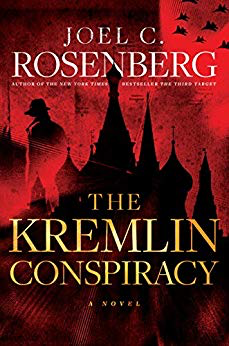
# 9 The Kremlin Conspiracy – Joel Rosenberg

Joel Rosenberg does not disappoint with his newest thriller. The Kremlin Conspiracy is a well-researched political powder keg of a book. Joel Rosenberg writes with a deep understanding of Russian culture and has a good working knowledge of the intelligentsia – both American and Russian.

Link to my Review

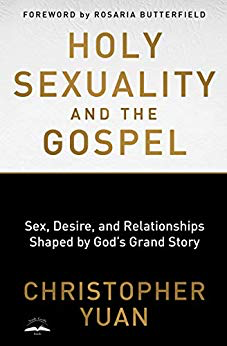
# 8 Holy Sexuality and the Gospel – Christopher Yuan

Rosaria Butterfield calls Christopher Yuan’s book, Holy Sexuality and the Gospel “the most important humanly composed book about biblical sexuality and godly living for our times.” I predict that this book will be a standard textbook in Bible Colleges and Seminaries for many years to come.

Link to my Review

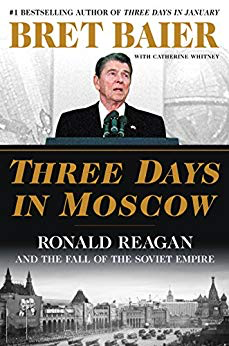
# 7 Three Days in Moscow: Ronald Reagan and the Fall of the Soviet Empire – Brett Baier

The fortieth president of the United States marked our nation and led us through some troubling times. Brett Baier’s excellent work reminds us why Ronald Reagan was one of our most inspiring and effective presidents.

Link to my Review

#6 Always in God’s Hands: Day by Day in the Company of Jonathan Edwards – Owen Strachan

The influence of Jonathan Edwards’s writing and ministry has helped shape my worldview and theological framework more than any other. Dr. Strachan’s devotional book, which features the Puritan divine shows why.

Link to my Review

#5 Christian Ethics: An Introduction to Biblical Moral Reasoning – Wayne Grudem

Ethics is a topic that Christians tend to avoid. Wayne Grudem illustrates why this should never be the case in his thought-provoking book.

Link to my Review

# 4 Reformed Preaching – Joel Beeke

Joel R. Beeke addresses the matter of preaching in his latest volume. Reformed Preaching: Proclaiming God’s Word from the Heart of the Preacher to the Heart of the People underscores the importance of the preaching task and inspires every expositor who is set on obeying the biblical mandate.

Link to my Review

# 3 Expository Exultation – John Piper

Expository Exultation, by John Piper should be read by rookie and veteran preachers alike. It should be read and re-read. Every Bible College and Seminary professor should immediately add this work to their list of required reading for preaching courses.

Link to my Review

# 2 Suffering – Paul David Tripp

C.S. wrote, “If I knew a way of escape I would crawl through the sewers to escape the pain.” Whether a person agrees with Lewis’s radical conclusion or not is a matter of personal opinion. However, the problem of suffering is a universal dilemma that every person must face. How we respond to suffering reveals the strength of our Christian resolve and character. Paul David Tripp cuts through the fog in his most recent book, Suffering: Gospel Hope When Life Doesn’t Make Sense.

Link to my Review

#1 The Preacher’s Catechism – Lewis Allen

The Preacher’s Catechism by Lewis Allen is my number 1 pick for 2018. Here’s why —

Link to my Review

Suffering: Gospel Hope When Life Doesn’t Make Sense – Paul David Tripp (2018)

tripp 2Paul David Tripp, Suffering (Wheaton: Crossway, 2018), 210 pp.

C.S. wrote, “If I knew a way of escape I would crawl through the sewers to escape the pain.” Whether a person agrees with Lewis’s radical conclusion or not is a matter of personal opinion. However, the problem of suffering is a universal dilemma that every person must face. How we respond to suffering reveals the strength of our Christian resolve and character.

Paul David Tripp’s recent book, Suffering explores a weighty subject and invites readers onto a personal journey that will encourage deep humility and personal growth. Speaking personally, Dr. Tripp’s book took my breath away. The author’s transparency and humble approach spoke deeply to my heart and lifted my spirit.

In the final analysis, this book has less to do with coping with suffering and more to do with how suffering can supernaturally transform the lives of God’s people. Listen to Tripp’s meditations and allow his words to sink in deeply:

“Suffering has the power to turn your timidity into courage and your doubt into surety. Hardship can turn envy into contentment and complaint into praise. It has the power to make you tender and approachable, to replace subtle rebellion with joyful surrender. Suffering has the power to form beautiful things in your heart that reform the way you live your life. It has incredible power to be a tool of transforming grace.”

Suffering in many ways is like pouring ice-cold water on an unsuspecting victim; a battering ram that brings even the most powerful to a place of humility and surrender. This volume is quick to remind us that all those who suffer are in desperate need of grace. Tripp adds, “This physical travail, in the hands of my Savior, is a tool used to drive me away from self-sufficiency and into a deeper dependency on God and his people.” Therefore, suffering is greatly used by God to propel his people to a place they never would have reached apart from suffering.

This fundamental message of transformation stands at the heart of Tripp’s book and has the power in itself to encourage and equip a lot of people in God’s kingdom.

I received this book free from the publisher. I was not required to write a positive review.

The Rule Of Love – Jonathan Leeman (2018)

ruleJonathan Leeman, The Rule of Love (Wheaton: Crossway Books, 2018), 174 pp.

Submission and authority is a hot topic these days. Tragically, however, most people are not flocking to read about it, let alone embrace this important reality. Jonathan Leeman explores this subject in his book, The Rule of Love. The subtitle nicely captures the essence of the book: How the Local Church Should Reflect God’s Love and Authority.

Leeman’s intent is to help readers understand what love and authority truly are. As such, the main goal of the book is to “refashion our views of God’s love and authority and their relationship together.” Also in play is the responsibility of the church to administer discipline in a biblically appropriate manner – and to maintain the crucial distinctive of love and authority.  “We need to remember something about love and rule that our ancestors in the garden forgot,” writes the author. “For God, love and rule aren’t two things but different aspects of one thing.”

So Leeman draws the attention of readers to the magnificence of God’s love. He demonstrates first, that God’s first priority is himself. That is, God’s love is first and foremost is a God-centered love. The author adds, “The Father gives his righteousness and glory to the Son and delights in that glory above all. The Son, in turn, gives his righteousness and glory to the Father and delights in that glory above all.” Evidently, Christ did not think of us “above all” as the popular song suggests. Leeman refers to the God-centered love as the “archetypal boomerang of love.” Brilliant!

This God-centered love has a series of massive implications for the church:

  1. God’s love motivates the church to evangelize and do good.
  2. God’s love motivates the church to identify church members and practice church discipline.
  3. God’s love motivates the church to teach and disciple the nations.
  4. God’s love motivates the church to worship.
  5. God’s love creates a distinct and holy culture.

Second, God’s love for sinners is described in glorious detail. At the heart of this discussion is how the Father sent the Son into the world to win his bride. Leeman includes a helpful discussion on what he calls contra-conditional love (as opposed to the unconditional love of God). My suspicion is that the author is building off the excellent work of David Powlison who has emphasized the same point in his book, God’s Love: Better Than Unconditional. ”Love” according to the author, is “affectionately affirming that which is from God in the beloved, and giving oneself to seeing God exalted in the beloved.”

The takeaways for the church are crucial:

  1. Making disciples must be uppermost in the church’s mission.
  2. Christians should be a people of compassion and justice.
  3. Christians should seek to display God’s glory in their lives together and apart.
  4. To belong to a church is to belong to a covenant.

Summary

The Rule of Love is a book that deserves to be read and studied by many. It is a book that should be read and re-read. The bottom line in a pluralistic and pragmatic culture: “To preach and teach is to exercise loving authority because it points people to God’s revelation. To disciple is to exercise loving authority because it seeks to see people conformed to the image of God. To evangelize is to participate in loving authority because it tells the nations that God is their Judge and King, and that he offers a way of pardon.”

The Rule of Love is a counter-cultural book that will challenge the unsuspecting to action and urge the unrepentant to be transformed. Walking away from this book unchanged is impossible. I recommend it highly!

I received this book free from the publisher. I was not required to write a positive review.

Reading the Bible Supernaturally – John Piper (2017)

piperJohn Piper, Reading the Bible Supernaturally Wheaton: Crossway, 2017, 430 pp. $25.51

The day I completed John Piper’s newest book, Reading the Bible Supernaturally, I was alerted to a shocking and sobering statistic, namely, only forty-five percent of those who regularly attend church read the Bible more than once a week. Such a statistic should prompt Christians to radically shift their priorities and make Bible reading a normal part of their lives. If less than half of Christian people are reading the Bible on a regular basis, we are not only short-circuiting our joy; we are failing to showcase the glory of God and find satisfaction in his all-sufficient grace.

Part One: The Ultimate Goal of Reading the Bible

Reading the Bible Supernaturally, by John Piper is directed at people who regularly feast on the Word of God. My assumption is that if people neglect Bible reading, they will have no interest in reading a book about the Bible. Piper offers a modest proposal in Reading the Bible Supernaturally:

Our ultimate goal in reading the Bible is that God’s infinite worth and beauty would be exalted in the everlasting, white-hot worship of the blood-bought bride of Christ from every people, language, tribe, and nation.

Six implications flow forth from this proposal:

  1. that the infinite worth and beauty of God are the ultimate value and excellence of the universe;
  2. that the supremely authentic and intense worship of God’s worth and beauty is the ultimate aim of all his work and word;
  3. that we should always read his word in order to see this supreme worth and beauty;
  4. that we should aim in all our seeing to savor his excellence above all things;
  5. that we should aim to be transformed by this seeing and savoring into the likeness of his beauty,
  6. so that more and more people would be drawn into the worshipping family of God until the bride of Christ – across all centuries and cultures – is complete in number and beauty.

The proposal and the six implications make up the first part of the book and help set the stage for the remaining sections.

Part Two: The Supernatural Act of Reading the Bible

In Part Two, the author argues that reading the Bible in a way that glorifies God is a supernatural act. God expects that his Word is read supernaturally a feat that Piper expounds with skill and persuasiveness.

Part Three: The Natural Act of Reading the Bible Supernaturally

Part three may surprise some readers as Piper makes a case for joining the natural efforts of Bible reading with supernatural assistance from God. The aim of the author in this section is to “encourage a deep dependence on God and the fullest use of natural powers in the supernatural act of reading the Bible.” In passage after passage, Piper demonstrates how this view matches the biblical record.

Summary

John Piper succeeds in defending his proposal. In the process, he encourages Christians to read “actively” with “aggressive attentiveness.” His plea is for readers to be rooted in a “deep understanding of the glorious calling to pursue the natural act of reading the Bible supernaturally.” Clearly, we are in the midst of a crisis if less than half of Christians are reading their Bibles on a regular basis. Something must change in the days ahead. The best place to begin is by reading the Bible supernaturally.

I received this book free from the publisher. I was not required to write a positive review.

Death By Living – N.D. Wilson (2013)

_225_350_Book.903.cover

Grasshoppers, swings, dirt, traffic jams, puppy dogs, and blue skies. N.D. Wilson appears to be captivated by everyday objects and everyday situations. He appears to be captivated by life. Living life is what his new book is meant to convey – really living life. But living also means dying.  So the author wordsmiths his way into the heart of readers by painting portraits of life and death – most of which arise from his own life and the lives of his family and extended family.

Death by Living is a plea for people to live life as God intends. In other words, to quote Red from Shawshank Redemption, “Get busy livin’ or get busy dying.” Wilson challenges readers to get busy living which of course will culminate with death: “How much of the vineyard can we burn first? How fast can we run? How deeply can we laugh?  Can we ever give more than we receive? How much gratitude can we show? How many of the least of these can we touch along the way? How many seeds will we get into the ground before we ourselves are planted?”

A theme that runs through Wilson’s work is that life is a story. Life is a story that each of us participates in. Indeed, we write our stories every day.  But the author maintains, “there is a difference between asserting that life is a story and actually living life like a story. And there is another difference between living life-like a story and living life like a good story.”  Living life like a story, therefore, is part and parcel of the Christian life.

The author helps readers see what real living looks like: “Grabbing will always fail. Giving will always succeed … Our children, our friends, and our neighbors will all be better off if we work to accumulate for their sakes … Don’t leave food uneaten, strength unspent, wine undrunk.”

Wilson urges readers to live with all their might. And while he never mentions Jonathan Edwards, I hear a strong Edwardsian influence throughout the book. Edwards himself penned 70 resolutions that reflect many of the propositions in Death by Living. One of those resolutions is to “live with all my might, while I do live” (Resolution 6). Nate Wilson argues in the same vein, which of course, is undergirded by America’s greatest intellectual: “Laugh from your gut.  Burden your moments with thankfulness. Be as empty as you can be when that clock winds down. Spend your life.  And if time is a river, may you leave a wake.”

Death by Living will elicit laughter – lots of laughter.  I found myself reading portions of Wilson’s work to my wife and she would laugh with me.  In fact, I haven’t laughed so hard in a while!  Some won’t find Wilson’s humor funny – which makes me laugh even harder!

Death by Living may prompt tears. There is a realism here that is hard to come by these days. This author speaks in candid terms.  Taking prisoners simply isn’t an option.  All the cards are on the table.  Readers are left to determine a whether the “hand they’ve been dealt” will result in joyful, Christ-saturated living or death by a thousand qualifications.  Far too many have simply thrown in the towel.  Wilson argues from an entirely different perspective as he encourages readers that “life is meant to be spent.”

One reviewer compares Wilson to John Eldredge – what is likely meant to be a compliment. Sure, whatever.  I prefer as I have done elsewhere [See my review: Notes From the Tilt-a-Whirl] to compare Wilson to Dennis Miller, G.K. Chesterton, and C.S. Lewis – no doubt a true compliment!  Death by Living is about the gospel but it never comes across in “preachy” tones.  It’s a celebration of a life lived and ended well.  It’s about a life that is lived passionately and faithfully.  Death by Living is about living with gusto; about living with passion; about living to honor Christ.  But real living also requires dying.  We are called to finish strong and die well – all to the glory of God!

I received this book free from the publisher through the BookSneeze®.com  book review bloggers program. I was not required to write a positive review.