 I am a disturbed man. I am disturbed because people compromise the truth. I am disturbed because people marginalize the truth and swerve away from biblical reality. I am disturbed because a great communicator with a bright mind and a love for people continues down a rocky path. On Tuesday, March 12, Rob Bell unveiled his newest book, What We Talk About When We Talk About God. I am disturbed because one group of people uncritically accepts anything that comes off the end of Bell’s pen. On the other hand, I am disturbed by Christians who refuse to debate civilly with the likes of Bell. Instead, they cast stones and call names. They protest outside at his speaking events and drop nasty one liners on Facebook. Surely, there must be a better way!
In Bell’s previous offering, Love Wins, several fundamental doctrines were undermined, most notably the doctrine of hell. Bell argued then, “If we want hell, if we want heaven, they are ours. That’s how love works. It can’t be forced, manipulated, or coerced. It always leaves room for the other to decide. God says yes, we can have what we want, because love wins.” The author continues, “Restoration brings God glory; eternal torment doesn’t. Reconciliation brings God glory; endless anguish doesn’t. Renewal and return cause God’s greatness to shine through the universe; never-ending punishment doesn’t.”
The author continues the dialogue (according to emergent standards) in What We Talk About When We Talk About God. The writing is witty and inquisitive. Bell has mastered the art of asking questions and has adjusted his eyes and tuned his ears in order to understand postmodern culture.
One of Bell’s central claims in the book is this: “We have a problem with God.” He argues that many people are rethinking the nature of God. Personally, I think that Bell is on to something here. He is keenly aware of a shift that appears to be taking place in the minds of some people that concerns the nature of God. Consider some of the ways that the nature of God has been recast in recent years, especially with the rise of open theism, inclusivism, and universalism. Bell is not only aware of this “mind-shift” that has to do with the nature of God; he embraces it himself. He compares God to the classic Oldsmobile. This old car served many people in its day but has since been proven irrelevant. Bell ponders what he calls the “tribal God” – “… the one who’s always right (which means everybody else is wrong) – is increasingly perceived to be small, narrow, irrelevant, mean, and sometimes just not that intelligent.” Bell quips, “Is God going to be left behind? Like Oldsmobiles?”
What We Talk About When We Talk About God essentially argues that the old view of God (the Oldsmobile view) is outdated and needs to be updated. The argument revolves around three words: “With, For, and Ahead.” Essentially, Bell argues that God is with us, for us, and ahead of us – all of us.
With: God is with us. He is the “energy, the glue, the force, the life, the power, and the source of all we know to be the depth, fullness, and vitality of life from the highest of highs to the lowest of lows and everything in between.”
For: God is for us. “I believe God is for every single one of us, regardless of our beliefs or perspectives or actions or failures or mistakes or sins or opinions about whether God exists or not.”
Ahead: God is ahead of us. “It’s as if human history were progressing along a trajectory, an arc, a continuum; and sacred history is the capturing and recording of those moments when people became aware that they were being called and drawn and pulled forward by the divine force and power and energy that gives life to everything.”
These affirmations are all very interesting and will likely receive much positive feedback. But do they stand up to the scrutiny of Scripture? I offer four specific critiques that go to the core of the book.
1. Being Certain About Certitude
Bell stands shoulder to shoulder with postmodern thinkers who mock the possibility of certitude. Anyone who has studied the Enlightenment (Christian and non-Christian alike) will admit a posture of arrogance during these days. But certitude does not necessarily entail an arrogant attitude. Indeed, even Bell is pleading for a particular kind of knowledge that is wedded with humility. Orthodoxy should include bold propositions and large doses of humility.
What is troubling about Bell’s discomfort with certitude is that certitude appears throughout the book. His certitude about the world, the laws of physics, and the nature of God conflicts with the argument against certitude!
2. A Failure to Distinguish Between Law and Gospel
I am increasingly aware of and concerned with Christian thinkers who fail to distinguish between law and gospel. What is concerning about this particular work is that neither emerge clearly. When the author argues that “God is for every single one of us” law is essentially extinguished. Additionally, the gospel appears to be inclusive; it is a gospel that appears to cut across all kinds of theological traditions, including traditions that fall outside the pale of orthodoxy.
3. A Failure to Distinguish Between the Creator and the Creature
The notion that God is “with us,” “for us,” and “ahead of us leads readers away from the importance of the Creator-creature distinction. The apostle Paul made this distinction plain in his message to the philosophers in Athens: “The God who made the world and everything in it, being the Lord of heaven and earth, does not live in temples made by man, nor is he served by human hands, as though he needed anything, since he himself gives to all mankind life and breath and everything” (Acts 17:24-25, ESV).
Acts 17:22-31 reveals a Creator God who is the cosmos shaper, the kingdom shaker who lives above creation. He is the all-sufficient Ruler, Life Giver, and Destiny Maker. And he is the righteous Judge who “commands all people everywhere to repent, because he has fixed a day on which he will judge the world in righteousness by a man whom he has appointed …” (Acts 17:30-31, ESV).
And Scripture speaks of the creature who was created by God (Gen. 2:7). The creatures (Adam and Eve) were originally free from sin but fell and as a result became sinners by nature and by choice (Gen. 3:1-7). As such, these sinful creatures have no inherent righteousness, no desire for God (Rom. 3:10-11). Subsequently, all creatures are born with a hatred in their hearts for God (Rom. 8:7-8). They are dead in sin (Eph. 2:1-3), and they are enslaved in sin; totally unable to come to Christ apart from God’s empowerment (John 6:44). These creatures are dependent upon God for everything. These creatures, while given the ability to make free choices, are determined (Acts 17:26; Prov. 19:21; 21:1). And these creatures are accountable to a righteous and sovereign Judge (Rom. 2:5-11).
4. A Failure to Reveal the Whole Truth About God
The notion that God is “with us,” “for us,” and “ahead of us (every single one of us) may sound good initially but falls short of the biblical model. It is true that God is with his people. We see this especially in the incarnation of Jesus, the One who is named Immanuel – or God with us (Matt. 1:23). Yet God is not “with” the man who has rejected the revelation of God in Christ. “… Whoever does not obey the Son shall not see life, but the wrath of God remains on him” (John 3:36).
It is true that God is “for us” – that is to say, he is for his people. “For I am sure that neither death nor life, nor angels nor rulers, nor things present nor things to come, nor powers, nor height nor depth, nor anything else in all creation, will be able to separate us from the love of God in Christ Jesus our Lord” (Romans 8:38–39, ESV). Yet God is not “for” the man who has rejected the promises and purposes of God. He resists the proud (Jas. 4:6; 1 Pet. 5:5).
And it is true that God is “ahead of us” – he works on behalf of his people (Isa. 64:4). Indeed, he works all things for good – but not for all. The promise in Romans 8:28 is this: “And we know that for those who love God all things work together for good, for those who are called according to his purpose” (Romans 8:28, ESV). And Scripture is clear on this point: God does not give sovereign grace to all people. “For many are called, but few are chosen”” (Matthew 22:14, ESV). The one who resists God’s authority; the one who refuses to take refuge in God will endure the wrath of almighty God (Ps. 2:12; Deut. 32:35; Rom. 1:18-24).
The model presented in What We Talk About When We Talk About God appears to have something in common with panentheism which says that the world is “in” God. So in the final analysis, the book appears to make much of God’s immanence and make light of his transcendence.
A.W. Tozer rightly said, “What comes into our minds when we think about God is the most important thing about us.” Tozer continues, “Among the sins to which the human heart is prone, hardly any other is more hateful to God than idolatry, for idolatry is at bottom a libel on His character. The idolatrous heart assumes that God is other than He is – in itself a monstrous sin – and substitutes for the true God one made after its own likeness.” Therefore, we must beware of our propensity to fashion a god that suits our particular needs. We must always subject our vision of God to the Scriptures and allow God’s Word to have the final say.
My plea to fellow evangelicals who disagree with Bell is to engage with biblically minded sensibility. Name calling and ad hominem attacks must stop. May our debates with those whom we disagree be filled with kindness, humility, meekness, and patience (Col. 3:12). And when we talk about God, may our talk reflect the biblical vision of God that emerges in Scripture. May we bow before his transcendent majesty. May his holiness stop us dead in our tracks. May we find comfort in his immanence – for he finds great delight in working for his people. May we marvel at and worship this great God who tends “his flock like a shepherd and gathers the lambs in his arms” (Isa. 40:11).
Soli Deo Gloria!
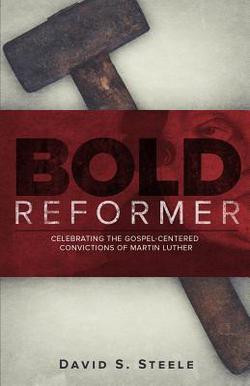
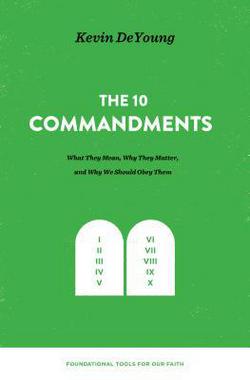 Kevin DeYoung, The Ten Commandments (Wheaton: Crossway, 2018), 190 pp.
 R.C. Sproul and Stephen J. Nichols, The Legacy of Luther. Sanford: Reformation Trust Publishing, 2016, 308 pp. $15.66
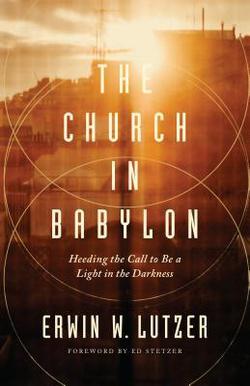 Erwin W. Lutzer, The Church in Babylon (Chicago: Moody Press, 2018), 295 pp.
 Vern Poythress, Theophany: A Biblical Theology of God’s Appearing Wheaton: Crossway, 2018, 463 pp. $26.79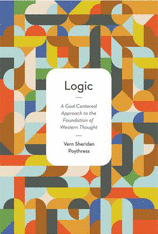
 Caroline Leaf, Think, Learn, Succeed (Grand Rapids: Baker Books, 2018), 316 pp.
 Veritas et Lux