Don’t miss this Reformation Week eBook Sale with my friends at Zondervan. Click this link for incredible savings!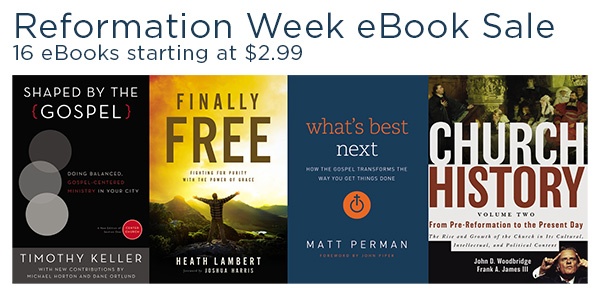
A SPECIAL SALE ON AMAZON!
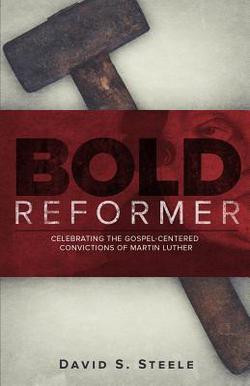
The paperback version of Bold Reformer: Celebrating the Gospel-Centered Convictions of Martin Luther is now available on Amazon for $8.06 for a limited time. The Kindle version is also available for $2.99.
On October 31, 1517, Martin Luther nailed the ninety-five theses to the castle door in Wittenberg. One act of courage sparked a theological firestorm in Germany that set the world ablaze in a matter of days. Spreading like wildfire, thousands were introduced to the gospel which is received by grace alone, through faith alone, in Christ alone.
Bold Reformer: Celebrating the Gospel-Centered Convictions of Martin Luther takes readers on a journey through a remarkable period of church history. It will challenge contemporary readers to learn the lessons of courage, and perseverance. It will inspire a new generation of people to follow Jesus, obey Jesus, and worship the Savior with all their heart, soul, mind, and strength. It invites a new generation of Christ-followers to recover the gospel in their generation and make their stand as a bold reformer.
Bold Reformer is born out of personal pastoral turmoil and inspired by the courage of Martin Luther. My hope is that many pastors, Christian leaders, and Christ-followers will be encouraged as a result of reading this book; that God will propel them into the future by his grace and for his glory.
Endorsements:
“David Steele’s Bold Reformer is a book for our times! As we celebrate the 500th anniversary of the Reformation, how appropriate to look afresh at ways the bold faith and action of Martin Luther can inspire and instruct our own faith and work. Christians today need strength of character and boldness of conviction. Steele’s presentation of Luther’s life moves readers to live bold lives that adorn the gospel of grace alone, by faith alone, in Christ alone.”
Dr. Bruce A. Ware, T. Rupert and Lucille Coleman Professor of Christian Theology, Chairman of the Department of Christian Theology, The Southern Baptist Theological Seminary
“Pastoral ministry is often mingled with both blessing and despair. Many pastors experience seasons of opposition that result in discouragement and even depression. David Steele’s new work, Bold Reformer is an exploration into the gospel-centered convictions of the stalwart reformer, Martin Luther. Luther faced many pastoral hardships during his ministry, but emerged victorious because of his unwavering faith in the gospel of Jesus Christ. I encourage you to drink from the refreshing waters of this book and use the life of Luther as an example that emboldens you to stand strong in the midst of the fiery trial.”
Dr. Steven J. Lawson, President, OnePassion Ministries, Dallas, Texas
Shaken – Tim Tebow
 Tim Tebow, Shaken. Austin: Waterbrook, 2016, 209 pp. $13.21
A roller coaster is a fitting term for Tim Tebow. As a Heisman Trophy winner and with two national championships under his belt, his future appeared bright. Tebow was originally drafted in the first round by the Denver Broncos in 2010. He was subsequently traded to the New York Jets and did short stints with the New England Patriots and Philadelphia Eagles.
While thousands of people flocked to see their hero on the gridiron, not everyone was as enthusiastic about Tebow’s performance. He was criticized from the start and endured the scorn of people who rejected his outspoken Christian faith.
Tebow underscores the events of his life as a professional athlete and guides readers through the emotional rollercoaster in his latest book, Shaken: Discovering Your True Identity in the Midst of Life’s Storms. The book is a window into the heart of Tim Tebow as he shares about his bumps and bruises along the way.
Tim Tebow is the “Dan Quayle” of the sports world. Here is a man who works harder than most athletes and has exemplary integrity to boot. Like Dan Quayle, though, Tebow has been treated unfairly. He has been unjustly criticized by the media. And his Christian convictions have been cast aside by many.
But Tebow does not write as a martyr. He writes as a fellow-traveller. He writes to inspire young people. And he succeeds in achieving his goal. Shaken is packed with inspirational stories that provide a much-needed perspective in an entitled world. The book reminds readers that they are significant in the eyes of God; that they have a contribution to make. Tebow’s wisdom and enthusiasm are contagious and will no doubt encourage many young athletes.
I respect and admire Tim Tebow. His love for the Lord Jesus Christ and people is worth emulating. And his character is above reproach. Indeed, Tim Tebow is a worthy role model for America’s young people. However, a few critiques are in order as one who desires to fairly review a book. First, the emphasis on the “unconditional love of God” should be modified and re-articulated. Readers are encouraged to see David Powlison’s book, God’s Love: Better Than Unconditional . Powlison’s book is the best starting point and will offer a better explanation that conforms to the pattern of Scripture.
Second, while readers are urged to trust in Christ and accept his gift of salvation, there is a missing element of repentance. It is certainly true that Scripture invites/commands sinners to believe but saving faith always includes repentance. Signs of repentance are absent in this work.
Summary
Shaken is a basic biographical account of a well-known sports icon. As such, it is written with the student-athlete in mind. Christian athletes will be inspired and touched by the testimony of Tim Tebow. The author’s worldview is spelled out in clear terms here:
Trophies don’t last. Awards come and go. Impressive titles move from one person to the next. But how we live can make an eternal impact.
Tebow has been unfairly caricatured and criticized. He continues to move forward, despite the abuse that his critics hoist upon him. Indeed, he has been shaken, but he has not been moved. He continues to use his gifts to glorify God and encourage many people. His newest book is a testimony to this fact.
I received this book free from the publisher. I was not required to write a positive review.
The Legacy of Luther – R.C. Sproul and Stephen Nichols, Ed.
 R.C. Sproul and Stephen J. Nichols, The Legacy of Luther. Sanford: Reformation Trust Publishing, 2016, 308 pp. $15.66
On October 31, 1517, Martin Luther nailed the Ninety-Five Theses to the castle door in Wittenberg. One act of courage sparked a theological firestorm in Germany that set the world able in a matter of days. Spreading like wildfire, thousands were introduced to the gospel, which is received by grace alone, through faith alone, in Christ alone.
The Legacy of Luther celebrates the accomplishments of this godly man. Edited by R.C. Sproul and Stephen Nichols, the book surveys Luther’s life, thought, and ultimately his legacy. A wide range of pastors and theologians contribute to this volume; men like Steven J. Lawson, Michael Horton, Sinclair Ferguson, and Derek Thomas, to name a few.
The Legacy of Luther is a sweeping look at the German Reformer. The book contains basic information that will appeal to first-time students of Luther. But it is also filled with a wealth of information that will satisfy the most deeply entrenched Luther scholar.
The Legacy of Luther certainly honors a significant man who stands head and shoulders above most others in church history. But at the end of the day, the book does not exalt a man; the book exalts the gospel of grace and celebrates the accomplishments of our Savior. The neglected gospel truths which were recovered by the Reformers are proclaimed with passion in zeal in this important volume.
Readers may be interested in my recently published book, Bold Reformer: Celebrating the Gospel-Centered Convictions of Martin Luther.
A BIRD, A GIRL, AND A RESCUE
 J.A. Myhre, A Bird, a Girl, and a Rescue. Greensboro: New Growth Press, 2016, 131 pp. $15.99
Fiction is a creative way to convey truth and spark the imagination. This genre is especially helpful with young readers who are impressed with a good story and intrigued by interesting characters. J.A. Myhre captures the imagination of young readers in her novel, A Bird, a Girl, and a Rescue.
Myhre’s work takes young readers to the African jungle where a school-aged girl is dropped off by her father for a season of education. The lead character, Kiisa is met by new friends and is challenged by foes, not only foes in her school but a band of rebels.
The story is filled with tension as Kiisa meets a talking bird, a baboon, and a slithering snake. Lessons of reconciliation and redemption are at the core of the book, and invite readers to join this journey.
My suspicion is that young readers will be taken in by this short story and the practical lessons will serve them well.
I received this book free from the publisher. I was not required to write a positive review.
THE UNFINISHED REFORMATION
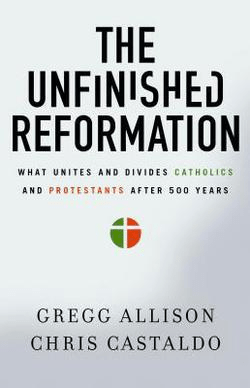
 Gregg Allison & Chris Cataldo, The Unfinished Reformation. Grand Rapids: Zondervan, 2016, 171 pp. $16.99
The book market is beginning to see a rise of titles that deal with the Protestant Reformation as we move closer to the 500th anniversary of Luther’s bold move at Wittenberg. Gregg Allison and Chris Castaldo collaborate on a creative work that poses a critical question: “What unites and divides Catholics and Protestants after 500 years?” The authors are clear about the core of this controversy: “To whom did God give authority to define Christian faith? Did it belong to the institution of the Roman Catholic Church? Or was Scripture its own interpreter?” These questions serve as a sort of litmus test which will eventually help readers discover the truth.
Before discussing the most essential differences between the two traditions, The Unfinished Reformationhelps readers understand that there is, in fact, much that is shared in common. For instance there is essential agreement on the Trinity, the nature and revelation of God, the person and work of Christ, and the Holy Spirit, among other things.
But there are several distinct differences between Roman Catholics and Protestants; differences that have caused a serious rift between the two traditions. These differences are sharp and have prompted much debate throughout church history. The fundamental matters of authority and salvation are the key drivers which have led to severe disagreements between Catholics and Evangelicals. A brief summary of these differences includes the role of Scripture and tradition, the Roman Catholic belief of purgatory, prayer for the dead, penance, Mary’s role in the Christian life, and the role of the sacraments.
The difference that carries the most weight and theological controversy is Rome’s repudiation of justification by faith alone. The authors present the view of justification which was rediscovered by the Reformers and contrast it with the view that Rome embraced during the days of the Reformation; a view that is still maintained to this day. Allison and Castaldo state:
Unlike Catholic theology, in which the decisive verdict of God’s acceptance comes at the end of life following the accumulation of sacramental grace and merits, Protestants emphasize the decisive moment when people believe in the gospel apart from works. They are justified by faith alone, and their perfect standing before God results in new life as children of God, a life that then blossoms with virtuous fruit by the internal renewal of the Holy Spirit through the Word of God.
Allison and Castaldo conclude that the Reformation is finished in some respects. The historical accomplishment of the Reformation is undeniable and have charted a specific trajectory that will never be altered.
But more importantly, the authors note that the Reformation is still not complete. Theological differences remain intact: “From our perspective, unless the Catholic Church undergoes radical reform according to Scripture, the Reformation will necessarily continue.”
The Unfinished Reformation is a much-needed book as we move closer to the 500th anniversary of the original Protest. Both Roman Catholics and Protestants will benefit from Allison and Castaldo’s work. Their research is meticulous and they present their findings with grace and humility. My hope is this work will receive a wide readership and that the labors of the Reformers will carry on and lives will be enriched and transformed by the gospel of Jesus.
I received this book free from the publisher. I was not required to write a positive review.
The Theological Backbone of William Tyndale (1494 – 1536)

Today marks the anniversary of the martyrdom of William Tyndale. This faithful man was born in 1494. He attended Oxford, Magdalen Hall and Cambridge University. A student and adherent of the Protestant Reformation, Tyndale engaged in numerous debates with Roman Catholics. One leader in the Roman Catholic church mocked Tyndale: “We are better to be without God’s laws than the Pope.” Tyndale, never one to mince words replied, “I defy the Pope and all his laws. If God spare my life ere many years, I will cause the boy who drives the plow to know more of the Scriptures than you.”
Tyndale was a confident, bold, and fearless theologian and scholar who translated the Bible into an early form of Modern English, likely with Luther’s help in Wittenberg. But Tyndale was arrested and imprisoned for 500 days in a kangaroo court, and ultimately convicted. He was sent to be strangled and burn at the stake in the prison yard on October 6, 1536 – the same year that Calvin published the first edition of The Institutes of the Christian Religion. His last words were, “Lord, open the king of England’s eyes.”
May God raise up a new generation of leaders like William Tyndale – courageous and bold; men with a theological backbone and rock solid integrity. May God raise up a new generation of men who say what they mean and mean what they say; men who are unashamed of the gospel; men who are utterly unwilling to compromise the truth; men who are willing to be burned at the stake for the sake of truth.
Semper Reformanda!
True Faith and Allegiance – Alberto R. Gonzales
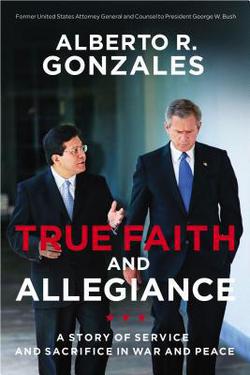
Alberto R. Gonzales, True Faith and Allegiance. Nashville: Thomas Nelson, 2016, 526 pp. $19.09
True Faith and Allegiance is the biographical tale of a man who has experienced the American dream. Rising from humble origins, this man served in a prestigious Texas law firm, and served under George W. Bush during his days as governor of Texas. He became the Secretary of State in Texas and was named as a Supreme Court Justice in that state. He was later appointed by then-President George W. Bush to serve as special legal counsel until he reached the apex of his career in an appointment to serve as Attorney General in the Bush administration.
True Faith and Allegiance recounts the life and career of Alberto R. Gonzales, the first Hispanic man to ever serve as Attorney General. Gonzales writes with a stunning amount of transparency in this book, sparing no details.
While the book is primarily about Gonzales, one of the most fascinating features is his insight into the forty-third president of the United States, George W. Bush. Gonzales speaks highly of Bush and alerts readers to his keen intellect, rock-solid integrity, loyal friendship, and his leadership abilities.
The most outstanding feature of True Faith and Allegiance is the depth of Gonzales character. It is a testament to personal integrity, courage under fire, and devotion to the Commander in Chief. Alberto Gonzales paid a steep price for being a man of integrity and for living according to a set of timeless principles. Gonzales shares in great detail about the painful assault on his character and the tragic dividends he reaped after his time in office.
Despite these painful events, Gonzales forged ahead. He never gave up and he continues to use his gifts to serve people and glorify God. The former Attorney General writes,
Everyone at some point, believes life is unfair, but you must learn to accept and overcome adversity, put your trust in God rather than human beings, and move on. I harbored resentment for a time against Democratic senators and staffers who attacked me, and against Republicans who abandoned me. Now I see that while they sought to do evil to me, God used it for good.
Gonzales takes a page out of Joseph’s playbook by maintaining a God-centered perspective. He encourages young people, “Step into the arena with your eyes open and your armor securely attached. Be bold and take risks. Never fear criticism; you will not be treated fairly; accept the fact that you will be criticized no matter what you do, so do good anyway.”
True Faith and Allegiance is a story for every American. Some may disagree with Gonzales convictions. Others may reject his politics. But none can accuse him of being unfaithful to his country. Gonzales is a model patriot worthy to be emulated. Indeed, he is a man of true faith and allegiance!
I received this book free from the publisher. I was not required to write a positive review.
Why the Reformation Still Matters
 Michael Reeves and Tim Chester, Why the Reformation Still Matters. Wheaton: Crossway Books, 2016, 223 pp. $10.72
October 31, 2017, will mark the 500 year anniversary of the Protestant Reformation. This quincentennial celebration is remarkable in many ways as Protestants around the world will remember the accomplishments of the Reformers, most notably the bold move by Martin Luther in nailing the 95 theses to the castle door at Wittenberg.
Despite the widespread celebration of many who take delight in the rediscovery of the gospel and the great doctrine of justification by faith alone, there is an ongoing debate concerning the relevance of the Reformation for our time. Michael Reeves and Tim Chester address this specific matter in their new book, Why the Reformation Still Matters.
After a brief introduction to the history and theology of the Reformation, Reeves and Chester waste no time in an initial answer to the question: “We need a stronger, not a weaker focus on Reformation theology,” according to the authors. They describe the Reformation as “a continual movement back to God’s Word.” Thus, the stage is set for the remainder of the book which will argue in no uncertain terms that the Reformation still matters.
Reeves and Chester undergird their stance by pointing readers to key doctrines that were rediscovered during the days of the Protestant Reformation. They showcase the gospel systematically as they unfold the biblical reality of sovereign grace. Indeed, we are saved by grace alone, through faith alone, in Christ alone, on the Word alone, to the glory of God alone.
Each doctrine is unveiled and contrasted with the historic Roman Catholic position which gives readers an opportunity to interact with two competing systems of thought. The authors are charitable and gracious but never compromise the truth. Reeves and Chester boldly present the core elements of Reformed theology; doctrines the magnify the Savior and humble sinners.
Why the Reformation Still Matters is an outstanding summary of this important topic. People from all stripes, from beginning to advanced will benefit from this book. There is enough information to keep seasoned theologians and students of church history on their toes. Yet the material is not too advanced for anyone just getting started in the field of church history. The balance here is rare and should be well received by readers.
Why the Reformation Still Matters succeeds and makes a positive case for the gospel-saturated truths that flowed from the Reformation and continue to impact lives in our generation. Yet, theology is more than an end in itself. “Through these truths,” write Reeves and Chester, “lives can still blossom under the joy-giving light of God’s glory.” In other words, the Reformation makes a practical difference in the lives of people. In did almost five hundred years ago and will continue to impact lives as we await the return of our sovereign king.
I received this book free from the publisher. I was not required to write a positive review.
Designed to Lead

Eric Geiger and Kevin Peck, Designed to Lead Nashville: B&H Publishing Group, 2016, 234 pp. $16.16
The systematic and purposeful development of leaders in the church is sorely lacking. This reality is reinforced in Designed to Lead by Eric Geiger and Kevin Peck. The authors argue at the outset that leaders must be developed in the church context: “The church is designed to lead, designed to disciple leaders who are, by God’s grace, commanded to disciple people in all spheres of life.” Therein lies the central theme of the book.
But make no mistake – Designed to Lead is not your typical leadership book. While the authors do interact with current leadership literature, their primary aim is to see the fulfillment of the Great Commission. The authors add, “The locus of the Church is and must be Jesus and His finished work for us. The center of the Church must be the gospel; for it is the gospel – His righteousness given to us in exchange for our sin – that created the Church, and it is the gospel that sustains the Church.” So as helpful as leadership theory may be, the real fuel of Designed to Lead is the gospel of Jesus Christ.
The book is arranged in three parts. Part one explores conviction. Part two examines culture. And part three explains constructs.
Conviction
The conviction to develop leaders must undergird all of our efforts in the church. An equipped church is a healthy church. Or as the authors write, “Equipping must be viewed as foundational, as fundamental to what it means to actually be called a church.”
Pastors must embrace the paradigm of Ephesians 4:12 and strive to equip the saints for the work of the ministry. They must embrace a mentality of every-member ministry and strive to eliminate the so-called “clergy/laity split.”
Equipping, then, is at the core of every pastor’s calling. Geiger and Peck maintain, “Without a deep-seated conviction to develop leaders, without a passion for equipping – a church will not enjoy the beautiful effect of unity and maturity. A conviction for equipping is essential.”
The authors provide a basic template to help pastors develop their conviction for developing leaders:
- Leaders are called to reflect God’s glory
- Leaders are called to replicate
- Leaders are called to cultivate
The ultimate aim of our leadership development is to “guide others into joyful submission to King Jesus.” Such an approach helps develop leaders in the church who are prepared to impact people in every sphere of life. But none of this will come to pass until we have a deeply entrenched conviction about the importance of leadership development.
Culture
Developing conviction and culture are intertwined to be sure. So the authors argue, “Healthy cultures are conducive for leadership development.” Three layers of church culture are presented, namely, acutal beliefs, articulated beliefs, and artifacts.
Actual beliefsare the stated values of a given church. But actual beliefs are those beliefs that are truly cherished by a congregation.
Articulated beliefs are found in a vision statement or document that spells out what the church treasures.
Artifacts are the “visible, tangible expressions of a church’s actual and articulated beliefs.
These combined elements help make up a church culture. The authors argue that every church culture must be transformed. So churches must be assessed, vision must be cast, and specific goals must be in place for that transformation to take place.
Constructs
“Constructs are the systems, processes, and programs utilized to help develop leaders.” Section three provides readers with the practical tools to help develop leaders in the church. The authors present a framework for transformational leadership to occur. They maintain that “people grow when godly leaders apply the truth of God to their hearts while they are in a teachable posture. Discipleship occurs when truth, posture, and leaders converge.”
Additionally, three leadership components must be in place which includes delivering knowledge, providing experiences, and coaching.
Finally, pipelines must be developed that are directly applied to local congregations. “For a ministry, a leadership pipeline is a visible picture of how leaders can be developed and what their next step in the pipeline is.”
And pathways must be paved for individual sheep in a congregation. This pathway provides a tailor-made plan that helps a leader to fully develop.
Evaluation
Designed to Lead is a well-written and thoroughly researched book. The authors have done their homework and have tapped into top leadership resources. But the real strength of the book is the commitment to biblical discipleship which is grounded in the Great Commission imperative. Designed to Lead is saturated by Scripture and driven by a passion to obey God and help fulfill his kingdom mandate.
One helpful suggestion might be to include some transferable templates for pastors to immediately employ the principles set forth in the book.
Designed to Lead contains a wealth of biblical wisdom by two seasoned leaders who have paid their dues and deserve to be heard by pastors around the country. It is sure to receive a wide readership and help many pastors carry out the vision to equip the saints for the work of the ministry.
I received this book free from the publisher. I was not required to write a positive review.
 Veritas et Lux