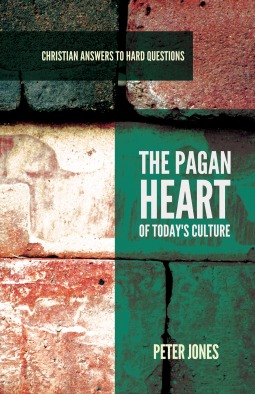
THE PAGAN HEART OF TODAY’S CULTURE – Peter Jones (2014)

jonesPeter Jones has been writing about paganism for many years now.  While many are put off by the term “pagan,” Jones is simply offering the critical components of a worldview which is growing with a vengeance.  The troubling news is that many Christ-followers are either unaware the tentacles of paganism or could care less.

The Pagan Heart of Today’s Culture offers a clear look at paganism through the lens of three isms, postmodernism, Gnosticism, and polytheism.  Jones unpacks each worldview in a clear way and alerts readers to the deadly toxins that affect countless numbers of people.

Ultimately, Jones defines paganism as “direct mysterious-mystical access to ‘the Spirit.'”  The author demonstrates how the three worldviews described above intertwine and result in the strange but deadly brew we know as paganism.  He cites Romans 1:25  where Paul the apostle boils down two distinct approaches to spirituality:

  1. The worship and service of nature-creation – “Oneism.”
  2. The worship and service of the Creator – “Twoism.”

The first approach to spirituality results in the wrath of God for failing to honor God as we ought.  The second approach to spirituality is the path commended by Scripture.

Jones warns readers, “Any system of thought that attempts to describe the world exclusively by the world is in principle Oneist.”  Whenever the creature and the Creator are blended into some kind of synthesis, the spiritual results are not only devastating – the results are damning.

The author shoots a metaphorical flare in the hopes that Christ-followers will be alert and respond appropriately to the danger of paganism.  In so doing, he argues that Christians will need to do at least two things:

  1. They must have a clear understanding of the coherence of Oneism.
  2. They must affirm the glorious superiority of Twoism and fearlessly declare the gospel of reconciliation with the personal Creator, possible only through the atoning blood of Jesus the sole mediator between Creator and creature.

As usual Peter Jones does not disappoint.  His passion to equip believers is evident through the book.  I commend The Pagan Heart of Today’s Culture to Bible-believing Christians.  My prayer is that thousands will read and digest this excellent material with thoughtfulness and humility.

I received this book free from the publisher.  I was not required to write a positive review. 
 

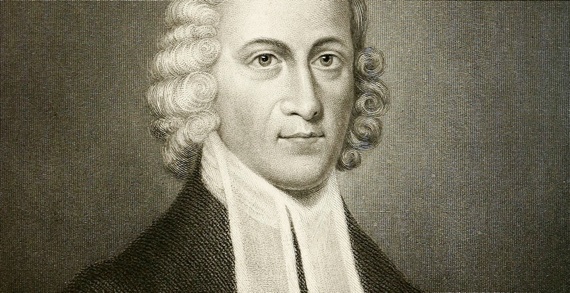
The Preciousness of Time – Jonathan Edwards (1734)

Time is a precious commodity that must be treasured.  Such is the argument in jonathan-edwardsJonathan Edward’s piece entitled, The Preciousness of Time and the Importance of Redeeming It.

The subject of time was no stranger to Edwards.  He thought about the “improvement” of time often.  Even in his famous 70 resolutions, he addressed the matter of time.

Resolution # 5

Resolved, never to lose one moment of time; but improve it the most
profitable way I possibly can.

It would serve us well, then, to consider the precious matter of time from Jonathan Edwards’ perspective.

Section 1: Why Time is Precious

Jonathan Edwards states four reasons why time is precious.

  1. Because a happy or miserable eternity depends on the good or ill improvement of it.
  2. Time is very short, which is another thing that renders it very precious.
  3. Time ought to be esteemed by us very precious, because we are uncertain of its continuance.
  4. Time is very precious, because when it is past, it cannot be recovered.

Edwards argues in respect to to time, “…When once that [time] is gone, it is gone for ever; no pains; no cost will recover it.”  So typical is this eternal perspective that flows so freely from the pen of the Northampton preacher.  Tragically, many Christ-followers are not following the counsel of this godly man as they squander their time with worldly pursuits.  He reminds us, “Eternity depends on the improvement of time; but when once the time of life is gone, when once death is come, we have no more to do with time; there is no possibility of obtaining the restoration of it, or another space in which to prepare for eternity.”

Section 2: Reflections of Time Past

In section 2, Edwards encourages believers to reflect on time which has been granted in order to prepare for eternity.  Indeed, the argument goes, “Your future eternity depends on the improvement of time.”  He challenges readers, “How have you let the precious golden sands of your glass run?”

Section 3: Who Are Chiefly Deserving of Reproof From the Subject of the Preciousness of Time

Edwards begins section three with a discussion of how people waste their time: “There is nothing more precious, and yet nothing of which men are more prodigal.”  He demonstrates the kinds of people are who reproved for their negligence in this area.

  1. Those who spend a great part of their time in idleness.
  2. They are reproved by this doctrine who spend their time in wickedness, who do not merely spend their time in doing nothing to any good purpose, but spend it to ill purposes.
  3. Those are reproved by this doctrine, who spend their time only in worldly pursuits, neglecting their souls.

Section 4: An Exhortation to Improve Time

“Time is money.”  So goes the conventional wisdom of the day.  Edwards essentially agrees as he argues, “If you have a right conception of these things, you will be more choice of your time than of the most fine gold.”  He exhorts readers with four  bold propositions:

  1. You are accountable to God for your time.
  2. Consider how much time you have lost already.
  3. Consider how time is sometimes valued by those who are come near to the end of it.
  4. Consider what a value we may conclude is set upon time by those who are past the end of it.

Section 5: Advice Respecting the Improvement of Time

Edwards concludes his piece by offering three encouragements with respect to time.

  1. Improve the present time without any delay.
  2. Be especially careful to improve those parts of time which are most precious.
  3. Improve well your time of leisure from worldly business.

The notion of “improving” time is seen throughout the writings of Jonathan Edwards.  He gave a great deal of thought to it and chose to live wisely in light of his discoveries.  Indeed, Jonathan Edwards sought to “live with all his might unto the Lord.”  By God’s grace he accomplished resolution # 5: Resolved, never to lose one moment of time; but improve it the most profitable way I possibly can.

“Therefore, spend not such opportunities unprofitably, nor in such a manner that you will not be able to give a good account thereof to God.  Waste them not away wholly in unprofitable visits, or useless diversions or amusements.”

– Jonathan Edwards


DIARY OF A MADMAN – JOSEPH STALIN

BN-CX891_bkrvst_DV_20140523142333“His face lost its color.  His breathing became distorted.  He choked to death as we watched.  The death agony was painful.  At the last-minute he opened his eyes again, a terrible look, mad, or angry, and full of the fear of death.  His left hand rose, and seemed to be pointing upwards, or threatening us all … then his spirit tore itself from his body.”

The final moments of Joseph Stalin’s life, as recorded by his daughter, Svetlana.

Paul Johnson provides a valuable service in his book, Stalin: The Kremlin Mountaineer.  The book is a short summary of Stalin’s evil reign in the Soviet Union.  The book is not meant to be comprehensive by any stretch of the imagination.  However, he does provide enough detail to motivate readers to turn to other sources.  Such sources would include Young Stalin or Stalin: The Court of the Red Tsar, both by Simon Sebag Montefiore.

Johnson’s book is a reminder of where atheism leads and how unchecked power always leads to devastating results – in Stalin’s case the loss of millions of lives.

CHRIST IS TO THE HEART LIKE A RIVER TO A TREE PLANTED BY IT – Jonathan Edwards (1751)

jonathan-edwardsIn this short sermon prepared and addressed to the Stockbridge Indians, Edwards utilizes Psalm 1:3 – “He shall be like a tree planted by rivers of water.”  The doctrine is set forth at the beginning of the sermon:

Doctrine

Christ is to the heart of a true saint like a river to the roots of a tree that is planted by it.

Edwards explains his doctrine with five short propositional statements.

  1. As the waters of a river run easily and freely, so the love of Christ.
  2. Christ is like a river in the great plenty and abundance of his love and grace.
  3. Waters of a river don’t fail; [it] flows constantly, day and night.
  4. A tree planted [by a river] is never [dry]: so Christ is never [exhausted].
  5. [Water] refreshes; so [Christ] refreshes and satisfies [the heart], and makes it rejoice.

Application

In a brief application, Edwards challenges the Indians of Stockbridge with two concluding thoughts:

  1. Examine whether you are a true saint.
  2. If you are not in Christ, though you may be like green trees, yet by and by you will wither.

In a short sermon (unusual for Edwards), he demonstrates a remarkable ability to contextualize the gospel for his audience.  The sermon is filled with imagery that his audience would have immediately grasped.  These images are employed for the sole purpose of introducing people to the Savior.  The final exhortation ends abruptly.  But Edwards obviously wants this final thought to lodge in the hearts and minds of his hearers – “All your streams will fail you.”

EVANGELISM – J. Mack Stiles (2014)

The word, “evangelism” strikes fear in the hearts of many Christ-followers.  But 1433544652_bnothing could be more backwards, for the people of God possess the greatest news in the universe.  A holy God sent his Son, the Lord Jesus to die in the place of every person who would ever believe.  Sinners may receive the hope of eternal life by banking all their hope in Christ and the benefits he purchased for them on Calvary’s cross.

J. Mack Stiles helps Christians develop confidence in the responsibility to tell the nations about Christ in his excellent little book, Evangelism.  The author rightly responds to churches who turn the evangelistic endeavor into a mere program.  Rather, he encourages the church to develop a “culture of evangelism” which is “built on people filled with the power of God’s Spirit proclaiming the gospel of God’s grace in the context of their everyday lives and relationships.”  The main theme, then, is built around an entirely different paradigm; a mindset that can and should dominate every local church.

Stiles endorses a modified definition of evangelism that I rather like: “Evangelism is teaching the gospel with the aim to persuade.”  Such a definition works well in the pulpit, classroom, local park, and coffee shop.  Francis of Assisi may have been well-intentioned when he quipped, “Preach the gospel, and if necessary use words.”  But wordless evangelism is no evangelism at all (no offense to The Wordless Book – which actually uses words, in the final analysis).  Stiles speaks emphatically, “There is no evangelism without words.”  Such a gospel should include important words that include God, man, Christ, and human response.

The culture of evangelism that Stiles favors emerges clearly in chapter two.  The author dreams of churches committed to eleven ideals:

  1. A Culture Motivated by Love for Jesus and His Gospel
  2. A Culture That Is Confident In the Gospel
  3. A Culture That Understands the Danger of Entertainment
  4. A Culture That Sees People Clearly
  5. A Culture That Pulls Together as One
  6. A Culture in Which People Teach One Another
  7. A Culture That Models Evangelism
  8. A Culture in Which People Who Are Sharing Their Faith Are Celebrated
  9. A Culture That Knows How to Affirm and Celebrate New Life
  10. A Culture Doing Ministry That Feels Risky and Is Dangerous
  11. A Culture That Understands That the Church Is the Chosen and Best Method of Evangelism

Such a culture becomes a reality when God’s people put the gospel at the center of every activity.  The gospel emerges in every song, every sermon, and every classroom.  In this gospel-centered culture, people are equipped – prepared and passionate about presenting Christ to lost people.

J. Mack Stiles has written a fantastic book that I commend to Christians – not only to read, but also to absorb and apply.  Perhaps the harvest is just around the corner!

TRUE GRACE, DISTINGUISHED FROM THE EXPERIENCE OF DEVILS – Jonathan Edwards (1752)

Jonathan_Edwards_engravingOn September 28, 1752, Jonathan Edwards was invited to preach a sermon before the Presbyterian Synod of New York.  His son-in-law, Aaron Burr (who had recently married his daughter Esther) was the president of the College of New Jersey and undoubtedly had an influence in the invitation that Edwards received.

James 2:19 is the text that Edwards utilizes – You believe that God is one; you do that well.  Even the demons believe – and shudder!

Doctrine

Nothing in the mind of man, that is of the same nature with what the devils experience, or are the subjects of, is any sure sign of saving grace.

Edwards essentially argues this: there is no sign of grace in demons.  Three propositions drive the doctrine which he presents.

  1. The devils have no degree of holiness: and therefore, those things, which are nothing beyond what they are the subjects of, cannot be holy experiences.
  2. The devils are not only absolutely without all true holiness, but they are not so much as the subjects of any common grace.
  3. It is unreasonable to suppose, that a person’s being in any respect as the devil is, should be a certain sign, that he is very unlike, and opposite to him; and hereafter, shall not have his part with him.

Edwards includes a series of improvements or inferences which assist his hearers and instruct them in the Christian faith.

First, Nothing that damned men do, or ever will experience, can be any sure sign of grace.

Second, No degree of speculative knowledge of things of religion, is any certain sign of saving grace.

Third, For persons merely to yield to a speculative assent to the doctrines of religion as true, is no certain evidence of a state of grace.

Fourth, [Converted men] have been the subjects of very great distress and terrors of mind, through apprehensions of God’s wrath, and fears of damnation.

Fifth, It may be further inferred from the doctrine, that no work of the law on men’s hearts, in conviction of guilt, and just desert of punishment, is a sure argument, that a person has been savingly converted. 

Sixth, It is no certain sign of grace, that persons have earnest desires and longings after salvation.

Seventh, Persons who have no grace may have a great apprehension of an external glory.

Edwards demonstrates in stroke after stroke how and why the devils lack saving grace.  He applies his thesis to the hearts of men as noted above.  Once again, the Puritan divine accurately diagnoses the human condition apart from grace.  But he concludes by contrasting the graceless state of devils with the gracious state of a person who trusts Christ: “By this, above all other things, do men glorify God.   By this, above all other things, do the saints shine as lights in the world, and are blessings to mankind.”    It is here where Edwards draws his readers and those who would listen to this sermon – to the fountain of grace which never ends!


HERE I STAND: A LIFE OF MARTIN LUTHER – Roland Bainton (1950)

1426754434_bMy copy of Here I Stand: A Life of Martin Luther is falling apart.  I first read this classic back in 1998.  At that time, Luther’s life and legacy were still very new to me.  Now over fifteen years later, the story is no less exciting.  In fact, it just keeps getting better.

Bainton’s work is clearly the best biographical overview of Luther’s life.  The book walks readers through the humble beginning of Luther’s life as the son of a coal miner, his induction into an Augustinian monastery, radical conversion, and his courageous work as a reformer.

Bainton writes objectively and is not afraid to show Luther’s warts and weaknesses.  Luther’s theological development emerges in these pages which give readers a context for the blossoming Protestant Reformation.

Here I Stand: A Life of Martin Luther should sit proudly on every theologian’s shelf.  Read it for inspiration, education, and fuel for the soul!


ESSENTIALISM: The Disciplined Pursuit of Less – Greg McKeown (2014)

0804137382_bIn the late 80’s I read Seven Habits of Highly Effective People.  That was a profound experience as Covey revealed areas of weakness that needed to be excavated in my life.  A similar thing happened as I poured over the pages of Essentialism by Greg McKeown.

McKeown sets forth his basic proposal at the beginning of the book.  It’s what he calls the basic value proposition of Essentialism: “Only once you give yourself permission to stop trying to do it all, to stop saying yes to everyone, can you make your highest contribution towards the things that really matter.”

The author essentially argues that business leaders who attempt to fit more and more into their lives have a tendency to decrease their effectiveness.  Many leaders run from one meeting to the next and never really get anything accomplished that matters.  The ladder to the top is time-consuming and requires a ton of sacrifice.  The problem is that most people sacrifice the wrong things and consequently place the truly important things – like family, friends, and faith on the wrong altar.  The end result of a life of frustration and regret.

The path of Essentialism is a totally different paradigm.  The Essentialist asks, “Am I participating in the right activities?”  The Essentialist learns to tell the difference between activities that make a lasting impact from the ones that merely steal time.  “Essentialism,” argues the author, “is not about how to get more things done; it’s about how to get the right things done.  It doesn’t mean just doing less for the sake of less either.  It is about making the wisest possible investment of your time and energy in order to operate at our highest point of contribution by doing only what is essential.”

At the heart of McKeown’s book is a refreshing strategy for daily living: “Essentialism is a disciplined, systematic approach for determining where our highest point of contribution lies, then making execution of those things almost effortless.”  As such, the book militates against much of what most leaders consider to be conventional wisdom.  Much of the book, then, is counterintuitive as it jettisons the typical workaholic approach to effectiveness in the marketplace – especially in America.

The book is comprised of four parts.  Part one, Essence, describes the core mind-set of an essentialist.  Part two, Explore, helps readers determine which activities are trivial and which ones are considered a part of the “vital few.”  Part three, Eliminate, discusses how we can cut out the trivial from our lives.  And part four, Execute, provides practical help for engaging in the necessary activities.

Essentialism is not a “how to” book.  It merely provides the philosophical framework that helps ensure effectiveness without sacrifices the things that really matter in life.  But this framework is worth embracing and building into the fabric of one’s life.  I found the book stimulating, encouraging, mind-bending, and even convicting at times.

Essentialism stand among the best reads of 2014.  I heartily recommend it!

I received this book free from the publisher through the Bloggingforbooks.org. I was not required to write a positive review.
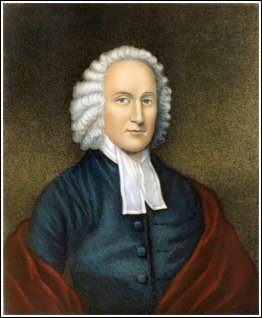
GOD’S USE OF AFFLICTION – Jonathan Edwards (1753)

jonathan-edwardsJonathan Edwards sets out in this sermon to exposit a passage in the book of Job:

“Behold, blessed is the one whom God reproves;  therefore despise not the discipline of the Almighty.” (Job 5:17, ESV)

Doctrine

Three doctrinal propositions mark this very short sermon which was contextualized to reach the Stockbridge Indians with power and effectiveness:

  1. 1. Afflictions that are brought on men in this world are from the hand of God.

2. Afflictions are brought on men for sin.

3. How the man is said to be happy whom God correcteth.

The Puritan divine notes two specific improvements (application):

Improvements

1. A warning or counsel.

One sentence explains Edwards heart before his congregation: “Their hearts are not convinced, not humbled; [their] will is not bowed to God’s will, not weaned from the world, [and] not weaned from sin: only a refraining from sin, not removing it, [so that] if God lightens his hand, [they] will turn to it again.

2. A special enforcement, that ’tis chastening of the Almighty.

Edwards argues that God is sufficient to help and strengthen his people as they endure any affliction.  He adds, “[God is] able to do all things for us, if we yield to him under affliction and comply with his will.  [He can] support [and] strengthen [us under chastisement, and so] cause [it] to work for good.  [God can] abundantly more than make up [for our sufferings; he can] deliver [us from it, and] make us happy.  [He can] give the blessed fruit of affliction, [and] bestow that far more exceeding and eternal weight of glory.”

In typical Edwardsean fashion, the New England preacher restores the hope and perspective of any listener or reader who will submit himself or herself to God.

Soli Deo Gloria!


Center Church – Tim Keller (2012)

kellerI have been reading books about the church for almost thirty years now.  Most of the best material is being churned out by Mark Dever and the boys at 9Marks.  Tim Keller’s, Center Church is a welcome guest in the growing list of books on ecclesiology.

Keller sets out to communicate one central message which is summed up in the subtitle: Doing Balanced Gospel-Centered Ministry in the City.  Center Church is encyclopedic in nature.  It covers every subject conceivable and is a helpful tool in every pastors prospective tool chest.

The discussion about gospel contextualization (chapter 7) is deeply encouraging and highly instructive.  The author notes, “Contextualization is not – as is often argued – ‘giving people what they want to hear.’  Rather, it is giving people the Bible’s answers, which they may not at all want to hear, to questions about life that people in their particular time and place are asking, in language and forms they can comprehend, and through appeals and arguments with force they can feel, even if they reject them..”

Keller warns against the temptation to use contextualization as a clever means of compromise (which I find many pastors doing).  He adds, “The call to contextualize the gospel has been – and still often is – used as a cover for religious syncretism.  This means not adapting the gospel to a particular culture, but rather surrendering the gospel entirely and morphing Christianity into a different religion by over-adapting it to an alien worldview.”

Center Church is filled with helpful instruction on doing gospel ministry in the city.  It is a long read but worth plodding through for the treasures along the way.

Highly recommended for pastors who love the gospel!