SHOULD YOU BELIEVE IN GOD? – K. Scott Oliphint

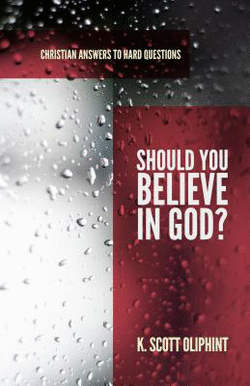
Pre-suppositional apologetics appears to be on the rise.  We can thank Francis Schaeffer shouldfor popularizing the presuppositional approach.  Of course Cornelius Van Til, John Frame, and Richard Pratt have played a huge part.  But I have been recently encouraged by K. Scott Oliphint as he wields a sharp presuppositional apologetic sword.   His work, Covenantal Apologetics is a fine introduction to the discipline.  His work, The Battle Belongs to the Lord demonstrates the power of Scripture for defending the faith.  But most recently, Oliphint presents Should You Believe in God?  a booklet written to equip people in the discipline of apologetics – with a presuppositional approach.

Should You Believe in God? is a a fictional dialogue between a Christian and a skeptic who actually embraces the notion of truth.  As such,  Oliphint begins this two-way dialogue by pouring the unshakable epistemological “cement.”  He admits his Christian presupposition up front and argues that this, indeed, is the only proper starting point: “Unless you submit yourself to the Lord Jesus Christ, and stand on his Word, you will never find a real place to stand, or a real place to rest, and your curious search will never end.”

Next, the Christian directs the skeptic to think through the implications of a world which is created, sovereignly controlled, and sustained by the living God.  The only difference between a sovereign God who ordains all things and a skeptic who believes that all things are “accidentally conditioned” is that the pagan view has “no reference point.”  Whereas the Christian view has an integration point that finds rest in God alone.

He proceeds to describe how the Christian faith holds to two kinds of necessity, namely – “the necessity that belongs to God alone,” and “the kind of necessity that is what it is because God created it that way” (such as the laws of logic).

He continues to demonstrate the futility of unbelief by assuming a position of neutrality.   This view holds that one can hold a position (philosophical, scientifically, or otherwise) that is “neutral” and excludes God from the discussion.  The point is that unbelievers begin autonomously – that is, they begin with themselves.  Oliphint explains, “To assume neutrality at the outset is to assume that God has not spoken clearly through the things he has made.”  They effectively and tragically cut themselves off from the very source of knowledge (found in Christ) when they make this fatal move.

Oliphint rightly argues that seekers of truth should begin with God instead of themselves as the proper starting point: “We ought to begin our searching, our research, our reasoning, and our demonstration with the fact of who he is and what he has done …Only by assuming, and affirming at the outset, the Christian God who has spoken can we escape this morass of meaninglessness and despair” (what Schaeffer referred to as the “line of despair.”)

The skeptic, in the final analysis, is urged to turn from unbelief and erroneous autonomous assumptions – which only lead to hopelessness and futility.  The skeptic is challenged to turn to his Creator and bank all his hope and future on the living God: “If you will forsake your idols of independence and place yourself in his hands, this much is certain – he will redeem you.”

Should You Believe in God? is a powerful little tool that should receive a wide readership.  It is a brilliant retooling of Van Till’s apologetic method put in a contemporary setting.  Highly recommended!

SACRED WARRIOR – Waiting in Darkness (2013)

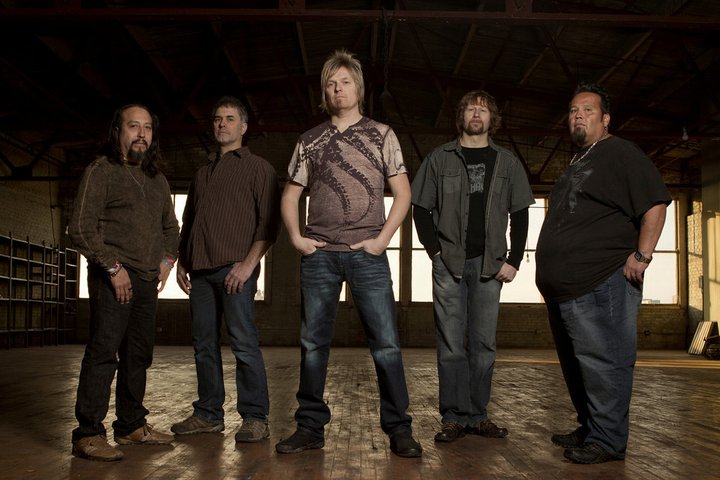
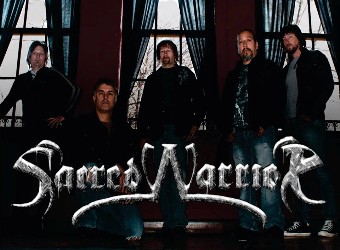
swThe 80’s was the decade of great Christian music.  Stryper led the way and several other bands followed.  Barren Cross, Bloodgood, Holy Soldier, and Guardian set a new direction and gave musical hope for a multitude of young people who grew tired of what passed for “music” in that generation.  One band that rose up during those formative years was Sacred Warrior.  What made this band special was their no-nonsense lyrics that confronted listeners with the biblical gospel.  They were never afraid of confronting sin and speaking plainly about the problem of evil.  SW eventually broke up and went their separate ways.

Almost thirty years later, Sacred Warrior has returned with a new lead singer and a fresh, updated sound.  Their new album, Waiting in Darkness has all of the features described above.  The only difference is this: The music is faster and the rock is heavier.  In fact, this is their heaviest album to date.  It should come as no surprise that this brain-rattling music is accompanied by the same non-compromising approach to the gospel.  Each song on the album is a testimony to the gospel of grace.

Track by Track:

The album begins by addressing the problem of evil and the reality of redemption:

Desperately wicked we are born Corrupted seeds/This stronghold grips humanity/The curse of sin

Flesh and spirit raging on the war within/Life or death cursed or blessed the choice is given/In the perfect sacrifice a hope remains                                                   Redemption by shedding of blood love overcame

The title track, Waiting in Darkness is a heavy metal exposition of spiritual warfare:

Through your anger they fuel the fire/Feeding off of your flesh’s sinful desires/Lies and confusion your faith put to the test

Focusing in on all of your weaknesses/We must be vigilant to thwart their evil plight/Be strong in the lord and in the power of his might/Be prepared for war

In Dust and Ashes is a Job-like lament written in the first person that is sure to grip the attention of anyone who is enduring a dark night of the soul:

Oh lord hear my cry/I’m a man with many troubles/ In the regions dark and deep /This world lies heavy on me/Your steadfast love remains/Even though I feel abandoned/Invade my soul/Break the chains of doubt and sorrow/Skin for skin all that I am/Will bless your name in your remain

In dust and ashes I repent/Resolved to make you my content/In dust and ashes I confess/My love for you within this test

Fear Me is a bold declaration of the sovereignty of God.

I speak and the waves obey I am governed by none, sovereign over all  Wisdom begins and ends with me/All authority is mine and I’ll put an end to evil’s reign   For vengeance is mine says the lord/Fear me like you’d fear a raging fire/You’d never run into the flames/Respect keeps you from the pain/Or the ragin of the ocean/You’de never jump into the waves and sink to your grave

Fear me

To deny that I exist/ Suppress the truth for a lie professing to be wise/The wrath I hold will be revealed/This world I will destroy                                                                 Judging all who reject my name

Fans of A.W. Pink will immediately wonder if the guys in Sacred Warrior have been meditating on the classic, The Sovereignty of God!  

Long Live the King continues to confront the listener with the sovereignty of God over all things.

He is the lightning he is on high/Always and eternal and his love will never die/He is forever the answer to the rhyme                                                                                      Of what will be for you and me before the start of time

I hear the thunder I hear the call/The armies of his angels from the royal temple hall/One day is a thousand years, still he’s drawing nigh/Lift up your voice unto the sky/shout the battle cry

Long live the king, Long live the king

Jealous Love is a ballad that glories in the Cross of Christ.

sac

Day of the Lord is the token eschatological metal anthem and is rerecorded from their first studio album, Rebellion.  This one is a real blast from the past!  This is the kind of music that put Sacred Warrior on the map.

Fans of Sacred Warrior will only be encouraged by their latest record.  The music is tight, sounds current, best of all – exalts the Lord Jesus Christ!

DEVOURING FREEDOM: CAN BIG GOVERNMENT EVER BE STOPPED? – W. James Antle III (2013)

freedomThere are three unshakable realities in life: Death, taxes, and an ever-expanding government.  The reality of death is one that each person must face.  Taxes are indeed a reality, but as every conservative argues, taxes in America must decrease or the economy will inevitably falter.  And while every American must deal with the reality of death and taxes, the growing federal government can and should be marginalized.  This final reality can and should be altered.  The new reality should be a smaller, leaner, more efficient government.  Herein lies the argument in W. James Antle’s  book, Devouring Freedom: Can Big Government Ever Be Stopped?

The author has done his homework in this well-written book.  Ten chapters guide readers on a journey that informs, educates, and most importantly, warns.  Any thoughtful American will appreciate the contrast between the big government promoted by the current president and the smaller government that was prompted by our nations greatest president, Ronald Wilson Reagan.

W. James Antle is no pushover Republican.  He not only warns readers about the manifold dangers of big government.  He also reports some of the Republican failures and compromises which have not served our nation well.

The author does not offer “pie in the sky” solutions either.  In fact, he is critical of any conservative who suggests such an approach.  Rather, he recognizes the rocky road before our great nation and suggests practical steps to smooth our path to greater prosperity.  But he does not write under any delusional pretense or promote a utopian vision.  He understands the road to a smaller government will not be easy.  He writes, “Sometimes it will seem impossible.  But like a parent yanking his child to safety at the last second before he dashes into the street, Divine Providence has pulled this nation back from the abyss before.”  Indeed, the path forward will be marked with pain.  But the pain now will be worth it in the days to come.

Conservatives must be prepared for the rocky road to smaller government.  The author rightly adds, “Conservatives who stick to their principles on taxes and spending get the Grover Norquist treatment.”  That is to say, anyone who argues for lower spending, lower taxes and smaller government will be unfairly demonized.  The attack adds against Paul Ryan during the last election cycle prove this sad point.

While the author sets forth several points which militate against big government, none is more important than the principle of liberty.  In President Reagan’s farewell address, he articulated this bold principle in vivid terms: “There is a clear cause and effect there that is as neat and predictable as a law of physics: as government expands, liberty contracts.”  However Reagan’s law is evidently not etched into the liberal mindset as our current President and the majority leader in the Senate, Harry Reed seek to expand the federal government.  With this expansion comes the erosion of liberty.  The author aptly sums up this matter: “As government grows beyond its constitutional boundaries, it really does devour freedom.”

Devouring Freedom: Can Big Government Ever Be Stopped?  The author asks the right question and gives the right answer.  The only question is this: Do we have the courage to move in the direction of a smaller federal government?  Any negative answer will result in an erosion of freedom; the same freedom that was such an integral part of the dream which was articulated by the founding fathers.

4 stars

TRIUMPHING OVER SINFUL FEAR – John Flavel (2011)

flavelIn 1682, John Flavel published his work, A Practical Treatise of Fear.  Almost 330 years later, the fear continues to plague people.  The simple fact is this: There are two kinds of people in the world – people who admit the battle with fear and those who don’t.  For the people who fess up, Flavel’s writing is of tremendous help.

Reformation Heritage Books is a very helpful ministry that is devoted to reintroducing the writing ministry of the Puritans to an age that is increasingly tied to technology and postmodernism.  This title is appropriately retitled, Triumphing Over Sinful Fear and comes highly recommended.

John Flavel is quick to remind readers that the ultimate remedy for fear is a healthy fear of God.  This kind of fear is defines as “a  gracious habit or principle planted by God in the soul, whereby the soul is kept under a holy awe of the eye of God, and from thence is inclined to perform and do what pleases him, and to shun and avoid whatever he forbids and hates.”

Flavel draws a sharp contrast between the carnal man who “fears man, not God” and the godly person who “fears God, not man.”  He adds, “The weak Christian fears man too much and God too little.”

Flavel continues, “There is a fear which is the effect of sin.  It springs from guilt and hurries the soul into more guilt.  There is a fear which is the effect of grace.  It springs from our love for God and His interest and drives the soul to Him in the way of duty.  The less fear a person has, the more happiness he has – unless, of course, it is that fear which is his happiness and excellency.”

So in a few words, the Puritan divine sets himself in opposition to the world that has invented a multitude of explanations for fear.  Flavel cuts through all the so-called justifications for fear and helps readers understand that sin is at the core of our struggle with fear.  “Sinful fear,” he says, “will cause the best people to attempt to help themselves through sinful compromises.”

Flavel utilizes Isaiah 8:13 as his primary text which he offers as a remedy for fear.  He comments, “The fear of God will swallow up the fear of man.  A reverential awe and dread of God will extinguish the creature’s slavish far, as the rain puts out the fire.   To sanctify the Lord of hosts is to acknowledge the glory of His sovereign power, wisdom, and faithfulness.  It includes not only a verbal confession, but internal acts of trust, confidence, and entire dependence upon Him.  These are our choicest respects towards God, and give Him the greatest glory.”  So fearing God is the primary remedy in the battle with fear.

The Puritan preacher alerts readers to the various kinds of fear: Natural fear, sinful fear, and religious fear.  Additionally, he argues that fear has several uses.  Sinful fear may be utilized as a tool in the hand of God as a “scourge to punish His enemies.”  Secondly, God may use sinful fear to “punish His enemies in hell.”  And God may use sinful fear to “scatter wicked people, especially when they align themselves against God.”

Religious fear may be uses to “excite and confirm His promises in the way of their duty,” namely – to fear God and obey His commandments.  Religious fear may be used to “preserve our conscience’s peace and purity.”  And finally, religious fear may be used by God to “make us prepare for future distress.”

Next, Flavel helps readers understand the various causes of fear including ignorance, guilt, unbelief, confusion, immoderation, and Satan.  The effects of sinful fear are set forth as well.  These effects may include but not be limited to distraction, deception, vulnerability, cowardice, bondage, and apostasy.

Finally, Flavel unpacks several rules for combatting fear:

1. Study the Covenant of Grace

2. Consider the Misery of Sinful Fear

3. Prepare for Future Suffering

4. Commit Yourself to God

5. Mortify Your Affections to the World

6. Imitate Faithful Saints

7. Confirm Your Interest in Christ

8. Keep Your Conscience Pure

9. Record Your Experiences of God’s Faithfulness

10. Consider Christ’s Providential Kingdom

11. Subject Your Carnal Reasoning to Faith

12. Exalt the Fear of God in Your Heart

This short review only scratches the surface of John Flavel’s excellent treatment on fear.  “You must exalt the fear of God in your hearts and let it gain the ascendency over all other fears.”  More than anything else in the book, this is the constant theme that emerges.  This is the constant theme that fear mongers must return to again and again.  Then and only then, will sinners be able to triumph over sinful fear.

Highly recommended!

Theocracy – Remastered and Remixed (2007)

theocracyThe self-titled release by the Atlanta-based band, Theocracy first appeared in 2007 but has been out of circulation since that time.  For several months, fans have long-awaited for the release of Theocracy’s original album – an album that has been remastered and remixed.  On November 19, fans around the were thrilled to listen in to Matt Smith and the boys hammer out their unique style of Stryper meets Dream Theater heavy metal music.

Track by Track:

After a 80’s-like keyboard intro the album begins with a double-base drum anthem that celebrates victory in Christ.  Here’s a few lines from Ichthrus.

Forced into the catacombs
unite to praise the King of kings
they fear a revolution
and the power that He brings
heaven’s sons stand as one, as believers
in the blood of Christ
even in death we have true life

CENTURIES FLY
BUT THE FLAME IS STILL ALIVE
THE MAY HIDE IT, BUT IT WILL NEVER DIE
CARVED IN OUR SOULS,
SEE THE TWO HALVES OF THE SIGN
THROUGH THE AGES HIS GLORY WILL ARISE
FOR ALL TIME

The Serpent’s Kiss begins as a ballad and speaks candidly about the curse of sin that has been inflicted on the cosmos.

Born into the darkness
thrown into the viper’s den
the serpent in the cradle
takes the child into its nest of sin
slowly suffocating
the souls of victims it has found
into the vicious cycle
on the path that only leads us down

Rat-race-fueled machinery
this system of corruption
have we become so cold and numb
we’re blind to its destruction?
We’re forging in the fires made of greed
Our idols made of gold
then bowing down before them
with corrupt, adulterous souls
opened eyes,
realize…

WHAT WE HAVE DONE
WHAT WE HAVE SEEN
WHAT HAS BECOME OF OUR LIVES
CORRUPTED OUR DREAMS
WHAT WE HAVE LOST
AND WHAT REMAINS
PARALYZED BY THE VENOM THAT RUNS THROUGH OUR VEINS
THERE’S GOT TO BE MUCH MORE TO LIFE THAN THIS
THE WORLD’S CARESS IS JUST THE SERPENT’S KISS

But the venom that has plagued mankind has been defeated by the power of the cross.  So the song continues …

I stand before you as a child
by this world I’ve been defiled
stained and poisoned, burned and beaten
bruised and wounded, sick and vile
with hands reaching out to you, I run
realizing what I’ve done
you take me in your arms, a reunited father and son…

The song is not only a powerful reminder of the gospel but also leaves listeners with a permanent and painful warning:

And all illusion ceases to exist
the world’s caress is just a serpent’s kiss

Mountain paints a vivid portrait of the journey that every Christ-follower faces.

Step by step the climb gets harder
my being weakens as I struggle farther and farther
flesh is weakness, darkness, sickness
my dreams are shattered, my ambitions crumbled
my will defeated, my spirit humbled once more
I am hopeless, helpless without you

The tune resembles John Bunyan’s classic work, Pilgrim’s Progress and leaves listeners with hope as they plod their way through the Christian life:

Take me to the places I can’t go
Transcending
I’m sick of living in the status quo
New Beginning
And when it seems I’ve given up
On eagle’ wings you life me up again
and this time I know, in the end
…You carried me

The title track, Theocracy is a metal dream that challenges every listener with the direct claims of Christ’s lordship:

At the center of my heart there sits a throne
That the rightful occupant’s not always
free to call His own
For how can I give the King
His place of worth above all else
When I spend my time striving
to place the crown upon myself?

The chorus hammers the lordship theme with a holy vengeance:

I TAKE MY CROWN AND CAST IT DOWN
CASTLES BURNING
CASTLES BURNING
LEARN TO GROW, GROW TO BE
A FLESH AND BLOOD THEOCRACY
TO TAKE THE LOSS AND BEAR THE CROSS
RAISE THE KINGDOM
RAISE THE KINGDOM
BURN AWAY ALL IVE BEEN
TO RESURRECT THEOCRACY WITHIN

2 Corinthians 10:5 is employed to remind Christians to submit every thought to the lordship of Christ:

and the would-be rulers of my heart
that I place upon the throne
each lead the kingdom of my life to ruin
to bring every though into submission
to tear the idols down
is to break the chains, to rearrange,
to give the king his crown

The Healing Hand is a powerful five-part masterpiece that begins with the prophecy of the Messiah – the hope of nations.  The tune leads listeners from the cradle to the Cross of Christ where the “healing hand becomes the bleeding hand.”

His kingdom forever, the Lion of Judah in strength
everlasting redemption, atonement complete
resurrected in power, as King now he stands
FOR THE BLEEDING HAND HAS BECOME THE RULING HAND

Faith-born forever, a part of His kingdom become
Or reject him, stand back
and watch his kingdom come
Alpha and omega almighty is he
Christ reigns victorious for eternity
Eternity

Several more songs grace this stunning album.  There is simply too much to share in a short review in this format.  But suffice it to say, this piece of work by Theocracy is about as good as it gets.  The music is tight, the production is crisp, and the vocals are spot on.  Again, as I have noted elsewhere, Matt Smith is one of the premier songwriters of this day.  For whatever reason, he has gone largely unnoticed – a tragedy in its own right.  This young man should be commended for his God-given gifts.  But as every God-fearing man recognizes, all the glory goes back to the Giver of every good gift.

Thanks to Matt Smith and the band for writing such God-honoring music; heavy metal music that truly honors the Lord Jesus Christ and magnifies his gospel!

5 stars

RISKY GOSPEL – Owen Strachan (2013)

owenWhen is the last time you took a risk – something really risky; something adventuresome, something costly?  Whatever the reason is, many people have failed to step up to the plate.  Hoards of Christ-followers have failed to live up to their calling before almighty God.

Owen Strachan’s newest book helps Christians reach for something greater; something that is all-together God-honoring.  The subtitle captures the essence of the book – Abandoning Fear and Building Something Awesome.  In Risky Gospel, the author urges readers to live according to God’s design.  For “God doesn’t want his people to be fearful, but faithful.”  Strachan rightly argues that believers are called to live boldly for God, to demonstrate courageous faith, even in the midst of suffering and adversity.

Strachan is the executive director of the Council on Biblical Manhood and Womanhood.  As such, he makes a strong case for complementarianism and sets forth a winsome case for building families according to the Scriptural mandate, a vigorous Christian life that is led by godly men and supported and encouraged by godly women.

The author encourages readers to rely on the power of the Holy Spirit who empowers them to live in the way that God intends.  This power is fueled by the gospel and is available to every Christ-follower.  And it is expressed  in our homes, in our careers, in our communities, and in our gospel witness.

Strachan urges readers to risk everything they have for the glory of God.  Please recognize, this has nothing to do with self-effort.  Rather, it has everything to do with the gospel, which is summarized beautifully by Dr. Strachan: “Gospel risk, then, is grounded in an unshakable foundation: God.  It is possible through divine grace, secured through the cross of Christ and activated in our lives by the resurrection of Christ.  Sin is defeated; Satan has lost; the law is kept; we are counted righteous in the heavenly courtroom, all because of Jesus.  Now we are freed and empowered by the Spirit to count the cost, forsake all the paltry pleasures of this world, and life a life of faith.”

There is so much to commend here.  The author writes simply without being simplistic.  He writes in a popular style that will appeal to a younger audience.  It is very obvious from the start, that this author is plugged into contemporary culture and understands the hot-buttons of the younger generation.   References to popular musicians and current television programs bear this out.  Yet at the same time, Strachan is introducing readers to the Puritans and inviting them to join him in a rigorous study of systematic theology.

One review of the book maintains that Risky Gospel is uninspiring.  Nothing could be further from the truth.  While the book should target a younger audience, this does not negate the bold reality and challenge the Strachan presents.  This is good stuff.  This is gospel stuff.  God is honored by this kind of writing.

RUSH REVERE AND THE BRAVE PILGRIMS – Rush Limbaugh (2013)

rushMost people know him as the conservative radio talk show host.  And most people have an opinion about him.  Many Americans love Rush Limbaugh.  Liberals and social progressives can’t stand him.  But everyone should appreciate what he’s trying to accomplish in Rush Revere and the Brave Pilgrims.

Limbaugh’s newest book is designed for children as he takes them on a journey to the seventeenth century and introduces them to the pilgrims.  The author employs the fictional tool of time travel to teach some important history lessons that will appeal especially to young readers.

Rush is to be commended for his desire to bring the events of the Mayflower to a readable format that children can enjoy.  Unfortunately, some of the historical data gets overshadowed by the prose.  But Limbaugh does leave readers with the right mindset toward history.  This is a reminder that young and old can appreciate.

3 stars

THE BOY ON THE WOODEN BOX – Leon Leyson (2013)

boxLeon Leyson recounts his personal nightmare in The Boy On The Wooden Box.  Leyson is a holocaust survivor and was among the Schindlerjuden, the Schindler Jews.  This fascinating story takes readers on a mind-chilling journey that leads Leyson through many brushes with death, only to be saved by Oskar Schindler, the German who was celebrated in Steven Spielberg’s blockbuster, Schindler’s List.

The Boy On The Wooden Box is a testament to the human spirit and serves as a magnifying glass that illuminates the depths of human evil and depravity.  Leyson provides enough details to keep young readers interested and beautifully weaves his personal story through the darkness days of the 20th century.

While the book is designed for younger readers, it will certainly captivate the attention of all kinds of book lovers, especially students of history.  Leyson is to be commended for retelling his story and celebrating the man who saved the lives of so many Jewish people.

4 stars

LOOK BEFORE YOU LEAD – Aubrey Malphurs (2013)

LOOK BEFORE YOU LEADI was greatly influenced and encouraged during my Seminary days by Dr. Aubrey Malphurs.  So when I learned about his newest book, Look Before You Lead I jumped at the chance to read it.  I wasn’t disappointed!

The subtitle of Malphur’s book is an accurate description of the tone and tenor of this leadership treasure: How to Discern and Shape Your Church Culture.

Part 1: The Basics of Congregational Culture

Part one is a primer on culture and how effective ministries navigate successfully in a given cultural milieu.  Malphurs writes encourages pastors to read their respective cultures: “If they fail to read the culture well, it will mean that the culture of the church will lead and manage them … The better a pastor knows his church’s culture, the better he’ll be able to lead his church.  To a great degree, leadership decisions are based on the knowledge of one’s culture as well as one’s gifts and abilities as a leader.”  Ultimately, churches must adapt to their culture, while at the same time, maintaining doctrinal integrity.

The author discusses congregational culture, which he compares to an apple.  The skin on the apple represents the church’s outward behavior.  The apple’s flesh represents the church’s values.  And the core of the apple represents the beliefs or doctrinal standards of the church.  These three elements combine to give the church its distinct flavor and character in the community.  Dr. Malphurs carefully unpacks the three distinguishing characteristics of the cultural apple and provides tools for pastors to determine their cultural niche.

Churches may respond to cultures in three specific ways, namely – isolation, accommodation, and contextualization.  Isolated churches will either cloister around a set of ideals and never make any difference in the world.  Eventually, they will die.

Church who accommodate to culture (like emergent churches) compromise by embracing the spirit of the age and adopting liberal theology and man-centered ideology that may look good externally, but will in the final analysis result in watered down temples of worldiness.

Churches who contextualize seek to communicate the gospel in ways that fit the cultural context without compromising the truth.  Malphurs rightly notes that, “the gospel is supracultural in its origin and essence but cultural in its interpretation and application.”  Therefore, Christians must be careful to differentiate between the gospel and their culture in order to effectively penetrate the lives of people.

Part 2: Reading Congregational Culture

Reading congregational culture involves a deeper understanding of the so-called cultural apple; that is to say, pastors must exegete their congregational culture.  The author includes numerous exercises that will lead to a proper reading of the congregational culture.  Additionally, he encourages pastors to address several critical issues:

  • Discern if the Culture is Spiritually Mature or Immature
  • Determine Where You as a Leader Will Be Most Effective

Malphurs encourages pastors to do an honest self-assessment.  Pastors must discover the origins of their cultural framework which include an uncovering of the leaders behavior, values and cherished beliefs.

Part 3: Shaping Congregational Culture

The final section includes several ways that pastors can and should shape their congregational culture.  Numerous exercises are included to help pastors effectively do this.  Practical help is offered for those who resist change.  Five levels of leadership need to be effectively saturated with the vision for maximum impact:

  • Governing board
  • Ministry staff and committees
  • Sunday school teachers and small group leaders
  • Leaders of support ministries
  • A patriarch and/or matriarch

“The wise leader,” writes Malphurs, “encourages change more by asking insightful questions than by offering directions or giving ultimatums.”  Good communication is paramount in the process.

The bad news is that at least 80 percent of churches are either on the plateau or are in a state of decline.  So pastors must navigate the waters of change with care, boldness, and determined vision.

Look Before You Lead is a terrific book that should receive a wide reading.  Dr. Malphurs offers a deep knowledge of strategic planning but offers advice with the heart of a seasoned shepherd.