DEAD MEN TALKING – Part 4

4. The dead guys encourage vibrant Christian living

The dead guys have wielded a powerful force for change in my life and have encouraged my Christian growth in ways that are beyond the scope of a 500 word blog post.  Four specific things emerge in particular:

  • Waking EarlyIMGP0676 There was a day when I felt like waking up at 8:00 a.m. was a real sacrifice.  The dead guys have taught me otherwise.  For instance, Martin Luther said, “I have so much to do that I shall have to spend the first three hours in prayer.”  There is a consistent pattern among the Reformers and Puritans; a pattern of rising early for prayer, time in the Word, and studying theology.  Their pattern has rubbed off on me and has paid rich spiritual dividends.
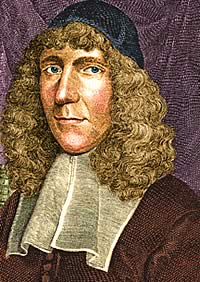
  • Fighting SinowenThe Word of God is clear when it comes to waging a holy war against sin: “Put to death therefore what is earthly in you: sexual immorality, impurity, passion, evil desire, and covetousness, which is idolatry” (Col. 3:5, ESV).  Or consider Paul’s letter to the church at Rome: “For to set the mind on the flesh is death, but to set the mind on the Spirit is life and peace.  For the mind that is set on the flesh is hostile to God, for it does not submit to God’s law; indeed, it cannot.  Those who are in the flesh cannot please God” (Rom. 8:6-8, ESV).  I can’t think of anyone who has helped me more in the battle against sin than the Puritan divine, John Owen.  Temptation and Sin (Vol. 6) contains an almost endless supply of ammunition to fight the world, the flesh, and the devil.  Owen wisely remarks, “The life, vigour, and comfort of our spiritual life depend much on our mortification of sin.”  That is to say, in Owen’s words, “Be killing sin or sin will be killing you.”  He continues, “Let faith look on Christ in the gospel as he is set forth dying and crucified for us.  Look on him under the weight of our sins, praying, bleeding, dying; bring him in that condition into thy heart by faith; apply his blood so shed to thy corruptions: do this daily.”  And daily we must if we are to successfully wage the war against sin!
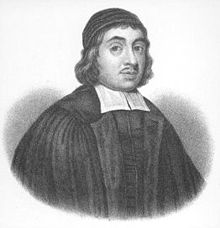
  • Growing in Grace – “But grow in grace and knowledge of our Lord and Savior Jesus Christ.  To him be the glory both now and to the day of eternity.  Amen”220px-Thomas_Watson_(Puritan) (2 Pet. 3:18, ESV).  The dead guy that has especially helped me grow in grace is the Puritan, Thomas Watson.  Watson is readable, clear, and pithy.  His challenges go straight to the heart and give Christians exactly what they need to press on to gain the heavenly prize.  Watson aptly writes, “The more we grow in grace, the more glory we bring to God.”  Indeed, to grow in grace is never an option for a Christ-follower.  Rather, it is a vital part of biblical Christianity.
  • Being Happy in Christ – Finally, Richard Baxter has encouraged me to enjoy the sweet fruit of the historical Christian faith: “The principal damning sin,” Baxter writes,  “is to make anything besides God our end and happiness.”  Timely words that remind us of the supreme importance of being happy in Christ.

DEAD MEN TALKING – Part 3

2. Dead guys remind us how God can take the most hardened sinner and transform him into a trophy of God’s grace

AugustineIn 354 a baby was born.  His name – Aurelius Augustine.  The young boy who was a sinner by birth (Ps. 51:5).  As he grew older, became increasingly comfortable with his status as a sinner.  As a young adult, Augustine engaged in consistent carnality.  He admitted, “The evil in me was foul, but I loved it.”  This young sinner fell under the spell of Ambrose – a man who faithfully proclaimed the Word of God.  When Augustine heard the voice of a child say, “Take up and read,” he immediately turned to the book of Romans.  He read the words of the apostle Paul: “Let us walk properly as in the daytime, not in orgies and drunkenness, not in sexual immorality and sensuality, not in quarreling and jealousy.  But put on the Lord Jesus Christ, and make no provision for the flesh, to gratify its desires” (Rom. 13:13-14, ESV).  Augustine notes, “For in an instant, as I came to the end of the sentence, it was through the light of confidence flooded into my heart and all the darkness of doubt was dispelled.”  One sinner that was miraculously transformed by God’s grace.  Dead guys remind us how God can take the most hardened sinner and transform him into a trophy of God’s grace.

3. The dead guys remind us that God has the power to change our warped theology

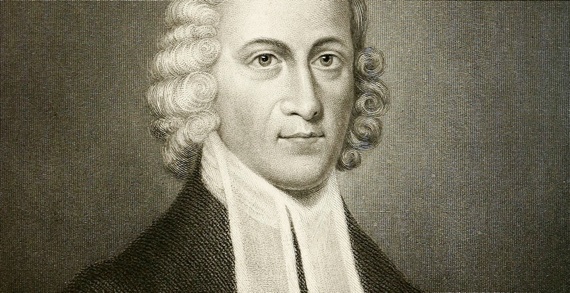
Jonathan_Edwards_engravingJonathan Edwards is the last person most people consider when they think of warped theology.  Yet Jonathan Edwards demonstrated from an early age that his theological framework was in desperate need of help.  You see, Jonathan Edwards battled with God and especially resisted his sovereign control over all things.  When he came across a passage like Psalm 115:3, he winced; he reacted negatively.  To confess with the psalmist that “God is in the heavens.  He does whatever he pleases” was offensive to Edwards.  Notice how the battle ensues and how God triumphs, however, in his affections: “From my childhood up, my mind had been full of objections against the doctrine of God’s sovereignty … It used to appear like a horrible doctrine to me.  But I remember the time very well, when I seemed to be convinced and fully satisfied, as to this sovereignty of God … And there has been a wonderful alteration in my mind, in respect to the doctrine of God’s sovereignty … The doctrine has very often appeared exceeding pleasant, bright, and sweet …”  And then in a moment that captures Edwards at his best, he adds, “Absolute sovereignty is what I love to ascribe to God.”  The dead guys teach remind us that God has the power to change our warped theology.

DEAD MEN TALKING – Part 2

lewisREASONS FOR UNEARTHING THE DEAD GUYS

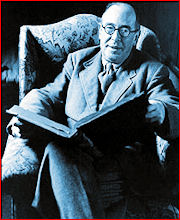
What is the rationale for unearthing the dead guys?  In his introduction to Athanasius’s masterpiece, On the Incarnation (a book written over 1,600 years ago), C.S. Lewis discusses the propensity of many people to gravitate to the new when all the while neglecting the old: “This mistaken preference for the modern books and this shyness of the old ones is nowhere more rampant than in theology.”  He goes on to describe the reason he advises people to select the old over the new.  The reason is this: “… He is an amateur and therefore much less protected than the expert against the dangers of an exclusive contemporary diet.  A new book is still on trial and the amateur is not in a position to judge it.  It has to be tested against the great body of Christian thought down the ages, and all its hidden implications (often unsuspected by the author himself) have to be brought to the light.”  So Lewis essentially argues that most people simply do not have sufficient resources to sift through the sludge of contemporary writing.  Thus, he is vulnerable to worldviews that are spiritually dangerous.

Lewis rightly says that every culture is unique.  Each culture comes with a certain amount of baggage that does not square with Scripture.  So he makes an appeal to old books, what I call reading the dead guys: “We all, therefore, need the books that will correct the characteristic mistakes of our own period.  And that means the old books.”  His advice is pretty clear and carries a lot of weight: “It is a good rule, after reading a new book, never to allow yourself another new one till you have read an old one in between.”

So with Lewis’s admonition close at hand, notice the first of eight reasons for unearthing the dead guys.

bunyan

1. The dead guys remind us that normal people can accomplish extraordinary things for God

John Bunyan is a classic example.  They called him an “uneducated tinker.”  His classic autobiography, Grace Abounding to the Chief of Sinners, recounts his miraculous conversion.  Bunyan admits he came from the “meanest and most despised of all the families in the land.”

“Sin and corruption, I said, would as naturally bubble out of my heart, as water would bubble out of a fountain.”  Bunyan clearly described the hatred he had for God prior to his conversion: “I saw my sin most barbarous, and a filthy crime, and could not but conclude, and that with great shame and astonishment, that I had horribly abused the Son of God …”

“I saw how gently [Jesus] gave himself to be hanged and nailed on it for my sins and wicked things.”

In a stunning turn of events, Bunyan explains the radical change that the Holy Spirit wrought in his sin-stained heart: “I magnify the heavenly Majesty, for that by this door he brought me into the world, to partake of the grace and life that is in Christ by the gospel.”

Bunyan was a Bible man whose preaching, writing, and life screamed the truth of Galatians 6 – “But far be it from me to boast except in the cross of our Lord Jesus Christ, by which the world has been crucified to me, and I to the world” (Gal. 6:14, ESV).

Bunyan’s pedigree was among the lowest of the low.  Indeed, he was an everyday “Joe!”  But God rescued him from his sin and used the British tinker as a powerful instrument in God’s hands!  Who would have thought that as he wrote Pilgrim’s Progress from a Bedford jail that it would become the number two best seller in the world?  The great British theologian, John Owen, when asked by King Charles why he, a great scholar went to hear an uneducated tinker like Bunyan preach, said, “I would willingly exchange my learning for the tinker’s power of touching men’s hearts.”  Indeed, the dead guys remind us that normal people can accomplish extraordinary things for God!

DEAD MEN TALKING – Part 1

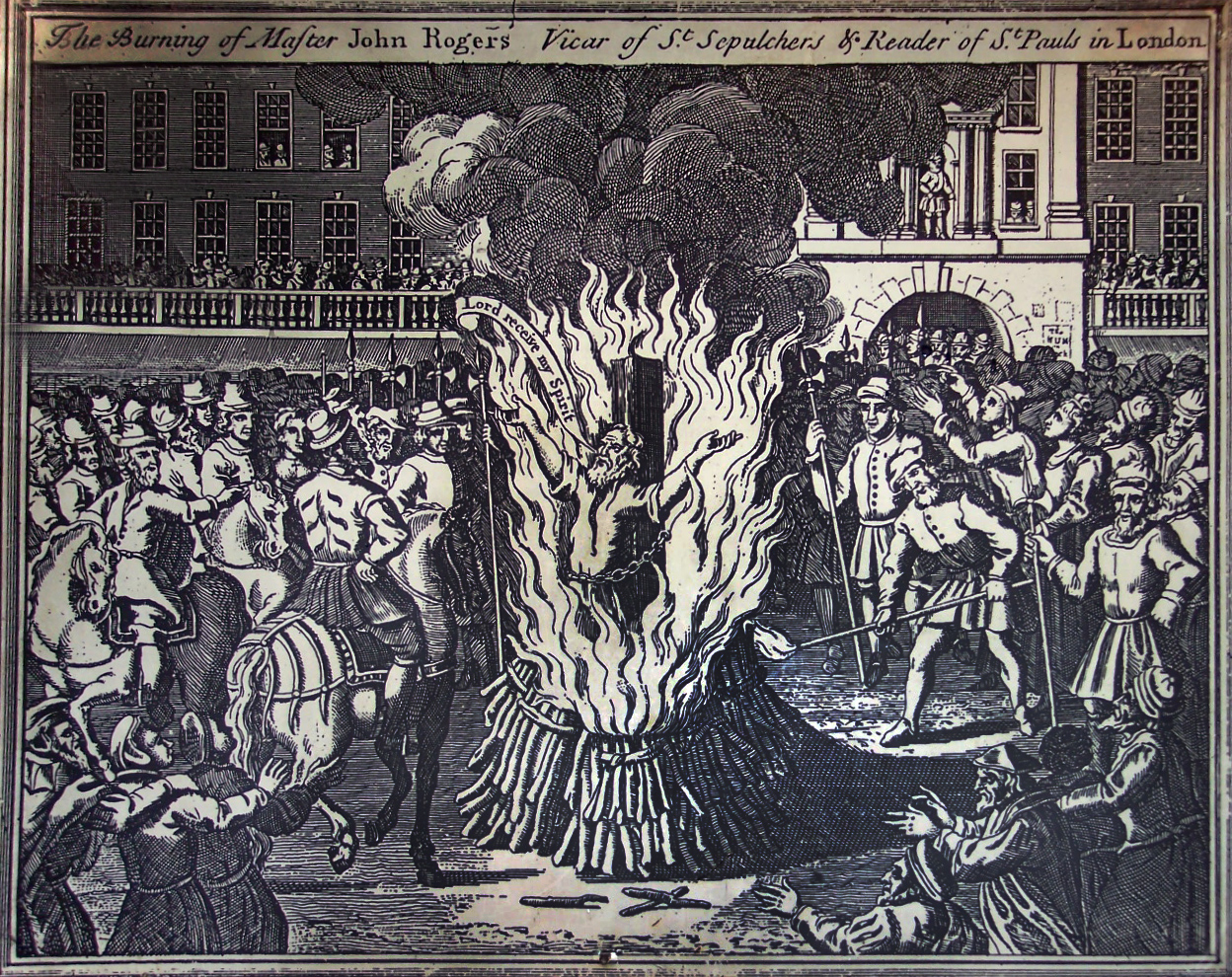
The_Burning_of_Master_John_RogersThe smell of burning flesh hung in the air.  The villagers turned their heads and gasped.  Stray dogs fled.  The man’s wife wept bitterly.  His children watched in disbelief.  The stench was a vivid reminder of who sat on the throne.  Mary Tudor ruled with ironclad authority.  Her subjects were obligated to obey.  Any dissenters would pay the ultimate price.  The world would remember her as “Bloody Mary.”

 The day was February 4, 1555.  The man roped to the pyre was known well in the British village.  A man of humble origins.  A man with bold ambitions and simple obedience to match.  A man who dared to challenge the throne with two simple acts – preaching the Word of God and printing the Matthews-Tyndale Bible.  His name was John Rogers.  Pastor, father, martyr.  He was the first Christ-follower to pay the ultimate price of death during Mary’s bloody reign of terror.  He was the first of hundreds who would die at the hands of this blood-thirsty tyrant.

John Rogers stands in a long line of godly men; men who preached the truth, lived uncompromising lives, and finished strong.  Like Rogers, some were martyred.  Others died of old age or were tormented with disease.  Those who stand in the long line of godly men still have something to say.  Their courage emboldens us.  Their lives inspire us.  Their theology instructs us.

Hebrews 11 recounts the stories of some of the godly men and women of Scripture that were people of faith – people who still have something to say.  The Word of God says, “Now faith means that we have full confidence in the things we hope for, it means being certain of things we cannot see.  It was this faith that won their reputation for the saints of old” (Heb. 11:1-2, Phillips).  God’s Word says, And without faith it is impossible to please him, for whoever would draw near to God must believe that he exists and that he rewards those who seek him” (Hebrews 11:6, ESV).

The historical figures in Hebrews 11 received their commendation from God – that is to say they were recognized by the God of the universe.  The Bible says they were commended by God for their faith; for displaying remarkable courage under fire, resilience, and soft-hearted obedience.  Enoch, Noah, Abraham, Sarah, Isaac, Jacob, Joseph, Moses, Gideon, Samson, David, and Rahab were commended through their faith.

Hebrews 12:1 says that these heroes of the faith are a great cloud of witnesses  who surround us – giving us great impetus to “lay aside every weight, and sin which  clings so closely, and run with endurance the race that is set before us.”

Here is what’s intriguing.  All of these heroes (with the exception of Enoch) is dead.   In Enoch’s case the Bible tells us that he “was taken up so that he should not see death.”  But even Enoch “was commended as having pleased God” (Heb. 11:5).  The other heroes are dead – each of them is in heaven with Jesus!

One of these heroes is Abel.  Genesis 4 tells the story of this faithful man:

  • A sheep herder (v. 2).
  • Cain brought to the LORD an offering of the fruit of the ground (v. 3).
  • Abel brought an offering of his own the firstborn of his flock (v. 4).

Scripture tells us this: “… And the Lord had regard for Abel and his offering …(Gen. 4.4).

What was it about Abel’s offering that attracted the heart of God?  What was it that caused God to gaze upon Abel’s offering with joy and receive it as an acceptable offering?  The answer emerges in Hebrews 11:4: “By faith Abel offered to God a more acceptable sacrifice than Cain, through which he was commended as righteous.  God commending him by accepting his gifts.  And through his faith, though he died, he still speaks.”

“And through his faith, though he died, he still speaks.”  There is a parade of godly men in Redemptive history who have died, yet they still speak.  Yet … there is a tone in the church, an attitude in the church that discounts church history.  There is a tone and an attitude in the local church that turns a blind eye at the past and a muffled ear to the historical.  Indeed, our feet appear to be reluctant to travel on the old dusty paths.  I have even heard people say that they’re “sick of hearing about the Puritans and the Reformers.”  “I’m sick of hearing about Luther, and Edwards, and Spurgeon,” they say.

Here’s the problem.  Discounting and discarding the past is not only a mistake.  It is dangerous to our spiritual lives.  J.I. Packer refers to the countless number of Christians who hold:

  • the newer is truer
  • only what is recent is decent
  • every shift of ground is step forward
  • and the latest word must be hailed as the last word on its subject

This is what C.S. Lewis affectionately labeled as “chronological snobbery,” that is – “the uncritical acceptance of the intellectual climate common to our own age and the assumption that whatever has gone out of date is on that account discredited” (C.S. Lewis, Suprised by Joy, 207-208).

Here’s what I’ve learned.  Dead men are still talking!  If you ever wonder what influence a dead man might have over masses of people, consider two wicked men who continue to rule with an iron fist from the grave.

Charles Darwin (1809 – 1882)

Darwin is credited with writing Origin of Species (1859) and formulating the theory of evolution, the diabolical notion that matter emerged by chance and relegates God to the intellectual scrap bin of history.  Darwin noted, “I am not apt to follow blindly the lead of other men.”  Unfortunately, millions of people continue to blindly follow the lead of Charles Darwin.  He informs their worldview and leads them away from God and his revealed truth.

Karl Marx (1818 – 1883) 

Another man who rules from the grave is Karl Marx, the man credited with saying, “Religion is the opium of the masses.”  Marx influenced men like Stalin – a mass murderer of his own countrymen.  His famous, Communist Manifesto has and continues to influence countless lives and twists political ideologies into a godless morass of hopelessness.

But my goal is to focus on the men who can and should have a profound affect on our Christian lives.  The dead guys I’m referring to are the ones who believe in the authority of Scripture and embrace the doctrinal foundations that fuel our Christian lives.  One of those dead men is none other than Charles H. Spurgeon (1834 – 1892) who died over 120 years ago.  He remarked, “I shall live and speak long after I am dead.”rogers profile

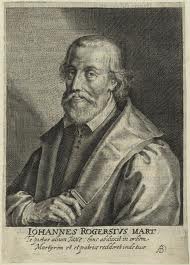
John Rogers is dead, yet he still speaks.  So what can the dead guys teach us?  And what is the rationale for learning from these dead guys?  The next several posts will address this very important question.

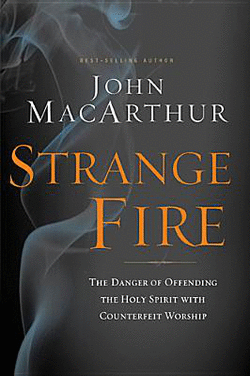
STRANGE FIRE – John MacArthur (2013)

strange fireNadab and Abihu, the Old Testament miscreants who offered unacceptable worship to the Lord paid the ultimate price for their diabolical deed – death.  The “strange fire” they offered led to their untimely deaths: “The crux of their sin,” writes John MacArthur, “was approaching God in a careless, self-willed, inappropriate manner, without the reverence He deserved.  They did not treat Him as holy or exalt His name before the people.”  MacArthur offers an identical warning that is directed at the heart of the charismatic movement – a movement that is filled with “spiritual swindlers, con men, crooks, and charlatans.”

Many readers will be tempted to cast aside the arguments that MacArthur wields in his latest book, Strange Fire – a work that maintains the Holy Spirit is offended by counterfeit worship.  His critique of the charismatic movement may come across as severe and insensitive.  His comments may offend.  But jumping to a judgmental conclusion would be a mistake.  For the greatest offense in the universe involves creatures who approach God in an unworthy manner or offers “worship” that He deems unacceptable.   Cain, Nadab, Abihu, Uzzah, Ananias and Sapphira remind us that God will not trifle with man-centered “worship.”

Part 1: Confronting a Counterfeit Revival

MacArthur argues that charismatics “often seem to reduce the Spirit of God to a force or a feeling.”  The author notes how many charismatics are locked into a health and wealth gospel which is in the final analysis no gospel at all.  But the heart of the problem is that “Pentecostals and charismatics elevate religious experience over biblical truth.”  MacArthur maintains, “If Scripture alone were truly their final authority, charismatic Christians would never tolerate patently unbiblical practices – like mumbling in nonsensical prayer languages, uttering fallible prophecies, worshipping in disorderly ways, or being knocked senseless by the supposed power of the Holy Spirit.”

The origins are the charismatic movement are explored in a fascinating biographical account of Charles Parham – founder of the Apostolic Faith Movement.  Parham’s was discredited by his ungodly character and false teaching.  As a result the movement as a whole was subject to suspicion from the start.

The remainder of part one is a theological tour de force that guides readers through a thought process that equips them to exercise biblical discernment by testing the spirits, in keeping with 1 John 4:2-8.  Believers should ask five questions to test every proposition or movement:

1. Does the work exalt the true Christ?

2. Does it oppose worldliness?

3. Does it point people to the Scriptures?

4. Does it elevate the truth?

5. Does it produce love for God and others?

The questions noted above are prompted by Jonathan Edwards’ fine work on this biblical passage.  MacArthur not only helps readers develop biblical discernment; he includes numerous examples of charismatics who have abandoned the truth of God’s Word and as a result ignored the prompts of the Holy Spirit.

Part 2: Exposing the Counterfeit Gifts

In part two, the author cites concrete examples of a movement that has moved from bad to worse.  While some leaders like C. Peter Wagner affirm the beginning of the Apostolic Age, MacArthur rightly argues that the canon is closed: “Hence, the writing so the New Testament constitute the only true apostolic authority in the church today.”  The author argues strenuously that the office of apostle was unique to the first century church, an office that faded away and no longer necessary with the closing of the canon.

False prophets are addressed and rightly labeled as “dry well wells, fruitless trees, raging waves, wandering stars, brute beasts, hideous stains, vomit-eating dogs, mud-loving pigs, and ravenous wolves.”  Readers offended by such language need only turn to Scripture where each title is assigned to false teachers.  The author helps readers identify false prophets with three defining benchmarks:

1. Anyone who leads people into false doctrine and heresy.

2. Anyone who lives in unrestrained lust and unrepentant sin.

3. Anyone who proclaims any supposed “revelation from God” that turns out to be inaccurate or untrue.

MacArthur helps readers determine whether the modern version of tongues is equivalent with the original biblical gift.  After presenting a lengthy argument, the author concludes, “It is a false spiritual high with no sanctifying value.  The fact that modern glossolalia parallels pagan religious rites should serve as a dire warning of the spiritual dangers that can be introduced by this unbiblical practice.”

Finally, two so-called faith healers are examined: Oral Roberts and Benny Hinn in what proves to be one of the most interesting chapters in the book.  The conclusions are clear and decisive.

Part 3: Rediscovering the Spirit’s True Work

Part three includes a robust treatment of the person and work of the Holy Spirit.  The author uncovers the Spirit’s role in salvation, sanctification, and the Word of God. The biblical contrast with the previous two sections could not be clearer.  Charismatics are encouraged to carefully read this section and contrast MacArthur’s treatment with what currently resides in the modern Pentecostal sanctuary.

Summary

The charismatic movement is carefully evaluated through the lens of Scripture in Strange Fire.  The critique is forthright and charitable.  But the criticism is not for the faint at heart.  Readers should approach Strange Fire with a biblically informed worldview and be prepared to make necessary adjustments.

“God is spirit, and those who worship him must worship in spirit and truth” (John 4:24).  We must worship God in the way that he prescribes.  To move outside the boundaries of Scripture or invent man-made models is tantamount to idolatry.

I received this book free from the publisher through the BookSneeze®.com  book review bloggers program. I was not required to write a positive review. 

4.5 stars

MISTAKES LEADERS MAKE – Dave Kraft (2012)

1433532492_bEvery leader makes mistakes.  Dave Kraft makes this painfully clear in his excellent book, Mistakes Leaders Make.  MLM is a part of the growing list of Re:Lit books, a superb lineup of Crossway titles that provide encouragement for emerging leaders in pastoral ministry.

Kraft brings over 40 years of leadership experience as he presents ten leadership mistakes:

1. Allowing ministry to replace Jesus

2. Allowing Comparing to Replace Contentment

3. Allowing Pride to Replace Humility

4. Allowing Pleasing People to Replace Pleasing God

5. Allowing Busyness to Replace Visioning

6. Allowing Financial Frugality to Replace Fearless Faith

7. Allowing Artificial Harmony to Replace Difficult Conflict

8. Allowing Perennially Hurting People to Replace Potential Hungry Leaders

9. Allowing Information to Replace Transformation

10. Allowing Control to Replace Trust

The book should be applauded for its transparency and vulnerability.  Dave Kraft “lays the cards on the table” in a way that is rare these days.  Pastors in particular will benefit from Kraft’s biblical wisdom.

4 stars

THE WARNINGS OF SCRIPTURE ARE IN THE BEST MANNER ADAPTED TO THE AWAKENING AND CONVERSION OF SINNERS – Jonathan Edwards

Jonathan_Edwards_engravingJonathan Edwards has a way of warning sinners like no one else in the halls of church history.  His warnings are distinct from the watered-down invitations that emerge from many American pulpits.

The preacher from Northampton is burdened in this sermon to warn sinners and root that warning in sacred Scripture.  He sets forth his primary assertion as follows: “The warnings of God’s word are more fitted to obtain the ends of awakening sinners, and bringing them to repentance, than the rising of one form the dead to warn them.”  Edwards maintains that while many unconverted people would appear ready to believe the gospel if Christ performed a miracle or walked among them like he did with his disciples – they would, in the final analysis remain hardened.

Six principles guide his primary argument:

First, God in many respects, knows better what belongs to the punishment of sinners than departed souls.  Edwards responds to those who misread and misapply Jesus’ story about Lazarus who saw the rich man in hell.  He writes, “God glorifies his justice in the punishment of ungodly men, in the view of the saints and angels, and thereby makes them the more admire the riches of his goodness in choosing life.”  Edwards affirms God’s “all-seeing” eye: “He is in heaven and in hell, and in and through every part of the creation … He therefore is doubtless able to give us as clear and distinct, and as true, an account of hell, as the damned themselves, if they should rise from the dead.”

Second, we have the truth upon surer grounds from God’s testimony, than we could have it from the testimony of one rising from the dead.  Edwards intention is to ground the attention of the reader to God’s truthfulness.  While the testimony of a creature may be flawed, God’s testimony is always on target and can be relied upon with certainty.

Third, the warnings of God’s word have greatly the advantage, by reason of the greatness and majesty of him who speaks.  Edwards speaks forcefully, “Now what can have a greater tendency to strike the mind and move the heart, than to be warned by this great and glorious being?”  The question hangs in there air – a tool that Edwards often uses to alert the reader to the seriousness of the situation.

Fourth, it more evidently shows the importance of the affair, that God should immediately concern himself in it, than the coming of one from the dead would do.  

Fifth, God warning us of our danger of damnation has a greater tendency to have influence upon us, because he is our Judge.   Edwards weighs in, “Damnation is a punishment to which he condemns and which he inflicts.  What he warns us of is his own wrath and vengeance.”

Sixth, God is infinitely wise, and knows better how to speak to us so as to persuade us, than one risen from the dead.  Edwards makes it clear that theses are only some of the reasons why the warnings of God may bring people to repentance.

Edwards applies the doctrine in a straightforward manner.  Ultimately, “the warnings of the word of God are, as you have heard, better and more powerful means than if one should rise from the dead to warn us, and tell us our danger, and the dreadfulness of the wrath of God.”  Once again, Edwards is distinguished from scores of American pastors who rarely warn their congregations to flee from the wrath to come.  He is set apart from a church which is all to often captivated by pragmatic methodology.  His warning is not only for the unrepentant; it is plea for pastors to warn their congregations.

Faithful pastors must heed the challenge that Jonathan Edwards offers.

“Him we proclaim, warning everyone and teaching everyone with all wisdom, that we may present everyone mature in Christ.” (Colossians 1:28, ESV)

THE GREAT CHOLESTEROL MYTH – Jonny Bowden and Stephen Sinatra (2012)

cholesterol mythMe: “Doc, I cycle 100 miles a week, burn 6000-7000 calories a week, take fish oil, and I’m eating better.  I even take advantage of “nature’s broom” by eating oatmeal almost every day.  However, my cholesterol just won’t drop.”

Doctor: “Because of family history and genetics, you simply won’t be able to lower your cholesterol without a statin.”

So for the last four years, I’ve taken a well-known statin and the results have been favorable.  However, Drs. Jonny Bowden and Stephen Sinatra disagree with the notion that lowering cholesterol prevents heart disease.  Their book, The Great Cholesterol Myth contains an argument that pumps feverishly through the arteries of this book: The real causes of heart disease include four key factors, namely – inflammation, oxidation, sugar, and stress.  The authors contend the real tragedy is the fixation with cholesterol which has produced an industry that boasts over $30 billion a year in the statin market.  In a shocking statement, both authors maintain, “Cholesterol does not cause heart disease.”

Bowden and Sinatra point out that cholesterol is vital for healthy living: “Cholesterol is an essential molecule without which there would be no life, so important that virtually every cell in the body is capable of synthesizing it.”  For over fifty years, the so-called lipid hypothesis has dominated the medical community which essentially states that “saturated fat runs up cholesterol levels, and elevated cholesterol leads to heart disease.”  The hypothesis has never been proved but continues to rule in the hearts and minds of most Americans.

One of the most helpful aspects of The Great Cholesterol Myth is the discussion about the importance of coenzeme Q10 (better known as CoQ10) which serves an important nutrient, a sort of fuel source for the heart.  Statins deplete CoQ10 which may lead to muscle pain, weakness, and fatigue.  Yet none of the doctors that have prescribed a stain in my case have ever mentioned that importance of supplementing with CoQ10.  The authors plead with readers who take statins to immediately begin supplementing their cholesterol lowering drug with  CoQ10 – a minimum of 200 mg daily.

Dr. Sinatra admits that he still prescribes statins on occasion but “almost exclusively to middle-aged men who’ve already had a first heart attack, coronary intervention, or coronary artery disease.”  He argues, “Statin drugs are anti-inflammatory, and their power to reduce inflammation is more much important than their ability to lower cholesterol.  But [and here’s the clincher] we can lower inflammation (and the risk for heart disease) with natural supplements, a better diet, and lifestyle changes such as managing stress.”

The authors reveal a fascinating study that includes five factors that significantly lowered the risk for heart disease:

1. Don’t smoke.

2. Drink alcohol in moderation.

3. Engage in moderate-to-vigorous exercise for at least half an hour a day on average.

4. Maintain a healthy weight (BMI under 25).

5. Eat a wholesome, low-glycemic (low-sugar) diet with plenty of omega-3 fats and fiber.

Notice that lowering cholesterol is painfully absent from the list.  Perhaps this is why, as the authors note, “Cholesterol is a relatively minor player in heart disease and a poor predictor of heart attacks.  More than half of all people who are hospitalized with heart attacks have perfectly normal cholesterol levels.”

The heart of the book explores the real culprit behind heart disease.  The authors dogmatically claim “the true cause of heart disease is inflammation” or as they put it, “acute inflammation hurts, but chronic inflammation kills.”  Second, oxidation is one of the sure signs of inflammation, which leads to a fascinating conclusion, namely – the only time cholesterol becomes troubling is if it’s oxidized (or damaged).  Third, the authors note that “sugar is a far greater danger to your heart than fat ever was.”  They go on to demonstrate that “the number one dietary contributor to heart disease is sugar.”  Finally, stress is included as a major cause of heart disease.

Bowden and Sinatra wonder out loud if statins will become the next medical tragedy – quite comforting to anyone who has relied on statins for years on end!  Side-effects are explored, which is well documented, and side-effects which I have personally experienced.  But the alarming news is that some researchers are warning that statins may contribute to Alzheimers, thinking skills, and memory.  One researcher comments, “Cholesterol changes the shape of the protein to stimulate thinking and memory.”  But the fact that is most often repeated is ability of statins to deplete the body of CoQ10.  “The depletion of CoQ10 is one of the most important negative effects of statins, and the one that is pretty much responsible for a host of common side effects involving muscle pain, weakness, and loss of energy.” To summarize, the authors maintain the risk of using statins outweighs the rewards.

Finally, Bowden and Sinatra explore how supplements can lead to heart health such as vitamins, antioxidants, and omega-3 fats included in wild salmon.  Additionally, they recommend that stain users immediately begin to supplement their diet with CoQ10.  “Just as a gasoline engine can’t work without spark plugs, the human body can’t work without CoQ10.”

I am not ready to pitch my statin until my doctor recommends doing so.  But The Great Cholesterol Myth has got me thinking.  And it has led to some concrete action steps such as implementing CoQ10 into my daily diet.  I’m actually looking forward to my next doctor visit – where my list of questions will be long.  Let’s just say, I’ll be getting my money’s worth that day!

FIVE POINTS – John Piper (2013)

I remember fighting the doctrines of grace during my university days.  Perhaps it was the moniker, “Calvinism” that put me on edge.  I remember believing in perseverance1781912521_b of the saints (inconsistently I might add), but rejecting the other points of Calvinism.  While I affirmed the doctrine of sin, like all Arminians – I refused to embrace the doctrine of radical depravity.  I held to election according to foreknowledge but denied the doctrine of unconditional election.  I believed that God’s grace could be resisted in an ultimate sense (which is rooted in a robust belief in libertarian free will) and I found the doctrine of limited atonement deplorable.

I remember battling with my roommate in Bible College, mustering every argument I could to defend my rather fragile Arminian stance.  However, in the late 80’s my Arminian worldview came apart at the seams and my semi-Pelagian presuppositions were rendered useless on the safe shore of God’s truth.  First, the book of Romans dealt a devastating blow to my man-centered theological views.  Ephesians, the Gospel of John, and Galatians moved in and graciously woke me up.  R.C. Sproul’s book, Chosen by God confirmed what I was learning about the doctrines of grace and God’s redemptive purposes.  John Piper’s book, The Pleasures of God played a huge role in my thinking during those days.

Five Points by John Piper is a short but powerful summary of the doctrines of grace.  The author’s aim is to “persuade the mind concerning biblical truth and thus awaken a deeper experience of God’s sovereign grace.”  And he succeeds at every level.  The historical roots of the debate are explored which provide a helpful context to this much debated topic.  Piper maintains, “These five points are still at the heart of biblical theology.  They are not unimportant.  Where we stand on these things deeply affects our view of God, man, salvation, the atonement, regeneration, assurance, worship, and missions.”

The next five chapters unpack the doctrines of grace, carefully.  While Piper rightly utilizes logic, the main driver is Scripture – which supports the five points throughout.  The arguments are clear and compelling and serve to magnify the greatness of God’s worth and lead worshippers to a deeper experience of God’s grace.

Piper includes some helpful personal reflections and shares how the doctrines of grace have revolutionized his life:

1. These truths make me stand in awe of God and lead me into the depth of true God-centered worship.

2. These truths help protect me from trifling with divine things.

3. These truths make me marvel at my own salvation.

4. These truths make me alert to man-centered substitutes that pose as good news.

5. These truths make me groan over the indescribable disease of our secular, God-belittling culture.

6. These truths make me confident that the work which God planned and began, he will finish – both globally and personally.

7. These truths make me see everything in the light of God’s sovereign purposes – that from him and through him and to him are all things, to him be glory forever, and ever.

8. These truths make me hopeful that God has the will, the right, and the power to answer prayer that people be changed.

9. These truths remind me that evangelism is absolutely essential for people to come to Christ and be saved, and that there is great hope for success in leading people to faith but that conversion is not finally dependent on me or limited by the hardness of the unbeliever.

10. These truths make me sure that God will triumph in the end.

In the end, John Piper makes his point and leaves no room for misunderstanding.  This powerful little primer deserves a wide readership and is destined to help many as their navigate their way to the Celestial City.  Soli Deo Gloria!

THE KING IN HIS BEAUTY: A Biblical Theology of the Old and New Testaments – Thomas R. Schreiner (2013)

The King In His Beauty by Tom Schreiner is a book about biblical theology.  But my suspicion is 0801039398_bthe author would agree enthusiastically with my assertion that the book is a worship manual.  Schreiner’s work weighs in at 646 pages.  Each page is filled with heart-warming theology and mind-stretching propositions.  But when the work is considered as a whole – it is, in the final analysis a worship manual.

The book is arranged in nine parts.

Part 1: Creation to the Edge of Canaan

Part 2: The Story of Possession, Exile, and Return

Part 3: lsrael’s Songs and Wisdom

Part 4: Judgment and Salvation in the Prophets

Part 5: The Kingdom in Matthew, Mark, and Luke-Acts

Part 6: Eternal Life in the Gospel and Epistles of John

Part 7: The End of Ages Has Come According to the Apostle Paul

Part 8: Living in the Last Days According to the General Epistles

Part 9: The Kingdom Will Come

Schreiner makes it clear that Redemptive history is going somewhere: “The Scriptures promise that there will be a new heaven and a new earth – a new creation where the glory of God will illumine the cosmos.  So, the kingdom of God has a threefold dimension, focusing on God as King, on human beings as subjects of the King, and the universe as the place where his kingship is worked out.”

The author demonstrates over and over again that Christ is the King; Christ intends to fulfill his promises; that the offspring of the woman will be the Victor; he will triumph over the serpent through the son of David (Gen. 3:15).  He reiterates the theme that runs throughout the Scripture, namely, the theme of judgment followed by salvation.  But the most penetrating reality in Schreiner’s work is the main truth he wishes to communicate, namely, the people of God will see the King in his beauty.

This is the book I’ve been searching for since my days as a Seminary student.  For years, I was taught the distinctives of classical Dispensationalism that saw two peoples of God, a distinction between the kingdom of God and the kingdom of heaven, a rigid distinction between Israel and the church, and a pre-tribulational rapture.  Schreiner is not content to rest in the land of classical dispensational theology, a terrain that is filled with horrible hermeneutics and wacky exegetical propositions.   He moves forward and as far as I can tell, lands squarely in a historical premillennial arena.

One paragraph in particular is worth citing; a paragraph that has ended a thirty year search for answers to the dispensational dilemma.  Schreiner writes, “The coming of Jesus Christ means that the old covenant, the Sinai covenant, has passed away, and the new covenant has become a reality.  The promises of Abraham are being fulfilled in the gospel of Jesus Christ.  Now inclusion in the people of God is not restricted to Israel but is open to both Jews and Gentiles who believe in Jesus.  Those who trust in him are truly children of Abraham (emphasis mine).  Those who belong to Jesus Christ and who have received the gift of the Spirit are truly circumcised.  Those who are members of the new creation are the new and true Israel of God.  In the church of Jesus Christ the worldwide promises given to Abraham are becoming a reality, for Jews and Gentiles are one body in Christ, equally members of the people of God together” (p. 642).

Schreiner also clears up the essence of the land promises that are a major part of the dispensational warp and woof: “The new new heavens and the new earth fulfill the land promise given to the patriarchs, but now the promise encompasses the entire universe” (p 617).

The King in His Beauty is a fitting companion to recent works that have also jettisoned classical dispensational distinctives, namely, Kingdom Through Covenant by Gentry and Wellum and God’s Glory in Salvation Through Judgment by James Hamilton.  Indeed, it is an essential part of every pastoral toolbox.  But “toolbox” is the wrong metaphor.  The King in His Beauty is a treasure chest.  Readers who open this treasure chest will be immediately struck with the majesty, sovereignty, and the beauty of the Lord Jesus Christ!  Open the worship manual and respond rightly with God-centered worship!

Highly recommended