It’s Good to Be a Man – Michael Foster and Dominic Bnonn Tennant

Michael Foster & Dominic Bonn Tennant, It’s Good to Be a Man (Moscow: Canon Press, 2022), 227 pp.

Books about masculinity are a dime a dozen. A few books that address the topic of masculinity break this pitiful mold. These books direct men to the Bible as our highest authority. These books challenge men to be men of the Book. They challenge men to see their unique role in the framework of the Christian worldview; one that follows the trajectory of redemptive history. The most recent book that breaks the mold and stands out in a decisive way is It’s Good To Be a Man by Michael Foster and Dominic Bnonn Tennant.

The goal of the authors is “to help modern Christian men understand what God made them for, and how to start doing it intentionally.” Foster and Tennant state their goal upfront and don’t waste any time in achieving it. The book begins on what some would consider being controversial as the topic of patriarchy is discussed. Readers committed to the authority of God’s Word know better, though.

“Patriarchy is inevitable,” writes Foster and Tennant. “God has built it into the fabric of the cosmos. It is part of the divine created order … Redemptive history is therefore patriarchal history.” Critics who charge the authors with male chauvinism should tread carefully since the case for biblical patriarchy is carefully developed:

Men were made to rule. They always have and always will. Nothing can change that. Nothing will. It is not a question of whether men will be pulling, but which ones and how.

The reason patriarchy is so controversial is that sin has distorted it and twisted it. We even find patriarchy distorted in the church, a sin that will pay a high price in the final analysis. Foster and Tennant explain, “Although our culture treats all patriarchy as evil, God’s father-rule is good. Evil patriarchy is that which does not reflect God’s loving authority.” The heartbeat of the authors, then, is to expose evil patriarchy and extinguish it wherever they can. But positively, they aim to explore the beauty and richness of patriarchy and how it fits into God’s redemptive program. The remainder of the book reveals the purpose of God in creating men and practical steps to fall in step with his revealed will.

God’s purpose in creating man is “for productive, representative rulership. This is what it means to exercise dominion: to fruitfully order the world in God’s stead.” This purpose sounds strange and even offensive to the unregenerate mind, yet God’s purpose stands. Tragically, God’s purpose is being modified and marginalized by people who are professing Christians.

After carefully dismantling the arguments of anyone who militates against God’s purpose in creating men, the authors provide practical steps for fulfilling God’s revealed will. The argument is as follows:

A mission is your best effort at wisely integrating your interests, skills, and circumstances into a personal vision for exercising dominion over what God has given you.

Practical help is offered so men can move forward in achieving their mission, which propels them forward in carrying out God’s purpose in creation. It’s Good To Be a Man is not for the faint at heart. It will provoke. It may even offend at times. But in the end, it will lead men on a path that glorifies the Creator of the cosmos.

I’ll never forget when my Uncle Dwight challenged me to read The Christian Mind by Harry Blamires. He said, “If you’re a real man, you’ll read this book.” I offer the same challenge to readers of my blog: “If you are a real man, you’ll devour It’s Good To Be a Man!”

Now is the time for Christian men to step up and obey God (1 Cor. 16:13-14). Now is the time for mature manhood (Eph. 4:13). It’s time to love our wives as Christ loved the church (Eph. 5:25-33) and bring our children up in the discipline and instruction of the Lord (Eph. 6:4). Kill sin by the power of the Spirit (Rom. 8:13). Walk according to the Spirit (Gal. 5:16). Pursue holiness (Heb. 12:14). Work with our hearts as unto the Lord (Col. 3:23-24; 1 Cor. 10:31). It’s good to be a man!

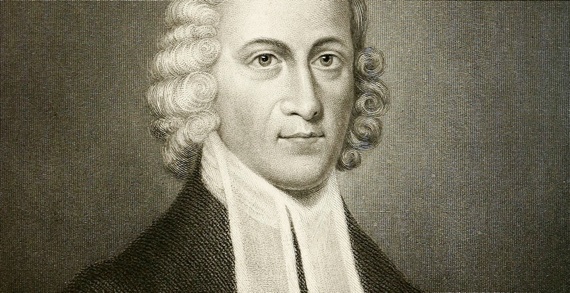
The Christian Pilgrim – Jonathan Edwards

Jonathan_Edwards_engravingJonathan Edwards reminds readers that there are on a journey towards heaven. The title of the message is The Christian Pilgrim.

Section 1 – A Pilgrimage to Heaven

“We ought above all things to desire a heavenly happiness; to be with God; and dwell with Jesus Christ,” argues the Puritan divine. This is a journey to heaven, which is the way of holiness. Such a journey requires travelers to set aside anything that hinders progress to our heavenly home (Heb. 12:1). Edwards continues,

We should travel on in the way of obedience to all God’s commands, even the difficult as well as the easy; denying all our sinful inclinations and interests. The way to heaven is ascending; we must be content to travel up hill, though it be hard and tiresome, and contrary to the natural bias of our flesh. We should follow Christ; the path he travelled, was the right way to heaven … The way to heaven is a heavenly life; an imitation of those who are in heaven, in their holy enjoyments, loving, adoring, serving, and praising God and the Lamb. Even if we could go to heaven with the gratification of our lusts, we should prefer a way of holiness and conformity to the spiritual self-denying rules of the gospel.

The highway to heaven is a difficult journey; one that will be met with hardship along the way. However difficult the journey may be, travelers must be constantly growing in holiness: “We should be endeavoring to come nearer to heaven, in being more heavenly; becoming more and more like the inhabitants of heaven … We ought to be hungering and thirsting after righteousness; after an increase in righteousness” (1 Pet. 2:2).

Section 2 – Why the Christian’s Life is a Pilgrimage

Edwards marks out four specific reasons that our life on this earth is a mere pilgrimage.

  1. This world is not our abiding place.
  2. The future world was designed to be our settled and everlasting abode.
  3. Heaven is that place alone where our highest end, and highest good, is to be obtained.
  4. Our present state, and all that belongs to it, is designed by him that made all things, to be wholly in order to another world.

Section 3 – Instruction Afforded by the Consideration that Life is a Pilgrimage to Heaven

Edwards infuses his readers with heavenly perspective in section three. He is quick to remind them of the heavenly lot of Christ-followers: “If they lived a holy life, then their lives were a journey towards heaven. And why should we be immoderate in mourning, when they are got to their journey’s end? Death, though it appears to us with a frightful aspect, is to them a great blessing. Their end is happy, and better than their beginning.”

Section 4 – An Exhortation in the Journey to Heaven

Edwards concludes by encouraging his readers to think much about heaven: “Labour to obtain such a disposition of mind that you may choose heaven for your inheritance and home; and may earnestly long for it, and be willing to change this world, and all its enjoyments, for heaven.”

The Seventy Sevens – Ping Pong Over the Abyss

The 77’s first album was originally released in 1983.  So why review an album that is almost thirty years old?  For starters, Michael Roe decided to make the album available on iTunes a few weeks ago.  So anyone that has an old crusty cassette and nothing to play it on should be very excited.  Also, the iTunes release gives many listeners a chance to hear these unbelievable notes for the first time.

Ping Pong Over the Abyss engages with worldview themes in a way that is uncommon in Christian circles.  If King Solomon wrote lyrics to a rock album, this is what it would be like.  The album tackles several worldviews in a very straightforward way.  A Different Kind of Light questions the notion of finding “truth within.”

They talk about a light inside you
I hope I never get that blind
I don’t want to take my chances
On joining the collective unconscious
I’m waiting for the clouds to break
I’m looking for the road to take
Don’t want the usual merchandise
Recycled in a new disguise

I’m following a different Light
A different kind of light

It’s So Sad lays bare the worldly philosophy of hedonism and refuses to embrace the lies of Hinduism:

Trying to buy heaven
Right here on earth
The cost will always end up
More than it’s worth
You ponder living
You wonder why
No matter what you do
You’re still going to die

Falling Down a Hole wrestles with a host of worldviews including Buddhism, Islam, Spiritualism, Fatalism, Humanism, Evolution, and Witchcraft:

Humanism
Is a tired old line
The logos is sleeping
Just give it some time
Evolution is preaching
“From monkey to divine”

Renaissance Man is a frontal assault on atheistic evolution and is a powerful musical apologetic:

It’s from “star stuff” that he’s made
It’s the cosmos that gave him life
How does that help him feed the poor
How does that help him love his wife

A renaissance man
Tearing himself from The Rock
A renaissance man
Tearing himself from The Rock

He’s cast away all thoughts of heaven
His science is full of preconceptions
His answers make me ask more questions
How many can wait on evolution

He needs to live
On the sides of the north
In the city of Reformation
That’s where he’ll find his life

This album is definitely not a typical Christian rock album.  The themes are sobering and tap into the meaningless of man apart from Christ.  A severe blow is delivered to nihilism, humanism, and hedonism.  Something tells me these guys were reading Francis Schaeffer in the late 70’s!

If you like your music raw and realistic and don’t mind a trip back to the 80’s,  Ping Pong Over the Abyss is for you.

The Happiness of God – Part 3

person walking on snowfield near mountain range

God is eternally happy. Over the past few days, we have been learning about the reality of God’s happiness and the reasons for God’s happiness. We conclude this brief study by focusing on our response to this happy God.

The Response to our Happy God

I’m convinced that one of the biggest reasons that many followers of Christ are unhappy is that they fail to realize and embrace the biblical reality of God’s eternal happiness. Notice, then, four key responses to our happy God.

We model after God by striving for happiness

George Müller was a happy and contented Christian man. He impacted the city of London in unprecedented ways. He said:

Above all things see to it that your souls are happy in the Lord … It is of supreme and paramount importance that you should seek above all things to have your souls truly happy in God Himself.1

There is no need, therefore, to choose between happiness and holiness. We need to forever ditch this notion that has been popularized in the church and Christian circles. “If you keep my commandments, says Jesus, “you will abide in my love, just as I have kept my Father’s commandments and abide in his love. These things I have spoken to you, that my joy may be in you, and that your joy may be full” (John 15:10-11, ESV).

When you live a holy life, you will experience firsthand what it means to be a happy person when you find your happiness in Christ (Ps. 37:4). John Piper adds, “God is most glorified in us when we are most satisfied in him.” If we are called by God to reflect his glory, then it follows that we should be the happiest people on the planet. When we fail to be happy Christians, we misrepresent the God who is infinitely happy!

We have the privilege of joining in the same happiness that God enjoys

Moses asks God an important question that helps us understand the inner-workings of God: Moses said, “Please show me your glory.” And he said, “I will make all my goodness pass before you and will proclaim before you my name ‘The LORD.’ And I will be gracious to whom I will be gracious, and will show mercy on whom I will show mercy” (Exodus 33:18–19, ESV).

Daniel Fuller adds, “God’s glory consists in his goodness, that is, that he alone is both able and disposed to bring people made in his image, into the ultimate happiness of sharing with in his delight in his glory.”2

We find happiness by delighting in God and the gospel of his Son

When we consider what God has delivered us from, the sin that Christ has saved us from and the inheritance that is our in Christ, we will overflow with gratitude and happiness. “Our eternal joy will flourish,” writes Tony Reinke, “when we are the objects of God’s sovereign grace.”3

Randy Alcorn beautifully describes this blessing in his book, Happiness”4

  • Happy are those who believe in Jesus.
  • Happy are those facing trials for Jesus’ sake.
  • Happy are those who see and hear Jesus for who he is.
  • Happy are those who serve God faithfully.
  • Happy are those who trust God’s promises.
  • Happy are those who obey God’s Word.
  • Happy are those who help and serve others.
  • Happy are those who have been forgiven by the Lord.
  • Happy are those who see unhappiness as a warning sign.
  • Happy are those who are prepared for Christ’s return.
  • Happy are those who will spend eternity with God.
  • Happy are those who are also holy.

Conclusion

To the extent that we fail to find our happiness in God, we fail to glorify him. “Because you did not serve the LORD your God with joyfulness and gladness of heart, because of the abundance of all things …” (Deut. 28:47, ESV). Indeed, the joy of the Lord is our strength (Neh. 8:10).

The Scriptures are packed with commands to rest in and find our joy in our sovereign LORD:

Let the heavens be glad, and let the earth rejoice, and let them say among the nations, “The LORD reigns!” (I Chron. 16:31).

Be glad in the LORD, and rejoice, O righteous, and shout for joy, all you upright in heart! (Ps. 32:11).

Shout for joy in the LORD, O you righteous! Praise benefits the upright (Ps. 33:1).

Let the righteous one rejoice in the LORD and take refuge in him! Let all the upright in heart exult! (Ps. 64:10).

Oh, come, let us sing to the LORD; let us make a joyful noise to the rock of our salvation! (Ps. 95:1).

Through him we have also obtained access by faith into this grace in which we stand, and we rejoice in the hope of the glory of God (Rom. 5:2).

Finally, my brothers, rejoice in the Lord. To writes the same things to you is no trouble to me and is safe for you (Phil. 3:1).

Happy are those who believe the gospel. Spurgeon reminds us of this great reality:

The Gospel is like wine which makes us glad. Let a man turly know the Grace of our Lord Jesus Christ, and he will be a happy man! And the deeper he drinks into the spirit of Christ, the more happy will he become! … He made the world, studied the happiness of His creatures. You cannot help thinking, as you see everything around you, that God has diligently, with the most strict attention, sought ways of pleasing man. He has not just given us our absolute necessities, He has given us more – the flowers … the stars … the hill and the valley – all these things were intended not merely because we needed them, but because God would show us how He loved us and how anxious He was that we should be happy! Now, it is not likely that the God who made a happy world would send a miserable salvation! He who is a happy Creator will be a happy Redeemer.5

Where do we receive our joy? From our God who is a happy Sovereign. Where do we rest and find refuge? From our God who is a happy Sovereign. Where do we turn to for the most satisfying relationship, one that can never be severed? From our God who is a happy Sovereign. Where do we turn to for freedom and forgiveness from all our sins? From our God who is a happy Sovereign.

““Everything hangs on the unbounded joy in the triune God from all eternity. This is the source of God’s absolute self-sufficiency as a happy Sovereign. And every true act of free grace in redemptive history depends on it.”6 May we cling to and trust in our God who is eternally happy.

  1. George Müller, cited in Randy Alcorn, Happiness, 225.
  2. Daniel Fuller, The Unity of the Bible.
  3. Tony Reinke, The Joy Project (Minneapolis: Desiring God, 2015), 8.
  4. Randy Alcorn, Happiness, 203-208.
  5. C.H. Spurgeon, cited in Randy Alcorn, Happiness, 119.
  6. John Piper, The Pleasures of God, 35.

The Happiness of God – Part 1

The Happiness of God – Part 2

The Happiness of God – Part 2

snow covered brown wooden house near trees

Jonathan Edwards helps us comprehend the reality of God’s happiness: “It is of infinite importance … to know what kind of being God is. For he is … the only fountain of our true happiness …”1 Notice, then, several reasons for God’s happiness.

The Reasons for God’s Happiness

God finds happiness in himself

The primary reason for God’s happiness is this: he is God. We find a God in Scripture whose greatest delight is in – himself! So we begin with the doctrine of the Trinity which helps us understand the supreme happiness among the members of the godhead. C.S. Lewis argues, “The words ‘God is love’ have no real meaning unless God contains at least two Persons. Love is something that one person has for another person. If God was a single person then before the world was made, he was not love.”2 Daniel Fuller adds, “God’s love is primarily to Himself … and his infinite delight is in Himself, in the Father and the Son (and the Spirit) delighting in each other … The happiness of the Deity, as all other true happiness, consists in love and society.”3 God has from all eternity been happy in the marvelous fellowship of the Trinity!

God finds happiness in creation

“May the glory of the Lord endure forever; may the LORD rejoice in his works” (Ps. 104:31, ESV). God rejoices in his creation because it is a reflection of his glory.

God finds happiness in his Son

In his high priestly prayer, Jesus prays, “Father, I desire that they also, whom you have given me, may be with me where I am, to see my glory that you have given me because you loved me before the foundation of the world. O righteous Father, even though the world does not know you, I know you, and these know that you have sent me. I made known to them your name, and I will continue to make it known, that the love with which you have loved me may be in them, and I in them” (John 17:24–26, ESV).

God finds happiness in the Son because the Son reflects the glory of the Father (Heb. 1:3). “The infinite happiness of the Father consist in the enjoyment of his Son, writes Jonathan Edwards.4

God finds happiness in his people

Listen how the Old Testament zeroes in on God’s happiness in his people:

For as a young man marries a young woman, so shall your sons marry you, and as the bridegroom rejoices over the bride, so shall your God rejoice over you (Isaiah 62:5, ESV).

The LORD your God is in your midst, a mighty one who will save; he will rejoice over you with gladness; he will quiet you by his love; he will exult over you with loud singing (Zephaniah 3:17, ESV).

God finds happiness in people, not only because he created them but because, like his creation and like his Son, his people are a reflection of his glory!

God finds happiness in the prayers of his people

Proverbs 15:8 says, “The sacrifice of the wicked is an abomination to the LORD, but the prayer of the upright is acceptable to him.”

Let us marvel at our great God who delight to hear the prayers of his people.

  1. Jonathan Edwards, cited in Randy Alcorn, Happiness (Carol Stream: Tyndale House Publishers, 2015), 111-112.
  2. C.S. Lewis, cited in Daniel Fuller, The Unity of the Bible (Grand Rapids: Zondervan, 1992), 121.
  3. Daniel Fuller, The Unity of the Bible, 122.
  4. Jonathan Edwards, cited in John Piper, The Pleasures of God, 31.

The Happiness of God – Part 1

The Happiness of God – Part 1

golden hour photography of sky above ocean

In the film, Chariots of Fire, Eric Liddell is criticized for his desire to train for the Olympic games. In the midst of their discussion, his sister Jennie essentially accuses Liddell of having a problem with idolatry. Liddell utters these words that prove to be the best line in the movie:

God made me fast, and when I run I feel his pleasure.

To view God as happy has a bearing on our worship; it affects our evangelism; it affects the way we approach Scripture. Indeed, it affects our Christian worldview. Randy Alcorn adds, “I believe it’s vital that we not leave our children and future generations of Christians to figure out for themselves that God is happy. Most never will.”1 Instead of making assumptions about God, we want to see what the Scriptures say about him. Over and over again, we learn that God is a happy God!

In the next two posts, we will come face-to-face with this glorious reality, the happiness of God.

The Reality of God’s Happiness

In 1 Timothy 1, Paul issues a warning against false teachers and those who teach contrary to sound doctrine; doctrine that is “in accord with the gospel of the glory of the blessed God …” (v. 11).

A great part of God’s glory is his happiness. It was inconceivable to the apostle Paul that God could be denied infinite joy and still be all glorious. To be infinitely glorious was to be infinitely – happy. He used the phrase, ‘the glory of the happy God’ because it is a glorious thing for God to be as happy as he is. God’s glory consist such in the fact that he is happy beyond our wildest imagination.2

“It is of infinite importance … to know what kind of being God is. For he is … the only fountain of our true happiness,” writes Jonathan Edwards.”3 Paul refers to “the glory of the blessed God” (1 Tim. 1:11). The same verse could be rendered, “the good news of the glory of the happy God.” The term blessed indicates “supreme happiness.”4 “The gospel … is the gospel of happiness,” writes Spurgeon. It is called, “the glorious gospel of the blessed God.’ A more correct translation would be ‘the happy God.’ Well, then, adorn the gospel by being happy.”5

The Greek term markáprios is translated as “blessed” or “happy.” G. Campbell Morgan adds, “I wish we were brave enough to write in our Bibles, ‘happy’ instead of ‘blessed’ for that is the right translation.”6 Simply put, the Bible shouts the happiness of God – but we are slow in embracing this important reality. Many people struggle with viewing God as happy because they have not been taught properly.

Henry Scougal brings us back to reality:

It should delight us beyond all expression, to consider that the beloved of our souls is infinitely happy in himself (emphasis mine), and that all his enemies can not shake or unsettle his throne, ‘that our God is in the heavens, and doth whatsoever he pleaseth.’

Oh, that we would delight in the happiness of God. May this glorious reality embolden us and enable our hands and feet for the tasks before us and may we receive strength from the King of kings and the Lord of lords.

  1. Randy Alcorn, Happiness (Carol Stream: Tyndale House Publishers, 2015), 110.
  2. John Piper, The Pleasures of God (Portland: Multnomah Press, 1991), 23.
  3. Jonathan Edwards, cited in Randy Alcorn, Happiness (Carol Stream: Tyndale House Publishers, 2015), 111-112.
  4. Robert Jameison, cited in Ibid.
  5. C.H. Spurgeon, cited in Ibid, 127.
  6. G. Campbell Morgan, cited in Ibid, 218.

Theocracy – Remastered and Remixed

theocracyThe self-titled release by the Atlanta-based band, Theocracy first appeared in 2007 but has been out of circulation since that time.  For several months, fans have long-awaited for the release of Theocracy’s original album – an album that has been remastered and remixed.  On November 19, fans around the were thrilled to listen in to Matt Smith and the boys hammer out their unique style of Stryper meets Dream Theater heavy metal music.

Track by Track:

After a 80’s-like keyboard intro the album begins with a double-base drum anthem that celebrates victory in Christ.  Here’s a few lines from Ichthrus.

Forced into the catacombs
unite to praise the King of kings
they fear a revolution
and the power that He brings
heaven’s sons stand as one, as believers
in the blood of Christ
even in death we have true life

CENTURIES FLY
BUT THE FLAME IS STILL ALIVE
THE MAY HIDE IT, BUT IT WILL NEVER DIE
CARVED IN OUR SOULS,
SEE THE TWO HALVES OF THE SIGN
THROUGH THE AGES HIS GLORY WILL ARISE
FOR ALL TIME

The Serpent’s Kiss begins as a ballad and speaks candidly about the curse of sin that has been inflicted on the cosmos.

Born into the darkness
thrown into the viper’s den
the serpent in the cradle
takes the child into its nest of sin
slowly suffocating
the souls of victims it has found
into the vicious cycle
on the path that only leads us down

Rat-race-fueled machinery
this system of corruption
have we become so cold and numb
we’re blind to its destruction?
We’re forging in the fires made of greed
Our idols made of gold
then bowing down before them
with corrupt, adulterous souls
opened eyes,
realize…

WHAT WE HAVE DONE
WHAT WE HAVE SEEN
WHAT HAS BECOME OF OUR LIVES
CORRUPTED OUR DREAMS
WHAT WE HAVE LOST
AND WHAT REMAINS
PARALYZED BY THE VENOM THAT RUNS THROUGH OUR VEINS
THERE’S GOT TO BE MUCH MORE TO LIFE THAN THIS
THE WORLD’S CARESS IS JUST THE SERPENT’S KISS

But the venom that has plagued mankind has been defeated by the power of the cross.  So the song continues …

I stand before you as a child
by this world I’ve been defiled
stained and poisoned, burned and beaten
bruised and wounded, sick and vile
with hands reaching out to you, I run
realizing what I’ve done
you take me in your arms, a reunited father and son…

The song is not only a powerful reminder of the gospel but also leaves listeners with a permanent and painful warning:

And all illusion ceases to exist
the world’s caress is just a serpent’s kiss

Mountain paints a vivid portrait of the journey that every Christ-follower faces.

Step by step the climb gets harder
my being weakens as I struggle farther and farther
flesh is weakness, darkness, sickness
my dreams are shattered, my ambitions crumbled
my will defeated, my spirit humbled once more
I am hopeless, helpless without you

The tune resembles John Bunyan’s classic work, Pilgrim’s Progress and leaves listeners with hope as they plod their way through the Christian life:

Take me to the places I can’t go
Transcending
I’m sick of living in the status quo
New Beginning
And when it seems I’ve given up
On eagle’ wings you life me up again
and this time I know, in the end
…You carried me

The title track, Theocracy is a metal dream that challenges every listener with the direct claims of Christ’s lordship:

At the center of my heart there sits a throne
That the rightful occupant’s not always
free to call His own
For how can I give the King
His place of worth above all else
When I spend my time striving
to place the crown upon myself?

The chorus hammers the lordship theme with a holy vengeance:

I TAKE MY CROWN AND CAST IT DOWN
CASTLES BURNING
CASTLES BURNING
LEARN TO GROW, GROW TO BE
A FLESH AND BLOOD THEOCRACY
TO TAKE THE LOSS AND BEAR THE CROSS
RAISE THE KINGDOM
RAISE THE KINGDOM
BURN AWAY ALL IVE BEEN
TO RESURRECT THEOCRACY WITHIN

2 Corinthians 10:5 is employed to remind Christians to submit every thought to the lordship of Christ:

and the would-be rulers of my heart
that I place upon the throne
each lead the kingdom of my life to ruin
to bring every though into submission
to tear the idols down
is to break the chains, to rearrange,
to give the king his crown

The Healing Hand is a powerful five-part masterpiece that begins with the prophecy of the Messiah – the hope of nations.  The tune leads listeners from the cradle to the Cross of Christ where the “healing hand becomes the bleeding hand.”

His kingdom forever, the Lion of Judah in strength
everlasting redemption, atonement complete
resurrected in power, as King now he stands
FOR THE BLEEDING HAND HAS BECOME THE RULING HAND

Faith-born forever, a part of His kingdom become
Or reject him, stand back
and watch his kingdom come
Alpha and omega almighty is he
Christ reigns victorious for eternity
Eternity

Several more songs grace this stunning album.  There is simply too much to share in a short review in this format.  But suffice it to say, this piece of work by Theocracy is about as good as it gets.  The music is tight, the production is crisp, and the vocals are spot on.  Again, as I have noted elsewhere, Matt Smith is one of the premier songwriters of this day.  For whatever reason, he has gone largely unnoticed – a tragedy in its own right.  This young man should be commended for his God-given gifts.  But as every God-fearing man recognizes, all the glory goes back to the Giver of every good gift.

Thanks to Matt Smith and the band for writing such God-honoring music; heavy metal music that truly honors the Lord Jesus Christ and magnifies his gospel!

5 stars

God, Technology, and the Christian Life – Tony Reinke

Tony Reinke, God, Technology, and the Christian Life (Wheaton: Crossway Books, 2022), 316 pp.

God, Technology, and the Christian Life by Tony Reinke addresses an important topic that affects a vast number of readers. The title conjures images of Christ-followers who jettison technology and seek refuge in a monastery. But nothing could be further from the truth. This book is a biblical theology of technology. The author seeks to build his case for human innovation and also warn readers of the dangers of technology.

Reinke navigates the stormy waters of technology in a skillful and winsome way. He argues, “It’s a good time for Christians to think about God’s relationship to technology as we ask questions about the origin of our gadgets.” He tips his hat to technology but also warns how it easily morphs into idolatrous obsession.

One of the most encouraging aspects of this book is the focus on God’s providential control over all things – including Silicon Valley. It is an inside look at the sovereignty of God and the role that technology plays in our lives – for good or ill. The author writes:

Our lives are a spritz-mist in the desert that evaporates before hitting the ground … We are creatures of clay. Our pseudo-control over the variables of this world is an idolatrous illusion. Instead, we affirm with the psalmist that God has governed my destiny until now, he is the source of all I need today, and he holds my future secure.

In what may prove to be the most important sentence in the book, Reinke writes, “We are not called to stifle all-new tech but to live with enough trust in God’s providential control to celebrate the tech wealth offered to us while also demonstrating God-centered contentment required for a life of tech minimalism.”

Such a God-centered paradigm is a mighty help, especially for those who have not stopped to consider the implications of the technium. God, Technology, and the Christian Life is a soul-shaping book. The insight that Reinke offers is deeply convicting. But the author is not content to leave readers in sackcloth and ashes. His aim is to inspire them. He wants readers to set their sights on the New Earth where they will glorify God and enjoy him forever.

I received this book free from the publisher. I was not required to write a positive review.

Democracy: Stories from the Long Road to Freedom – Condoleezza Rice

riceThe Puritan, John Winthrop spoke of America as “the city on a hill” as he gazed upon the shores of his new home from the confines of his ship, the Arbella. President Ronald Reagan inspired freedom lovers around the world as he too spoke in glowing terms of this “city on a hill.” Winthrop and Reagan captured the very heartbeat of every human being with that phrase as they echoed the cry for freedom – a freedom which is made possible by democracy.

Former Secretary of State, Dr. Condoleeza Rice paints a beautiful portrait of freedom in her most recent book, Democracy: Stories from the Long Road to Freedom. Rice explores the early foundations of American democracy by providing a basic framework for freedom.

Most of the book is devoted to telling stories about the hope of democracy in countries like the Russian Federation, Columbia, Poland, Kenya, and the Middle East. Readers will not be surprised to learn that while democracy is on the rise in the world, the promise of democracy is usually a long path and is usually accompanied by pain and bloodshed. Some nations like Germany and Japan are “stabilizing forces for good.” But other nations like Russian and China “seem determined to disrupt the global order.”

Dr. Rice makes full use of her experience as Secretary of State by sharing stories about her role in helping various nations move forward in their quest for democracy. Readers will quickly note that Secretary Rice has a passion for freedom and is quick to defend the downtrodden. Rice adds, “Giving voice to the voiceless is a moral cause for a country – America that is based on an idea: that human freedom is the source of human dignity and progress. That cannot be true for us and not for them.

Democracy by Condoleeza Rice is a book for every American. Liberals and conservatives alike should digest this book and be reminded of the great price of freedom:

“The United States has been a north star for those seeking liberty not because it is perfect, but because it was born imperfect and is still struggling with imperfection. That has always been the best argument for America’s example – and America’s engagement. We are living proof that the work of democracy is never done. For those who are just starting – stumbling, and starting again – that is reassuring and inspiring. And it is reason to be a voice for them as they struggle in their freedom – just as we do – to chart a better future.”

Dr. Rice tells about the time she visited the home of Lech Wałęsa in Gdańsk, Poland. One hundred thousand Polish workers were waving flags and shouting, “Bush, Bush, Bush … Freedom, Freedom, Freedom.” Rice turned to her colleague as said, “This is not exactly what Karl Marx meant when he said, ‘Workers of the world unite.”

So the atheistic worldview of Karl Marx is relegated to the ash heap of history. And the city on a hill shines brightly, still. However, there are still forces that loom large and cast a dark shadow on our liberty. Democracy is a celebration of our liberty and a vivid reminder of the freedom we enjoy as Americans.

Highly recommended!

Last Act: The Final Years and Emerging Legacy of Ronald Reagan – Craig Shirley (2015)

a reagThe legacy of President Ronald Reagan is securely established in history. Liberals can scoff and moan but the fact remains; Ronald Wilson Reagan is one of the most influential Americans of all time. Indeed, Reagan is not only one of the loved and respected presidents in American history; he is also one of the most effective.

Most books focus on the life of President Reagan and work hard to establish his presidential accomplishments. Craig Shirley’s new masterpiece, Last Act: The Final Years and Emerging Legacy of Ronald Reagan takes a different approach. Shirley sets out to help readers see Reagan in a different light and in a different context. This book serves as a lens for Americans to view President Reagan in his post-presidential days, including the days which followed his diagnosis of Alzheimer’s disease.

Last Act begins with President Reagan on his deathbed. The author highlights Reagan’s life and legacy from different perspectives – including friends, family, and foes. One of the constant themes that weave through the book is the deep and abiding love that America has for the 40th president of the United States.

We would do well to listen to the words of Reagan’s old arch nemesis, Senator Ted Kennedy who offered these fitting words, upon hearing of Reagan’s death:

“He brought a special grace to the White House and the country in everything he did. We often disagreed on specific issues, but he had an undeniably unique capacity to inspire and move the Nation. On foreign policy, he will be honored as the President who won the cold war. It was more than the fact that he was a superb communicator. Some attributed at least part of his success to the fact that he was a superb communicator. Some attributed at least part of his success to the fact that he had been an actor. But his deepest convictions were matters of heart and mind and spirit, and on them, he was no actor at all.”

Last Act: The Final Years and Emerging Legacy of Ronald Reagan bears the marks of a book which is informed by thorough research and careful study. Craig Shirley should be commended for his clear writing and respect for the 40th president of the United States. Last Act is not only a tribute to one of the most beloved leaders in American history; it is a gift to the American people.

The legacy of Ronald Wilson Reagan speaks for itself and will continue to reverberate throughout history. Antonin Scalia notes, “Ronald Reagan needs no one to sing his praises.” Justice Scalia may be on target. But the fact remains: History will not stand by in silence. The legacy of Ronald Reagan will endure for generations.

I received this book free from the publisher.   I was not required to write a positive review.