THE SHARK TANK AND BUSINESS SENSE

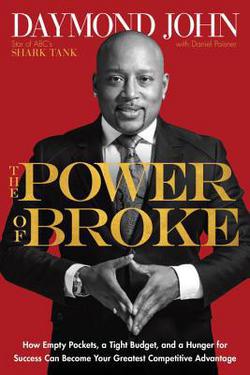
Daymond John, The Power of Broke. New York: Crown Business, 2016. 261 pp. $15.60

broke
Daymond John is the well-known fashion mogul who is best known for swimming in the Shark Tank, the popular reality television show where investors pitch their business idea in exchange for stake in their company.

The Power of Broke is the tale of a rag to riches businessman who grew up in Queens, New York and battled dyslexia as a youngster. The book is a mixture of John’s autobiography combined with business principles geared to budding entrepreneurs and success stories from others who have succeeded in the business world.

The acronym (SHARK) is the backbone of the book:
Set a goal
Homework, do yours
Adore what you do
Remember, you are the brand
Keep swimming.

The author builds on each of the above points by showing how other men and women in the business world have put these principles to good use.Also included in the book are eight Broke Power Principles that the author sets forth for immediate application. The author essentially argues that there is a benefit to being broke; that difficult times help fuel greater resolve and motivate a given person to a specific task.
I found The Power of Broke helpful and motivating. The book would be a big boost to a beginning entrepreneur who is looking for help from someone who has succeeded in the business world.

I received this book free from the publisher. I was not required to write a positive review.


THE MARRIAGE COVENANT – An Indissoluble Union

Books on marriage are a dime-a-dozen these days, even from a Christian perspective.  However, only a handful of books on marriage pass the test of biblical fidelity.  John Piper’s book, This Momentary Marriage passes both tests..  In fact, it ranks among the best books I’ve read on marriage to date.

Readers familiar with Piper will instantly drawn in to his argument for marriage.  Over and over Piper pounds the theme of the book into the ground for maximum effect: The ultimate purpose of marriage is “the display of Christ’s covenant keeping grace.”  To that end, the author develops several items worth mentioning.

1. The author grounds his central argument in rich soil by reiterating that marriage is “the doing of God.”

And in a final sense, “marriage is the display of God.”  He continues, “The ultimate things we can say about marriage is that it exists for God’s glory.  That is, it exists to display God … Marriage is patterned after Christ’s covenant relationship to his redeemed people, the church.  And therefore, the highest meaning and the most ultimate purpose of marriage is to put the covenant relationship of Christ and his church on display.”  And this is the primary reason why divorce is so odious to God: “Therefore, what makes divorce and remarriage so horrific in God’s eyes is not merely that it involves covenant-breaking to the spouse, but that it involves misrepresenting Christ and his covenant” (emphasis mine).

2. Piper focuses on the priority of covenant love.

Remember the theme of the book that marriage is means to display Christ’s covenant keeping grace.  Therefore, the author argues that “staying married is not mainly about staying in love.  It’s about covenant-keeping.”  The foundation for this covenant-keeping is the rock-solid covenant between people and God.  Therefore, Piper continues, “Marriage exists to display the merciful covenant-keeping love of Christ and the faithfulness of his bride.”

It is here that the book takes an important and decisive turn – for the author shows the relevance of the doctrine of justification by faith alone and how it relates to marriage.  Piper adds, ” God requires two thing of us: punishment for our sins and perfection for our lives.”  He continues to describe how the vertical reality of justification must be “bent horizontally to our spouses if marriage is to display the covenant-making, covenant-keeping grace of God.”  The takeaway is profound: “Let the measure of God’s grace to you in the cross of Christ be the measure of your grace to your spouse.”  This is a perfect example of the Christ-saturated wisdom that permeates the book.

Piper continues to give practical advice to husbands and wives throughout the book; advice that is bathed in biblical wisdom; advice that is ultimately rooted in our God who keeps covenant with his people.  Biblical headship is discussed – so husbands are encouraged to lead well: “Headship is the divine calling of a husband to take primary responsibility for Christlike, servant leadership, protection, and provision in the home.”  The husband’s leadership involves physical and spiritual protection and physical and spiritual provision.Biblical submission is explored: “Submission is the divine calling of a wife to honor and affirm her husband’s leadership and help carry it through according to her gifts.”   What strikes me about the section on headship and submission is this: in a few short pages, Piper delivers an exegetical bombshell that utterly destroys the prevailing notion of egalitarianism.  This God-dishonoring view that sees no distinction between male and female roles is left begging for mercy; tattered and torn in the shadow of Piper’s sound exposition.

The concluding chapters discuss the permanence of the marriage covenant.   In what may be one of the most important statements in the book, Piper suggests that “if Christ ever abandons and discards his church, then a man may divorce his wife.  And if the blood-bought church, under the new covenant, ever ceases to be the bride of Christ, then a wife may legitimately divorce her husband.  But as long as Christ keeps his covenant with the church, by the omnipotent grace of God, remains the chosen people of Christ, then the very meaning of marriage will include: What God has joined, only God can separate.”

The author boldly goes where few pastors dare to go by suggesting that remarriage is prohibited so long as the previous spouse is still alive.  His arguments are exegetically sound and compelling.  Readers who disagree are encouraged to survey the case that Piper presents and prayerfully consider his arguments.

This Momentary Marriage is a landmark book.  It is a theological landmine that will undoubtedly shatter many preconceived notions about marriage.  It is solid food that Christians need to digest.  And it is timely ointment that is designed to heal wounds and promote strong marriages in the difficult days ahead.

Highly recommended!

AUGUSTINE ON THE CHRISTIAN LIFE – Gerald Bray (2015)

augIt is no secret that Aurelius Augustine was a stalwart of the Christian faith; a pagan turned Christ-follower; a man of the world turned to a man of the Word; a man controlled by sin to a man controlled by the Spirit. Gerald Bray offers up a thoughtful overview of Augustine of Hippo in his latest work.

Augustine on the Christian Life summarizes the life of the influential theologian and meticulously navigates his life from pagan to pastor. Bray’s work is historically sound and captures the essence of Augustine’s life and legacy.

Practical application is drawn from Augustine’s life which will surely be an encouragement to readers. Much can be learned from Augustine – lessons from his life in defiance of God before his conversion and lessons from his devotion to God.

THE CHRISTIAN PILGRIM – Jonathan Edwards

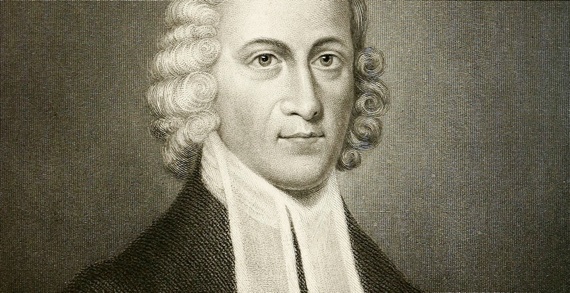
Jonathan_Edwards_engravingJonathan Edwards reminds readers that there are on a journey towards heaven. The title of the message is The Christian Pilgrim.

Section 1 – A Pilgrimage to Heaven

“We ought above all things to desire a heavenly happiness; to be with God; and dwell with Jesus Christ,” argues the Puritan divine. This is a journey to heaven, which is the way of holiness. Such a journey requires travelers to set aside anything that hinders progress to our heavenly home (Heb. 12:1). Edwards continues,

We should travel on in the way of obedience to all God’s commands, even the difficult as well as the easy; denying all our sinful inclinations and interests. The way to heaven is ascending; we must be content to travel up hill, though it be hard and tiresome, and contrary to the natural bias of our flesh. We should follow Christ; the path he travelled, was the right way to heaven … The way to heaven is a heavenly life; an imitation of those who are in heaven, in their holy enjoyments, loving, adoring, serving, and praising God and the Lamb. Even if we could go to heaven with the gratification of our lusts, we should prefer a way of holiness and conformity to the spiritual self-denying rules of the gospel.

The highway to heaven is a difficult journey; one that will be met with hardship along the way. However difficult the journey may be, travelers must be constantly growing in holiness: “We should be endeavoring to come nearer to heaven, in being more heavenly; becoming more and more like the inhabitants of heaven … We ought to be hungering and thirsting after righteousness; after an increase in righteousness” (1 Pet. 2:2).

Section 2 – Why the Christian’s Life is a Pilgrimage

Edwards marks out four specific reasons that our life on this earth is a mere pilgrimage.

  1. This world is not our abiding place.
  2. The future world was designed to be our settled and everlasting abode.
  3. Heaven is that place alone where our highest end, and highest good, is to be obtained.
  4. Our present state, and all that belongs to it, is designed by him that made all things, to be wholly in order to another world.

Section 3 – Instruction Afforded by the Consideration that Life is a Pilgrimage to Heaven

Edwards infuses his readers with heavenly perspective in section three. He is quick to remind them of the heavenly lot of Christ-followers: “If they lived a holy life, then their lives were a journey towards heaven. And why should we be immoderate in mourning, when they are got to their journey’s end? Death, though it appears to us with a frightful aspect, is to them a great blessing. Their end is happy, and better than their beginning.”

Section 4 – An Exhortation in the Journey to Heaven

Edwards concludes by encouraging his readers to think much about heaven: “Labour to obtain such a disposition of mind that you may choose heaven for your inheritance and home; and may earnestly long for it, and be willing to change this world, and all its enjoyments, for heaven.”

GOD’S GLORY ALONE: The Majestic Heart of Christian Faith – David Vandrunen (2015)

aGod’s Glory Alone – The Majestic Heart of Christian Faith and Life is the second title in the 5 Solas Series. The first volume by Thomas Schreiner, Faith Alone: The Doctrine of Justification walked readers through this important doctrine which was rediscovered in the sixteenth century. The latest installment is penned by David Vandrunen, professor of Systematic Theology and Christian Ethics at Westminster Theological Seminary in Escondido, California.

God’s Glory Alone unfolds in three parts. Part one, The Glory of God in Reformed Theology summarizes the essence of the Reformation and is captured by the Latin words, soli Deo gloria – ”to God alone be the glory.”

Part two, The Glory of God in Scripture is a tour of redemptive history which presents the glory of God in both testaments and also includes a section the describes the glory of Christ in the glorification of his people.

Part three, Living for God’s Glory Today includes practical application which is an overflow of the first two sections. The author presents chapters that discuss prayer, worship, and the fear of the Lord.

Vandrunen’s work is welcome addition to the 5 Solas Series and is sure to serve pastors, theologians, and Christ-followers well, especially as we near the 500th year anniversary of the Protestant Reformation.

Soli Deo gloria!

JOYFUL CALVINISM IS THE ONLY KIND OF CALVINISM

reinke

Tony Reinke. The Joy Project. Minneapolis: Desiring God, 2015. 122 pp. $8.99

Every human being searches for happiness. No one is exempt. The Creator of the universe has hardwired human beings to be joyful. Tony Reinke makes this argument the centerpiece of his excellent book, The Joy Project. The thesis is simple and breathtakingly profound: “Making glad worshipers out of spiritually dead sinners is the grand design of God’s Joy Project.”

Reinke’s undergirds his thesis by making a case for historic Calvinism. He refers readers back to the Synod of Dort where the doctrines of grace were systematically spelled out by our theological forefathers. What grew out of the Synod was the well-known acronym, TULIP. The author puts the five points of Calvinism on display in vivid terms:

  • TOTAL DEPRAVITY is not just badness, but blindness to beauty and deadness to joy.
  • UNCONDITIONAL ELECTION is how God planned before we existed to complete our joy in Christ.
  • LIMITED ATONEMENT is the assurance that indestructible joy in God is infallibly secured for us by the blood of Jesus.
  • IRRESISTIBLE GRACE is the sovereign commitment of God to make sure we hold on to superior delights instead of the false pleasures that will ultimately destroy us.
  • PERSEVERANCE OF THE SAINTS is the almighty work of God to keep us, through all affliction and suffering, for an inheritance of pleasures at God’s right hand forever.

The author proclaims, “Our eternal joy will flourish when we are the objects of God’s sovereign grace. So the remainder of the book is devoted to unpacking the doctrines of grace (otherwise known as the five points of Calvinism). Critiques of Reformed theology will no doubt be drawn to Reinke’s winsome approach, an approach which is drowning in grace and Christ-saturated joy. Folks who are already convinced of Reformed theology will walk away with warmed hearts and drawn to the heart of the Savior.

The Joy Project could be viewed in many ways as the cliff notes for John Piper’s best-selling book, Desiring God. Tony Reinke should be commended for articulating the doctrines of grace in such a creative way, without losing any doctrinal punch. I recommend The Joy Project to anyone ready to be captivated by sovereign grace.  Readers will certainly discover that joyful Calvinism is the only kind of Calvinism.

Download a free version of this book at [http://www.desiringgod.org/books/the-joy-project]

4.5 stars

HAPPINESS by Randy Alcorn

1414389345_bRandy Alcorn. Happiness.  Carol Stream: Tyndale House Publishers, 2015.    480 pp. $14.45.

Randy Alcorn is an author who consistently places strong, biblical challenges before his readers. His newest work, Happiness, is no exception. The book is arranged in four parts and is arranged as is summarized below.

Part 1: Our Compelling Quest for Happiness

Alcorn lays the groundwork here by making the biblical case for happiness. He confronts the typical evangelical notion that God is only concerned with our holiness but disregards the need for happiness. Such views are not only unbiblical but harmful to Christian growth and progress.

The author argues that happiness is a part of the warp and woof of the Christian life. “Every man,” says Augustine, “whatsoever his condition, desires to be happy.” Ultimately, Alcorn reminds readers that their happiness is grounded and rooted in a relationship with God through Christ: “Longing for the happiness of humankind once knew, we can be drawn toward true happiness in Christ, which is offered us in the gospel.”

Part 2: The Happiness of God

Part two explores a theme that has been largely neglected in the church, not to mention, most works of Systematic Theology. Alcorn says, “Some people suppose happiness is uniquely human, unrelated to God’s nature: as he gave us a body and hunger, which he doesn’t have, he gave us a capacity for happiness, which he also doesn’t have. I believe. Something radically different – that God wants us happy because he’s happy.” Jonathan Edwards adds, “It is of infinite importance…to know what kind of being God is. For he is…the only foundation of our happiness.”

The author builds an unshakeable case for the happiness of God by pointing to key texts in Scripture (Zeph. 3:14, 17; Ps. 2:12; 16:11; Deut. 30:9; Ps. 35:27; Isa. 62:5).

At the heart of section two is the importance of the doctrine of the Trinity. For in the Trinity, we find a God who is eternally happy. Alcorn cites Michael Reeves who says, “The Trinity is the cockpit of all Christian thinking.” Indeed, as Alcorn writes, “The only way God’s happiness or love could be without beginning is if there exists within God himself a reasons for and object of his happiness and love.”

The author helps readers understand the earth-shattering consequences of a happy God and the impact this reality has on our worldview: “But God is fully happy, one day we will be fully happy.”

Part 3: The Bible’s Actual Words for Happiness

Part three is the most technical part of the book as Alcorn includes a detailed word study of happiness and all the related words in Scripture. One section is especially significant as the happiness which emerges from Scripture is set forth in vivid detail. A few samples include:

Happy are those who believe in Jesus.

Happy are those facing trials for Jesus’ sake.

Happy are those who see and hear Jesus for who he is.

Happy are those who serve God faithfully.

Happy are those who trust God’s promises.

Happy are those who obey God’s Word.

Happy are those who help and serve others.

Happy are those who have been forgiven by the Lord.

Happy are those who see unhappiness as a warning sign.

Happy are those who are also holy.

Ultimately, our joy is not optional. Rejoicing in the Lord is a command (Phil. 3:1; 4:4).

Part 4: Understanding and Experiencing Happiness in God

The concluding section includes several chapters that include practical ways to pursue happiness. The culmination of the book includes several meditations on the essence of our existence on the New Earth where we will experience unvarnished happiness in the presence of the Lord Jesus Christ.

Happiness is a breath of fresh air in a world that tends to minimize happiness. Alcorn aggressively confronts the popular notion that God is only interested in our holiness but has not interest in our happiness. He advocates the radical pursuit of joy, which by definition, necessitates holiness. Indeed, on cannot have one without the other.  The pursuit of joy and the commitment to holy living are not at odds!  Randy Acorn’s work is loaded with encouragement that lifts readers out of the clutches of mediocrity, discouragement, and complacency. He urges readers to pursue a higher calling, namely, happiness.  Such happiness is found in the gospel, in a relationship with the God of the universe and his Son the Lord Jesus Christ!

Highly recommended!

THE NATURE AND END OF EXCOMMUNICATION – Jonathan Edwards

Jonathan_Edwards_engravingThe Nature and End of Excommunication is a timely and practical sermon.  For many churches in our generation simply refuse to exercise church discipline on the unrepentant.  This act of passivity is not only cause for grave concern; it is a violation of Scripture.

Edwards utilizes 1 Cor. 5:11 as his text:

But now I am writing to you not to associate with anyone who bears the name of brother if he is guilty of sexual immorality or greed, or is an idolater, reviler, drunkard, or swindler—not even to eat with such a one.” (1 Cor. 5:11, ESV)

DoctrineThose members of the visible Christian church who are visibly wicked, ought not be tolerate in the church, but should be excommunicated.

Edwards explains and articulates three main headings which support the doctrine.

1. The Nature of Excommunication

Edwards wastes no time explaining the essence of excommunication: “It is a punishment executed in the name and according to the will of Christ, whereby a person who hath heretofore enjoyed the privileges of a member of the visible church of Christ, is cast out of the church and delivered unto Satan” (c.f. 2 Cor. 2:6).

Ultimately, church discipline is meant for the good of the person in question and seeks their repentance and restoration to the body of Christ.  Edwards, adds, “Excommunication itself is to be performed as an act of benevolence.  We should seek their good by it; and it is to be used as a means of their eternal salvation.”

2. The Proper Subjects of Excommunication

Those who walk through the process of excommunication are the “visibly wicked.”  Two things mark such a person:

  • By gross sin 
  • By remaining impenitent in their sin

3. The End of Excommunication

Three specific ends are delineated by Edwards:

  • That the church may be kept pure, and the ordinances of God not be defiled.
  • That others may be deterred from wickedness.
  • That the persons themselves may be reclaimed, and that their souls may be saved.

Application

5 points of application are set forth by the preacher from Northampton:

  1. That you tolerate visible wickedness in your members, you will greatly dishonor God, and our Lord Jesus Christ, the religion which you profess, the church in general, and yourselves in particular.
  2. Your own good loudly calls you to the same thing.  From what hath been already said, you see how liable you, as individuals, will be to catch the contagion, which is easily communicated by reason of the natural depravity, in a degree at least, remaining in the best of men.
  3. The good of those who are without should be another motive.
  4. Benevolence towards your offending brethren themselves, calls upon you to maintain discipline in all its parts.
  5. But the absolute authority of Christ ought to be sufficient in this case, if there were no other motive.

These powerful reminders should beckon every church to seriously consider the high calling of operating in a God-glorifying way.  Edwards wonders out loud, “Now, how can you be the true disciples of Christ, if you live in the neglect of these plain positive commands?”  He concludes, “If you strictly follow the rules of discipline instituted by Christ, you have reason to hope for his blessing; for he is wont to bless his own institutions, and to smile upon the means of grace which he hath appointed.”

In this short sermon, Edwards demonstrated the necessity of carrying out church discipline on unrepentant church members.  How very far are so many churches from this biblical model?  How long will it take to come in alignment with the teaching of Scripture?

THE MARKS OF A SPIRITUAL LEADER – John Piper

full_the-marks-of-a-spiritual-leader“Spiritual leadership is knowing where God wants people to be and taking the initiative to use God’s methods to get them there in reliance on God’s power.” John Piper’s definition permeates this little book, appropriately titled, The Marks of a Spiritual Leader. Piper maintains that the essence of spiritual leadership involves helping people move toward heart change. Of course, it is the Holy Spirit who transforms hearts, but in his mercy and grace, he sovereignly uses Christian leaders to play an important part of this process.

The author presents to aspects of spiritual leadership. First, the inner circle. The ultimate aim here is to glorify God. Piper urges, “The ultimate goal of all spiritual leadership is that other people might come to glorify God, that is, might so feel and think and act as to magnify the true character of God.” This is where people meditate on and pray over the Word of God. This is where people acknowledge their desperate need for God.

Piper cites the examples of Hudson Taylor and George Mueller as men who understood this inner circle, men who were committed to godliness and genuine heart change.

Second, the outer circle of spiritual leadership. This is the arena where leaders manifest qualities that are consistent with godliness. Piper presents several qualities that meet this criteria, including restlessness, optimism, intensity, self-control, thick-skin, energy, thinking ability, and being theologically oriented – among others.

The Marks of a Spiritual Leader is not meant to be a comprehensive guide to Christian leadership. Others have written more comprehensive books like Spiritual Leadership by J. Oswald Sanders and The Conviction to Lead by Al Mohler. Piper’s work is a helpful addition and will no doubt encourage many men as they walk the path of a spiritual leader.

True Worshipers: Seeking What Matters to God – Bob Kauflin (2015)

Bob Kauflin is no stranger to the local church, especially people in the church who are passionate about worship. kauflinIn his latest book, True Worshipers: Seeking What Matters to God, Mr. Kauflin unpacks the reason for our existence. He explores the very essence of worship and draws practical applications to our contemporary milieu.

Kauflin cites John Calvin approvingly: “We should consider it the great end of our existence to be found numbered among the worshipers of God.” Indeed, Calvin rightly reveals the end of our existence. And it is with this end in mind, that Bob Kauflin explores warp and woof of true worship.

The book is comprised of nine chapters, all of which describe the essence and reality of worship. Kauflin’s reflections are biblical and challenging. His words are warm and his tone attracts the ear of worshipers. While the author is good to explore many practical aspects of worship, he is quick to direct the attention of readers back to the true meaning of God-centered worship: “Any definition of true worship that denies or minimizes God’s supremacy, authority, and uniqueness is unbiblical and will lead to idolatry.”

This is a book worthy of commendation and should be well received by many in the church. I personally thank Bob Kauflin for his influence in my life, his Christ-saturated songs, and for leading the people of God to the throne room to worship our Triune LORD.

I received this book free from the publisher. I was not required to write a positive review.