LAST ACT: The Final Years and Emerging Legacy of Ronald Reagan – Craig Shirley (2015)


a reagThe legacy of President Ronald Reagan is securely established in history. Liberals can scoff and moan but the fact remains; Ronald Wilson Reagan is one of the most influential Americans of all time. Indeed, Reagan is not only one of the loved and respected presidents in American history; he is also one of the most effective.

Most books focus on the life of President Reagan and work hard to establish his presidential accomplishments. Craig Shirley’s new masterpiece, Last Act: The Final Years and Emerging Legacy of Ronald Reagan takes a different approach. Shirley sets out to help readers see Reagan in a different light and in a different context. This book serves as a lens for Americans to view President Reagan in his post-presidential days, including the days which followed his diagnosis of Alzheimer’s disease.

Last Act begins with President Reagan on his death bed. The author highlights Reagan’s life and legacy from different perspectives – including friends, family, and foes. One of the constant themes that weaves through the book is the deep and abiding love that America has for the 40th president of the United States.

We would do well to listen to the words of Reagan’s old arch nemesis, Senator Ted Kennedy who offered these fitting words, upon hearing of Reagan’s death:

He brought a special grace to the White House and the country in everything he did. We often disagreed on specific issues, but he had an undeniably unique capacity to inspire and move the Nation. On foreign policy, he will be honored as the President who won the cold war. It was more than the fact that he was a superb communicator. Some attributed at least part of his success to the fact that he was a superb communicator. Some attributed at least part of his success to the fact that he had been an actor. But his deepest convictions were matters of heart and mind and spirit, and on them, he was no actor at all.

Last Act: The Final Years and Emerging Legacy of Ronald Reagan bears the marks of a book which is informed by thorough research and careful study. Craig Shirley should be commended for his clear writing and respect for the 40th president of the United States. Last Act is not only a tribute to one of the most beloved leaders in American history; it is a gift to the American people.

The legacy of Ronald Wilson Reagan speaks for itself and will continue to reverberate throughout history. Antonin Scalia notes, “Ronald Reagan needs no one to sing his praises.” Justice Scalia may be on target. But the fact remains: History will not stand by in silence. The legacy of Ronald Reagan will endure for generations.

I received this book free from the publisher.   I was not required to write a positive review.
LUTHER AND KATHARINA – Jody Hedlund (2015)

lutherHe was an Augustinian monk, transformed by the sovereign grace of God. His newly regenerated heart beat with passion for Jesus. His mind was devoted to the sacred Scripture. This former Roman Catholic turned Protestant rebel was mightily used by God to influence a nation and eventually the whole world for the sake of Christ’s gospel.

But one of the key themes in Luther’s life was the other love of his life, Katherina Von Bora. This fascinating love story emerges in Jody Hedlund’s new book, Luther and Katharina. This work of historical fiction captures the pathos of a woman who left the “safe” confines of the abbey. Safety was a relative term in the 16th century abbey, since the Roman Catholic church was plagued by corruption, heresy, abuse, and sexual sin.

Luther and Katharina underscores the heavy works-based orientation among the faithful. At one point in the story, one of the former nuns asks with chagrin, “Do you ever wonder if we should have stayed?” “What if God is displeased with us? What if He’s punishing us for forsaking our vows?” She continues, “What if we’ve thrown away our best chance at salvation.” Such a sentiment not only characterized the church in the 16th century. It is still a part of the warp and woof of the Roman works-based system.

Additionally, the book captures the tension between genders in a 16th century context. The author does a formidable job of fairly representing a male dominated culture, “without horns and without teeth,” as Luther might say.

Hedlund is a colorful writer, with an ability to turn a phrase and guide the imagination of the reader in the right direction. She demonstrates a good working knowledge of Reformation culture, including the priesthood of believers, cardinal doctrines such as justification by faith, and the repudiation of celibacy.

Luther and Katharina is a terrific historical read designed to awaken a thirst for authentic relationships which are grounded in gospel reality.

Highly recommended!

I received this book free from the publisher.   I was not required to write a positive review.

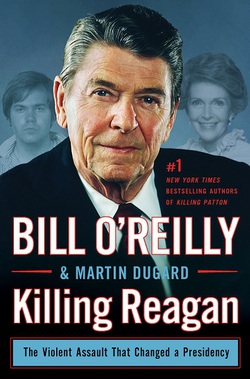
KILLING REAGAN – Bill O’Reilly (2015)

Some people love him; others hate him. But one thing is certainreagan about Bill O’Reilly. The popular host of the O’Reilly Factor makes history interesting. The “no-spin” Irish-American journalist began a series of killing books, with the publication of Killing Lincoln. This effort was followed by Killing Kennedy, Killing Jesus, and Killing Patton. O’Reilly’s latest offering, Killing Reagan has sparked a bit of controversy, since unlike the other characters, Reagan was not murdered.

Readers will not be surprised that at the heart of this book is an insiders look at the assassination attempt of President Reagan. The would be executioner, John Hinckley Jr. is rightly portrayed as a psycho-path drifter who will go to any length, including killing the President of the United States to impress the actress, Jodi Foster.

But readers may be surprised at how O’Reilly portrays the President. The author carefully paints a portrait of the 40th president and includes details that are making some readers uncomfortable and even upset. Make no mistake: the king of no-spin in unwilling to leave any stone unturned in this book.

Apart from some of the more controversial elements of the book, O’Reilly includes fascinating discussion about Reagan’s relationship with Nancy, staff members, Mikhail Gorbachev, and of course, the Iron Lady, Margaret Thatcher.

This book will draw criticism from liberals. But it will also invite the critical response of conservative who revere Ronald Reagan. But it is clear that O’Reilly writes as an unbiased journalist here. He has no bone to pick. He has no axe to grind. He merely desires a telling of the facts. The end result is a fascinating read that ultimately honors the 40th President of the United States. Killing Reagan is a memorial to one of America’s great leaders. It is a vivid reminder of the importance of freedom. This is the story of Ronald Wilson Reagan – patriot, promoter of liberty, and President of the United States of America.

UNBELIEVERS CONTEMN THE GLORY AND EXCELLENCY OF CHRIST

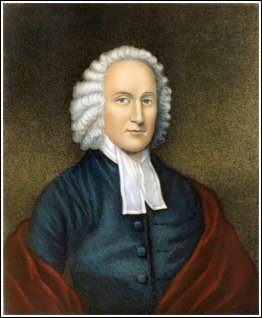
jonathan-edwardsThe 21st century ushered in a new emphasis that had an effect on ecclesiology and anthropology.  The so-called seeker-sensitive movement held that unregenerate people seek God.  However, the notion that unconverted people seek God is absent from the pages of Scripture.  Jonathan Edwards present the biblical case against such an idea in his sermon, Unbelievers Contemn the Glory of Christ.

The Doctrine

Unbelievers set at nought the glory and excellency of Christ.

Edwards sets forth two propositions that support his doctrine:

  1. They set at nought the excellency of his person.  Christ is a great and glorious person, a person of infinite worthiness, on which account he is infinitely esteemed and loved of the Father, and is continually adored by the angels.
  2. They set at nought his excellency in his work and office.  They are told how glorious and complete a mediator he is, how sufficient to answer all our necessities, and to save sinners to the uttermost; but they make light of it all; yea, they make nothing of it.

Four evidences are presented to support the doctrine:

  1. They never give Christ an honor on account of his glory and excellency.
  2. They have no love to him on account of his glory and excellency.
  3. Unbelievers have no desires after the enjoyment of Christ.
  4. They show that they set at nought the glory and excellency of Christ, in that they seek not a conformity to that glory and excellency.

Application

Edwards argues: “This doctrine may teach us the heinousness of the sin of unbelief, as this sin sets all the glory and excellency of Christ at nought.”

The sermon concludes with four practical applications, each of which are directed to unbelieving people.

  1. Hereby you may be convinced of the greatness of your guilt.
  2. Hereby you may be convinced of your danger.  You must needs think that such guilt will bring great wrath.
  3. You may hence be led to see how worthless many of those things in yourselves are, that you have been ready to make much of.
  4. Hence learn how justly God might forever refuse to give you an interest in Christ.  For why should God give you any part or interest in him who you set at nought, all whose glory and excellency you value not in the least, but rather trample it under your feet.

Jonathan Edward’s sermon is a vivid reminder about the serious nature of the sin of unbelief.  His heart for lost people shines brightly in this sermon.  And his love for God’s glory is manifest as well.

THE COLUMBUS CODE – Mike Evans (2015)

columbusModern day readers in search of a thriller packed with action, intrigue, and espionage turn to authors like Daniel Silva, Vince Flynn, or Tom Clancy. Readers looking for historical drama may turn to Dan Brown or Bernard Cornwall. When I learned about the chance to read and review Mike Evans novel, The Columbus Code, I jumped at the opportunity. Initially, the book appeared promising and seemed to offer not only a good story but an inside look at the mysterious figure, Christopher Columbus. Unfortunately, the storyline in this book drags and the characters are not developed in a way that holds the attention of the reader. But the inability to hold the attention of the reader is not the greatest concern. The chief problem with The Columbus Code is the scanty discussion about the famous explorer. A small portion of the book is devoted to unwrapping the story of Columbus. Personally, I was disappointed with how The Columbus Code unfolded.

I received this book free from the publisher.   I was not required to write a positive review.

PRAYING THE BIBLE – Donald Whitney (2015)

whitPraying the Bible by Don Whitney identifies a problem that concerns prayer, namely – we pray “the same old things about the same old things.”  Whitney adds, “It seems that virtually everyone begins to pray this way sooner or later, and it is boring.  And when prayer is boring, we don’t feel like praying.  When we don’t feel like praying, it’s hard to pray, at least in any sort of focused way.”

Once the author identifies the problem, he proposes a solution:

When you pray, pray through a passage of Scripture, particularly a psalm.  

Whitney spends a good portion of the rest of the book, helping readers pray the Bible: “So basically what you are doing is taking words that originated in the heart and mind of God and circulating them through your heart and mind back to God.  By this means his words become the wings of your prayers.”

Praying the Bible is both practical and potent.  Albert Mohler describes the book as “explosive and powerful.”  Bryan Chapell  adds, “It’s so simple it will shock you and, at the same time, invigorate a renewed prayer life with you God.”  I concur with Mohler and Chapell.  Whitney’s book is a powder keg for anyone committed to the discipline of prayer  This little treasure is destined to encourage a lot of people.

Highly recommended!

AVENUE OF SPIES – Alex Kershaw (2015)

My introduction to Alex Kershaw took place several years ago as I spiespoured over his excellent book, The Longest Winter.  Kershaw is back again with another historical gem, Avenue of Spies.  The book chronicles the life and legacy of Sumner Jackson and his wife, Toquette.  These brave people joined the French in their pushback against the Third Reich during the heart of World War II.

Kershaw is a master story teller who has a special gift for transporting readers into the heart of Paris, a city that was overtaken by Nazi thugs.  He carefully guides readers through the historical drama, noting the tragic turn of events for Mr. and Mrs. Jackson and their family.

The author educates readers by helping them understand the worldview of Hitler’s henchmen as well as those who fought against the Third Reich.  The attention to detail is breath-taking.  The scenes are memorable.  The heroic deeds of the Jackson’s are sure to inspire readers.

I heartily recommend Kershaw’s excellent book, which is researched with precision and recounted in a thoughtful and memorable way.

I received this book free from the publisher.   I was not required to write a positive review. 

4 stars

THE REASON FOR MY HOPE – Billy Graham (2013)

grahamOne thing that marked my childhood was hearing Billy Graham preach several times.  I saw him preach at the Kingdome in Seattle in 1976 to a capacity crowd, the largest crowd in the history of the infamous dome.  I saw him preach in Spokane as a teenager and saw him in his last Crusade in his final visit to the Tacoma Dome in 1991.  I remember being impressed, even as a child with his boldness and courage in the pulpit – characteristics that never faded from the world-famous evangelist.

Boldness and courage are two words that describe Dr. Graham’s most recent offering, The Reason For My Hope.  After seventy years of ministry, the message remains the same.  The message is the simple gospel message that Christ came to die for sinners, securing forgiveness and eternal life for anyone who believes.

Graham weaves personal stories and anecdotes throughout his gospel presentation.  The narrative is warm.  The message is compelling.  It is no secret that Billy Graham proclaims a message that is peppered with doctrinal convictions that find a home in the Arminian camp.  The debate between Calvinists and Arminians will likely continue until the coming of our Lord.

I still have fond memories of seeing Billy Graham preach the Word of God.  I have since come to some soteriological conclusions that differ from Graham.  But my respect for the man has never wavered. Billy Graham is a consistent, faithful, Christ-follower.  He has finished the race strong.   He is a faithful witness to the reality of Jesus Christ and his gospel!

I received this book free from the publisher.   I was not required to write a positive review. 

GAINING BY LOSING – J.D. Greear (2015)

jdWhat is the criteria for a successful church that is growing and impacting its community for the sake of the gospel?  While many churches point to attendance numbers or the size of one’s campus, J.D. Greear argues in a completely different direction.  Greear says this: “Jesus’ measure of the church is not seating capacity, but sending capacity.”  Pastor Greear effectively makes this case in his newest book, Gaining By Losing.

J.D. Greear is the Pastor of Summit Church in Raleigh-Durham, North Carolina.  His previous books, Jesus Continued, Gospel: Recovering the Power That Made Christianity Revolutionary, and Stop Asking Jesus Into Your Heart have been an immense encouragement to me, personally.

Gaining By Losing is equally encouraging.  The author argues that churches in our generation who make an impact learn to send people – ultimately to plant the church.  In part one, the author develops his philosophical and biblical case for being a sending church.

In part two, the author presents readers with ten principles, what he refers to as plumb lines for being a sending church.  These plumb lines are biblical, practical, and have been field tested in the church that Greear pastors.

At the heart of the book is an appeal for churches engage in systematic discipleship.  The author argues, “Every spiritual gift serves the larger purpose of making disciples.  The gifts are varied, but the mission is the same.”  In the final analysis, “The future belongs to churches that send.”

Gaining By Losing is a much-needed book in our age of pragmatism and man-centeredness.  This book provides both an important perspective as well as a corrective to some of the unhelpful practices in the church.

I received this book free from the publisher.   I was not required to write a positive review. 

Highly recommended!

THE PASTOR AS PUBLIC THEOLOGIAN – Kevin VanHoozer and Owen Strachan (2015)

pastorAfter serving in pastoral ministry for nearly twenty-five years, I can testify that the most discouraging moments occurred when the people of God failed to look favorably on theology.  R.C. Sproul rightly laments, “We live in the most anti-intellectual period in all of church history.”  Frankly, many pastors have the battle scars to prove it.  I know I do.

Kevin VanHoozer and Owen Strachan serve up a timely antidote to this troubling, anti-theology age we find ourselves in.  The Pastor as Public Theologian presents a fresh vision; a vision for “reclaiming the vocation of the pastor-theologian.”  But the authors have a larger vision that unfolds throughout the book.  Their vision extends to local congregations.  They too need to reclaim the vision and vocation of the pastor theologian.

Part one explores biblical theology and historical theology.  Part two explores systematic theology and practical theology.  Each chapter is drenched in biblical wisdom with an eye on kingdom priorities.

This book stands in the same stream as David Well’s excellent works, No Place For Truth, God in the Wasteland, and The Courage to Be Protestant – to name a few.  The great strengths lie not only in setting forth a description of the problems in the church but in the prescription for moving forward.  Such a move entails  pastors who are theologically motivated and theologically driven.  These pastors offer up theologically rich sermons which equip, edify, and send the people of God to the nations.

The Pastor as Public Theologian is a sweeping book.  It is, in many ways an epic accomplishment. Indeed, VanHoozer and Strachan achieve their goal in setting forth the biblical case for recovering the biblical portrait of the pastor-theologian.

The Pastor as Public Theologian is a profoundly encouraging book.  Pastors who are serious about their call should read and devour this excellent material.  Some pastors will find themselves repenting for embracing a secularized model of the pastorate.  Others will be re-energized to boldly proclaim the truth for God’s glory and the good of God’s people

Highly recommended!

4.5 stars