The Colson Way – Owen Strachan (2015)
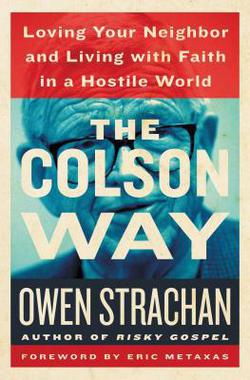
Gospel-spreading, Jesus-loving, and worldview-shaping. These short phrases describe a special man. This man was bold, unafraid, and merciful. He was filled with compassion for people and longed to see social justice in America and around the globe. These are only a few brief descriptions of the former hatchet-man. This man served under President Richard M. Nixon. This man served time in a federal penitentiary. His name – Charles Colson.
Owen Strachan provides an invaluable service to the church in his latest book, The Colson Way. While the primary target is American millennial evangelicals, the author’s message should reach all age groups and is destined to not only inspire a new generation of leaders but also warn against moral decay and worldview erosion. The book is a primer on the importance of loving one another and making a mark for the gospel – a gospel which is characterized by truth, grace, forgiveness, love, and mercy.
Strachan explores the formative years of Mr. Colson and walks readers through his days in the White House which ultimately led to a short stay in the “Big House.” The Providential path of pain that Colson traveled led him to a relationship with the Lord Jesus Christ. As a result, his life was transformed by Jesus which resulted in a series of unexpected events that would have an effect on people around him and thousands of people who never met him.
The author chronicles the various ministries of Chuck Colson, especially Prison Fellowship which spans around the world and offers hope, peace, and forgiveness to prisoners.
Strachan summarizes the Colson life creed:
“His God-given role in the kingdom was to go to the needy, the suffering, and the forgotten, and to minister grace to them … As a former prisoner, disgraced in the public eye, he never lost sight of just how freeing the gospel truly was. He knew what it was to have lost everything, to be at the mercy of routines and regulations that were not of his choosing, and to taste shame and guilt that left only to return.”
This fascinating book not only introduces readers to the life and legacy of Charles Colson; it also serves as a primer for living with a bold faith in the public square. It is a clarion call to young evangelical leaders. It is an invitation to proclaim, defend, and live the truth in a world which is hostile to the truth of the gospel.
This much-needed book will serve the church well and prompt much discussion and debate. Better yet, it will lead a new generation of leaders to the front lines where the battle is fought, and where our Commanding Officer beckons us to heed His sovereign call.
Highly recommended – 4.5 stars
I received this book free from the publisher. I was not required to write a positive review.
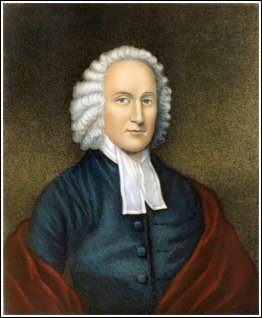
GOD THE BEST PORTION OF THE CHRISTIAN – Jonathan Edwards (1736)
Two hundred years after Calvin published his first edition of The
Institutes, Jonathan Edwards preached a sermon about being content in God. The title of the sermon was God the Best Portion of the Christian. Edwards’s text is Psalm 73:25:
Whom have I in heaven but thee? and there is none upon earth that I desire besides thee.
The central truth is set forth at the beginning of the sermon, in deductive fashion: It is the spirit of a truly godly man, to prefer God before all other things, either in heaven or on earth.
Two propositions comprise this short sermon
1. A godly man prefers God before any thing else in heaven.
Edwards presents the God-centered paradigm in this section by leading readers on the correct biblical path. He notes, “Every godly man hath his heart in heaven; his affections are mainly set on what is to be had there. Heaven is his chosen country and inheritance.”
The godly man sets his affection on beauty, which is to say his heart is oriented to God and the things of God. “Now the main reason why the godly man hath his heart thus to heaven,” writes Edwards, “is because God is there; that is the palace of the Most High. It is the place where God is gloriously present, where his love is gloriously manifested, where the godly may be with him, see him as he is, and love, serve, praise, and enjoy him perfectly.”
2. It is the temper of a godly man to prefer God before all other things on the earth.
The highest priority for the follower of Christ, according to Edwards is on the Triune God. Three points highlight the heart of the Puritan preacher:
- The saint prefers that enjoyment of God, for which he hopes hereafter, to any thing in the world.
- The saints prefer what of God may be obtained in this life before all things in the world.
- The saints prefers what he hath already of God before any thing in this world.
Application
As usual, Edwards concludes his sermon with several points of application. Five penetrating questions are posed:
- What is it which chiefly makes you desire to go to heaven when you die?
- If you could avoid death, and might have your free choice, would you choose to live always in this world without God, rather than in his time to leave the world, in order to be with him?
- Do you prefer Christ to all others as the way to heaven?
- If you might go to heaven in what course you please, would you prefer to all others the way of a strict walk with God?
- Were you to spend your eternity in this world, would you choose rather to live in mean and low circumstances with the gracious presence of God, to to live forever in earthly prosperity without him?
Jonathan Edwards offers perspective and godly wisdom in a sermon that directed his 18th century hearers heavenward and continues to beckon followers of Christ to the Celestial City.
NEHEMIAH: An Expositional Commentary (James Boice)
James Boice was God’s special gift to the church. When he died, Boice left an enormous hole that no other person will ever fill. He demonstrates his giftedeness in his commentary on Nehemiah.
The author presents a series of “dynamics” that are packed into the book of Nehemiah. Principles of leadership, delegation, and management are explored.
Boice helps readers deal with opposition by using Nehemiah’s godly example. He notes how success breeds opposition, and how detractors will often use tactics of ridicule or even violence. Nehemiah’s leadership shines brightly as he faces the opposition on multiple fronts as he rebuilds the wall.
Part two examines the rebuilding of the nation. The broad strokes of revival are set forth which include prayer, the read of God’s Word, the preaching of God’s Word, and sorrow over sin.
James Boice is always a pleasure to read. The gospel is front and center. The scholarship is impeccable. And God’s Word is exalted to its rightful place.
Highly recommended!
The Most High A Prayer Hearing God – Jonathan Edwards (1735)
Psalm 65:2 is Edwards text in the winter of 1735, January 8.
O you who hears prayer, to you shall all flesh come.
Doctrine – It is the character of the Most High, that he is a God who answers prayer.
Four headings drive the sermon.
1. The Most High is a God that Hears Prayer
Though he is infinitely above all, and stands in no need of creatures; yet he is graciously pleased to take a merciful notice of poor worms in the dust.
Edwards argues that God not only accepts the supplications of all the saints; he does so willingly with favor. He adds, “While they are praying, he gives them sweet views of his glorious grace, purity, sufficiency, and sovereignty; and enables them, with great quietness, to rest in him, to leave themselves and their prayers with him, submitting to his will, and trusting in his grace and faithfulness.”
2. He is Eminently Such a God
Edwards provides several examples of how God answers prayer:
- In his giving such free access to him by prayer.
- That God is eminently of this character, appears in his hearing prayer so readily.
- That the Most High is eminently one that hears prayer, appears by his giving so liberally in answer to prayer.
- That God is eminently of this character, appears by the greatness of the things which he hath often done in answer to prayer.
- This truth appears, in that God is, as it were, overcome by prayer.
3. Reasons for the Doctrine
A crucial point that Edwards makes is that God answers prayer because “he is a God of infinite grace and mercy.”
- He hath by his blood made atonement for sin; so that our guilt need not stand in the way, as a separating wall between God and us, and that our sins might not be a cloud through which our prayers cannot pass.
- Christ, by his obedience, has purchased this privilege, viz, that the prayers of those who believe in him should be heard.
- Christ enforces the prayers of his people, by his intercession at the right hand of God in heaven.
Application
Edwards draws out many practical applications, the chief of which alerts the saints to make good use of prayer; to be prayer warriors in this wicked age.
“Seeing we have such a prayer-hearing God as we have heard, let us be much employed in the duty of prayer: let us pray with all prayer and supplication: let us live prayerful lives, continuing instant in prayer, watching thereuto with all perseverance; praying always, without ceasing, earnestly, and not fainting.”
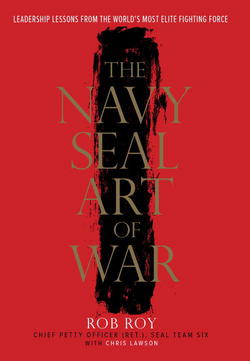
THE NAVY SEAL ART OF WAR – Rob Roy (2015)
Former Navy SEAL, Rob Roy was inspired by Sun Tzu’s, The Art of
War. The result is a book of his own: The Navy Seal Art of War. The book is filled with over fifty chapters of leadership inspiration.
Rob Roy shares a wealth of leadership tips from his years in the military in The Navy Seal Art of War. Each chapter contains a short but powerful meditation that will help anyone who aspires to influence others. The author writes, “Real leaders inspire, direct, guide, and give hope.” The book delivers as promised.
Roy’s book addresses various leadership topics like planning, mentoring, human resources, mental toughness, devotion, faithfulness, loyalty, and hard work. Leaders from all walks of life will appreciate the approach here. It is a good day to learn a few lessons from the world’s most elite fighting force.
Here are a few examples:
The Essential Seven
Extraordinary teams have a clear leader.
Extraordinary teams have quantifiable goals.
Extraordinary teams have well-defined roles.
Extraordinary teams share resources.
Extraordinary teams communicate effectively.
Extraordinary teams are 100 percent committed.
Extraordinary teams discourage big egos.
Mental Toughness
Be decisive. Move quickly.
Don’t let stress result in your blaming others.
Don’t let distraction deter you from accomplishing your objectives.
Never “take yourself out of the game.” Always stay positive.
Under stress, good leaders learn how to compartmentalize tasks so they don’t get overwhelmed and shut down.
Stay focused on the mission. Don’t let fatigue or stress deter your focus.
I received this book free from the publisher. I was not required to write a positive review.
3.5 stars
HELP MY UNBELIEF – Barnabas Piper (2015)
“I believe; help my unbelief!” cried the father of a demon-possessed boy (Mark 9:24). This cry of anguish is the cry necessarily which emerges from the mouth of every believer. Why? Our faith is growing. Our faith is incomplete. We are works in progress. We still have much to learn. In fact, Barnabas Piper argues, that questions are normal, even healthy in the Christian life. This is the essence of Piper’s newest book, Help My Unbelief
When the man in Mark 9 cried out, “I believe, help my unbelief,” he was uttering more than a mere statement. Piper adds, “Requests can stem only from belief, even it is just the tiniest inkling of belief.” This kind of reasoning should breathe hope, strength, and confidence in believers who doubt from time to time. For the very act of doubt, precipitates saving faith! Once again: we are in process. We are still growing. God is in the process of refining our faith. And he will complete the good work he started!
Piper introduces readers to the idea of “believing doubt.” He says, “Believing doubt will always anchor in God’s character and word as unshakeable and then take on questions that harass and attack.” While much harm can come from doubt, Piper maintains, “Doubt can save us from much trouble and lead to much knowledge … Doubt that seeks the truth and stems from the belief that God is the source of all truth.”
But the author also presents the idea of “unbelieving doubt.” “When unbelieving doubt poses a question, it is not interested in the answer for any reason other than to disprove it … These doubts are the wild monsters that wreck faith and destroy the simplistically peaceful Christian lives so many people try to lead.”
This doubt can surface in several ways – intellectual, emotional, or even theological. Truth be told, every Christian battles with unbelieving doubt. This is why the writer of Hebrews says, “See to it that none of you has a sinful unbelieving heart that turns away from the living God.”
God has given us certain evidences of saving faith which include repentance, prayer, and humility: “Through repentance, prayer, and humility believers move away from unbelieving doubt and grow in holiness. The refusal to do these things is a spiritual red flag and evidence of wanting to be one’s own god.”
Piper discusses disobedience as unbelief: “Disobeying the command of God is disbelieving His character … He [God] is authority itself, the essence of perfect, flawless authority. To disobey is to deny this about him.” Piper also discusses obedience as belief. In a statement to is dripping with the wisdom of his father, he adds: “Obedience is not the end; God’s satisfaction in us and our pleasure in Him are. It doesn’t feel tangible in the moment, but as we grow in belief, we will find it gaining power over the desire to sin.” Pure Christian hedonism!
Walking in obedience to God is not a magic formula or a recipe for perfection in the Christian life. The author rightly notes, “Belief [which is to say – obedience to God] does not mean sin will go away … True belief is that which perpetually, magnetically pulls us toward the ‘not yet’ of Revelation 21.” Believing the promises of God and being satisfied with all that God is for us in Christ leads us in the direction of the new earth where Jesus will make all things new!
Help My Unbelief is a plea for a faith which is transparent and vulnerable. It is a call for vibrant Christian living in the face of unanswered questions. And if offer hope for people who are desperately looking for answers. The search for answers is welcomed here. Indeed, the search for truth is a vital part of the Christian life. The book is a call to action; action which is grounded in biblical faith. While faith may waver and is “prone to wonder” as Charles Wesley wrote, we can be assured that God will never leave us or forsake us. He will complete the good work he started.
“I believe; help my unbelief” represents the tension, the need the promise for every follower of Jesus. We do believe. We do live every day in great need. Our belief is imperfect, so we cry out for help. But that cry come from a place of belief. We hold fast to God even as we feel pulled by the current of doubt, fear, and temptation.”
– Barnabas Piper
Highly recommended!
I received this book free from the publisher. I was not required to write a positive review.
THE UNREASONABLENESS OF INDETERMINATION IN RELGION – Jonathan Edwards (1734)
“And Elijah came near to all the people and said, “How long will you go limping between two different opinions? If the Lord is God, follow him; but if Baal, then follow him.” And the people did not answer him a word.” (1 Kings 18:21, ESV)
The title of the sermon is The Unreasonableness of Indetermination in Religion. Jonathan Edwards preached this sermon in the summer of 1734.
Doctrine: Unresolvedness in religion is very unreasonable.
Two central propositions support the doctrine.
Proposition 1: Many persons remain exceedingly undetermined with respect to religion.
Edwards notes that some people never resolve the matter of truth. That is to say, they cannot determine whether or not historic Christianity is true. The point is fascinating when one considers the current postmodern milieu where some maintain that truth is either culturally conditioned or even non-existent. Our culture views truth as a “power grab.” The 18th century Enlightenment mind believed in truth and the necessity of propositions. Edwards argues that many people merely wavered between two opinions. A sad state of affairs.
All people have two options before them – heaven or hell. Edwards in essence argues that one must decide: “There are but two things which God offers to mankind for their portion: one is this world, with the pleasures and profits of sin, together with eternal misery ensuing; the other is heaven and eternal glory, with a life of self-denial and respect to all the commands of God.” One cannot have his cake and eat it too. For such a man is like the one referenced by James 1:8 – “double-minded in all his ways.”
Proposition 2: To continue thus undetermined and unresolved in the things of religion, is very unreasonable.
Indeed, the choice before all men is clear: “He hath given man so much understanding, as to make him capable of determining which is best; to lead a life of self-denial, and enjoy eternal happiness, or to take our swing in sinful enjoyments, and burn in hell forever.”
Application
Edwards makes several applications, all of which are worth noting:
1. Inquire whether you have yet come to a full determination with respect to the truth of the things of religion.
2. Inquire whether you have ever yet come to a determination about religion with respect to the practice of it; whether you have chosen heaven with the way to it, viz. the way of obedience and self-denial, before this world and the ways of sin; whether you have determined upon it as most eligible, to devote yourselves to the service of God.
Edwards highlights four signs that indicate his hearers are halting between two opinions:
- To put off duty altogether.
- It is a sign of the same thing when persons are strict and conscientious in some things, but live in the omission of others.
- It is a sign that you halt between two opinions, if you sometimes are wont to be considerably engaged in religion, but at other times neglect it.
- It is a sign that you are halting between two opinions, if it be your manner to balk your duty whenever any notable difficulty comes in the way.
In this case, Edwards argues, “You are in the state of the stony-ground hearers, you have no root in yourselves, and like a tree without root, are easily blown down by every wind.”
Edwards urges his readers to trust Christ – to stop halting between two opinions. A final admonition leave his listeners in a tenuous position, with eternity hanging in the balance:
Those who live under the gospel, and thus continue undetermined about religion, are more abominable to God than the heathen.
The Unreasonableness of Indetermination is a classic Edwardsean sermon that highlights an 18th century mindset which is thoroughly biblical and Christ-centered. Oh, that the 21st century mind would gain the strength and fervency of worldview and passion for preaching as demonstrated by Jonathan Edwards!
REFORMED DOGMATICS – Herman Bavinck
Reformed Dogmatics by Herman Bavinck (1854-1921) is arranged like a standard systematic theology text and includes seven branches of theology overall. Bavinck was a seminal thinker in his day and deserves to be read in ours. The new abridged volume by Baker Academic is a welcome addition to the growing number of theological works in print.
The writing, while dense at times is easy to follow and offers readers a Reformed framework which stands in the tradition as writers such as Warfield, Hodge, and Edwards.
Perhaps an assortment of citations will give readers a better idea of Bavinck’s style and theological convictions:
The entire life of the Christian is dedicated to the worship of God – we are not our own; we are God’s. We belong to God completely and always, in life and in death.
Sin, therefore, is never an arbitrary matter, merely a whimsical displeasure of a jealous God. Sin is knowingly breaking God’s command and flows from a heart that rebels against God.
… The human heart and head can rest in God’s will, for it is the will of an almighty God and a gracious father, not that of a blind fate, incalculable chance, or dark force of nature. His sovereignty is one of unlimited power, but also of wisdom and grace. He is both king and father at one and the same time.
Mystery is the lifeblood of theological reflection. From the start of its labors, dogmatic theology is shrouded in mystery; it stands before God the incomprehensible One. This knowledge leads to adoration and worship; to know God is to live.
The content of the Christian faith is the knowledge of God in his being and in his works.
Even the abridged edition weighs in at 777 pages, so readers will need to demonstrate a measure of discipline and patience in order to reach the finish line of Dogmatic Theology. But the time and effort will be well-spent and one dives into the deep end of the theological pool.
Highly recommend!
WHAT IS EXPERIENTIAL CALVINISM? – Ian Hamilton (2015)
Each year, I put together a “top ten list,” books that have personally encouraged me; books that I would commend to others. It is unusual to include a booklet in such a list but after reading Ian Hamilton’s, What is Experiential Calvinism this book will certainly make the top ten list in 2015.
Calvinism is quite possibly one of the most misrepresented system thoughts – both in the church and in the marketplace of ideas. Christians and non-Christians alike slice and dice this theological system into a cruel concoction which has nothing to do with Calvinism. This twisting and maniacal maneuvering made famous by the likes of critics such as David Hunt does nothing to serve people. Rather, it confuses the unsuspecting and irritates those who no better.
But Hamilton makes this much clear. While Calvinism as such is a theological system, it is much more than a system. It is at the very warp and woof of biblical theology. “Experiential Calvinism” writes Hamilton, has one preeminent concern: to glorify God.”
A substantial part of the book is committed to summarizing the main components of experiential Calvinism. The author presents eight in particular. Instead of summarizing each point, readers are encouraged to dig into Hamilton’s work so as to discover the deeper realities behind each component. The eight points are summarized as follows:
- The experiential Calvinist honors God’s unconditional sovereignty. The author cites B.B. Warfield, who argues, “Calvinists are humble souls, who, in the quiet of retired lives, have caught a vision of God in His glory and are cherishing in their hearts that vital flame of complete dependence on Him which is the very essence of Calvinism.”
- The experiential Calvinist cherishes God’s grace.
- The experiential Calvinist has a deep sense of the sinfulness of sin.
- The experiential Calvinist lives before God’s face.
- The experiential Calvinist shapes all of life by the revelation of God’s unimpeachable holiness.
- The experiential Calvinist is content and satisfied with scriptural worship.
- The experiential Calvinist pursues godly catholicity.
- The experiential Calvinist cultivates communion with God.
I stand with a handful of other Reformed minded people who take exception to the so-called Regulative Principle which is described in the sixth component. Hamilton obviously writes with the best of intentions but gets boxed in by a mindset which canonized the past and neglects elements of contemporary worship. Certainly, there is much drivel in the contemporary music scene. But much good is being accomplished as well. To ignore some of the songs being written by artists such as Stewart Townend, Matt Redman, and Chris Tomlin is a mistake. Perhaps 1 Corinthians 10:31 should guide this discussion about worship.
This of course, is a minor criticism in light of the whole. Indeed, this concern is a mere “bump in the road” and should not distract readers from devouring the rest of the book. Iain Hamilton has served the church well by boiling down the essence of Calvinism which will lead people in the right direction for all the right reasons.
What is Experiential Calvinism is a must-read. It is both corrective and Christ-centered and offers the right blend of admonition and encouragement. My hope is that thousands and thousands of people will literally consume this little book and benefit immensely from the godly wisdom here.
5 stars